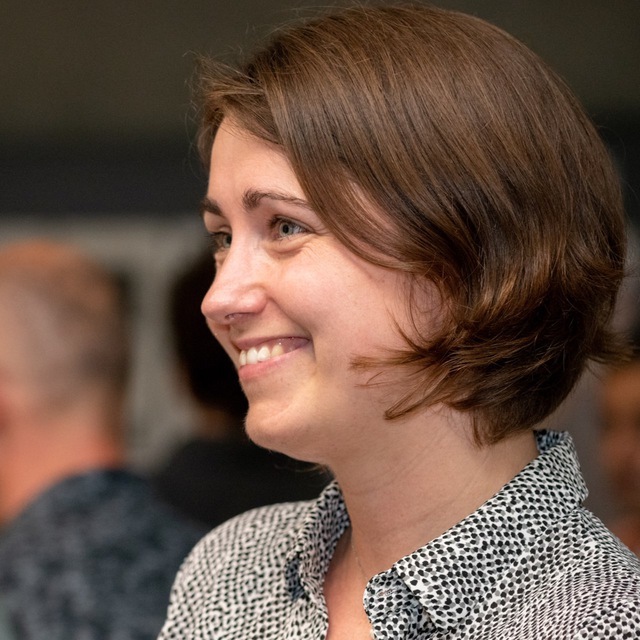
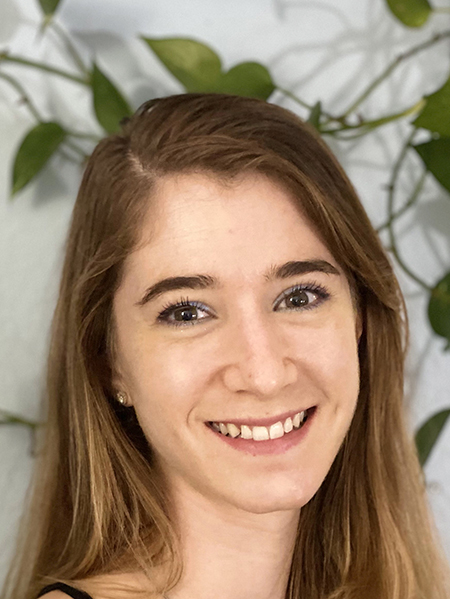
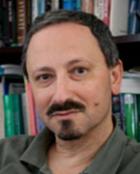
Noortje Venhuizen is an Assistant Professor in the Department of Cognitive Science and Artificial Intelligence at the Tilburg School of Humanities and Digital Sciences, Tilburg University. She serves as Academic Director for the BSc Cognitive Science and Artificial Intelligence program since 2024, and has held academic positions at Saarland University (2015-2022) including roles as Scientific Staff member and Principal Investigator in SFB 1102 projects. PhD in Computational Semantics (University of Groningen, 2015) MSc in Logic (ILLC, University of Amsterdam, 2011) BSc in Artificial Intelligence (Utrecht University, 2009) Her research focuses on expectation-based language comprehension, neurocomputational modeling of semantic processing, distributional formal semantics, and pragmatic reasoning in discourse. Key contributions include PDRT-SANDBOX (Haskell NLP library) and DFS Tools (Prolog implementation of distributional formal semantics). Recent publications (2023-2025) explore multimodal word meaning, informativity in reference production, and neurocognitive models of surprisal processing. Her work combines formal semantics with cognitive neuroscience and computational modeling. LOT Grotevragenprijs essay contest - Second Prize She has presented research at major conferences including CogSci, AMLaP, and Sinn und Bedeutung. Current teaching includes courses on artificial intelligence, statistics, and semantic theory.
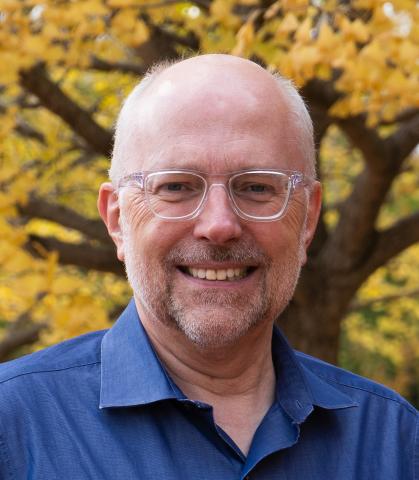
Anna Fariha is an Assistant Professor in the Kahlert School of Computing at the University of Utah. She co-leads the Data Management Research Center for Human-centered, Efficient, and Scalable Systems. Her research focuses on enhancing data system usability, explainability, and trustworthiness through algorithmic innovations and practical implementations. She holds a Ph.D. from the Manning College of Information and Computer Sciences at the University of Massachusetts, Amherst, under Prof. Alexandra Meliou. Education: Ph.D. in Computer Science, University of Massachusetts Amherst (2021) Master's in Computer Science, University of Massachusetts Amherst (2020) Undergraduate work in Computer Science, unspecified institution Her research interests include data wrangling tools, constraint discovery, conversational AI for data science, and human-centered database systems. Recent work emphasizes automated data summary recommendations, constraint violation detection, and educational tools for data science programming. Grants & Awards: NSF CIRC: ENS/Grand: POWDER-ENS Award (2024) Stena Center Seed Grant for Fintech Data Analysis (2025) Microsoft Research Dissertation Grant (2020) SIGMOD 2022 Comprehensive Reproducibility Award Teaching: Recently taught Advanced Database Systems , Human-Centric Data Management , and Deep Learning courses at the University of Utah.
Andrew Melnyk is a Professor in the Department of Philosophy at the University of Missouri . His research focuses on philosophy of mind , philosophy of science , and metaphysics , particularly defending physicalism (or materialism) through the lens of realization theory. He is a member of the Heterodox Academy and the Academic Freedom Alliance . Education : B.A. in Literae Humaniores, Oxford University (1985) B.Phil. in Philosophy, Oxford University (1987) D.Phil. in Philosophy, Oxford University (1991) Research Interests : Defending physicalism via realization theory Philosophical methodology and naturalism Mind-body problem and phenomenal consciousness Reductionism vs. non-reductive physicalism Empirical evidence for materialism in neuroscience His publications, including the 2025 book Phenomenal Properties and the Intuition of Distinctness , critically engage with two-dimensionalism, supervenience, and the scientific plausibility of physicalism. His teaching includes Philosophy of Mind and Philosophy of Science courses at both undergraduate and graduate levels.
Marina Vazanova is an Associate Professor at the Department of Romance and Slavic Languages, Faculty of Applied Languages, University of Economics in Bratislava, where she has worked since February 2021. Her career spans multiple institutions, including Comenius University in Bratislava (2016–2020), Chuvash State Pedagogical University in Russia (2006–2016), and Johannes Gutenberg University of Mainz (research internship in 2014). Current Position: Associate Professor (University of Economics in Bratislava) Past Roles: Lecturer, Head of Program, Department Chair Her research focuses on linguistic and cultural aspects of Russian language teaching , including componential analysis , political discourse , and cross-cultural communication . She has published extensively on topics such as address forms in political contexts , propaganda in media , and corpus-based linguistic expertise . Key trends in her recent publications (2019–2023) emphasize media linguistics , political communication , and language pedagogy . She has participated in international collaborations and organized conferences on Russian language education and bi/polylingualism. Vazanova has delivered 4 invited lectures at international/national levels and contributed to the Web of Science/Scopus database with 1 registered research output. Her organizational experience includes leadership roles in academic conferences and examination commissions.
Boyan Paskalev Bontchev is a Professor in the Department of Software Technologies at Sofia University's Faculty of Informatics. With a PhD in Computer Science from the Center of Informatics and Computer Technology - Bulgarian Academy of Sciences, he has established himself as a prominent academic in software engineering and educational technology fields. His academic career includes teaching Java Server/Side Programming and OOAD-UML courses at Sofia University and New Bulgarian University since 2000. Professor Bontchev's research focuses on e-learning systems, adaptive hypermedia, and software architecture. His work centers around developing self-adaptive educational platforms, with significant contributions to the ARCADE e-learning platform that complies with IEEE LTSA standards. He has published extensively on topics including courseware composition, learning content interoperability, and assessment frameworks, demonstrating a consistent research trajectory in educational technology systems. His publications reveal a strong emphasis on practical applications of educational technology, particularly in self-adaptive hypermedia navigation, e-learning courseware delivery, and assessment interoperability. The research shows progression from foundational work on software architecture to increasingly sophisticated adaptive learning systems that incorporate learner modeling and personalized educational experiences. Professor Bontchev maintains active industry connections, having worked as a software engineer and project manager at companies including Rila Solutions, ESDI Ltd., and OBLOG Software Ltd. His international experience includes research stays at the University of Vienna and Technical University of Aachen, contributing to his broad perspective on educational technology development. With proficiency in multiple programming languages and environments including Java, JSP, Oracle, and web technologies, he bridges theoretical computer science with practical educational applications. His multilingual capabilities (English, Portuguese, German, Russian, Spanish) further enhance his international research collaborations and academic contributions.
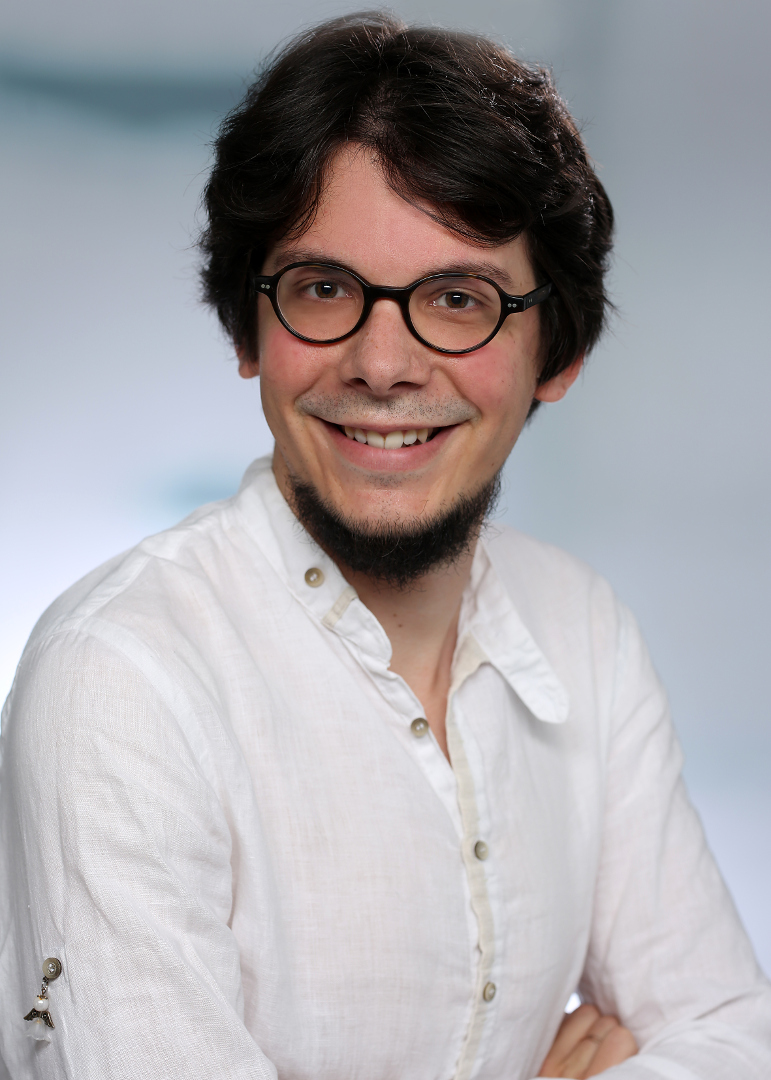
Alexander Steen is an Assistant Professor (Juniorprofessor) at the University of Greifswald within the Institute of Mathematics and Computer Science. His research focuses on computational logic, automated reasoning, and theoretical computer science, with significant contributions to higher-order logic (HOL) and non-classical reasoning systems. He leads the development of the Leo-III automated theorem prover, a versatile system supporting classical HOL with choice, polymorphic logics, and higher-order modal/deontic logics. Steen's academic journey includes a Dr. rer. nat. (summa cum laude) from Freie Universität Berlin (2018), followed by post-doctoral work at the University of Luxembourg (2018-2021) as a principal investigator for the AuReLeE project on legal reasoning automation. He holds a 2024 nomination for the University of Greifswald Teaching Award and was elected Fellow of the Academy of Sciences and Humanities in Hamburg (2022). Key Research Areas: Higher-Order Logic, Automated Reasoning, Non-Classical Logics, Legal Tech, Formal Methods in AI, Computational Ethics. Major Projects: Leo-III (DFG-funded automated prover), AuReLeE (FNR-funded legal reasoning), MET (modal logic embedding tool). His recent publications (2025-2022) explore diverse applications of HOL in non-classical reasoning, legal formalization, argumentation frameworks, and TPTP infrastructure extensions. Steen actively contributes to AI governance as co-speaker of the GI AI section and deputy member of Greifswald's Senate. He also engages in science communication through works like the 2024 science comic book Was wissen wir schon (What Do We Know?), featuring his automated reasoning research. Scientific Honors: CLAR 2023 Best Paper Award, IRIS 2020 LexisNexis Best Paper Award, CASC-27 LTB Division Winner, Woody Bledsoe Travel Awards (CADE 2018, 2016), GI Junior Fellowship (2018). Advising: Supervises ongoing PhD/MSc/BSc theses in logic-based AI, modal reasoning, and legal tech at University of Greifswald and Freie Universität Berlin.
Marika Apostolova Trpkovska is an Associate Professor at the Faculty of Contemporary Sciences and Technologies, South East European University (Tetovo, Macedonia). Her academic work spans cybersecurity, blockchain technology, and educational technology with a focus on Industrial IoT security, semantic web applications, and digital learning systems. PhD in Computer Science (Specialty: e-Medical Services based on Semantic Web) MSc in Software Development and Applications BSc in Computer Sciences Her research covers cybersecurity frameworks for Industrial IoT, blockchain applications in public administration, and educational technology innovations including VR/AR integration and gamification. She has published extensively in international conferences and journals on these topics, with recent works focusing on machine learning-enhanced security protocols and decentralized real estate management systems. Current publications (2023-2024) highlight her expertise in IIoT security standards, smart contract development using Ethereum/IPFS, and cybersecurity threat modeling. Earlier works examine e-learning systems implementation, gender disparities in CS research, and real-time operating system validation. She serves as part-time academic staff member while maintaining technical roles in learning management system administration (LIBRI, ANGEL) and teaching responsibilities across software engineering, algorithms, and programming disciplines.
Fengjunjie Pan is a PhD student and research assistant at the Chair of Robotics, Artificial Intelligence and Embedded Systems at the Technical University of Munich since 2021. He holds an M.Sc. in Electrical Engineering from TU Berlin (2019) and a B.Eng. in Electrical Engineering from Hamburg University of Applied Sciences. His research focuses on automotive systems engineering and generative AI applications in model-based engineering. His publications (2022-2025) demonstrate expertise in: LLM integration for automotive software development Containerized architectures for autonomous driving Virtualization technologies in vehicular systems Constraint generation and model transformation He supervises multiple Master's and Bachelor's theses on generative AI applications and privacy-enhancing technologies in automotive contexts, working alongside Prof. Alois Knoll's team.
Didrik Lundberg is a Researcher at the Department of Theoretical Computer Science within the School of Electrical Engineering and Computer Science at Royal Institute of Technology . His work focuses on system security and formal methods , particularly in mechanized reasoning for the P4 programming language. Key research areas include formal verification , network security , and program logic , as evidenced by his publications on HOL4P4 , symbolic execution , and unstructured program logics . He has presented at international conferences such as SEFM 2020 , OOPSLA 2024 , and VSTTE 2024 . His peer-reviewed articles and conference contributions span topics like P4 semantics, data plane verification, and Hoare-style logic for unstructured programs. He also authored a master's thesis titled Provably Sound and Secure Automatic Proving and Generation of Verification Conditions (2018).
Sophia A. Malamud is an Associate Professor in the Department of Computer Science at Brandeis University, where she directs the Meaning In Language Research Group (MILa) and is affiliated with the Language & Linguistics Program. Her research specializes in theoretical linguistics with a focus on formal semantics, formal pragmatics, discourse-syntax interactions, and semantics-pragmatics interface. Her educational background includes a Ph.D. in Linguistics with a dissertation on Semantics and pragmatics of arbitrariness and an M.A. in Mathematics exploring statistical decision theory in Entropy as relevance: maximizing entropy and minimizing loss . Malamud's research investigates discourse coherence, word order variations, indexicality, semantics of impersonals/plurals, speech acts, and utterance modifiers. She leads NSF-funded projects creating annotated corpora of spoken Russian (including the BiRCh Corpus), examining bilingual acquisition and heritage language phenomena. Her work employs corpus linguistics, experimental methods, and formal modeling. Her publications demonstrate consistent focus on pragmatic computation models, conversational dynamics, and cross-linguistic semantics, with frequent examination of Russian, Mandarin, and Greek data. Key themes include commitment avoidance strategies, conversational scoreboard modeling, and formal analyses of particles/pronouns. Awards include: NSF Grant BCS-1651083 for BiRCh Corpus development Mandel Foundation Faculty Grant for heritage language research Theodore and Jane Norman Award (2018) Multiple Brandeis Provost Research Grants Malamud has advised 8+ graduate/undergraduate theses on topics including heritage Russian pragmatics, utterance particles, reduplication, and distributivity. She collaborates internationally on corpus projects and directs research teams at Brandeis' Laboratory for Linguistics and Computation.
Jeffrey Horsburgh is a Professor in Civil and Environmental Engineering and a Water Researcher at the Utah Water Research Laboratory (UWRL) at Utah State University. His work focuses on hydroinformatics, environmental sensor networks, and watershed hydrology, integrating data models, cyberinfrastructure, and GIS for water quality and hydrology research. Professor, Utah State University (College of Engineering) Utah Water Research Laboratory Research Interests: Dr. Horsburgh develops technology for environmental observatories, emphasizing high-frequency sensor data, reproducibility, and cyberinfrastructure. His research spans watershed hydrology, surface water quality, human dimensions of water use, and standards-based data sharing through platforms like HydroShare and HydroServer. Notable Awards: 2024 USU Outstanding Researcher 2023 Reproducibility Author Award 2019 Outstanding Teacher 2014 Early Career Excellence Award (International Environmental Modelling & Software Society) Education: Ph.D., MS, and BS in Civil/Environmental Engineering from Utah State University (2009, 2001, 1999).
Professor Franz Berto holds the position of Professor of Logic and Metaphysics at the University of St Andrews, where he also serves as Director of the Arché Philosophical Research Centre for Logic, Language, Metaphysics and Epistemology. Additionally, he maintains an affiliation with the Institute for Logic, Language and Computation (ILLC) at the University of Amsterdam, where he has taught in the Master in Science of Logic program. His academic journey includes previous appointments at the University of Aberdeen, the Institute for Advanced Study at the University of Notre Dame, the Sorbonne-Ecole Normale Supérieure in Paris, and several Italian universities including Padua, Venice, and Milan-San Raffaele. Professor Berto's research spans multiple areas of philosophical inquiry with particular focus on non-classical logics, impossible worlds, and the philosophical implications of computation. His work demonstrates a distinctive approach that bridges analytic and continental traditions, with special interest in logical paradoxes and their metaphysical implications. He has made significant contributions to understanding how imagination functions in epistemic contexts and how counterfactual reasoning operates across different domains of inquiry. His recent publications reveal a consistent trajectory examining the intersection of logic, epistemology, and metaphysics, with increasing attention to hyperintensional approaches that go beyond traditional possible worlds semantics. The trend shows growing sophistication in modeling cognitive processes related to imagination, belief revision, and counterfactual reasoning, often incorporating insights from computer science and cognitive psychology. Fellow of the Royal Society of Edinburgh (FRSE, 2022) Honorary Chaire Mercier, Institut Supérieur de Philosophie, Université Catholique de Louvain (2020) José Gaos Honorary Chair, National Autonomous University of Mexico (UNAM, 2023) Professor Berto has successfully secured substantial research funding including an ERC Consolidator grant of €2,000,000 for 'The Logic of Conceivability' project (2016-2022), a Leverhulme Trust grant of £500,000 for 'What If? Knowing By Imagining [WIKI]' (2025-2028), and an AHRC Early Career Researcher grant of £240,000 for 'The Metaphysical Basis of Logic' (2013-2015). His supervision portfolio includes doctoral students working on diverse topics ranging from modal epistemology to the philosophy of computation, with several securing prestigious fellowships. As Editor-in-Chief of The Philosophical Quarterly since 2020, he plays a significant role in shaping contemporary philosophical discourse. Professor Berto leads research within the Arché Philosophical Research Centre at St Andrews, a world-renowned hub for work in metaphysics, epistemology, and philosophical logic. His current projects involve collaborations with researchers across Europe and North America, particularly focusing on the logical structure of imagination and counterfactual reasoning. The 'What If?' project brings together philosophers, cognitive scientists, and computer scientists to develop a comprehensive framework for understanding how imagination serves as a tool for knowledge acquisition.
Alina Arseniev-Koehler serves as Assistant Professor in the Department of Sociology at Purdue University, where she bridges computational methods with cultural sociology to investigate language, health, and social inequality. Her research clarifies how cultural meaning systems perpetuate disparities through stereotypes related to body weight, disease, and gender. Her academic background includes: B.A. in Sociology, University of Washington (2014) Master's and Ph.D. in Sociology, University of California, Los Angeles (2022) Dr. Arseniev-Koehler's methodological expertise centers on computational text analysis using word embeddings and machine learning to model cultural meaning in large datasets. She examines how language encodes moral judgments about obesity, stigmatizing disease narratives, and gender stereotypes in educational contexts. Her work demonstrates that computational methods require deep theoretical engagement with sociological concepts of meaning. Analysis of her recent publications (2021-2025) reveals three dominant research trajectories: (1) Methodological innovation in word embedding applications for cultural measurement, (2) Health disparity investigations using the All of Us Research Program and NVDRS data, particularly regarding obesity diagnosis and suicide patterns, and (3) Gendered analysis of mental health indicators and educational stereotypes through historical media analysis. No scientific awards were documented in the provided materials. Information regarding graduate student advising and external grant funding was not specified in the available sources. While no dedicated research lab is mentioned, her work consistently leverages interdisciplinary collaborations through access to national datasets like the National Violent Death Reporting System.
Nikolaos Papaspyrou is a Professor at the School of Electrical and Computer Engineering of the National Technical University of Athens (NTUA) and a member of the Software Engineering Laboratory . His research focuses on the theory and implementation of programming languages, including semantics, type systems, compilers, static analysis, and formal verification. Since October 2021, he has been on leave from NTUA, working as a Software Engineer for Google in the memory management team for the V8 JavaScript and WebAssembly engine. He previously served as Director of the Division of Computer Science (2017-2019) and was on sabbatical with Google's compiler group in Munich (2015-2016). His work includes the RELEASE project (EU FP7 STREP) for reliable large-scale server software and uncertainty handling in distributed databases (European Social Fund). Ph.D. and Diploma in Electrical and Computer Engineering from NTUA M.Sc. in Computer Science from Cornell University His research interests span programming languages , software engineering , and formal verification , with recent publications on coinductive proofs in Liquid Haskell, concurrency semantics, and quantum compilation. He has supervised over 50 diploma projects and mentored numerous students now at institutions like MIT, Princeton, and UC Berkeley. Awards include conference organizing and program committee roles, though no formal scientific prizes are listed.
Michael Kifer is a Professor in the Department of Computer Science at Stony Brook University . His research focuses on declarative languages, logic programming, semantic web, and integration of object-oriented and deductive paradigms. He has received multiple prestigious awards including three ACM-SIGMOD 'Test of Time' awards, SUNY Chancellor's Award, and Stony Brook's Research Excellence Award. Ph.D. in Computer Science, Hebrew University of Jerusalem (1985) M.S. in Mathematics, Moscow University (1976) Dr. Kifer's research interests span over 30 years, with major contributions to databases, knowledge representation, and semantic web technologies. He co-invented F-logic, HiLog, Annotated Logic, and Transaction Logic, which are widely cited in computer science literature. His recent publications focus on hybrid logic programming, multilevel modeling (MLM), and knowledge authoring systems like Flora-2. These works bridge rule-based reasoning, controlled natural language, and semantic web technologies. Scientific Awards : Department Research Excellence Award (2014) ACM-SIGMOD 'Test of Time' Awards (1999, 2002) SUNY Chancellor's & Stony Brook President's Awards (2008) Association for Logic Programming 'Test of Time' Award (2013) Plumer Fellowship at Oxford (2006) Dr. Kifer has served on editorial boards and chaired conferences in logic programming and semantic web. He developed the Flora-2 knowledge representation system and contributed to standards like RIF (Rule Interchange Format).