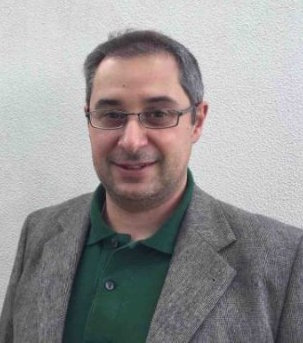
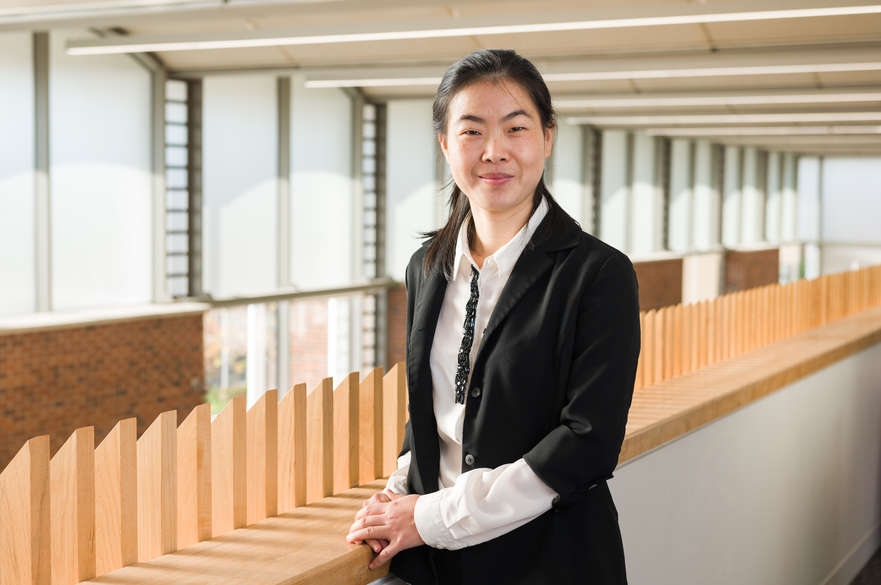
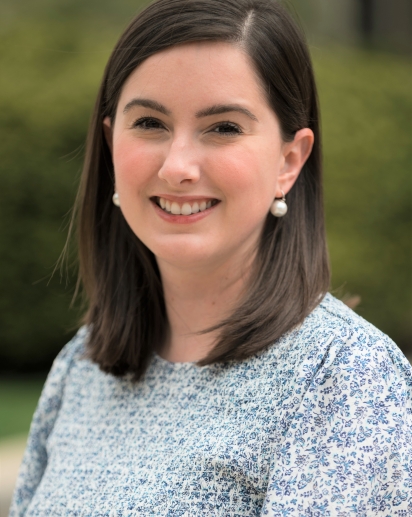
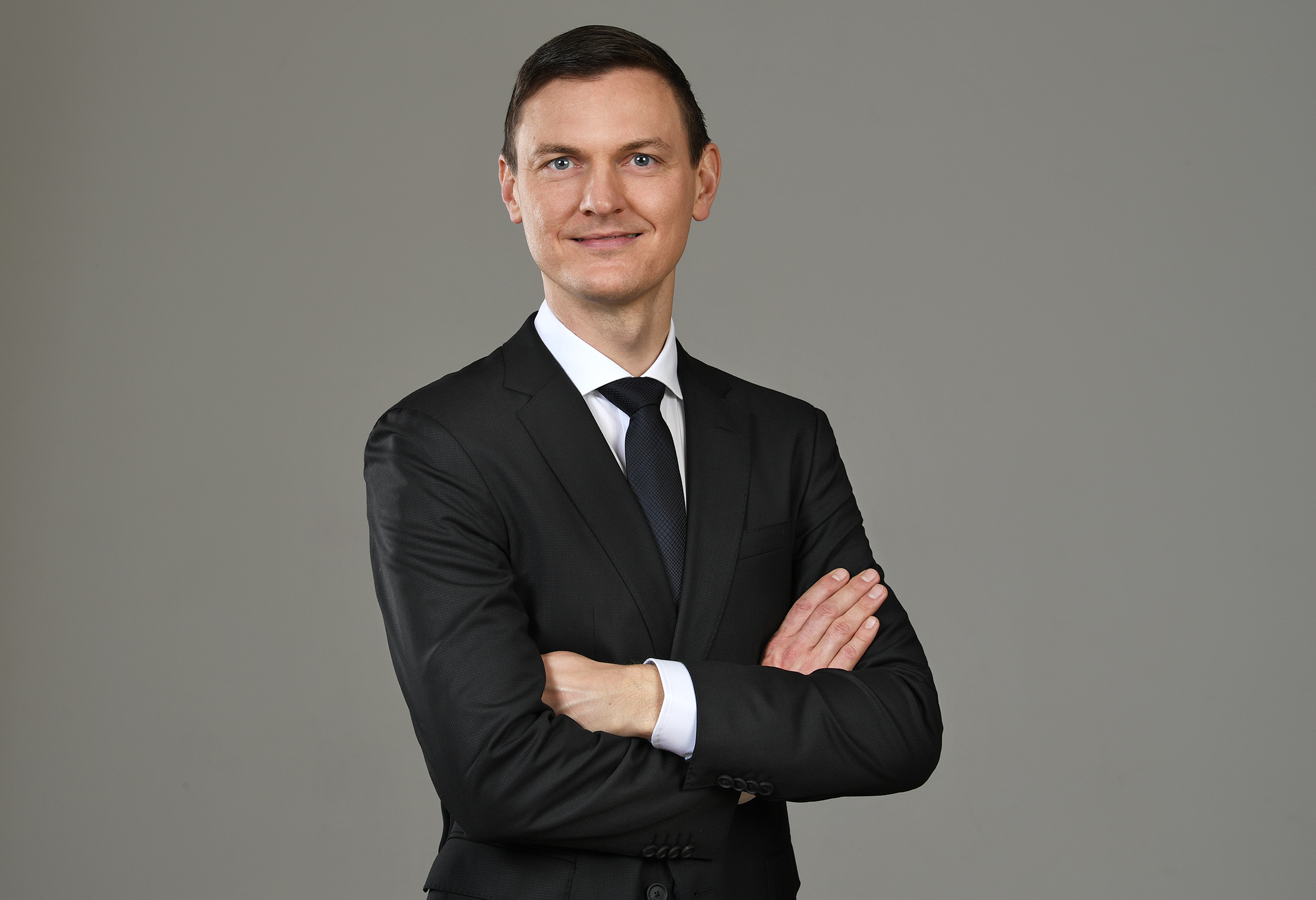
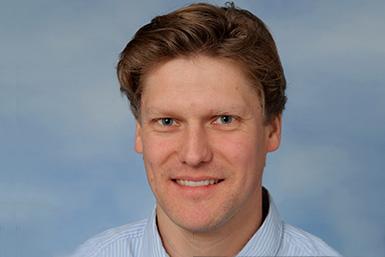
Luis Merino is an Associate Professor at the School of Engineering, Universidad Pablo de Olavide (UPO), Seville, Spain. He founded and leads the Service Robotics Laboratory and contributed to establishing the Systems Engineering and Automation division at UPO. He served as Vice-Dean for five years and currently coordinates the Computer Science degree program. Education: Ph.D. in Robotics from the University of Seville (2007), supervised by Anibal Ollero. Research: Focuses on cooperative robotic systems, human-robot collaboration, localization/navigation techniques, and machine learning in social robotics. His work includes leading 2 H2020, 4 FP7, 3 National R&D, and 3 Andalusian regional projects. Notable projects: MBZIRC 2020 (PI), collaboration with Honda Research Institute Japan, and EU-funded initiatives. He advocates for open-source code/datasets and industry technology transfer. Scientific Awards: ABB Award to the Best Doctoral Dissertation on Robotics (2007) Best Paper Award at ROBOT2019 Professional Roles: Associate Editor for Image and Vision Computing and IEEE Robotics and Automation Letters . Serves on ICRA/IROS conference program committees. Grant reviewer for FONDECYT (Chile), SBIR (USA), and ERC.
Roger Stirnimann serves as a Lecturer in Agricultural Engineering at the Bern University of Applied Sciences, specifically within the School of Agricultural, Forest and Food Sciences HAFL, Department of Agronomy in Zollikofen. With over a decade of academic experience since 2013, he has established himself as a specialist in agricultural machinery and tractor technology. His educational background includes an Executive Master of Business Administration from Kalaidos Fachhochschule Bern (2007-2008), a degree in Economics Engineering from Private Hochschule für Wirtschaft Bern (2000-2002), and an Agricultural Engineering degree from SHL Zollikofen (1993-1996). He further enhanced his academic teaching skills with a Certificate of Advanced Studies in University Teaching and e-Learning (2013-2014). Agricultural Engineering in general Tractor Technology and development Transport Technology in agriculture Self-propelled harvesting machinery Alternative drive systems for agricultural vehicles Emissions from Nonroad Mobile Machinery Terramechanics and soil-vehicle interaction Trailer braking systems His publication record demonstrates consistent scholarly output, particularly in tractor technology and agricultural machinery. The analysis of his 15 most recent articles reveals a strong focus on tractor development, engine and transmission systems, alternative drive concepts, and classification methodologies. His work bridges theoretical research with practical applications in agricultural machinery, with particular emphasis on performance optimization, sustainability, and technological innovation in farming equipment. Max Eyth commemorative coin in silver (DLG) Stirnimann actively contributes to academic and industry organizations, serving as a co-author for the Yearbook of Agricultural Engineering, Swiss delegate for OECD's Tractor Test Codes, and chair of DLG's Vehicle Technology examination commission. His industry experience prior to academia, particularly with Ammann Schweiz AG and Matra, provides valuable practical context to his academic work. His research often addresses real-world challenges in agricultural machinery, focusing on performance, efficiency, and environmental impact. His work with various tractor chassis concepts, soil pressure analysis, and alternative drive systems demonstrates his commitment to advancing sustainable and efficient agricultural technology. Through his memberships in organizations like ISTVS (International Society for Terrain-Vehicle Systems) and the Club of Bologna, he maintains strong connections between academic research and industry applications.
Dr. Lorenzo Vigentini serves as an Adjunct Senior Lecturer in the Computer Science and Engineering Department within the Faculty of Engineering at the University of New South Wales (UNSW). With a background spanning psychology, higher education teaching, and extensive IT/e-learning experience, he contributes significantly to the academic community through his expertise at the intersection of cognitive psychology, differential psychology, education, and human-computer interaction. Vigentini's research focuses on learning processes, particularly examining how technology interacts with learning and the human-machine interface. His work emphasizes data-driven approaches to understanding educational patterns, with special interest in Learning Analytics and Educational Data Mining. He has led the development of the Learning Analytics and Educational Data Science research group at UNSW, positioning himself at the forefront of educational innovation. His research interests span technology evolution, student experience enhancement, Quality Assurance processes, and Quality Enhancement in educational contexts. Vigentini's publication record demonstrates consistent focus on learning analytics applications across educational contexts, with recent work examining dashboard development for both secondary schools and higher education institutions. His research shows a clear progression from theoretical frameworks to practical implementations, particularly in MOOC analytics and personalized learning support systems. His work bridges the gap between educational theory and technological implementation, with an increasing emphasis on institutional adoption of data-driven approaches. As a research leader, Vigentini has secured multiple significant grants totaling over AUD 1.9 million, including a major AUD 1.2 million UNSW 'Students as Partners' program in 2018. His grant history reflects a consistent focus on educational innovation, learning analytics implementation, and student experience enhancement across different educational contexts and platforms. Dr. Vigentini has established the Learning Analytics and Educational Data Science research group at UNSW, creating a collaborative environment for exploring data-driven approaches to education. His work integrates quantitative and qualitative methodologies to develop comprehensive understanding of learning processes and technological interventions in educational settings.
Dr. Bridianne O'Dea is an Associate Professor and NHMRC MRFF Investigator based at the Black Dog Institute, affiliated with the University of New South Wales. She completed her PhD in Health Sciences at the University of Sydney in 2013, along with a Graduate Certificate in Educational Studies (Higher Education) in 2011 and a Bachelor of Health Science (Honors, First Class) in 2009. Dr. O'Dea leads a comprehensive research program focused on identifying and addressing treatment gaps in mental health service provision using innovative Internet solutions. Her research integrates public health, psychology, and computer science to design and test scalable, low-cost digital interventions that proactively reach young people rather than waiting for them to seek help. Her vision is to ensure all young Australians have access to timely, appropriate, and effective mental healthcare. Her work demonstrates significant trends in digital mental health, with a strong emphasis on creating accessible treatments and service models through technology. Recent publications highlight her leadership in developing smartphone applications for mental health monitoring, school-based prevention programs, and AI-driven recommendation systems. Her research spans adolescent depression, suicide prevention, teacher wellbeing, and the use of digital phenotyping to identify mental health markers. Scientific Awards: Bupa Emerging Health Researcher Award (2018) NSW Young Tall Poppy Award (2017) theMHS Early Career Research Award - Innovation (2017) Multiple Black Dog Institute Travel Awards (2015-2018) Centre for Research Excellence in Suicide Prevention Best Paper Award (2017) Dr. O'Dea has secured substantial research funding, including an NHMRC MRFF Investigator Grant (2021-2026) for her project 'Tackling it with Tech: Using novel internet solutions to overcome the burden of depression in youth' and multiple NHMRC Project Grants. She collaborates extensively with researchers across disciplines including psychology, computer science, and public health. Her work with the Future Proofing Study represents a major longitudinal effort to understand adolescent mental health through digital interventions and monitoring.
Katarina Mikaelsson is a Senior Lecturer at Luleå University of Technology, affiliated with the Department of Health, Education and Technology. Her research focuses on physiotherapy, health promotion, and physical activity, particularly in the context of active school transportation (AST) and post-stroke rehabilitation. Academic Role: Senior Lecturer, Head of Division (Health, Medicine and Rehabilitation). Contact: katarina.mikaelsson@ltu.se . Research Interests span psychosocial factors in AST, gamification for health behavior change, digital interventions for stroke recovery, and school-based health promotion. She emphasizes independence, peer support, and technology-driven solutions to enhance physical activity. Recent Publications highlight her work on co-designing persuasive games for AST, scoping reviews of psychosocial barriers/facilitators, and feasibility of internet-based self-management programs for stroke patients. Collaborations include Vinnova-funded projects and international studies. Advising and Grants include contributions to doctoral theses (e.g., Eva Savolainen’s AST research) and grants from Vinnova and the Swedish Stroke Association. She explores implementation challenges like flexibility, support systems, and visual progress tracking.
Stephen Voida is an Associate Professor and founding faculty member in the Department of Information Science at the University of Colorado Boulder. His work bridges human-computer interaction (HCI), ubiquitous computing, and health informatics to examine how technology impacts mental health, both positively and negatively. Current research focuses on mental health informatics, remote work technologies, and chronic disease management systems. He teaches programming, hands-on research seminars, and ubiquitous computing courses at CU Boulder. Recent publications explore feminist design lenses for remote work, narrative healing in suicide bereavement, and infrastructuring diabetes care in youth. His work has received recognition, including a CHI 2024 Best Paper Honorable Mention. Stephen emphasizes collaboration, supporting CU students through independent study credits, and connecting external prospects with departmental research groups. Email contacts: svoida@acm.org (research), svoida@colorado.edu (CU), stephen@voida.com (personal). Outside academia, he maintains hobbies in aviation, music, and travel, with a personal collection of global experiences and model trains.
Dr Belinda Middleweek is a Senior Lecturer at the University of Technology Sydney , affiliated with the School of Communication and serving as Teaching and Learning Lead for Journalism . She currently acts as Higher Degree Research Coordinator in the Faculty of Arts and Social Sciences. Educational background: PhD in Journalism, University of Sydney (2007) BA (First Class Honors), University of Sydney (2002) Her research explores intersections between human-technology interaction , digital intimacy , and journalism/media studies . Key themes include: bodily engagement with AI, gendered technology positioning, media representation of technology, affective technology bonds, and ethical implications of digital intimacy. She co-authored Real Sex Films: The New Intimacy and Risk in Cinema (2017) and authored Feral Media? The Chamberlain case, 40 years on (2021), which re-examined Australia's most significant media-trial dynamics. Recent publications analyze: touch in journalism (2025), pre-digital sleuthing (2025), and data privacy in sexual health tech (2025). These works explore sensory news practices, historical public investigations, and gendered data ethics in biometric devices. Scientific recognition: Erasmus Mundus Scholarship (2018) Dean’s Teaching Awards (2024, 2013) Heroic Award for Outstanding Contribution (2023) As an educator, she leads journalism curriculum development and has 8 current/postgraduate HDR supervisees. Her industry experience includes senior roles at Sunrise, Today Tonight, and documentary production for multiple networks. Leadership roles: Teaching and Learning Lead for Journalism (2020–present) Acting HDR Coordinator (2025–present) UTS Expert Working Group on Human Rights and AI (2020)
Cuifeng Ying serves as a Senior Lecturer in Electrical Engineering within the Department of Engineering at Nottingham Trent University's School of Science and Technology. She leads research in the Advanced Optics and Photonics Group (AOP Lab), specializing in cutting-edge nanopore and plasmonic technologies for single-molecule analysis. Her academic foundation includes: Ph.D. in Physics from Nankai University (2013), developing photonic crystals and plasmonic nanocavities for biosensing Postdoctoral research at Nankai University's Centre for Nanoscale Science and Technology on single-molecule nanopore sensing Postdoctoral position with Prof. Michael Mayer at the Adolphe Merkle Institute, University of Fribourg Dr. Ying's research pioneers solid-state nanopore fabrication and plasmonic nanotweezers for real-time monitoring of unmodified protein dynamics. Her work enables fingerprinting of individual proteins through innovative surface functionalization methods and data analysis algorithms, with direct applications in disease mechanism studies and biosensor development. She bridges nanotechnology, biophysics, and electrical engineering to solve fundamental challenges in molecular characterization. Analysis of her 15 most recent publications reveals consistent focus on advancing nanopore technology (60% of works) and plasmonic biosensing (40%), with growing integration of machine learning for data analysis. Her research spans fundamental nanofluidics to applied biomedical diagnostics, evidenced by collaborations with institutions in Switzerland, Australia, and India. Her scientific recognition includes: Academy of Medical Sciences Springboard Fellowship (2025) for "Dynamic Profiling of Individual, Unmodified Intrinsically Disordered Proteins using Optical Nanotweezers" As Principal Investigator, Dr. Ying secured the £125k AMS Springboard Award (2025-2027) and £12k Royal Society International Exchanges grant (2025-2027) with Nagaoka University of Technology. She co-leads the UKIERI-SPARC India collaboration (£60k, 2024-2025) and contributes to major projects including the Royal Society Wolfson Fellowship (£250k) and UKRI Future Leaders Fellowship extension (£567k). Within the AOP Lab, she directs the bio-photonics stream developing ultrasensitive sensors capable of single-protein detection, with recent breakthroughs in optical nanotweezers for protein disassembly kinetics.
Quentin Cappart is an Associate Professor at Polytechnique Montréal since 2020, specializing in artificial intelligence , combinatorial optimization , and constraint programming . His work integrates machine learning and operations research to solve complex industrial problems, particularly in transportation , logistics , and healthcare . Affiliations: Co-founder and Head of the Combinatorial Optimization and Reasoning in Artificial Intelligence Laboratory (CORAIL) Interuniversity Research Centre on Enterprise Networks, Logistics and Transportation (CIRRELT) IVADO researcher Affiliate member of MILA Researcher at IMC2 institute Research focus: Hybrid algorithms combining logical reasoning , machine learning , and operations research to enhance decision-making tools. His group emphasizes accessibility for non-experts and small companies. Scientific Awards: 2025: Early Career Engineer Award (Ordre des ingénieurs du Québec) 2025: Early Career Professor Award (Polytechnique Montréal) 2025: Prix Méritas (Polytechnique Montréal) 2024: Early Career Researcher Award (ACP) 2024: Best Paper Award (ACP Machine Learning track) 2023: Winning approach for Citylearn challenge (NeurIPS) Teaching: Courses include INF8175: Artificial intelligence - methods and algorithms and INF6102: Local search and metaheuristics . He also teaches at ACP Summer/Winter Schools.
Maria Tomas Rodriguez is a Senior Lecturer in Mechanical and Aeronautical Engineering at City University London. She has been with the institution since 2007, initially as a Lecturer (2007-2014) and promoted to Senior Lecturer in 2014. Prior to her position at City University, she was a Postdoctoral Research Associate at Imperial College London and a Research Assistant at the University of Sheffield. Dr. Rodriguez earned her Licenciatura in Physics from Universidad Complutense de Madrid, followed by a Masters and PhD in Control Systems Engineering from the University of Sheffield. She further completed an MPhil in Aeronautical Engineering at Imperial College London, establishing her interdisciplinary expertise spanning physics, control systems, and aeronautics. Her research primarily focuses on nonlinear control systems applied to diverse platforms including floating offshore wind turbines, rotorcraft dynamics, marine vehicles, and motorcycle suspension systems. She has developed innovative methodologies for dynamic modeling, stability analysis, and control of complex mechanical systems, with particular emphasis on vibration reduction and oscillation damping in challenging environments. Her work bridges theoretical control approaches with practical engineering applications in renewable energy and vehicle dynamics. Her publication record shows consistent output across multiple domains, with recent work concentrating on floating offshore wind turbine technology, helicopter dynamics, and advanced control techniques for autonomous systems. The interdisciplinary nature of her research is evident in her collaborations across engineering disciplines and institutions. Dr. Rodriguez has extensive experience in supervising research and teaching across mechanical engineering and aeronautics disciplines. Her technical expertise spans nonlinear dynamics, system identification, control theory, and their applications to complex engineering systems in marine, aerospace, and automotive contexts. She maintains active research in structural dynamics and control for renewable energy systems, particularly focusing on floating wind turbine technology, where she has developed methodologies for stability analysis, vibration identification, and motion control of these complex marine structures.
Jennifer Landino is an Assistant Professor in the Department of Biochemistry and Cell Biology at the Geisel School of Medicine, Dartmouth College. Her research focuses on understanding the biochemical and biophysical mechanisms underlying cortical patterning during cytokinesis, the final stage of cell division, using a cell-free system derived from Xenopus egg extract and supported lipid bilayers. Key research areas include: Dynamical patterning of the cell cortex Role of Rho GTPase and F-actin in furrow formation Biophysical properties of membrane-cytoskeleton interactions Development of artificial cortex models for studying cell division Recent publications highlight her work on membrane composition effects on cortical patterning (2025), neighbor cell interactions during cytokinesis (2025), and cortical excitability regulation across the cell cycle (2022). Her lab utilizes live imaging and quantitative analysis to investigate these processes. Contact: Jennifer.E.Landino@dartmouth.edu | @jenelandino
Lei Wang is the F. L. Castleman Associate Professor in Engineering Innovation at the University of Connecticut's School of Engineering, Department of Electrical and Computer Engineering. He holds a PhD from the University of Illinois at Urbana-Champaign (2001), an MS (1996) and BS (1992) from Tsinghua University, China. His research focuses on cyber-physical systems , embedded computing with renewable energy , and nanoscale integrated circuit design . Key areas include microbial fuel cells , memristor-based hardware security , and low-power signal processing architectures . Recent work trends involve Quantum-dot transistor applications for in-memory computing Adaptive LDPC decoder optimization Hardware security leveraging memristor properties Energy-efficient power management systems for underwater sensors Scientific recognition includes National Science Foundation CAREER Award (2010) F. L. Castleman Term Professorship in Engineering Innovation Professional roles encompass editorial and committee positions at IEEE and ACM journals. His work spans interdisciplinary domains in renewable energy integration , VLSI design , and bio-inspired computing systems .
California Institute of Technology (Caltech)United States
Anna Fontcuberta i Morral is a Full Professor and President at École Polytechnique Fédérale de Lausanne (EPFL), holding appointments in the Laboratory of Semiconductor Materials (LMSC) within the School of Engineering, as well as in the EDMX teaching unit. She maintains active research leadership while serving in administrative roles at the highest level of the institution. Her educational background includes: PhD in Materials Science, École Polytechnique (1998-2001) Diplôme d'Etudes Approfondis in Materials Science at Université Paris XI (1997-1998) BA in Physics at Universitat de Barcelona (1993-1997) Postdoctoral Scholar at California Institute of Technology under Professor Harry A. Atwater (2001-2002) Professor Fontcuberta i Morral's research program focuses on semiconductor nanostructures, particularly nanowires, with applications spanning fundamental physics to technological implementations. Her work bridges materials science, quantum physics, and device engineering, with significant contributions to understanding growth mechanisms, structural properties, and electronic characteristics of various semiconductor systems. She has pioneered research on nanowire-based solar cells that can potentially exceed traditional efficiency limits, as well as quantum phenomena in nanowire heterostructures. Analysis of her recent publications reveals a strategic expansion of research scope from fundamental nanowire properties to practical applications in photovoltaics, quantum computing, and optoelectronics. Her 2024-2025 publications demonstrate growing interest in germanium nanowires for quantum processors, zinc phosphide for sustainable photovoltaics, and 2D materials like WSe2, while maintaining strong contributions to the core understanding of III-V semiconductor nanostructures. Scientific recognition includes: Marie Curie Excellence Grant (2005-2010) Research counselor at the Swiss National Science Foundation since 2016 Section Editor and founder of a publications section Professor Fontcuberta i Morral has supervised over 40 PhD students who have gone on to successful careers in academia (including tenure-track positions at TU Delft, ETH Zurich, and University of Basel) and industry (including positions at IBM, Sensirion, and startup companies). Her research has been consistently funded by major agencies including the Swiss National Science Foundation and European programs. She leads the Laboratory of Semiconductor Materials, which focuses on the synthesis, characterization, and application of semiconductor nanostructures for next-generation electronic, photonic, and energy conversion devices.
Prof. Dr. Tobias Kowatsch is an Associate Professor at the Institute for Implementation Science in Health Care, Faculty of Medicine, University of Zurich. He serves as Scientific Director of the Centre for Digital Health Interventions (CDHI) and Director of the School of Medicine at the University of St. Gallen (HSG). His research focuses on digital health interventions at the intersection of information systems, computer science, and behavioral medicine. PhD in Management (University of St. Gallen, 2016) Master in Business Informatics (2012) Master in Media and Informatics (2007) Diploma in Informatics (2005) Kowatsch develops digital health solutions such as MobileCoach (open-source platform for health interventions) and Pathmate Technologies (digital therapeutics like manoa for hypertension). His work integrates machine learning, conversational agents, and wearable technology to address non-communicable diseases and mental health challenges. His recent research trends emphasize personalized health interventions , conversational AI , and biopsychosocial monitoring using wearables. Key areas include dementia prevention , menstrual health , and cancer patient support . ISRII Poster Award (2023) Gold & Silver Awards, World Media Festivals (2023) Fitrockr & Garmin Health EMEA Research Grant (2023) Kowatsch leads the CSS Health Lab and collaborates with institutions like ETH Zurich and the Singapore-ETH Centre. His initiatives include the Precision Digital Therapeutics Summer School and industry partnerships with companies like Pathmate Technologies .
Prof. Dr. Lukas C. Kapitein is a leading researcher in Cell Biology, Neurobiology and Biophysics at the Faculty of Science, Utrecht University . His work bridges physics and neuroscience to understand how cells maintain their shape and intracellular organization, particularly in neurons. Academic Affiliation: Full Professor of Molecular and Cellular Biophysics since 2018 Key Collaborations: Co-manages the Gravitation project IMAGINE! with Anna Akhmanova Research Focus: The lab investigates the neuronal cytoskeleton , emphasizing microtubule organization and motor protein dynamics. They develop advanced optical methods to map cytoskeletal architecture and design intracellular assays to probe motor-cargo interactions, linking these to neurodegenerative disease mechanisms. Awards: ERC Consolidator Grant (2018), ERC Starting Grant (2013), NWO VIDI (2013), NWO ALW-VENI (2011), Erasmus MC Fellowship (2011). Students: PhD students include Albert Serweta, Thijs Makaske, Jasper Schelt, and Varsha Mahapatra. The lab also features postdocs and technical staff in microscopy and protein engineering. Methods: Combines protein engineering , super-resolution microscopy (STED, Localization, Expansion), and mathematical modeling to resolve microtubule polarity, transport rules, and dendritic spine dynamics.