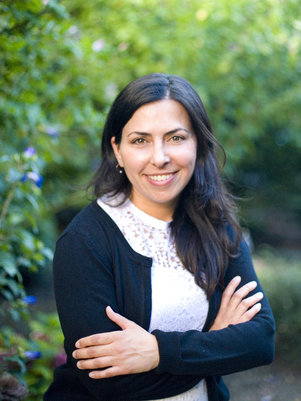
Dr. Haneen Farah is an Associate Professor in the Department of Transport & Planning at Delft University of Technology and co-director of the Traffic and Transportation Safety Lab. She also serves as head of the Traffic Systems Engineering section. Her research focuses on road infrastructure design, road user behavior, and traffic safety, integrating transportation engineering, human factors, and econometrics. Prior to TU Delft, she was a postdoc at KTH Royal Institute of Technology and earned her M.Sc. and Ph.D. in Transportation Engineering from the Technion-Israel Institute of Technology. Her work includes national/international projects like SAMEN (mixed automated/human traffic implications), AfroSAFE (road safety in Africa), and XCARCITY (sustainable city mobility). She teaches undergraduate and graduate courses on road design and traffic safety, including online programs for low/middle-income countries. Farah supervises multiple PhD and Master students in her research areas, contributing to over 50 peer-reviewed publications. Key research themes include infrastructure design for automated vehicles, driver behavior modeling, cyclist safety, and policy implementation of the Safe System approach. Her interdisciplinary approach bridges engineering and psychology to enhance traffic safety and efficiency through advanced analytics and simulation models.
Phuong H. Nguyen is an Associate Professor at the Department of Electrical Engineering at Eindhoven University of Technology (TU/e). He leads the digital Power & Energy Systems (digi-PES) lab, focusing on smart energy systems, distributed control, and IoT integration for future energy grids. His research addresses energy transition challenges, including microgrid optimization, flexibility markets, and data-driven grid management. Nguyen holds a PhD from TU/e (2010) and has held visiting researcher positions at Clemson University. His work contributes to UN SDG goals related to affordable and clean energy. Education: Bachelor's in Electrical Engineering, Hanoi University of Science and Technology (2002) Master's in Electrical Engineering, Asian Institute of Technology (2004) PhD in Electrical Engineering, TU/e (2010) Key Research Areas: Smart Grids and Cyber-Physical Systems Distributed Energy Resource Management Local Energy Markets and Flexibility Provision IoT and Big Data in Energy Systems Awards & Recognition: Best Paper Award SEST 2020 Projects & Grants: REACT-D: Reactive Power Management (Project Manager) Al-driven Applications to Smarten Power System Operation (Project Lead) UNIversity Campus as a Self-Regulated Network (Co-Manager) Labs & Teams: The digi-PES lab develops cyber-physical tools for energy transition, including microgrid simulations, flexibility markets, and grid resilience strategies.
Raquel Fernández is Full Professor of Computational Linguistics and Dialogue Systems at the University of Amsterdam, where she leads the Dialogue Modelling Group at the Institute for Logic, Language & Computation (ILLC). As Vice-Director for Research at ILLC and a Fellow of the ELLIS Society, she bridges computational linguistics, cognitive science, and artificial intelligence through her research on language use in multimodal and conversational contexts. PhD in Computational Linguistics from King's College London Prior research positions at University of Potsdam and Stanford University's CSLI Her work explores how cognitive constraints, social interaction, and perception shape language use, with a focus on: Visually-grounded language processing Multimodal dialogue modeling Model uncertainty and calibration Language grounding in multimodal data Language learning and semantic change Dialogue reference resolution Recent publications analyze multimodal reasoning limitations, cross-lingual knowledge consistency, and uncertainty modeling in dialogue systems. She has received multiple accolades including an ERC Consolidator Grant , NWO VENI/VIDI/Aspasia fellowships , and EMNLP/GenBench awards . Outstanding Paper Award (EMNLP 2023) Best Data Award (GenBench Workshop 2023) ELLIS Society Fellow ERC Consolidator Grant #819455 recipient NWO VENI/VIDI/Aspasia awardee As a leader in academic service, she serves on the SIGDAT Executive Committee and chairs multiple conference committees. Her lab develops models for multimodal dialogue, visual storytelling, and grounded language understanding.
Prof. Tilo Hartmann is a Full Professor at the Department of Communication Science, Vrije Universiteit Amsterdam (VU), affiliated with the Network Institute and Communication Choices, Content and Consequences (CCCC). He holds a PhD from Hanover University of Music, Drama and Media (2005) and has held positions at institutions including the University of Southern California, University of Erfurt, and University of Zurich. His research focuses on immersive technologies like Virtual Reality (VR), examining presence, media awareness, and their psychological impacts. He explores how immersive experiences affect beliefs, wellbeing, and social behaviors, with applications in education (e.g., reducing plastic waste via VR interventions). Key research areas include: presence theory, media psychology, effects of XR technologies, and entertainment’s role in wellbeing. He co-founded the Immersive High Tech Group at VU's Network Institute and contributes to UN Sustainable Development Goals related to sustainable behavior and education. Prof. Hartmann has served on editorial boards of top journals (e.g., Journal of Communication) and professional roles such as secretary of ICA's Game Studies Interest Group. His teaching spans over 12 courses across universities globally, emphasizing curriculum development and student supervision. He holds advanced teaching qualifications (SKO).
Elly Konijn is a Full Professor at the Faculty of Social Sciences and Humanities and Network Institute of Vrije Universiteit Amsterdam, holding the Fenna Diemer-Lindeboom Endowed Chair. As chair of the Media Psychology Amsterdam program, her work bridges media psychology, social robots, affective processing, and adolescent media use . Research Pillars : Relating to media figures, virtual humans, and social robots Media-based reality perceptions and moral standards Adolescent media effects (cyberbullying, video games, body image) Recent Publications explore emotional bonding with robots, narrative complexity in film, and media's impact on adolescent cognition. Her 2025 Communication Theory article introduces a framework for human-artificial others relationships. Scientific Recognition : KNAW/NWO Eurekaprijs (2015) Computable Award (2021) Network Institute Competitive Research Funding (2025) She supervises 16 PhD students and leads projects like ROBOT-BOND (ERC Advanced Grant 2025-2029) and Communicating with Social Robots (2020-2025). Her documentaries (e.g., Alice Cares ) translate research into public discourse.
Dr. Elisabeth (Lies) Wesseling is an Associate Professor in the Department of Literature and Art at the Faculty of Arts and Social Sciences, Maastricht University. She serves as Director of the Centre for Gender and Diversity and leads the international research network PLACIM (Platform for a Cultural History of Children's Media). Her interdisciplinary work bridges literature, cultural history, and the humanities' engagement with science and identity. Her educational background includes MA degrees in English Language and Literature and Comparative Literature (both cum laude) and a PhD in Comparative Literature, all from Utrecht University. Dr. Wesseling’s research focuses on the cultural construction of childhood, particularly through narrative forms in fiction, life writing, and film. She investigates how global adoption narratives forge kinship across cultural boundaries, drawing on postcolonial theory, literary anthropology, and life writing studies. Her work critically examines implicit cultural assumptions about parenthood, orphanhood, and identity, aiming to enrich ethical discourse on transnational adoption. Her recent publications (2020–2023) reflect a strong trajectory in children’s literature, narrative theory, and cultural critique, with a particular emphasis on mermaid myths, adoption memoirs, and postcolonial family formations. These works span edited volumes and journals, demonstrating sustained scholarly engagement. She is actively involved in academic service as congress convenor of the 21st Biennual IRSCL Conference and board member of the International Research Society for Children's Literature. She also belongs to several learned societies including the International Society for Cultural History and the Society for Literature, Science, and Art. Dr. Wesseling has supervised multiple PhD candidates and coordinates research programs funded by the Dutch Science Foundation (NWO). Her teaching spans BA, MA, and MPhil levels, focusing on arts and culture, postcolonialism, and problem-based learning. She has led major educational innovation projects such as ForUM and TAC, enhancing pedagogical practices across institutions. She leads the externally funded research program Emergent Cultural Literacy: Assimilating Children's Literature and directs the Centre for Gender and Diversity, fostering interdisciplinary collaboration on gender, identity, and cultural inclusion within the faculty.
Dr. Ed E. Moret is an Associate Professor of Computational Medicinal Chemistry at Utrecht University, where he serves as Managing Director of the Utrecht Institute for Pharmaceutical Sciences. He is a member of the Departmental Executive Board and Chair of the Board of Examiners of the School of Pharmacy. His academic career spans over three decades with significant contributions to pharmaceutical sciences. Utrecht University, Utrecht Institute for Pharmaceutical Sciences School of Pharmacy, Department of Chemical Biology and Drug Discovery Managing Director since January 2010 Dr. Moret's educational background includes completing Gymnasium-b at Gymnasium Camphusianum in Gorinchem in 1979, followed by pharmacy studies at Utrecht University until 1988. He earned his PhD in 1993 with research on calculations and simulations of DNA-alkylating cytostatics under supervision of Prof. L.H.M. Janssen and Prof. J.P.A.E. Tollenaere. He also conducted postdoctoral research at the Scripps Research Institute with Prof. A.J. Olson. His primary research interests focus on molecular recognition, particularly in auto-immune diseases, with expertise spanning computational medicinal chemistry, computer-aided drug discovery, cheminformatics, and bioinformatics. Dr. Moret's work bridges the gap between theoretical calculations and experimental validation in drug design. His research portfolio demonstrates a consistent trajectory from fundamental molecular interactions to applied drug discovery, with particular emphasis on enzyme inhibitors, carbohydrate-protein interactions, and molecular recognition processes. Analysis of his publication record reveals a strong focus on structure-based drug design, with significant contributions to the development of inhibitors for enzymes like β-glucocerebrosidase, NNMT, and neuraminidase. His work spans multiple therapeutic areas including lysosomal storage disorders, cancer metabolism, and infectious diseases. The interdisciplinary nature of his research is evident in the integration of computational approaches with experimental validation across biochemistry, pharmacology, and medicinal chemistry. Teacher of the Year (awarded three times by Pharmacy students) Member of editorial boards for Medicines and Conceptuur journals Secretary of Board of FIGON (2016) Secretary of Raad voor de Farmaceutische Wetenschappen (2024) Member of Board of Stichting Farmaceutische Erfgoed (2024) Dr. Moret has been actively involved in educational innovation, developing and coordinating the master's programme Drug Innovation, the profile Drug Regulatory Sciences, and the Honours programme Pharmaceutical Sciences. He has taught courses for pharmacy, chemistry, UCU and medical sciences students, as well as PhD courses in bioinformatics and computer-aided drug discovery. His educational contributions include developing an inquiry-based elective course on drug discovery, for which he published educational research. He holds BKO and SKO teaching qualifications and participated in the Centre of Excellence in University Teaching program. As Managing Director of the Utrecht Institute for Pharmaceutical Sciences, Dr. Moret leads research initiatives across chemical biology, drug discovery, and pharmaceutical sciences. His leadership extends to multiple advisory and editorial roles within the pharmaceutical research community, reflecting his significant contributions to both academic and professional spheres of pharmaceutical sciences.
Prof. Sander Bohte is a part-time full professor of Computational Neuroscience at the University of Amsterdam (Swammerdam Institute of Life Sciences) and an honorary full professor of Bio-inspired Neural Networks at the University of Groningen. He serves as a Scientific Staff Member and Group Leader in the Machine Learning department at CWI, Amsterdam. His work bridges computational neuroscience and machine learning with a focus on continuous-time information processing. Key research interests include: Spiking Neural Networks with predictive coding and multi-compartment models Biologically Plausible Learning in recurrent and deep architectures Working Memory modeling via reinforcement learning Neuromorphic Computing for real-time systems and GPU acceleration His recent publications highlight trends in neural adaptation , predictive coding , and SNN hardware-software co-design . Awards include the Veni Innovational Research Grant (2004) and ERCIM grant (2013) . He actively supervises MSc theses and leads grants like the NWO KIC project 'Selfhealing Neuromorphic Systems' (2024).
Dr. Reine van der Wal is an Associate Professor at the Faculty of Social and Behavioural Sciences , Utrecht University, specializing in Social, Health and Organisational Psychology . Her work focuses on the intersection of social relationships, forgiveness, and organizational dynamics. Research Themes: Forgiveness, interpersonal relationships, workplace psychosocial risks, and interdisciplinary teaching. Collaborations: Graduate School of Life Sciences, UWV (Dutch Employee Insurance Agency), Netherlands Labour Authority. Her research explores relationship imbalances in organizations and families, including restoring social safety after trust breakdowns, forgiveness in post-divorce co-parenting, and workplace aggression. She integrates findings into policy development on social safety at Utrecht University. Key Publications (2024-2017) address forgiveness in late childhood, romantic relationships, work-family guilt during the pandemic, and dyadic coping in chronic illness. These works span psychology, organizational ethics, and developmental studies, emphasizing emotional regulation and social cohesion. Scientific Awards: SPSP Service Award (In-Mind Magazine, 2016) Advising: Supervises PhD research on social safety in academia (Julia Houben) and institutional trust (Michiel Kuik). Involved in workplace psychosocial risk research with Netherlands Labour Authority.
Tessa H.S. Eysink is a Full Professor in Instructional Technology, affiliated with the Digital Society Institute. Her research focuses on educational technology, inquiry-based learning, and technology-enhanced STEM education for children. 2024 Research Highlights : Investigated physiological and gaze metrics for learner emotions in Frontiers in Psychology Studied hypothesis generation in simulation-based learning in the Journal of Research in Science Teaching Co-developed the gamified Science Chaser app for STEM engagement at the ACM Interaction Design and Children Conference Her work bridges psychology, computer science, and education, emphasizing multimedia learning and cognitive modeling. No scientific awards or student supervision details were explicitly mentioned in the provided texts.
Nima Monshizadeh Naini is a Professor in the Faculty of Science and Engineering at the University of Groningen. He holds the position of Chair of the IEM Program Committee and serves on the boards of ENTEG and YSEN. His academic journey includes a PhD in Control Systems from the University of Groningen (2013, Cum Laude), followed by postdoctoral research at the University of Cambridge (2016-2017) and the University of Groningen (2014). He has been an Assistant Professor since 2018 and was awarded the NWO Open Competition Grant in 2021. His research focuses on Cyber-Physical Human Systems (CPHS) , addressing two core areas: (1) Coordination of self-interested users in power systems and traffic networks using dynamic information design and game-theoretic mechanisms; and (2) Privacy-aware control and optimization with tailored encryption methods for dynamic systems. Applications include energy markets, microgrids, and smart grids. He has published extensively in top venues like IEEE CDC and Automatica, with key topics including privacy-preserving algorithms, distributed control, and optimal intervention design. His work contributes to UN Sustainable Development Goals related to affordable energy and responsible consumption. Education: PhD in Control Systems, University of Groningen (2013) Research Associate, University of Cambridge (2016-2017) Postdoctoral Researcher, University of Groningen (2014) Awards: Cum Laude distinction for PhD thesis (2013) NWO Open Competition Grant (2021) Advising & Grants: Supervised 5 PhD students Editorial roles in IEEE journals and conference proceedings Labs/Teams: Leading the Cyber-physical systems group within the Smart Manufacturing Systems institute.
Joaquin Vanschoren is an Associate Professor of Machine Learning at Eindhoven University of Technology (TU/e), affiliated with the Faculty of Mathematics and Computer Science. He leads the Automated Machine Learning group and serves as Education Director for the Data Science program. His research focuses on democratizing AI, algorithm selection, and open science platforms like OpenML. He has received awards including the Dutch Data Prize and Amazon Research Award. Education: PhD in Engineering (KU Leuven, Belgium), MSc in Computer Science (KU Leuven). Research visits included IBM, Amazon Research, and universities globally. Research Interests: Machine Learning, Automated ML, Meta-learning, AI Safety, Data-centric AI. He co-founded OpenML and chairs MLCommons' AI Safety working group. Key Projects: NeurIPS Datasets and Benchmarks track, MLCommons initiatives, OpenML platform. Supervised 78 research works and authored 200+ papers. Awards: Dutch Data Prize (2016), Amazon Research Award (2019), Microsoft Azure Research Awards (2016–2017). Labs/Teams: OpenML open source team, MLCommons collaborations, Automated Machine Learning group at TU/e.
Andrea Continella is an Associate Professor at the Faculty of Electrical Engineering, Mathematics and Computer Science of the University of Twente, where he contributes to the International Secure Systems Lab (iSecLab). His research focuses on systems security, particularly embedded firmware security, Android app security, malware detection, and program analysis techniques for vulnerability discovery. Ph.D. in Computer Science and Engineering, Politecnico di Milano (cum laude) Postdoctoral Researcher, Computer Science Department, UC Santa Barbara Visiting Researcher, School of Computer Science, University of Sydney Key research contributions include: Developing automated analysis techniques for embedded firmware (KARONTE, ShieldFS) Creating privacy leak detection mechanisms for mobile applications Designing ransomware defense systems using self-healing filesystems Advancing IoT security through misconfiguration detection (S3 buckets) and protocol analysis Pioneering semi-supervised methods for network traffic fingerprinting (FlowPrint) Scientific awards: Dutch Cyber Security Best Research Paper Award 2024 Runner-up USENIX Security Distinguished Reviewer Award 2024 Professional activities: Keynote speaker on firmware security (2024) Member of IPN Cyber Security Special Interest Group Oral presentations on automated vulnerability research (2023)
Ewa Miedzobrodzka is a postdoctoral researcher at Utrecht University's Faculty of Social and Behavioural Sciences , specializing in the JEDi consortium project (Youth and Digitalization). She holds a PhD in Communication Science from Vrije Universiteit Amsterdam (2023) and has held academic roles at multiple institutions. Current position: Researcher at Utrecht University (2023-present) Previous roles: Vrije Universiteit Amsterdam (2013-2023), University of Amsterdam (2020-2022) Research Focus: Investigates digital media's impact on adolescent development through behavioral, neuroimaging (ERP), and longitudinal studies. Key areas include: Violent video game effects on empathy and social cognition Digital inequality during pandemic education Self-regulated learning in digital environments Cross-contextual media landscape analysis Academic Contributions: Published 13+ research outputs (journal articles, book chapters, reports) with international collaborators. Active in academic conferences and media outreach. Teaching & Supervision: Supervised 13+ Master's students across institutions, taught courses on media psychology and assessment methods, and contributed to systematic reviews on pandemic educational impacts.
Afra Alishahi is a Full Professor at Tilburg University's Department of Cognitive Science and Artificial Intelligence within the Tilburg School of Humanities and Digital Sciences. Her research focuses on computational models of human language acquisition and grounded language learning, leveraging neural models to explore how language processing and acquisition occur. She has held roles including Assistant Professor at Tilburg University (since 2011) and Postdoctoral Fellow at Saarland University (2008-2011). Her work bridges computational linguistics, cognitive science, and artificial intelligence, with contributions to understanding language learning mechanisms through models that integrate visual, auditory, and linguistic data. Education: PhD (university unspecified), with prior academic roles in Iran and Germany. Awards: CoNLL 2017 Best Paper Award, 2023 Outstanding Paper Award, NWO Aspasia Grant (2015), and NWO Natural Artificial Intelligence Grant (2015). Her research has been supported by grants such as the Dutch National Research Agenda-funded project on interpreting deep learning models for text and sound. Research Interests: Grounded language learning, interaction effects in language acquisition, and neural model interpretability. Key areas include multi-modal learning (e.g., linking speech to visual scenes), computational modeling of child language learning, and probing neural networks for linguistic knowledge. She co-organized workshops like BlackboxNLP (2018-2020) and has authored over 60 publications, including influential works on phonology encoding in neural models and gender disambiguation in machine translation. Teaching: Courses include Cognitive Models of Language Learning , Computational Linguistics , and Language, Cognition & Computation . She advises master's theses and leads projects in data science and AI. Lab/Team: Leads research on computational modeling, collaboration with interdisciplinary teams (e.g., with Grzegorz Chrupała, Afsaneh Fazly), and involvement in initiatives like the Interpreting Deep Learning Models for Text and Sound project.