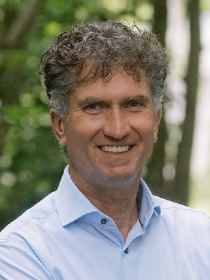
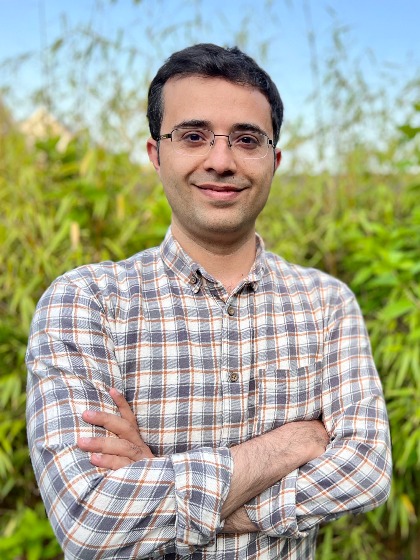
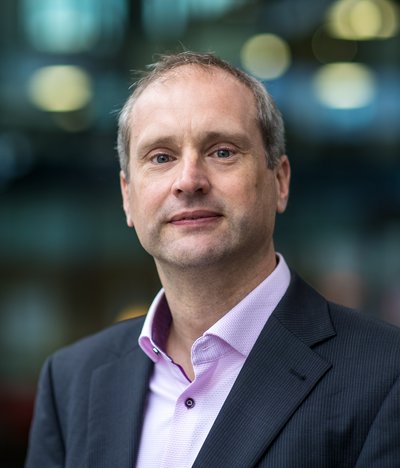
Phuong H. Nguyen is an Associate Professor at the Department of Electrical Engineering at Eindhoven University of Technology (TU/e). He leads the digital Power & Energy Systems (digi-PES) lab, focusing on smart energy systems, distributed control, and IoT integration for future energy grids. His research addresses energy transition challenges, including microgrid optimization, flexibility markets, and data-driven grid management. Nguyen holds a PhD from TU/e (2010) and has held visiting researcher positions at Clemson University. His work contributes to UN SDG goals related to affordable and clean energy. Education: Bachelor's in Electrical Engineering, Hanoi University of Science and Technology (2002) Master's in Electrical Engineering, Asian Institute of Technology (2004) PhD in Electrical Engineering, TU/e (2010) Key Research Areas: Smart Grids and Cyber-Physical Systems Distributed Energy Resource Management Local Energy Markets and Flexibility Provision IoT and Big Data in Energy Systems Awards & Recognition: Best Paper Award SEST 2020 Projects & Grants: REACT-D: Reactive Power Management (Project Manager) Al-driven Applications to Smarten Power System Operation (Project Lead) UNIversity Campus as a Self-Regulated Network (Co-Manager) Labs & Teams: The digi-PES lab develops cyber-physical tools for energy transition, including microgrid simulations, flexibility markets, and grid resilience strategies.
Bram Duivenvoorde is an Associate Professor at the Molengraaff Institute for Private Law , Utrecht University , specializing in advertising law , consumer law , and e-commerce . He holds a PhD from the University of Amsterdam (2014) and combines academic research with practical legal experience, including roles as an attorney-at-law at Hoogenraad & Haak (2014-2020) and interim legal counsel at Heineken International (2018). His work focuses on digital society , personalized marketing , and AI regulation in consumer contexts. Education : PhD (UvA, 2014), LLM (Utrecht, 2009), LLB (Utrecht, 2007) Key Research Areas : Advertising Law, Consumer Law, Digital Regulation, EU Law, Personalized Marketing Recent publications analyze generative AI , deepfakes , and DSA compliance , emphasizing consumer protection in evolving digital landscapes. He supervises PhD candidates Thijs Kelder and Jorn Torenbosch and leads the LLM Honours Programme . Duivenvoorde contributes to European consumer law through RENFORCE initiatives and serves as Editor for journals like Intellectuele Eigendom en Reclamerecht .
Prof. Jan Theeuwes is a Full Professor of Cognitive Psychology at the Vrije Universiteit Amsterdam's Faculty of Behavioural and Movement Sciences, leading the ERC-funded research group on statistical learning and attention. He holds additional roles as Distinguished Visiting Research Professor at the William James Center for Research (Lisbon) and Visiting Professor at Zhejiang University (China). With over 474 publications and two ERC Advanced Grants (2013 & 2019), his work spans visual attention, statistical learning, and applied human factors in road design. He pioneered the 'Self-Explaining Roads' concept, revolutionizing global road safety design, and co-developed Open Sesame, a widely used open-source experiment builder. His research integrates EEG, fMRI, and computational modeling, addressing topics like distractor suppression, emotion, and leadership influence. Over 25 PhD students have graduated under his mentorship, many securing academic roles across Europe. Education: Cum laude degrees in Experimental Psychology (Tilburg University) and a PhD (VU Amsterdam, 1992). Key awards include the Bertelson Award (2001) and KNAW membership (2010). He advises the Dutch Department of Transportation and founded the Institute for Brain and Behavior Amsterdam (IBBA) in 2016. Ancillary roles include leadership in European psychological societies and consultancy for Attention Architects, applying eye-tracking research in corporate settings.
Prof. Koert van Ittersum is a Professor of Marketing and Consumer Well-Being at the Faculty of Economics and Business, University of Groningen (since 2013). He holds a PhD from Wageningen University (2001) and previously worked at the University of Illinois and Georgia Institute of Technology. His research focuses on consumer behavior, particularly linking marketing strategies to consumer well-being through healthier and sustainable diets. Key collaborations include the Centre for Public Health in Economics and Business and the Aletta Jacobs School of Public Health (RUG). Research interests center on consumer psychology, health, sustainability, and spending behaviors. Notable projects involve interventions with Dutch retailers to reduce food waste via transparency tools and studying decision-making dynamics in grocery shopping. Recent work explores self-control mechanisms, pride/guilt effects, and health-promoting digital interventions. Publications span journals like Journal of Consumer Research , Annals of Internal Medicine , and Preventive Medicine , addressing topics from food waste to mHealth adoption. His work bridges academic research with real-world applications in public health and retail strategy.
Dr. Arnout Geeraert is Assistant Professor at Utrecht University’s Utrecht School of Governance, specializing in the intersection of Law, Economics, and Governance . His research focuses on public-private interactions in global governance, particularly the European Union’s role as an international actor in sport-related policy domains. Active in Sport and Society research group Developed benchmarking tools: Sports Governance Observer , National Sports Governance Observer , and National Anti-Doping Governance Observer Geeraert’s work has been published in leading journals such as Journal of European Public Policy , Public Administration , and European Sport Management Quarterly . His book The EU in International Sports Governance (Palgrave, 2016) and co-edited Good Governance in Sport (Routledge, 2022) are key contributions to the field. He serves as president of the Integrity Commission of the Belgian Football Association and has held advisory roles for the UNESCO MINEPS VI Working Group , IPACS Task Force , Flemish Government Committee , and EU Expert Group . His expertise centers on enhancing compliance with good governance principles in sport federations, addressing corruption risks, and analyzing EU interventions in FIFA/UEFA. Recent publications explore topics like collaborative governance , Flemish nationalism through sport , and EU sectoral diplomacy , reflecting his multidisciplinary approach to sport policy and institutional analysis.
Dr. Ed E. Moret is an Associate Professor of Computational Medicinal Chemistry at Utrecht University, where he serves as Managing Director of the Utrecht Institute for Pharmaceutical Sciences. He is a member of the Departmental Executive Board and Chair of the Board of Examiners of the School of Pharmacy. His academic career spans over three decades with significant contributions to pharmaceutical sciences. Utrecht University, Utrecht Institute for Pharmaceutical Sciences School of Pharmacy, Department of Chemical Biology and Drug Discovery Managing Director since January 2010 Dr. Moret's educational background includes completing Gymnasium-b at Gymnasium Camphusianum in Gorinchem in 1979, followed by pharmacy studies at Utrecht University until 1988. He earned his PhD in 1993 with research on calculations and simulations of DNA-alkylating cytostatics under supervision of Prof. L.H.M. Janssen and Prof. J.P.A.E. Tollenaere. He also conducted postdoctoral research at the Scripps Research Institute with Prof. A.J. Olson. His primary research interests focus on molecular recognition, particularly in auto-immune diseases, with expertise spanning computational medicinal chemistry, computer-aided drug discovery, cheminformatics, and bioinformatics. Dr. Moret's work bridges the gap between theoretical calculations and experimental validation in drug design. His research portfolio demonstrates a consistent trajectory from fundamental molecular interactions to applied drug discovery, with particular emphasis on enzyme inhibitors, carbohydrate-protein interactions, and molecular recognition processes. Analysis of his publication record reveals a strong focus on structure-based drug design, with significant contributions to the development of inhibitors for enzymes like β-glucocerebrosidase, NNMT, and neuraminidase. His work spans multiple therapeutic areas including lysosomal storage disorders, cancer metabolism, and infectious diseases. The interdisciplinary nature of his research is evident in the integration of computational approaches with experimental validation across biochemistry, pharmacology, and medicinal chemistry. Teacher of the Year (awarded three times by Pharmacy students) Member of editorial boards for Medicines and Conceptuur journals Secretary of Board of FIGON (2016) Secretary of Raad voor de Farmaceutische Wetenschappen (2024) Member of Board of Stichting Farmaceutische Erfgoed (2024) Dr. Moret has been actively involved in educational innovation, developing and coordinating the master's programme Drug Innovation, the profile Drug Regulatory Sciences, and the Honours programme Pharmaceutical Sciences. He has taught courses for pharmacy, chemistry, UCU and medical sciences students, as well as PhD courses in bioinformatics and computer-aided drug discovery. His educational contributions include developing an inquiry-based elective course on drug discovery, for which he published educational research. He holds BKO and SKO teaching qualifications and participated in the Centre of Excellence in University Teaching program. As Managing Director of the Utrecht Institute for Pharmaceutical Sciences, Dr. Moret leads research initiatives across chemical biology, drug discovery, and pharmaceutical sciences. His leadership extends to multiple advisory and editorial roles within the pharmaceutical research community, reflecting his significant contributions to both academic and professional spheres of pharmaceutical sciences.
Dr. Reine van der Wal is an Associate Professor at the Faculty of Social and Behavioural Sciences , Utrecht University, specializing in Social, Health and Organisational Psychology . Her work focuses on the intersection of social relationships, forgiveness, and organizational dynamics. Research Themes: Forgiveness, interpersonal relationships, workplace psychosocial risks, and interdisciplinary teaching. Collaborations: Graduate School of Life Sciences, UWV (Dutch Employee Insurance Agency), Netherlands Labour Authority. Her research explores relationship imbalances in organizations and families, including restoring social safety after trust breakdowns, forgiveness in post-divorce co-parenting, and workplace aggression. She integrates findings into policy development on social safety at Utrecht University. Key Publications (2024-2017) address forgiveness in late childhood, romantic relationships, work-family guilt during the pandemic, and dyadic coping in chronic illness. These works span psychology, organizational ethics, and developmental studies, emphasizing emotional regulation and social cohesion. Scientific Awards: SPSP Service Award (In-Mind Magazine, 2016) Advising: Supervises PhD research on social safety in academia (Julia Houben) and institutional trust (Michiel Kuik). Involved in workplace psychosocial risk research with Netherlands Labour Authority.
Rob van Beers is an Assistant Professor at the Faculty of Behavioural and Movement Sciences at Vrije Universiteit Amsterdam, with affiliations to Neurocontrol, IBBA, and AMS - Sports. His research focuses on human motor control, spatial perception, and computational modeling using Bayesian approaches to understand sensory-motor integration under uncertainty. He holds ancillary roles as a Researcher at Radboud University (Nijmegen) since 2015 and serves on the Editorial Board of the Journal of Neurophysiology since 2015. His work contributes to UN Sustainable Development Goals related to health and well-being. Key research interests include motor learning dynamics, sensorimotor adaptation, and the neural basis of spatial orientation. Recent studies explore Alzheimer’s impacts on motor adaptation and Bayesian inference in vestibular path integration. Teaching responsibilities include courses on linear systems dynamics, physical measurement techniques, and motor systems regulation. His work spans 42 peer-reviewed articles, with datasets published on platforms like Dryad and Zenodo.
Tajda Laure is a Researcher at the Erasmus School of Social and Behavioural Sciences , Erasmus University Rotterdam. Her work focuses on emotion regulation , mental health , and digital interventions for university students. Specializes in mobile mental health applications Active in mixed methods research design Collaborates with experts like Dr. M. Boffo and Prof. R.C.M.E. Engels Research Trends : Recent articles highlight her development of the ROOM mental health app, optimization of transdiagnostic emotion regulation interventions, and methodologies involving microrandomized trials and mixed method studies . Her work intersects digital health , positive psychology , and mindfulness practices .
Geoffrey Nelissen is an Assistant Professor in the Department of Mathematics and Computer Science at Eindhoven University of Technology. He holds additional roles as a Research Scientist and Investigador Auxiliar at INESC TEC (Portugal), contributing to interdisciplinary research in real-time systems. His work focuses on schedulability analysis, parallel task execution, and real-time communication protocols, with applications in embedded systems and multicore architectures. Research Interests: Real-Time Scheduling Response Time Analysis Multi-core and Parallel Systems Time-Sensitive Networking (TSN) Formal Verification Recent work emphasizes schedule abstraction frameworks, memory contention analysis, and deterministic communication protocols. His research has received recognition through multiple best paper awards including ICESS 2021 and RTAS 2022. He actively contributes to conferences like RTSS and ECRTS while teaching courses on Real-Time Systems and Operating Systems. Collaborations span European institutions with focus on embedded systems, autonomous driving, and safety-critical applications. Current projects explore holistic approaches to WCRT analysis and resilient real-time communication architectures.
Dr. Irene Kamara is an Assistant Professor at Tilburg Law School and TILT (Tilburg Institute for Law, Technology, and Society) at Tilburg University. She holds a joint doctorate from Tilburg University and Vrije Universiteit Brussel (VUB), specializing in data protection standardization. Irene is an affiliated researcher at VUB’s Law, Science, Technology, and Society (LSTS) group and serves as Research Coordinator at TILT since August 2022. Education: PhD in Law with a focus on Data Protection Standardization (Tilburg University & VUB, 2021) LL.B. in Law (Democritus University of Thrace) MSc in International and European Studies (University of Piraeus) Research Interests: Irene examines the intersection of technology and human rights, particularly cyberviolence (cyberstalking, image-based abuse), cybersecurity governance, AI ethics, and data protection law. Her work emphasizes EU legal frameworks, technical standards, and soft law instruments. Recent projects include analyzing child cyberbullying legislation across EU states and developing privacy-preserving AI frameworks through the ENCRYPT Horizon Europe project. Teaching: Course coordinator for Cybercrime (LL.M. Law & Technology) and Regulating Cybersecurity (MSc Artificial Intelligence & Cybersecurity). Supervises PhD and master’s theses. Professional Activities: Member of ENISA Experts List, Netherlands Network for Human Rights Research (NNHRR), and European Academy for Standardisation (EURAS) Evaluator for EU-funded proposals on societal security Editorial Board member of the Journal of Standardisation Awards & Grants: 2025 KNAW Early Career Partnership Grant 2021 CEN CENELEC Standards+Innovation Individual Researcher Award 2023 Nominated for Praemium Erasmianum Foundation Prize Current Projects: CArE Project : Combating technology-facilitated cyberviolence (2023–2027) ENCRYPT Project : Privacy-preserving AI frameworks (2022–2025) HE Edu4Standards.eu : Standardization education initiatives (2024–2026)
Dr. Odilia Laceulle is an Associate Professor in Developmental Psychology at Utrecht University's Faculty of Social and Behavioural Sciences. She is affiliated as a senior researcher at the Center for Adolescent Psychiatry, Reinier van Arkel in Den Bosch and at HYPE, GGZCentraal in Amersfoort. Additionally, she serves as one of the community chair holders of Utrecht University strategic theme 'Dynamics of Youth', domain 'Thriving & Healthy Youth'. Dr. Laceulle investigates youth developmental pathways with a transactional approach, examining both person characteristics and environmental factors. Her research explores how personality traits interact with environmental influences such as stress, trauma, and social relationships to affect mental health outcomes in young people. She has a particular focus on borderline personality disorder features in youth, developmental milestones, and the impact of social environments on adolescent development. Her recent publications demonstrate a strong research trajectory focusing on personality pathology in youth, cultural identity conflict among refugees, household chaos and borderline features, and the relationship between social support and mental health. She employs diverse methodologies including longitudinal studies, clinical assessments, and transactional models to understand adolescent development. Among her notable achievements is obtaining her PhD cum laude from the University of Groningen for research into adolescent adaptability. She has been actively involved in research into the effects of the coronavirus pandemic on young people through the 'Youth Challenge' of the National Science Agenda. Dr. Laceulle collaborates extensively with researchers across institutions, particularly with colleagues at Utrecht University including N. Koster, C.J. Hessels, and M.A.G. van Aken. Her work appears regularly in high-impact journals across psychology, psychiatry, and developmental science.
Nima Monshizadeh Naini is a Professor in the Faculty of Science and Engineering at the University of Groningen. He holds the position of Chair of the IEM Program Committee and serves on the boards of ENTEG and YSEN. His academic journey includes a PhD in Control Systems from the University of Groningen (2013, Cum Laude), followed by postdoctoral research at the University of Cambridge (2016-2017) and the University of Groningen (2014). He has been an Assistant Professor since 2018 and was awarded the NWO Open Competition Grant in 2021. His research focuses on Cyber-Physical Human Systems (CPHS) , addressing two core areas: (1) Coordination of self-interested users in power systems and traffic networks using dynamic information design and game-theoretic mechanisms; and (2) Privacy-aware control and optimization with tailored encryption methods for dynamic systems. Applications include energy markets, microgrids, and smart grids. He has published extensively in top venues like IEEE CDC and Automatica, with key topics including privacy-preserving algorithms, distributed control, and optimal intervention design. His work contributes to UN Sustainable Development Goals related to affordable energy and responsible consumption. Education: PhD in Control Systems, University of Groningen (2013) Research Associate, University of Cambridge (2016-2017) Postdoctoral Researcher, University of Groningen (2014) Awards: Cum Laude distinction for PhD thesis (2013) NWO Open Competition Grant (2021) Advising & Grants: Supervised 5 PhD students Editorial roles in IEEE journals and conference proceedings Labs/Teams: Leading the Cyber-physical systems group within the Smart Manufacturing Systems institute.
Dr. Annabelle Christiaens serves as a Lecturer in the Department of Youth and Family at Utrecht University's Faculty of Social and Behavioural Sciences. She currently contributes to the "Pedagogy of Hope" project, where she investigates adolescents' attitudes toward climate and sustainability through the lens of eco-identity development. Her academic journey began with a Bachelor in Psychology at Tilburg University (2013-2017, with distinction), followed by a Research Master in Psychology: Individual Differences and Assessment (2017-2019, with honors). She completed her PhD at Utrecht University in 2024 with the dissertation "Navigating School Transitions: The Formation and Maintenance of Adolescents' Educational Identity," supervised by Dr. Stefanie Nelemans and Professor Dr. Susan Branje. Dr. Christiaens' research expertise centers on educational identity development during critical school transitions, with particular focus on how adolescents construct and maintain their educational identities. Her work employs sophisticated longitudinal methodologies and advanced statistical techniques including latent class/profile analysis, multilevel modeling, and structural equation modeling. She has made significant contributions to understanding identity processes through the development and validation of measurement tools like the Educational Identity Processes Scale (EIPS). Analysis of her publication record reveals a clear trajectory from foundational work on identity measurement and developmental patterns toward increasingly complex examinations of the interplay between identity formation, psychological needs, and environmental factors. Her recent work demonstrates growing attention to the role of basic psychological needs in identity construction and the reciprocal relationships between school environments and identity development. Dr. Christiaens maintains active engagement with the academic community through multiple service roles: Local Committee member for the ISRI conference 2024 Co-organizer of the CAS Studies Research Day Member of the CAS educational advisory committee Her commitment to methodological excellence is evident through her participation in numerous specialized training programs, including summer schools on multilevel analysis, SEM modeling in Mplus, and longitudinal analysis methods. Her current research on eco-identity represents an important expansion of her work into sustainability education, demonstrating the adaptability and relevance of identity frameworks to contemporary societal challenges.
Frank Willems is a Full Professor of Systems and Control Technology and Chair of Integrated Powertrain Control at Eindhoven University of Technology (TU/e), holding a part-time position realized with support from TNO. He is affiliated with the Control Systems Technology group within the Department of Mechanical Engineering, and also contributes to EIRES and EAISI research initiatives. Dr. Willems obtained his MSc (1995) and PhD (2000) in Mechanical Engineering from Eindhoven University of Technology (TU/e). His academic journey continued with a position at TNO Automotive, where he currently serves as a principal scientist in powertrain control. Professor Willems' research focuses on developing optimal and robust control methods for automotive powertrain systems. His work addresses the critical challenge of integrating energy and emission management strategies at the powertrain system level, which is essential as traditional methods become infeasible due to increasingly strict environmental regulations. Key research areas include control-oriented modeling of internal combustion engines, cylinder pressure-based combustion control, and integrated energy and emission management. His research aims to minimize development time and costs through model-based control methods, with the ultimate goal of achieving auto-calibration where powertrain energy efficiency is optimized online using smart sensors and route information. Dr. Willems serves as an Associate Editor for Control Engineering Practice and is an active member of the IFAC Technical Committee Automotive Control. He has participated in numerous international program committees for conferences including the IFAC Conference on 'Engine and Powertrain Control, Simulation and Modeling (E-CoSM)', IFAC Symposium 'Advances in Automotive Control (AAC)', and 'Symposium for Combustion Control (SCC)'. His research has been supported by organizations including the Dutch Technology Foundation (STW) and DENSO Japan. At TU/e, Professor Willems teaches courses on 'Optimal control and reinforcement learning' and 'Advanced control for future heavy-duty powertrains.' His research group, part of the Control Systems Technology group, focuses on developing self-learning powertrain control systems to address the complexity and diversity of future ultra-clean and efficient vehicles.