Gerda de Vries is a Professor in the Department of Mathematics & Statistical Sciences at the University of Alberta, Faculty of Science. Her research focuses on mathematical physiology, dynamical systems, and mathematical modeling, particularly in cellular biophysics, pattern formation, and systems biology. She has contributed extensively to understanding complex biological systems through interdisciplinary approaches combining mathematics and biology. Her work spans applications in radiation biology (e.g., cell cycle dynamics and low-dose radiation effects), biophysics (microtubule organization, motor proteins), ecology (predator-prey interactions, forest fire modeling), and education (adapting primary literature for STEM teaching). Recent research highlights include analyzing saddle-node bifurcations, bystander effects in radiation, and collective behavior in animal groups. De Vries has published over 50 peer-reviewed articles since 2000, with a focus on bridging abstract mathematical theory to concrete biological phenomena. Notable contributions include models of pancreatic β-cell dynamics, immune system versatility, and educational frameworks for mathematical biology. Her academic career includes leadership in curriculum development and interdisciplinary research, though no specific grants or awards are explicitly listed in the provided information.
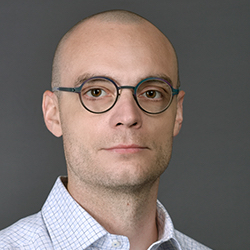
Jörg Spenkuch is an Associate Professor of Managerial Economics & Decision Sciences at Kellogg School of Management, Northwestern University, where he has been since 2013. He holds a Ph.D. in Economics (2013) and M.A. (2009) from the University of Chicago, and dual B.A. degrees in Economics and Business Administration (2007) from the University of St. Gallen, Switzerland. Education: Ph.D., 2013, Economics, University of Chicago M.A., 2009, Economics, University of Chicago B.A., 2007, Economics, University of St. Gallen B.A., 2007, Business Administration, University of St. Gallen Professor Spenkuch's research bridges political economy and applied microeconomics , with a focus on ideological behavior, strategic decision-making, and social dynamics. His work examines topics like: Political Economy: Campaign finance, electoral accountability, and ideological sorting. Behavioral Economics: Satisficing behavior, memory-driven choices, and strategic voting. Public Policy: School desegregation effects, bureaucratic performance, and immigration-crime linkages. His recent publications analyze: Long-term ideological shifts from 1975 school desegregation (2025 working paper). Memory premiums in decision-making (2025 working paper). Complexity's role in chess strategy (2024 Review of Economic Studies ). Political accountability during natural disasters (2025 American Economic Journal ). Scientific Recognition: MinE Best Paper Award (European Economic Association) Chair's Core Teaching Award Deutschlands "Top 40 unter 40" (Capital magazine) FEEM Award (European Economic Association) Best Paper Award, RGS Doctoral Conference At Kellogg, he teaches Leadership and Crisis Management (PACT-440-5) and Business Analytics (DECS-435-0). His work has been published in top journals like Econometrica , American Economic Review , Quarterly Journal of Economics , and Review of Economic Studies , covering topics from partisan spatial sorting to expressive vs. strategic voting behavior.
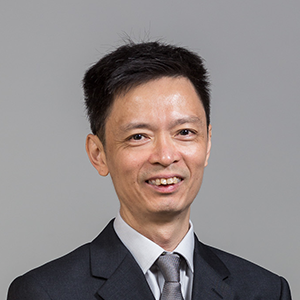
CHAN Chee Yong is an Associate Professor in the Department of Computer Science at the School of Computing, National University of Singapore (NUS) . He earned his Ph.D. in Computer Science from the University of Wisconsin-Madison and holds B.Sc. and M.Sc. degrees in Computer Science from NUS. Education : Ph.D., Computer Science, University of Wisconsin-Madison M.Sc., Computer Science, NUS B.Sc., Computer Science (1st Class Honours), NUS His research focuses on database systems , emphasizing query processing and optimization , transaction management , and database usability . He has contributed extensively to XML data dissemination, skyline computation, and multicore database performance optimization, with publications in venues like ACM SIGMOD, VLDB, and IEEE ICDE. Recent publications show increasing emphasis on join optimization , transaction healing , and spatial-keyword queries , reflecting trends in multicore systems, complex query processing, and XML data management. His work combines theoretical rigor with practical applications in distributed databases and data engineering. Notable professional roles include Associate Editor for the VLDB Journal , ACM SIGMOD Record , and IEEE Transactions on Knowledge and Data Engineering . He has served on program committees for major conferences like SIGMOD, ICDE, and VLDB across 2003-2026. Dr. Chan has supervised 9 PhD students and 10 M.Sc./M.Comp. students , including WANG TaiNing (2021), LI Meiying (2020), and TRAN Quoc Trung (2011). His advisees have been placed in institutions like the Institute for Infocomm Research and Huawei Shannon Lab.
Christine ABDALLA MIKHAEIL is an Assistant Professor in the Department of Management of Information Systems at IÉSEG School of Management in France. She holds dual Ph.D. degrees in Business Administration with a focus on Information Technology from the University of Paris Dauphine (France) and Georgia State University (USA), alongside advanced degrees in Business Consulting and Administration from Paris Dauphine. Her research focuses on collective action dynamics in social media, cybersecurity and privacy challenges, artificial intelligence applications, and disinformation propagation. Recent work explores the adoption of privacy-enhancing technologies (PETs), paradoxes in hybrid work visibility, and data adequacy in qualitative IS research. She has published in leading journals such as Information Systems Journal and Information and Organization . Her articles reflect a strong emphasis on understanding socio-technical systems through interdisciplinary lenses, combining behavioral theories with digital technology analysis. No specific awards or grant details are mentioned in her profile. She currently advises no formally listed students.
Dr. Joe F. Lutkenhaus is a University Distinguished Professor and Chair of the Department of Microbiology, Molecular Genetics and Immunology at the University of Kansas School of Medicine. A member of the American Academy of Microbiology (2002) and the National Academy of Sciences (2014), he has received prestigious accolades including the Louisa Gross Horwitz Prize (2012) and an NIH Merit Award. BSc, Chemistry, Iowa State University PhD, Biochemistry, UCLA Postdoctoral Fellowship, Molecular Biology, University of Edinburgh Postdoctoral Fellowship, Microbiology, University of Connecticut His research focuses on bacterial cytokinesis, particularly the molecular mechanisms of the Z ring and divisome complex in Escherichia coli . Key areas include spatial/temporal regulation of septation, protein interactions (FtsZ, FtsA, FtsEX), and the evolution of cell division machinery across prokaryotes. Recent work explores photosynthesis-related proteins in haloarchaeal division and the self-enhancing nature of divisomes in Caulobacter crescentus . Scientific contributions span over 40 years, with 15 most recent publications highlighting regulatory mechanisms of FtsZ polymers, ATP-dependent divisome assembly, and novel protein interactions. Articles demonstrate expertise in bacterial cell cycle regulation, peptidoglycan synthesis, and cytoskeletal dynamics. Recipient, Louisa Gross Horwitz Prize (2012) NIH Merit Award Member, National Academy of Sciences (2014–Present) Member, American Academy of Microbiology (2002–Present) Dr. Lutkenhaus's lab has contributed to understanding Z ring kinetics, FtsEX-FtsA interactions, and Min system oscillation. His work bridges fundamental bacterial biology with implications for antibiotic development, supported by continuous NIH funding and collaborations across structural biology and genetics.
Professor Lisa Kervin is a leading academic in early childhood education at the University of Wollongong (UOW), serving as Director of Early Start Research and holding a Professorial appointment in the School of Education. Her research focuses on young children’s literate practices, play-based learning, and digital technology integration in education. She leads the ARC Centre of Excellence for the Digital Child and has secured significant funding, including a 2025 ARC Future Fellowship exploring intergenerational play. Kervin was honored as a Member of the Order of Australia (AM) in 2024 for contributions to early childhood digital literacy research. She has supervised over 35 research students, many now in academic and leadership roles, and currently oversees seven doctoral candidates. Her work bridges theory and practice through collaborations with educators and industry partners, emphasizing interdisciplinary approaches to child development and policy influence globally. Education: PhD in Language and Literacy from UOW (2001–2004). Professional roles include Principal Fellow of the Australian Literacy Educators’ Association and Director qualifications from the Australian Institute of Company Directors. Her research spans digital childhood ethics, play pedagogy, and literacy curriculum design, with outputs impacting government policies and international educational frameworks. Ongoing projects include the ‘DigIQ’ program promoting digital literacy and ‘Playgroups for All Ages’ fostering intergenerational engagement. Grants and collaborations involve partnerships across six universities and 33 global organizations. Her teaching innovations include the Early Childhood Elevate Mentoring Program to support educators’ academic progression. Kervin’s work addresses critical issues like screen time impacts, STEAM education, and culturally responsive pedagogies, positioning her as a key voice in 21st-century early childhood education.
Dr. Kang Liang is a Scientia Associate Professor at the University of New South Wales (UNSW Sydney), specifically within the School of Chemical Engineering. He leads the Nano-Micro-Bio Systems research group and serves as Co-Chair of the Australian Synchrotron Program Advisory Committee for SAXS/WAXS and BioSAXS. His research focuses on the intersection of nanotechnology, biocatalysis, and materials science, with particular expertise in metal-organic frameworks and their applications in biomedical and environmental contexts. Dr. Liang's research interests center around interfacial engineering of nanostructured materials, NanoBionics, biomimetics and biomineralization, and smart nano-micro-bio systems. His work explores how nanomaterials can interface with biological systems to create innovative solutions for healthcare, environmental monitoring, and energy applications. He has made significant contributions to the field of biocatalytic metal-organic frameworks, demonstrating their potential in drug delivery, cytoprotection, and cell manipulation. His publication record shows a strong focus on developing advanced nanomaterials with applications spanning from environmental remediation (water purification, contaminant removal) to biomedical applications (drug delivery, biosensing, cancer treatment). The trends in his recent publications indicate increasing sophistication in the design of nanomotors and nanoswimmers, with growing emphasis on precision targeting, multi-functionality, and integration with biological systems. Victoria Fellowship in Physical Sciences (2017) Fellow of the Australian Royal Chemical Institute (FRACI) Fellow of the Royal Society of Chemistry (FRSC, UK) NHMRC Career Development Fellow (2019-2022) ARC Future Fellow (2023-2027) Dr. Liang actively mentors PhD and MPhil students through his research group and encourages highly motivated candidates to join his team. His research is supported by significant funding including his current ARC Future Fellowship (2023-2027). His work bridges chemical engineering, materials science, and biomedical applications, creating a unique interdisciplinary approach to solving complex problems in healthcare and environmental sustainability. His laboratory focuses on developing innovative nanomaterial platforms that interface with biological systems, with particular emphasis on creating responsive and adaptive systems that can perform specific functions when triggered by environmental conditions. The group's work represents a cutting-edge intersection of nanotechnology, bioengineering, and materials science.
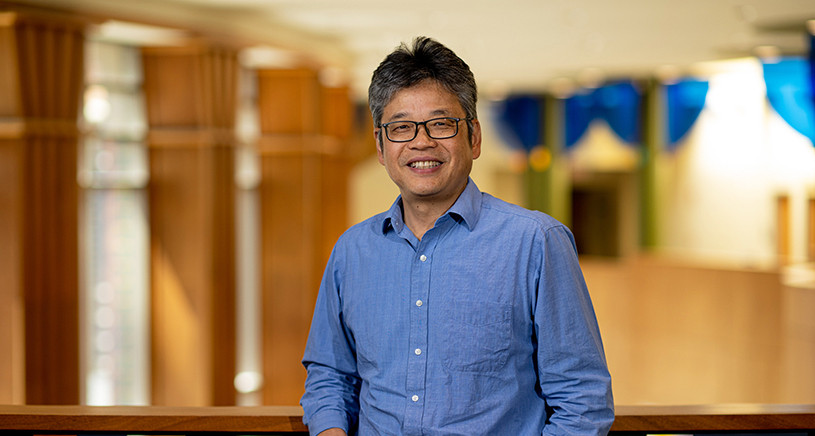
Peter X. K. Song is a Professor in the Department of Biostatistics at the University of Michigan School of Public Health. With expertise spanning statistical methodology development and interdisciplinary applications, Dr. Song maintains active collaborations across Nutritional Sciences, Environmental Health Sciences, Chronic Disease research, and Nephrology. His work bridges theoretical statistics with practical healthcare solutions, focusing on innovative approaches to complex data challenges in public health and medicine. Based at the M4140 SPH II building in Ann Arbor, he leads the Song Lab and contributes significantly to the academic community through teaching, research mentorship, and scholarly publications. PhD, University of British Columbia, Vancouver, 1996 BS, Jilin University, Changchun, 1985 Dr. Song's research focuses on the statistical foundation of big data analytics, with particular emphasis on data integration, distributed inference, high-dimensional data analysis, longitudinal data analysis, mediation analysis, and spatiotemporal modeling. His methodological innovations address critical challenges in smart health applications, including organ exchange programs, children's health, chronic disease management, environmental health assessment, and nutritional sciences. His approach combines statistical theory, integer optimization, and algorithm development to create practical tools that help researchers understand complex relationships between environmental exposures and health outcomes. Dr. Song's publication record demonstrates a consistent trajectory of methodological innovation applied to pressing health challenges. His recent work shows increasing focus on sleep classification using AI techniques, personalized treatment effect analysis, distributed statistical methods for high-dimensional data, and epigenetic applications in adolescent health. The interdisciplinary nature of his research is evident in publications spanning biostatistics journals, computer science venues, and domain-specific medical publications. His work increasingly addresses the challenges of integrating diverse data sources while maintaining statistical rigor in the era of big data. IMS Fellow ASA Fellow Elected Member of the International Statistical Institute 2017 ENAR John Van Ryzin Award Dr. Song has mentored an impressive 22 PhD students and 6 postdoctoral trainees throughout his career, with many now holding faculty positions at prestigious institutions or working as data scientists in leading technology companies. His lab, the Song Lab, currently supports two postdoctoral research fellows and eight doctoral students working on cutting-edge statistical methodology development. His collaborative research extends across numerous grants that support interdisciplinary projects in kidney paired donation programs, environmental health studies, nutritional sciences, and chronic disease research, demonstrating his commitment to translating statistical innovation into practical health solutions. The Song Lab serves as a hub for interdisciplinary statistical research at the University of Michigan, bringing together experts from statistics, operations research, and machine learning to address complex challenges in medical and public health sciences. Current lab members include eight doctoral students and three postdoctoral fellows working on projects related to optimal organ matching strategies, causal mediation pathways of omics biomarkers, and statistical methods for big data integration. The lab maintains strong connections with clinical researchers across nephrology, pediatrics, environmental health sciences, and nutritional sciences, ensuring that methodological developments remain grounded in real-world applications.
Loic Binan is an Assistant Professor in the Department of Human Genetics at McGill University, with additional affiliations as an Associate Member in the Department of Biomedical Engineering and the Integrated Program in Neuroscience. His research focuses on developing cutting-edge technologies to investigate how gene networks control the self-organization of cells into complex 3D tissues during development and in disease conditions. Dr. Binan's research interests span multiple interdisciplinary fields, with particular emphasis on cancer metastasis , where he investigates the genetic mechanisms allowing cells to reversibly transition between epithelial and mesenchymal phenotypes. His work also explores isoforms and non-coding regions , developing technologies to understand alternative splicing in neurodegenerative diseases, and examining how past cell-cell interactions shape present transcriptional activity during development. His laboratory employs a diverse array of techniques including CRISPR gene editing, spatial transcriptomics, single-cell RNA sequencing, advanced microscopy, and computational methods for image analysis. The recent publications reveal a strong trend toward integrating high-throughput genetic screening with spatial transcriptomics to map gene regulatory networks across both cancer biology and neuroscience contexts. Dr. Binan leads the Binan Lab at the Lady Davis Institute for Medical Research, where his team develops precision gene editing tools such as Cas9 and Cas12 for high-throughput screens, creates novel imaging tools to collect spatial context data, and builds computational tools to analyze these complex new data types. His research primarily focuses on cancer and neurodegenerative diseases, with particular attention to brain development and tumor microenvironments.
Professor Kristopher Kilian is Director of the Laboratory for Advanced Biomaterials & Matrix Engineering (LAB&ME) with a joint position across the School of Chemistry and the School of Materials Science & Engineering in the Faculty of Science at UNSW Sydney. He serves as co-Director of the Australian Centre for NanoMedicine (ACN) and is a member of the Adult Cancer Program in the Prince of Wales Clinical School. His interdisciplinary research focuses on unraveling 'matrix structure-cell function' relationships through innovative biomaterial design. After completing his PhD at the University of New South Wales, Kilian pursued NIH postdoctoral training at the University of Chicago before faculty positions at the University of Illinois at Urbana-Champaign (2011-2018). He returned to UNSW in 2018 as a Scientia Fellow, establishing his current leadership roles. Research Focus: Design of model extracellular matrices and dynamic hydrogels for cell and tissue engineering Fundamental studies in cell plasticity and matrix-directed cell fate Development of synthetic tumor microenvironments for drug testing iPSC-derived organoid bioengineering 4D biofabrication techniques Tissue engineering approaches for lab-grown meat applications His extensive publication record demonstrates consistent focus on hydrogel mechanics, dynamic biomaterials, and the role of physical cues in directing cell behavior. Recent work emphasizes mechanochemistry, spatial control of cell differentiation, and the development of sophisticated tumor models that replicate the complexity of cancer microenvironments. Scientific Recognition: Cornforth Medal (2008) NIH Ruth L. Kirchstein Award (2008) Kavli Fellow (2014) NSF CAREER Award (2015) Australian Research Council Future Fellowship (2018) Eureka Prize finalist (2023) Kilian's research program bridges fundamental cell biology with translational applications, particularly in cancer modeling and regenerative medicine. His laboratory develops innovative biomaterial platforms that enable precise control over cellular microenvironments, facilitating discoveries in cell plasticity and tissue engineering. The group's work on dynamic hydrogels and mechanochemical systems represents a significant contribution to the field of biomaterials science. As Director of LAB&ME, Kilian leads a multidisciplinary team that integrates nano- and micro-fabrication techniques with synthetic chemistry to create biomimetic materials. The laboratory's approach centers on the concept that cell state and fate are governed by inherent cell plasticity within specific multivariate signaling contexts.
Prof. Hasan F. Ateş is a Professor at Özyeğin University's Faculty of Engineering, Department of Computer Engineering, specializing in Artificial Intelligence. He joined Özyeğin University as a full-time Professor in 2022 after holding positions at Sabancı University (2004-2005), Işık University (2005-2018), and İstanbul Medipol University (2018-2022). His academic journey began with a B.S. in Electrical and Electronics Engineering from Bilkent University in 1998, followed by M.A. and Ph.D. degrees in Electrical Engineering from Princeton University in 2000 and 2004, respectively. Prof. Ateş's educational background includes: Doctorate in Electrical Engineering, Princeton University, 2004 Master's in Electrical Engineering, Princeton University, 2000 Bachelor's in Electrical and Electronics Engineering, Bilkent University, 1998 His research focuses on the intersection of deep learning and visual information processing, with particular emphasis on image/video processing, computer vision, remote sensing, autonomous systems, and artificial intelligence. Prof. Ateş leads the Deep-VIP Laboratory, which applies deep learning to solve diverse problems in computer vision and image processing. The lab's work spans multiple sectors including defense, telecommunications, medicine, retail, and consumer electronics. Analysis of Prof. Ateş's recent publications reveals a strong focus on advanced deep learning techniques for visual information processing. His work prominently features state-space models, transformer architectures, and hybrid neural approaches applied to problems like super-resolution, 3D reconstruction, object detection, and medical imaging. Notably, there's a growing emphasis on domain adaptation techniques and cross-spectral registration methods, reflecting the increasing complexity of real-world vision applications. Prof. Ateş's contributions have been recognized through several prestigious awards: First place in the 24th Alper Atalay Best Student Paper Competition (2025) Third place in the Master's Thesis category of the 5DT Thesis Competition (2025) As a dedicated mentor, Prof. Ateş has supervised numerous graduate students through their research journeys. His lab, Deep-VIP, has successfully guided students like İ. Can Yağmur (MS thesis on "Self-Supervised Deep Learning for Multispectral Image Matching") and Gökçe Güven (PhD thesis on "DEEP LEARNING TECHNIQUES FOR 3D VOLUME RECONSTRUCTION FROM PLANAR X-RAY IMAGES"). The lab maintains active collaborations with industry partners including Vestel, Tübitak Bilgem, and Obase, securing research funding for cutting-edge projects in computer vision and deep learning. The Deep-VIP Laboratory is at the forefront of deep learning based computer vision research, with current projects focusing on Image Registration, Tiny Object Detection in Aerial Imagery, Building Height Estimation from Satellite Images, 3D Reconstruction, and Super-Resolution Imaging. The lab's recent work has been presented at major conferences including SIU, IGARSS, and ECAI, demonstrating their commitment to advancing both theoretical understanding and practical applications of visual intelligence systems.
Dr. Christian Morgner is a Senior Lecturer in Cultural and Creative Industries at the Sheffield University Management School. He holds a PhD and MA, with expertise in complexity studies, relational sociology, and cultural networks. His research focuses on: Global cultural processes and innovation Diversity and inclusivity in creative industries Network analysis in urban informal settlements Dementia care through arts interventions Media events and translation dynamics Recent publications analyze cultural transformations in Santiago de Chile, relational creativity in Olympic ceremonies, and digital heritage politics in China. He has secured grants including the Rutherford Fellowship and Japanese Society for the Promotion of Science funding. Scientific awards include: Rutherford Fellowship Japanese Society for the Promotion of Science Postdoctoral Research Fellowship He supervises PhD students and teaches modules on critical theories in cultural and creative industries, marketing, and branding.
Lesley W. Chow is an Associate Professor in Bioengineering and Materials Science & Engineering at Lehigh University. She leads the Chow Lab, focusing on designing biomaterials for regenerative medicine and tissue engineering, particularly musculoskeletal interfaces like the osteochondral junction. Her work integrates 3D printing, peptide-polymer conjugates, and self-assembly techniques to create hierarchical scaffolds mimicking native tissues. Chow holds a Ph.D. in Materials Science and Engineering from Northwestern University and a B.S. in Materials Science and Engineering from the University of Florida. Her research emphasizes understanding how tissue organization influences cell behavior and improving clinical translation of biomaterials. Key areas include osteochondral interface regeneration, immunomodulatory biomaterials, and spatially functionalized scaffolds using additive manufacturing. Her lab’s innovations address challenges in musculoskeletal repair, such as creating gradient scaffolds to replicate native tissue properties. Collaborations span biomaterials science, engineering, and clinical translation. She also advocates for diversity in engineering through frameworks promoting institutional accountability. Major grants include the NSF CAREER Award for spatially organized biomaterials. Her work is published in journals across biomaterials science and tissue engineering, with a focus on interdisciplinary solutions for complex tissue regeneration.
Ellen Robey is a Professor of Immunology and Molecular Medicine at the University of California, Berkeley, serving as Division Head of the IMM Division. Her research focuses on signaling pathways controlling T cell fate decisions, using mouse models to study T cell development and immune responses, including mechanisms of thymic selection and CD4/CD8 lineage commitment. She employs 2-photon imaging to analyze T cell behavior in situ, particularly during parasitic infections like Toxoplasma gondii . Robey’s lab investigates how self-reactivity influences thymic selection timing and develops collaborative projects combining multi-omics approaches with spatial and temporal analyses of thymic development. Key research areas include understanding negative/positive selection mechanisms in the thymus, immune response dynamics during chronic infections, and the role of unconventional T cell subsets recognizing non-classical MHC molecules. The lab has pioneered studies on Qa1-restricted T cells and their role in host defense against pathogens. Her work bridges basic immunology with cutting-edge imaging and systems biology tools to unravel complex immune processes. Lab collaborations include projects with Nir Yosef and Aaron Streets to create high-resolution thymic developmental maps using single-cell multi-omics. Current efforts also explore how ERAAP downregulation alters antigen presentation, influencing T cell responses. The Robey Lab emphasizes diversity in its team, fostering an inclusive environment for scientific innovation.
Skirmantas Janusonis is an Associate Professor in the Department of Psychological and Brain Sciences at the University of California, Santa Barbara (UCSB). He is a core faculty member of the UCSB Neuroscience Research Institute and the Interdepartmental Graduate Program in Dynamical Neuroscience, and a member of the California NanoSystems Institute. His research program lies at the intersection of neuroscience, complex systems, and computational modeling. Education: Ph.D. in Neuroscience and Behavior, University of Massachusetts Amherst Postdoctoral Research, Department of Neuroscience, Yale University School of Medicine B.S./M.S. in Biology, Vilnius University, Lithuania Dr. Janusonis's research focuses on the stochastic (random walk-like) behavior of serotonergic axons in the brain, particularly within the ascending reticular activating system and the broader serotonergic matrix. His work integrates molecular neurobiology, comparative neuroanatomy (from sharks to rodents to humans), advanced microscopy, and supercomputing simulations. He investigates how these complex systems self-organize and their relevance to mental disorders, especially autism and the enigma of platelet hyperserotonemia. His lab collaborates with physicists, mathematicians, and engineers to model anomalous diffusion and fractional Brownian motion in 3D brain spaces. His recent publications reveal a strong trend toward computational and theoretical neuroscience, using high-resolution data and mathematical generalizations to model axonal distributions. Key themes include reflected fractional Brownian motion, self-organization of serotonergic densities, and the interface between central and peripheral serotonin systems. His work challenges traditional views of the blood-brain barrier and proposes interdisciplinary solutions involving immunology, physiology, and computer science. Scientific Awards and Recognition: Elected to the Board of Directors of the Organization for Computational Neurosciences (2024) NSF, NIMH, and California NanoSystems Institute grant funding Multiple student awards under his mentorship, including the Harry J. Carlisle Award and NIH IRTA NSF CRCNS and Frontera supercomputing grants UCSB Art of Science People's Choice Award (awarded to lab member) Dr. Janusonis actively mentors PhD students such as Justin Haiman and Dahyana Arroyo, and has advised alumni including Dr. Angela Chen, Dr. Kasie Mays, and Dr. Melissa Hingorani. His lab has received numerous grants from the NSF and NIH, supporting research on stochastic axon systems and super-resolution imaging. He teaches graduate and undergraduate courses including Neuroanatomy (Psy 269), Neurobiology of Brain States (Psy 136), and Complex Systems (Psy 113L). Research Team and Collaborations: The Janusonis Lab is an interdisciplinary group combining neuroscience, mathematics, and engineering. It collaborates with institutions such as UC San Diego, the University of Pisa, and MIT. The lab is equipped with advanced imaging tools and has access to Frontera, a leading NSF supercomputer. Outreach includes science nights at local schools and public lectures at the Santa Barbara Museum of Natural History.