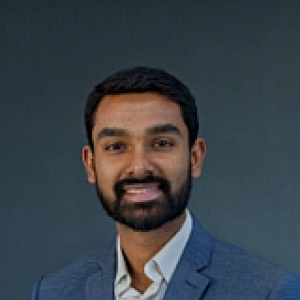
Joseph A. Campbell is an Assistant Professor in the Department of Computer Science at Purdue University, leading the Collaborative AI for Machines and People (CAMP) Lab. He holds a Ph.D., M.S., and B.S. in Computer Science and Computer Engineering from Arizona State University. Before academia, he worked as a software engineer for five years. Prior to Purdue, he was a Postdoctoral Fellow at Carnegie Mellon University's Robotics Institute. His research focuses on explainable machine learning and robotics, particularly how agents use explanations for self-improvement and decision-making. Key areas include theory of mind in multi-agent systems, lifelong learning, and interpretable transfer learning. His work bridges robotics and AI, with applications in human-robot interaction and prosthetic control. Notable publications include advancements in reinforcement learning with language models, multi-agent collaboration frameworks, and methods for enhancing state estimation in robots. His research has been presented at top conferences like NeurIPS, EMNLP, and CoRL. Dr. Campbell maintains an active GitHub profile (joe-campbell) with repositories such as Interaction Primitives for robotics applications. His lab, CAMP, explores AI systems that collaborate effectively with humans and other machines.
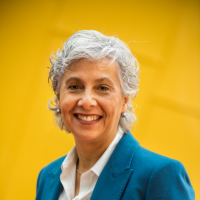
Jennifer K. Ryan is a Professor and Division Head for Numerical Analysis, Optimization & Systems Theory at the Department of Mathematics, KTH Royal Institute of Technology, Stockholm. She is affiliated with the Digital Futures Faculty, a cross-disciplinary research center jointly established by KTH, Stockholm University, and RISE Research Institutes of Sweden. Her research focuses on developing numerical schemes for extracting enhanced accuracy from simulations, with applications in imaging, data analysis, and fluid dynamics. Ryan’s work emphasizes improving computational efficiency through theoretical insights and practical algorithms. Her academic roles include teaching courses like Numerical Methods for Differential Equations II and supervising student projects in numerical analysis. She has contributed to the SIAC MAGIC toolbox, a software package for accuracy-enhancing filtering techniques. Ryan’s research group actively explores discontinuous Galerkin methods, SIAC filtering, and multi-resolution analysis, addressing challenges in computational physics and engineering. Her publications span high-order numerical methods, mesh adaptivity, and applications in plasma physics and wave equations. Projects include error estimation for boundary integral methods and developing filters for noisy data. Ryan collaborates internationally, contributing to both theoretical advancements and practical implementations in computational science.
Du Changwen is a Researcher (Professor) at the Nanjing Institute of Soil Science, Chinese Academy of Sciences, serving as Deputy Director of the National Engineering Laboratory for Soil Nutrient Management. He supervises doctoral and master's students in soil science and agricultural technology development. His academic journey includes: Bachelor's degree from Huazhong Agricultural University's College of Resources and Environmental Science (1997) Master's degree from Huazhong Agricultural University's Trace Element Laboratory (2000) PhD from Nanjing Institute of Soil Science, Chinese Academy of Sciences (joint program with Technion - Israel Institute of Technology) (2003) Dr. Du's pioneering research focuses on precision fertilization technologies, particularly polymer-coated controlled-release fertilizers developed through model membrane and water-based reaction film-forming techniques. His work integrates Fourier Transform Infrared spectroscopy (ATR and PAS modes) with engineering mathematics to monitor nutrient release dynamics, soil chemistry processes, and plant nutrition in real-time. This interdisciplinary approach bridges agricultural chemistry, materials science, and environmental engineering to optimize fertilizer efficiency while minimizing ecological impact. Analysis of his 2015-2017 publications reveals a consistent emphasis on spectroscopic methods for soil-plant system analysis, with dominant themes in controlled-release fertilizer development, soil organic matter characterization, and in-situ nutrient monitoring. His work demonstrates strong cross-disciplinary integration between agricultural technology, analytical chemistry, and environmental science. His scientific recognition includes: Special Award of the First China Agricultural Science and Technology Innovation and Entrepreneurship Competition First Prize of Jiangsu Science and Technology Award First Jiangsu Youth Entrepreneurship Award Second Prize of Chinese Academy of Sciences Science and Technology Contribution Award First Prize of China Agricultural Science and Technology Award Dr. Du has secured major research funding including National Natural Science Foundation projects (key, general, youth), National '973' Basic Research Program, '13th Five-Year' R&D Plan sub-projects, '863' High-tech Program sub-projects, and Jiangsu Provincial Science and Technology Support Plan initiatives. His leadership in the National Engineering Laboratory for Soil Nutrient Management drives innovation in fertilizer technology, with significant outputs including 198 academic papers (89 SCI, 35 EI), 6 monographs, 1 international patent, 8 national patents, and 2 software copyrights. His laboratory specializes in advanced spectral analysis of soil-plant systems, utilizing FTIR-ATR and FTIR-PAS technologies for real-time monitoring of nutrient dynamics and polymer membrane reactions. Current research focuses on next-generation controlled-release fertilizers, machine learning-enhanced spectral analysis, and precision nutrient management systems for sustainable agriculture.
Henry Hoffmann is a Professor and Liew Family Chair in the Department of Computer Science at the University of Chicago. His research focuses on self-aware computing systems that adapt to meet goals like power efficiency, performance, and security. He leads the SEEC project and has contributed to advancements in computer architecture, embedded systems, and quantum computing. Hoffmann received the PECASE (2019), DOE Early Career Award (2015), and was inducted into the Samsung Hall of Fame for discovering vulnerabilities in SmartTVs. He holds a PhD from MIT (2013) and has co-founded Config Dynamics (2019). His work bridges control theory, machine learning, and traditional computer systems to create adaptive solutions for modern computing challenges. Education: PhD in Electrical Engineering and Computer Science from MIT (2013), SM (2003), and B.S. (1999) with highest honors from UNC Chapel Hill. Professional experience includes roles at Tilera Corporation and MIT Lincoln Laboratory. Research Interests: Self-aware systems, adaptive resource management, quantum computing optimization, and cybersecurity. His SEEC framework enables systems to autonomously adapt to constraints like energy and performance. Recent work explores applying adaptive techniques to AI/ML models for energy-efficient inference and security. Awards: Over $19M in research funding, 100+ publications, and leadership roles in NSF Expedition EPiQC (quantum computing). Named Chair of UChicago CS Department (2023-2024). Labs/Teams: Systems Group, EPiQC (quantum computing), and CERES (unstoppable computing systems). Current students include Jerry Ding and Ryien Hosseini. Notable alumni include Yi Ding (now faculty at Purdue) and Nikita Mishra.
About Marin Litoiu is a Professor at York University, holding dual affiliations in the Department of Electrical Engineering and Computer Science at the Lassonde School of Engineering and the School of Information Technology in the Faculty of Liberal Arts and Professional Studies. He is a Fellow of the Canadian Academy of Engineering and a recipient of the 2020 IBM Faculty of the Year Award. His research focuses on cloud computing, self-adaptive systems, DevOps, IoT, and machine learning-driven performance engineering. Research & Awards Litoiu leads the Dependable Internet-of-Things Applications (DITA) program, funded by NSERC, and co-founded Bitnobi Inc., acquired by Myant. His notable awards include the CASCON 2019 Most Influential Paper Award and Best Paper Awards at multiple conferences. His work emphasizes practical applications of adaptive systems, cybersecurity, and smart infrastructure integration. Grants & Projects NSERC CREATE Program: $1.65M for the DITA program (2018) York Innovation, TIAP, NSERC, and OCI-funded Bitnobi incubation Leadership in multiple CASCON workshops on cloud computing and AIOps Labs & Teams Litoiu’s lab has produced impactful startups like Bitnobi and pioneered research in self-driving systems, edge computing, and AI-driven operations. His team collaborates with industry partners like IBM and explores cutting-edge topics such as LLMs in performance optimization and fault detection.
Jeffrey P. Bigham is an Associate Professor at the Human-Computer Interaction Institute within the School of Computer Science at Carnegie Mellon University . His research spans human-computer interaction , human-AI interaction , accessibility , dialog systems , NLP , and crowdsourcing . Current PhD Students: Hamza El Alaoui, Jessica Yin Huynh, Sara Kingsley, Peya Mowar, Yi-Hao Peng, Atieh Taheri PhD Graduates: Erin Brady, Yu Zhong, Ting-Hao Huang, Anhong Guo, Cole Gleason, Prakhar Gupta, Stephanie Valencia, Kundan Krishna, Jason Wu His work is funded by Apple , Bosch , DARPA , Google , Microsoft , the National Institute of Disability Rehabilitation Research , the National Science Foundation , and Yahoo! He also holds a CMU HCII Career Development Fellowship . Selected Awards: NSF CAREER Award 2019 Best Paper at ASSETS 2021 Best Paper Nomination at CHI 2024 Best Paper Nomination at CHI 2021 Best Paper Nomination at DIS 2021
Dr. Alireza Nili is a Senior Lecturer in Service Science at QUT's School of Information Systems within the Faculty of Science. His expertise spans digitization of customer-centric services, AI/chatbots, IoT/IIoT, and sustainable technologies. He holds a PhD from Victoria University of Wellington and has coordinated large-scale courses like IT Systems Design (IFB103), achieving top teaching scores. Nili's research focuses on service ecosystems, trust in digital services, and public/retail sector innovations. He has secured over $1.4M in industry grants for projects involving Cisco, Amazon, and Services Australia. His awards include the 2023 Educator of the Year and multiple top conference paper recognitions. Nili supervises PhD students at Level 3 mentoring status and contributes to major conferences as track chair/associate editor. Research highlights include frameworks for chatbot governance, IOT in agriculture, and AI ethics. His work appears in IEEE Software , Communications of the ACM , and MIT Sloan Management Review . Current projects address consumer trust in AI technologies and spatial data systems. Nili's interdisciplinary approach combines design science with empirical methodologies to bridge theory and practice in digital service innovation.
Harish Ravichandar is an Assistant Professor at the School of Interactive Computing , Georgia Institute of Technology, and a core faculty member of the Institute for Robotics and Intelligent Machines (IRIM) . He leads the Structured Techniques for Algorithmic Robotics (STAR) Lab , focusing on structured computational frameworks and learning algorithms with inductive biases to enhance robot efficiency, reliability, and self-sufficiency in human-robot collaboration and complex applications like dexterous manipulation and multi-agent coordination. His research bridges robot learning , human-robot interaction , and multi-agent systems , emphasizing stable, frugal, and safe skill acquisition from human demonstrations. Key themes include intention inference , trajectory optimization , and heterogeneous team coordination , often leveraging Koopman operators , hypernetworks , and graph-based methods . Scientific recognition includes the NSF CAREER Award , IEEE MRS Best Paper Award , and Georgia Tech’s College of Computing Outstanding Post-Doctoral Research Award . His work also received the ASME DSCC Best Student Paper Award and P&W Institute Graduate Fellowship . Harish’s educational background includes a Ph.D. in Electrical and Computer Engineering from the University of Connecticut (2018) , an M.S. from the University of Florida (2014) , and a B.E. in Instrumentation and Control Engineering from Anna University (2012) . He previously held postdoctoral and research scientist roles at Georgia Tech before his current position.
Una-May O'Reilly is a Principal Research Scientist at MIT's Computer Science and Artificial Intelligence Laboratory (CSAIL), leading the ALFA group. She holds a PhD in Computer Science from Carleton University (1995), with prior roles including a postdoctoral appointment at MIT's Artificial Intelligence Laboratory. Her research focuses on cybersecurity, adversarial AI, software security, and disinformation dynamics, applying evolutionary algorithms and machine learning to address arms races in cyber defense and societal challenges like climate change communication. Education: B.Sc., University of Calgary M.C.S., Carleton University Ph.D., Carleton University (1995) Research Interests: Adversarial machine learning for secure systems Coevolutionary algorithms in cybersecurity and healthcare Program comprehension via neuroscience and AI Climate disinformation mitigation on social media Large language model applications in code synthesis and threat hunting Key Projects: Adversarial Cyber Security : Modeling cyber attack-defense arms races GIGABEATS : AI-driven medical sensor data analysis for critical care MOOC Learner Project : Data science for online education insights Awards: EvoStar Award (2013) for contributions to evolutionary computation Fellow of ACM Sig-EVO Leadership & Service: Co-founder and Vice-Chair of ACM Sig-EVO Former Chair of GECCO (2005), major evolutionary computation conference Editorial roles in Evolutionary Computation and Genetic Programming and Evolvable Machines Labs & Groups: Leads the AnyScale Learning for All (ALFA) group at CSAIL, focusing on scalable AI for cybersecurity, healthcare, and education.
Dr. Jia Zhang is the Inaugural Robert H. Dedman Jr. Endowed Department Chair and Professor of Computer Science at Southern Methodist University (SMU Lyle School of Engineering). She holds the Cruse C. and Marjorie F. Calahan Centennial Chair in Engineering and has a courtesy appointment in the Department of Operations Research and Engineering Management. Her research focuses on applying machine learning, natural language processing, and information retrieval to data science infrastructure, particularly scientific workflows, provenance mining, software discovery, knowledge graphs, cloud computing, immune AI, and applications in earth science and healthcare. Education: Ph.D. in Computer Science, University of Illinois at Chicago M.S. in Computer Science, Nanjing University B.S. in Computer Science, Nanjing University Dr. Zhang's work emphasizes data science infrastructure and machine learning for scientific workflows and knowledge graphs. Her recent publications highlight deep learning , graph neural networks , and optimization algorithms in cloud computing, cybersecurity, and environmental applications. Key trends include spatiotemporal modeling , hybrid neural architectures , and AI-driven service ecosystems . Scientific Awards: Best Paper Awards IEEE SCC (2011, 2017) Best Student Paper Awards IEEE ICWS (2014, 2018), IEEE ICCC (2018) Distinguished Paper Award ICSOC (2023) First Outstanding Service Award IEEE Technical Committee on Services Computing (2016) She has secured over $5 million in federal grants (as PI) and $11 million as PI/Co-PI from NSF, NASA, NIH, UTSW, Ericsson, SAP, and Google. Her lab (Caruth Hall 308) actively recruits research assistants. She previously served as a faculty member at Carnegie Mellon University, Northern Illinois University, and Nanjing University, and worked in industry as a software architect.
Jim Smith is a Professor in Interactive Artificial Intelligence at the University of the West of England (UWE), Bristol, affiliated with the School of Computing and Creative Technologies and the Department of Computer Science and Creative Technologies. He serves as Director of the Computer Science Research Centre and leads the AI@UWE theme. His research is supported by UKRI, Innovate UK, and partnerships with organizations including Health Data Research UK, Office for National Statistics, NHS Scotland, and DSTL. University: University of the West of England School: School of Computing and Creative Technologies Department: Department of Computer Science and Creative Technologies Role: Professor in Interactive Artificial Intelligence Leadership: Director, Computer Science Research Centre Research Interests : Jim Smith's work focuses on Interactive Artificial Intelligence, particularly at the intersection of AI and privacy preservation when using sensitive data for public good. His research includes statistical disclosure control, privacy leakage from AI models, evolutionary computation, machine learning, and systems that learn through human interaction or self-adaptation. He explores how AI can automate privacy checks in research outputs and assess vulnerabilities in trained models. Recent Publications : His recent work spans AI privacy in trusted research environments (e.g., SACRO, SDC-Reboot), dialogue act classification, human-robot interaction, and visualization of deep learning models. Themes include privacy-preserving AI, automated disclosure control, interactive machine learning, and neuromorphic computing. Machine Learning & Privacy Evolutionary Computation Interactive AI Systems Human-Computer Interaction Statistical Disclosure Control Federated Learning Security Scientific Awards : No specific awards are mentioned in the provided texts. Advising and Grants : He currently supervises PhD students on topics including spatio-temporal air quality modeling, federated learning privacy, and threat detection in mobile networks. He leads Innovate UK and UKRI-funded projects such as SACRO and SDC-Reboot, focusing on AI-driven solutions for data confidentiality in public sector research. Interactive Machine Learning for Claim Settlement (Innovate UK) SDC-Reboot (DARE UK/Health Data Research UK) Threat Identification in Mobile Networks (Ribbon Communications) Labs and Teams : He leads the AI@UWE initiative and the Computer Science Research Centre at UWE. His work involves collaboration through DARE UK and open-source development via the AI-SDC GitHub organization, which hosts tools from SACRO and GRAIMATTER projects.
Vera Liao is a Principal Researcher at Microsoft Research, where she is part of the FATE (Fairness, Accountability, Transparency, and Ethics of AI) group. She will join the University of Michigan Computer Science and Engineering department as an Associate Professor in fall 2025. Her work focuses on human-AI interaction, explainable AI, and responsible computing. Liao has made significant contributions to IBM products such as AI Explainability 360 and Uncertainty Quantification 360 during her time at IBM T.J. Watson Research Center. Dr. Liao received her education from the University of Illinois at Urbana-Champaign and Tsinghua University. Her academic journey has positioned her at the intersection of human-computer interaction and artificial intelligence, with a strong emphasis on creating AI systems that are transparent, accountable, and user-centered. Vera Liao's research primarily centers around human-centered AI explainability and transparency. She investigates how to design AI systems that effectively communicate their capabilities, limitations, and decision-making processes to users. Her work examines the intersection of AI transparency with trust, control, and user experience. Liao has pioneered approaches to bridging the socio-technical gap in AI evaluation and has developed frameworks for contextualized evaluation of explainable AI systems. Her research spans multiple domains including conversational interfaces, data storytelling, and creative work with generative AI. Liao's publications reveal a clear trend toward addressing the challenges of large language models and their impact on human-AI interaction. Her recent work focuses on understanding how uncertainty communication affects user trust, how to design for appropriate reliance on AI systems, and how to create authentic co-creation experiences with generative models. She has been examining the risks in AI-infused information ecosystems and developing methods for human-centered evaluation of language technologies. Her scientific contributions have been recognized with multiple honors: Best Paper Award, Honorable Mention at CHI 2025 (two papers) Best Paper Award at CHI 2024 Best Paper Award, Honorable Mention at FAccT 2023 Best Paper Award, Honorable Mention at HCOMP 2022 Best Paper Award, Honorable Mention at CHI 2021 Best Paper Award, Honorable Mention at CHI 2014 Outstanding Paper Award at IUI 2019 Dr. Liao is an active mentor, having guided numerous research interns from top universities including Cornell, Princeton, CMU, Stanford, and MIT. She serves in editorial roles as Co-Editor-in-Chief of the Springer Human-Computer Interaction Book Series and as an Editor for ACM CSCW. Liao has secured research funding through her work at Microsoft Research and previously at IBM, focusing on projects related to AI explainability, transparency, and responsible AI development. As part of Microsoft Research's FATE group, Liao collaborates with a multidisciplinary team of researchers focused on the ethical implications of AI technologies. Her work bridges the gap between technical AI development and human-centered design principles, ensuring that AI systems are developed with user needs and societal impacts in mind.
Prof. Dr. Tobias Gemmeke is a University Professor at RWTH Aachen University's Faculty of Electrical Engineering and Information Technology, leading the Chair of Integrated Digital Systems and Circuit Design. His work focuses on neuromorphic computing, hardware accelerators, and energy-efficient electronics. He has pioneered advancements in FPGA-based computational neuroscience simulators, neuromorphic processor architectures, and sensor integration for industrial and medical applications. Research interests include time-domain computing, ReRAM reliability, and co-optimization of neural networks with hardware. Notable contributions include the neuroAIx framework for accelerated neuroscience simulations and energy-efficient ASIC designs for post-quantum cryptography. He actively explores memristive devices and domain generalization techniques for edge computing. Recent publications highlight innovations in spiking neural networks, sensor systems for plain bearings, and time-domain compute-in-memory engines. His work bridges theoretical neuroscience with practical hardware implementations, emphasizing scalability and real-time performance.
Monica Lam is the Kleiner Perkins, Mayfield, Sequoia Capital Professor in Stanford University's School of Engineering and holds a courtesy professorship in Electrical Engineering. She leads the Stanford Open Virtual Assistant Laboratory and has pioneered work in virtual assistants, privacy protection, and compiler design. Her research includes the Almond virtual assistant, privacy-preserving IoT systems, and the ThingTalk programming language. She co-authored the seminal 'dragon book' on compilers and co-founded Tensilica (now part of Cadence). Education: Bachelor of Science (Honors), Computer Science, University of British Columbia, 1980 Master of Science, Computer Science, Carnegie Mellon University, 1982 Doctor of Philosophy (PhD), Computer Science, Carnegie Mellon University, 1987 Research Interests: Dr. Lam's work focuses on conversational AI with privacy guarantees, compiler optimization for parallel computing, and open-source virtual assistant ecosystems. She is a leader in decentralized systems, having developed frameworks like SociaLite for large-scale graph analysis and Musubi for mobile social networking without centralized platforms. Article Trends: Recent publications emphasize multimodal interactions, multilingual dialogue systems, and LLM-driven applications in areas like question answering, persuasive chatbots, and adaptive assistants. Her work bridges foundational AI research (e.g., semantic parsing) with real-world deployments (e.g., privacy-compliant IoT). Awards & Honors: Member of the National Academy of Engineering ACM Fellow Popular Science's Best of What's New Award (Security, 2019) Advising & Grants: Lam oversees the Open Virtual Assistant Initiative, a collaborative project to build open-source semantic models. Her NSF CNS grant (CNS Core) focuses on federated privacy systems. She has advised over 50 students in AI and systems research, though specific names are not listed in the provided texts. Labs & Teams: Directs the Stanford Open Virtual Assistant Laboratory, collaborates with the Stanford NLP group, and maintains ties to industry through former startup Tensilica's legacy in embedded processors.
Gianni Franchi is an Assistant Professor at ENSTA Paris, part of Institut Polytechnique de Paris. His research focuses on robust computer vision, uncertainty quantification, and explainable AI (XAI). He has been teaching Deep Learning, Computer Vision, and Machine Learning courses since 2020 at ENSTA Paris and Télécom Paris. PhD in Fusion of Information, Machine Learning, and Image Processing (2016) from Mines de Paris Postdoctoral experience at Paris Saclay University (2018-2020) and Seigen University (2016-2018) Current PhD students: Rémi Kazmierczak, Olivier Laurent, Adrien Lafage, Mouïn Ben Ammar Alumni: Xuanlong Yu (2020-2023) Research interests include robust computer vision, anomaly detection, uncertainty quantification, out-of-distribution detection, certifiable AI, and explainable AI. He leads the development of the PyTorch library Torch Uncertainty for uncertainty quantification in deep learning. Recent publications span uncertainty quantification in foundation models, trajectory forecasting, vision-language adaptation, and explainability benchmarks. Gianni actively collaborates on multimodal autonomous driving datasets and uncertainty-aware systems for human-agent interaction.