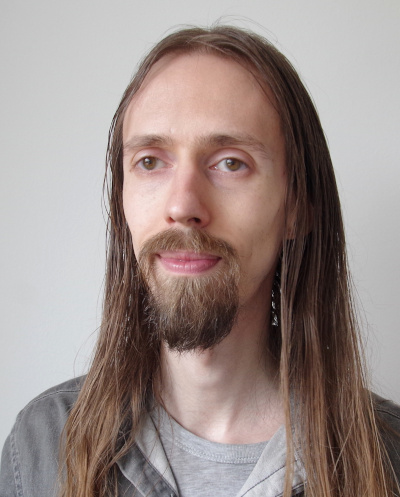
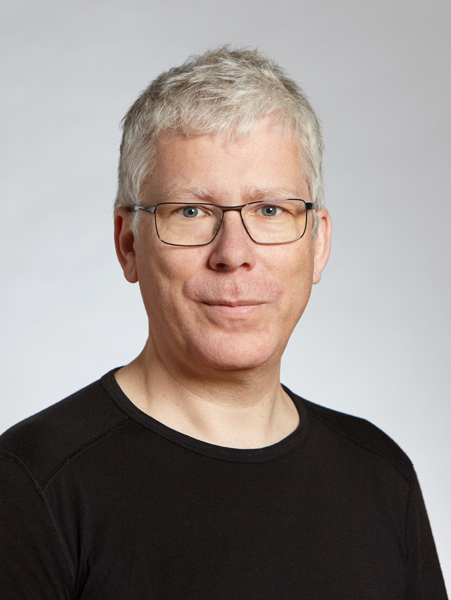
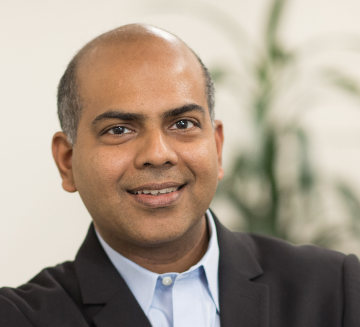
Dr. Paul Henderson is a Lecturer in Machine Learning at the School of Computing Science, University of Glasgow. He holds a BA in Mathematics (University of Cambridge, 2009), an MSc in Informatics (University of Edinburgh, 2010), and a PhD in Computer Vision (University of Edinburgh, 2018). His research focuses on generative AI, probabilistic machine learning, and minimally-supervised approaches to 3D computer vision, with applications in healthcare, computer graphics, and physical sciences. Education: PhD in Computer Vision (University of Edinburgh, 2018) MSc in Informatics (University of Edinburgh, 2010) BA in Mathematics (University of Cambridge, 2009) His work spans generative models, medical imaging, and robotics. Notable contributions include datasets like Flat’n’Fold and techniques in diffusion models for text-to-image retrieval. He has received grants including the Royal Society Research Grant (2022-2023) and the Vesuvius Challenge Autosegmentation Prize (2025). He supervises PhD students in topics such as medical image segmentation and generative AI. Teaching: CS5002 Advanced Programming, CS4061/CS5014 Machine Learning.
Ghassan Hamarneh is a Professor in the School of Computing Science at Simon Fraser University (SFU). His research focuses on medical image analysis, with expertise in super-resolution microscopy, explainable AI, and biomedical computing. He teaches courses in biomedical computing and scientific computing, emphasizing practical applications like signal processing and health informatics. Education: Ph.D. in Signal and Systems (Chalmers University, 2001), M.Sc. in Digital Communications (Chalmers, 1997), B.Sc. in Electrical Engineering (Jordan University, 1995). Research Interests include developing AI-driven tools for medical imaging, analyzing cellular structures using super-resolution techniques, and addressing ethical challenges in AI deployment. His work bridges computational methods with clinical applications, such as lesion segmentation, PET image analysis, and bias mitigation in medical algorithms. Recent publications highlight advancements in network analysis of molecular structures, debiasing AI models, and improving diagnostic accuracy through deep learning. His lab contributes to open-source software like SuperResNET and MCS-DETECT for super-resolution microscopy analysis. No scientific awards explicitly listed, but his extensive publication record reflects recognition in the field. Advising and grants information is not detailed in the provided texts. Active in teaching, including CMPT 340 (Biomedical Computing) and special research projects.
Marc Pollefeys is a Full Professor of Computer Science at ETH Zurich and Director of the Microsoft Mixed Reality and AI Zurich Lab. He has held roles such as Visiting Professor at Stanford University (2007) and Assistant/Associate Professor at UNC-Chapel Hill (2002–2009). His research focuses on 3D computer vision, robotics, machine learning, and augmented reality. Education: PhD in Computer Science from KU Leuven (1999), followed by postdoctoral research there until 2002. He transitioned to academic roles at UNC-Chapel Hill before joining ETH Zurich in 2007. Research interests include 3D reconstruction, visual localization, SLAM, and applications in archaeology, urban modeling, and robotics. Notable projects include real-time 3D scanning, city-scale reconstruction, and autonomous vision-based drones. Key awards include ACM Fellow (2022), IEEE Fellow (2012), and ERC Starting Grant (2008). He advises numerous PhD students and collaborates with institutions like Google and Microsoft. Labs and teams: Leads the Computer Vision and Geometry (CVG) lab at ETH Zurich and directs the Microsoft Mixed Reality and AI Lab. His work bridges academia and industry, focusing on perception for mixed reality and autonomous systems.
Ram Bala is an Associate Professor of AI & Analytics at Santa Clara University’s Leavey School of Business. He holds a Ph.D. in Operations Research from UCLA Anderson School of Management and a Mechanical Engineering degree from IIT Bombay. His research focuses on pricing strategies, marketplace design, supply chain dynamics, and the integration of AI into business operations. He leads the Prometheus Lab on AI and Business and is Co-founder/Chief AI Scientist of Samvid, a generative AI startup for logistics. Additionally, he co-founded the MS-SCMA program and holds leadership roles in academic governance committees. Education: Ph.D. in Operations Research, UCLA Anderson School of Management Bachelor's in Mechanical Engineering, Indian Institute of Technology Bombay Research Interests: Ram’s work bridges optimization, game theory, and machine learning to address dynamic market challenges. He explores the transformative adoption of AI-driven autonomous systems in organizations, particularly in supply chains and healthcare logistics. His recent projects include pandemic response platforms for PPE distribution and AI tools for humanitarian aid via Project Stanley. Leadership & Ventures: Founder & President of Project Stanley (non-profit applying data science to humanitarian issues) Co-founder and Director of MS-SCMA program Past roles: Chief Data Scientist at GrandCanals (acquired by C.H. Robinson) and leadership at Andela Labs & Teams: Co-leads Prometheus Lab on AI and Business at Leavey School, focusing on enterprise AI adoption and generative AI applications in supply chain management.
Joseph Alejandro Gallego Mejia is an Assistant Teaching Professor in the Department of Computer Science at Drexel University's College of Computing and Informatics. He holds a PhD with meritorious distinction in Systems and Computing Engineering from the National University of Colombia, along with a Master’s and dual Bachelor’s degrees in Systems and Computing Engineering and Industrial Engineering. PhD in Systems and Computing Engineering, National University of Colombia (Meritorious Distinction) Master of Systems and Computing Engineering, National University of Colombia Bachelor of Engineering in Systems and Computing Engineering, National University of Colombia Bachelor of Engineering in Industrial Engineering, National University of Colombia His research focuses on artificial intelligence, machine learning, computer vision, quantum machine learning, natural language processing, and cybersecurity. He explores robustness estimation, anomaly detection, incremental learning, and scalable software architectures for AI systems. His work bridges theoretical foundations and practical applications in health, remote sensing, and edge computing. The recent publications reflect a strong trend in interdisciplinary AI research, combining machine learning with quantum computing, cybersecurity, and natural language understanding. His work spans domains such as satellite imagery analysis, medical diagnostics, IoT security, and conversational AI, demonstrating a commitment to scalable and robust intelligent systems. Keywords across publications include Computer Science, Machine Learning, Quantum Computing, and Cybersecurity, with subfields ranging from adversarial robustness to hybrid quantum-classical models. Scientific distinctions include: PhD with meritorious distinction, National University of Colombia Postdoctoral fellow, Frontier Development Lab (Trillium), supported by NASA and ESA He has served as a reviewer for top-tier journals and conferences including Neurocomputing, IEEE Access, Radioscience, NeurIPS, and NLDL. Though no formal grants are listed, his postdoc was funded by NASA and ESA, indicating significant external support. He teaches courses in programming, data science, machine learning, deep learning, NLP, and software engineering. He founded the tech company Sammu and mentors students through instruction and research supervision. He is actively involved in research and teaching, contributing to innovative programs in AI and computing education. His lab and team affiliations are not explicitly stated, but his work suggests collaboration with AI, quantum computing, and cybersecurity research groups.
Simon Yang is a Professor in the School of Engineering at the University of Guelph, part of the College of Engineering and Physical Sciences. His research focuses on artificial intelligence, robotics, sensors, control systems, and bio-inspired intelligence. He has contributed to advanced robotics applications, including mobile robot navigation, underwater vehicle control, and agricultural automation. Dr. Yang holds editorial roles for journals such as the International Journal of Robotics and Automation and IEEE Transactions on Cybernetics . His work bridges theoretical advancements with practical implementations in areas like sensor networks, machine learning, and multi-agent systems. Recent projects include developing robust control frameworks for autonomous systems, digital twin applications, and bio-inspired neural network algorithms. His research emphasizes real-world challenges in robotics, environmental monitoring, and precision agriculture, with a focus on integrating AI-driven solutions for enhanced decision-making and system reliability. Professional contributions include advisory roles in multiple journals and conference committees, reflecting his leadership in the field.
Giuseppe Bruno Averta is a Fixed-term Researcher at the Department of Control and Computer Science (DAUIN), Polytechnic University of Turin, and a member of the Interdepartmental Center SmartData@PoliTO - Big Data and Data Science Laboratory. He is affiliated with the College of Computer, Film and Mechatronics Engineering and contributes to national and international research in artificial intelligence and robotics. Averta has held a Visiting Researcher position at the Massachusetts Institute of Technology (MIT) from January to June 2019. His research interests include Computer Vision, Deep Learning, Robotics, Neural Architecture Search, Egocentric Vision, Embodied Intelligence (Edge/Tiny ML), and Human-Robot Collaboration . His work is aligned with ERC sectors in Artificial Intelligence, Machine Learning, and Robotics, and contributes to UN SDGs such as Good Health and Well-being, Industry Innovation and Infrastructure, and Responsible Consumption and Production. The recent publication trends highlight his focus on vision-language models (e.g., CLIP), egocentric action recognition, efficient neural architectures (e.g., BiSeNet, MaskFormer), and robust deep learning. His research bridges theoretical advances with practical robotics applications, including grasping and manipulation. Scientific Awards and Recognitions: Georges Giralt PhD Award (euRobotics AISBL, 2021) Wiley Best Reviewer (Wiley, Italy, 2021) Best Paper Award, ICUMT 2015 (2017) Fellow, ELLIS Network of Excellence (2022–) Fellow, DAAD AInet (2022–) DAAD AInet Fellowship Advising and Grants : Averta supervises multiple PhD students in the Artificial Intelligence and Computer and Systems Engineering doctoral programs at Politecnico di Torino. He is involved in teaching at both the master’s and doctoral levels, including courses on Robot Learning and Machine Learning and Deep Learning. He is also a co-inventor on a national and international patent for a method and algorithm for the automatic design of neural networks through machine learning, indicating active research funding and innovation. Labs and Research Groups : He is a member of the SmartData@PoliTO center and contributes to research in the VANDAL PoliTO lab (as indicated by his student Davide Buoso). His work is deeply integrated with teams working on egocentric vision, embodied AI, and neural architecture search.
Michelle Cameron is an Associate Professor in the Department of Anthropology at the University of Toronto's Faculty of Arts & Science. She joined the department in 2018 and specializes in skeletal biology and bioarchaeology, integrating skeletal analysis with archaeological and ecological evidence to study human adaptability across diverse environments. Her research explores how environmental and cultural contexts shape human biology through time, focusing on biocultural stressors and skeletal responses. She employs advanced methodologies including 3D modeling, biomechanical analyses, and spatial analysis frameworks to examine human adaptation to environmental challenges. Primary research regions: Africa (South Africa, Namibia, Lake Turkana), North America, Europe Key methodologies: Cross-sectional geometry, skeletal biomechanics, paleodiet reconstruction Dr. Cameron's publications demonstrate expertise in subsistence transitions (herding practices), human evolutionary morphology, and contemporary skeletal biology applications. She maintains active fieldwork programs in southern Africa while engaging in comparative studies across continents. Scientific Awards: SSHRC Insight Development Grant Connaught New Researcher Award Education: PhD, University of Cambridge (2017) As co-host of the YouTube series 'Humans in 5', she actively participates in science communication, distilling complex anthropological concepts into accessible five-minute segments.
Eric T. Anderson is the Polk Bros. Chair in Retailing and Professor of Marketing at Northwestern University's Kellogg School of Management. He serves as Chair of the Marketing Department and Director of the Kellogg-McCormick MBAi Program. Anderson holds a Ph.D. from MIT Sloan School of Management and has held academic positions at the University of Chicago and University of Rochester. His research focuses on pricing strategies, retail analytics, AI/ML applications, customer loyalty, and channel management. He teaches courses in pricing, retail analytics, and marketing strategy at Kellogg. Education: PhD in Management Science, MIT Sloan School of Management (1995) MS in Engineering-Economic Systems, Stanford University (1989) BS in Electrical Engineering, Northwestern University (1988) Research Interests: Anderson's work bridges quantitative and behavioral marketing. He explores pricing dynamics, retail innovation, and the impact of digital tools on consumer decisions. His recent studies analyze alternative data for credit scoring, backorder effects, and AI-driven analytics. His research has appeared in top journals like Management Science and Marketing Science . Teaching & Recognition: A four-time winner of the Sydney Levy Award for teaching excellence, Anderson is known for courses like Pricing and Retail Analytics. He advises Canadian Tire and LiftLab, and serves on editorial boards for Management Science and Journal of Marketing Research . His work often collaborates with industry, yielding practical insights for firms like FTD and NASCAR. Grants & Labs: Leads the Center for Global Marketing Practice at Kellogg. His research has been funded by the Marketing Science Institute and industry partnerships. Active in doctoral training, Anderson coordinates the Marketing Ph.D. program and mentors emerging scholars.
Prof. Serge A. Shapiro is a Full Professor of Geophysics at Freie Universität Berlin since 1999 and Director of the PHASE consortium since 2004. He holds a Diploma in Applied Geophysics from Lomonosov Moscow State University (1982), a PhD from the Moscow Research Institute of Geosystems (1987), and a Habilitation from Karlsruhe University (1995). His research focuses on seismogenic processes, induced seismicity, rock physics, and subduction zone dynamics, with applications to geothermal energy, CO2 storage, and hydraulic fracturing. Education: Diploma in Applied Geophysics, Lomonosov Moscow State University (1982) PhD in Geophysics, Moscow Research Institute of Geosystems (1987) Habilitation, Karlsruhe University (1995) Research Interests: Induced seismicity from fluid operations CO2 storage and hydraulic fracturing risks Seismic hazard assessment Rock physics under stress Key Contributions: Developed the Seismogenic Index Model for induced earthquakes Pioneered DAS-based seismic monitoring techniques Advanced understanding of fault stability and pressure diffusion effects Awards: Virgil Kauffman Gold Medal (2013) for work in microseismic monitoring and rock physics Grants & Projects: PHASE consortium leader (2004–present) Utah FORGE EGS project advisor Labs/Teams: Seismology Group, Freie Universität Berlin PHASE university consortium
Kevin Trompelt serves as Lecturer and Chair of Hebrew Linguistics at Heidelberg University of Jewish Studies since 2006, teaching comprehensive Hebrew language courses from beginner to advanced levels including Modern Hebrew, Biblical Hebrew, Rabbinic Hebrew, and Tanakh with Accents. His academic foundation includes: M.A. in Bible from Hebrew University of Jerusalem (2005) Hebrew Language studies at Hebrew University of Jerusalem (1999-2005) Semitics/Islamic Studies, Protestant Theology and Judaic Studies at Jena, Halle and Leipzig Universities (1995-1999) Doctoral concept development at University of Tübingen (2005-2006) Trompelt's research centers on the Masoretic accentuation system's linguistic functions, examining its syntactic structure, exegetical significance, and role in text segmentation across Biblical Hebrew manuscripts. His work reveals how accentuation reflects textual variants between Masoretic tradition and earlier sources like Dead Sea Scrolls, with particular focus on poetic books (Psalms, Proverbs, Job). He demonstrates the system's dual function as both grammatical guide and textual preservation mechanism. Publication trends show escalating sophistication from foundational textual variant analysis (2009-2011) to current syntactic-exegetical integration (2022-2024), consistently bridging linguistic theory with practical textual criticism across Biblical and Rabbinic corpora. He has mentored numerous Hebrew language students through structured curriculum development while advancing research without documented external grants or awards.
Kristian O'Connor is a Professor in the Department of Kinesiology within the College of Health Sciences at the University of Wisconsin-Milwaukee, where he also serves as Associate Vice Provost for Research Education. His academic credentials include a Ph.D. in Exercise Science from the University of Massachusetts (2002), an M.S. in Exercise Science from Arizona State University (1998), and a B.A. in Physics from Colorado College (1994). Dr. O'Connor's research centers on the biomechanics of musculoskeletal injury, with particular emphasis on knee injury mechanisms during sports activities. His work investigates how neuromuscular fatigue contributes to increased injury risk in conditions like anterior cruciate ligament (ACL) tears and anterior knee pain, and explores its role in osteoarthritis progression. A significant innovation in his research involves developing portable single-camera 3D motion capture technology for clinical settings, eliminating the need for specialized laboratory environments. Analysis of his 15 most recent publications reveals consistent focus on age-related movement changes, knee biomechanics during dynamic tasks, and fatigue-induced injury mechanisms. His work spans geriatric mobility, athletic performance, and clinical rehabilitation, with strong methodological emphasis on motion analysis and neuromuscular assessment. Key trends include transition step descent biomechanics, visual-motor integration in aging populations, and foot-joint coupling dynamics in runners. Dean’s Award for Outstanding Service (2016), College of Health Sciences As Associate Vice Provost for Research Education, Dr. O'Connor oversees research training programs while maintaining active NIH-funded research. His recent grants include NIH R44HD068147-02 ($1.5M) and R43HD068147-01 ($215k) for developing clinical gait assessment tools, plus industry funding from Sport Biomechanics, Inc. His research program integrates motion capture technology development with fundamental injury mechanism studies, focusing on translating laboratory findings to clinical applications for injury prevention and rehabilitation. Dr. O'Connor leads a biomechanics research laboratory focused on developing portable motion analysis systems and investigating injury mechanisms across diverse populations including athletes, older adults, and clinical patients. His team's development of single-camera 3D motion tracking represents a significant advancement toward accessible clinical biomechanics assessment.
Dr. Susan D. Hovorka is a Research Professor at the Bureau of Economic Geology, The University of Texas at Austin, specializing in geological techniques for environmental applications. She focuses on subsurface permeability dynamics in both tight and highly transmissive systems, with a primary emphasis on geological carbon sequestration and CO₂ storage security. Ph.D. in Geology (1990), The University of Texas at Austin M.A. in Geology (1981), The University of Texas at Austin B.A. in Geology (1974), Earlham College Her research addresses critical challenges in carbon geological storage, including: Characterizing salt formations as containment materials Analyzing carbonate fabrics for karst aquifer flow understanding Field CO₂ injection experiments for sequestration assessment Developing composite confining systems for secure CO₂ retention The articles she has contributed to since 2002 demonstrate a consistent focus on: Carbon capture and storage (CCS) technologies Reservoir pressure dynamics and fault permeability Permit-ready site workflows and risk mitigation Geological analogs from petroleum systems Dr. Hovorka actively collaborates with institutions like the Gulf Coast Carbon Center (GCCC) and participates in international CCS initiatives. Her work integrates sedimentology, geophysics, and environmental policy to advance subsurface carbon management solutions.
Dr. Brett J. Borghetti is a Professor of Computer Science in the Department of Electrical and Computer Engineering at the Air Force Institute of Technology (AFIT), Graduate School of Engineering and Management, Wright-Patterson AFB, OH. He was promoted to Professor in July 2022, following prior appointments as Associate Professor (2017) and Assistant Professor (2008/2013). His expertise lies in artificial intelligence, machine learning, deep learning, cybersecurity, and human-machine teaming. Education: Ph.D. in Computer Science, University of Minnesota, Twin Cities (2008) M.S. in Computer Systems, Air Force Institute of Technology (1996) B.S. in Electrical Engineering, Worcester Polytechnic Institute (1992) Dr. Borghetti's research focuses on applying machine learning to physical science sensors (hyperspectral, seismic, RF), cybersecurity, and enhancing human-machine team performance. He teaches graduate courses in machine learning, AI, data security, and algorithm design, and advises numerous MS and PhD students in areas such as sensor exploitation, cognitive workload, and cyber situational awareness. His recent publications demonstrate strong trends in deep learning for multimodal sensor fusion, nuclear security, and neuroergonomics. Scientific Awards: AETC Educator of the Year (2021, Civilian) AFIT Ezra Kotcher Teaching Award (2021) AFIT Teaching Excellence Award (2019) AF STEM Outstanding Science and Educator Award (2015) Multiple Eta Kappa Nu Outstanding Instructor Awards Air Force Meritorious Service Medal and other military honors Dr. Borghetti has advised numerous graduate students and led research projects with significant funding and applications in defense and national security. He has directed research in AI-driven sensor analysis, cyber defense systems, and adaptive automation. His work often involves collaboration with national labs and DoD agencies. He has contributed to major research initiatives in human factors, cyber intruder detection, and machine learning for operational environments. Labs and Research Teams: His work is associated with AFIT's research in cyber security, sensor exploitation, and human-machine systems. He collaborates with teams working on the Cyber Intruder Alert Testbed (CIAT), neuroergonomic modeling, and machine learning for defense applications.
Prof. Dr. Julia Metag is Professor for Communication Science at the Department of Communication, University of Münster, where she heads the chair on 'Forms and Processes of Public Communication.' Her research focuses on political communication, science communication, media effects, and online communication. She is actively involved in major research initiatives such as the 'Hot SciComm Lab' (funded by the Volkswagen Foundation) and 'Global Warming’s Five Germanys,' and has led significant projects including the 'Science Barometer Switzerland.' Julia Metag's research interests include science communication, political communication, media use, public trust in science, science-related populism, climate change communication, and digital media. She investigates how audiences engage with scientific information, the role of visuals and AI in science communication, and the impact of misinformation and conspiracy theories. Her work often employs survey, experimental, and content analysis methods to understand public perceptions and media effects. Her recent publications reflect a strong focus on trust in science, audience segmentation, science literacy in digital environments, and the multimodal nature of science communication. She frequently collaborates with scholars across Europe, particularly with Mike S. Schäfer and other colleagues in Switzerland and Germany. Scientific Awards and Memberships: Member of the Academia Europaea (The Academy of Europe) Member of the German Society for Journalism and Communication Studies (DGPuK) Member of the International Communication Association (ICA) Member of the European Communication Research and Education Association (ECREA) Member of the Center for Higher Education and Science Studies (CHESS), University of Zurich Editorial Board Member of Studies in Communication Sciences , Media and Communication , and Environmental Communication Advisory Board Member of the German 'Wissenschaftsbarometer' Julia Metag supervises student theses and leads collaborative research projects, often involving interdisciplinary teams. She has previously held academic positions at the University of Zurich and the University of Fribourg, and her work is widely published in top journals such as Public Understanding of Science , Science Communication , and Communication Research . She is also involved in public engagement through projects like 'Frag Sophie!' and 'Nachgefragt bei Sophie & Co,' which use creative formats to bridge science and society. She leads the 'Hot SciComm Lab,' which investigates science communication in highly contested, multimodal environments shaped by social media, AI, and deepfakes. Her leadership in research networks such as 'Cultures of Compromise' further demonstrates her interdisciplinary reach and academic influence.