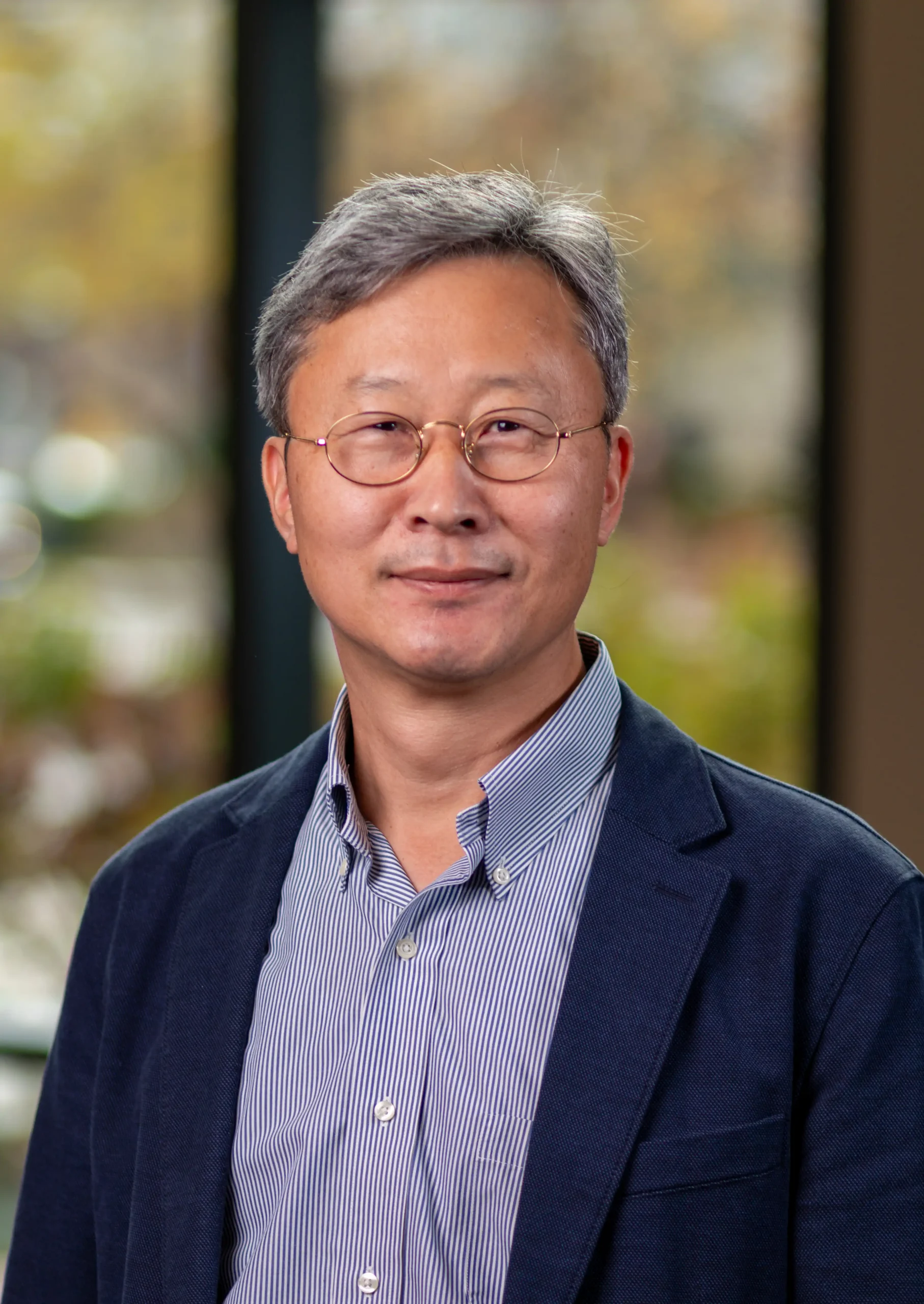
Dr. Hoontaek Seo serves as Associate Professor of Finance and Chair of the Department of Accounting, Economics, and Finance at Niagara University's Holzschuh College of Business Administration, where he has been faculty since fall 2010. His office is located in Bisgrove Hall Room 354F with office hours Tuesdays and Thursdays 10 a.m.-12 p.m. and Wednesdays 1:30-3:30 p.m. He holds a Ph.D. in Finance from Michigan State University (2009), forming the foundation of his academic expertise. Research focuses on empirical corporate finance mechanisms, particularly security offerings dynamics, corporate governance structures, control systems, and divestiture strategies. His work examines how these elements influence corporate financial decision-making and market valuation processes within empirical frameworks.
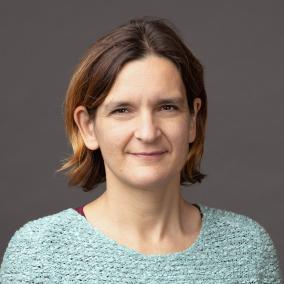
Esther Duflo is the Abdul Latif Jameel Professor of Poverty Alleviation and Development Economics in the Department of Economics at the Massachusetts Institute of Technology (MIT). She is also co-founder and co-director of the Abdul Latif Jameel Poverty Action Lab (J-PAL), holds the Chaire, Pauvreté et politiques publiques at the Collège de France, and serves as President of the Paris School of Economics. Her research focuses on understanding the economic lives of people living in poverty to help design and evaluate social policies. Her work spans multiple domains including: Development Economics Poverty Alleviation strategies Health interventions Educational programs Financial inclusion initiatives Environmental policy Governance improvements Duflo revolutionized developmental economics by pioneering the use of randomized controlled trials to test poverty reduction measures. Her empirical approach has challenged conventional opinions about development and has helped improve the efficient use of resources in poverty alleviation programs worldwide. She co-authored the influential books "Poor Economics" and "Good Economics for Hard Times" with Abhijit Banerjee, demonstrating through field experiments how specific interventions (like providing lentils to mothers for child immunization) can dramatically improve social outcomes. Her notable scientific achievements include: Sveriges Riksbank Prize in Economic Sciences in Memory of Alfred Nobel (2019) Princess of Asturias Award for Social Sciences (2015) Infosys Prize (2014) John Bates Clark Medal (2010) MacArthur "Genius Grant" Fellowship (2009) A.SK Social Science Award (2015) Duflo has established J-PAL as a global network of over a hundred affiliated professors who use scientific evidence to inform policy decisions in the fight against poverty. J-PAL has offices across Africa, Europe, Latin America and the Caribbean, North America, and South and Southeast Asia. Her work has demonstrated the crucial importance of information in policymaking, with numerous field experiments showing how carefully designed interventions can have significant impacts on social outcomes across multiple domains including health, education, and economic opportunity.
Professor Jo Barraket is a leading academic and researcher in social equity, social innovation, and public policy. As Director of the Melbourne Social Equity Institute and member of the Dilun Duwa Centre for Indigenous Business Leadership, she focuses on improving social equity through organizational innovation, cross-sector collaboration, and policy design. Her research addresses social procurement, health equity, digital inclusion, and employment pathways for marginalized groups. Her work includes landmark projects such as the Australian Digital Inclusion Index and evaluations of Commonwealth Social Enterprise Development Funds. She has secured over $11M in research grants, including multiple ARC grants, and produced over 75 scholarly publications. Her current projects compare social procurement policies in Australia and Scotland, and study youth unemployment in construction via employment-focused procurement. Key research themes include: social enterprise scaling strategies, cross-sector partnerships for policy implementation, and the role of philanthropy in equitable housing. She advises governments and OECD on inclusive employment policies and chairs major research initiatives like the Social Enterprise Impact Lab. Prof Barraket’s transdisciplinary approach combines rigorous academic research with practical outputs like policy guides and digital tools to maximize societal impact. She previously founded the Centre for Social Impact Swinburne, now a global leader in social economy research.
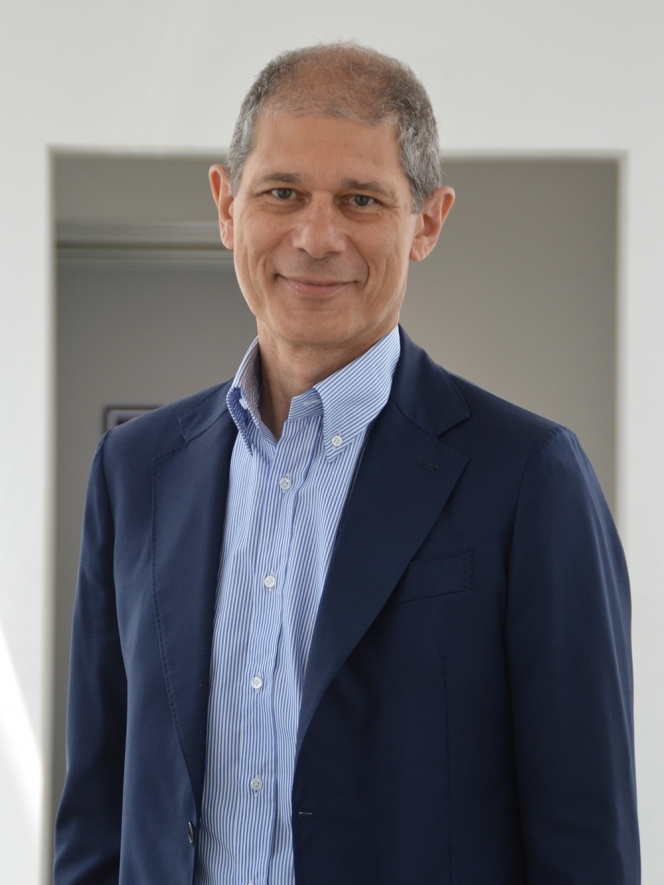
Prof. Sergio Ginebri is an Associate Professor at the Department of Jurisprudence, University of Rome Tre. He holds a PhD in Economics from Sapienza University of Rome and has extensive experience in fiscal policy, pension systems, and public finance research. His work focuses on topics like pension sustainability, social inequality, and the political economy of public debt. Education: PhD in Economics, Sapienza University of Rome (1988–1992) MA in Economics, University of Warwick (1987–1988) Laurea in Statistics and Demography, Sapienza University of Rome (1977–1984) Research Interests: Prof. Ginebri specializes in public policy, fiscal sustainability, and the social impacts of pension reforms. His research explores how demographic trends, wealth distribution, and political dynamics shape economic policies. Recent work includes analyses of longevity risks, pension equity, and fiscal policy integration in the EU. Key Projects: Coordinated studies on pension system sustainability (2002–2018) Developed models for forecasting public pension expenditure Contributed to EU tax policy observatories Awards: Recipient of the national PhD award (1994) and recognition for academic excellence in tax policy research (2001). Teaching: Teaches courses in political economy, public finance, and macroeconomics at undergraduate and graduate levels.
Dawn Song is a Professor in the Department of Electrical Engineering and Computer Science at the University of California, Berkeley, affiliated with multiple research centers including the Berkeley Artificial Intelligence Research Lab (BAIR) and the Berkeley Center for Responsible, Decentralized Intelligence (RDI). She holds leadership roles in AI safety, cybersecurity, and blockchain research. Her work bridges machine learning, security, and distributed systems, with notable contributions to formal verification, privacy-preserving technologies, and AI governance. Education: Ph.D. (2002) and M.S. (1999) in Computer Science from UC Berkeley and Carnegie Mellon University, respectively. She previously served as an Assistant Professor at Carnegie Mellon University before joining UC Berkeley in 2007. Research Interests: Dawn's work focuses on AI safety, cybersecurity, and the ethical implications of frontier AI. She explores topics such as large language model vulnerabilities, zero-knowledge proofs, blockchain security, and policy frameworks for AI governance. Her research combines theoretical rigor with practical applications, addressing challenges in secure systems, adversarial machine learning, and privacy-preserving computation. Publications: Her recent work includes groundbreaking studies on LLM memorization, smart contract decompilation, and AI agent cybersecurity evaluation. She also leads initiatives like the Singapore Consensus and California Report on AI safety priorities, emphasizing global collaboration in risk mitigation. Notable Awards: MacArthur Fellowship (2010), ACM Fellow (2019), IEEE Fellow (2019) Advising & Grants: She advises projects on AI policy and cybersecurity, securing grants from NSF, DARPA, and industry collaborations. Her lab develops tools like CyberGym for evaluating AI agents and zkPyTorch for secure machine learning. Labs & Teams: Her research groups at UC Berkeley focus on cutting-edge projects in AI safety, blockchain, and cybersecurity, collaborating with industry leaders and policymakers to advance both technical and ethical standards.
Adam Hollowell is an Adjunct Assistant Professor in the Program in Education at Duke University, where he also serves as Senior Research Associate at the Samuel DuBois Cook Center on Social Equity and Director of the Inequality Studies Minor. His teaching spans ethics, inequality studies, and history across Duke’s Kenan Institute for Ethics, Sanford School of Public Policy, and Department of History. Hollowell holds a Ph.D. from the University of Edinburgh (2009). His research focuses on inequality, higher education, public policy, and ethics, with notable work on pandemic impacts, telemedicine in education, and reproductive health access during crises. In Inequality Studies , Hollowell emphasizes understanding policies to drive social change, as highlighted in recent media coverage. His publications explore topics like student behavior shifts during the pandemic, telemedicine adoption in universities, and James Baldwin’s ethical challenges. He is a finalist for the Judith Deckers Prize (2024). Professionally, Hollowell leads projects such as Bass Connections on college contraception access and Story+ initiatives. His work bridges academia and public engagement, addressing systemic inequities through interdisciplinary approaches.
Professor Michael Ben-Gad is a Professor of Economics at City, University of London, where he has served since 2009. He previously held roles as Head of the Department of Economics (2010–2013) and Deputy Head (2008–2010). His research focuses on dynamic macroeconomics, taxation, public debt, immigration economics, and national security, with notable contributions to endogenous growth models and compositional data econometrics. He holds a PhD from the University of Chicago (1996) and has taught at institutions including the University of Houston and University of Haifa. Ben-Gad served on the U.S. National Academy of Sciences panel on immigration's economic and fiscal impacts (2014–2016) and received a 2017 Fellowship from the Royal Society of Arts (FRSA). His work spans academic journals (Economic Modelling, Journal of Economic Dynamics and Control) and media outlets (BBC, CNBC, Al Jazeera), addressing topics like Brexit economics, fiscal policy, and geopolitical challenges. He co-convenes the City Branch of Academics for Academic Freedom and is a founding member of London Universities' Council for Academic Freedom. His research grants include funding from HM Treasury/ESRC on fiscal policy and immigration (2011), the Israel Science Foundation (2007–2008), and the Samuel Ne'eman Foundation (2004). Professional roles include editorial board membership for Economic Affairs and membership of the ESRC Grant Assessment Panel (2021). He is proficient in Hebrew and contributes to policy debates on taxation, macroprudential frameworks, and defense economics.
Stephen Licht is an Associate Professor of Ocean Engineering and Graduate Director at the University of Rhode Island's College of Engineering, where he directs the Robotics Laboratory for Complex Underwater Environments (R-CUE). His research focuses on developing maritime robots capable of operating in dynamic and unpredictable environments through biologically inspired propulsion, distributed pressure sensing, model-based optimal control, and compliant underwater manipulation technologies. Ph.D. in Oceanographic and Mechanical Engineering from MIT/WHOI Joint Program (2008) B.S. in Mechanical Engineering from Yale University (1998) Former Senior Research Scientist at iRobot and Senior Robotics Engineer at Vecna Robotics Current Research Affiliate with MIT Department of Mechanical Engineering Former Visiting Faculty at Libera Università di Bolzano (2019-2020) Dr. Licht's research spans marine robotics with emphasis on biologically inspired propulsion systems that provide high authority and bandwidth thrust, nonlinear attitude control for maneuvering in dynamic conditions, compliant underwater manipulation technologies, and unmanned aerial monitoring of coastal structures. His work bridges mechanical engineering principles with oceanographic applications to create more capable underwater robotic systems that can operate in complex marine environments. His recent publications demonstrate a strong trend toward soft robotics applications for deep-sea exploration, with particular focus on jamming grippers and neutrally buoyant manipulation systems. The research also shows increasing integration of additive manufacturing techniques for field-deployable solutions and computational methods for autonomous systems operating in challenging marine environments. His work spans fundamental control theory, mechanical design, and practical field applications. Dr. Licht has secured significant research funding as both Principal Investigator and Co-Principal Investigator from major organizations including the Office of Naval Research, NOAA, NSF, and various university collaborations. His grants focus on advancing unmanned underwater vehicle technology, soft robotics for deep-sea applications, and coastal monitoring systems. Active mentor to numerous graduate and undergraduate students in Ocean Engineering Successful track record of student placements at organizations including Jaia Robotics, Scripps Institution of Oceanography, FORSSEA Robotics, and government research labs Collaborates with researchers at MIT, WHOI, University of Connecticut, University of Maine, and international institutions Licht leads the R-CUE lab which develops innovative solutions for underwater robotics challenges, with particular expertise in biomimetic propulsion, soft robotics for deep-sea applications, and autonomous systems for environmental monitoring. The lab maintains strong industry connections with OceanGate Inc. and FabNewport, and engages with local educational institutions through outreach programs with Roger Williams Middle School.
Matthew Potolsky is Professor of English at the University of Utah, specializing in nineteenth-century literature and literary theory. His career spans from 1998 Lecturer at Harvard University to current University Professorship. He earned a BA in Comparative Literature and Philosophy (1990), followed by MA and PhD in Comparative Literature (1992, 1997) from UC Irvine. Chair of English Department (2013-2016) University Professor (2014-2016) Research focuses on Decadence , Mimesis , Finance-Aesthetics intersections , and Government Secrecy . His work traces connections between financialization and decadent aesthetics, revealing how economic cycles influence artistic production. Key themes include: Decadent anti-realist literary movements Finance capital's cultural impact Decadent counterpublic formations Victorian aesthetic education debates Sublime aesthetics in national security Cosmopolitanism in literary communities Recent publications analyze: Decadent style as financialization rhetoric Reintroduction of verisimilitude theory Decadent responses to financial crises Mimetic labor in artistic production Decadent cosmopolitan counterpublics Historical parallels between financialization and literary decadence
Yuri Bobbert is a Professor of Information System Science at Antwerp Management School (AMS), part of the University of Antwerp. He holds dual PhDs from Radboud University and the University of Antwerp, focusing on IT performance measurement. His career includes roles as Global Group CSO of NN Group and UWV (Government), leading cybersecurity integrations during mergers like NN Group and Delta Lloyds. As CEO of B-ABLE (IT consultancy), he developed cybersecurity frameworks. Currently, he advises on NIS2 compliance and Zero Trust strategies. His research spans cybersecurity ROI, regulatory frameworks (e.g., NIS2), and leadership in digital security. Education PhD in Information Systems (Radboud University) PhD in Cybersecurity (University of Antwerp) Research Interests Cybersecurity governance and compliance ROSI (Return on Security Investment) CISO leadership and board communication Zero Trust architecture Risk quantification in digital ecosystems Publications & Books Authored books: Strategic Approaches to Digital Platform Security Assurance , Cybersecurity in 60 Minutes , and Digital Security Leadership Over 100 peer-reviewed publications on cybersecurity performance and governance Grants & Awards Recipient of NIS2 implementation research grants Contributor to EU cybersecurity policy discussions Labs & Teams Leads AMS cybersecurity education programs and collaborates with ON2IT on global cybersecurity strategies.
Adrian Weller is a prominent researcher and academic at the University of Cambridge, serving as a Director of Research in Machine Learning within the Department of Engineering. He holds multiple significant leadership roles including Programme Director for Trust and Society at the Leverhulme Centre for the Future of Intelligence (CFI), and previously served as Programme Director for AI at The Alan Turing Institute, the UK national institute for data science and AI. His work bridges theoretical machine learning research with practical applications and societal implications of artificial intelligence. Weller's research interests span a broad spectrum of AI and machine learning topics with a particular focus on ensuring beneficial societal outcomes. His work encompasses explainability, fairness, robustness, scalability, privacy, safety, and ethics in AI systems. He has made significant contributions to trustworthy machine learning, including developing frameworks for AI governance, certification, and human-AI collaboration. His research group actively investigates neuro-symbolic approaches, privacy-preserving techniques, and methods for improving the reliability and interpretability of AI systems. His recent publications demonstrate a strong trend toward addressing the practical challenges of deploying AI systems in real-world contexts, particularly focusing on certification frameworks, governance mechanisms, and human-centered approaches. His work spans theoretical advances in machine learning architectures while maintaining a strong connection to societal impact, with publications appearing in top venues across AI, machine learning, and interdisciplinary applications. Scientific Awards: MBE for services to digital innovation (2022 Queen's Birthday Honours) Turing AI Fellowship for Trustworthy Machine Learning Weller actively supervises a large group of PhD students and postdocs, with current students including Juyeon Heo, Yanzhi Chen, Katie Collins, Isaac Reid, Yichao Liang, Herbie Bradley, and Shoaib Siddiqui. His former students have gone on to positions at leading institutions including Google DeepMind, ETH Zurich, NYU, and MPI-IS Tübingen. He has served on numerous advisory boards including the Centre for Data Ethics and Innovation, UNESCO's expert group on AI ethics, and the World Economic Forum's Global Future Council on AI. His research has been supported through his Turing AI Fellowship and various collaborative projects focused on safe and ethical AI development. Weller leads a vibrant research group focused on trustworthy machine learning, which actively organizes workshops and conferences including ICML 2024 (where he served as Program Chair), multiple workshops on responsible AI, and events through the ELLIS network. His group collaborates extensively across disciplines, working with researchers in computer science, social sciences, law, and policy to address the multifaceted challenges of developing beneficial AI systems.
Rhenish Friedrich Wilhelm University of BonnGermany
Gül Şen is a Senior Lecturer and Privatdozentin at the Institute of Oriental and Asian Studies, University of Bonn, and also serves as a Lecturer at the University of Heidelberg. Her academic work focuses on premodern Ottoman history, historiography, and the dynamics of dependency, particularly in maritime contexts such as galley slavery and war captivity. She is actively involved in major research programs including the DFG-Priority Program 'Transottomanica' and the Bonn Center for Dependency and Slavery Studies. Her research areas include: Premodern Ottoman historiography and narrative strategies Legitimacy of rule and political transitions Maritime unfree labor and galley slavery War captivity and captivity narratives in the 18th century Dependency and asymmetrical power relations in the early modern Mediterranean Her recent publications reveal a strong thematic trend centered on the interplay between narrative construction and social power, particularly in contexts of slavery and captivity. She investigates how historical actors used storytelling to assert legitimacy, cope with crises, and negotiate identity. Her work bridges literary analysis with social history, offering nuanced understandings of agency within systems of dependency. She frequently collaborates with leading scholars like Stephan Conermann and contributes to major edited volumes and series in Ottoman studies. Her scientific awards include: DAAD Award for outstanding academic achievements (2012) Postdoctoral Scholarship from the Fritz Thyssen Foundation (2012–2013) Postdoctoral Fellowships at the Annemarie Schimmel Kolleg (2015–2016, 2018–2019) Postdoctoral Scholarship from the University of Bonn (2019–2020) She has supervised numerous B.A. and M.A. theses at the University of Bonn and Heidelberg and has secured third-party funding, including a DFG project (€192,000) from 2016–2018 and Fritz Thyssen Foundation grants. She is co-editor of the 'Ottoman Studies' and 'Otto Spies Memorial Series' book series, and holds leadership roles in the Society for Turkic, Ottoman and Turkish Studies (GTOT) and the International Association for Ottoman Social and Economic History (IAOSEH). Her academic activities are deeply embedded in collaborative and interdisciplinary research environments. She is affiliated with the Bonn Center for Dependency and Slavery Studies and contributes to the DFG-Priority Program 'Transottomanica,' where she examines mobility dynamics and captivity narratives. Her work is supported by a strong network of international collaborations and editorial engagements.
Andrew Mitchell is a Professor at the Faculty of Law, Monash University, and a member of the WTO Dispute Settlement Panelists Indicative List. He has extensive legal practice experience with Allens Arthur Robinson and consults for governments, international organizations, and the private sector. Mitchell has taught law in Australia, Canada, Indonesia, Singapore, and the US. He holds law degrees from the University of Melbourne, Harvard Law School, and a PhD from the University of Cambridge. His research focuses on international economic law, public international law, and digital trade governance, with a particular emphasis on the intersection of trade law and public health. Mitchell has secured six major grants, including an Australian Research Council Future Fellowship, and has authored over 170 books and articles. He serves as an editor for Edward Elgar’s International Economic Law Series and multiple journal editorial boards. Recent projects include 'Safeguarding Health in International Investment Agreements' (2022–2025) 'Maritime Cooperation for a Sustainable Indo-Pacific' (2021–2022) 'Global E-Commerce and Cottage Industries in India' (2020–2021) He has contributed to policy submissions on bilateral investment treaties and delivered lectures on data sovereignty and digital trade. His awards include editorial leadership roles at journals like the Journal of World Investment and Trade and Asia Pacific Law Review .
Avi Loeb , the Frank B. Baird Jr. Professor of Science at Harvard University, is a leading astrophysicist and former Chair of Harvard's Department of Astronomy (2011-2020). He directs the Institute for Theory and Computation (ITC) and the Galileo Project (2021-present), while holding the Sackler Senior Professorship at Tel Aviv University. His research spans cosmology, black holes, interstellar objects, and the search for extraterrestrial life. Education: PhD in Physics from Hebrew University of Jerusalem (1986) Former Positions: Member of the Institute for Advanced Study, Princeton (1988-1993) Loeb's research interests include: Gravitational wave detection and interstellar object analysis Simulation hypothesis and cosmic reality Technological signatures beyond the Standard Model His recent publications focus on 3I/ATLAS , gravitational SETI, and AI alignment in space exploration. Awards include being named among TIME's 25 Most Influential People in Space (2012), 14 Most Inspiring Israelis (2020), and ranking #3 in global astronomical impact (2024). He chairs the Breakthrough Starshot Initiative and advises the National Academies' Board on Physics and Astronomy.
Dr. Hassan Qudrat-Ullah is a Professor at the School of Administrative Studies, York University, and Coordinator of the Certificate in Logistics Management. He holds a PhD in Decision Sciences from NUS Business School and completed a post-doctoral fellowship at Carnegie Mellon University. His research focuses on dynamic decision making, system dynamics modeling, energy planning, and interactive learning environments. He teaches courses on quantitative methods, logistics, and decision analysis, informed by global industry experience across 20+ countries. Research interests include sustainability, climate change, systems thinking, and educational applications of decision sciences. He serves as Editor-in-Chief of the International Journal of Complexity in Applied Science and Technology and is a member of IEEE, DSI, and the International System Dynamics Society. His work has been published in Energy , Decision Support Systems , and others. Key projects include studies on 'structured-debriefing in dynamic decision making' and renewable energy policies in Africa. His recent articles (2023–2025) address AI integration in energy governance, system dynamics for supply chain resilience, and education for sustainability. Hassan advocates for systems thinking in K-12 education and enjoys traveling (visited 129 countries) and bird-watching.