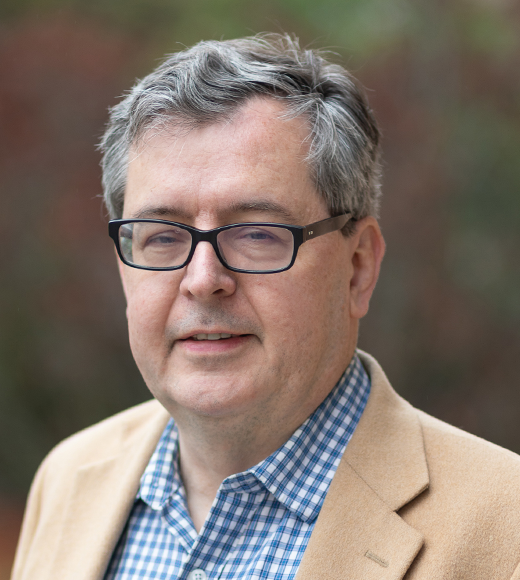
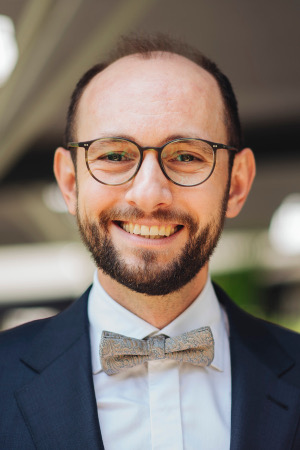
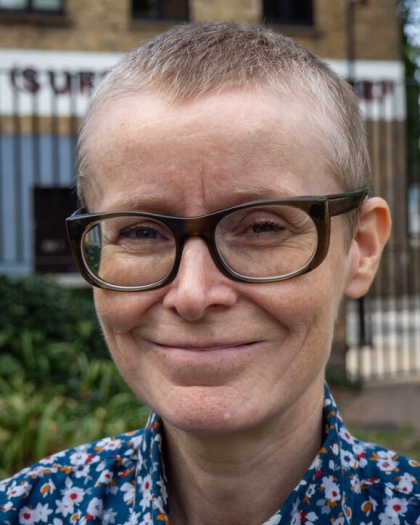
Tom Walsh is a Lecturer in International Relations at Northumbria University and the London School of Economics and Political Science (LSE). He specializes in Middle Eastern politics, focusing on the Saudi-Iranian rivalry, Yemen conflict, and Iranian women's movements. He holds a PhD from Durham University (2023) and teaches courses on international relations theory, conflict, and security. His research emphasizes humanitarian crises, securitization, and social media's role in political discourse. Education: PhD in International Politics (Durham University, 2023), MA in International Relations (Durham, 2019), BA in Philosophy and Politics (Durham, 2017). Research interests include the Yemen war, sectarian identity, disinformation, and postcolonial theory. His work contributes to UN Sustainable Development Goals related to education and global peace. Notable publications analyze visual propaganda methods (2022), Iranian involvement in Yemen (2023), and TikTok's role in Iranian activism (2024). Teaching emphasizes diversifying international relations perspectives beyond Euro-American frameworks. He has advised 18 undergraduate groups and won the 2022 Student Employee of the Year award at Durham University for organizing conferences and editing a Global Policy special section.
John P. Hunt is a Professor of Law at the UC Davis School of Law (King Hall). His research focuses on law and finance, particularly student-loan bankruptcy, municipal bankruptcy, credit rating agencies, and mortgage securitization. He holds a J.D. from Yale Law School and an M.F.E. in Financial Engineering from UC Berkeley’s Haas School of Business. Hunt previously served as Research Director of the Law and Finance Program at UC Berkeley’s Center for Law, Business, and the Economy (2008–2009) and worked as a regulatory lawyer, litigator, and credit derivatives analyst. Education: A.B. in Russian and Soviet Studies (Harvard, 1991), J.D. (Yale, 1995), M.F.E. (Berkeley, 2007) His research interests include bankruptcy law, contracts, mortgages, and regulatory arbitrage in financial systems. He has published extensively on topics like student debt policy, mortgage securitization flaws, and credit rating agency accountability. Hunt’s work often bridges legal frameworks with financial engineering principles to address systemic risks in credit markets. Awards/Honors: Member of the American Law Institute Hunt has advised on complex financial regulations and participated in conferences addressing mortgage transfer systems, insurance regulation, and municipal debt crises. He teaches courses in bankruptcy, contracts, and secured transactions. His research collaborations with economists like Richard Stanton highlight interdisciplinary approaches to financial law challenges.
Yue Wang is a Visiting Researcher at the Arctic Centre within the University of Lapland, focusing on Arctic politics and international relations. Their work examines Sino-Russian energy cooperation, transport infrastructure projects, and geopolitical dynamics in the Arctic. Research interests include China's Arctic strategy, climate securitization, and the impact of Western sanctions on Arctic energy sectors. Key collaborations involve analyzing transport infrastructure projects in Europe and the geopolitical implications of Chinese investments. Recent activities include organizing workshops on Arctic clean energy (geothermal/wind energy) and presenting on topics like 'Unintended effects of international scientific research cooperation with China in the Arctic' (2023) and 'Evolving Dynamics of Sino-Nordic Cooperation in Arctic Clean Energy' (2024). Publications span Political Geography, energy policy analysis, and Arctic governance, with a focus on de-risking strategies in infrastructure projects and security dimensions of climate change. Active participation in interdisciplinary workshops highlights their commitment to bridging research and policy in Arctic affairs.
Dr. Tony Ciochetti holds the Elmo James Burke Jr. Chair in Real Estate Finance and Development and serves as Executive Director of the Embrey Real Estate Finance and Development Program at UTSA's Carlos Alvarez College of Business. Previously, he chaired MIT's Center for Real Estate as the Thomas G. Eastman Chair and directed UNC-Chapel Hill's Center for Real Estate Development. His academic credentials include: B.A. in Finance, University of Oregon M.S. in Real Estate and Urban Land Economics, University of Wisconsin-Madison Ph.D. in Real Estate and Urban Land Economics, University of Wisconsin-Madison Dr. Ciochetti's research pioneers commercial mortgage risk analysis, pension fund real estate allocation strategies, and ESG integration in built environments. His work bridges theoretical finance with practical real estate applications, examining international market dynamics, sustainable investment frameworks, and credit risk modeling across diverse economic contexts. His publication trajectory (2000-2015) reveals evolving expertise from foundational commercial mortgage studies to contemporary sustainable real estate research. Early work focused on default risk modeling and pension fund allocation, while later research addressed carbon markets and energy efficiency, demonstrating consistent methodological rigor through proportional hazards models and international market analysis. Recognition includes: Academic Fellow of the Real Estate Research Institute As program director and frequent executive educator, Dr. Ciochetti shapes industry practice through board positions at commercial real estate firms and consulting engagements with investment banks and rating agencies. His curriculum development spans MIT, Cambridge University, and Penn, emphasizing real-world application in asset management and securitization. Global impact characterizes his career through founding Cambridge University's real estate program, six years as Senior Visiting Professor there, and teaching engagements across Asia, Africa, Europe, and the Middle East. He remains active in journal editorial boards and industry associations including the Real Estate Research Institute's Advisory Board.
Max Riedel is a Postdoctoral Researcher at the SAFE (likely Sustainable Architecture for Finance in Europe) Institute, specializing in Financial Markets. His research focuses on Capital Markets, Securitization, and Sustainable Finance. He is affiliated with the House of Finance and contributes to projects such as the Pension Finance Lab and Experiment Center. His work is associated with the Financial Markets research department at SAFE, and he has contributed to working papers and policy publications through the institute. No specific student advisees or awards are explicitly mentioned in the provided text.
Randi Gressgård is a Professor at the Centre for Women's and Gender Research (SKOK) at the University of Bergen , with additional affiliation to the International Migration and Ethnic Relations (IMER) research unit. Her work bridges sociology, political theory, and gender studies, focusing on pressing contemporary issues of identity, power, and governance. Research Interests: Her scholarship centers on gender and sexuality , migration and minorities , and urban security and governance . Thematically, she explores multiculturalism, postcolonialism, nationalism, racism, East-West geopolitics, and the politics of recognition. Her work critically examines how categories like race, gender, and sexuality are instrumentalized in political discourse and urban policy. She has made significant contributions to debates on intersectionality, resilience, necropolitics, and microaggressions in academic life. Recent Research Trends: Her most recent publications (2020–2023) analyze the racialized dimensions of urban resilience, the politicization of sexuality in Eastern Europe, and shifting notions of vulnerability in Swedish prevention policy. A recurring theme is the critique of liberal tolerance and the uncovering of hidden power mechanisms in governance and identity politics. Her work often engages with critical theorists like Foucault, Mbembe, and Kögler. Public Engagement: Gressgård is actively involved in public discourse through media interviews, opinion pieces, and panel discussions on topics such as cancel culture, LGBT+ rights, academic freedom, and gender identity. She has participated in events like the NORNDiP Conference, Christie Conference, and NORA Conference, and has contributed to public understanding during Pride and Transgender Awareness Week. Research Leadership: She is a member of the Egalitarian Futures Research Group (FUTURES) and SkeivForsk , and co-edits special journal issues on topics like Struggles over Europe and Planning for Pluralism in Nordic Cities . She leads or collaborates on projects examining urban resilience in the context of migration.
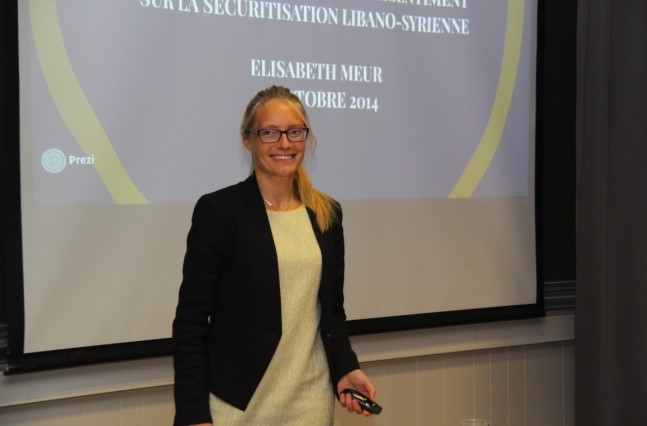
Elisabeth Meur serves as a Lecturer and Research Project Coordinator at the Centre for Education and Research in Humanitarian Action, specializing in the intersection of security studies and political psychology with regional expertise in the Middle East. Her academic credentials include: PhD in International Relations from the University of Namur focusing on resentment in Lebanese-Syrian securitization Master's in Contemporary Arab and Muslim Worlds from the Universities of Lausanne and Geneva Specialized training in Political Psychology at Stanford University and Emotions in International Relations at the University of Washington Dr. Meur's research pioneers the analysis of complex social emotions—particularly resentment, shame, and guilt following traumatic events—in shaping security policies and foreign relations. Her fieldwork in Lebanon and Syria since 2006 examines how these emotional dynamics influence securitization processes in conflict and post-conflict environments, bridging theoretical frameworks from psychology with practical security applications. As an educator, she has designed and taught research methods courses, supervised academic dissertations, and served as Assistant Academic Advisor and Lecturer for SIT Study Abroad programs in Switzerland covering Global Health and Development Policy as well as International Studies and Multilateral Diplomacy.
Emre Ozdenoren is a Professor of Economics at London Business School, where he researches microeconomics, behavioral economics, game theory, and financial market dynamics. He holds a PhD from Northwestern University and previously served as an Associate Professor at the University of Michigan. He maintains an active research fellowship at the Centre for Economic Policy Research (CEPR). Ozdenoren's research explores decision-making under uncertainty, auction mechanisms, and feedback loops between financial markets and real economies. His recent work focuses on decentralized finance (DeFi), cryptocurrency applications, and behavioral aspects of economic choices. His publications demonstrate strong thematic coherence, with recent articles (2020-2025) concentrating on: Behavioral finance and self-control in economic decisions Cryptocurrency applications in lending platforms Dynamic security design and systemic risk Market competition effects on innovation Honors include his position as a Research Fellow at CEPR, recognizing his contributions to economic theory and financial markets research.
Professor Florin Vasvari is an academic at London Business School , serving as Professor of Accounting , Executive Dean for Executive Education (Middle East) , and Academic Director of the Institute of Entrepreneurship and Private Capital . He teaches courses on Distressed Investing, Private Equity, and Venture Capital. PhD from Rotman School of Management MA from University of Toronto Research Focus : Dr. Vasvari specializes in the intersection of accounting information and credit markets , with emphasis on private equity valuation , debt contracting , and ESG disclosures . His work explores how accounting data influences secondary debt markets , bankruptcy valuation , and risk management . Publication Trends : His recent articles address evolving ESG standards , digital transformation in private equity , and debt market intermediaries . Collaborations include renowned academics like Marcel Olbert and Eli Talmor. Leadership Roles : He serves as Editor of The Accounting Review and participates in the School’s Management Board and Finance Committee. His authored books include Private Capital (2019), a two-volume reference on private equity practices.
Lydia Nussbaum is a Professor of Law and Associate Dean for Experiential Legal Education at the University of Nevada, Las Vegas (UNLV) William S. Boyd School of Law. She directs the Mediation Clinic and Saltman Center for Conflict Resolution, focusing on integrating practical ADR training into legal education. Education: B.A. in History and Italian, Cornell University J.D., University of Maryland Francis King Carey School of Law Her research examines the societal impact of Alternative Dispute Resolution (ADR) , particularly its role in addressing systemic issues like foreclosure crises , school discipline reform , and medical malpractice . She analyzes how states leverage ADR mechanisms for public policy innovation and justice accessibility. Recent publications explore topics such as mediator burnout, restorative justice in education, and ADR’s application in securitized housing markets. Her work appears in journals like the Fordham Law Review , Hastings Law Journal , and Ohio State Journal on Dispute Resolution . Scientific Awards & Honors Hoffberger Clinical Law Prize Law School Alumni Association Prize for Character and Leadership Two Dean’s Scholarship Awards Nussbaum has delivered presentations on ADR competency standards, legal needs assessments, and mediator training at national conferences including the American Bar Association Dispute Resolution Section Spring Conference and AALS Annual Meeting . She also provides expert training to agencies like the Federal Mediation and Conciliation Service .
Giulia Liberatore is a Lecturer at the University of Edinburgh's School of Social and Political Science, affiliated with both the Social Anthropology department and the Alwaleed Centre. Her research focuses on the politics of difference , particularly examining migration, Catholicism, gender, and the Somali diaspora across Europe and Italy. A graduate of the London School of Economics (PhD in Anthropology), she previously worked at the University of Oxford's Centre on Migration, Policy, and Society. Education : PhD in Anthropology, London School of Economics Her current research explores lay Catholic groups' encounters with diversity in Palermo as part of the ERC-funded Multi-Religious Encounters in Urban Settings (MEUS) project, where she collaborates with Ammara Maqsood (UCL) and Leslie Fesenmyer (Birmingham). She also works on audio-visual projects documenting Palermo's Islamic heritage with photographer Kate Stanworth and artist Stefania Artusi. Publications include the monograph Somali, Muslim, British: Striving in Securitized Britain (2017), awarded the LSE Monographs on Social Anthropology/Bloomsbury First Book Competition Prize. Her Leverhulme Early Career Fellowship (2015-2019) examined Female Islamic scholarship and guidance in the UK , challenging secular frameworks in Islamic knowledge and counseling. Scientific Awards : Leverhulme Early Career Fellowship (2015-2019), LSE Monographs on Social Anthropology/Bloomsbury First Book Competition Prize Giulia's work bridges anthropology of Islam , migration studies , and gender subjectivity , with notable contributions to understanding Somali diasporic communities and religious governance in Europe.
Daniel Lebret is a Senior Lecturer at the Cornell Peter and Stephanie Nolan School of Hotel Administration, Cornell University, where he has been teaching since earning his PhD in 2008. His academic work centers on real estate finance, urban economics, and long-term policy evaluation. His educational background includes: PhD in Hotel Administration, Cornell University, 2008 MBA, ESSEC Business School, 2002 BA in Culinary Arts, École Supérieure de Cuisine Française, 1998 Lebret's research focuses on integrating long-term sustainability into real estate and urban economic analysis. He investigates how financial and economic policies can be restructured to reduce local inequalities and promote more sustainable land usage. His work emphasizes the trade-offs between short-term gains and long-term societal costs, advocating for careful planning and evidence-based policy reform. He teaches courses such as Real Estate Financial Modeling (HADM 4205/HADM 6205/REAL 6205), Structured Finance, and Urban Economics, and actively coaches student teams in real estate case competitions. His interdisciplinary approach bridges applied economics, behavioral decision-making, and real estate finance. There are no scientific awards listed in the provided material. Lebret advises students through course projects and case competition mentorship, though no formal graduate advisees are listed. He has not disclosed grant funding details, but his academic role supports research in sustainable real estate policy and financial modeling. His work environment is embedded within the academic and research infrastructure of the Nolan School of Hotel Administration. No labs or research teams are explicitly mentioned in the text.
Farzin Lotfi-Jam is an Assistant Professor in the Department of Architecture at Cornell University's College of Architecture, Art, and Planning (AAP). He is the director of the Realtime Urbanism Lab and leads the interdisciplinary design studio Farzin Farzin, focusing on the intersection of architecture, urbanism, computation, and media. His work critically investigates how algorithms, real-time data, and simulation technologies govern urban life. His research areas include urban simulation, digital media, smart cities, and the political implications of technology in architecture. He employs spatial media and computational tools to model and critique the control mechanisms embedded in urban systems. His work has been exhibited globally at venues such as the Venice Architecture Biennale, the Sharjah Architecture Triennial, The Shed, and Storefront for Art and Architecture. The most recent publications and projects reflect a deep engagement with digital twins, surveillance, and the militarization of urban environments. His work often involves collaborative research, particularly with Mark Wasiuta and Caitlin Blanchfield, and spans academic writing, exhibition design, and built interventions. Themes across his articles include the historical continuity between military simulation (SIMNET) and contemporary urban digital twins, the cultural logics of social media, and the historical value of architectural management techniques. 2022 Architecture League of New York League Prize Epic MegaGrant recipient (2019) Inaugural Open Call Artist, The Shed (2018) Graham Foundation Grant recipient (2021) Onassis Foundation Grant (2019) M+/Design Trust Research Fellowship (2019) National Center For Preservation Technology and Training Award (2023, Co-PI) Lotfi-Jam has received significant research support from institutions such as the Graham Foundation, Alexander S. Onassis Foundation, M+/Design Trust, and The Shed. He advises research through the Realtime Urbanism Lab and contributes to academic discourse as a member of the editorial board of TAD Journal. His interdisciplinary design practice, Farzin Farzin, operates across architecture, urbanism, and media, producing research-based, multimediatic projects. He leads the Realtime Urbanism Lab at Cornell, which develops new spatial media to visualize and simulate algorithmic governance in cities. His collaborative projects, such as 'The Machine at the Heart of Man' and 'Media Habitat c. 1975', have been curated into major exhibitions, demonstrating the lab’s impact beyond academia into public and artistic spheres.
Aries A. Arugay is Professor and Chairperson of the Department of Political Science at the University of the Philippines Diliman, where he has been a regular faculty member since 2004. He teaches undergraduate and graduate courses in comparative politics, international relations, research methods, and political theory. Additionally, he serves as a Visiting Senior Fellow at the Institute of Southeast Asian Studies-Yusof Ishak Institute in Singapore, coordinating its Philippine Studies Programme. Education: Doctor of Philosophy in Political Science, Georgia State University (2014) Master of Arts in Political Science, University of the Philippines-Diliman (2004) Bachelor of Arts in Political Science (cum laude), University of the Philippines-Diliman (2000) Research Focus: Aries specializes in comparative democratization processes, civil-military relations, Indo-Pacific international relations, contentious politics, and the impact of social media on governance. His work critically examines democratic erosion, security sector reform, and disinformation dynamics in Southeast Asia, with a regional emphasis on Philippine politics and foreign policy. Publication Trends: His recent research (2019-2024) predominantly analyzes democratic backsliding, populist governance, and geopolitical shifts in the Philippines under the Duterte and Marcos administrations. Key themes include civil society repression, disinformation in elections, China-Philippines relations, and security sector militarization. Methodologically, his work blends comparative politics with international relations theory. Honors and Awards: UP Scientist III (2022-2024) & II (2019-2021) Sheth International Alumni Award for Exceptional Achievement (2019) Outstanding Young Scientist in Political Science (2020) One UP Professorial Chair (2016-present) UP Centennial Professorial Chair (2015-2018, 2020-2022) Fulbright Fellowship (PhD studies) ASEAN@50 Fellowship (New Zealand, 2018) Professional Engagements: As Editor-in-Chief of Asian Politics & Policy and editorial board member for seven international journals, he shapes academic discourse on governance and security. He is a Senior Fellow of the Philippine Public Safety College, Fellow at Social Weather Stations, and member of the National Research Council of Philippines. He actively participates in track-two diplomacy through the Foundation for the National Interest, focusing on regional security and ASEAN integration.
Thierry Braspenning-Balzacq is a Visiting Professor at the School of Social Sciences, Politics and Communication , Central European University. His academic work focuses on International Relations , Security Studies , and Securitization Theory , with significant contributions to understanding Collective Memory , Moral Responsibility , and Non-intervention Policies in global conflicts. Doctor of International Relations, University of Cambridge (2003) His research explores the intersection of Security Governance , Political Discourse , and Ethical Constraints in international affairs, particularly how Blame Games and Collective Memory shape governmental actions and conflict resolutions. Recent publications analyze the theoretical foundations of securitization and its practical applications in counter-terrorism and diplomatic performance. Scientific contributions include the editorial work Security: Dialogues Across Disciplines and the co-authored project 'Blame Games in International Arenas' . His work aligns with UN Sustainable Development Goals in education and academic innovation, emphasizing interdisciplinary approaches to global challenges. Scientific Awards Doctor of International Relations, University of Cambridge (2003) As a supervisor, he guided projects like Blame Games in International Arenas and Historical Lessons in Conflict Discourses . His expertise has been showcased through media contributions, including the George Soros Visiting Chair Lecture (2022) and analytical commentaries on security, freedom, and data retention.