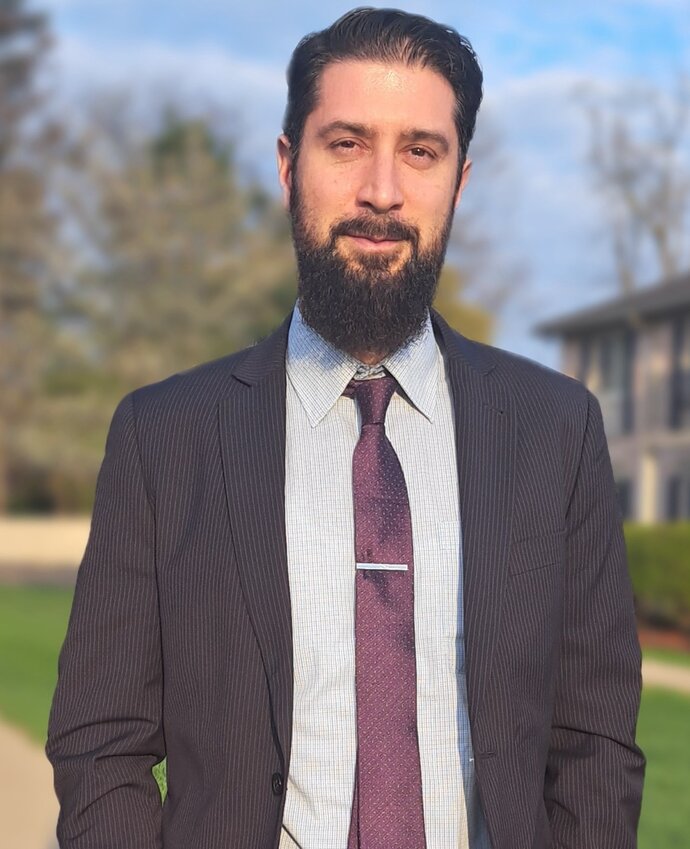
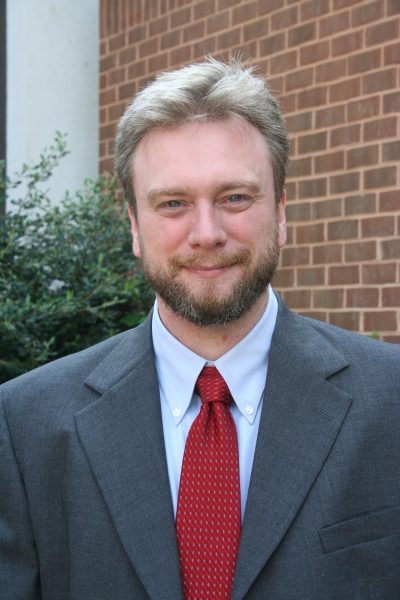
Professor Stephen Graham at Newcastle University is a leading scholar in critical urban studies, focusing on the intersections of militarism, surveillance, and urban infrastructure. His work explores how cities are shaped by and become sites of geopolitical conflict, technological control, and social inequality. Research spans urban verticality , military urbanism , and digital surveillance . Key themes include infrastructure disruption , elite spatial practices , and post-conflict urbanism . Recent publications analyze the militarization of urban space , robotic imperialism , and surveillance societies . His "Splintering Urbanism" framework remains foundational for understanding fragmented urban networks. Current work investigates vertical geopolitics , elite bunkering , and smart city security , with a focus on planetary-scale urban systems and their vulnerabilities.
Karl Gustafsson is a Professor at Stockholm University within the Department of Economic History and International Relations. His work bridges security studies , collective memory , and digital research methods in international relations. Current Role: Professor of International Relations, Stockholm University Previous Positions: Post-Doc at Lund University, Researcher at Swedish Institute of International Affairs Visiting Appointments: University of Tokyo, Osaka University, Keio University, Academia Sinica, Nordic Institute of Asian Studies Research Focus: Karl specializes in memory politics , ontological security , and anxiety-driven international dynamics , particularly in Sino-Japanese relations and digital platforms . His studies explore how historical narratives and online memory construction influence state identity and policy. Awards & Grants: Recipient of the Wang Gungwu Prize (2014) and Stockholm University Association’s award (2011). Holds Swedish Research Council and Marianne & Marcus Wallenberg Foundation grants for projects on apologies in international politics and digital memory in East Asia . Publications: His work appears in journals such as International Studies Quarterly , European Journal of International Relations , and Memory Studies , addressing topics like narrative power in East Asia, anxiety’s role in policy change , and digital humanities applications in IR.
Jeffrey Monaghan is an Associate Professor at the Institute for Criminology and Criminal Justice (ICCJ) at Carleton University. He holds a Ph.D. in Sociology from Queen’s University and serves on the editorial board of Criminological Encounters . His research focuses on the intersections of policing, surveillance, and systemic inequality, with a particular emphasis on settler colonialism, Indigenous movements, and the global expansion of security practices. Monaghan teaches courses on criminological theories, policing, and justice frameworks. His work examines how security and policing practices criminalize marginalized communities, especially Indigenous peoples and social movements resisting extractive development. Key projects include analyses of counterterrorism strategies, disability injustice in criminal systems, and the securitization of Canadian foreign aid. He has authored/co-authored books like Security Aid: Canada and the Development Regime of Security and Policing Indigenous Movements , and edited volumes such as Protests in the Information Age . Monaghan’s research integrates critical criminology, colonial studies, and sociolegal analysis. He is cross-appointed to Carleton’s Department of Sociology and Anthropology and the School of Canadian and Indigenous Studies, amplifying interdisciplinary engagement with security governance and social justice issues.
Prof. Stefan Rohdewald is a Professor of East and South-Eastern European History at the University of Leipzig since 2020. Previously, he held positions at Justus Liebig University Giessen (2013-2020), University of Passau (2003-2012), and University of Zurich (1998-2001). His research focuses on transregional histories, religious memory, and intercultural communication in Eastern Europe and the Ottoman sphere. Key roles include coordinating DFG’s Transottomanica program and leading the GiZo partnership with University of Zagreb. Education: PhD (2004, University of Zurich), Habilitation (2012, University of Passau). Research interests span memorial discourses, Ottoman-Europe relations, and sport history. Major projects include studies on Serbo-Bulgarian religious figures and transottoman mobility dynamics. He chairs conferences on minority politics and Ottoman Europe, contributing to over 70 peer-reviewed publications. Award-winning publications include Götter der Nationen (2014) and Vlad der Pfähler (2017). His work bridges Eastern European, Ottoman, and transnational histories through innovative methodological frameworks.
Myriam Dunn Cavelty serves as Deputy Head of Research and Teaching at the Center for Security Studies (CSS) at ETH Zurich, where she leads significant academic initiatives in cybersecurity and digital governance. She holds formal affiliations as an associate researcher at the Center for Advanced Security Theory at the University of Copenhagen, and has held prestigious visiting positions at Brown University, the University of Darmstadt (as a Mercator Fellow), and the Central European University. Her research expertise centers on how digital technologies influence political behavior and societal values, with particular attention to governance arrangements for digital technologies and their embedding in social, political, and economic processes. Her scholarly contributions span cybersecurity politics, cyber warfare, critical infrastructure protection, and strategic foresight, reflecting an interdisciplinary approach that bridges political science, international relations, and technology studies. Dunn Cavelty's publication record demonstrates remarkable consistency and impact, with works spanning from 2008 to the present. Her research shows an evolution from early analyses of cyber-threat construction to contemporary examinations of AI in security contexts and the political dimensions of cybersecurity governance. Her work consistently addresses the intersection of technological capabilities and political constraints, examining how states and other actors navigate security challenges in the digital domain. Mercator Fellow at the University of Darmstadt Editor-in-Chief of Contemporary Security Policy Advisory work for governments, international institutions, and corporations As an academic leader, she has advised numerous doctoral students and supervised research projects examining the political dimensions of cybersecurity. Her work with the Center for Security Studies involves directing research programs that connect academic inquiry with policy relevance, particularly in the areas of risk analysis and strategic foresight. She has established herself as a leading voice in European cybersecurity scholarship, with particular expertise in the Swiss context and broader European security frameworks.
Giuseppe Fontana is an Associate Professor of Political Economy (SECS-P/01) at the University of Sannio (UNISANNIO) in the Department of Law, Economics, Management and Quantitative Methods (DEMM). He has maintained an active research profile for over two decades, establishing himself as a significant contributor to Post-Keynesian economics and monetary theory. His research interests include: Post-Keynesian Economics Monetary Theory and Endogenous Money Macroeconomic Policy and Financial Stability Financialization and Socioeconomic Impacts Economic Methodology and History of Economic Thought International Trade and Exchange Rate Theory Stock-Flow Consistent Modeling Fontana's scholarly trajectory demonstrates a consistent focus on heterodox economic approaches, particularly Post-Keynesian theory. His work evolved from theoretical contributions in the early 2000s to increasingly policy-relevant analyses of contemporary economic challenges. His recent publications show special attention to the Eurozone crisis, the impact of the COVID-19 pandemic on European economies, and the theoretical foundations of monetary production. He frequently employs stock-flow consistent modeling to provide comprehensive analyses of macroeconomic phenomena, challenging mainstream economic frameworks with alternative theoretical perspectives. Fontana has established important collaborations with scholars like Emiliano Brancaccio, Riccardo Realfonzo, and Marc Lavoie, demonstrating his integration within international networks of heterodox economists. His work has been published in leading heterodox economics journals including the Cambridge Journal of Economics, Journal of Post Keynesian Economics, and Review of Political Economy, as well as in edited volumes with major academic publishers like Palgrave Macmillan and Edward Elgar.
Meg Rithmire serves as the James E. Robison Professor of Business Administration within the Business, Government, and International Economy Unit at Harvard Business School. She holds concurrent faculty affiliations at Harvard's Weatherhead Center for International Affairs, Fairbank Center for East Asian Studies, and Harvard Faculty Committee on Southeast Asia, where she convenes the Chinese Economy Seminar. Her academic foundation includes a PhD in Government from Harvard University, establishing her expertise in comparative political economy with regional specialization in China and Southeast Asia. Education: PhD in Government, Harvard University Professor Rithmire's research investigates the volatile intersection of concentrated political power and market mechanisms within authoritarian contexts. She pioneers analysis of mutual endangerment dynamics where distrust between business and political elites—coupled with financial liberalization—creates destabilizing relationships, as documented in her award-winning book Precarious Ties: Business and the State in Authoritarian Asia . Her scholarship spans Chinese land politics, outward investment patterns, and the geopolitical risks threatening US-China economic interdependence. Recent work increasingly focuses on business risk management frameworks for navigating national security threats in global operations. Analysis of her 15 most recent publications reveals a sharp pivot toward geopolitical risk governance, with 60% of her 2022-2025 output addressing business resilience in deteriorating US-China relations. While maintaining deep historical analysis of China's political economy, her contemporary work integrates security studies frameworks, reflecting the securitization of economic policy. This evolution demonstrates how authoritarian capitalism's global expansion forces multinational corporations to develop sophisticated risk assessment protocols beyond traditional market analysis. Awards & Honors: 2023 HBS Student Association Faculty Teaching Award for Outstanding Teaching in the Elective Curriculum 2020 Greenhill Award for Outstanding Service to the HBS Community 2015 Charles M. Williams Award for Teaching Excellence 2015 HBS Student Association Faculty Award for Outstanding Teaching in the Required Curriculum Professor Rithmire advises executive education programs on geopolitical risk management while co-chairing the U.S. Chamber of Commerce Foundation's Business Geopolitical Risk and Resilience initiative. Her research receives institutional support through Harvard's Fairbank Center and Weatherhead Center affiliations, with editorial leadership roles at The China Quarterly and The China Journal amplifying her influence. Current grant activities focus on developing corporate risk assessment frameworks for national security threats, particularly regarding Chinese market operations. She leads the Business Geopolitical Risk and Resilience initiative with the U.S. Chamber of Commerce Foundation, convening multinational executives and policymakers to develop practical risk management protocols. Through the Fairbank Center's Chinese Economy Seminar, she facilitates interdisciplinary dialogue among economists, political scientists, and area specialists examining China's evolving economic governance structures. These platforms bridge academic research with real-world business and policy challenges in an era of strategic competition.
Alexi Savov is the Marcus Nadler Professor of Finance and Economics at the New York University Stern School of Business and a Research Associate in Asset Pricing at the National Bureau of Economic Research. His research investigates the interplay between monetary policy, financial institutions, and asset markets, with a focus on banking stability and macroeconomic transmission mechanisms. Education: Ph.D. in Finance, University of Chicago Booth School of Business M.B.A., University of Chicago Booth School of Business B.A. in Mathematics and Economics (summa cum laude), Washington University in St. Louis Research Focus: Professor Savov's work centers on macro-finance, monetary policy transmission, and financial intermediation. He examines how central banking actions influence credit markets, asset prices, and banking stability, with empirical emphasis on deposit dynamics, housing markets, and risk premiums. Publications: His articles in top-tier journals explore themes including monetary policy's impact on housing, deposit-driven banking models, and shadow banking. Research often integrates theoretical frameworks with granular data to address systemic risks and regulatory implications. Awards and Honors: 2022 Journal of Finance Brattle Group Prize (Distinguished Paper) 2018 Journal of Finance Amundi Pioneer Prize (Distinguished Paper) 2011 Journal of Finance Smith-Breeden Prize (Distinguished Paper) WFA Best Paper Award in Financial Intermediations Yuki Arai Faculty Research Prize in Finance, NYU Stern
Prof. Dr. Gunther Hellmann is a Professor of Political Science at Goethe University Frankfurt, specializing in German and European foreign policy. He serves as a Principal Investigator, Board Member, and Research Field Coordinator at the Cluster of Excellence 'Normative Orders,' and has held leadership roles such as President of the World International Studies Committee (2017–2021) and Dean of the Department of Social Sciences (2004–2005). His academic contributions include co-editorship of the Journal of International Relations (ZIB) and a visiting professorship at Johns Hopkins University’s SAIS Bologna Center. Affiliations: Goethe University Frankfurt, Cluster of Excellence 'Normative Orders,' World International Studies Committee, Aspen Institute Berlin, Transatlantic Academy Education: Political Science, History, and Philosophy at Freiburg, Munich, and Washington, D.C. Research Interests: Hellmann focuses on international relations theory, foreign policy analysis, German and European foreign policy, security and peace policy, and the transformation of global and regional orders. His work emphasizes the interplay between normative expectations and practical diplomacy, with a particular interest in transatlantic relations, strategic dilemmas, and praxis theory. Publications: His recent works examine global order challenges, pragmatism in foreign policy, and the evolution of international practices. Articles from 2024 address normative expectations, economic interdependence, and post-reunification German foreign policy. Earlier works (2022–2020) analyze praxis theory, securitization, and the relevance of theoretical political science to real-world issues. Teaching: He supervises theses and exams in international relations, requiring topics related to foreign policy theory, German/EU policy, and security studies. Students must attend his colloquium and submit detailed outlines.
Dr Tim Aistrope is a Senior Lecturer in International Relations and Director of Graduate Studies (Taught) at the University of Kent's School of Politics and International Relations. Based in Canterbury, his research focuses on the intersection of political culture, security studies, and international relations theory. Key themes include the role of imagination, conspiracy theories in foreign policy, and the embodiment of political narratives. His notable work includes the book Conspiracy Theory and American Foreign Policy (2016), analyzing post-9/11 secrecy and power dynamics. He teaches courses on IR theory and security, supervising PhD students exploring topics like securitization and translation. Active in professional associations, he contributes to journals like International Studies Quarterly and International Affairs . His recent publications address pandemic governance, apocalyptic narratives, and cybersecurity. Research interests span IR theory, US/Australian foreign policy, international ethics, and cyber security. His work often bridges cultural studies and security, examining how narratives shape policy and public perception. He has advised on counter-radicalization strategies and explored the role of social media in counterterrorism. His academic contributions highlight interdisciplinary approaches to understanding global politics through lenses of culture, ethics, and critical theory.
Sami Al Daghistani is an Associate Professor in Contemporary Islamic Studies at Lund University's Centre for Theology and Religious Studies, a Researcher at the Centre for Advanced Middle Eastern Studies (CMES), and holds associate appointments at Columbia University (Middle East Institute) and the Brooklyn Institute for Social Research. His work bridges Islamic economics, environmental ethics, legal philosophy, and intellectual history, emphasizing interdisciplinary methodologies and cross-cultural analysis. Ph.D. (2017) in Islamic Studies from Leiden University, co-supervised by Columbia University and WWU Münster Postdoctoral Fellow at Norwegian School of Theology (2020-2024) Visiting Researcher at Istanbul University and Swedish Research Institute in Istanbul His research focuses on decolonizing economic thought through Islamic traditions, integrating environmental ethics, moral philosophy, and legal theory. Recent publications analyze intersections between Islamic economic cosmology, pre-modern intellectual traditions, and contemporary societal challenges. Key projects include: SWEMENA (Swedish Middle East and North Africa Network), Critical Islamic Studies consortium (founded 2021), and GreenMENA. He has received the 31st World Book of the Year Award in Islamic Studies (2024) and Islamic Economics Research Award (2024). Academic roles span teaching at Lund University (Islamology courses), guest lectures at Istanbul Forum, and leadership in international research collaborations. His translations of Ibn Baṭṭūṭa and Ibn Ṭufayl into Slovenian demonstrate linguistic expertise and cultural bridge-building.
Joshua Fairfield is the William Donald Bain Family Professor of Law and Director of Artificial Intelligence Legal Innovation Strategy at Washington and Lee University's School of Law. His expertise spans digital property, data privacy, cryptocurrencies, and virtual worlds regulation. He holds a BA from Swarthmore College and a JD from the University of Chicago. Professor Fairfield's research focuses on the intersection of law and technology, particularly in digital ownership, privacy rights, and emerging technologies like IoT and blockchain. He has authored influential books, including Owned: Property, Privacy and the New Digital Serfdom (2017) and Runaway Technology: Can Law Keep Up? (2021). His work critiques corporate control over digital devices and advocates for consumer rights in the digital age. Education: BA, Swarthmore College; JD, University of Chicago Key Achievements: Fulbright Grant (2012–2013), American Law Institute Member (2013) Consulting: Advises U.S. agencies like the White House Office of Technology and Homeland Security Privacy Office His recent articles address topics such as environmental AI ethics, NFT regulation, and smart contract governance. Fairfield emphasizes the need for updated legal frameworks to protect digital rights and ensure democratic control over technology. He directs the AI Legal Innovation Strategy initiative, focusing on integrating AI into legal systems while addressing ethical and regulatory challenges.
Andreas Fuster is an Associate Professor of Finance and SFI Senior Chair at the Swiss Finance Institute (SFI) @ EPFL, and a Research Fellow at the Centre for Economic Policy Research (CEPR). He previously worked at the Federal Reserve Bank of New York and the Swiss National Bank, where he maintains a part-time research advisor role. His research focuses on empirical finance (household finance, real estate, banking, fintech), macroeconomics, and behavioral economics, with recent work examining technological advancements in credit markets. He teaches courses in financial engineering, macroeconomics, and financial econometrics at EPFL. As Director of the Doctoral Program in Finance at EPFL and academic co-director of the EPFL Executive Education Fintech program, he oversees academic development and executive training. His editorial roles include Associate Editor at the Review of Financial Studies and Journal of Financial Economics . Education: Ph.D. from Harvard University, M.Phil. from Oxford University, B.A. from University of Lausanne (all in economics). Research Interests: Empirical finance, macroeconomics, behavioral and experimental economics, fintech, mortgage markets, and banking regulation. External Roles: Co-organizer of the BIS-CEPR-SCG-SFI Conference on Financial Intermediation and SNB-CIF Conference on Cryptoassets and Financial Innovation. Grants & Awards: Recognition for contributions to financial stability and policy analysis (no specific awards listed). His work has been published in top journals such as the Quarterly Journal of Economics and Review of Financial Studies. He advises on sustainable digital finance through Innosuisse and contributes to policy analysis via CEPR and the Federal Reserve Bank of NY.
Edward R. Morrison is the Charles Evans Gerber Professor of Law at Columbia University's Columbia Law School, where he has been a full-time faculty member since 2003. His academic rank is Professor, specializing in corporate finance, bankruptcy law, and law and economics. He holds a Ph.D. in economics (University of Chicago, 2003), J.D. (University of Chicago Law School, 2000), M.A. in economics (University of Chicago, 1997), and B.S. (University of Utah, 1994). Morrison’s research focuses on corporate reorganization, consumer bankruptcy, and systemic market risk regulation. Notable work includes studies on racial disparities in Chapter 13 filings, valuation disputes in bankruptcies, and the link between financial distress and mortality. He co-edits the Journal of Legal Studies and directs Columbia’s Executive LL.M. Program. His teaching portfolio includes Contracts, Bankruptcy Law, and Corporate Finance. He co-directs the Richard Paul Richman Center for Business, Law, and Public Policy. Awards include the Willis L.M. Reese Prize (2018) for teaching excellence and the John Wesley Steen Law Review Writing Prize (2012). Morrison’s work is supported by the National Science Foundation and Pew Charitable Trusts. He previously served as Paul H. and Theo Leffmann Professor of Commercial Law at the University of Chicago (2013–2014) and has held roles on the Supreme Court’s Advisory Committee on Bankruptcy Rules and as associate editor of the American Law & Economics Review .
Amir Sufi is the Bruce Lindsay Distinguished Service Professor of Economics and Public Policy at the University of Chicago Booth School of Business, where he has been a faculty member since 2005. He serves as a Research Associate at the National Bureau of Economic Research and co-director of its Corporate Finance Program. Bachelor’s Degree, Walsh School of Foreign Service, Georgetown University (1999) PhD in Economics, Massachusetts Institute of Technology (2005) His research focuses on finance , macroeconomics , and corporate finance . Key areas include household debt dynamics , credit market structure , income inequality , and interest rate impacts on productivity growth . Recent work examines customer capital investment and low-interest rate effects on market concentration . Selected scientific awards include the 2017 Fischer Black Prize, Econometric Society Fellow (2022), and American Academy of Arts and Sciences Fellow (2024). His peer-reviewed publications and working papers span topics from syndicated loans to global household debt cycles , with notable contributions to understanding credit-driven business cycles and government-led consumer credit programs . He teaches courses in leveraged finance , private credit , and corporate restructuring .