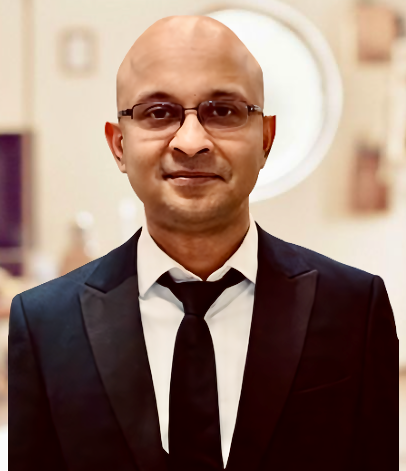
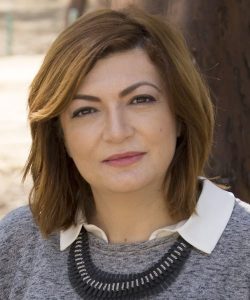
Shakil Mahmud is a Visiting Assistant Professor in the Department of Electrical and Computer Engineering at the University of Mississippi. His research focuses on medical device security, embedded systems, and hardware security for cyber-physical systems. He holds a B.S. in Electrical Engineering from Ahsanullah University of Science and Technology (2015) and a Ph.D. in Computer Science and Engineering from the University of South Florida (2023). His recent work emphasizes enhancing safety and reliability in closed-loop medical systems through biosignal modeling, hardware emulation platforms (PEP), and trojan resilience strategies. He explores design trade-offs in bioimplantable devices and efficient implementations of AI architectures on constrained platforms. Key research themes include FPGA security, IoT medical device reliability, and false alarm mitigation in IoMT systems. His publications span topics like hardware obfuscation, real-time biomedical signal processing, and neural network optimization for embedded systems.
Renata Dividino is an Assistant Professor in the Department of Computer Science at Brock University, Canada. She holds a BSc from the University of Campinas (Brazil), an MSc from Universität des Saarlandes (Germany), and a PhD from Universität Koblenz – Landau (Germany). Her research focuses on graph knowledge representation, machine learning, and their applications in web science, semantic web foundations, and provenance systems. She has worked at institutions like DFKI, Fraunhofer IGD, and the Big Data Analytics Lab at Dalhousie University, bridging academic and industrial sectors. Her industry experience includes roles as an AI Scientist and Director of Data Science in the maritime sector, where she developed patented technologies for AI-driven maritime operations and risk assessment systems. Key research contributions include improving AI system reliability via provenance analysis and advancing knowledge graph applications. Education: BSc in Computer Science, University of Campinas MSc in Computer Science, Universität des Saarlandes PhD in Computer Science, Universität Koblenz – Landau Research Interests: Provenance systems, semantic web foundations, knowledge graphs, graph-based AI, maritime AI applications, and federated learning. Her work emphasizes practical applications in complex networks, web-scale data, and social networks. Awards: No specific awards mentioned, but her contributions include patented technologies and peer-reviewed publications on provenance-driven AI transparency. Advising & Grants: Secured industry grants for R&D projects in maritime AI and data science. Her work on vessel risk assessment and infectious disease prediction demonstrates applied research impact.
Johes Bater is an Assistant Professor of Computer Science at Tufts University's School of Engineering. He joined Tufts in 2022 after postdoctoral research at Duke University's Database Group and a Ph.D. in Computer Science at Northwestern University. Education B.Sc. in Electrical Engineering (2011) from Stanford University M.Sc. in Electrical Engineering; Computer Systems (2013) from Stanford University Ph.D. in Computer Science (2020) from Northwestern University Research Focus Bater's research focuses on privacy-preserving analytics , balancing security , privacy , and utility in trustworthy database systems . His work spans differential privacy , secure computation , and data federation to enable robust distributed analytics with provable guarantees. Publications & Trends His publications since 2016 emphasize secure multi-party computation (SMCQL, 2016), differentially private indexing (Longshot, 2023), and privacy-utility trade-offs in federated databases. Key subfields include private data sharing , access pattern security , and incremental computation for outsourced systems. Awards & Grants 2022: Cisco Systems grant for "A Usable and Shareable Tool for Software Threat Modeling" Teaching & Service Bater teaches courses like Database Systems , Dissertation Research , and Special Topics in Data Infrastructure . He served on Tufts' CS PhD Admissions Committee (2022) and as a reviewer for the ACM Conference on Computer and Communications Security (2022).
Emily Kyle Fox is an Associate Professor in the Department of Computer Science at The University of Texas at Dallas (UTD), affiliated with the Erik Jonsson School of Engineering and Computer Science. She holds a Ph.D. in Computer Science from the University of Illinois at Urbana-Champaign (UIUC, 2013), followed by postdoctoral positions at Duke University and Brown University’s Institute for Computational and Experimental Research in Mathematics (ICERM). Her research focuses on algorithmic foundations with an emphasis on computational geometry, topology, and graph algorithms, particularly leveraging topological methods to design efficient algorithms for complex problems. Education Ph.D. in Computer Science, University of Illinois at Urbana-Champaign (2013) M.S. in Computer Science, University of Illinois at Urbana-Champaign (2010) B.S. in Computer Science, University of Illinois at Urbana-Champaign (2008) Research Interests Computational Geometry & Topology Graph Algorithms & Optimization Algorithm Design for Surface-Embedded and Geometric Networks Applications of Topology in Algorithm Development Publications Trends Her work includes breakthroughs in geometric transportation problems, minimum cut algorithms on hypergraphs/surface graphs, and efficient approximation schemes for transshipment and Fréchet edit distance. Recent contributions emphasize deterministic algorithms with near-linear time complexity and applications of topology to graph algorithm design. Awards NSF CAREER Award (2020) Best Teacher in Computer Science (UTD, 2020) Stutzke Dissertation Completion Fellowship (UIUC, 2013) Grants & Affiliations Dr. Fox secured a $586,654 NSF CAREER grant (2020) for topology-driven algorithm design. She serves on UTD’s Graduate Admissions Committee and actively contributes to the Algorithms and Theory Group. Labs/Teams Active in the Algorithms and Theory Group at UTD, focusing on foundational algorithm research with geometric and topological applications.
Dr. Jason Jue is Professor of Computer Science at UT Dallas' Erik Jonsson School of Engineering and Computer Science. He chairs the IEEE Communications Society Technical Committee on Optical Networking and leads research in optical networking, 5G systems, and network virtualization. His substantial publication record (2022-2025) demonstrates evolving focus on network slicing for 5G, reinforcement learning applications in network management, and quantum-secured optical networks. Recent articles increasingly integrate machine learning with networking challenges, particularly for resource allocation and slice provisioning in multi-domain environments. Significant awards include: NSF CAREER Award (2002) Best Paper Award, Optical Network Design and Modeling (2010) Best Paper Award, IEEE Globecom (2005) Research funding highlights: NSF: $449,651 for resilient network slicing (2021) Multiple NSF grants exceeding $800,000 total Industry funding from Fujitsu
Fan Yao is an Associate Professor in the Department of Electrical and Computer Engineering at the University of Central Florida's College of Engineering and Computer Science. She received her Ph.D. in Computer Engineering from The George Washington University in 2018 and currently leads the Computer Architecture and Systems Research (CASR) lab. Her research focuses on the intersection of computer architecture, security, and machine learning, with particular emphasis on hardware-based security vulnerabilities and defenses. Dr. Yao's research interests span computer architecture, hardware and system security, AI security, energy-efficient computing, and cloud computing. Her work addresses critical security challenges in modern computing systems, particularly focusing on microarchitecture attacks, hardware-based model tampering in deep learning systems, and information leakage threats in emerging non-volatile memory systems. She has developed innovative defense mechanisms against cache timing channels, branch predictor vulnerabilities, and GPU-based side channels. Her recent publications demonstrate a strong focus on AI security (particularly Deep Neural Network vulnerabilities), hardware security (including cache and branch predictor attacks), and secure memory architectures. The research shows an evolution from traditional computer architecture topics toward the security implications of AI hardware and emerging memory technologies, with increasing emphasis on practical attacks and defenses in real-world systems. NSF GW I-Corps Site Grant Award, 2018 Best Dissertation Award, GWU, 2018 The Norris & Betty Hekimian Engineering Endowment Fellowship, GWU, 2017 Top Picks in Hardware and Embedded Security, 2019 NSF CAREER project award, 2024 Dr. Yao currently leads multiple NSF-funded research projects including 'Understanding and Taming Deterministic Model Bit Flip Attacks in Deep Neural Networks' (NSF SaTC, 2020-2023), 'Towards Secure-By-Design Integration of Emerging Non-Volatile Memory in Future System' (NSF CNS, 2020-2023), and 'Architecting Secure-by-Design Memristor-Based Memories' (NSF CNS, 2019-2022). She has successfully mentored numerous PhD students, many of whom appear as first authors on top-tier conference publications, demonstrating her commitment to graduate education and research mentorship. As the leader of the CASR lab, Dr. Yao oversees a vibrant research group focused on building secure-by-design, efficient, and advanced future systems through novel techniques spanning hardware, computer architecture, and systems. The lab actively publishes at top computer architecture and security conferences including ISCA, MICRO, HPCA, IEEE S&P, and USENIX Security, with multiple papers accepted to these venues annually. The group has developed several influential tools and frameworks for security analysis, including proof-of-concept code for BranchSpec exploits that has been widely cited in the hardware security community.
Dr. Tony White is an Adjunct Professor in the School of Computer Science at Carleton University. He holds a Ph.D. from Carleton (2000), an M.A. from Cambridge, and a B.A. in Theoretical Physics. His research focuses on complex adaptive systems, including influence measurement in social networks and swarm intelligence applications. He leads the Complex Adaptive Systems Group and has extensive industry experience, previously working at Nortel. Education: Bachelor of Theoretical Physics, Cambridge University (1981) Master of Physics, Cambridge University (1981) Master of Computer Science, Carleton University (1993) Ph.D. in Electrical Engineering, Carleton University (2000) Research Interests: Artificial Intelligence Swarm Intelligence Genetic Algorithms Neural Networks Recommender Systems Search Engines His work explores influence dynamics in social networks, adaptive information systems, and evolutionary computation. Recent publications address neural network topologies, distributed control strategies, and embedded systems administration. He has also contributed to trust models, referral networks, and traffic signal optimization. Dr. White’s research bridges theoretical computer science and practical applications in robotics, network management, and autonomous systems. Labs/Teams: Leads the Complex Adaptive Systems Group, focusing on interdisciplinary approaches to complex systems and swarm intelligence.
Dr. Miao Pan is an Associate Professor in the Department of Electrical and Computer Engineering at the Cullen College of Engineering, University of Houston. He directs the PAN Lab (panlab.ece.uh.edu) focusing on wireless networking, security, and IoT applications. His educational background includes a B.S. in Electrical Engineering from Dalian University of Technology (2004), M.S. from Beijing University of Posts and Telecommunications (2007), and Ph.D. from the University of Florida (2012). Dr. Pan's research spans privacy-preserving deep learning, wireless networking, machine learning applications in communications, underwater systems, and cognitive radio networks. His interdisciplinary approach combines theoretical foundations with practical implementations in emerging technologies. Recent publications demonstrate strong focus on federated learning optimizations, wireless sensing innovations, and security mechanisms for next-generation systems. Key trends include energy-efficient mobile AI, robust authentication methods, and adaptive underwater networking solutions. Honors include: NSF CAREER Award (2014) 5 IEEE Best Paper Awards (2015-2019) University of Florida Graduate Fellowship (2007) He leads multiple federally funded projects and advises graduate researchers in wireless systems and security. The PAN Lab collaborates with industry partners to translate research into practical solutions for IoT and 5G/6G networks.
Uwe Meyer-Baese is an Associate Professor in the Electrical and Computer Engineering Department at the FAMU-FSU College of Engineering. He holds a Ph.D. (Dr.-Ing. habil) from Darmstadt University of Technology, Germany. His research focuses on Digital Signal Processing with FPGAs, VLSI design, and medical imaging applications. He has authored over 100 publications, 5 books, and holds 3 patents. He has been recognized with awards such as the Humboldt Fellowship (2009) and the FAMU-FSU Teaching Award (2007). Education History: Dr.-Ing. habil (Venia Legendi), Darmstadt University of Technology, Germany, 2003 Ph.D. (Dr. Ing.), Darmstadt University of Technology, Germany, 1995 M.S., Darmstadt University of Technology, Germany, 1989 Research Interests: FPGA-based embedded systems and real-time DSP Low-power VLSI architectures Medical image processing (e.g., breast MRI, brain tumor analysis) Hardware security and intellectual property protection Graph theory applications in biological networks Recent work includes advancements in FPGA implementations for microprocessor systems, brain network controllability studies, and AI-driven medical diagnostics. His lab focuses on bridging hardware design with biomedical applications, emphasizing practical implementations through FPGA platforms. Awards: Max-Kade Award in Neuroengineering (1997) ECE Department Research Award (2005) Humboldt Fellowship (2009) FAMU-FSU Teaching Award (2007) He has advised over 60 master’s theses and contributed to major grants in FPGA-based medical systems. His book Digital Signal Processing with Field Programmable Gate Arrays is a widely used textbook in the field.
Francesc Moll Echeto is an Associate Professor at the Universitat Politècnica de Catalunya (UPC), affiliated with the Departament d'Enginyeria Electrònica and the Escola Tècnica Superior d'Enginyeria de Telecomunicació de Barcelona. He leads the HIPICS research group focused on high-performance integrated circuits and systems design. His expertise spans energy harvesting, low-power electronics, process variability management, and secure circuit design. He coordinates the Doctorat en Enginyeria Electrònica program and has coordinated EU-funded projects like the European Processor Initiative (EPI). Education: M.S. in Physics, Universitat de les Illes Balears, 1991 Ph.D. in Electronic Engineering, Universitat Politècnica de Catalunya, 1995 Research Focus: His work addresses energy-efficient computing, including: - Design of circuits tolerant to manufacturing variability - Energy harvesting from mechanical and RF sources - Secure hardware countermeasures against side-channel attacks - RISC-V architecture implementations in advanced technologies - Edge computing and autonomous sensor systems Grants & Collaborations: Coordinator of R&D projects like 'ARQUITECTURA DE COMPUTADORES DE ALTAS PRESTACIONES' (PID2023-146511NB-I00) Part of the Barcelona Zettascale Lab consortium Collaborations with Barcelona Supercomputing Center and industry partners Awards: HiPEAC Paper Award (2023, 2024) for innovations in vector processing and DNN acceleration Labs/Teams: Leads the HIPICS group and the EFRICS subgroup, collaborating on EU-funded initiatives like the European Processor Initiative. Active in open-source silicon projects (e.g., Sargantana RISC-V processor).
Omar Haider Chowdhury is a SUNY Empire Innovation Scholar and Associate Professor in the Department of Computer Science at Stony Brook University. Previously, he was an Assistant Professor at the University of Iowa where he received the Dean's Scholar Award. He completed his postdoctoral research at Cylab, Carnegie Mellon University and Purdue University. His educational background includes a Ph.D. in Computer Science from the University of Texas at San Antonio under the supervision of Prof. Jianwei Niu and Prof. William H. Winsborough (deceased), and undergraduate education in Computer Science and Engineering at the Bangladesh University of Engineering and Technology (BUET). Chowdhury's research focuses on Computer Security and Privacy, with particular emphasis on applying formal verification, automated reasoning, runtime verification, programming languages, software engineering, and human-computer interaction techniques to solve practical security problems. His work addresses security challenges in SSL/TLS, X.509 PKI, Cellular Networks, Wi-Fi, Internet-of-Things (IoT), and Regulatory Compliance. He is also interested in fundamental problems in automated reasoning and formal verification. His recent publications demonstrate a strong focus on applying formal methods to practical security problems, with particular emphasis on cellular networks (4G/5G), IoT systems, and cryptographic protocols. His research shows a consistent pattern of bridging theoretical verification techniques with real-world security implementations, resulting in enhancements to widely used protocols like 4G LTE, 5G, and WPA2 enterprise. His scientific contributions have been recognized with numerous awards including: 2023 Test of Time Award, ACM SACMAT 2022 Dean's Scholar Award, University of Iowa 2021 Best Paper Award (Runner Up), ACM CCS 2020 Best Paper Award, ACNS 2019 DARPA Young Faculty Award Multiple Best Paper Awards at IEEE DASC, ACSAC, and NDSS Chowdhury has successfully mentored several PhD students including Dr. Moosa Yahyazadeh (now at Apple Inc.), and currently advises students including Joyanta Debnath, Muhammad Daniyal Pirwani, and Aliakbar Sadeghi. His research has been funded by both National Science Foundation (NSF) and Defense Advanced Research Projects Agency (DARPA), including a prestigious DARPA Young Faculty Award. His group's findings have directly influenced improvements in widely used security protocols and cryptographic libraries. He leads a research group focused on high-assurance software design and implementation, recently teaching courses on these topics at Stony Brook University. His research group combines expertise in formal methods, security analysis, and practical implementation to tackle emerging security challenges in modern computing systems.
Maria K. Michael is an Associate Professor at the Electrical and Computer Engineering Department (ECE), University of Cyprus, and a cofounding faculty member of the KIOS Center of Excellence. She leads the Center’s Education and Training activities and coordinates the MSc program in Intelligent Critical Infrastructure Systems, a collaboration between UCY, KIOS CoE, and Imperial College London. Her expertise spans dependability, security, and reliability in cyber-physical systems, embedded systems, and AI/ML optimization for edge intelligence. Education: BSc in Computer Science MSc in Computer Science Ph.D. in Engineering Sciences (Computer Engineering), Southern Illinois University, USA Research Focus: Hardware-enabled security, cyber-security in intelligent embedded systems, reliability of edge-based accelerators, and applications in smart grids, UAVs, robotics, and autonomous vehicles. Her work emphasizes safety-critical systems and resource-constrained environments. Grants & Team: Leads a 15-member research team (postdocs, PhD/MSc/BSc students). Funded by EU FP7, H2020, Horizon Europe, NSF, Intel Corp., and the Cyprus Research and Innovation Foundation. No scientific awards listed explicitly in provided text. Labs & Initiatives: Director of Education/Training at KIOS CoE; core contributor to the MSc program in Intelligent Critical Infrastructure Systems.
Dr. Muhammad Intizar Ali is an Assistant Professor in the School of Electronic Engineering at Dublin City University (DCU). He holds a PhD (with distinction) from Vienna University of Technology, Austria (2011) and has held roles including Adjunct Lecturer and Research Fellow at the Insight Centre for Data Analytics, NUI Galway. His primary research focuses on IoT, Data Analytics, Machine Learning, and Knowledge Graphs with applications in Smart Cities, Manufacturing, Farming, and Healthcare. Education: PhD in Computer Science, Vienna University of Technology (2007-2011) Research Interests: IoT and Edge Analytics Federated and Distributed Machine Learning Semantic Web and Knowledge Graphs Smart Manufacturing and Industry 4.0 Stream Processing and Real-Time Systems Recent Work Trends: His publications emphasize federated learning frameworks, IoT-enabled adaptive intelligence, and knowledge graph applications in industrial contexts. Recent projects include digital twin systems for predictive maintenance and ontology-driven manufacturing solutions. Grants & Projects: Lead Investigator in SFI-funded projects like MultiRoof (2025-2029) and Neuro-Symbolic AI for Building Management EU/Industry collaborations including Terrain-AI and Bentley-funded initiatives Labs & Teams: Active in DCU's Data Analysis and Machine Learning research groups, leading projects like Smart DCU Digital Twin for campus optimization.
Licong Cui, Ph.D., is an Associate Professor at the McWilliams School of Biomedical Informatics, University of Texas Health Science Center at Houston (UTHealth). She is also affiliated with the Center for Translational AI Excellence and Applications in Medicine (TEAM-AI) and the Texas Institute for Restorative Neurotechnologies (TIRN). Her research focuses on developing informatics methods to address biomedical data challenges, with expertise in ontologies, neuroinformatics, big data analytics, and clinical text mining. Dr. Cui has authored over 100 peer-reviewed publications and secured grants from NIH and NSF. Her work emphasizes ontology quality assurance, large language model applications in healthcare, and data integration frameworks. Notable contributions include developing the VaxBot-HPV chatbot for vaccine communication and advancing seizure frequency extraction methodologies using LLMs. Her honors include the 2022 AMIA New Investigator Award and 2021 NSF CAREER Award. Current projects involve enhancing NIH Common Data Elements with AI tools and improving EHR-based cohort querying through ontology-driven approaches. She collaborates on initiatives like the National Sleep Research Resource and Vaccine Ontology harmonization efforts.
Dr. Rui Dai is an Associate Professor in the Department of Computer Science at the University of Cincinnati's College of Engineering and Applied Science. Her research focuses on wireless sensor networks, multimedia communications, and video analytics for healthcare and surveillance applications. She directs multiple NSF and NIST-funded projects on perceptual-quality-aware video systems. Research interests include quality-of-experience optimization for video analytics, compressed domain feature extraction, and edge computing frameworks for intelligent surveillance. Recent work develops deep feature compression techniques, multi-camera fall detection systems, and quality-aware video distribution strategies for 5G networks. Publications demonstrate consistent innovation in video processing for resource-constrained environments, with applications spanning healthcare monitoring, public safety networks, and embedded vision systems. Current projects investigate metaverse communication challenges for 6G networks and PHP vulnerability detection through hybrid static-fuzzing analysis.