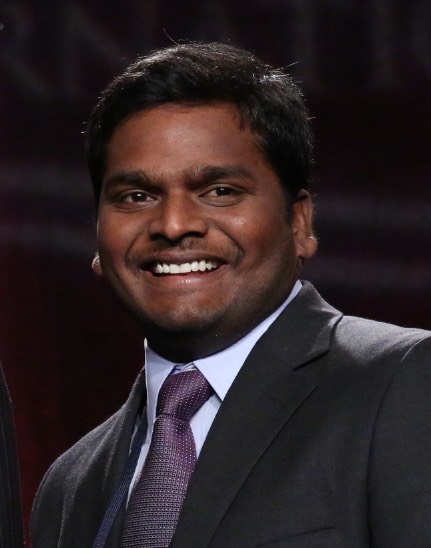
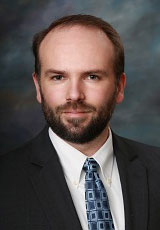
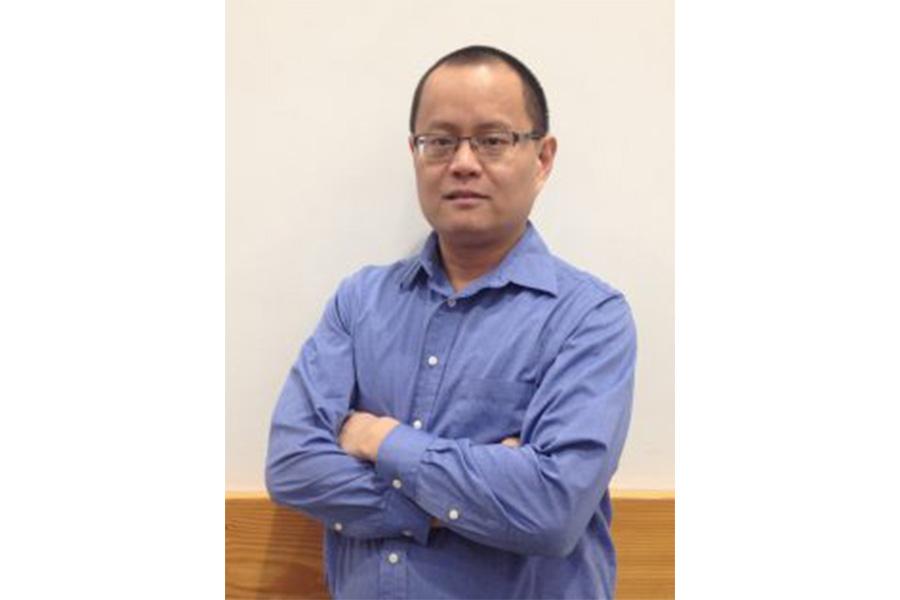
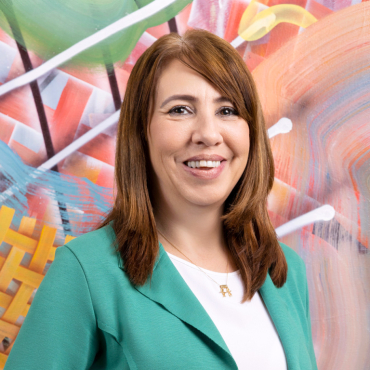
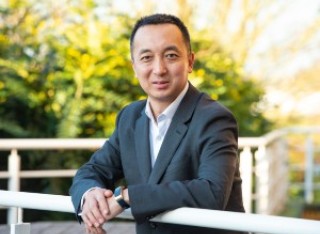
Kaliramesh (Kali) Siliveru is an Associate Professor and University Outstanding Scholar in the Department of Grain Science and Industry at Kansas State University. His work focuses on grain processing, food safety, and process modeling , with expertise in milling technologies, particle mechanics, and material handling. He holds a B.S. in Food Science from Acharya N.G Ranga Agricultural University, India, and a Ph.D. in Grain Science from Kansas State University. Dr. Siliveru’s research has produced 75+ peer-reviewed articles, 13 book chapters , and impactful studies on reducing microbial contamination in wheat-based products, optimizing pulse processing, and advancing nonthermal technologies like cold plasma. He has received prestigious awards including the ASABE Early Career Engineer of the Year and the University Distinguished Faculty Award for undergraduate mentoring. He teaches GRSC 310 (Materials Handling) , GRSC 810 (Particle Technology) , and GRSC 840 (Advanced Grain Processing) . His lab affiliations include the BIVAP Feed Quality Assurance Lab and Hal Ross Flour Mill, where he explores milling efficiency, microbial control, and sustainable food processing . Current projects address novel applications for minor millets and engineering solutions for safe, nutritious food production.
Dr. Alan Lloyd is an Assistant Professor in Civil Engineering at the University of New Brunswick, specializing in structural response to extreme loads. He directs experimental research at the Drop Mass Impact Test Facility, focusing on blast-resistant design and retrofit techniques. Education: PhD Civil Engineering, University of Ottawa MASc Civil Engineering, University of Ottawa BEng Civil Engineering, Lakehead University Diploma Civil Engineering Technology, Camosun College Research: Investigates blast/impact effects on structures, structural retrofitting, material behavior under high strain rates, and experimental validation using shock tubes and impact testing. Current projects include developing blast-resistant building components and retrofit solutions for existing infrastructure. Publications: Focus on blast dynamics, FRP composites for structural strengthening, and experimental mechanics. Recurring themes include concrete/wood material performance under explosive loads and design methodologies for blast mitigation. Awards: NSERC Graduate Scholarships National Security Innovation Competition prizes (2010, 2011) ACI Blast Prediction Contest winner Advising: Supervises graduate students researching FRP materials, concrete properties, and structural modeling. Manages industry collaborations on blast-resistant technologies. Facilities: Leads development of the Drop Mass Impact Test Facility for structural component testing under controlled impact conditions.
Dr. Jinan Allan is an Assistant Professor at Clemson University's College of Behavioral, Social and Health Sciences, Department of Psychology. She holds a PhD in Cognitive Psychology from the University of Oklahoma (2021), an MS from the same university (2018), and a BS in Mathematics-Statistics from Michigan Technological University (2015). She completed a postdoctoral fellowship at the Max Planck Institute for Human Development. Her research focuses on cognitive abilities, statistical numeracy, and their impact on decision-making in contexts like medical scenarios, cybersecurity, and extreme weather risks. She is affiliated with the Media Forensics Hub and teaches courses on judgment and decision-making. Education: PhD Cognitive Psychology, University of Oklahoma, 2021 MS Cognitive Psychology, University of Oklahoma, 2018 BS Mathematics-Statistics, Michigan Technological University, 2015 Research emphasizes behavioral science and psychometric methods to develop decision-making metrics. Key themes include risk communication for tornado/hurricane warnings, climate change judgments, and cybersecurity decision-making. Her work bridges cognitive psychology with real-world applications in disaster preparedness and public health. Recent publications analyze extreme weather response patterns, numeracy's role in science comprehension, and probabilistic risk communication strategies. She is currently reviewing graduate student applications for 2025-2026. Affiliations include the Media Forensics Hub at Clemson University, indicating interdisciplinary collaboration in digital security and information integrity.
Heiko Falk is a Professor and Head of the Institute of Embedded Systems at Technische Universität Hamburg (TUHH). His roles include serving as Workshop Chair for the 2024 Embedded Systems Week (ESWEEK), Scientific Coordinator for the B.Sc. and M.Sc. Computer Science programs, and Deputy Head of the Board of Examiners for Computer Science and Engineering. His research focuses on real-time systems, compiler optimizations, and worst-case execution time (WCET) analysis. Key areas include multi-core architectures, cache management, energy efficiency, and hardware/software co-design. Falk's work emphasizes practical compiler techniques for improving real-time performance, such as WCET-aware memory allocation, dynamic SPM optimization, and event-driven scheduling. His publications analyze shared cache interference, preemptive/non-preemptive scheduling, and DMA-aware optimizations. Recent work explores multi-objective trade-offs between WCET, energy consumption, and code size in embedded systems. No scientific awards are explicitly listed, but his contributions to WCET benchmarking (e.g., haRTStone project) and compiler frameworks demonstrate significant impact in the field. Advising and grants: No formal advisees are listed in the provided texts. Falk's work is supported through projects like teamplay, focusing on cyber-physical systems optimization. Labs/Teams: His group operates within TUHH's Institute of Embedded Systems, collaborating on projects addressing real-time system challenges in multi-core environments.
Justin Thaler is an Associate Professor in the Department of Computer Science at Georgetown University, researching algorithms and computational complexity with focus on probabilistic proof systems, verifiable computation, and streaming algorithms. Education: PhD Computer Science, Harvard University BS Computer Science and Mathematics, Yale University Research Interests: Develops protocols for verifying computations (including zero-knowledge proofs), analyzes the power of low-degree polynomials, and designs efficient streaming/sketching algorithms for large datasets. Publications: Research advances theoretical foundations of proof systems, with recent work on SNARKs, lookup arguments, and Fiat-Shamir security. Authored the monograph 'Proofs, Arguments, and Zero-Knowledge'. Advising & Labs: Advises PhD students in theoretical computer science. Contributes to open-source projects including DataSketches library of streaming algorithms. Currently on leave at a16z crypto research.
Paul Rohmeyer is an Adjunct Professor at Stevens Institute of Technology's School of Business, holding roles such as Associate Teaching Professor (2015-Present) and former Program Director for the MSIS program (2017-2019). He holds a PhD in Information Management from Stevens (2006) and has extensive industry experience in IT governance, risk management, and leadership roles across AXA Financial, SAIC/Bellcore, and American Home Products. His research focuses on Information Security Management, Risk Assessment, Project Management, and Business Intelligence. Notable work includes his 2018 book on Financial Cybersecurity Risk Management and studies on network dynamics impacting company profitability (2015), cloud computing risks (2015), and cybersecurity policy frameworks (2012). Rohmeyer is a Ponemon Institute Fellow and actively contributes to professional organizations like ISACA and PMI. He teaches advanced courses in cybersecurity, data management, and project management at both graduate and undergraduate levels, including MIS 646 Information Security Management and FIN 545 Risk Management for Financial Cybersecurity. His career spans academic leadership and executive IT roles, with a strong emphasis on bridging theoretical research and practical applications in organizational security and technological innovation.
Yang Wang is an Associate Professor in the Department of Computer Science and Software Engineering at Concordia University, holding an adjunct position since 2022. Previously, he served as an Associate Professor at the University of Manitoba (2012–2022) and worked as Chief Scientist in Computer Vision at Huawei Canada (2020–2022). He holds a PhD from Simon Fraser University, MSc from the University of Alberta, and BEng from Harbin Institute of Technology. His research focuses on computer vision, machine learning, and deep learning, particularly in meta-learning, test-time training, and continual learning. Key areas include crowd counting, anomaly detection, video highlight detection, and gaze estimation. His work has been recognized with awards such as the Falconer Emerging Researcher Rh Award (2017) and a Faculty of Science Research Chair (2019–2022). Recent research emphasizes AI models that are personalized and adaptable, leveraging techniques like meta-learning and few-shot learning. He has published extensively in top venues (CVPR, ICCV, ECCV) and holds patents in related fields. His group collaborates with industry partners like Huawei and Sightline Innovation.
Assoc. Prof. Paul Leonard is an Associate Professor in Biotherapeutics at Dublin City University (DCU), leading the Biomedical Innovation Group (BIG) within the School of Biotechnology. His research focuses on biomolecular interaction analysis, single-cell technologies, and biologics discovery, addressing challenges in oncology, cardiovascular disease, and infectious disease diagnostics. He has 20+ years of academic and industry experience, co-founding Remedy Biologics Ltd and securing over €15M in funding. His entrepreneurial roles include CSO/CTO, Lean Six Sigma process improvements, and advisory work for life sciences companies. Research interests span high-throughput antibody discovery, immunoassay development, and environmental sensing. He collaborates with academia and industry, including projects like AquaBioSens for aquatic pollutant detection. His lab employs multidisciplinary teams and holds patents in biotechnology. Paul also serves as an external examiner for Technical University Dublin’s Biomedical Diagnostics program. Key achievements include technology spin-outs, patent filings, and leadership in EU-funded projects. His work bridges academic innovation with commercial applications, emphasizing rapid diagnostic tools and therapeutic advancements.
Denise Ranghetti do Pilar is a Professor of UX Design at Savannah College of Art and Design (SCAD) in Savannah, GA, since 2022. Her academic background includes a Postgraduate Certificate in Applied Positive Psychology and a Ph.D. in Psychology from Pontificia Universidade Catolica do Rio Grande do Sul, and a B.S. in Computer Science from Catholic University of Louvain. Her research focuses on User Experience Design and User Experience Research , with specific interests in UX strategy, design thinking, UX metrics, and user research methodologies. She has taught at multiple institutions including Product Arena, UFRGS, UniRitter, and Feevale. Professionally, she has served as Staff User Experience Researcher at Nubank and User Experience Lead at SAP Labs Latin America. She is affiliated with professional organizations BayCHI and AnthtroDesign.
Vivy Suhendra serves as Associate Professor of Practice and Programme Director for Master Programmes at the National University of Singapore's School of Computing, while also holding the position of Assistant Dean for Graduate Studies. Previously, she led the Singapore Cybersecurity Consortium (SGCSC) as Executive Director from 2016 to 2022, driving collaborative cybersecurity research between academia, industry, and government agencies. Her career at NUS spans over two decades, beginning as a Research Assistant before advancing to her current leadership roles. Her academic credentials include: Ph.D. in Computer Science, National University of Singapore (2009). Thesis: "Memory Optimizations for Time-predictable Embedded Software". Advisors: Abhik Roychoudhury and Tulika Mitra. B.Comp. (Honors) in Computer Science, National University of Singapore (2004). Dr. Suhendra's research integrates Software Assurance, Cybersecurity, Security and Privacy, and Embedded Systems domains. Her work bridges theoretical foundations with practical applications, particularly in national cybersecurity ecosystem development, smart grid security protocols, denial-of-service mitigation techniques, and real-time embedded system optimization. This interdisciplinary approach enables innovative solutions for critical infrastructure protection and time-predictable software execution in multi-core environments. Her 14 selected publications (2004-2020) demonstrate an evolving research trajectory from foundational embedded systems timing analysis to applied cybersecurity solutions. Early work focused on memory optimization for predictable execution in multi-core embedded systems, which naturally transitioned into cybersecurity applications for smart grids, cloud environments, and national infrastructure. This progression highlights her ability to translate low-level system expertise into high-impact security frameworks for complex real-world systems. Scientific recognition includes: Microsoft Research Asia Fellowship (2006) Valedictorian at NUS School of Computing Ph.D. Commencement (2010) While specific graduate student advising details aren't provided, her leadership as SGCSC Executive Director involved extensive mentorship across academic-industry partnerships. She has also contributed significantly to the research community through roles including Conference Chair for ESEC/FSE 2022 and Workshops Committee Member for ICSE 2024. Dr. Suhendra established the Singapore Cybersecurity Consortium as a national platform for collaborative R&D during her directorship (2016-2022). Though no personal laboratory is specified, her research leadership manifests through cross-institutional teams focused on cybersecurity innovation, particularly in critical infrastructure protection and embedded systems security where she maintains active publication records.
Nick Heard is a Professor and Chair in Statistics at the Department of Mathematics, Faculty of Natural Sciences, Imperial College London. His research focuses on computational Bayesian inference, clustering, and changepoint analysis applied to dynamic networks (e.g., computer networks, social networks) and bioinformatics. He leads the EPSRC-funded NeST project on Network Stochastic Processes and Time Series, collaborating with universities including Bristol, Oxford, and LSE. His work bridges statistical theory with applied problems in cyber-security and neuroscience. Research Interests - Modelling large dynamic networks - Changepoint analysis and anomaly detection - Statistical methods for cyber-security - Bayesian computation and inference - Spectral clustering and graph embeddings Grants & Collaborations - Co-leads the NeST project on Dynamic graph embeddings: procedures and inference - EPSRC Programme Grant (EP/T004870/1) supporting Network Stochastic Processes and Time Series research Software & Tools - Developed open-source packages for Bayesian changepoint analysis (e.g., changepoints ) - Code for p-value combination methods ( standardised_partial_product )
Simon Moore is a Professor of Computer Engineering at the University of Cambridge's Department of Computer Science and Technology. He leads the Computer Architecture research group, focusing on secure processors and subsystems, particularly the CHERI project. His work emphasizes formal verification, hardware-software co-design, and scalable security solutions. He is a Fellow and Director of Studies at Trinity Hall, overseeing undergraduate admissions and mentoring in Computer Science. Research Interests: Moore's primary focus is the CHERI secure processor architecture, integrating RISC-V cores with formal verification. His work spans secure hardware design, memory safety, and embedded systems. Notable contributions include the CHERI-RISC-V microarchitecture, CheriABI, and formal verification frameworks. Key Projects: CHERI, CheriBSD, Morello (ARM collaboration) Recent Achievements: Test of Time Award (IEEE Security & Privacy 2025), finalist for Bhattacharyya Award (2022) Grants: Innovate UK Digital Security by Design, DARPA Mission Oriented Resilient Clouds Publications: Over 200 papers on secure architectures, including influential work on CHERI's capability model, formal verification, and hardware security. Recent focus areas include temporal memory safety, embedded system security, and GPU-based capability systems. Labs/Teams: Directs the Computer Architecture Group and collaborates with industry partners like ARM and Microsoft on CHERI implementations.
Professor Damien Field is a leading academic in global soil security and soil education at the University of Sydney, serving as Director of the Sydney Institute of Agriculture and Chair of Division 4 in the International Union of Soil Science. He holds roles in the School of Life and Environmental Sciences and chairs the Sydney Southeast Asia Centre's Executive Research Training committee. His career includes research fellowships, academic leadership roles, and a Master of Education (Higher Education). Education: Bachelor of Science in Soil Science PhD in Soil Structure (Cotton Production) Master of Education (Higher Education) Research Interests: Integrating soil security with global sustainability, soil modeling, and education. His work spans soil functionality, agroecosystems, and community-driven research in Laos and Papua New Guinea. He advocates linking research with teaching, emphasizing real-world problem-solving through innovative curricula and field schools. Publications & Grants: Over 100 peer-reviewed articles, including books on global soil security and chapters on soil sensing. Key projects include soil mapping in Laos and cocoa sustainability in PNG, funded by ACIAR and GRDC. Collaborates with universities in Cambodia, Laos, Vietnam, and the USA. Awards: Vice Chancellor’s Award for Outstanding Mentorship (2016) Fellow of Soil Science Australia (2020) Principal Fellow Higher Education Academy (2020) Roles & Lab: Leads the Sydney Institute of Agriculture and coordinates international field schools with the National University of Laos. Advises postgraduate training and chairs soil education committees internationally.
Yu Huang is an Assistant Professor of Computer Science at Vanderbilt University with a secondary appointment in the Department of Teaching and Learning at the Peabody School of Education. She is affiliated with the Institute for Software Integrated Systems, the Frist Center for Autism and Innovation, the Vanderbilt Lab for Immersive AI Translation (VALIANT), and the Vanderbilt LIVE Learning Innovation Incubator. Her research focuses on human-centered AI for software engineering, combining human cognition with machine intelligence to enhance software development processes. Educated at the University of Michigan (PhD, 2021), University of Virginia (MS, 2015), and Harbin Institute of Technology (BS, 2011), her work spans software engineering, human factors, AI, and medical imaging. Key projects include the MIND Lab, studying programmer expertise and cognitive processes, and the HumanAISE workshop on Human-Centered AI for Software Engineering. Huang has received significant recognition, including the 2025 ICPC Vaclav Rajlich Early Career Achievement Award and three ACM SIGSOFT Distinguished Paper Awards. Her research is supported by NSF, GitHub, and Vanderbilt initiatives. She advises numerous graduate and undergraduate students, emphasizing diversity and innovation in programming education.
Yue Gao is a Professor of Wireless Communications at the Institute for Communication Systems, University of Surrey. He holds a PhD from Queen Mary University of London (2007) and previously served as a lecturer, senior lecturer, and reader at QMUL. His research focuses on smart antennas, signal processing, spectrum sharing, millimeter-wave systems, and IoT in mobile/satellite communications. He has authored over 180 papers, two patents, a book, and five book chapters. Current roles include EPSRC Fellow (2018–2023) and editorial roles for IEEE Transactions on Cognitive Communications and Networking, Vehicular Technology, and Internet of Things Journal. Notable awards include the EU Horizon Prize (2016). His work spans interdisciplinary projects like GBSense (GHz Bandwidth Sensing) and contributes to 6G research. Collaborations include leadership roles at IEEE conferences and global spectrum sensing challenges. Research interests emphasize antenna design (e.g., 3D printed, Ka-band), sub-Nyquist sampling, and machine learning for spectrum reconstruction. Affiliated with Surrey’s antenna measurement facilities (NPL) for advanced testing (400 MHz to 110 GHz, THz spectroscopy). Active in mentoring PhD students in antennas/wireless communications and oversees projects like the GBSense Challenge, advancing sensor-driven spectrum management.