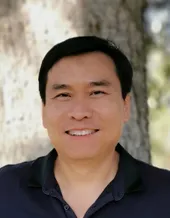
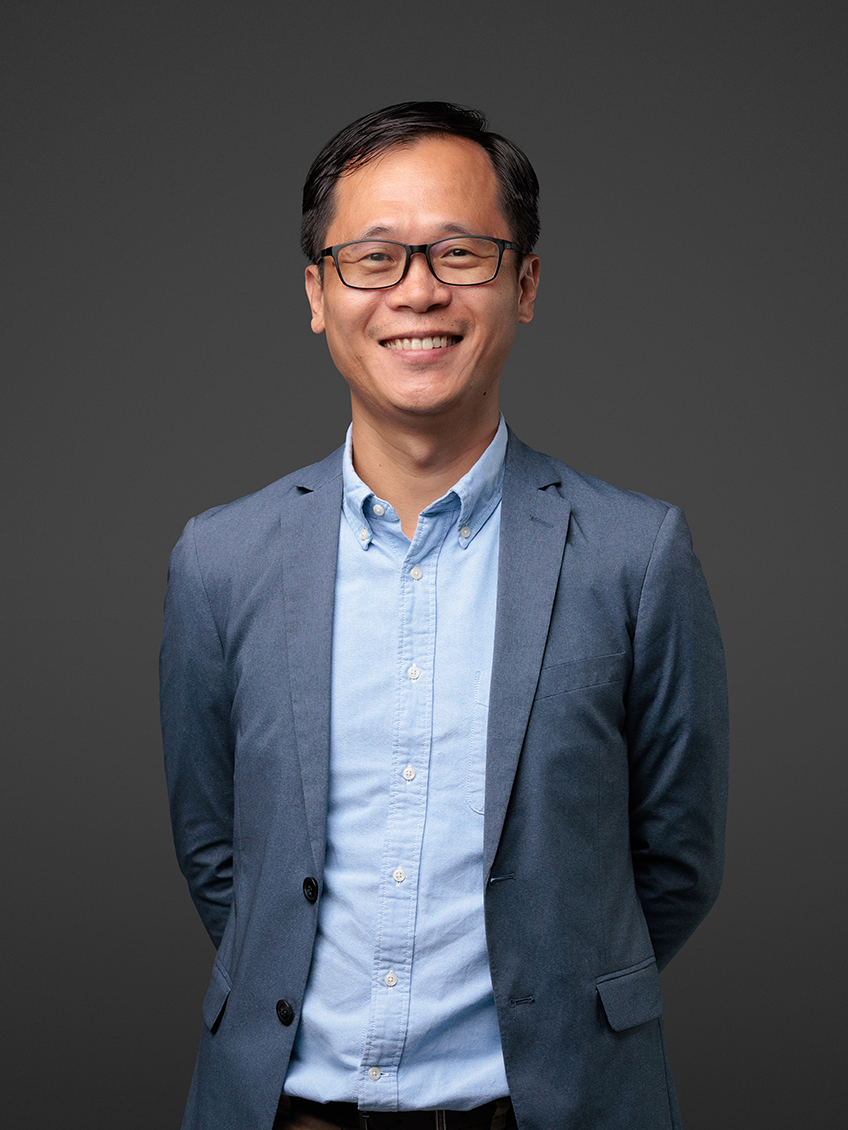
Zhenchang Xing is a Research Professor at CSIRO's Data61 and holds a Hans Fischer Senior Fellowship at TUM-IAS. With a Ph.D. in Computer Science from the University of Alberta (2008), he previously served as Associate Professor at Australian National University and Assistant Professor at Nanyang Technological University. His research focuses on software engineering for AI systems and human-centered computing. Current projects include: Automated Software-Hardware Co-Design for AI Systems Software Supply Chain Security frameworks Data Bill of Materials (DataBOM) for verifiable data ecosystems Software Testing Knowledge Graph development Professor Xing has received 10 Distinguished Paper Awards from ACM and IEEE, including the 2005 Most Influential Paper Award for UMLDiff. His work combines software engineering with responsible AI development.
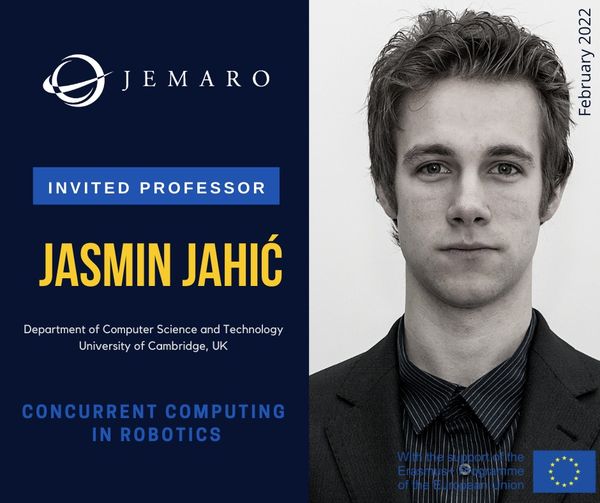
Jasmin Jahic is a Researcher at the Computer Architecture Group of the University of Cambridge, working under Timothy M. Jones. She holds a PhD in 'Supervised Testing of Embedded Concurrent Software' from the University of Kaiserslautern (2020) and has extensive experience as a researcher and project manager at the Fraunhofer Institute for Experimental Software Engineering. Her research focuses on concurrency in embedded systems, software engineering, AI integration, and low-power systems. Education: PhD in Computer Science from the University of Kaiserslautern (2020). Prior roles include Project Manager at Fraunhofer IESE and Coordinator of the European Master Program in Software Engineering. Research Interests: Concurrent computing, embedded systems architecture, AI applications in software engineering, and low-power system design. She explores concurrency bugs, synchronization mechanisms, and software architecture evolution in the context of Industry 4.0 and autonomous systems. Professional Activities: Co-Organizer of SAMOS workshops (2018–2021), Reviewer for IEEE/ACM conferences, and contributor to European Strategic Research Agendas for embedded systems. Teaches courses on software architectures for embedded systems and supervises numerous graduate students. Key Contributions: Frameworks like BOSMI for multithreaded software testing, FERA for concurrency bug detection, and research on AI adoption in traditional embedded systems. Active in HiPEAC conferences and industry partnerships.
Prof. Rocco OLIVETO is a Full Professor at the University of Molise, affiliated with the School of Biosciences and Territory. His research spans software engineering, artificial intelligence, cybersecurity, and healthcare technology. He focuses on empirical studies of developer practices, AI-driven code analysis, vulnerability detection in smart contracts, and human-centric computing. His work also addresses challenges in game development, mobile app optimization, and wearable health monitoring systems. Notable research areas include code readability assessment, machine learning applications in healthcare diagnostics, and the effectiveness of AI tools like GitHub Copilot. He has contributed to projects like QualAI (continuous quality improvement for AI systems) and 2Vita-B (cognitive and physical rehabilitation systems). His empirical studies often bridge academic research with real-world developer workflows, emphasizing practical applicability. Prof. Oliveto's recent work explores topics such as automated gameplay analysis for game debugging, detection of engagement issues in video games, and robust methods for identifying security vulnerabilities. He has also investigated Dockerfile quality, developer frustration metrics, and the ethical implications of AI in administrative document simplification.
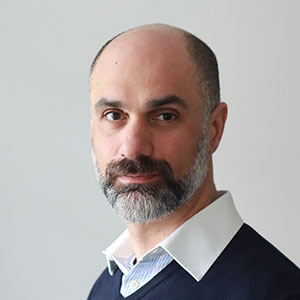
Tero Päivärinta is a Professor at the University of Oulu, Faculty of Information Technology and Electrical Engineering. His work focuses on software engineering, digital ecosystems, and cybersecurity. He specializes in empirical studies of software systems, digital twins, and autonomous driving technologies. His research explores hybrid intelligence systems, data-centric decision-making, and governance of collective ambidexterity in digital initiatives. Education: PhD holder with extensive experience in academic and industry collaborations. Key research domains include cyber-physical systems, DevSecOps automation, and IT governance in public sectors. He co-leads projects such as the NUVE Lab’s vehicle testing frameworks and contributes to initiatives like the Software-Defined Vehicle project. Research highlights include advancing knowledge graphs for manufacturing, cybersecurity compliance in DevOps pipelines, and evaluating data-driven decisions. His articles emphasize interoperability challenges, adaptive systems design, and sustainable digital transformation in public utilities. Professional contributions include organizing the TKTP Annual Symposium and co-editing volumes celebrating academic peers like Markku Oivo. His work bridges theoretical software engineering with practical applications in mobility, governance, and industrial systems.
Theocharis Kyriacou is a Reader in Computer Science at Keele University, School of Computer Science and Mathematics. He holds roles as Director of Education and Programme Director for undergraduate and postgraduate Computer Science programmes since 2018. Educated at the University of Sheffield (BEng, 2000) and University of Plymouth (PhD in Computer Science, 2004), his research focuses on Data Science and Machine Learning applied to healthcare, robotics, education, and sports science. He has led a 3-year Knowledge Transfer Partnership (KTP) with Bentley Motors and supports local SMEs through consultancy. His work spans academic research collaborations across disciplines and organizational roles in curriculum development. Research interests include machine learning applications in cardiology (predicting cardiovascular risks), wearable electronics for neurological conditions, and educational technology for curriculum design. He has published widely in journals like International Journal of Cardiology and BMJ Open Sport and Exercise Medicine , with a focus on interdisciplinary problem-solving. Awards and recognitions are not explicitly listed, but his contributions include impactful collaborations with medical institutions and industry partners. Advising and grants include guiding students in KTP projects and securing funding for robotics and healthcare-related research. He has developed new academic programmes in computer science apprenticeships and cross-school initiatives. His involvement in labs/teams includes collaborations with Keele’s pharmacy, sports science, and medicine departments, as well as international partners.
Dr. Yuting Chen is a Senior Lecturer at the University of Greenwich, School of Construction, Property, and Surveying. She holds a PhD in Construction Project Management, CFA certification, and a PGCert in International Business Law, with ongoing studies in Adjudication via RICS. Her roles include Deputy Head of School, Programme Leader for MSc Construction Project Management, and External Examiner at Regent's University London and the University of the West of Scotland. Education: PhD in Construction Project Management (2016–2021). Key qualifications include CFA, PGCert in International Business Law, and ongoing Diploma in Adjudication. Research Interests: Contract lifecycle analysis, including contract management, project governance, dispute resolution, and NLP-driven risk identification in construction contracts. Her work explores the interplay between contractual frameworks and trust in project outcomes, cultural influences on contract design, and digital tools for contract analysis. Grant and Funding: Secured £100,000 in research funding. Supervises 6 PhD students focusing on contract-related topics. Active in teaching innovation, invited to share methods at teaching conferences. Labs/Teams: Involved in interdisciplinary projects linking legal frameworks, technology (e.g., GIS, AI), and construction governance. Provides consulting and training in contract management, including FIDIC-certified courses.
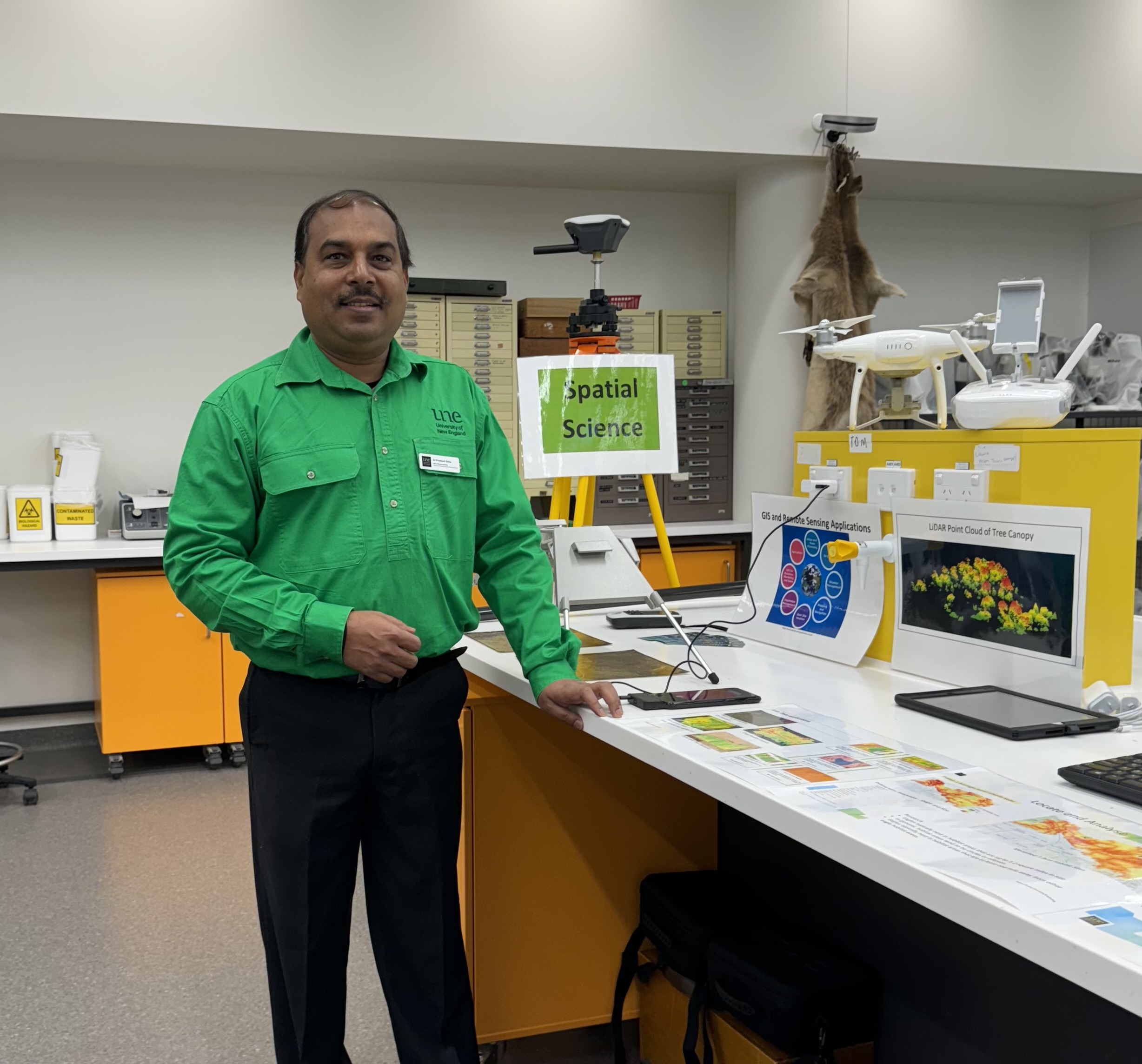
Dr. Priyakant Sinha is a Senior Lecturer in Spatial Science at the University of New England's School of Environmental and Rural Science, with over 20 years of research experience in remote sensing and geospatial science. He specializes in applying remote sensing technologies to agriculture, environmental monitoring, and natural resource management. His research focuses on: Advanced agricultural remote sensing and precision agriculture Time-series crop monitoring and yield prediction UAV/Drone-based 3D imaging for farm management Vegetation species mapping and change detection Hyperspectral and LiDAR data analysis Dr. Sinha teaches courses in GIS, spatial analysis, precision agriculture, and remote sensing applications. He has successfully supervised multiple PhD students in areas ranging from flood hazard mapping to drought monitoring using earth observation data. Technical expertise includes advanced digital image processing, GIS analysis and modeling, and specialized software including ENVI, ArcGIS, QGIS, and Pix4D. He develops innovative methods for temporal change analysis using machine learning and Google Earth Engine.
Eilif B. MULLER is a Professor in the Department of Neurosciences at Université de Montréal, Principal Investigator of the Architectures of Biological Learning Lab (ABL-Lab) at CHU Sainte-Justine Research Center, and Associate Faculty at Mila (Quebec AI Institute). His work bridges neuroscience and artificial intelligence, focusing on understanding how sensory perception is learned in the neocortex through biophysical simulations and deep learning models. He holds affiliations with IVADO (Institute for Data Valorization) and contributes to strategic initiatives like the UNIQUE Québec Center. His research integrates empirical neurophysiology with computational models, exploring dendritic processing and synaptic plasticity to inform both biological understanding and AI advancements. Teaches NSC-6044 and NSC-6045 (Neuroscience Colloquia) at Université de Montréal. Leads projects on neocortical learning mechanisms and their implications for neurodevelopmental disorders. Recipient of grants from CRSNG (Natural Sciences and Engineering Research Council), FRSQ (Health Research Fund), and institutional funding. Publications span topics in computational neuroscience, neural network modeling, and interdisciplinary AI-neuroscience research. Collaborates extensively across institutions to advance large-scale brain simulations and data-driven models.
Talal Shaikh is an Associate Professor at Heriot-Watt University's School of Mathematical and Computer Sciences in Dubai. He serves as Director of Undergraduate Studies and Programme Director for BSc Computer Science, BSc CS (AI), and MSc Software Engineering. With a decade of industry experience as a Chief Information Officer and Software Engineer, he bridges practical insights with academic research. Research Interests: Pervasive Computing, IoT/M2M, AI/ML, WiFi Sensing for Healthcare, Financial Machine Learning, Educational Technology Awards: Teaching Excellence Awards (2017/18), Fellow of the Higher Education Academy (FHEA), multiple Learning and Teaching Oscars (2016, 2017, 2018) His work spans Ubiquitous Computing and IoT , focusing on sensor networks and WiFi-based sensing for healthcare. In Artificial Intelligence , he applies ML to robotics, financial analytics, and educational innovation. Recent articles analyze Reinforcement Learning , Emotion Recognition , and WiFi Sensing applications. His teaching emphasizes student-centric learning, with over 100 supervised dissertations achieving distinctions. Collaborations include international conferences and interdisciplinary research in smart environments and adaptive systems.
Adlen Ksentini is a Professor at EURECOM, a leading graduate school and research center in Sophia Antipolis, France, specializing in digital science and communication systems. His extensive research focuses on next-generation mobile networks (5G/6G), network management, and the integration of artificial intelligence with telecommunications infrastructure. Dr. Ksentini actively contributes to major EU research initiatives including 6G-BRICKS and AC3, serving as a key researcher and project leader in the development of future network architectures. Dr. Ksentini's research interests center around network slicing, intent-based networking, edge computing, and the application of machine learning to network management problems. His work bridges theoretical advancements with practical implementations in 5G/6G systems, with particular emphasis on zero-touch network management, energy efficiency optimization, quality of service assurance, and the integration of large language models with network operations. His research has significantly contributed to the development of O-RAN (Open Radio Access Network) frameworks and the evolution of network automation. His recent publication trends reveal a strategic shift toward AI-native network architectures, with increasing focus on integrating large language models (LLMs) with network management systems. His work demonstrates a clear progression from traditional network management approaches to more autonomous, AI-powered systems capable of intent-based configuration, self-optimization, and predictive maintenance. The publications show strong emphasis on practical implementations within the 6G research ecosystem, addressing critical challenges in network slicing, resource allocation, and energy efficiency. As a research supervisor, Dr. Ksentini mentors several PhD students including Abdelkader Mekrache, Karim Boutiba, Bouziane Brik, and Houda Hafi, who frequently appear as co-authors on his publications. His research is primarily funded through major EU research projects such as 6G-BRICKS (Building Reusable Testbed Infrastructures for Cloud-to-Device Breakthrough Technologies) and AC3 (which focuses on Cloud Edge Continuum). Dr. Ksentini is actively involved with the 6G-BRICKS project consortium and the AC3 project team, where he contributes to developing next-generation network architectures that integrate communication, computing, and sensing capabilities. His work within these projects focuses on creating reusable testbed infrastructures and addressing security and trust management challenges in the cloud-edge continuum.
Mauro Pezzè is a Full Professor of Software Engineering at the Università della Svizzera italiana (USI) and Università di Milano Bicocca, leading the STAR research group since 2006. He holds a laurea from the University of Pisa and a PhD from Politecnico di Milano. His research focuses on software testing, analysis, self-adaptive systems, and cloud systems. He has held editorial roles, including Editor-in-Chief of ACM Transactions on Software Engineering and Methodologies (TOSEM), and served on numerous program committees. Education: Laurea (Pisa), PhD (Politecnico di Milano). Professional roles include Dean of the Faculty of Informatics at USI (2009-2013), visiting scientist at UC Irvine and Edinburgh, and technical lead for international projects. He co-authored a seminal book on software testing (Wiley, 2007), with over 670 citations. Research Interests: Software Testing, Self-Adaptive Systems, Cloud Computing, AI in SE, Sustainable Software. Projects include work on field-based testing, failure prediction in distributed systems, and neuro-symbolic approaches for test oracles. Grants and Advising: Led STAR Lab projects in self-healing systems, GUI testing, and semantic matching. Advised numerous PhD/postdoc students (e.g., Ciniselli, Di Grazia, Qiu). Collaborations with European tech firms on R&D initiatives. Labs/Teams: STAR Group at USI/Constructor Institute, Bicocca, and Politecnico di Milano. Current members include postdocs and PhD students working on AI-driven testing and cloud reliability.
Professor Rashid Rashidzadeh is a faculty member in the Faculty of Engineering at the University of Windsor. He specializes in Machine Learning, IoT Security, and Autonomous Systems, with a focus on integrating these technologies into engineering education. He has advised numerous students in first-year design courses and advanced research projects, including work on autonomous emergency vehicles, IoT security for 5G devices, and hyperloop pod development. His teaching responsibilities include the Cornerstone Design course, where students develop autonomous systems and navigate engineering challenges. He has organized workshops on Python and Machine Learning, engaging both university and high school students. His research projects span industrial automation (e.g., Hiram Walker distillery software integration) and high-stakes competitions like the SpaceX Hyperloop Pod Challenge. Professor Rashidzadeh has mentored over 30 students in projects such as: Programming model railcars to navigate obstacle courses Designing cybersecurity safeguards for 5G IoT devices Building hyperloop pods for high-speed transport competitions His work emphasizes hands-on learning and industry collaboration, with projects showcased in media and academic platforms.
Chen Binbin is an Associate Professor and Associate Head of Pillar (Innovation and Enterprise) in the Information Systems Technology and Design (ISTD) pillar at Singapore University of Technology and Design (SUTD). He serves as Deputy Director for the Future Communications Research and Development Programme (FCP), Singapore. Previously, he was a Principal Research Scientist at the Advanced Digital Sciences Center (now Illinois ARCS), affiliated with the University of Illinois. Education: PhD in Computer Science from National University of Singapore, and Bachelor's from Peking University. Research focuses on wireless networking, distributed systems, and cyber security for critical infrastructures like smart grids and industrial control systems. His work addresses secure communications, intrusion detection, and resilience against cyber-physical threats. Notable contributions include error-estimating coding, provenance verification in ICS, and AI-driven network security solutions. Key awards include the 2010 ACM SIGCOMM Best Paper Award for error-estimating coding research. His grants span agencies like Singapore's National Research Foundation (NRF), Cyber Security Agency (CSA), and Energy Market Authority (EMA). He leads projects on secure smart grid communication, industrial control system defense, and AI-enhanced cybersecurity tools. Technical leadership involves developing frameworks like CyberSAGE for security assessment and CMD for IoT malware detection. Active in collaborations with industry and government, his work bridges theory and practice in securing critical infrastructure systems.
Dr. Erika Leal is an Assistant Professor in the Department of Computer Science at Baylor University, where she teaches cybersecurity and advises the Cyber@Baylor student organization. She also serves as the Director of Research and Development for the Central Texas Cyber Range, contributing to regional cybersecurity infrastructure and education. Her research focuses on innovative approaches to malware analysis, particularly leveraging hardware performance counters to detect and unpack obfuscated malware. She integrates hardware-assisted techniques with machine learning to improve the detection of packed binaries and enhance software security in high-performance computing environments. Dr. Leal's recent publications demonstrate a consistent focus on hardware-based malware detection, binary analysis, and high-performance computing security, with contributions to top-tier conferences such as USENIX Security and IEEE HOST. Her work bridges low-level system behavior with practical security solutions. She actively contributes to the academic community through service as a Technical Program Committee member for SC23 and SC24, Session Chair at ICISSP 2023, and Diversity Chair for SC22. She also mentors the Baylor Cybersecurity Team in national competitions including CCDC and NCL. Dr. Leal earned her Ph.D. in Computer Science from Tulane University and the University of Texas at Arlington, advised by Dr. Jiang Ming, and holds a Bachelor’s in Computer Science with a minor in Business Administration from Texas Wesleyan University. She currently advises one Ph.D. student, Abanisenioluwa Orojo, and has served as an external reviewer for journals and conferences including ACM Computing Surveys and CCS. Her leadership extends beyond research into developing cybersecurity talent and promoting diversity in computing.
Ruben Martins is an Assistant Professor at Carnegie Mellon University's School of Computer Science and serves as the program director of the Master of Science in Computer Science (MSCS) . His research focuses on the intersection of constraint programming, program synthesis, analysis, and verification, with recent work aiming to make formal methods tools more accessible through automated reasoning. Ruben earned his Ph.D. with honors from the Technical University of Lisbon, Portugal (2013) , followed by postdoctoral research at the University of Oxford (2014-2015) and UT Austin (2015-2017) . Research Interests : Ruben's work bridges constraint programming and program synthesis , with applications in software verification , optimization , and automated reasoning . He has developed award-winning tools like Open-WBO , a modular MaxSAT solver that has won gold medals in international competitions. His publications span top-tier venues such as POPL , PLDI , FSE , SAT , and CP , often addressing real-world challenges from program analysis to network security. Scientific Awards include: Distinguished Paper Award at PLDI 2018 Distinguished Paper Award at FSE 2021 Distinguished Paper Award at SAT 2022 Gold medals for Open-WBO in MaxSAT competitions Teaching & Advising : Ruben mentors Ph.D., Master’s, and undergraduate students in research projects related to program synthesis, formal methods, and constraint solving. He teaches courses such as Bug Catching: Automated Program Verification and Advanced Topics in Logic: Automated Reasoning and Satisfiability , emphasizing hands-on experience with tools like Why3. His advising spans topics from AI-driven program repair to network protocol verification , fostering collaboration across disciplines.