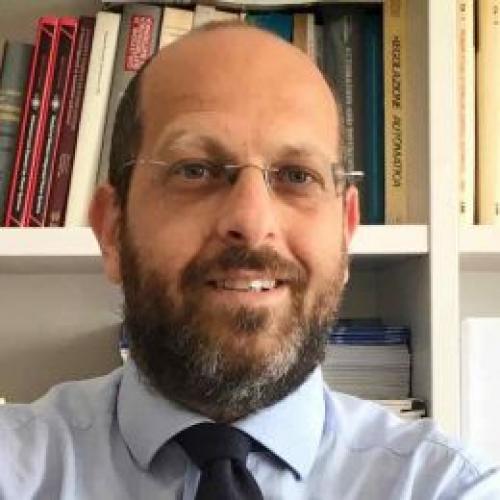
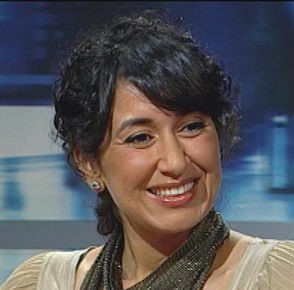
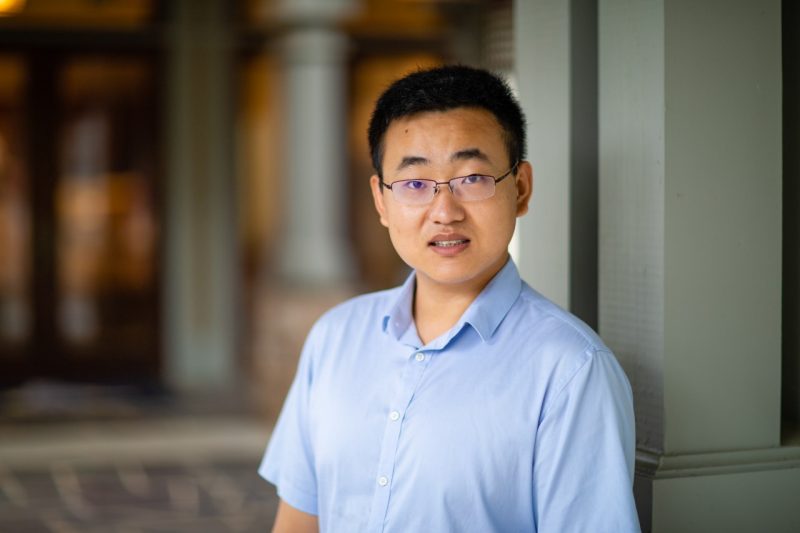
Federico Silvestro is a Full Professor at the University of Genoa , affiliated with the Naval, Electrical, Electronic and Telecommunications Engineering Department . His academic roles include being a Course Coordinator, Department Council Member, and Deputy Director of DITEN. His research focuses on Power systems stability and control Cybersecurity in energy networks Electric propulsion for marine applications Optimal energy storage and microgrid design Integration of renewable energy in maritime contexts Recent publications highlight trends in data-driven power system analysis , DC microgrid modeling , cybersecurity for virtual power plants , and advanced energy management strategies for maritime and port systems. Email: federico.silvestro@unige.it He leads the ENET-RT Lab , focusing on real-time power systems simulation and co-simulation platforms for marine and grid applications.
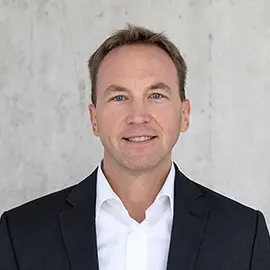
Dr. Christian Russ is a Senior Lecturer at the Institute of Business Information Technology , Zurich University of Applied Sciences (ZHAW), with expertise in digital transformation, IT leadership, and business-IT alignment. His work spans healthcare, education, and automotive sectors, focusing on agile IT governance and adaptive business models. Current roles: Program Director MAS IT-Leadership and TechManagement Key projects: ZHAW Digital Culture Assessment, Monitoring eCH Standards Research interests include digital transformation , agile IT , health informatics , and emerging technologies . Recent publications analyze post-pandemic organizational culture, medical AI regulation, and cloud infrastructure in healthcare. 2025: Organizational culture shifts during/after pandemic 2024: ML solutions in Swiss hospitals under MDR 2023: iPaaS cloud security in healthcare 2023: Agile transformation in non-profits Scientific recognitions: Best Paper Award at SMART 2018 "Educate to lead" award (Soroptimist International Europa, 2016) Active in the ZHAW Digital Health Lab, he leads projects on tech startup coaching, digital ecosystems, and IT governance. His teaching covers IT strategy, digital transformation, and enterprise service management at ZHAW.
Adrot Anouck is a Lecturer in Management Research at PSL University, focusing on crisis management, organizational improvisation, and disaster risk reduction. Her work bridges information systems with emergency response, emphasizing cross-border resilience and digital transformation in extreme situations. Key Research Themes: Crisis management, organizational resilience, information systems in disaster contexts, cross-border cooperation, and digital decision-making under uncertainty. Her publications span journals like Expert Systems with Applications and Information Systems Journal , with recent studies on portfolio management under uncertainties and data sharing barriers in disaster risk reduction. She has contributed to book chapters and conference proceedings at venues such as the Academy of Management and EGOS Colloquium, exploring topics like measurement practices during the COVID-19 pandemic and the role of technology in crisis response. Adrot collaborates extensively with researchers across disciplines, including Moriceau, Karanasios, and Friedrich. While no explicit awards or student advising details are provided in the text, her work highlights the interplay between structure, action, and digital tools in enhancing organizational resilience.
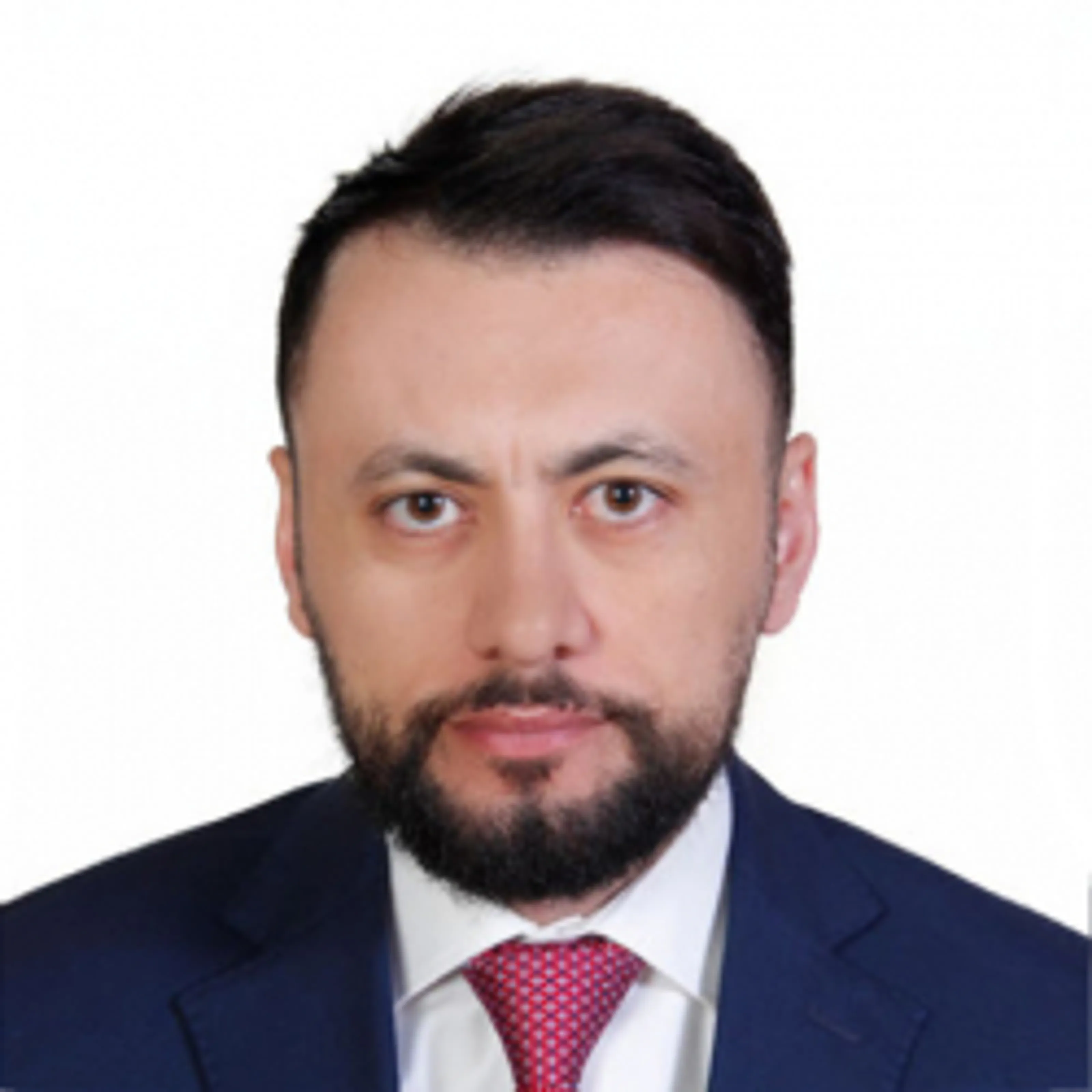
Yazan Otoum is a Part-Time Professor in the School of Electrical Engineering and Computer Science at the University of Ottawa and concurrently an Assistant Professor in the School of Computer Science and Technology at Algoma University . A licensed Professional Engineer in Ontario, he is internationally recognized for his interdisciplinary work at the intersection of cybersecurity, artificial intelligence, and the Internet of Things . Education Ph.D. in Electrical and Computer Engineering, University of Ottawa (September 2022) M.Sc. in Network Engineering and Management, DePaul University (December 2009) Research Interests Dr. Otoum’s research program is dedicated to securing the rapidly expanding IoT ecosystem. His core themes include: Scalable meta-learning models that adapt to evolving threats in resource-constrained IoT devices. Federated and transfer learning to enable privacy-preserving, collaborative intrusion detection across heterogeneous networks. Healthcare IoT (IoMT) security, ensuring safe and trustworthy medical devices and data streams. Smart-city infrastructures , where AI-driven security safeguards critical urban services. His recent work leverages large language models (LLMs) , blockchain , and differential privacy to push the boundaries of next-generation cyber-defence mechanisms. Publication Trends Across 23 peer-reviewed works (2017-2025), a clear evolution is evident: early studies established foundational deep-learning intrusion detection frameworks (DL-IDS), followed by federated and transfer-learning paradigms tailored for IoT and IoMT. The latest 2024-2025 publications integrate cutting-edge generative AI and blockchain techniques, highlighting a shift toward holistic, scalable, and privacy-preserving security ecosystems for IoT, Internet of Vehicles, and healthcare domains. Professional Recognition & Service Licensed Professional Engineer (P.Eng), Ontario Certifications: CEH, CCNA, CHFI, ISO 27001 Lead Implementer Peer reviewer for IEEE, ACM, and Elsevier journals Invited speaker and mentor in cybersecurity education initiatives Teaching & Mentorship Dr. Otoum currently teaches Data Science and Data Structures and Algorithms at the University of Ottawa. His office hours are held Mondays 11:30 AM–1:30 PM in SITE room 4075. While specific student advisees are not listed, he is actively engaged in mentoring emerging researchers and practitioners in secure AI and IoT systems. Labs & Teams Operating at the intersection of academia and industry, Dr. Otoum collaborates with multidisciplinary teams spanning embedded systems, AI laboratories, and healthcare technology partners, fostering innovation that transitions seamlessly from theory to real-world deployment.
Arlie Adkins serves as Associate Professor with dual appointments in the School of Landscape Architecture and Planning at the University of Arizona's College of Architecture, Planning and Landscape Architecture (CAPLA) and the Health Promotion Sciences Department within the Mel and Enid Zuckerman College of Public Health. He holds the position of Program Chair for the Master of Science in Urban Planning program and teaches transportation planning, planning theory, and capstone studios. Dr. Adkins earned his PhD in Urban Planning from Portland State University and Master's in City Planning from UC Berkeley. Prior to academia, he worked as a planner at TriMet (Portland's transit agency) and for carsharing pioneer Flexcar. His research program investigates transportation equity through three interconnected lenses: systemic health and safety disparities in urban transportation, socioeconomic applicability of walkability metrics, and affordable housing's role in enabling access to opportunity-rich neighborhoods. He emphasizes sociocultural contexts in built environment assessments, particularly focusing on Mexican American communities and refugee populations. His work integrates critical race theory to expose racial biases in transportation systems, as demonstrated by his nationally covered research on driver yielding behavior at crosswalks. Recent publications reveal a methodological shift toward qualitative assessment tools like the Qualitative Pedestrian Environments Data (QPED) Toolkit, addressing limitations of quantitative metrics in capturing social dimensions of walkability. His scholarship increasingly centers refugee mobility and Global South urbanism, reflecting expansion into transnational equity frameworks while maintaining core focus on transportation-housing-health intersections. Dr. Adkins has secured major funding from the Federal Highway Administration, National Institute for Transportation and Communities, and Centers for Disease Control and Prevention. He co-led the CDC-funded Physical Activity Policy Research Network (PAPRN+) collaborating center and directs the QPED initiative, which has trained practitioners through workshops including the 2019 Transportation and Communities Summit in Portland. His leadership extends to program development, evidenced by the MS Urban Planning program's #5 national ranking among public programs without PhDs by Planetizen (2023) and the UA Urban Planning Capstone's award for best graduate project from the Arizona APA chapter. He actively mentors students through capstone projects focused on transportation equity and housing justice.
Prof. Dr. Stefan Eicker is a Professor and Chairholder of Business Information Systems and Software Engineering at the Faculty of Computer Science, University of Duisburg-Essen, Germany. He has held this position since April 2004, following previous academic appointments at the Technical University of Clausthal, the University of Essen, and other German institutions. His research spans multiple domains within information systems and software engineering, with a particular focus on digital transformation and emerging technologies. Prof. Eicker's research interests center around Smart Products , Service Systems , Internet of Things , and Platform Economics . His work explores how digital technologies transform traditional business models and create new value propositions. He has developed taxonomies for smart services and investigated quality factors in self-tracking solutions, demonstrating his interdisciplinary approach that bridges technical and business perspectives. His research particularly emphasizes the integration of physical and digital components in modern products and services. His recent publications (2019-2024) reveal a strong focus on digital platform economies, smart services, and IoT applications. The research shows a clear trajectory toward understanding value creation mechanisms in digital ecosystems, with increasing attention to practical applications in energy systems, self-tracking technologies, and business model innovation. His work often involves collaboration with colleagues like Gero Strobel and Tobias Brogt, indicating an active research group focused on digital transformation. Prof. Eicker has contributed significantly to the academic community through his extensive publication record spanning nearly two decades, with work appearing in journals, conference proceedings, and edited volumes. His research bridges theoretical frameworks with practical applications in business contexts. He maintains an active role in academic administration and education at the University of Duisburg-Essen, where he has contributed to curriculum development and the implementation of systems for managing academic information. His work on the bolognaT3 system demonstrates his commitment to improving academic processes through technology.
Amir Ardestani-Jaafari is an Associate Professor at the Faculty of Management , University of British Columbia Okanagan, with affiliations to the Institute for the Sustainability (IGS) . His office is located at EME 4111, and he can be reached at amir.ardestani@ubc.ca or 250.807.8108. Postdoctoral Fellow in Operations Management, McGill University Ph.D. in Management Science, HEC Montreal M.Sc. and B.Sc. in Industrial Engineering, Tehran Polytechnic Dr. Ardestani-Jaafari’s research focuses on Healthcare Operations , Supply Chain Management , and Business Analytics , with particular emphasis on robust optimization techniques for facility location, demand uncertainty, and network design. His work integrates mathematical modeling with real-world healthcare and logistics challenges. Recent publications demonstrate expertise in Two-stage Robust Optimization for equity-driven facility location, Text Mining in telemedicine appointment systems, and Decision-dependent Uncertainty in network interdiction. He has explored applications in Home Healthcare , Cancer Screening Networks , and Global Sourcing Compliance using advanced optimization frameworks. Dr. Ardestani-Jaafari is affiliated with key research centers including the UBC Optimization Center (COCANA) , Materials and Manufacturing Research Institute (MMRI) , and GERAD Research Center . While student advising information isn't explicitly stated, his technical contributions span algorithm development for inventory problems, network design methodologies, and computational solutions for complex operations management challenges.
Dr Sean Anderson is a Senior Lecturer at the Department of Automatic Control and Systems Engineering , University of Sheffield , with over 15 years of experience in interdisciplinary research spanning robotics, control systems, and computational biology. He earned his MEng and PhD from the University of Sheffield, focusing on control systems and chemical engineering. Education: MEng in Control Systems Engineering, University of Sheffield (2001) PhD in Chemical and Process Engineering, University of Sheffield (2005) Research Interests include: Bioinspired robotics Adaptive and optimal control in biological systems Nonlinear system identification Computational neuroscience Acoustic and visual sensor fusion for localization His recent publications highlight innovations in robotic localization in hazardous environments, interpretable deep learning for control systems, acoustic sensing technologies, and data-driven modeling of complex systems. Key projects involve autonomous navigation in pipe networks, turbulence modeling, and biomedical signal processing. Grants and Funding: He has secured major grants from EU H2020 (£4M), EU FP7 (£2.9M), and EPSRC (£5.7M), focusing on bioinspired control algorithms, robotic safety, and infrastructure assessment. Teaching: He leads the ACS61011 Deep Learning module, emphasizing practical applications in robotics and signal processing.
Umar Iqbal is an Assistant Professor in the Department of Computer Science and Engineering at Washington University in St. Louis , where he investigates transparency and control mechanisms in computing systems to enhance user privacy and security. His work intersects computer security, privacy, and technology policy with a focus on web tracking, IoT, and agentic systems. Research Themes : Web security, emerging technology privacy, regulatory compliance under CCPA/GDPR, and tracking mitigation Scientific Awards : Best paper award at ACM Internet Measurement Conference (IMC), 2023 Caspar Bowden Award for Outstanding Research in PET Runner-Up, 2024 Best applied research paper (3rd) at CSAW NYU Tandon, 2020 Collaborations : Regularly works with researchers like Franziska Roesner, Tadayoshi Kohno, and Zubair Shafiq His publication portfolio spans 2016-2025 with impactful work on browser fingerprinting (IEEE Oakland 2021), ad blocking (IEEE Oakland 2020), and LLM platform security (AIES 2024). Current research includes privacy implications of AI systems and regulatory auditing frameworks.
Dr. Yang Zhang is a tenured Professor at the CISPA Helmholtz Center for Information Security . His research focuses on Trustworthy Machine Learning , emphasizing privacy, safety, and security , with additional work on measuring misinformation and unsafe online content like hateful memes. He has published extensively at top conferences (CCS, NDSS, Oakland, USENIX Security) and received multiple awards including the Busy Beaver Award (2022) and NDSS Distinguished Paper Award (2019) . Research Interests : Trustworthy Machine Learning LLM Security, Privacy, and Safety Misinformation and Hate Speech Detection Social Network Analysis Recent Publications examine synthetic data auditing, hate speech detection in LLM-generated content, and privacy risks in curriculum learning, spanning conferences like USENIX Security , IEEE S&P , and ACM CCS . His work often intersects AI security with ethical considerations . Scientific Awards : Busy Beaver Award for “Privacy of Machine Learning” (2022) NDSS Distinguished Paper Award (2019) CCS Best Paper Runner-Up (2022) Best Machine Learning and Security Paper in Cybersecurity Award (2025) Best Paper Finalist at CSAW Europe (2023, 2024) Students in his group include Yixin Wu , Xinyue Shen , and Yiting Qu , the latter recently completing their Ph.D. defense. He actively recruits MSc and PhD students and has contributed to iDRAMA Lab for meme-related research.
Professor Miriyam Aouragh is a Digital Anthropologist at the University of Westminster, affiliated with the Communication and Media Research Institute (CAMRI). Her work critically examines the intersection of technology, revolution, and anti-capitalism across West Asia and North Africa, with a focus on Palestine, Lebanon, Jordan, and Morocco. Through ethnographic fieldwork and critical theory, she explores how digital infrastructures mediate resistance, memory, and identity under settler-colonialism and neoliberalism. Key Research Areas: Revolution, Infrastructure, Anti-Capitalism, Critical Race Theory, Digital Colonialism Awards: NIAS Fellowship (2023), Swiss Foundation Grant (2024), TNI Fellow (2023-2028) Academic Engagements: Co-Director, Arab Media Centre (2018-2020); Co-Lead, Global Media Research Group; Coordinator, Labor-Tech Social Justice Working Group Her publications, including Palestine Online (2011) and Infrastructures of Empire (forthcoming), analyze techno-social politics from the Arab Spring to Palestinian cyber resistance. She critiques Western liberal democratic narratives and advocates for decolonial digital praxis, arguing against corporate co-optation of social justice movements. Public Engagement: Aouragh is a vocal critic of Big Tech capitalism and Israeli digital occupation, delivering keynotes at events like the Tom Hurndall Memorial Lecture. She connects struggles across Palestine, Ferguson, and Standing Rock through frameworks of radical kinship and intersectionality.
Henrikki Tenkanen is an Assistant Professor in the Department of Built Environment at Aalto University, specializing in Geoinformatics. His research focuses on geospatial analysis, urban planning, transportation accessibility, and open data applications for sustainable development. His primary research interests include Geospatial Analysis , Urban Planning , Transportation Accessibility , and Population Dynamics . Tenkanen's work integrates mobile phone data, social media, and open geospatial sources to understand urban environments, accessibility patterns, and carbon emissions. His research contributes significantly to UN Sustainable Development Goals related to sustainable cities and communities. Tenkanen's recent publications demonstrate strong trends in high-resolution spatial analysis of urban environments, with particular emphasis on transport equity , carbon emissions mapping , and rural population representation . His work combines advanced geocomputing techniques with practical urban planning applications, often developing open-source tools to enhance reproducibility and accessibility of geospatial research. As an active member of the academic community, Tenkanen serves as a peer reviewer for journals including Big Data & Society and Environment and Planning B, and participates in conference committees such as the International Conference on Location Based Services. His research has garnered significant attention, with multiple publications featured in news outlets and academic platforms. Tenkanen leads several major research projects including Geo-R2LLM (developing geographic large language models), Geoportti (open geospatial infrastructure), MAPICO (mapping commute-related carbon emissions), and LIH: Location Innovation Hub. His work bridges academic research with practical applications for urban planning and sustainable mobility.
Professor Kelly Lyons is a Professor at the Faculty of Information at the University of Toronto, cross-appointed to the Department of Computer Science. Her research focuses on service science, knowledge mobilization, social media, and data-driven innovation. Prior to academia, she held roles at IBM Toronto Lab's Centre for Advanced Studies. She has secured extensive funding from NSERC, IBM, and industry partnerships, and has advised numerous graduate students. Her work bridges interdisciplinary collaboration, emphasizing AI governance, digital economy impacts, and fostering Women in Technology initiatives. Research interests include the application of social platforms in service systems, data science for knowledge translation, and the societal implications of AI. Key projects involve analyzing gender dynamics in user reviews, open-source software structures, and pandemic-driven innovation trends. Her grants span data science, healthcare analytics, and smart city technologies. Publications span empirical studies on GitHub collaboration, AI governance frameworks, and biomedical knowledge systems. She received the Best Paper Award for 'The Effect of Collaborative Games on Group Work' (2015). Her teaching emphasizes service systems design and project management, with a focus on practical, interdisciplinary learning. Active in scholarly service, she chairs the Consortium for Software Engineering Research and serves on ACM-W's Executive Council. Collaborations include cross-institutional projects with University College London and UCL on AI governance frameworks. Her work extends to promoting STEM education and diversity in tech.
Peng Gao is an Assistant Professor in the Department of Computer Science at Virginia Tech. He is affiliated with the Virginia Tech Security & Intelligence Lab and holds a Ph.D. in Electrical Engineering from Princeton University. Prior to his faculty position, he was a postdoctoral researcher at UC Berkeley and held research internships at Microsoft Research, Facebook, and NEC Laboratories America. Education includes a B.Eng. from Shanghai Jiao Tong University (2009-2013), M.A. and Ph.D. from Princeton (2013-2019), and an exchange program at the University of Hong Kong (2012). Key roles include Technical Program Committee memberships for conferences like IEEE S&P, USENIX Security, and CCS. Research focuses on Cybersecurity (APT prevention, network security with P4/eBPF) AI applications (LLMs for security, AI safety) Systems security (attack investigation, threat intelligence) AI for science (molecular/materials prediction) Notable awards include the 2022 Amazon-VT Initiative Faculty Award, CCI Fellowships, and multiple best paper nominations. His lab has received grants from CCI, NSF, and industry partners like Google Cloud and Cisco. Teaching includes courses on Principles of Computer Security (CS 4264) and Blockchain Technologies (CS 5594). He advises ~20 students across Ph.D., MS, and undergraduate levels.
Tanya Golubchik is a Senior Lecturer in Computational Microbiology and an NHMRC Principal Research Fellow at the University of Sydney's School of Medical Sciences under the Faculty of Medicine and Health. She is affiliated with the Sydney Southeast Asia Centre and the Sydney Infectious Diseases Institute (Sydney ID). Her research focuses on applying modern genomics technologies to study pathogen evolution and transmission, particularly in viruses and bacteria with public health significance. She has collaborated extensively with institutions such as the University of Oxford's Big Data Institute and the PANGEA-HIV Consortium, contributing to HIV and SARS-CoV-2 genomic analysis. Educated at the University of Sydney with a dual major in biology and computer science, she earned her PhD in molecular biology. Her postdoctoral work at the University of Oxford involved pneumococcal vaccine escape variants and within-host bacterial evolution. She led computational analysis of SARS-CoV-2 sequencing during the pandemic as part of the COG-UK Consortium and returned to Sydney in 2022. Her research interests include understanding how pathogens evolve within hosts, develop strategies to combat infections, and integrate metagenomics for clinical insights. She has pioneered methods like targeted metagenomics for simultaneous sequencing and transcriptional profiling of pathogens. Recent work examines RSV intrahost diversity in infants and SARS-CoV-2 transmission dynamics in the UK. She also explores climate change impacts on disease through CLIMADE and investigates HIV transmission networks in Africa. Her scientific contributions include the 2023 Thompson Prize from the University of Sydney. Research grants span projects like genomics solutions for HIV surveillance in low-income settings, vector-borne disease detection amid climate change, and metagenomic studies in female reproductive health. Her work bridges epidemiology, genetics, and translational research, emphasizing interdisciplinary approaches to global health challenges. In advising and grants, she has secured funding for high-throughput sequencing and transmission network analysis. While no formal advisee names are listed, her supervisory roles in molecular epidemiology and bioinformatics suggest active student mentoring. Collaborations with international teams and institutes highlight her global engagement in addressing infectious disease threats through computational and genomic strategies. Key teams include the PANGEA-HIV Consortium, COG-UK, and CLIMADE. She leads initiatives at Sydney ID and the School of Medical Sciences, advancing pathogen genomics and outbreak response methodologies.