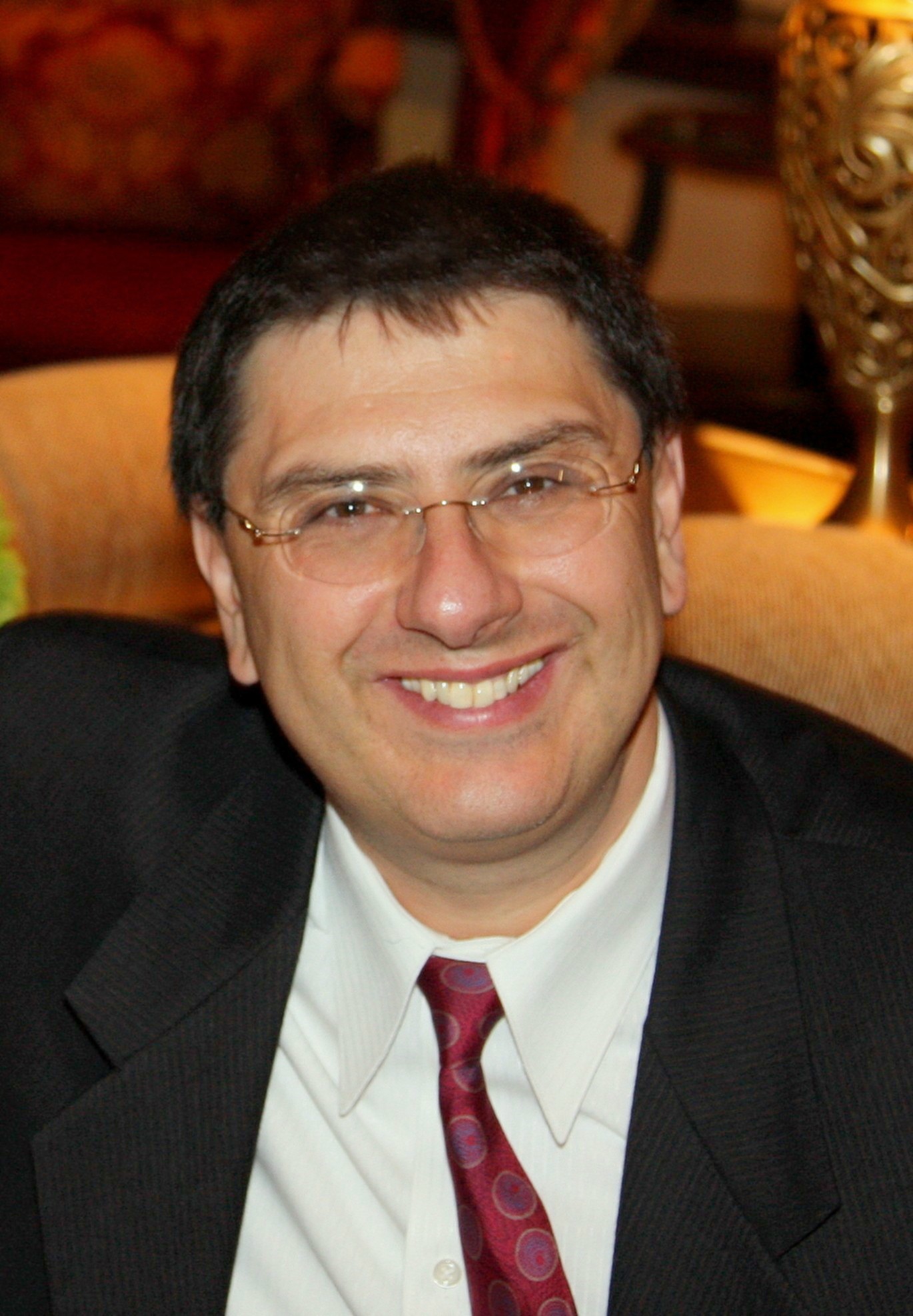
Ron Steinfeld is an Associate Professor at the Cybersecurity Lab of the Faculty of Information Technology , Monash University . His research focuses on lattice-based cryptography , post-quantum cryptographic protocols , and privacy-preserving technologies . He has contributed to advancements in secure multiparty computation , digital signatures , and blockchain confidentiality . Key areas: Lattice-Based Cryptography, Zero-Knowledge Proofs, Blockchain Security Recent work trends: Quantum-safe protocols, Efficient sampling algorithms, Scalable blockchain solutions Scientific Awards : BEST PAPER AWARD (ASIACRYPT 2015) He has served on program committees for major conferences including CRYPTO , EUROCRYPT , and ASIACRYPT . Ron is a member of the Discrete Mathematics Research Group and has collaborated with institutions like Macquarie University in the past.
Mohammad Hajiabadi is an Assistant Professor at the University of Waterloo's Department of Computer Science. His research focuses on theoretical cryptography, including cryptographic protocols, functional encryption, and secure communication. He holds a PhD in Computer Science from the University of Victoria (2016), a Master of Science from the same institution (2011), and a Bachelor of Science from Sharif University of Technology (2009). His research explores foundational aspects of cryptography, such as cryptographic assumptions, algorithmic lower bounds, and privacy-preserving techniques. Notable areas include registration-based encryption, secret sharing schemes, and the black-box complexity of cryptographic primitives. His work often intersects with theoretical computer science, addressing challenges in secure computation and efficient protocol design. Dr. Hajiabadi's publications span topics like trapdoor functions, oblivious transfer, and private set intersection, demonstrating a commitment to advancing both the theory and practical applications of cryptography. He has secured collaborative research funding, including a National Science Foundation grant for expanding oblivious transfer tools. His contributions to academic grants and collaborative projects highlight his role in shaping modern cryptographic frameworks.
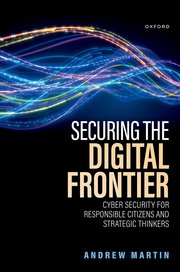
Professor Andrew Martin is a leading academic in Systems Security at the Department of Computer Science, University of Oxford, and a Governing Body Fellow at Kellogg College. His research focuses on trusted computing, cybersecurity, and secure distributed systems, with applications in cloud computing, IoT, and smart grids. He has been instrumental in advancing secure architectures using hardware-based trust mechanisms such as Intel SGX and Trusted Platform Modules. Research Interests: His work spans Systems Security , Trusted Computing , Confidential Computing , Secure Multi-Party Computation , and Privacy in Distributed Systems . He investigates how hardware-enforced security can mitigate risks in large-scale environments, particularly where privacy and trust are paramount. Publication Trends: His recent publications reveal a strong focus on Trusted Execution Environments (TEEs), remote attestation, and secure cloud architectures. He critically examines the feasibility of using hardware enclaves for both defensive and offensive security, emphasizing architectural soundness and real-world applicability. Scientific Awards: No specific awards mentioned in the provided text. Advising and Grants: Professor Martin has supervised numerous PhD and Master’s students in cybersecurity and systems research. His projects include CRANE , Trustworthy Logging , webinos , TCLOUDS , and Secure Networking by Design (SNbD) . He has secured funding for research in trusted computing and secure distributed systems, contributing to both theoretical foundations and practical implementations. Labs and Teams: He leads a research group focused on systems security and trusted computing, collaborating with industry and academic partners on large-scale security challenges. His team works on developing secure middleware, analyzing vulnerabilities in consumer devices, and designing privacy-preserving protocols for smart infrastructure.
Fatemeh Ganji is an Assistant Professor in the Department of Electrical & Computer Engineering at Worcester Polytechnic Institute (WPI), with an affiliation to the Cybersecurity program. She holds a Ph.D. in Electrical Engineering from the Technical University of Berlin (2017), where she received the BIMoS Ph.D. Award and was nominated for the ACM Dissertation Award. Prior to WPI, she served as a Post Doctoral Associate at the University of Florida (2018–2020) and at Telecom Innovation Laboratories/Technical University of Berlin (2017–2020). Her research focuses on interdisciplinary approaches in hardware security, combining machine learning and cryptography to design and evaluate security-critical hardware systems. Key areas include physically unclonable functions (PUFs), side-channel analysis, and countermeasures against tampering and counterfeiting. Her work is funded by the European Union (Horizon 2020, FP7), German BMBF, NSF, and NIST. Ganji actively contributes to the academic community as a reviewer for IEEE and ACM journals and serves on technical program committees for CHES, FPL, DATE, and SPACE conferences. Her recent projects include developing AI-driven forensic analysis for PCB tamper detection, secure multiparty computation frameworks for chiplet systems, and open-source tools for implementation security testing. Her awards include the BIMoS Ph.D. Award 2018 and recognition from the Technical University of Berlin for her doctoral work on PUF learnability. She has also pioneered methods to detect recycled integrated circuits and enhance hardware trust through reverse engineering and machine learning.
Affiliations Full-time Assistant Professor of Computer Science at the School of Computing and Information Systems (SCIS) , Singapore Management University (SMU). Research focuses on cryptography, post-quantum systems, and secure protocols. Previously affiliated with PolyU for select teaching and collaborations. Education PhD in Computer Science, Chinese Academy of Sciences (2015). Research Interests Specializes in advanced cryptographic techniques including: Post-Quantum Cryptography (e.g., lattice-based systems) Threshold Cryptography (e.g., secure distributed ECDSA) Zero-Knowledge Proofs and Privacy-Preserving Technologies Authenticated Key Exchange (AKE) protocols Efficient implementations of cryptographic primitives (e.g., Kyber, NewHope) Notable Awards First Prize (LAC.PKE) and Second Prize (SIAKE, LAC.KEX) in Chinese Post-Quantum Cryptography Competition (2020) Best Paper Awards at IWSEC 2015 and ProvSec 2014 Advising & Collaborations Advises PhD students JIANG Bowen and WANG Jiaheng at SMU. Collaborates with researchers such as Guofeng Tang (post-doc) and international teams. Active in organizing conferences (e.g., CCS, ProvSec) and contributes to open-source projects like the Preprocess-then-NTT library. Labs & Teams Leads research initiatives at SMU focused on cryptographic protocol design and implementation. Collaborates with PolyU on advanced security projects.
Rafail Ostrovsky is the Norman E. Friedman Chair in Knowledge Sciences at UCLA Samueli School of Engineering, where he serves as a Distinguished Professor of Computer Science and Mathematics. He also directs the Center for Information and Computation Security at UCLA. His academic leadership extends to his role as a foreign member of Academia Europaea and his fellowship in multiple prestigious organizations including the National Academy of Inventors, AAAS, ACM, IEEE, and IACR. Professor Ostrovsky's research spans multiple domains in theoretical computer science, with primary focus on cryptography, secure computation, and algorithms. His work on garbled circuits, zero-knowledge proofs, and private information retrieval has had significant theoretical and practical impact. He has pioneered research in secure multi-party computation, oblivious RAM, and cryptographic protocols that maintain privacy while enabling complex computations on sensitive data. His research bridges theoretical foundations with practical applications in secure systems, ranging from database security to hardware-based cryptographic primitives. Ostrovsky's publication record shows a consistent trajectory of innovation in cryptographic theory and its applications. His recent work focuses on optimizing secure computation protocols for efficiency while maintaining strong security guarantees, with particular attention to communication complexity, round complexity, and practical implementations. He has made significant contributions to homomorphic encryption, non-malleable commitments, and zero-knowledge proofs, often developing techniques that transform theoretical constructs into practically viable solutions. 1993 Henry Taub Prize 2017 IEEE Computer Society Edward J. McCluskey Technical Achievement Award 2018 RSA Award for Excellence in Mathematics (RSA Prize) 2022 W. Wallace McDowell Award (highest award from IEEE Computer Society) Fellow of National Academy of Inventors, AAAS, ACM, IEEE, and IACR Foreign member of Academia Europaea With over 350 peer-reviewed publications and 16 issued USPTO patents, Professor Ostrovsky has significantly shaped the field of cryptography and secure computation. His mentorship has cultivated numerous students and postdocs who have gone on to make their own contributions to the field. His editorial roles on prestigious journals including Journal of ACM and Algorithmica reflect his standing in the theoretical computer science community. His leadership extends to chairing major conferences including FOCS 2011 and serving on over 40 international conference program committees. As Director of the Center for Information and Computation Security at UCLA, Professor Ostrovsky leads a team focused on advancing the theoretical foundations and practical applications of secure computation. His center serves as a hub for interdisciplinary research connecting cryptography with systems security, network protocols, and hardware security. The center's work spans from foundational cryptographic primitives to real-world applications requiring privacy-preserving computation.
Dr. Rachel Player is a Senior Lecturer in the Department of Information Security at Royal Holloway, University of London . Her research focuses on post-quantum cryptography, lattice-based cryptographic schemes, homomorphic encryption, and quantum algorithm applications in cryptanalysis. She holds a PhD in Information Security from Royal Holloway, supervised by Prof. Carlos Cid and Prof. Sean Murphy. Education: PhD in Information Security, Royal Holloway, University of London (supervisors: Prof. Cid & Prof. Murphy) Research Interests: Rachel explores cutting-edge areas in cryptography with a focus on privacy-preserving technologies. Her work bridges theoretical advancements and practical implementations, particularly in homomorphic encryption and post-quantum security protocols. Recent efforts emphasize applying quantum algorithms to cryptanalytic challenges. Professional Activities: Rachel actively contributes to standards development in cryptography, including organizing HomomorphicEncryption.org meetings and participating in ISO/IEC JTC 1/SC 27/WG 2 (cybersecurity standards). She also serves as an editor for the Designs, Codes and Cryptography journal. Labs/Teams: Collaborations include the PolSys team at Sorbonne Université (Paris) and the EU H2020 PROMETHEUS project. Current research is anchored in Royal Holloway's Information Security Department.
Bailey Kacsmar is an Assistant Professor in the Department of Computing Science at the University of Alberta and an Alberta Machine Intelligence Institute (Amii) Fellow. Her research focuses on developing human-centered privacy solutions, combining technical privacy mechanisms (e.g., private machine learning, secure computation) with user perception studies and usability evaluations. She holds a PhD and MMath in Computer Science from the University of Waterloo. Education: PhD in Computer Science, University of Waterloo Masters of Mathematics (MMath), University of Waterloo Research Interests: Privacy-preserving machine learning and AI User-centric privacy design Cryptography for private computation Usability of privacy-enhancing technologies Recent Work Trends: Her publications emphasize practical privacy solutions, including private set intersection protocols, differential privacy in machine learning, and user comprehension of privacy mechanisms. Awards: 2025 U of A Award for Outstanding Mentorship in Undergraduate Research Honorable Mention for CRA Outstanding Undergraduate Researcher Award (Jialiang Yan) Teaching & Advising: Courses include Cryptography for Digital Privacy and Privacy, Cryptography, Network Security. Advises graduate students and undergraduate researchers on privacy-preserving technologies. Emphasizes ethical and human-centered approaches in advising. Labs & Teams: Leads the PUPS (Practical Usable Privacy and Security) Lab, focusing on interdisciplinary privacy research spanning technical design, usability, and societal impact.
Aleksandra Slavković is a Professor of Statistics and Associate Dean for Graduate Education at Pennsylvania State University's Eberly College of Science. She holds a PhD in Statistics from Carnegie Mellon University (2004) and has held academic roles since 2004, including appointments at the Institute for Computational and Data Sciences and Penn State College of Medicine. Her research focuses on statistical data privacy, differential privacy, algebraic statistics, and applications in social and health sciences. She has authored over 50 peer-reviewed publications and serves on editorial boards of top journals like Journal of Privacy and Confidentiality and Annals of Applied Statistics . Slavković has received major honors including Fellowships from the Institute of Mathematical Statistics (2021) and American Statistical Association (2018). She leads initiatives to enhance graduate education, including the Science Achievement Graduate Fellows Program, and actively promotes diversity in STEM through her leadership roles. Her recent work emphasizes privacy-preserving techniques for genomic, healthcare, and network data, with contributions to synthetic data generation and secure multiparty computation protocols. Her academic service includes chairing ASA committees and advising at the National Academy of Sciences. She maintains collaborative ties with institutions like Cornell University and UC Berkeley through visiting scholar programs, and her research bridges statistics, computer science, and applied mathematics.
Nir Bitansky is an associate professor of computer science at New York University's Courant Institute, part of the Theory Group and Cryptography Group. He previously held a faculty position at Tel Aviv University (now on leave) and was a postdoctoral researcher at MIT CSAIL, advised by Vinod Vaikuntanathan. His Ph.D. from Tel Aviv University was under Ran Canetti. His research focuses on foundational aspects of cryptography and computational complexity, including zero-knowledge proofs, obfuscation, and post-quantum security. Research Interests: His work bridges theoretical computer science and cryptography, addressing topics such as secure computation, cryptographic hardness assumptions (e.g., LWE, PPAD), privacy-preserving protocols, and quantum-resistant cryptography. Key areas include randomized encodings, succinct arguments, and the interplay between complexity theory and cryptographic primitives. Publications: His recent work emphasizes post-quantum cryptography (e.g., zero-knowledge protocols, commitment schemes) and foundational results in obfuscation. Notable contributions include advancements in batch proofs, non-interactive arguments, and the cryptographic hardness of local search problems. Students and Postdocs: Advised Ph.D. students include Sapir Freizeit, Nathan Geier, and Omri Shmueli (co-advised with Zvika Brakerski). Hosted postdocs such as James Bartusek (now at Columbia) and Rachit Garg. Collaborates widely, co-authoring papers with figures like Vinod Vaikuntanathan and Omer Paneth. Affiliations: Serves on program committees for top venues (e.g., CRYPTO, EUROCRYPT, FOCS). Taught courses on cryptography fundamentals, advanced topics, and lattices at TAU and NYU.
Ryan Henry is an Assistant Professor in the Department of Computer Science at the University of Calgary. His research focuses on applied cryptography, emphasizing the development of secure systems that prioritize user privacy. His work spans designing privacy-enhancing technologies, implementing cryptographic protocols, and analyzing number-theoretic attacks on cryptographic assumptions. He also explores theoretical aspects of cryptographic efficiency and practical deployment challenges. While specific educational background details are not provided in the text, his research contributions highlight expertise in cryptography, secure systems, and privacy-preserving technologies. His work has addressed topics such as Private Information Retrieval (PIR), secure messaging, and blockchain privacy. Key research interests include: Secure Multiparty Computation Privacy-Preserving Data Access Efficient Cryptographic Protocols Zero-Knowledge Proofs IoT Security Cryptocurrency and CBDC Design His recent publications emphasize advancements in distributed systems security, privacy in recommendation systems, and cryptographic efficiency. Notable contributions include the Grotto and Duoram frameworks for secure computation, and proposals for Canadian CBDC frameworks. Despite extensive research output, no scientific awards or grants are explicitly mentioned in the provided text. Collaborations and lab affiliations are not detailed, though his work suggests involvement in interdisciplinary projects on privacy and security technologies.
Chiara Bodei is an Associate Professor at the Department of Computer Science, University of Pisa. She specializes in cybersecurity, formal methods, and programming languages. Her teaching responsibilities include courses such as 'Programming Fundamentals with Laboratory' and 'Security Methods and Verification' at both undergraduate and graduate levels. She has contributed to research in automotive cybersecurity, IoT security, and formal analysis of software systems. Her work emphasizes secure communication protocols, privacy policies in automotive data, and context-aware security mechanisms. She collaborates with industry and academia on projects related to software-defined vehicles and IoT security. Her research has been published in top-tier conferences and journals, focusing on practical and theoretical advancements in computer security and formal methods. Research Interests: Cybersecurity, Formal Methods, Automotive Systems Security, IoT Security, Programming Languages, Context-Aware Systems. She has co-authored numerous papers on topics such as vehicular communication security, secure automotive protocols, and privacy in IoT systems. Teaching: Bodei has taught courses like 'Fondamenti di Programmazione' (undergraduate), 'Security Methods and Verification' (graduate), and 'Language-Based Technology for Security' (master’s level) across multiple academic years. She emphasizes practical programming skills and theoretical foundations in her courses. Labs/Teams: Her work is supported by the Department of Computer Science labs at the University of Pisa, focusing on applied research in cybersecurity and formal systems.
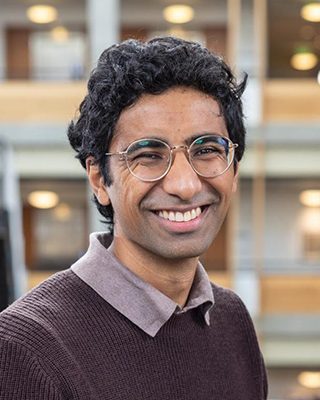
Nirvan Tyagi is an Assistant Professor at the University of Washington's Paul G. Allen School of Computer Science & Engineering, specializing in Human-Centered Computing and Software & Hardware Systems. His research focuses on cryptography, security, and privacy, with particular emphasis on building systems that provide users with precise privacy and security guarantees while enabling accountability mechanisms to counter abuse. Dr. Tyagi's research interests span cryptographic protocols that balance user privacy with necessary accountability in online systems. His work explores the tension between sender anonymity and abuse mitigation in encrypted messaging, develops novel verifiable registries using RSA authenticated dictionaries, and creates systems for distributed randomness generation. He is particularly interested in how cryptography can enable new balances between user privacy and user accountability, believing that users should enjoy strong privacy while bad actors can be held accountable for misbehavior. His publications reveal a strong trend toward developing practical cryptographic systems that solve real-world problems in privacy and security. Recent work has focused on zero-knowledge proofs, verifiable computation, and privacy-preserving protocols for distributed systems. His research consistently bridges theoretical cryptography with practical system implementations, as evidenced by the availability of code repositories for many of his publications. Early Career Award (CRYPTO 2020) Dr. Tyagi leads research in the Cryptography Group and Security & Privacy Research Lab at the University of Washington. His work has been published in top-tier venues including CRYPTO, CCS, USENIX Security, and SOSP, demonstrating both theoretical rigor and practical impact. His research has direct applications to real-world systems like encrypted messaging platforms and distributed ledgers.
Carmela Troncoso is an Associate Professor at EPFL heading the SPRING Lab focused on Security and Privacy Engineering. Her work addresses technology's societal impact through machine learning security, privacy-enhancing technologies, and privacy engineering frameworks. She leads significant research in decentralized privacy systems, including contributions to the DP-3T contact tracing protocol adopted by Google/Apple during COVID-19. Her lab develops tools for privacy evaluation including Synthetic Data Evaluation frameworks and anonymous authentication libraries. Awards include the ERCIM Best Ph.D. Thesis Award, CNIL Privacy Protection Award, and IEEE Distinguished Paper Award. She was recognized as a Fortune 40 Under 40 Technology Leader in 2020.
Prof. Danny Dolev is a distinguished academic holding the Berthold Badler Chair in Computer Science at The Hebrew University of Jerusalem's Rachel and Selim Benin School of Computer Science and Engineering. He is an ACM Fellow and IEEE Fellow. His research focuses on distributed computing, fault-tolerant systems, algorithms, and secure protocols. He has held leadership roles, including Director of his school (1999–2002) and Chair of the Israeli National Committee for Information Technology (1994–1998). Education: B.Sc., The Hebrew University of Jerusalem, 1971 M.Sc., Weizmann Institute of Science, 1973 PhD., Weizmann Institute of Science, 1979 Research Interests: Danny Dolev's work spans distributed algorithms, Byzantine fault tolerance, consensus protocols, and hardware algorithms. His contributions include groundbreaking research on self-stabilizing systems, secure communication, and fault-tolerant clock synchronization. His HEX and Chronos protocols exemplify innovations in scalable synchronization and network security. Publications: His recent work emphasizes Byzantine agreement, asynchronous fault tolerance, and game-theoretic distributed systems. Key papers address optimal resilience in consensus algorithms and secure multi-party computation. Awards: ACM Fellow (2010) IEEE Fellow (2004) Grants & Leadership: Member of the Scientific Council, European Research Council (2010–2014) Chair of Israel's National Committee for Information Technology (1994–1998) Leadership roles at IBM Almaden Research Center (1987–1993) and Stanford University (1979–1981) Labs & Teams: His research group at Hebrew University focuses on distributed systems, with collaborations on projects like Steward (wide-area Byzantine replication) and Self-Stabilizing Circuits .