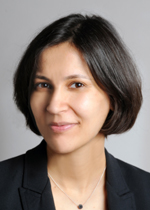
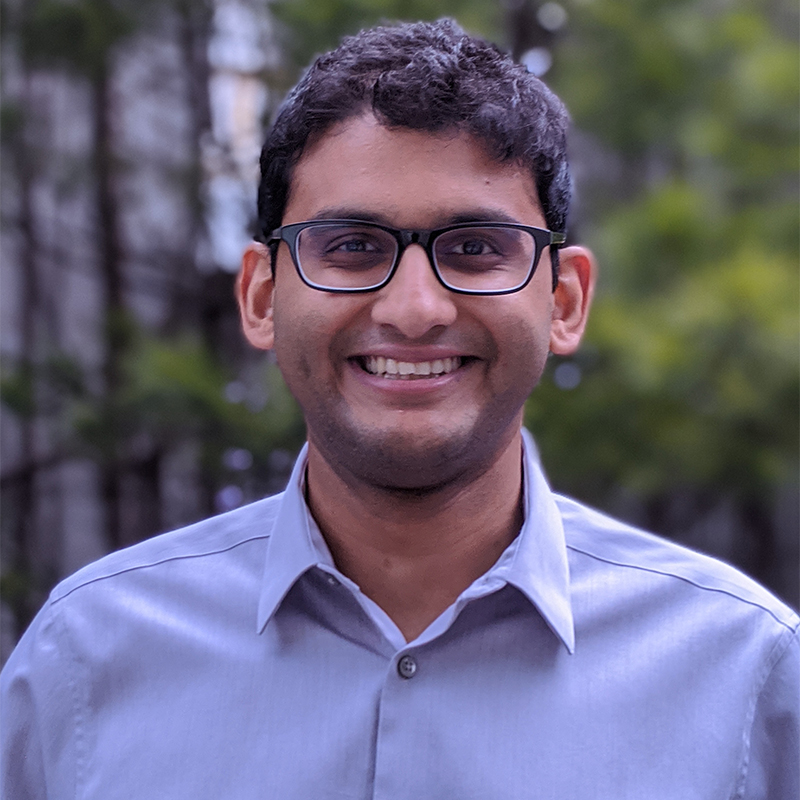
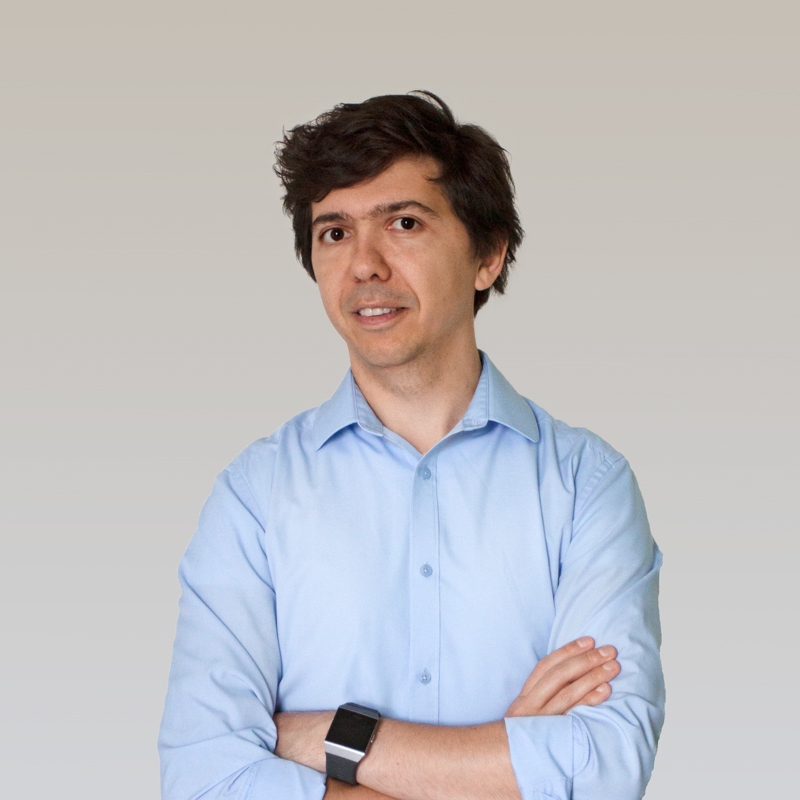
Erik van der Kouwe is an Assistant Professor at the Faculty of Science, Vrije Universiteit Amsterdam, holding dual appointments in the Computer Systems department and the Network Institute. His research focuses on system security, fault injection, fuzzing, and embedded systems security. He contributes to both theoretical advancements and practical implementations of security mechanisms. Key research areas include mitigating vulnerabilities through hardware-software co-design, exposing compiler optimization flaws that evade sanitizers, and developing efficient fuzzing frameworks for malware analysis. His work often bridges academic research with real-world applications in embedded systems and operating systems. Recent publications highlight innovations like InvisiGuard for microcontroller security, hwdbg for hardware debugging frameworks, and Enviral for environment-aware malware analysis. His research has been published in top-tier venues such as IEEE Transactions, ACM conferences, and workshops like EuroSEC. Teaching responsibilities include Advanced Operating Systems, Secure Programming, and Software Security courses. Collaborations span international teams working on topics like compiler hardening, embedded system resilience, and vulnerability benchmarking.
Hong Ye Tan is currently a Hedrick Assistant Adjunct Professor in Computational and Applied Mathematics at the University of California, Los Angeles (UCLA), hosted by Professor Stanley Osher. Previously, he completed his PhD at the University of Cambridge's Department of Applied Mathematics and Theoretical Physics as a member of the Cambridge Image Analysis group and the Cantab Capital Institute for the Mathematics of Information, supervised by Professors Carola-Bibiane Schönlieb, Subhadip Mukherjee, and Junqi Tang with funding from GSK.ai. His educational trajectory is exceptional: admitted to the University of Hong Kong at age 11 in 2015 (youngest in recent history) and to Cambridge at age 13 for doctoral studies. He passed his PhD thesis with no corrections, focusing on provably convergent algorithms leveraging geometric structures in data. Tan's research centers on machine learning theory, specifically investigating why learning succeeds through interactions between problem structure, data distributions, optimizers, and network architectures. His work bridges differential geometry (manifold hypothesis, intrinsic complexity), optimization (convex learning-to-optimize, Plug-and-Play inverse problems), and sampling theory (noise-free MCMC methods). He develops theoretically grounded algorithms with practical applications in imaging and unsupervised learning, emphasizing provable convergence guarantees derived from classical mathematics. Analysis of his 13 recent publications reveals a cohesive research program connecting optimal transport theory, manifold learning, and regularization techniques. His work demonstrates how geometric insights enable efficient solutions for high-dimensional problems, particularly in image analysis where dimensionality effects transform from curse to blessing. Key themes include Wasserstein proximal methods, dataset distillation via quantization, and accelerating mirror descent through equivariance. His scientific recognition includes: Masason Foundation Fellowship GSK.ai PhD Fellowship Tan has secured research funding through the GSK.ai PhD studentship and operates within Professor Stanley Osher's group at UCLA. He maintains active collaborations from his Cambridge tenure, particularly with the Cambridge Image Analysis group. Notably, he handles 100% of coding and 98% of writing for first-author publications, actively encouraging code reuse by the community. His work continues to explore foundational questions in learning theory while developing practical tools for inverse problems and imaging science.
Sylvia Ratnasamy is a Professor of Computer Science at the University of California, Berkeley, specializing in networked systems design. She holds affiliations with the International Computer Science Institute (ICSI), the Networked Systems Lab (NETSYS), and the Software Principles for Advanced Networking (SPAN) Center. Her research focuses on scalable network architectures, middlebox virtualization, data center networking, and distributed systems. Education: PhD in Computer Science from UC Berkeley (2002), Bachelor's in Computer Engineering from the University of Pune, India (1997). Research interests include networked systems, software-defined networking, middlebox architectures, and performance optimization. Notable contributions include the design of NetBricks, E2 framework for NFV, and foundational work on data-centric storage (e.g., OpenDHT). Recent work explores cloud-augmented autonomous driving, cellular network architectures, and hardware-accelerated scheduling. Major awards include the ACM Grace Murray Hopper Award (2014), ACM SIGCOMM Test-of-Time Award (2011), and Sloan Research Fellowship (2012). She has advised numerous projects funded by NSF, DARPA, and industry collaborations. Labs/Teams: Co-leads the SPAN Center for networking research. Active in academic service, including SIGCOMM Technical Steering Committee and program committees for top conferences like NSDI, SOSP, and HotNets.
Dr Joel Lisk is a Lecturer in Space Law at Flinders University, affiliated with the College of Business, Government and Law and the Jeff Bleich Centre for Democracy and Disruptive Technologies. He holds a PhD in Law from the University of Adelaide and is a qualified lawyer admitted to the Supreme Court of South Australia and the High Court of Australia. His educational background includes: Doctor of Philosophy (PhD) in Law, University of Adelaide (2024) Bachelor of Laws (First Class Honours), University of Adelaide (2018) Bachelor of Science in Biochemistry and Genetics, University of Adelaide (2018) Graduate Diploma in Legal Practice, University of Adelaide (2019) Joel's research centers on space law, particularly the design of domestic legal frameworks and their impact on commercial space activities. He also investigates data privacy, consumer protection, and regulatory compliance in emerging technological domains. His work contributes to global discussions on sustainable space governance and aligns with UN Sustainable Development Goals, particularly in education and responsible innovation. His recent publications demonstrate a strong focus on evolving licensing regimes, privacy obligations, and the regulation of satellite constellations and space-sourced data. These works reflect trends in balancing innovation with legal accountability in high-tech sectors. Joel has received notable scientific recognition, including: Bonython Prize (2024) Dean’s Commendation for Doctoral Thesis Excellence (2024) He actively advises stakeholders in the legal profession and industry, ensuring legal practitioners are equipped to handle space-related matters. His professional engagements include leading research projects such as 'Keeping Up with the Consumer Law' and contributing to policy development through testimony and industry collaboration. He is a frequent speaker at national and international conferences and contributes to public understanding through media appearances, podcasts, and policy commentaries. Joel leads several key initiatives, including serving as Company Secretary of the Space Law Council of Australia and New Zealand, Research Affiliate at the Australian Centre for Space Governance, and Chair of the Space Law Committee at the Law Society of South Australia. He also operates Lisk Legal, a sole legal practice providing expert advice in regulated sectors.
Dr. Surya Gayet is an Assistant Professor in Experimental Psychology at Utrecht University's Faculty of Social and Behavioural Sciences. As head of the CAP-Lab, they lead research on consciousness, attention, perception, and working memory through collaborations with the Visual Cognitive Neuroscience Lab (Donders Institute) and Attention Lab (Utrecht University). Research focuses on how sensory input transforms into conscious experience using psychophysics, computational modeling, eye-tracking, fMRI, and EEG. Key areas include visual perception dynamics, working memory mechanisms, and attentional selection processes. Recent work explores multisensory integration, statistical learning in perception, and neural representations of object size in natural scenes. Publications reveal strong emphasis on temporal dynamics of visual processing, cross-modal perception, and memory resilience. Current projects examine citizen science applications for visual perception training and viewpoint-dependent object representation. NVP Early Career Award (2023) NWO VENI grant (2019) NWO Science Communication grant 'LerenKijken.nl' (2025) Utrecht University Starting Grant (2023) Supervises multiple PhD candidates including Luzi Xu (recently defended), Kabir Arora, Yichen Yuan, Giacomo Aldegheri, and Dan Wang. Secured substantial funding including €250,000 NWO VENI grant and €150,000 NWO communication project. Currently writing a popular science book on consciousness through Unieboek | Het Spectrum. The CAP-Lab maintains active collaborations with Donders Institute and Utrecht University's Attention Lab, focusing on real-world applications of perception research through citizen science initiatives with vocational education students and security experts.
Rohan Padhye is an Assistant Professor at the Software and Societal Systems Department within Carnegie Mellon University's School of Computer Science . He leads the PASTA Lab and is affiliate faculty at CyLab . Ph.D. in Computer Science from UC Berkeley Master's degree in Computer Science from IIT Bombay His research spans software engineering, programming languages, systems, and security . He develops techniques for automated bug detection using dynamic program analysis and coverage-guided fuzz testing. His work includes tools like ChocoPy for compilers education and Fray for concurrency testing. Recent publications focus on: date/time bugs in Python, LLM-generated property-based tests , exception dependency analysis , and distributed system fuzzing . He has received multiple NSF grants and Amazon Research Awards . 2025: NSF Grant for Practical Controlled Concurrency Testing 2025: Amazon Research Award for property-based testing 2022: Goldwater Scholarship for John Billos (PASTA Lab member) He advises PhD students including Ao Li and Vasudev Vikram, and has mentored numerous undergraduate researchers through the REUSE program . His group's work is funded by NSF, CyLab, and Amazon .
Cormac Flanagan is a Professor in the Department of Computer Science and Engineering at the Baskin School of Engineering, University of California Santa Cruz. His research focuses on programming languages, security, and software verification, with particular expertise in concurrent programming, information flow control, and program analysis. Flanagan's research interests span multiple areas of programming languages and software security. He has made significant contributions to the fields of information flow control, concurrent programming verification, and dynamic analysis techniques. His work on dynamic race detection, particularly the FastTrack algorithm, has been highly influential in the field, earning him a PLDI Most Influential Paper Award. He has also pioneered techniques for secure information flow, including the development of faceted values and secure multi-execution approaches, which earned him a POPL Most Influential Paper Award. His recent publications demonstrate a continued focus on program verification, with particular attention to concurrent software, JavaScript verification, and serverless computing security. Flanagan's work often bridges theoretical foundations with practical implementations, resulting in tools like the Anchor Verifier for concurrent software that provide practical verification solutions for real-world programming challenges. Fellow of the Association for Computing Machinery Alfred P. Sloan Foundation Fellow POPL Most Influential Paper Award for 'Multiple Facets for Dynamic Information Flow' PLDI Most Influential Paper Award for 'FastTrack: Efficient and Precise Dynamic Race Detection' PLDI Most Influential Paper Award for 'Extended Static Checking for Java' ECOOP 2024 Distinguished Paper Award for 'Mover Logic: A Concurrent Program Logic for Reduction and Rely-Guarantee Reasoning' CSF Distinguished Paper Award for 'Transparent IFC Enforcement: Possibility and (In)Efficiency Results' PLDI Distinguished Artifact Award for 'BigFoot: Static Check Placement for Dynamic Race Detection' ECOOP Best Paper Award for 'RedCard: Redundant Check Elimination for Dynamic Race Detectors' ISSTA Distinguished Paper Award for 'Exploiting Purity for Atomicity' UCSC Excellence in Teaching Award Professor Flanagan has advised numerous PhD students who have gone on to successful careers in industry and academia, including positions at Google, Shape Security, and San Jose State University. He serves as Steering Committee Chair for the ACM Conference on Programming Language Design and Implementation (PLDI) and as Associate Editor for ACM Transactions on Programming Languages and Systems (TOPLAS). His research has been supported by various grants from funding agencies, though specific details are not provided in the available information. Flanagan leads research projects including the Anchor Verifier for Concurrent Software, data race detection tools, the RoadRunner dynamic analysis infrastructure, and work on cooperable concurrency. His research group at UC Santa Cruz focuses on developing practical techniques for ensuring software reliability and security, with applications to concurrent programming, web security, and cloud computing environments.
Andrea De Lucia serves as Full Professor in the Department of Computer Science at the University of Salerno, Italy, maintaining an active research profile with office hours at Fisciano Campus (Building F2, Room 089) and correspondence via adelucia@unisa.it. His scholarly contributions span software engineering with particular emphasis on security, mobile systems, and emerging quantum applications. His research portfolio demonstrates evolving focus through distinct phases: 2018-2020 : Code smell analysis and mobile energy efficiency (e.g., Android energy consumption studies) 2021-2022 : Security vulnerability lifecycle and quantum software engineering foundations 2023-2025 : Ethical AI integration (fairness in ML engineering) and advanced exploit prediction Recent publications reveal strategic expansion into quantum-computing applications and AI ethics, maintaining core software engineering principles while addressing contemporary challenges in secure, reliable systems development. His work consistently bridges theoretical frameworks with empirical validation through large-scale studies. De Lucia actively contributes to the software engineering community as program committee member for premier conferences including ICSE, ASE, and ICSME across multiple years (2018-2026), demonstrating sustained leadership in the field.
Engin Kirda is a Professor at Northeastern University, holding appointments in both the Khoury College of Computer Sciences and the Department of Electrical and Computer Engineering within the College of Engineering. He directs the Information Assurance Program and was awarded the inaugural Sy and Laurie Sternberg Interdisciplinary Chaired Professorship. His research focuses on malware analysis, web security, reverse engineering, and intrusion detection, with notable contributions to tools like Anubis, FIRE, and Pixy. Education: PhD in Computer Science from the Technical University of Vienna (2002). Prior to Northeastern, he held positions at Eurecom and the Technical University of Vienna. Research Interests: Malware Analysis & Detection Web Application Security Embedded Systems Security Privacy-Preserving Technologies Automated Vulnerability Discovery (e.g., fuzzing, differential testing) Recent Work Trends: Recent articles (2023–2025) emphasize web application firewall bypasses, embedded system hardening, and privacy-enhancing technologies. Collaborative projects like FLANKER (NSF-funded) address lateral movement detection in enterprise networks. Awards: Consistently ranked in Stanford's Top 2% Cited Scientists since 2021, reflecting impactful contributions to cybersecurity research. Grants & Labs: Principal Investigator on NSF/DARPA grants totaling $2.5M+, including projects on firmware analysis (FIRMALICE), Android marketplace security (DARKDROID), and graph-based lateral movement detection. Leads the International Secure Systems Lab (ISS Lab).
Aravind Machiry is an Assistant Professor at the Elmore Family School of Electrical and Computer Engineering at Purdue University. His research focuses on system and software security, particularly in securing embedded systems, firmware, and leveraging modern tools like static analysis and fuzzing to mitigate vulnerabilities. He leads the Purdue Systems and Software Security Lab (PurS3) , which emphasizes principled yet practical security solutions. Research interests include embedded systems security (e.g., Rust adoption in embedded contexts), vulnerability detection in firmware and network stacks, and securing continuous integration workflows. He has explored topics like language model integration in Android apps, fault injection in API error handling, and mitigating data poisoning in federated learning. His work bridges hardware and software domains, with contributions to secure execution environments (e.g., ARM TrustZone via Tarnhelm) and binary analysis tools like BinTrimmer. While no formal awards are listed, his grant-funded projects (e.g., CAREER award) reflect recognition of his research impact. Advising focuses on graduate students in cybersecurity and embedded systems domains. Key projects include rehosting embedded applications as Linux apps (LEMIX), automated firmware analysis (KARONTE), and feedback-driven binary generation (Cornucopia). His research often addresses scalability challenges in vulnerability detection across large codebases.
Jacques Klein is Full Professor of Software Engineering and Mobile Security at the University of Luxembourg. His research bridges software engineering principles with security challenges in modern computing environments. Research focuses on software security, mobile systems analysis, and increasingly on large language model applications for program analysis. Recent work examines Android ecosystem security, infrastructure-as-code vulnerabilities, and AI-enhanced program repair techniques. Klein's 2025 publications demonstrate strong emphasis on LLM capabilities for automated compliance checking, malware detection, and program understanding. The research combines empirical software engineering with AI methodologies to address security and maintenance challenges.
David Filliat is a Professor at ENSTA Paris within the Computer Science and Systems Engineering Unit (U2IS), where he serves as Director of the Interdisciplinary Center for Defense and Security Studies (CIEDS). He leads research activities in the Autonomous Systems and Robotics team, focusing on advancing robotics technologies for defense and security applications. Dr. Filliat's research spans multiple critical areas in robotics, with particular emphasis on perception and learning problems. His work aims to develop methods that simplify robot usage while enhancing robustness and autonomy. His primary research interests include navigation, mapping, planning, applied learning for multi-modal perception, and reinforcement learning applications to mobile robots, drones, and autonomous vehicles. His research integrates theoretical advancements with practical implementations, addressing challenges in both indoor and outdoor environments. Analysis of his recent publications reveals a strong trajectory in reinforcement learning, perception systems, and navigation technologies. His work demonstrates increasing sophistication in handling uncertainty, developing robust visual control systems, and creating efficient planning algorithms. Notably, his research shows consistent progression from foundational robotics problems toward more complex multi-modal and multi-task systems that integrate various sensory inputs and decision-making processes. As Director of CIEDS, Dr. Filliat oversees interdisciplinary research bridging defense and security studies with technological innovation. His leadership connects theoretical robotics research with practical security applications, fostering collaboration across multiple domains to address complex security challenges through technological solutions.
Muthu ramakrishnan Venkitasubramaniam is a Professor in the Department of Computer Science at Georgetown University. He previously held positions at the University of Rochester, where he served as an Assistant and Associate Professor. His research focuses on cryptography, network security, and complexity theory, with notable contributions to zero-knowledge proofs, secure multiparty computation, and post-quantum cryptography. He obtained his Ph.D. in Computer Science from Cornell University under Rafael Pass, followed by a CI Fellowship at NYU and Columbia University. His research is supported by grants from the National Science Foundation (NSF), IARPA, DARPA, JP Morgan, Google, and the McCourt School of Public Policy. Venkitasubramaniam co-invented the Ligero ZK-SNARK and co-founded Ligero Inc., advancing lightweight cryptographic tools. He has extensive teaching experience, including courses like Cryptography (COSC 530) and Introduction to Cryptography (COSC 260). He actively contributes to the academic community through editorial roles, conference organization, and reviewing activities, including serving as General Chair for CRYPTO 2019 and Program Chair for the ZKProof Standardization Workshop. His work emphasizes adaptive security, black-box constructions, and efficient cryptographic protocols. Key publications include advancements in ZK CPUs, distributed zero-knowledge proofs, and lightweight secure computation frameworks like LevioSA and Ligero. His research balances theoretical foundations with practical implementations, addressing challenges in privacy-preserving computation and post-quantum security.
Paul Patras is a Professor of Mobile Intelligence at the University of Edinburgh's School of Informatics, leading the Mobile Intelligence Lab and affiliated with the Institute for Computing Systems Architecture (ICSA) and Security & Privacy group. He co-founded Net AI, a university spin-off advancing AI-driven network management. His expertise spans AI for network traffic analytics, security, and biomedical innovation. He holds a Ph.D. from University Carlos III of Madrid and has held visiting roles at institutions like Northeastern University and Rice University. Research focuses on bridging mathematical models with real-world network applications, including high-speed data stream processing and adversarial robustness. Recent work includes Stable-Sketch for web-scale data streams and Sabre for adversarial noise filtering. Awards include the SICSA Best Dissertation Award (2024, student Alec Diallo) and a best paper award at WWW '24 (with Weihe Li). Advising includes PhD students like Weihe Li and postdocs like Alec Diallo. He has supervised numerous students in areas like network security and machine learning. His labs and collaborations drive innovation in 6G, edge computing, and AI ethics. He frequently speaks at global forums, including the UN's AI for Good Summit and 6G Evolution Summit.
Anders Skaarup Johansen is a Postdoctoral Researcher at Aalborg University's Department of Architecture, Design and Media Technology within The Technical Faculty of IT and Design. He works in the Section for Media Technology - Campus Aalborg, focusing on Visual Analysis and Perception as part of the AI for the People research group. His institutional email is asjo@create.aau.dk and his ORCID ID is https://orcid.org/0000-0002-9330-522X. His research interests center around Computer Vision, Artificial Intelligence, and Machine Learning with specific expertise in Image Segmentation, Object Detection, Thermal Imaging, and Benthic Habitat Mapping. Johansen's work demonstrates strong interdisciplinary applications across environmental science, marine biology, and safety systems. His research approach combines theoretical AI development with practical real-world implementation, particularly evident in his work on underwater imaging and thermal video analysis. Analysis of his recent publications reveals a clear trend toward practical AI applications with societal impact. His research spans video transformer architectures, machine unlearning verification techniques, and specialized imaging datasets for environmental monitoring. The work shows increasing sophistication in handling real-world challenges like concept drift in thermal imaging and multi-annotator systems for underwater habitat classification. Johansen actively contributes to two major research projects: REPAI (Responsible AI for Value Creation, 2023-2027) where he's a Project Participant, and JAMBO (2023-2024) where he serves as Principal Investigator studying seabed conditions and bottom-trawling gear impacts in Jammerbugt. His work has generated public policy impact related to marine research that contributed to a ban on beam trawling. His media engagement includes coverage of facial recognition technology limitations (2024) and video technology for societal safety (2022), demonstrating his commitment to translating technical research into public discourse. Johansen has also contributed to dataset development, notably the JAMBO dataset released on Hugging Face in October 2024.