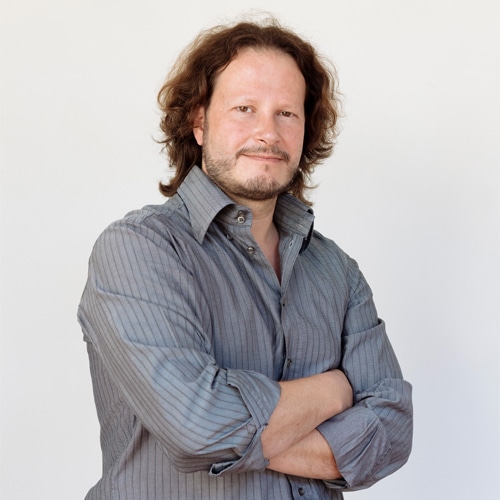
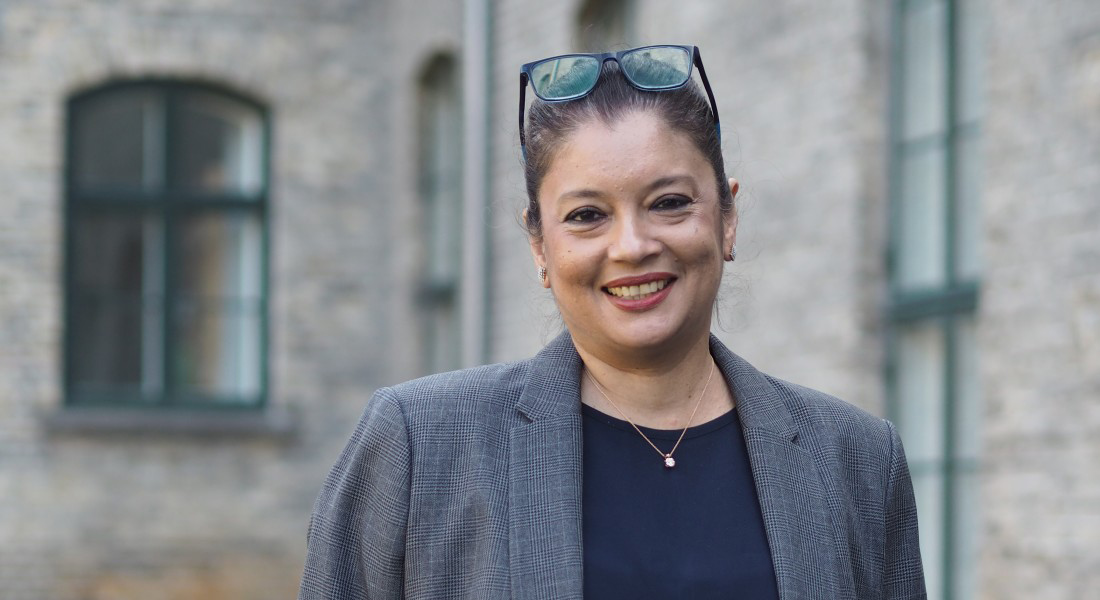
Professor Ulrik Lund Andersen heads the quantum information group at DTU Physics, Technical University of Denmark. His research develops quantum technologies including quantum computation, secure communication, and quantum-enhanced measurement systems. His group generates entangled optical states and investigates diamond-photon interactions for quantum nonlinearities. Key research areas: Quantum computing architectures Continuous-variable quantum information Quantum key distribution Quantum-enhanced sensing Solid-state quantum systems Recent work advances error correction, quantum state engineering, and quantum sensing algorithms. Publications demonstrate consistent focus on practical quantum technology implementation. Awards include multiple Sapere Aude research grants and the Eliteforsk Award from the Danish Ministry of Science.
Seth Lloyd is a Professor of Mechanical Engineering at the Massachusetts Institute of Technology (MIT), where he directs the Center for Extreme Quantum Information Theory (xQIT). His work bridges theoretical physics, quantum information science, and complex systems theory. He has made significant contributions to the foundations of quantum computing and quantum information processing. Lloyd received his education from prestigious institutions: B.A. from Harvard College (1982) M.Phil from Cambridge University (1984) as a Marshall Scholar Ph.D. in Physics from Rockefeller University (1988) Lloyd's research focuses on quantum information science, particularly quantum computation and quantum communications. He has pioneered work in quantum analog computation, quantum error correction, and quantum metrology. His research explores how quantum mechanics can be harnessed for information processing tasks, with applications ranging from quantum computing to understanding biological processes like photosynthesis. Lloyd is also known for his work on complex systems and the relationship between information and physical systems, arguing that the universe itself can be viewed as a quantum computer. His publication record shows a clear progression from foundational quantum computing work to applications in quantum machine learning and quantum biology. The most recent articles reveal a strong focus on quantum algorithms for machine learning, quantum metrology, and the intersection of quantum mechanics with biological systems. His work on the HHL algorithm for solving linear systems has been particularly influential in quantum machine learning, though its practical advantages have been debated following Ewin Tang's classical algorithms. Lloyd has received numerous scientific honors: Lindbergh Fellow (1994) Finmeccanica Professorship (1996) Edgerton Prize (2001) Fellow of the American Physical Society (2007) Quantum Communication Award (2012) International Quantum Communication Award (2012) Throughout his career, Lloyd has mentored numerous students and researchers in quantum information science. He has secured significant research funding for his work in quantum computing and complex systems. His research has been supported by various foundations and government agencies interested in advancing quantum technologies. Lloyd has also been involved in interdisciplinary collaborations, particularly with biologists studying quantum effects in photosynthesis. Lloyd directs the Center for Extreme Quantum Information Theory (xQIT) at MIT, which brings together researchers from physics, computer science, and engineering to tackle fundamental challenges in quantum information processing. His lab has been at the forefront of developing theoretical frameworks for quantum computing and exploring practical implementations of quantum information protocols.
Manex Aguirrezabal Zabaleta is an Associate Professor in the Department of Nordic Studies and Linguistics at the University of Copenhagen. He previously held positions as a Postdoc (2017-2019) and Assistant Professor at the same institution. His educational background includes: PhD in Natural Language Processing from the University of the Basque Country (UPV/EHU), conducted at the IXA NLP group. Master's degree in Natural Language Processing from UPV/EHU. Bachelor's degree in Computer Science (5 years) from UPV/EHU. Dr. Aguirrezabal's research focuses on the computational analysis of poetry , particularly stress patterns in English. He explores whether computers can effectively analyze poetic structures, a field with roots in the 1980s but revitalized by modern techniques. Additionally, he investigates language generation , computational morphology and phonology , and finite-state methods . His work bridges traditional linguistic inquiry with cutting-edge natural language processing. Recent publications (2023-2024) demonstrate a diverse engagement with computational linguistics, including poetry generation, multimodal corpus development, clickbait analysis, and fact-checking. His research often employs zero-shot learning and language models, reflecting current trends in AI-driven linguistic analysis. He has contributed to international collaborations such as ParlaMint (multilingual parliamentary corpora) and the GEHM Zoom corpus. While specific grant details are not provided, his active publication record indicates ongoing research support. Dr. Aguirrezabal maintains a strong connection to his Basque heritage, having pursued his early education in the Basque language.
Diego Garlaschelli is Professor of Theoretical Physics at the IMT School for Advanced Studies in Lucca, Italy, and at the Lorentz Institute for Theoretical Physics, University of Leiden, the Netherlands. He leads the NETWORKS research unit at IMT and the Econophysics and Network Theory group at Leiden. He is also an external faculty member at the Complexity Science Hub in Vienna and an associate member of the Enrico Fermi Research Center in Rome. His affiliations reflect a strong international and interdisciplinary research profile in network science and statistical physics. He holds a master's degree in theoretical physics from the University of Rome III (2001) and a PhD in Physics from the University of Siena (2005). His postdoctoral experience includes positions at the Australian National University, the University of Siena, the University of Oxford, and the Sant’Anna School of Advanced Studies in Pisa. Garlaschelli’s research spans network theory, statistical physics, econophysics, financial complexity, ecological networks, and social dynamics. He applies maximum entropy models, information theory, and random graph frameworks to understand complex real-world systems. His teaching includes courses in Network Theory, Econophysics, and Complex Systems at both PhD and MSc levels. The 15 most recent publications highlight a consistent focus on network reconstruction, ensemble inequivalence, renormalization, and applications to financial and socio-economic systems. Key themes include statistical inference in networks, resilience, and multi-scale modeling, with publications in top journals such as Nature Reviews Physics , Physics Reports , Science , and Physical Review Letters . His scientific awards include the Best Paper Award at the 6th International Workshop on Self-Organizing Systems (2012) and the Jan Kijne Prize (2013) as supervisor. He has secured multiple grants from NWO, the European Union, and the Royal Society, and has supervised over 40 students at PhD, master’s, and bachelor’s levels. He also mentors postdocs and visiting scientists. Garlaschelli leads and organizes major international workshops and schools in network science and complex systems. He serves on scientific committees and is an active referee for journals like Nature and Physical Review Letters , as well as funding agencies including the ERC and NWO.
Jacob Østergaard is a Professor and Head of the Division for Power and Energy Systems at DTU Wind and Energy Systems, Technical University of Denmark. His research focuses on renewable energy systems, offshore wind power hubs, and quantum computing applications in energy systems. He leads initiatives like EnergyLab Nordhavn and PowerLabDK, emphasizing collaboration between academia and industry. Education: MSc in Electrical Engineering from DTU (1989–1995). External positions include roles at Research Institute of the Danish Electric Utilities and Ørsted (now SK Energy). Research Interests: Power system stability, flexibility markets, offshore wind energy, quantum computing in energy systems, Power-to-X, and energy storage. He advocates for integrated, market-based energy systems to achieve the green transition. Publications highlight quantum computing for grid optimization, offshore energy hubs, and Denmark’s energy island strategy. Recent work emphasizes scientific advice for energy policy and green hydrogen production. Awards: A. Angelo’s Prize (1996), AEG Electron Prize (2007), Danish Design Award (2019), and EU RESponsible Island Prize (2020). Advising and Grants: Supervises PhD students in grid integration and control. Active in projects like OEH (Offshore Energy Hubs) and BOSS (Battery Energy Storage System). His work drives Denmark’s energy policy through roles on Energinet’s board and the Danish Energy Commission. Labs/Teams: Leads PowerLabDK and EnergyLab Nordhavn, experimental facilities for smart grid and energy system research.
Pedro Monteiro is an Assistant Professor (tenure track) in the Department of Organization at Copenhagen Business School. His research focuses on organizational expertise development, bureaucratic systems, and qualitative methods, with fieldwork in engineering firms and the public sector. Academy of Management Annals Best Article Award Louis Pondy Award recipient Max Boisot Award winner Poets and Quants Top 50 Undergraduate Business Professors 2024 Monteiro's work spans organizational theory, cybersecurity coordination, and migrant expertise challenges. He serves as Communications Editor for Administrative Science Quarterly and contributes to qualitative research communities through co-founding the Talking About Organizations Podcast and Ethnography Atelier. His research projects include a Gothenburg University collaboration funded by Otto Mønsteds Fond (2023). Current teaching includes Organizational Behavior at BSc level and Strategy, Organization & Leadership at MSc level.
Ole Wæver is a Professor of International Relations at the Department of Political Science, University of Copenhagen. He founded the Centre for Advanced Security Theory (CAST) and directs the Centre for Resolution of International Conflicts (CRIC) . His work spans security theory, conceptual history, and sociology of science, with global recognition for developing the Copenhagen School of securitization theory. Primary Research Areas: International Relations, Security Studies, Climate Change, Religion/Secularism, Conflict Analysis Notable Contributions: Pioneering securitization theory, interdisciplinary analysis of security concepts, and theoretical developments in regional security complexes. His recent work explores the intersection of technology, philosophy of language, and security. Scientific Awards: Royal Danish Academy of Sciences and Letters (2007) Carlsberg Foundation Research Prize (2012) Knight of the Order of Dannebrog (2014) Hesbjerg Foundation Peace Prize (2015) Honorary Doctorate, University of Turku (2015) Publications: Authored and co-authored influential books such as Security: A New Framework for Analysis and Regions and Powers , and contributed to leading journals including International Organization , Security Dialogue , and Millennium .
Christian Igel is a Professor at the Department of Computer Science, University of Copenhagen, and serves as director of the SCIENCE AI Centre . He is also a co-lead of the Pioneer Centre for Artificial Intelligence in Denmark. His academic journey includes a Doctoral degree from Bielefeld University (2002) and a Habilitation degree from Ruhr-University Bochum (2010). Igel is a Juniorprofessor (2002–2010) and has held editorial roles at journals like KI - Künstliche Intelligenz and Artificial Intelligence Journal . Doctoral degree: Faculty of Technology, Bielefeld University, Germany (2002) Habilitation degree: Department of Electrical Engineering and Information Sciences, Ruhr-University Bochum, Germany (2010) His research spans Machine Learning , focusing on Support Vector Machines , Evolution Strategies , Reinforcement Learning , Deep Neural Networks , and PAC-Bayesian Analysis . He applies these methods to Environmental Monitoring , Medical Diagnostics , and Climate Research . Recent publications highlight work on adversarial machine learning , environmentally sustainable AI , and tree resource mapping using deep learning. His scientific awards include being a ELLIS Fellow . Igel’s software tools like Shark , woody , and Multi-Planar UNet are widely used in research and industry. Notable grants and collaborations involve projects with European Lab for Learning and Intelligent Systems (ELLIS) , SCIENCE AI Centre , and international teams in Denmark , Germany , and France . His lab leadership emphasizes open-source frameworks and reproducible research. Editorial Roles: German Journal on Artificial Intelligence , Evolutionary Computation Journal , Artificial Intelligence Journal Software Projects: Shark , woody , Multi-Planar UNet , U-Time Collaborations: SCIENCE AI Centre , Pioneer Centre for Artificial Intelligence , European Lab for Learning and Intelligent Systems
Britta Timm Knudsen is a Professor at Aarhus University, affiliated with the School of Communication and Culture, where she contributes to both the Experience Economy and Scandinavian Studies programs. Her research spans critical cultural theory, decolonial practices, digital media, and affective experimentation. University: Aarhus University School: School of Communication and Culture Position: Professor Email: norbtk@cc.au.dk Location: Jens Chr. Skous Vej 2, 8000 Aarhus C, Denmark Her research interests focus on cultural heritage, film and video, aesthetics, colonial legacies, and affective ambivalence. She explores how media and artistic practices engage with decolonial resistance, emotional geographies, and urban cultural memory. Her work often intersects with Indigenous perspectives, digital activism, and experimental methodologies. The recent articles reflect a strong engagement with decolonial visualities, translocal media events (such as the George Floyd video in Denmark), and playful resistance through internet memes. Her scholarship combines critical heritage studies with affect theory, digital culture, and postcolonial critique, forming a cohesive trajectory around memory, power, and representation. Britta Timm Knudsen has been involved in significant research projects such as Playing with Ghosts and ECHOES: European Colonial Heritage Modalities in Entangled Cities . She has supervised visiting PhD students, including Shama Patel, and secured external research funding. Her editorial roles in journals like International Journal of Heritage Studies and Nordicom Review demonstrate her academic leadership. Playing with Ghosts - Affective ambivalence in decolonial art practices (2023–2025) ECHOES: European Colonial Heritage Modalities in Entangled Cities (2018–2021) Emotionel geografi netværk (2008–ongoing) She is actively engaged in public discourse, having contributed to Danish media outlets such as DR P1 and various radio programs, discussing topics ranging from nostalgia in film to existential themes. Her work bridges academic research and public engagement, particularly in the context of colonial heritage and cultural memory.
Qiongxiu Li is a Tenure-Track Assistant Professor in the Cyber Security group at Aalborg University's Copenhagen campus, part of the Technical Faculty of IT and Design. Her research focuses on cybersecurity, distributed optimization, privacy/security, and federated learning. She has authored/co-authored 38 papers in top-tier venues including IEEE Transactions on Information Forensics and Security, ICLR, and EUSIPCO. Education: PhD in Privacy and Security from Aalborg University (2018-2021). Notable achievements include winning the EUSIPCO 2020 3MT Contest and co-delivering a tutorial on privacy-preserving distributed optimization at EUSIPCO 2024. She actively reviews for conferences like NeurIPS, ICLR, and journals such as TPAMI and TIFS. Research Themes: Privacy-preserving distributed algorithms, federated learning security, differential privacy, and adversarial machine learning. Recent Trends: Focus on securing AI systems (e.g., LLM vulnerabilities, federated clustering privacy), quantization for privacy, and theoretical bounds in decentralized learning. Awards: 2020 EUSIPCO 3MT Winner (outstanding finalist in EURASIP's annual doctoral research competition). Grants/Projects: Co-PI of the AI:SECURITY project (2025-2029) addressing AI security threats like phishing and malicious actors. Labs/Teams: Leads the Cyber Security group at Aalborg's Copenhagen campus, focusing on theoretical and applied research in secure distributed systems.
Tom Brughmans serves as Associate Professor in Classical Archaeology at Aarhus University's School of Culture and Society, where he pioneers the application of network science and computational modeling to archaeological questions. His work bridges theoretical archaeology with complexity science, focusing on long-term economic dynamics in the Roman Empire through quantitative analysis of material culture distribution. His research centers on developing methodological frameworks for archaeological network analysis, with specific expertise in Roman economic integration, amphorae trade networks, and agent-based simulation of ancient economies. Brughmans advocates for computational reproducibility and open-science practices, creating accessible tools that transform complex archaeological data into analyzable network structures while challenging traditional interpretations of Roman market systems. Brughmans' publication trajectory reveals three dominant trends: advancing theoretical foundations of archaeological network science through handbooks and methodological guides; empirical investigations into Roman economic complexity using big-data approaches to amphorae distributions; and development of public-facing simulation platforms that translate academic research into interactive experiences. His work consistently integrates computational techniques with archaeological evidence to model socio-economic processes across centuries. His scientific recognition includes prestigious competitive fellowships: Leverhulme Early Career Fellowship (2017-2019) for the MERCURY project Marie-Curie Individual Fellowship (2019-2020) for SIMREC Brughmans directs multiple major research initiatives including the Past Social Networks Project (an open repository for ancient network data), NEFLARA (a Marie-Curie project developing landscape archaeology frameworks), and MINERVA (focused on Roman economic functioning). He has secured substantial funding from the Leverhulme Trust, Marie-Curie Actions, and ERASMUS+ for projects advancing computational archaeology, while actively promoting collaborative research through platforms like FORVM that make economic modeling accessible to broader audiences. As a core member of Aarhus University's Centre for Urban Network Evolutions (UrbNet), he contributes to interdisciplinary investigations of ancient urban connectivity. His leadership extends to developing international research networks through the Oxford Handbook of Archaeological Network Research and creating open educational resources that democratize access to network analysis methodologies in archaeology.
Atreyee Sen is Professor in the Department of Anthropology at the University of Copenhagen , Faculty of Social Sciences, a position she assumed on 1 February 2025 after serving as Associate Professor since 2015. She holds a PhD in Social Anthropology from SOAS, University of London (2003), and previously held academic roles at the University of Sussex and the University of Manchester. BA in Sociology, University of Calcutta (1994) MA in Sociology, Jawaharlal Nehru University (1996) PhD in Social Anthropology, SOAS, University of London (2003) Her research centers on urban South Asia , particularly India, with a focus on gender, violence, political mobilization, and subaltern communities . She investigates how marginalized groups—such as women in Mumbai slums, Muslim youth in Hyderabad, and former Maoist guerrillas in Calcutta—navigate and resist structural violence through political activism and cultural production. Her ethnographic work explores themes of prisons, moral policing, custodial disappearances, and urban poverty , challenging reductive narratives about the 'poor' and 'violent' in non-Western contexts. The recent articles in her publication record reveal a sustained engagement with political violence, urban precarity, and resistance . Her work spans ethnographic studies of child vigilantes, anti-Romeo squads, and informal economies in Indian cities, often highlighting the intersection of gender, state power, and everyday survival . She employs comparative frameworks, such as between Chicago and Mumbai, to broaden anthropological theory. Her research is deeply interdisciplinary, drawing from political science, sociology, and gender studies. Sutasoma Award for Outstanding Research Towards a PhD (2002) NirmalChunder Basu Ray Memorial Award, University of Calcutta (1994) Atreyee Sen has been actively involved in public scholarship through media engagements, including interviews and documentaries with BBC Radio 4 on topics such as the Delhi rape case, women vigilantes, and Indian elections. She has also led major research projects, including an ERC Advanced Grant on global political anger and a project on cashless economies and urban debt. She is currently writing a monograph titled ‘Morgue tags and body bags’ -- Ethno-histories, custodial death/disappearances and state torture in urban India . She has served in leadership roles in international academic bodies, including the Association of Social Anthropologists (ASA) and the World Council of Anthropological Associations (WCAA). While no formal lab or team is specified, her collaborative research outputs and network suggest active engagement with global academic communities. She has not indicated any future work beyond her current monograph and ongoing projects.
Andrea Burattin is an Associate Professor at the Department of Applied Mathematics and Computer Science, Technical University of Denmark. His work bridges formal methods and practical process analysis, focusing on process mining, business process management, and hybrid modeling techniques. He actively contributes to research in healthcare process optimization, streaming data analysis, and system verification through Petri nets and CCS transformations. UN Sustainable Development Goals: Poverty eradication, environmental protection, and prosperity for all (via process optimization) Active projects: Immersive Process Mining (2024-2027), Usability and Understandability of Hybrid Process Models (2018-2021) His research explores large language model integration with process mining, proposing frameworks like Tiramisù for multi-faceted process visualization and PN2CCS for formal model translation. Recent work emphasizes real-time monitoring, conformance checking, and IoT-driven process analytics. Key trends in his publications include: 1) Streaming process mining pipelines (2022-2025); 2) LLM-plan generation frameworks (2024); 3) Formal verification techniques (Petri nets, CCS); 4) Healthcare process modeling (2019-2023); 5) Behavioral pattern analysis in process compliance. Scientific Awards Best Demo Award (2022, 2016) Best Process Mining Dissertation Award (2014) Best Workshop Paper (EDBA and PODS4H, 2023) As advisor, he supervises PhD projects on process mining and hybrid modeling. His editorial roles include Information Systems reviewer (2024-2025) and past editor for Engineering Applications of AI (2022-2023). Collaborations span Denmark, Italy, and the Netherlands.
Birger Lindberg Møller is a Professor in Plant Biochemistry at the Department of Plant and Environmental Sciences, Faculty of Science, University of Copenhagen. He also serves as Director of the Carlsberg Laboratory (since 2014) and Head of the VILLUM Research Center for Plant Plasticity (since 2013). His research spans plant biochemistry, synthetic biology, and natural products chemistry with applications in sustainable production systems. His educational background includes: M.Sc. (1972) Ph.D. (1975) D.Sc. (1984) D.Sc. h.c. (honoris causa) Professor Møller's research focuses on bio-active natural products , particularly the biosynthesis, transport, storage and degradation of cyanogenic glucosides . His work elucidates how plants communicate with their environment and defend themselves against herbivores, pests and abiotic stresses. A promising application of his lab's research involves engineering microalgae, mosses and plant cells into production units for high value natural products . His engagement in synthetic biology represents a logical extension of his plant research activities, with work targeted towards forming new combinations of membrane proteins for harvesting sunlight energy to synthesize valuable natural products or degrade toxic compounds. Analysis of Professor Møller's recent publications reveals a strong focus on plant specialized metabolism, particularly cyanogenic glucosides and related compounds. His work spans genomics, transcriptomics, metabolomics, and synthetic biology approaches to understand plant defense mechanisms and engineer plants for improved traits. Key themes include sorghum and cassava metabolism, diterpenoid biosynthesis, and the application of synthetic biology for sustainable production of high-value compounds through photosynthetic systems. His notable scientific awards include: Villum Kann Rasmussen Research Prize (2007) - Denmark's largest research award (2.5 mil DKK or 350,000 €) The Academy of Future Research's "The Future Prize" (2004) Societas Physiologia Plantarum Scandinavica "Popularization Prize" (2003) Knight of the Dannebrog (1995) Carlsberg Research Prize Award (1994) Hans Gram Medal from the Royal Danish Academy of Sciences and Letters (1985) Appointed Honorary Doctor at the University of Umeå, Sweden (2009) Professor Møller has served as the main advisor for 43 PhD students (with 8 ongoing in Denmark and 3 in Australia) and numerous BSc and MSc students. He has secured significant research funding throughout his career, including an ERC Advanced Grant (2.5 million €), Villum Foundation grants, and participation in major research centers with multi-million euro budgets. His current funding includes projects related to synthetic biology, plant plasticity, and cyanogenic glucoside metabolism. He leads the Plant Biochemistry Laboratory and is deeply involved with the Center for Synthetic Biology at the University of Copenhagen. His laboratory focuses on understanding plant specialized metabolism and applying this knowledge through synthetic biology approaches to engineer plants and microorganisms for sustainable production of high-value compounds. His team collaborates extensively with international partners across Europe, Australia, and beyond, and he actively promotes cross-disciplinary collaboration to address complex global challenges in energy, sustainability, and medicine.
Ann-Dorte Pedholt Christensen is a Professor of Sociology at Aalborg University’s Department of Sociology and Social Work, affiliated with The Faculty of Social Sciences and Humanities. She leads research initiatives within CASTOR (sociological/criminological research on social differentiation) and MIX (Center for Displacement, Migration and Integration). Her research focuses on gender and masculinity studies through an intersectional lens, examining how gender interacts with class, ethnicity, generation, and migration. Key themes include citizenship, social movements, identity formation, military masculinities, and everyday life practices. She employs qualitative methods, notably the biographical narrative approach, collaborating with artists and municipal archives to bridge academic and public spheres. Christensen has coordinated AAU’s PhD program in Sociology and Social Work, served as head of the CASTOR research group, and contributed to editorial boards of international journals. Her work addresses UN SDGs related to gender equality and social inclusion. Recent projects include studies on migrant narratives (MultiAalborg), military family dynamics, and the evolving constructions of masculinity in Nordic contexts. Her publications span journals like Armed Forces and Society and Childhood , with book chapters in Palgrave handbooks. She actively engages in public discourse through media commentary and museum collaborations, addressing topics like gender equality backlash and refugee integration.