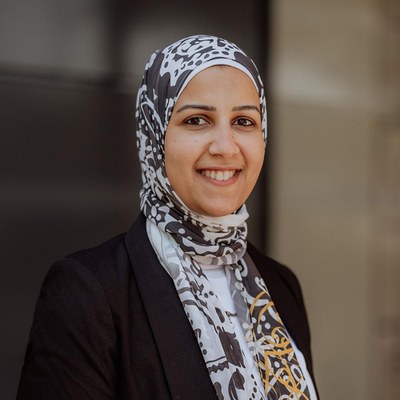
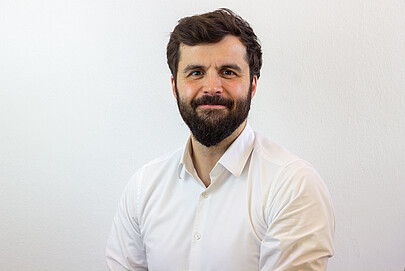
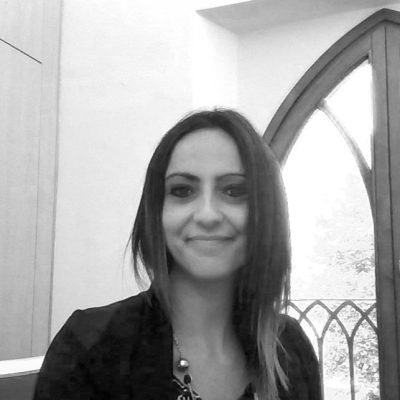
Dr. Lisa Kohl is a tenured Researcher in the Cryptology Group at CWI Amsterdam since October 2020. Her work focuses on secure computation and practical post-quantum secure protocols . Prior to CWI, she was a postdoctoral researcher at Technion with Yuval Ishai and completed her PhD at Karlsruhe Institute of Technology under Dennis Hofheinz in 2019. She also spent eight months at the FACT center, IDC Herzliya during her PhD and wrote her master’s thesis at CWI Cryptology Group as a visiting student in 2015. PhD in Cryptology (2019, Karlsruhe Institute of Technology) Postdoctoral Researcher (Technion, 2019-2020) Research Visit Fellow (FACT Center, 2015-2019) Visiting Student (CWI Cryptology Group, 2015) Her research spans secure multi-party computation , homomorphic secret sharing , post-quantum cryptography , and pseudorandom correlation generation . Articles demonstrate expertise in optimizing oblivious transfer , improving Σ-protocol efficiency , and constructing cryptographic primitives from lattice problems and LPN assumptions . Contact: Lisa.Kohl@cwi.nl
Patanjali Sristi is an Assistant Professor at Augusta University's School of Computer and Cyber Sciences, specifically within the Department of Cybersecurity Engineering. Located at 100 Grace Hopper Lane in Augusta, Georgia, Dr. Sristi joined the university in January 2025 after previously working as a Postdoctoral Researcher at the University of Florida with Dr. Swarup Bhunia. Their academic journey began with a B.Tech in Electrical and Electronics Engineering from Pondicherry University in 2011, followed by both MS and Ph.D. in Computer Engineering from the Indian Institute of Technology (IIT Madras). Dr. Sristi's educational background demonstrates a strong foundation in electrical engineering and computer science, with advanced specialization in hardware security. Their Ph.D. research at IIT Madras was supervised by Dr. Kamakoti Veezhinathan, focusing on critical aspects of hardware security that would form the basis of their future research career. Dr. Sristi's research program centers on addressing one fundamental question: "How can we design, measure and build efficient and affordable security assurances for a given hardware design in the context of an untrusted supply chain while respecting the design constraints at each level of abstraction?" This research vision spans three interconnected domains: AI for System Design: Developing data models and AI techniques for next-generation hardware systems AI for Hardware Security: Creating AI models for vulnerability detection, countermeasure evaluation, and mitigation of supply chain threats Cybersecurity for AI: Establishing metrics and algorithms for secure development, deployment, and operation of AI systems Dr. Sristi's scholarly output reveals a consistent focus on hardware security challenges within the modern distributed electronics supply chain. Their work demonstrates a progression from foundational research on hardware trojans and side-channel attacks toward comprehensive frameworks addressing the emerging "zero trust" paradigm in hardware security. A notable trend is the integration of AI/ML techniques with traditional hardware security approaches, reflecting the evolving nature of security threats and countermeasures. Their publications span prestigious venues including IEEE Transactions on VLSI Systems, IEEE Transactions on Computers, and various IEEE conferences, indicating strong recognition within the hardware security community. While specific awards aren't detailed in the available information, Dr. Sristi's research impact is evident through multiple US patents (including US Patent 11,899,827 and US Patent App. 17/392,376) and invitations to deliver talks at prominent organizations including Sony Finishing School, Northrop Grumman, and IEEE events. Their work on Netflix Privacy Analysis was featured in Wired, demonstrating real-world relevance and impact. Dr. Sristi actively engages with students through courses including CSCI 8940 (Dissertation Research), CSCI 8720 (Problems in Computer & Cyber), and CSCI 7900 (Research Colloquium). Their research program appears well-supported through collaborations with major institutions and industry partners, as evidenced by workshops conducted for the Indian Army in conjunction with Pravartak and IIT Madras. These partnerships suggest substantial research funding and collaborative opportunities that enhance the educational experience for students. Though specific lab information isn't provided in the available text, Dr. Sristi's research scope suggests involvement with hardware security laboratories equipped for VLSI design, testing, and security evaluation. Their work on IoT security, hardware trojans, and supply chain security would require facilities for physical device testing, side-channel analysis, and hardware emulation. The focus on "zero trust" implementation for hardware security indicates a research environment that bridges theoretical security models with practical implementation challenges.
Anrin Chakraborti is an Assistant Professor in the Department of Computer Science at the University of Illinois at Chicago, affiliated with the College of Engineering. His work bridges cryptography, systems, and theory to build privacy-preserving technologies for real-world challenges. Ph.D. in Computer Science from Stony Brook University (2020) Postdoctoral Researcher at Duke University B.Tech in Computer Science from Jadavpur University, India Chakraborti’s research focuses on three core areas: Secure Cloud Computing: Developing cryptographic mechanisms to protect data confidentiality and integrity in cloud environments against side-channels and malicious providers. Privacy in Collaborative Systems: Designing tools for private information sharing in cyber-physical systems and collaborative learning pipelines, including autonomous vehicle communication. Deniable Communication & Storage: Creating storage and messaging systems resistant to coercion, backdoors, and key compromise through plausibly deniable encryption. His publications demonstrate a consistent focus on privacy-enhancing technologies, oblivious protocols, and secure storage solutions. Notable contributions include Wink (deniable secure messaging), INVISILINE (plausibly-deniable storage), and ORAM-based protocols for cloud data privacy. He teaches graduate courses like CS 588 (Security & Privacy in Networked Systems) and CS 594 (Applied Cryptography), emphasizing hands-on implementation of secure systems.
Angelo Feraudo is a Research Fellow at the Department of Computer Science and Engineering of the University of Bologna. He is currently pursuing a PhD in Computer Science, focusing on vehicular computing and service continuity in vehicular networks. His academic path includes a Master's degree in Computer Engineering (University of Bologna) and research experience at the Computer Laboratory of Cambridge University. PhD Researcher (Nov 2021 - present) Research Fellow (Apr 2021 - Oct 2021) Visitor at University of Cambridge (Sept 2020 - Jan 2021) His research intersects emerging technologies like vehicular ad hoc networks (VANETs), vehicular cloud computing, 5G/Mobile Edge Computing (MEC), O-RAN standards, and IoT security. Key projects include: Vehicular computing research (2021-present) Resilient Water Emilia-Romagna dashboard (2021-present) MUD standard extensions for IoT security (2020) Distributed federated learning at Cambridge (2019-2020) Bluetooth vulnerability analysis (2018-2019) Technical expertise spans multiple programming languages ( Java, C, Python, C++, JavaScript ) and systems engineering. Publications address critical IoT security frameworks, federated learning implementations, and device fingerprinting methodologies.
Tor-Morten Grønli serves as Professor at the Department of Technology, School of Economics, Innovation and Technology, Kristiania University College (Norway). He is also a Visiting Research Scholar at Copenhagen Business School's Department of Information Technology Management and an affiliate of the Center of Business Data Analytics (cbsDBA). Education PhD in Computer Science from Brunel University, London (2011) Master of Technology (with distinction) from Brunel University, London (2007) Research Focus Grønli leads research in context-aware systems, mobile/pervasive computing, and Internet of Things (IoT). He founded/directs the Mobile Technology Lab at Kristiania and has co-authored 70+ publications. Core expertise includes: IoT architecture and applications Machine learning for transport systems Mobile computing frameworks Blockchain-security integration Edge-cloud computing paradigms Publication Trends Recent works (2023-2025) demonstrate strong focus on converging IoT, blockchain, and AI technologies, particularly for intelligent transport and healthcare systems. Dominant themes include federated learning implementations, privacy-preserving architectures, and sustainable edge computing solutions, with increasing emphasis on real-world applications in medical diagnostics and public infrastructure. Professional Activities Founder/Director of Mobile Technology Lab General Chair: Norwegian Conference on ICT Co-organizer: International Conference on Mobile Web Editorial Board: International Journal of Pervasive Computing, Journal of Online Information Review, Computers & Electrical Engineering TPC Member for IEEE BigData, Percom, HICSS, COMPSAC Guest Editor for special issues in Future Generation Computer Systems
Dr. Yomna Abdelrahman is a Professor of Usable Security and Privacy at the Bundeswehr University Munich . Her research focuses on thermal imaging for security and privacy , virtual reality usability, eye tracking , and biometric authentication . She collaborates with researchers like Florian Alt and Albrecht Schmidt on projects exploring how thermal sensing can enhance user identification and privacy awareness . Key Research Areas : Thermal Imaging, Human-Computer Interaction, Virtual Reality, Password Security, Biometric Authentication, Eye Tracking, Privacy Her recent publications address VR emotion detection , password usability , and privacy implications of thermal imaging . She has contributed to conferences like CHI, MUM, and INTERACT, often examining security-privacy trade-offs and non-invasive biometric systems . Notably, her work on thermal attacks reveals vulnerabilities in mobile authentication through thermal residue. She holds a PhD in Computer Science from the University of Stuttgart (2018), where her thesis, "Thermal Imaging for Amplifying Human Perception," laid the foundation for her later work on thermal-based interaction and cognitive load estimation . Her collaborations span diverse domains, from smart home notifications to industrial worker assistance , reflecting her interdisciplinary approach to usable security and interactive systems .
João Pedro Machado Vitorino is a part-time lecturer and researcher at the Polytechnic Institute of Porto's School of Engineering, affiliated with GECAD. He is pursuing a Ph.D. in Informatics Engineering (Artificial Intelligence) at the University of Porto and holds an MSc in Artificial Intelligence Engineering. Education : Ph.D. (in progress), MSc, and BSc in Informatics/Artificial Intelligence Engineering Research : Focuses on machine learning robustness, explainability, and adversarial attack simulation for cybersecurity applications Projects : Involved in 7 EU/National R&D initiatives (2021-2025), including BEHAVIOR (2024-2025) and CYDERCO (2023-2025) His recent publications (2023-2025) span cybersecurity datasets , adversarial learning , malware detection , LLM security , and energy-efficient AI . He co-organized the 36th European Simulation & Modelling Conference (2022) and peer-reviewed for Pattern Recognition and Computers & Security . Awards : IEEE Outstanding MSc Thesis (2023), Engineers Association Innovation Award (2024), multiple merit certificates Skills : Machine Learning, AI Security, Network Analysis, and 3 professional certifications (Cisco, Microsoft, Airbus)
William Bulko is an Associate Professor in the Department of Computer Science at the University of Texas at Austin. His work bridges Artificial Intelligence, Programming Languages, and Computer Science Education, with a focus on mobile development and pervasive computing. Ph.D. in Computer Sciences (UT Austin, specialization in Artificial Intelligence) B.S. in Mathematics (University of Texas at El Paso, Summa Cum Laude) Research spans interdisciplinary projects, such as integrating Computer Science with Journalism, and technical innovations in: Network Security (ARP Cache diagnostics) Hardware Authentication (electromagnetic profiling patents) Object-Oriented Systems (access control, operator overloading) Diagrammatic Reasoning (physics problem-solving, visual languages) His publications highlight expertise in AI, software engineering, and educational technology, with recent patents on computing desktop management and device security. Bulko serves on the Review Board of Applied Intelligence and as Faculty Advisor for the UT CS Roadshow. Scientific Recognition : 1988 MCC Award for Excellence in Computer Science nominee Teaching roles include CS 371L: Mobile Programming for iOS and CS 329E: Elements of Web/Mobile Computing . He has also led summer programs on Python and iOS development.
Jian Liu is an Associate Professor at the School of Computing, University of Georgia, leading the Mobile Sensing and Intelligence Security (MoSIS) Lab. Previously, he served as an Assistant Professor at the University of Tennessee, Knoxville. He holds a Ph.D. from Rutgers University and focuses on Trustworthy AI, Computational Sensing, and Human-Computer Interaction. Current Affiliation: School of Computing, University of Georgia Prior Affiliation: University of Tennessee, Knoxville Education : Ph.D. from Rutgers, The State University of New Jersey Dr. Liu’s research spans Trustworthy AI , Computational Sensing , and Intelligent Fitness Technologies , with publications in top venues like IEEE S&P/Oakland, ACM CCS, and ICML. His work addresses security vulnerabilities in mobile systems, federated learning, and acoustic-based sensing. Recent publications include HarmonyCloak (2025) for AI music copyright protection and mm-RunAssist (2025) for mmWave-based fitness analysis. Research trends emphasize AI ethics , privacy-preserving techniques , and innovative sensor applications . Scientific Awards : IChemE Biochemical Engineering Award (2023) ACM SIGMOBILE Research Highlights (2022) Professional Promise in Research and Creative Achievement Award (2025, University of Tennessee) Best Paper Awards at IEEE SECON (2017) and IEEE CNS (2018) Recognized in Stanford’s Top 2% Most Cited Scientists Dr. Liu mentors students in the MoSIS Lab, with lab members like Yi Wu joining the University of Oklahoma as a Tenure-track Assistant Professor. His research is supported by multiple NSF grants, including CSR and SaTC proposals, and industry partnerships like NVIDIA and Google. Media coverage includes BBC News , MIT Technology Review , and IEEE Spectrum , highlighting his work on AI-driven music protection and smart wearable technologies.
Florian Groß is a Lecturer in American Studies at the English Seminar within the Faculty of Humanities at Leibniz University Hannover. He serves multiple roles including Department Officer for IT Security and Representative of the Faculty of Humanities, demonstrating his integration into both academic and administrative structures of the institution. His scholarly work bridges literary studies, media theory, and urban cultural history with particular focus on serial phenomena across media forms. His educational background includes: M.A. in English/American Studies and Political Science from Leibniz University Hannover (2006) Thesis: "Just Another Appliance, a Toaster with Pictures: Postmodern Literary Engagements with TV in Don DeLillo and David Foster Wallace" Dr. Groß's research explores how serial forms like television series, podcasts, and world's fairs function as transnational cultural phenomena that shape identity formation and historical consciousness. He investigates the cultural history of New York City as a laboratory for negotiating authenticity, coolness, and creativity, particularly examining spaces like the High Line as sites where rural-urban tensions manifest. His work demonstrates how contemporary media forms build upon historical patterns of serial cultural production while adapting to new technological and social contexts. His publication pattern reveals consistent engagement with seriality across diverse media platforms, showing how cultural phenomena evolve while maintaining structural continuities. The thematic focus on New York City as a cultural laboratory connects his work on television, podcasts, and urban spaces, demonstrating how local contexts participate in global cultural flows. His scholarship consistently examines how authenticity is constructed within serial forms, whether in television comedy, world's fairs, or urban renewal projects. His recognized achievements include: Doktorandenkurzstipendium Deutscher Akademischer Austauschdienst for research at the Paley Center for Media, New York City Dr. Groß has been actively involved in academic service including organizing international conferences such as "Cultural Distinctions Remediated" (2011) and "The Aesthetics of Authenticity" (2010). His teaching engages directly with contemporary media forms, particularly television series, and he has shared his pedagogical approaches through guest lectures at institutions including TU Braunschweig and Georg-August-University Göttingen. His administrative roles within the Faculty of Humanities demonstrate his commitment to institutional development alongside his scholarly work. He maintains active participation in scholarly communities through memberships in the German Society for American Studies (DGfA), European Association of American Studies (EAAS), and International David Foster Wallace Society, regularly presenting his research at national and international conferences with presentations documented through 2023.
Prof. Dr. Markus Dürmuth is a Professor at the Faculty of Electrical Engineering and Computer Science, Leibniz University Hannover, leading the Usable Security and Privacy Department. His work bridges IT security with human-centered design, focusing on user authentication and privacy mechanisms. Current affiliation: Leibniz University Hannover (since 2022) Past roles: Ruhr University Bochum (2017-2022), Stanford University (2010) Education: PhD in Computer Science, Saarland University (2005-2010) His research explores how users interact with security systems, from smart home authentication to digital pandemic certificates. Recent publications analyze global security perceptions, authentication usability in SMBs, and media literacy around passwords. Key article trends include human factors in security design, cross-cultural privacy behaviors, and risk-based authentication frameworks. Subfields emphasize practical usability challenges in biometric systems, digital identity, and pandemic-era technology adoption. Markus Dürmuth serves on the Faculty Council and Computer Science Examination Board. He reviews for journals (JCSS, COSE, TIFS) and funding agencies like the Federal Ministry of Health and Werner Siemens Foundation.
Jelena Dj. Trifkovic serves as Full Professor in the Department of Analytical Chemistry at the Faculty of Chemistry, University of Belgrade, where she was promoted from Assistant Trainee (2003) through Associate Professor (2019) to her current position (2024). She concurrently holds leadership roles as Vice-Dean for Teaching and Secretary of the Serbian Chemical Society since 2020. Her academic foundation includes undergraduate (1995-2001), Master's (2003-2006), and Doctoral studies (2011-2013) in Chemical Sciences, all completed at the University of Belgrade's Faculty of Chemistry. Trifkovic's research centers on chromatographic separation techniques and chemometrics for food authenticity verification, particularly focusing on bee products like honey and propolis. Her methodology integrates advanced analytical instrumentation with multivariate data analysis to establish quality control protocols and detect adulteration, significantly contributing to food safety standards in the Balkan region. Analysis of her publication record reveals consistent innovation in HPTLC image analysis and multi-technique approaches (GC, LC, electrochemical methods) for natural product authentication. Her work demonstrates increasing international collaboration, with recent publications emphasizing standardized protocols for regulatory compliance and health benefit validation of food components. She actively secures competitive research funding, including Horizon Europe's PFAStwin project (2022-2025) and UNDP-funded valorization initiatives (2023-2024), alongside leadership in bilateral projects on bee product authentication with Croatian and Slovenian institutions. Trifkovic maintains strong laboratory networks through her affiliation with Slovenia's National Chemical Institute Food Chemistry Laboratory and coordinates multiple university committees focused on curriculum development and quality assurance in chemical education.
Dr. Martin Robertson is an Associate Professor in the Business School at Edinburgh Napier University, specializing in festival and event management. His research spans leadership, gender inequality, sustainability, and tourism futures. BA (Hons), MA, PhD Fellow of the Higher Education Academy (FHEA) Key research areas include: Gender disparities in festival leadership UN SDGs integration in event practices Resilience and future-proofing in events education Sustainable event design and audience behavior His recent publications analyze: Gender inequality in Edinburgh's festivals Deep learning applications for tourism futures Safety protocols at mass gatherings Evaluating SDG contributions through business events Robertson supervises PhD candidates and contributes to the Tourism Research Centre's initiatives.
Henrik Andersson is an Associate Professor (Docent) at Mid Sweden University's Department of Engineering, Mathematics and Science Education (IMD) in Sundsvall. His research spans multiple interdisciplinary fields at the intersection of materials science, nanotechnology, and energy harvesting. Andersson's research focuses on printed electronics , triboelectric nanogenerators , and paper-based electronics . His work explores innovative approaches to energy harvesting from everyday movements and environmental sources, with particular emphasis on sustainable and biodegradable materials. He has made significant contributions to understanding the triboelectric properties of various materials, including human body interactions, plant-based materials, and novel composites. His recent publications reveal a strong trend toward green energy solutions using waste materials like paper, development of high-performance sensors for healthcare applications, and exploration of novel materials for energy storage and conversion. His research has practical applications in wearable technology, IoT devices, and sustainable energy solutions. Andersson leads and participates in multiple research projects including IMPHET (Innovation environment for advanced Materials and Processes with Sustainable Energy Applications), LEAP (Large-area Energy Application Platform), and STORE (Electrical energy storage). These projects demonstrate his commitment to developing practical, sustainable energy solutions through interdisciplinary collaboration. His work bridges fundamental materials research with practical applications, particularly in developing manufacturing processes for printed electronics on paper substrates and exploring new applications for triboelectric phenomena in everyday environments.
Donatella Saccone is a Fixed-Term Researcher at the University of Gastronomic Sciences (UNISG), where she contributes to academic programs such as the Master's in Sustainable Food Innovation & Management and the Bachelor's in Gastronomic Sciences and Cultures. She has held significant roles, including Convenor for multiple degree courses and Delegate for Training COSGA Representative. PhD in Economics, University of Turin (2008) Master's in Economics, CORIPE Piemonte (2005) Political Science with major in Economics, University of Turin (2004) Her research focuses on sustainable economic development, food policy, and globalization, particularly within the agri-food sector. She has collaborated with international organizations like the ILO and UNCTAD, emphasizing food markets and security. At UNISG, she engages in interdisciplinary research under the 'Culture and Society' area, leading projects such as 'The origin of food: identity, authenticity, contradictions' and 'Circular Economy For Wine (CEFW).' She co-founded the Observatory on Emerging Economies-Turin (OEET) and served as President of the Italian Association for the Study of Comparative Economic Systems (AISSEC) from 2018 to 2022.