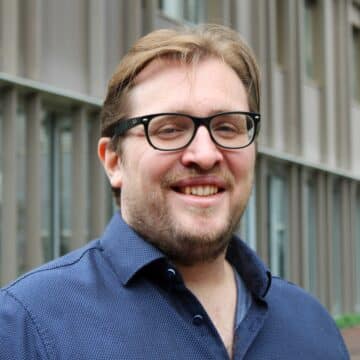
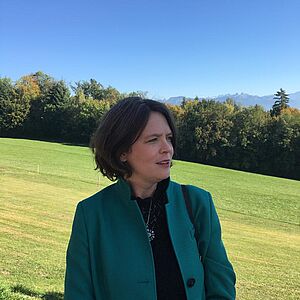
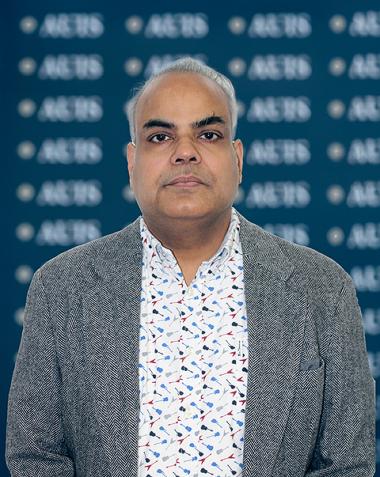
Daniele Cantini is a Senior Research Fellow and scientific coordinator at the Martin-Luther-Universität Halle-Wittenberg ’s Graduate School ‘Gesellschaft und Kultur in Bewegung’ . He specializes in social anthropology, Middle Eastern studies, and knowledge production dynamics, with a focus on Egyptian and Jordanian universities. His work bridges ethnographic research, critical theory, and institutional analysis. Education PhD in Cultural Anthropology (2006), University of Modena and Reggio Emilia & University of Milano – Bicocca MA in Cultural and Social Ethnology (2002), University of Modena and Reggio Emilia Research Interests Knowledge production in Middle Eastern universities Migration and integration in the Mediterranean Religious belonging and secularism Doctoral education in the Global South Recent Publications 2019: University reforms in the Middle East 2018: Knowledge production in Egyptian doctoral studies 2016: Private universities in Egypt
Dr. Hakki Arslan serves as a Research Associate at the Dubnow Institute within the Ignaz-Goldziher-Program since July 2024, specializing in comparative Jewish-Muslim legal traditions with emphasis on interreligious marriage and historical legal discourse. His academic background includes: Religious Studies and History studies at Goethe University Frankfurt am Main Doctoral research in Islamic Theology at University of Osnabrück (2011-2015), funded by Konrad Adenauer Foundation Arslan's research investigates authority structures in Jewish and Muslim legal traditions, Ottoman-era interreligious contact zones, and methodological critiques of Islamic law periodization. His work bridges historical analysis with contemporary relevance through comparative frameworks examining legal adaptation in pluralistic societies. Publication trends (2014-2022) reveal sustained focus on Islamic legal hermeneutics, Ottoman legal pluralism, and cross-traditional dialogue, with increasing emphasis on decolonizing historical narratives and contemporary applications of classical jurisprudence. His scientific recognition includes: Konrad Adenauer Foundation Doctoral Fellowship Arslan's research has been sustained through institutional postdoctoral positions at Osnabrück and Münster universities, with current work embedded in the Dubnow Institute's Ignaz-Goldziher-Program examining legal tradition authority in modern contexts.
Marcus V. A. B. De Matos is a Senior Lecturer in Law at Brunel University London , affiliated with the Brunel Law School within the College of Business, Arts and Social Sciences. His career spans academia, legal consultancy, and human rights advocacy. PhD in Law , Birkbeck, University of London (2014) - CAPES Foundation Overseas Scholarship MRes in Human Rights and Arts , Federal University of Rio de Janeiro (UFRJ) Bachelor of Laws (LLB) , UFRJ His research critically examines sovereignty , law and humanities , human rights , and digital democracy . Key projects include Human Rights & Religion (2021-2022), Living Avatars (2021-2022), and Human Rights, Religion and the Cold War (BRIEF Award 2023/2024). Recent work explores human rights and religion , digital avatars , and visual genealogies of sovereignty . His publications bridge law and film , sovereignty and aesthetics , and human rights in postcolonial contexts , with interdisciplinary focus on digital technology , religious movements , and historical memory . Notably, his 2021 monograph Imagens da América Latina (ABEU Prize winner) analyzes media and human rights in Latin America. BRIEF Award (2023/2024) HE Connects Grant (British Council) ABEU Prize for Best Monograph (2021) Honourable Mention (José Bonifácio Academic Foundation) Dr. De Matos serves as Deputy Director of Equality and Diversity at Brunel Law School, co-leads the Human Rights, Society and Arts and Living Avatars research groups, and contributes to international networks including ABEP-UK and RECAP (Brazilian legal advocacy network). He reviews for top journals like Law and Critique and Law and History Review .
Dr. Gordon Babst is an Associate Professor of Political Science at Wilkinson College of Arts, Humanities, and Social Sciences, Chapman University. He joined the faculty in 1999 and served as Faculty Senate President (2016-2017). His work bridges political philosophy, religion and politics, and contemporary debates on diversity, tolerance, and globalization. Rockhurst University: B.A. The Claremont Graduate University: M.A., Ph.D. Research focuses on: Kantian international political theory Intersection of religion and politics Same-sex marriage and gay rights Liberal-democratic challenges Moral community in global justice Recent publications include contributions to the Philosophical Foundations of Law and Justice series (Springer) and encyclopedic entries on constitutional and political topics. He co-edited and contributed to the book Moral Argument, Religion, and Same-Sex Marriage: Advancing the Public Good . His work appears in journals like Peace and Change and Journal of Politics . Dr. Babst has collaborated with students like Nicole M. Tellier on research about Israel/Palestine citizenship issues. His affiliations include serving as Senior Co-Editor for academic works and maintaining active roles in university governance.
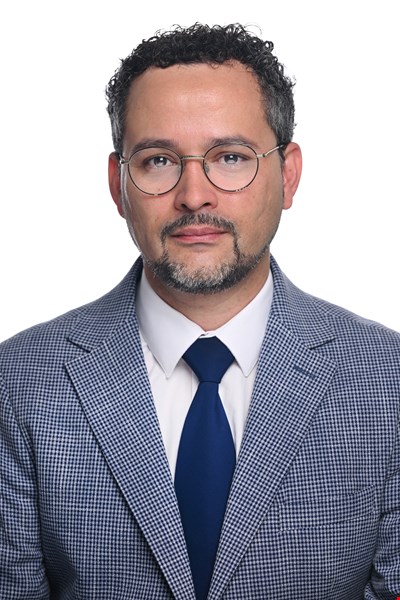
Timothy Larsen serves as the McManis Professor of Christian Thought and Professor of History at Wheaton College. He concurrently holds Honorary Fellow status at the University of Edinburgh's School of Divinity and Honorary Research Fellow position at the University of Wales Trinity Saint David's School of Theology, Religious Studies and Islamic Studies. Elected President of the American Society of Church History for 2025, he maintains fellowships with the Royal Historical Society and Royal Anthropological Institute, and has held visiting positions at Christ Church Oxford, All Souls College Oxford, and Trinity College Cambridge. His educational credentials include a D.D. in Historical Theology from the University of Edinburgh (2020), Ph.D. in History from the University of Stirling (1997), M.A. in Theology from Wheaton College (1990), and B.A. (Hons.) in History from Wheaton College (1989). Larsen's research examines Victorian religious dynamics through multiple lenses: faith/doubt tensions, biblical interpretation in society, evangelical identity formation, and secularization narratives. His scholarship uniquely bridges historical theology, anthropology of religion, and political theology, with recurring focus on nonconformist movements, women's religious roles, and the institutional history of academic disciplines. Key figures in his work include John Stuart Mill and George MacDonald as case studies for broader cultural analysis. While his journal output includes "A. S. Peake, the Free Churches, and Modern Biblical Criticism" (2008) on dissenting biblical scholarship, his primary scholarly impact comes through twenty authored/edited books that define modern discourse in British religious history. His scientific recognition includes two Books & Culture Book of the Year awards (2006, 2014), an Arlin G. Meyer Prize Finalist designation (2016), and dual fellowships in Britain's premier historical and anthropological societies. Information regarding doctoral advisees, research grants, or laboratory teams is not documented in available sources, though his editorial leadership includes Oxford University Press's Spiritual Lives biography series and The Oxford History of Protestant Dissenting Traditions.
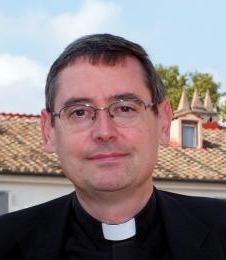
Dr. Federico M. Requena is a Professor of Contemporary Church History at the Pontifical University of the Holy Cross (PUSC) in Rome since 2009, with additional roles as Assistant Director of the Josemaría Escrivá Study Center (CEJE) and collaborator at the Church History Institute (IHI) of the University of Navarra. His academic journey includes two doctorates: Theology (1996) and History (2007), both from the University of Navarra, following earlier degrees in Theology (1993) from PUSC and Geography/History (1987) from the University of Murcia. Doctorate in Theology (1996), University of Navarra Doctorate in History (2007), University of Navarra Bachelor in Theology (1993), Pontifical University of the Holy Cross Bachelor in Geography and History (1987), University of Murcia As a leading scholar in European and US religious history, Dr. Requena specializes in the History of Opus Dei, Catholicism during the Primo de Rivera dictatorship and Second Republic, religious associations, and transnational church networks. His research spans institutional expansion, clerical leadership, and the interplay between religious identity and modernity. His publications include 15 recent articles analyzing transnational religious movements, with particular focus on Opus Dei's expansion (1948-1961), US-Latin American Vatican collaborations, and Cold War-era Catholic dynamics. Key methodologies include historiographical analysis, archival research across European and American institutions, and comparative studies of religious organizations. Director of Studia et Documenta journal (2023-present) Vice-Director of journal's Editorial Board (2010-2023) Member of Notre Dame's Cushwa Center Advisory Committee (2024) Dr. Requena has directed and co-directed multiple theses on Spanish spiritual literature and religious historiography while maintaining active roles in international conferences and research stays at prestigious institutions including Harvard, Notre Dame, and Oxford. He has pioneered digital resources like the Josemaría Escrivá Virtual Library and maintains extensive collaborations across Catholic academic networks. Current affiliations include the Pontifical University of the Holy Cross (Rome), University of Navarra's Centro de Estudios Josemaría Escrivá (Pamplona), and the Institute for Religious Sciences (Bologna). His work bridges archival rigor with contemporary relevance, focusing on religious modernity and institutional adaptation in both European and American contexts.
Max-Valentin Robert is a Postdoctoral Researcher in Political Science at the European School of Political and Social Sciences (ESPOL) within the Catholic University of Lille. He holds a PhD in political science from Sciences Po Grenoble (2021) and has held positions at Istanbul Bilgi University (ERC PRIME Youth project, 2020-2021), the University of Nottingham (Research Fellow, 2022-2023), and currently works on the Horizon Europe project 'ACTEU – Towards a new era of representative democracy.' Research Areas: Elections, Voting and Political Parties Democracy and Authoritarianism Far Right and Populism Turkish Politics Public Opinion Publication Trends: His work spans electoral dynamics in competitive authoritarian regimes, radical right-wing populism, Turkish politics, and the impact of social media on activism. Collaborative projects include analyzing Muslim youth radicalization, Euroscepticism, and European parliamentary representation. Teams and Projects: Involved in the Horizon Europe ACTEU project and the Digital Society Project (DSP) at the University of Nottingham.
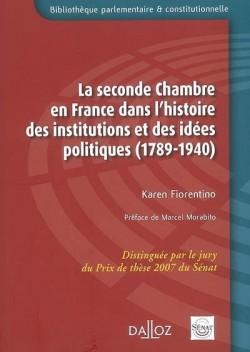
Karen Fiorentino is Professor of Legal History at the University of Burgundy (Université Bourgogne), France, where she is affiliated with the Faculty of Law and Political Science (UFR Droit et Sciences économique et politique de Dijon). She has held numerous academic leadership positions including Vice-president of the CFVU (Commission de la Formation et de la Vie Universitaire) from September 2020 to January 2024, member of the National University Council (Conseil National des Universités) from 2015 to 2023, and Secretary General of the Association of Historians of Law Faculties from 2014 to 2018 followed by Vice-president from 2018 to 2023. Professor Fiorentino's research focuses on constitutional history, family law history, and the historical relationship between medicine and law. Her scholarly output demonstrates consistent examination of how legal systems addressed issues of family, reproduction, and medical expertise throughout French history. She has made significant contributions to understanding archival practices within French judicial systems, with particular emphasis on regional archives from Côte-d'Or department. Her work frequently analyzes revolutionary periods and their transformation of legal thinking and practice. Her recent publications (2021-2025) reveal several key research trajectories: the historical relationship between religion and law during revolutionary periods, evolution of family law regarding maternity and paternity, use of medical expertise in legal contexts throughout French history, and development of archival practices within judicial systems. Her methodological approach consistently emphasizes value of regional archives in understanding broader legal historical developments. Professor Fiorentino has been actively involved in numerous academic service roles beyond her institutional positions, including serving on the Board of the Departmental Committee for the History of the French Revolution in Côte-d'Or since 2013 (as President since May 2020), and as President since 2022 of the Society for the History of Law and Institutions of the former Burgundian, Comtois and Romand countries. She has coordinated thematic research groups and served on various university governance committees related to academic formation and library systems.
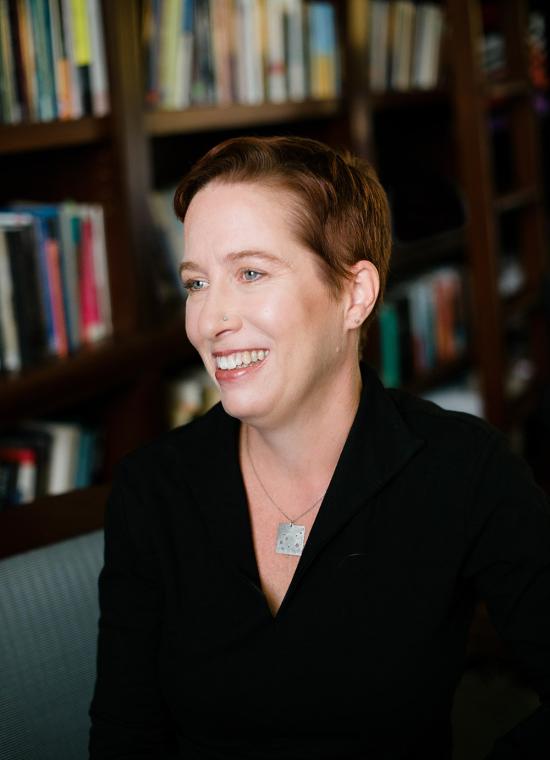
Erin M. Runions is Professor and Nancy M. Lyon Professor of Biblical History and Literature in the Department of Religious Studies at Pomona College , where she has been a faculty member since 2005. Her academic work sits at the intersection of biblical scholarship, political theology, cultural studies, and critical theory. Her research focuses on the Hebrew Bible and its reception history , particularly how biblical interpretations shape contemporary ideologies around sexuality, race, biopolitics, governance, war, torture, and U.S. imperialism . She critically examines how scriptural narratives are mobilized in political discourse and cultural production, including film, law, and religious movements. Runions’s publications include The Babylon Complex: Theopolitical Fantasies of War, Sex, and Sovereignty (2014), How Hysterical: Identification and Resistance in the Bible and Film (2003), and Changing Subjects: Gender, Nation, Future in Micah (2001). Her recent articles analyze topics such as carceral affect, biblical biopolitics, and the theological implications of economic sacrifice during the pandemic. Her scholarship frequently draws on feminist, queer, poststructuralist, and psychoanalytic theories to interrogate power, identity, and subjectivity. Her most recent publications reveal a sustained engagement with the intersections of religion, affect, and political economy , particularly in carceral systems and pandemic responses. She explores how biblical language is used to justify or critique systems of control, often linking theological concepts to broader structures of capitalism and state violence. Her notable awards and honors include: Lilly Endowment, Wabash Center Grant (2008–2009) Lilly Endowment Summer Research Stipend (2007) Fonds pour la formation de chercheurs et l'aide à la recherche, Québec (Postdoctoral Fellowship, 2000–2002) She is actively involved in social justice, including facilitating a writing workshop in a women’s prison and advocating for environmental justice in Pomona. She has taught courses such as Queer Theory and the Bible , Gender and Religion , and The Bible Goes to Hollywood . She received her Ph.D. from McGill University and her B.A. from the University of British Columbia.
Andrea Krauss serves as Chair of the Department of German and Professor of German within New York University's College of Arts and Science, where she leads departmental initiatives while maintaining an active research profile spanning German literature and intellectual history from the eighteenth century to contemporary periods. Her academic leadership encompasses curriculum development and faculty oversight in one of NYU's core humanities departments. Her educational trajectory includes a Ph.D. in German Studies from the Free University of Berlin (2001) followed by Habilitation (venia legendi) in German Literature and Literary Theory at the University of Zurich (2010), establishing her interdisciplinary foundation across continental philosophy and literary criticism. Professor Krauss's research program integrates aesthetics , political theory , and literary methodology through innovative frameworks like 'constellation theory' and 'aesthetics of exile.' Her scholarship critically examines hermeneutic practices in figures ranging from Jean Paul to Hannah Arendt, while pioneering new approaches to avant-garde literature and post-1945 German-Jewish intellectual history . This work consistently bridges philosophical inquiry with textual analysis, particularly through gender studies lenses and poetics of knowledge frameworks that challenge traditional disciplinary boundaries. Analysis of her recent publications reveals dominant thematic clusters around Hannah Arendt's political thought (constituting 30% of output), avant-garde techniques (25%), and 18th-century hermeneutics (20%), with emerging trajectories in uncanny theory and exile autobiography. Her editorial leadership on special journal issues demonstrates sustained engagement with constellation theory and avant-garde studies as unifying threads across diverse textual traditions. Her scholarly excellence has been recognized through: Global Opportunity Grant (NYU) Dean’s Award for Excellence in Scholarship (Johns Hopkins University) Visiting Professorship (Humboldt University Berlin) Research Fellowship (Swiss National Science Foundation) Visiting Scholar position (Vanderbilt University) Professor Krauss maintains an active mentoring practice through her 'Graduate Research & Writing' Werkstatt seminar, which guides students from seminar papers to publishable articles, while teaching advanced courses including 'Jean Paul: Aesthetics of Finitude' and 'Rethinking Politics: Hannah Arendt.' Her pedagogy emphasizes conceptual problem-solving through close readings integrated with philosophical and historical contexts, fostering methodological rigor in student scholarship. Though no formal lab structure is documented, her editorial collaborations on MLN and RISS special issues demonstrate leadership in international scholarly networks. Current projects include 'Literary Hermeneutics: Scenes of Understanding around 1800' and a monograph on aesthetics/political theory in Hannah Arendt's work, indicating continued theoretical innovation at the intersection of literature and philosophy.
Professor Achilles Emilianides is a faculty member at the University of Nicosia , serving as Dean of the School of Law and actively practicing as an advocate. His work spans constitutional law, European integration, and religious legal frameworks in Cyprus. Educational background includes degrees from Aristotle University of Thessaloniki and the University of Leicester Research focus includes: Cypriot legal systems and constitutionalism Labour law and EU integration Law and religion, particularly Islamic and Orthodox traditions Private international law and cross-border legal conflicts Recent publications (2022–2024) emphasize constitutionalism in context, Commonwealth relations post-EU accession, and citizenship frameworks. He contributes to academic discourse via editorial leadership and the Royal Commonwealth Society Cyprus Branch.
Auli Vähäkangas serves as Professor of Practical Theology at the University of Helsinki's Faculty of Theology, where she also supervises in the Doctoral Program in Theology and Religious Studies and contributes to the Helsinki Inequality Initiative (INEQ). Her international academic presence includes visiting researcher positions at both University of Johannesburg (2023-2026) and Stellenbosch University in South Africa (2023-2026). Her research centers on death studies, bereavement practices, and pastoral care in contemporary contexts. Vähäkangas examines how religious communities navigate grief, particularly through her leadership in the MeDea project on worldview minority cemeteries in Finland. Her work bridges theological inquiry with practical social challenges, including refugee support through diaconal work, African-Catholic identity formation in Finland, and chaplaincy with dementia patients in nursing homes. She investigates how secularization pressures affect spiritual care while maintaining narrative approaches to existential questions. Analysis of her recent publications reveals consistent focus on death rituals across Nordic contexts, innovative pastoral approaches in healthcare settings, and religious responses to migration crises. Her work combines empirical theology with practical application, often addressing how traditional religious practices adapt to contemporary societal challenges. Vähäkangas actively mentors the next generation of scholars as evidenced by her supervision of 8 doctoral dissertations and 2 Master's theses. Her research is supported by significant grants including Academy of Finland funding for the MeDea project (2024-2028) and the 'Funerals during Covid-19' initiative. She also contributes to institutional change through projects like establishing Black History Month at the University of Helsinki. Her public engagement includes 23 public talks and 8 media appearances where she discusses death positivity, grief processing, and religious responses to social crises. Notable presentations include 'Waves of grief after the loss of a loved one' and 'Life is about dying – how should we talk about the inevitable?'
Dr. Géraldine Vaughan is a Professor at the Université de Lille, affiliated with the Faculty of Languages, Culture and Societies and the Department of English Studies - ANGELLIER. Her research focuses on historical studies of Ireland, Scotland, and the British Empire during the 19th century, alongside secularization processes, religious identities, and the history of education. She is associated with the ULR 4074 - Center for Studies in Civilizations, Languages, and Foreign Literature. Her professional email contact is geraldine.vaughan@univ-lille.fr .
Prof. Dr. hab. Helena Słotwińska is a full-time Professor at the Department of Integral Catechetics within the John Paul II Catholic University of Lublin, Poland. Her academic career spans decades, focusing on religious education, pedagogy of religion, and the intersection of theology with moral and educational practices. Role: Professor in Integral Catechetics Institution: John Paul II Catholic University of Lublin Her research explores the emotional and psychological impacts of religious education, the role of liturgy in pedagogy, and the challenges of aggression and moral development in educational settings. She emphasizes the authority of educators and the integration of theological values into modern pedagogical frameworks. Recent publications highlight her work on sacramental rites, teacher-student dynamics, and the sociological dimensions of religious pluralism. Her articles span journals like Religions , Collectanea Theologica , and Pedagogical Annals , reflecting both qualitative and quantitative methodologies. While no explicit scientific awards are listed in the provided texts, her extensive bibliography and advisory roles (e.g., reviewing Fr. Grzegorz Śniadach's doctoral thesis) underscore her influence in academic and pastoral theology.
Dr. Joy Samad is an Associate Professor in the Department of Social Sciences at the American University of Iraq, Sulaimani (AUIS), where he has taught since 2013. He is currently on leave. His academic credentials include a B.A. from the University of Minnesota and a Ph.D. from Boston College. Samad's research explores political philosophy, leadership, and historical analysis. His work critically engages with thinkers like Machiavelli, Locke, and Aristotle, and examines modern geopolitical events such as the Iraq War. His publications reflect interdisciplinary approaches bridging philosophy, history, and political theory. While no awards or student advisories are documented, his scholarly output includes six major articles published between 2010–2024 in prominent journals such as the Journal of Church and State and British Journal of Middle Eastern Studies .


/prod02/channel_1/media/faculty/larsen-25.jpg)