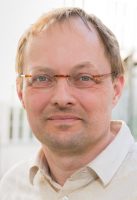
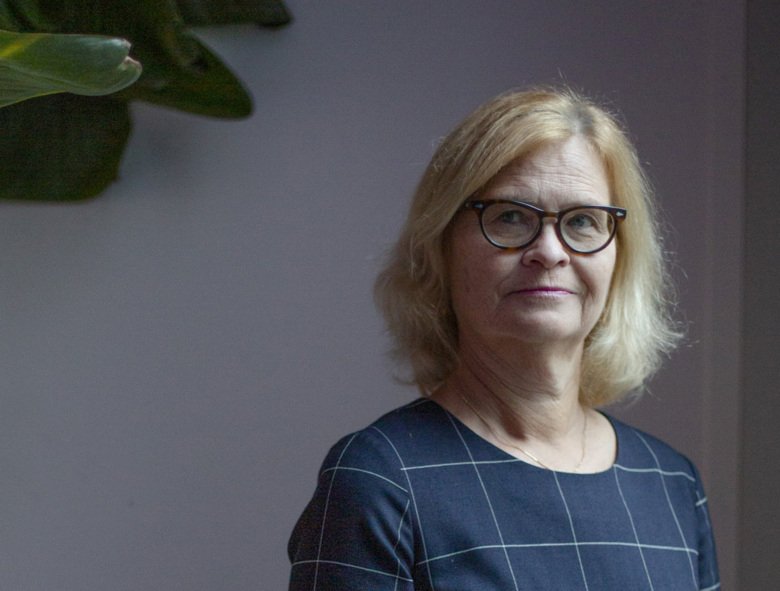
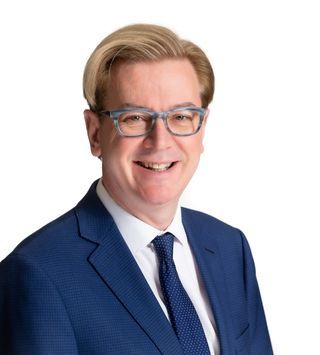
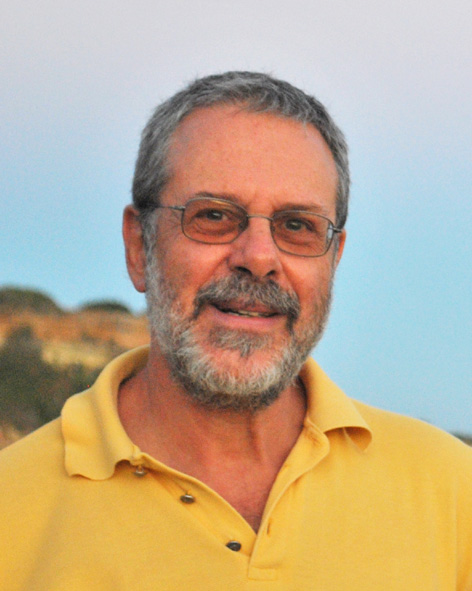
Henry D. Pfister is the Addy Family Professor of Electrical and Computer Engineering at Duke University, with a secondary appointment in Mathematics. He holds affiliations with the Pratt School of Engineering and the Duke Quantum Center. His research focuses on information theory, error-correcting codes, quantum computing, and machine learning applications in communications. Pfister earned his Ph.D. from UC San Diego and has held prior roles at Texas A&M University, École Polytechnique Fédérale de Lausanne, and Qualcomm. Education: Ph.D. in Electrical Engineering, UC San Diego (2003); M.S. degrees in Public Policy and Environmental Management from Duke University; J.D. and additional degrees from UNC Chapel Hill. Research interests include Reed-Muller codes, quantum error correction, neural decoders for DNA storage, and capacity-achieving coding schemes. Recent work highlights include proving Reed-Muller codes achieve capacity on binary-erasure channels and developing quantum-enhanced classical communication protocols. Publications span topics like polar codes for quantum channels, belief-propagation algorithms, and neural network-based decoding. Notable grants include NSF funding for DNA storage coding and quantum simulation projects. Pfister has advised over 20 graduate students and is a recipient of the STOC Best Paper Award and NSF CAREER Award.
Markus Vincze is an Associate Professor at the Institute of Automation and Control Engineering (ACIN) at Vienna University of Technology (TU Wien). He founded the Vision for Robotics (V4R) group in 1996 to advance robotic perception, particularly in real-world environments and homes. His work focuses on cognitive computer vision techniques for robotics. Education: Diplom in Mechanical Engineering (1988) and PhD (1993) from TU Wien; M.Sc. (1990) from Rensselaer Polytechnic Institute. V4R coordinates EU projects like ActIPret, robots@home, HOBBIT, and national initiatives like vision@home. Markus has edited a book on Robust Vision with Gregory Hager and authored 62 peer-reviewed journal articles and over 400 reviewed publications. His recent research explores zero-shot 6D pose estimation, sim-to-real transfer, and transparent object detection. Markus has served as program chair for ICRA 2013 and organized HRI 2017 in Vienna. He has advised numerous students and secured grants from the Austrian Academy of Sciences for work at HelpMate Robotics and Yale's Vision Laboratory. The V4R group leads innovations in robotic vision, including frameworks for synthetic data generation (Unrealgensyn), depth completion (CAGT), and educational robotics applications for sustainability. Their work spans household robotics (RH3), agricultural robotics (EdgeSoil), and human-robot collaboration.
Jasmine Begeske serves as Clinical Assistant Professor of Special Education in Purdue University's Department of Educational Studies within the College of Education. She co-founded and directs CREATE: Center for Research and Equipment for Assistive Technology in Education, an AT library and makerspace providing hands-on opportunities for pre-service teachers to develop individualized solutions for students with disabilities using 3D printers, Cricut, and Glowforge equipment. Her educational background includes: PhD in Special Education with Cognate in Art Education from Purdue University MFA in Photography and Related Media from Purdue University MS in Secondary Education (Special Education specialization) from Indiana University Northwest BFA in Photography with Art History minor from Indiana University Dr. Begeske's research program examines inclusive access to arts education through program evaluation and creative assistive technology development. Her experimental printmaking practice integrates individuals with disabilities as co-creators , while her scholarly work validates instruments measuring preschool arts accessibility and develops multisensory adaptations for students with visual impairments. She bridges art education and special education through evidence-based AT interventions . Analysis of her publication history reveals consistent focus on arts/special education intersections with increasing emphasis on empirical validation of accessibility instruments and multisensory adaptations. Her 2023 work on teacher education in art classrooms and multisensory adaptations demonstrates practical applications of her CREATE center's mission, while her 2022 instrument validation study establishes methodological rigor in measuring arts accessibility. Her scientific recognition includes: 2023 USSEA Outstanding Dissertation Award 2023 Purdue Focus Award for equity initiatives 2022 AEAI President's Award for EDI service Multiple Purdue University teaching and discovery awards (2020-2023) With 15+ years of teacher preparation experience spanning 100+ course sections, Dr. Begeske mentors doctoral students while securing grant funding including $100K from Purdue's Instructional Equipment Grant for CREATE. Her professional service encompasses state-level program reviews, academic standards committees, and leadership roles in Indiana Division of Early Childhood and CEC-DARTS. The CREATE center operates as a dual-space AT innovation hub with fixed location in Beering Hall and mobile carts supporting field experiences. It empowers pre-service teachers to prototype solutions addressing specific student needs while advancing Dr. Begeske's mission of making education universally accessible through technology and creativity.
Dr Opinderjit Kaur Takhar is a Professor and Associate Dean for Research and Knowledge Exchange at the University of Wolverhampton's Faculty of Education, Health, and Wellbeing . As Director of the Centre for Sikh and Panjabi Studies , she specializes in Sikh and Punjabi identity, caste/gender dynamics, and religious studies. Her work includes caste issues, Ravidassia communities, and UK Sikh policy frameworks. Education: PhD in Sikh Studies (University of Wales) MA in Indian Religions (University of Wales) PGCE in Secondary Religious Education (Sheffield Hallam University) Languages: Punjabi (fluent), Hindi, Urdu Research Focus: Takhar's work spans caste systems in Sikh contexts, gender dynamics, religious philosophy, and multicultural policy. She examines Ravidassia identity shifts and Punjabi Dalit experiences, while contributing to debates on UK caste legislation and Sikh political activism. Her recent projects include language politics in India and digital Sikhism. Publications Trends: Over 15+ years, her scholarship systematically explores caste-religion-gender intersections, faith-based health initiatives, and global Sikh identity. Key contributions include the foundational text Sikh Identity (2005) and collaborative works on caste lived experiences. Teaching & Supervision: Takhar teaches Sikhism, Buddhism, Hinduism, and supervises PhD projects on caste/gender issues. She integrates fieldwork into religious studies pedagogy. Grants & Projects: Currently leads NIHR-funded dementia support research for ethnic minorities. Previously managed health/sports engagement grants with NHS, Wolves Foundation, and Birmingham City Council.
Professor Udo Oppermann serves as Professor of Molecular Biology and Director of Laboratory Sciences at the Institute of Musculoskeletal Sciences, Botnar Research Centre, University of Oxford. He is also Deputy Director of the Oxford Centre of Translational Myeloma Research and a fellow at St Catherine's College. His educational background includes a Diploma in Human Biology (1990) and PhD in Pharmacology and Toxicology (1994), both earned with distinctions from Philipps University Marburg. Prior academic appointments include Associate Professor at Karolinska Institutet (until 2004) and sabbatical work at Yale University. Research focuses on epigenetic mechanisms in disease through drug and target discovery using systems biology and single-cell approaches . Key disease targets include metabolic disorders, inflammatory conditions, and malignant diseases—particularly multiple myeloma and secondary bone cancers. His group pioneers chemical biology applications in primary tumor microenvironments. Current funding sources include Cancer Research UK, Innovate UK, EPSRC, Royal Society-Newton Fund, Bristol Myers Squibb, Bayer Healthcare, GlaxoSmithKline, Blood Cancer UK, and Leducq Foundation. Notable research trends show increasing emphasis on epigenetic regulation in immune cells (2020-2024), single-cell technologies for myeloma (2022-2024), and translational applications of chromatin modifiers (2016-2019). Recent work integrates metabolomics with epigenetic mechanisms in gynecological and hematological disorders. He supervises doctoral research including Singh K.'s 2024 thesis on sonodynamic therapy mechanisms. Leadership roles encompass directing Oxford's Molecular Laboratory Sciences division and co-leading translational myeloma research initiatives.
Professor Maria Eriksdotter is a leading academic in geriatrics and dementia research at the Karolinska Institutet , holding the Department of Neurobiology, Care Sciences and Society . She also serves as a Senior Consultant in Themes Inflammation and Ageing at Karolinska University Hospital Huddinge and previously as Dean of KI South (2019–2023). Her work spans translational research, clinical trials, and national registry development, with a focus on Alzheimer's disease, cholinergic therapies, and aging. Her research group pioneered NGF cell therapy for Alzheimer's patients, demonstrating safety and cognitive stabilization in clinical trials. She chairs the SveDem registry , tracking over 100,000 dementia patients to refine diagnostics and care. Studies from SveDem revealed mortality reduction with cholinesterase inhibitors and highlighted pandemic-era diagnostic delays. Recent publications analyze dementia subtypes , comorbidities , and precision medicine in neurodegeneration. Her work intersects neuroimaging , epidemiology , and public health policy , addressing ageism and improving geriatric care systems. Collaborations span Karolinska University Hospital , NSGene Inc , and international institutions.
Graeme B. Dinwoodie is a University Distinguished Professor and Global Professor of Intellectual Property Law at Chicago-Kent College of Law, Illinois Institute of Technology, where he also serves as Co-Director of the Program in Intellectual Property Law. He has held prestigious academic positions at the University of Oxford (2009-2018), where he was Director of the Oxford Intellectual Property Research Centre and a Professorial Fellow of St. Peter's College, and Queen Mary College, University of London (2005-2009). Prior to his Oxford appointment, he led Chicago-Kent's intellectual property program for several years. Dinwoodie earned his J.S.D. from Columbia Law School, LL.M. from Harvard Law School, and LL.B. in Private Law (first class honors) from the University of Glasgow. He was the Burton Fellow at Columbia Law School (1988-89) and a John F. Kennedy Scholar at Harvard Law School (1987-88). Before entering academia, he practiced intellectual property law at Sullivan and Cromwell in New York. A leading international authority in trademark law, design law, and international intellectual property law, Dinwoodie's research focuses on the intersection of national and international IP systems, trademark theory and doctrine, and the evolving landscape of digital copyright. His work explores how trademark law serves consumer interests, the challenges of harmonizing IP systems across jurisdictions, and the role of international organizations like WIPO in shaping global IP norms. He has made significant contributions to understanding territoriality in trademark law and the impact of digital technologies on IP enforcement. Dinwoodie's extensive publication record reveals a consistent focus on the tension between national sovereignty and international harmonization in intellectual property law. His recent work examines the implications of Brexit for IP systems, the evolving role of internet intermediaries in IP enforcement, and the normative foundations of trademark law. He has increasingly focused on the practical application of IP law in digital contexts while maintaining his foundational work on international IP architecture. Scientific Awards and Recognition: Inducted into the IP Hall of Fame (2020) Recipient of the Ladas Memorial Award from the International Trademark Association (2008) Awarded the Pattishall Medal for Teaching Excellence in trademarks and trade identity law (2008) Three-time recipient of the Goldman Prize for Excellence in Teaching (University of Cincinnati) Elected to membership in the American Law Institute (2003) Named Norman and Edna Freehling Scholar (2001) Dinwoodie has served in significant advisory roles, including as a consultant to the World Intellectual Property Organization on private international law matters, an adviser to the American Law Institute Project on Principles on Jurisdiction and Recognition of Judgments in Intellectual Property Matters, and a consultant to the United Nations Conference on Trade and Development on the Protection of Traditional Knowledge. He currently serves as an adviser on the ALI's project on the Restatement of Copyright Law. He has held leadership positions as past chair of the Intellectual Property Section of the Association of American Law Schools and president of the International Association for the Advancement of Teaching and Research in Intellectual Property (ATRIP) from 2011 to 2013. As Co-Director of the Intellectual Property Program at Chicago-Kent, Dinwoodie helps shape one of the nation's leading IP law programs. His work with the Center for Design, Law & Technology reflects his commitment to addressing contemporary challenges at the intersection of law and innovation. Through his extensive scholarship, teaching, and professional service, Dinwoodie continues to influence both the theoretical foundations and practical applications of intellectual property law worldwide.
Dani S. Bassett is the J. Peter Skirkanich Professor at the University of Pennsylvania with primary appointment in the Department of Bioengineering (School of Engineering and Applied Science) and secondary appointments in Physics & Astronomy, Electrical & Systems Engineering, Neurology, and Psychiatry. They serve as an external professor at the Santa Fe Institute and lead a research group focused on complex systems and network science. B.S. in Physics, Penn State University (2004) Ph.D. in Physics, University of Cambridge as Churchill Scholar and NIH Health Sciences Scholar (2009) Postdoctoral position at UC Santa Barbara and Junior Research Fellow at Sage Center for the Study of the Mind Their research integrates complex systems science, statistical mechanics, and applied mathematics to study network dynamics in physical and biological systems. Key areas include brain connectivity mechanisms, cognitive processes, neurological disease modeling, granular matter physics, and collective human curiosity. Bassett employs advanced methodologies including algebraic topology, network control theory, and multilayer network analysis to investigate how network architecture influences system function across diverse domains. Recent publications reveal a strong trend toward interdisciplinary network science applications, particularly in modeling human curiosity through Wikipedia navigation patterns and analyzing brain network reconfiguration during cognitive development. Their work bridges physics, neuroscience, and behavioral science with emphasis on topological network properties and dynamical processes. American Psychological Association's Rising Star (2012) MacArthur Fellow Genius Grant (2014) Lagrange Prize in Complex Systems Science (2017) Erdos-Renyi Prize in Network Science (2018) American Physical Society Fellow (2021) Web of Science Highly Cited Researcher (3 consecutive years) Bassett's research is supported by major agencies including NSF, NIH, DoD, ONR, and private foundations (MacArthur, Sloan, Paul Allen). Their lab actively recruits students from physics, engineering, neuroscience, and computer science backgrounds, emphasizing diversity in academic perspectives. Current projects include the 'Curious Minds' initiative exploring collective knowledge building and network-based models of neurological disorders. Bassett co-authored the MIT Press book 'Curious Minds: The Power of Connection' with philosopher Perry Zurn.
Christian Wolff is a University Professor and Chair of Media Informatics at the Institute for Information and Media, Language and Culture at the University of Regensburg. Since April 2022, he has served as the founding Dean of the Faculty of Computer Science and Data Science, while maintaining secondary membership in the Faculty of Languages, Literature and Cultural Studies (SLK). His academic career spans over three decades with significant contributions to multiple disciplines at the intersection of computer science and humanities. Wolff's research interests center around multimedia and multimodal information systems, electronic publishing, and text technology, particularly text mining. His work bridges computer science with digital humanities, legal informatics, and social media analysis. Recent publications demonstrate a strong focus on large language models, sentiment analysis applications across various domains, legal technology innovations, and virtual reality research for cognitive studies. His interdisciplinary approach has produced significant contributions in both technical and humanities domains. His recent publication trends reveal a strategic shift toward applied AI research, particularly in legal technology (LegalTech), social media analysis, and sentiment analysis using large language models. The publications show increasing collaboration across disciplines, connecting computer science with law, political science, literature, and psychology. His work on the digital basis document for legal proceedings represents a major practical application of his research in the German justice system. East Bavarian Cultural Prize Doctoral Award of the University of Regensburg Wolff has led numerous interdisciplinary research projects connecting computer science with humanities and legal studies. His leadership extends to institutional roles including Dean of Research, Vice Dean, and Dean of Faculty positions. He has been instrumental in establishing the new Faculty of Computer Science and Data Science at the University of Regensburg, demonstrating significant impact on institutional development and research infrastructure. Wolff directs research initiatives focused on text technology, digital humanities, and legal informatics. His work with the INDIGO - Internet and Digitization Eastern Bavaria initiative and the TRIO project demonstrates commitment to regional technology transfer and innovation. The interdisciplinary nature of his research groups connects computer scientists with legal scholars, linguists, and social scientists to address complex digital transformation challenges.
Manolis G.H. Katevenis is a Professor at the Department of Computer Science, University of Crete, and Deputy Director and Head of the Computer Architecture and VLSI Systems (CARV) Laboratory at the Institute of Computer Science (ICS), Foundation for Research & Technology - Hellas (FORTH). He co-founded the European Research Center on Computer Architecture (EuReCCA) and is a founding partner of the European Network of Excellence on High-Performance and Embedded Architecture and Compilation (HiPEAC). PhD in Computer Science from University of California, Berkeley (1983) Co-founder of EuReCCA (2011) Contributed to RISC architecture (1980-1983), interconnection networks (1985-2011), and parallel computing (1993-2010) His research spans Scalable Multicore Systems , Interconnection Network Architecture , Packet Switch Design , Computer Architecture , and VLSI Systems . He has made foundational contributions to per-flow queueing, backpressure mechanisms, and wormhole IP over ATM, with applications in internet routers, data centers, and supercomputers. His publications focus on high-radix crossbar switches, flow control algorithms, and explicit interprocessor communication. Notable scientific awards include: ACM Doctoral Dissertation Award (1984) David J. Sakrison Memorial Prize (1983) IBM PhD Fellowship (1981-1983) Greek State Fellowship (1973-1978) He has supervised 40 graduate theses and participated in 22 R&D projects totaling €9M, including HiPEAC (coordinator of interconnection networks), SARC (FPGA prototype design), and ENCORE (cache-optimized remote DMA). His work has received over 2000 citations, with an h-index of 23.
Tine Kristin Jensen is a Professor of Clinical Psychology at the University of Oslo's Department of Psychology, with a part-time affiliation at the Norwegian Centre for Violence and Traumatic Stress Studies. She specializes in child trauma, PTSD treatment, and developmental psychology, focusing on interventions for youth exposed to violence, disasters, and terrorism. Dr. Jensen co-leads major trauma-focused cognitive behavioral therapy (TF-CBT) implementation projects across Europe and conducts research on unaccompanied refugee minors and digital mental health interventions for war-affected children. Education: Cand. psychol. (University of Oslo, 1986) Approved specialist in clinical psychology (Norwegian Psychological Association, 1996) Dr. Psychol. (PhD, University of Oslo, 2005; thesis: Suspicions of Child Sexual Abuse) Her research interests span trauma treatment efficacy, post-traumatic stress symptom dynamics, and cultural influences on psychological recovery. She has pioneered studies on parental experiences of terrorism (e.g., Utøya attack survivors) and developed digital tools like apps to complement TF-CBT for adolescents. Dr. Jensen also addresses systemic challenges in child mental health services, including therapist burnout and resource allocation. Recent work explores social media literacy's role in youth mental health and evaluates stepped-care models for trauma survivors. She collaborates internationally with institutions like Drexel University and Denver University, contributing to global PTSD treatment guidelines. Key projects include: Implementation of TF-CBT in Norwegian child mental health clinics Treatment outcomes for unaccompanied asylum-seeking minors Longitudinal studies on terror survivors' mental health Development of trauma-focused interventions for online abuse victims Dr. Jensen actively contributes to Nordic psychology policy as a journal editor and sits on scientific committees for organizations like ECOTS. Her work bridges clinical practice, research, and public health policy to improve care for traumatized children and families.
Yulong Wei is a Researcher in the Department of Microbial Pathogenesis at Yale School of Medicine. His work focuses on understanding viral persistence mechanisms, particularly in HIV-1 and SARS-CoV-2, using cutting-edge genomic and immunological approaches. He explores how host cellular environments influence viral integration, reservoir formation, and immune evasion. Research interests include: HIV reservoir dynamics and latency mechanisms Host-pathogen interactions in viral persistence Single-cell multiomics analysis of viral infections Antiviral drug discovery and repurposing Ribosomal adaptation and translation mechanisms in bacteria Recent work highlights his contributions to understanding how interferon signaling and chromatin structure affect HIV integration sites, as well as computational studies of griseofulvin's potential in combating SARS-CoV-2. He has also investigated evolutionary genomic signatures in microbes related to translation efficiency and environmental adaptation. His lab is part of the Yale School of Medicine's broader efforts in microbial pathogenesis and infectious disease research, with a focus on translational applications for persistent viral infections.
Elizabeth A. Koebele serves as Associate Professor of Political Science and Director of Graduate Studies at the University of Nevada, Reno, where her research centers on environmental policy with emphasis on collaborative governance, western U.S. water management, and disaster policy. Her methodological expertise combines qualitative and mixed approaches to analyze policy processes and outcomes. Her educational background includes: Ph.D. in Environmental Studies, University of Colorado Boulder (2017) M.S. in Environmental Studies, University of Colorado Boulder (2014) B.A. in English Literature, Arizona State University (2010) B.A. in Secondary Education, Arizona State University (2010) Dr. Koebele's research investigates how collaborative policymaking shapes environmental governance, particularly in water resources and disaster contexts. She examines coalition dynamics, narrative power in policy frameworks, and institutional arrangements enabling adaptive responses to climate challenges. Her work bridges political science with environmental studies through rigorous mixed-methods analysis. Analysis of her recent publications reveals consistent focus on polycentric governance systems, especially in western U.S. water basins. Key trends include studying collaborative forums in the Colorado River Basin, urban water management transitions in cities like Miami and Las Vegas, and the interplay between narrative strategies and policy change. Her scholarship increasingly integrates climate adaptation with equity considerations in resource governance. Her notable recognitions include: 2021 NSF CAREER award for Colorado River water governance research 2022 NSHE Board of Regents Rising Researcher award Dr. Koebele has secured significant external funding from the U.S. National Science Foundation and U.S. Department of Agriculture. As Director of Graduate Studies, she oversees the Political Science department's graduate program while maintaining an active research group focused on environmental governance. Her editorial role as co-editor of Policy & Politics further demonstrates her leadership in the field.
Dr. Michael Bennett is a Lecturer in Early Modern British History at the University of Sheffield's School of History, Philosophy and Digital Humanities. He joined the university in 2022 after working as a Research Associate at The University of Manchester and the Bank of England. His academic work focuses on the social and economic history of the English (later British) empire during the seventeenth and eighteenth centuries, with particular emphasis on the relationship between Britain and Caribbean plantation slavery. His educational background includes: BA (Hons) from King's College London (2015) Masters by Research from the University of Kent (2016) Ph.D. from The University of Sheffield (2020) Dr. Bennett's research centers on the reciprocal relationship between early modern Britain and the Caribbean plantation system. His in-progress book manuscript explores the Caribbean sugar boom beginning in Barbados during the 1640s, analyzing London merchants' role in financing plantation slavery's development. He's particularly interested in how slavery and colonialism shaped London as a global commercial and financial center during the long eighteenth century. Additionally, he maintains a secondary research interest in English trade and colonialism in the Indian Ocean world, with publications examining the East India Company's relationship with slavery and unfree labor. His scholarly output demonstrates a consistent focus on the economic dimensions of empire, particularly the financial mechanisms that supported plantation slavery and colonial expansion. His work bridges economic history with social history, examining how commercial interests drove colonial development and shaped labor systems across multiple imperial contexts, including both the Atlantic and Indian Ocean worlds. Dr. Bennett has received numerous prestigious awards and fellowships for his research: John Carter Brown Library Short-Term Fellowship (2021) Society for Renaissance Studies Postdoctoral Fellowship (2020) Huntington Library Short-Term Fellowship (2020) Eccles Centre for American Studies Visiting Fellowship (2020) AHRC International Placement Scheme Fellowship (2017) AHRC White Rose Competition PhD Scholarship (2016) Roger Scola prize for best MA/MRes thesis (2016) Dr. Bennett is actively engaged in research funding and public projects. His work has been supported by grants from the AHRC, Royal Historical Society, Society for Renaissance Studies, Huntington Library, John Carter Brown Library, and Eccles Centre for American Studies. He recently led the Bank of England's high-profile research project into its historical links to slavery (1694-1888), which resulted in the 'Slavery & the Bank' exhibition. He has also collaborated with Guy's and St. Thomas' Hospital, Somerset House, and community groups on public-facing projects exploring Britain's connections to historical slavery, resulting in research reports that have influenced public memorialization and policy. Dr. Bennett is a core member of Sheffield's Slavery Research Hub, where he collaborates with colleagues across disciplines to investigate the historical and contemporary legacies of slavery. His public engagement work has connected academic research with museum exhibitions, hospital histories, and community initiatives, demonstrating a commitment to making historical scholarship accessible and relevant to diverse audiences.
Prof. Dr.-Ing. Richard Membarth is a Research Professor for System-on-a-Chip and AI at the Edge Computing at Technische Hochschule Ingolstadt (THI). He is affiliated with the Hardware-Software Co-Design group and holds a secondary position at the German Research Center for Artificial Intelligence (DFKI) Saarbrücken. Co-creator of DSL frameworks like AnyDSL and Hipacc Key contributor to MetaDL (AI metaprogramming) and PRIME (predictive rendering) His research bridges GPU computing , domain-specific languages , and compiler technology , with recent work on Vulkan SPIR-V compilation and device-driven SpMV algorithms . Notable awards include the HiPEAC Paper Award (2018) and multiple Best Paper Awards for his compiler frameworks.