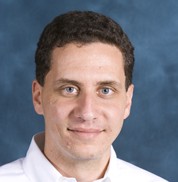
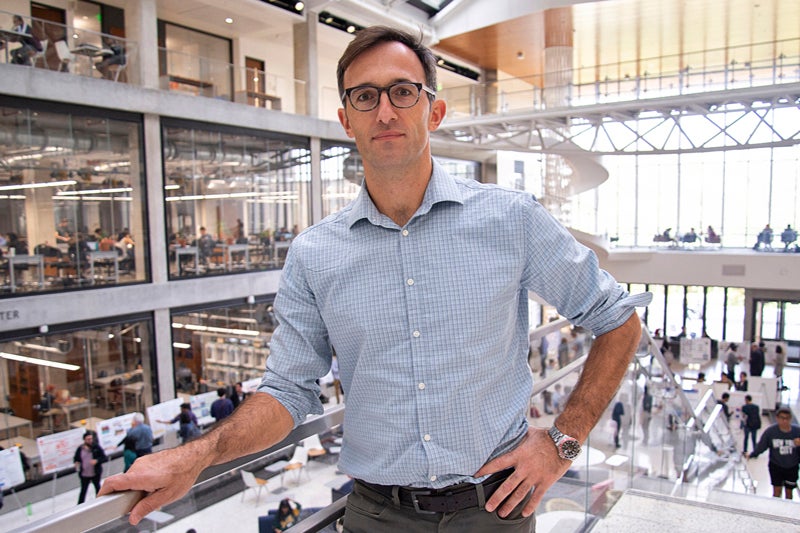
Philipp Hennig is a Full Professor (W3) at the Department of Computer Science, Eberhard Karls University Tübingen, heading the Chair for Methods of Machine Learning. He previously held positions at the Max Planck Institute for Intelligent Systems, including Emmy Noether Group Leader and Max-Planck-Group Leader. His research focuses on probabilistic numerics, Bayesian inference, and uncertainty quantification, with contributions to machine learning theory and computational methods. He co-founded the field of probabilistic numerics and authored the textbook Probabilistic Numerics — Computation as Machine Learning (2022). Education: PhD in Physics from the University of Cambridge (2007), MSci in Physics from Heidelberg University (2007). Research support includes DFG Emmy Noether Programme grants, ERC Starting/Consolidator Grants, and Max Planck Society funding. He leads the ELLIS Program on Theory, Algorithms, and Computations of Modern Learning Systems and serves as Dean of Studies for Tübingen's Computer Science Department. Key research directions include probabilistic ODE/PDE solvers, Bayesian deep learning, and uncertainty-aware algorithms. His work bridges computational methods with statistical inference, emphasizing scalable and theoretically grounded approaches. Recent projects address neural operator learning, uncertainty quantification in climate models, and efficient Gaussian process methods. Awards include ELLIS Fellowship and ERC grants. Over 100 publications span top venues like NeurIPS, ICML, and JMLR. Active in academic leadership roles, he co-leads the Tübingen AI Center and Cluster of Excellence for Machine Learning in Science. His lab develops open-source tools like ProbNum for probabilistic numerical computing.