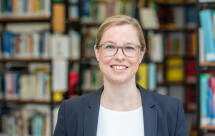
Zeynep Ünsal is a Senior Lecturer at Stockholm University's Department of Teaching and Learning. With a primary school teaching background in biology, physics, chemistry, mathematics, Swedish, and Swedish as a second language, her research examines multilingual students' science learning through resources like mother tongue, gestures, and physical artefacts. She coordinates undergraduate and graduate courses in Science and Technology for Primary School Teachers. Education: Doctoral thesis on bilingual science education (2017) Research Focus: Multilingual science instruction, translanguaging practices, and multimodal learning strategies Key Findings: Demonstrated effectiveness of physical artefacts in bridging language gaps, highlighted assessment challenges for bilingual students Awards: Research Worth Reading Award 2018 Her work spans electricity and chemistry education (2015-2023), with studies on gesture analysis, translational practices, and international science inquiry baselines. Current teaching includes doctoral supervision and school placement coordination for primary educators.
Nicola Meschede is a Professor of Natural Science Elementary and Primary Education at the Institute of General Studies Didactics, Faculty of Educational Sciences, University of Münster, a position she has held since January 2018. Previously, she served as a substitute professor for General Studies Didactics at the same institution from October 2017 to January 2018. Her academic journey includes significant research positions at Goethe-Universität Frankfurt and the Leibniz Institute for Science and Mathematics Education at Kiel University. Her educational background comprises a Doctorate in Natural Sciences (Dr. rer. nat.) from the University of Münster and the Leibniz Institute for Science and Mathematics Education (2009-2013), a Second State Examination for Primary School Teaching from Siegburg Teacher Training College (2013-2015), and a First State Examination for Primary, Secondary, and Comprehensive School Teaching with a focus on primary education from Siegen University and the University of Münster (2004). Professor Meschede's research centers on professional vision development in teachers, particularly how educators perceive and interpret learning-relevant classroom situations in science education. Her work examines the cognitive processes involved in recognizing significant teaching moments, with special attention to classroom management, learning support, and addressing student heterogeneity. She investigates how video-based learning environments can enhance teachers' professional perception skills during both initial and continuing teacher education. Analysis of her recent publications reveals a strong thematic focus on video-based teacher training methodologies, with particular emphasis on developing digital learning modules that foster multi-perspective professional vision. Her work consistently addresses how teachers process classroom situations, with increasing attention to language-sensitive approaches in science education and the relationship between teacher beliefs and professional vision development. The interdisciplinary nature of her research bridges educational psychology, science education, and teacher training methodologies. Professor Meschede leads several significant research projects including ViU:P (Video-based Instructional Analysis, Focus on Performance), which examines the causal chain of professional knowledge, teaching quality, and student achievement. She also directs the ProdiviS project developing digital, video-based self-learning modules for professional classroom perception training, the ComeMINT project focusing on professionalizing primary teachers in digital media use, and the ViFoNet project creating video-based training modules for digitally supported teaching. Her research methodology emphasizes video-based analysis of classroom situations, examining how teachers recognize and interpret learning-relevant events. She has developed specialized video portals like ViU: Early Science and ProVision that serve as both research tools and teacher training resources. Her work demonstrates how structured video analysis, particularly with modeling and prompting techniques, can enhance pre-service and in-service teachers' professional vision capabilities.
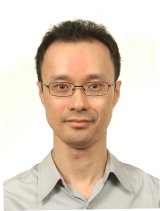
Selim Tiryakiol is a Research Fellow at the Department of Language and Culture , UiT The Arctic University of Norway. His work focuses on heritage language acquisition, particularly examining how linguistic and extra-linguistic factors influence language development and maintenance. Research interests include: Heritage language bilingualism Morphosyntactic and prosodic acquisition Community engagement's role in language competence Individual and social variables in language development Notable scientific award: Marie Skłodowska-Curie Fellowship (MSCA) . Current project CODE-V (2023-2025) investigates capacity, opportunity, and desire in heritage language variation. Recent publications emphasize: Heritage language input quality vs. quantity Comparative analysis of Turkish monolingual and heritage speakers Pedagogical grammar frameworks for Turkish Memory systems and cognitive factors in language learning He is affiliated with research groups AcqVA Aurora , C-LaBL , and AcqVA-Nor , focusing on experimental and theoretical approaches to language variation.
Benjamin Rifkin is Professor of Russian and University Provost & Senior Vice President for Academic Affairs at Fairleigh Dickinson University, where he previously served as Dean of the Maxwell Becton College of Liberal Arts and Education. Earlier he spent fifteen years on the faculty of Slavic Languages and Literatures at the University of Wisconsin–Madison and held academic leadership roles at Temple University, The College of New Jersey, Ithaca College, and Hofstra University. Education: Ph.D. in Slavic Languages and Literatures, University of Michigan M.A. in Slavic Languages and Literatures, University of Michigan M.A. in Russian and East European Studies, Yale University B.A. in Russian and East European Studies, Yale University Research & Teaching Interests: Rifkin’s scholarship integrates world-language pedagogy, curriculum design, and assessment of learning outcomes with content in Russian language, literature, and film. Recent work explores compassion and global citizenship as explicit learning outcomes within the liberal arts. He regularly teaches courses on Russian literature in translation, Russian film history, Russian history, sociolinguistics (Language and Discrimination), and methods of teaching world languages. Across four decades his publications have addressed communicative and performance-based language instruction, advanced proficiency attainment, study-abroad integration, digital listening resources (RAILS), and textbook authoring ( Panorama , Advanced Russian through History ). His 2024 article on training literature-in-translation faculty exemplifies ongoing engagement with graduate pedagogical preparation. Grants & Projects: Rifkin has secured millions of dollars in grants from private foundations and the U.S. Department of Education to develop oral-history interview programs, faculty-led study tours with community-engaged learning, and award-winning instructional materials for Russian language, history, and culture. Current Focus: As Provost he collaborates across schools and colleges to expand transformative learning opportunities—undergraduate research, internships, study abroad, and community-based projects—while continuing to write and speak on Russia’s war against Ukraine and the role of compassionate global citizenship in higher education.
Nigel John Musk is an Assistant Professor at Linköping University, working within the Department of Culture and Society and specifically in the Department for Language, Culture and Interaction. His academic work focuses on language education, multilingualism, and linguistic practices in social contexts. His research examines how individuals learn languages and use them in social contexts, considering how language intertwines with other resources such as movement, gaze, and object use. He approaches these topics through conversation and interaction analysis, with particular focus on educational contexts. Musk leads the research project "Revisions in digital collaborative writing," funded by the Swedish Research Council's Education Science Committee (2018-2020), which examines how upper secondary school students revise texts when writing collaboratively in English using digital tools. His research contributes to the field by conducting basic research on collaborative writing, developing refined methods to understand writing processes, and providing pedagogical recommendations. His publications from 2021-2024 focus on translation tools in language learning, collaborative writing strategies, and conversation analysis methodologies, appearing in journals like Linguistics and Education and Classroom Discourse. Musk has previously participated in the LINT research project (2008-2012) on learning and memory, and his doctoral thesis focused on bilingualism among young people in Welsh bilingual education settings. He teaches courses on interaction in language classrooms, varieties of English worldwide, and English language history. He has course responsibility for English 3 and the English Master's Year, and coordinates degree theses in English. He is affiliated with research environments including the Conversation and Interaction Seminar and the Language and Culture research environment.
Dr. Thuan Yew Edward Chuah is a Lecturer in the Computing Science Department within the School of Natural and Computing Sciences at the University of Aberdeen. He received his PhD in Computer Science from the University of Warwick in 2020, following an MSc in Distributed Systems Engineering from Lancaster University (2004) and a BSc (Hons) in Computer Science from the University of Leicester (2003). Prior to his academic career, he worked in Singapore for approximately 11.5 years as a research engineer (8 years), software engineer (1.5 years), and lecturer (2 years). Dr. Chuah's educational background includes: PhD in Computer Science, University of Warwick (2020) MSc in Distributed Systems Engineering, Lancaster University (2004) BSc (Hons) in Computer Science, University of Leicester (2003) His research focuses on large-scale systems dependability, with particular emphasis on two key areas: network security and HPC reliability. Initially focusing on reliability aspects of dependability, his current work investigates security in large networks through data-driven approaches for identifying, detecting, and predicting threats. He also develops data-driven methods for diagnosing failures and predicting faults in large cluster systems. Dr. Chuah has developed several system log-based diagnostics tools including FDiag (a failure diagnostics toolkit), ANCOR (an anomaly-correlation approach), and CORRMEXT (a workflow for identifying error propagation patterns). His work has practical applications, with FDiag being used by HPC systems administrators at the Texas Advanced Computing Center to uncover previously unknown causes of compute node soft lockups. Dr. Chuah's publication record shows a consistent research trajectory in system dependability, with recent publications (2023-2025) increasingly focusing on applying deep learning techniques to network security challenges and failure prediction in cluster systems. His research bridges the gap between theoretical computer science and practical system administration needs, with publications spanning both high-performance computing reliability and cybersecurity domains. His notable scientific achievements include: J. Tinsley Oden Faculty Fellowship at The Oden Institute for Computational Engineering and Sciences, University of Texas at Austin (2011) The Alan Turing Institute Doctoral Studentship (2016-2020) Dr. Chuah actively supervises research students, with MR MOHAMMAD ALSAAD listed as a current supervisee. He has secured research funding as Principal Investigator for "An AI-based Approach for Detecting Advanced Persistent Threats (APT) in Large Networks" through an EPSRC SPRITE+ Academic-Industry-Meeting secondment grant (2024-2025, £10k). He serves the academic community through various roles including TPC member for IEEE conferences, track chair for international conferences, and reviewer for numerous journals including Expert Systems with Applications, IEEE Transactions on Big Data, and ACM Computing Surveys. He teaches a variety of courses ranging from Learning from Data to Software Engineering and Algorithm Analysis to both undergraduate and postgraduate students at the University of Aberdeen.
Professor Marjorie Lorch is a distinguished academic at Birkbeck, University of London, holding the position of Professor of Neurolinguistics within the School of Creative Arts, Culture and Communication. She has been affiliated with Birkbeck since 1986, initially as a part-time Lecturer and Research Officer before becoming a full-time staff member in 1991. Her academic journey includes a BA in Linguistics, Anthropology, and Biology from Washington University, St. Louis (Phi Beta Kappa), a Grass Foundation Non-Clinical Fellowship in Neurology at Barnes Hospital, postgraduate studies in Linguistics at University College London, and a Ph.D. in Language Behavior (Neurolinguistics) from Boston University. BA, Washington University in St Louis PhD, Boston University Professor Lorch's research spans multiple dimensions of language processing and its neurological underpinnings. Her work integrates neurolinguistics, psycholinguistics, and historical perspectives to explore how language is organized in the brain, particularly through the investigation of neurogenic language and communication disorders. She has made significant contributions to understanding cross-linguistic comparisons and bilingual speakers' language processing, as well as conducting extensive archival research on 19th-century approaches to language function and disorder. Her interdisciplinary approach bridges linguistics, neurology, psychology, education, and history. Analysis of Professor Lorch's recent publications reveals a consistent focus on historical perspectives in neurolinguistics, particularly examining 19th-century understandings of language organization in the brain. Her work demonstrates a unique integration of historical scholarship with contemporary neurolinguistic research, with recurring themes including aphasia research history, language localization debates, and the evolution of speech and language pathology. The publications also highlight her expertise in cross-linguistic studies and her interest in the relationship between language, thought, and other cognitive domains like music. Silver Gilt Award, Member of the Embroidered Minds Collective, Epilepsy Garden, Chelsea Flower Show, Royal Horticultural Society (April 2018) President, International Society for the History of the Neurosciences (February 2010) Professor Lorch has supervised numerous doctoral and master's students across a wide range of topics related to language disorders, multilingualism, and historical linguistics. Her supervision portfolio includes both principal and second supervisory roles, demonstrating her collaborative approach to academic mentoring. She has served on the editorial boards of prestigious journals including Cortex (2003-2025), Historiographia Linguistica, and Journal of the History of the Neurosciences, and has held significant roles such as Associate Editor of Cortex and membership on the executive boards of the Henry Sweet Society and the International Society for the History of the Neurosciences. Her extensive international collaborations reflect her standing in the academic community. Professor Lorch maintains active international research collaborations and has held numerous visiting positions at institutions including Emory University, Brown University, Duke University, and Loyola University Chicago. Her research program involves interdisciplinary work with medical practitioners, psychologists, speech and language therapists, educators, and historians, reflecting her commitment to bridging theoretical and applied perspectives in language sciences.
Bojana Petric is Professor of Applied Linguistics at the School of Creative Arts, Culture and Communication, Birkbeck, University of London. She has held academic positions at the University of Essex (2007-2015), Eötvös Loránd University (2005-2007), Central European University (1999-2004), and the University of Novi Sad (1993-1999). Her research focuses on L2/multilingual students' academic literacy practices, citation behaviors, writer voice, interdisciplinary socialization, and cross-cultural writing dynamics. Her work includes collaborations on EAP pedagogy, ethnographic studies of multilingual scholars in exile, and historical analyses of academic genres. Over her career, she has authored 15+ publications in journals like English for Specific Purposes and Journal of Second Language Writing , emphasizing multilingualism, plagiarism, and academic identity. Served as Book Review Editor and Associate Editor for Journal of English for Academic Purposes Deputy Chair and Board member of the European Association for the Teaching of Academic Writing (EATAW) Leader of the 'Academic Literacies' research team in the COST Action IS140 Founding member of the Professional, Academic and Work-Based Literacies (PAWBL) SIG within BAAL She has supervised 10 doctoral projects to completion and contributed to editing award-winning collections on transnational thesis writing. Her recent book The Thesis Writing Journeys of Bachelor's and Master's Students: A Transnational European Perspective (2024) received the Best WAC Edited Collection Award (2025).
Rachel B. Kramer Theodorou serves as Senior Lecturer in Education and Assistant Director of Elementary Education at Brandeis University's Interdepartmental Program in Education. With over 20 years of professional experience spanning elementary/ESL classroom teaching, instructional coaching, and higher education, she maintains active consulting roles with Waltham Public Schools, Waltham Family School, and regional PK-Adult ESOL programs. Her academic credentials include a Master of Education from Bank Street College of Education and a Bachelor of Arts from the University of Rochester. Dr. Kramer Theodorou's research integrates critical pedagogy with practical application across multiple domains: Culturally and linguistically sustaining elementary education frameworks Sheltered English Immersion (SEI) methodology development Historically responsive literacy practices for PK-5 classrooms Citizen science initiatives bridging environmental advocacy and education Community-engaged learning models for climate and civics education Critical approaches to history/social studies instruction Her scholarly contributions have been recognized through: Teaching Innovation Grant from Brandeis University's Center for Teaching and Learning (2015-2016) for course development Davis Teaching and Learning Fellowship at Brandeis University (2015-2016) "Good Neighbor" Award from Waltham Partnership for Youth (2018) As leader of the MATSOL Teacher Education special interest group and advisor to the Massachusetts Department of Elementary and Secondary Education for small teacher preparation programs, she connects academic research with statewide educational policy. Her community partnerships in Waltham exemplify her commitment to translating theoretical frameworks into practical classroom applications.
Farnaz Adib Yaghmaie serves as an Assistant Professor and Docent at Linköping University's Department of Electrical Engineering (ISY), specializing in the Automatic Control division. Her research bridges control theory and machine learning, with significant contributions to reinforcement learning applications in complex systems. Education: Ph.D. in Electronic and Electrical Engineering, Nanyang Technological University (NTU), Singapore (2017, Best Thesis Award) Master's Degree in Electrical Engineering (Control), K. N. Toosi University of Technology, Tehran, Iran (2011) Bachelor's Degree in Electrical Engineering (Control), K. N. Toosi University of Technology, Tehran, Iran (2009) Her research focuses on redefining machine learning paradigms for control problems , particularly through reinforcement learning applications. Current projects include Foundation Models and RL for General-Purpose Control (2025-present), Online Control with Adversarial Noise (2022-present), and RL for Partially Observable Systems (2021-present). She explores how foundation models can enable control systems to generalize across diverse tasks and adapt to unseen scenarios, with applications in robotics and autonomous systems. Her work integrates large language models and generative AI into control frameworks, addressing fundamental challenges in sequential decision-making under uncertainty. Scientific Recognition: Best Thesis Award at Nanyang Technological University (2017) CENIIT research grant (2020) Co-founded SEDDIT competence centre (2024) As an educator, she teaches Ph.D.-level courses including Reinforcement Learning (2021-2024) and Advanced Robotics (2025), with her WASP course ranking as the second-best Ph.D. course in the program (3.9/5 evaluation). She actively mentors Ph.D. students including Abbas Pasdar, who is working on Foundation Models for General-Purpose Control. Her research is supported by grants including CENIIT and collaborations through the SEDDIT competence centre. She contributes to the academic community through workshops like the LINK-SIC Core Competence Workshops on Reinforcement Learning and by chairing sessions at major conferences including ECC 2025.
Guillaume Gentil is a Professor in the School of Linguistics and Language Studies at Carleton University. His research focuses on second language writing, bi/pluriliteracy development, and the intersection of multilingualism with academic and professional contexts. He has held editorial roles for the Journal of Second Language Writing and conducted SSHRC-funded research on academic biliteracy development in Canada's official languages (2017–2022). Education: DEUG (Paris VI), DEA & Diplôme d'ingénieur (Institut National Agronomique Paris Grignon), Ph.D. (McGill University) Key research areas include: translingual practices in bilingual universities, AI/translation tools in writing instruction, genre-based approaches to writing, and the geopolitics of academic publishing. His work bridges second language writing, bilingual education, and translation studies. Recent publications analyze ChatGPT's role in multilingual writing, machine translation's impact on academic publishing, and translanguaging pedagogies. Research employs longitudinal case studies and institutional ethnographies. Scientific contributions include: Honourable mention for Best Article of the Year, Journal of Second Language Writing (2011) Inclusion in 'The Best of the Independent Rhetoric and Composition Journals: 2011' He supervises students at all levels and has taught courses on bilingualism, second language writing, and doctoral seminars in applied linguistics. His work also addresses crosslingual literacy practices and the use of AI tools in writing development.
James Fenton is a Senior Lecturer in English for Academic Purposes at the University of Westminster's Centre for Education and Teaching Innovation (CETI). He holds an MA in Linguistics from University College London and a Postgraduate Certificate in Higher Education, and is a Fellow of the Higher Education Authority. With over 20 years of international teaching experience across 11 countries, he previously taught at De Montfort University and established English-language education businesses. His research focuses on cognitive processes underlying language ability, pedagogical approaches, educational assessment, and independent learning. Current investigations examine bilingual assessment frameworks in European education systems, while future work targets independent learning sustainability and student wellbeing in higher education. Publications demonstrate consistent focus on practical applications of linguistic theory, evolving from foundational work in language acquisition to contemporary studies on educational equity and academic English pedagogy. Research frequently addresses bilingual development, learner autonomy, and technology-enhanced language instruction. Honors include: Fellow of the Higher Education Authority Collaborates with European researchers on bilingual assessment projects and contributes to institutional curriculum development as module leader for two Academic English courses.
Alexei Kochetov is a Professor in the Department of Linguistics at the University of Toronto, Faculty of Arts and Science. His research focuses on the interface between phonology and phonetics, particularly palatalization, assimilation, and their phonetic correlates. He has held academic positions at the University of Toronto since 2003 and previously at Simon Fraser University. Kochetov holds a PhD from the University of Toronto (2001), an MA from Pittsburg State University (1996), and a BA from Perm State University (1992). His research interests include articulatory phonetics, cross-linguistic phonological phenomena, and bilingual speech production. He has conducted studies on languages such as Russian, Japanese, Kalasha, Kannada, and Korean using methods like electropalatography (EPG), ultrasound, and acoustic analysis. Recent work explores L2 acquisition of English consonants, nasal depalatalization in French, and articulatory MRI studies of Indian languages. Kochetov has secured extensive SSHRC funding for projects on speech production, perception, and bilingualism. His articles (e.g., on French nasal depalatalization, Russian palatalization, and Korean liquids) reflect his expertise in articulatory detail and cross-linguistic comparison. Though no specific awards are listed, his contributions to phonetics are highlighted through his prolific grant activity and experimental methodologies. He supervises graduate students in phonetics/phonology and teaches courses like Advanced Phonetics and Phonetic Analysis . His research lab focuses on cutting-edge articulatory imaging and remote data collection techniques, contributing to both theoretical and applied linguistics.
Jessica Scott is an Associate Professor in Deaf Education at the Georgia State University Department of Learning Sciences. She holds a B.A. in Deaf Education from Flagler College, an Ed.M. in Language and Literacy (with Reading Specialist licensure) from Harvard Graduate School of Education, and an Ed.D. in Human Development and Education from Harvard. Her research focuses on bilingualism in deaf education, academic English development, and the role of American Sign Language (ASL) in deaf students' literacy. She chairs the Deaf/Hard of Hearing Special Interest Group of the International Literacy Association. Education highlights include her work at the Alaska School for the Deaf and The Learning Center for the Deaf. Her award-winning dissertation explored ASL and academic English's impact on deaf students' reading comprehension. Current interests include deaf education in developing countries and translanguaging practices in STEM education. She has published extensively on deaf learners' literacy, bilingualism, and inclusive pedagogy. Scientific Awards: Recipient of Harvard University’s Jeanne S. Chall student research award (2016). Publications span topics like deaf education program efficacy, multicultural literacy strategies, and STEAM accessibility for deaf learners. Advising/Grants: While specific grants aren’t detailed, her work implies leadership in curriculum development and cross-cultural educational initiatives. She collaborates internationally, including research in Mexico and Jamaica. Labs/Teams: Affiliated with Georgia State’s research centers focusing on language development and inclusive education. Her work aligns with the Center for Research on Atypical Development and Learning (CRADL).
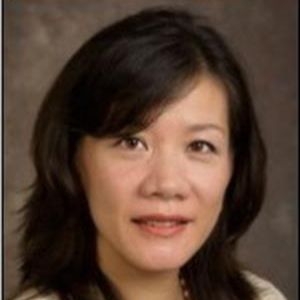
Zhiyin Renee Dong is an Associate Professor of Chinese and Second Language Studies at the University of Delaware, affiliated with the Department of Languages, Literatures, and Cultures within the College of Arts & Sciences. She specializes in teaching Chinese as a foreign language, world language pedagogy, and second language acquisition. Her research employs experimental methods like Event-Related Potentials (ERP) and Self-paced Reading (SPR) to study how classroom practices influence language learning outcomes, particularly focusing on complex sentence structures and morphology in advanced learners. Education: Ph.D. in Linguistics, University of Delaware M.A., Auburn University B.A., University of International Relations, Beijing, China Teaching: Offers courses such as Chinese I - Elementary, Chinese Film and Culture, Language Syllabus Design, and Second Language Testing. Active in teacher preparation initiatives, including Delaware’s Mandarin Chinese StarTalk program. Her research investigates how cognitive processes and pedagogical strategies shape second language proficiency, with a focus on Chinese morphology and syntax. She collaborates with K-16 educators in the Mid-Atlantic region to enhance language teaching practices.