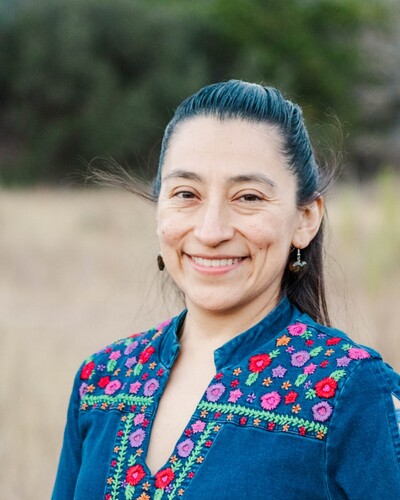
Cate Almon is an Associate Professor in the Department of English at Temple University's College of Liberal Arts , where she has taught since 2014. She also serves as the Associate Director of the First Year Writing Program. Her research focuses on student retention , plagiarism , and language assessment for English Language Learners (ELLs). Expertise : First Year Writing, Plagiarism, Retention, Linguistics Contact : calmon@temple.edu Her work explores intersections of academic integrity, linguistic diversity, and institutional support systems. Notably, she has published on topics like textual borrowing ethics, ELL college persistence, and linguistic factors in academic engagement, with presentations at conferences such as the Symposium on Second Language Writing and Interactions and Interfaces Linguistics Conference.
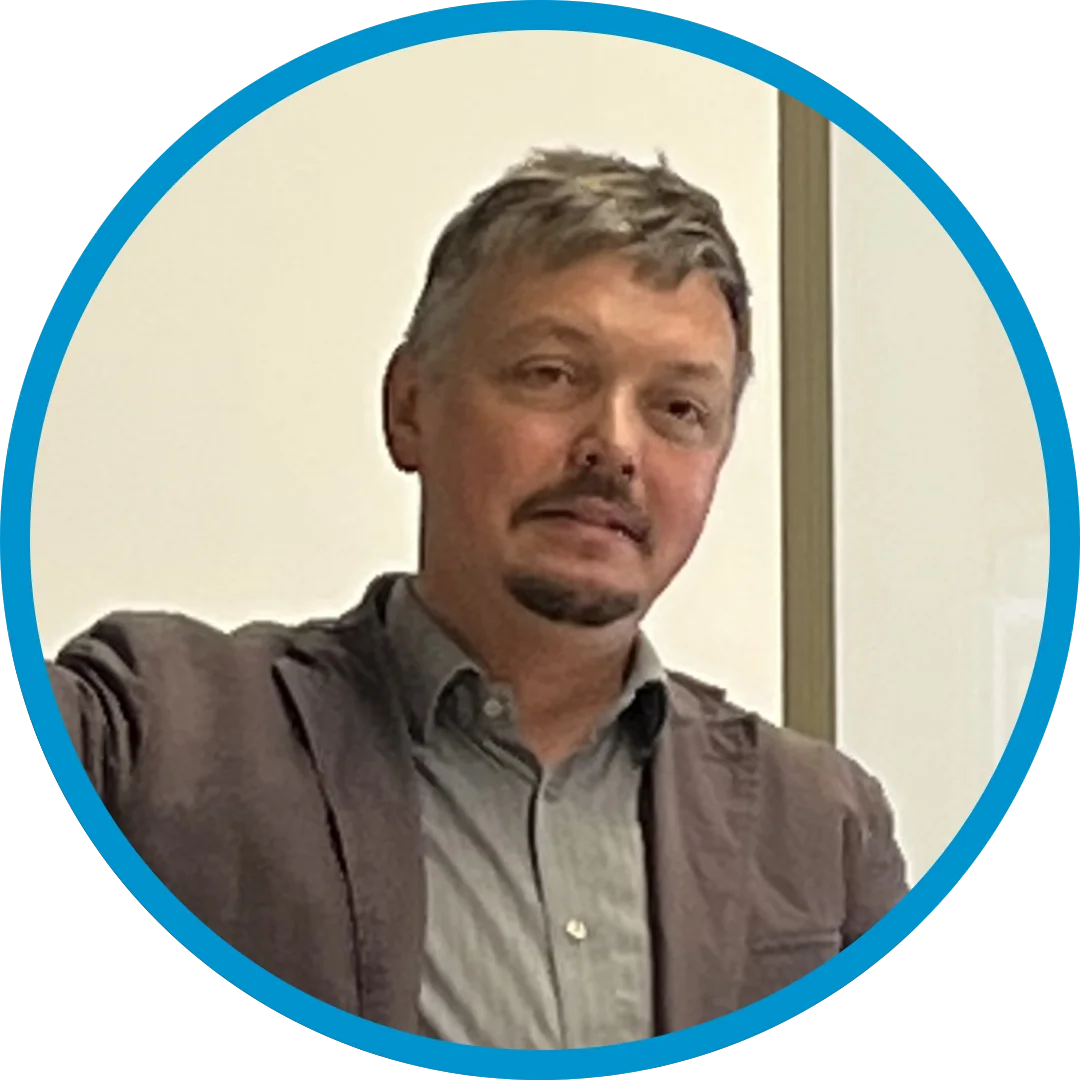
M. Tamer Özsu is a University Professor of Computer Science at the David R. Cheriton School of Computer Science, University of Waterloo, where he holds a Cheriton Faculty Fellowship. He also serves as a Distinguished Visiting Professor at Tsinghua University and is the Founding Director of Waterloo-Huawei Joint Innovation Laboratory since 2018. His extensive contributions to computing have earned him numerous prestigious awards including the 2024 ACM Presidential Award for long-standing and significant contributions to the computing field. Professor Özsu's research focuses on data engineering aspects of data science, particularly addressing data management issues with two main foci: management of non-traditional data and large-scale distributed data management. He is renowned for his seminal book "Principles of Distributed Database Systems" (co-authored with Patrick Valduriez), now in its fourth edition, and the "Encyclopedia of Database Systems" (co-edited with Ling Liu), in its second edition. His work bridges theoretical foundations with practical system implementations, targeting grand societal challenges through computational approaches. His recent publications reveal a strong trend toward graph analytics, streaming data processing, and the integration of large language models with vector data management. The research shows increasing focus on GPU-accelerated graph processing, RDF query optimization, and multimodal data analysis, reflecting the evolution of data management challenges in the era of big data and AI. His work continues to address fundamental challenges in distributed data systems while adapting to emerging technologies and application domains. Scientific Awards and Fellowships ACM Presidential Award (2024) IEEE TCDE Education Award (2024) IEEE Innovation in Societal Infrastructure Award (2022) CS Can | Info Can Lifetime Achievement Award (2018/2019) ACM SIGMOD Test-of-Time Award (2015) ACM SIGMOD Contributions Award (2006) The Ohio State University College of Engineering Distinguished Alumnus Award (2008) Fellow of the Royal Society of Canada Fellow of the American Association for the Advancement of Science (AAAS) Life Fellow of the Association for Computing Machinery (ACM) Life Fellow of the Institute of Electrical and Electronics Engineers (IEEE) Fellow of the Asia-Pacific Artificial Intelligence Association (AAIA) Elected member of the Science Academy, Türkiye Professor Özsu has been deeply involved in academic leadership and community building. As Founding Editor-in-Chief of ACM Books (2013-2019), he launched a series that by 2019 had published 28 major books with another 30 under contract. His service to ACM, particularly through SIGMOD, has been exemplary and widely recognized. He directs the Waterloo-Huawei Joint Innovation Laboratory, which focuses on cutting-edge research in data management and distributed systems, fostering strong industry-academia collaboration.
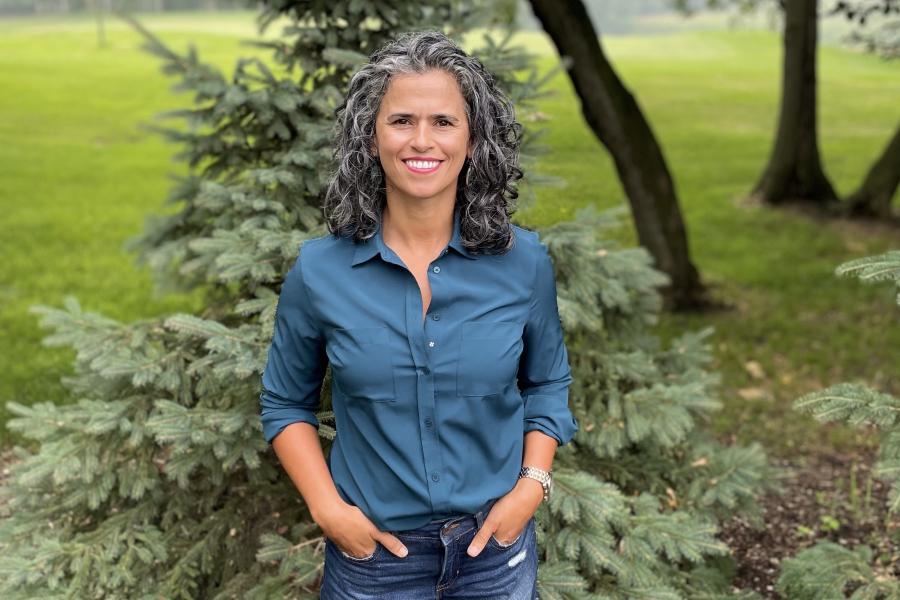
Dr. Martha Sidury Christiansen is a Professor of Applied Linguistics/TESOL at the University of Texas at San Antonio , where she serves in the College of Education and Human Development . She is the Principal Investigator of Project RESPETO , a NSF-funded initiative exploring racial equity in engineering education. Her work spans sociolinguistics, digital literacies, and raciolinguistic analysis, with a focus on transnational multilingual communities. Born in Veracruz, Mexico Ph.D. in Foreign/Second Language Education (Ohio State University, 2013) M.A. in English Composition (Indiana University, 2007) B.A. in English Language Teaching (Universidad Veracruzana, 2002) Her research examines how transnational youth navigate digital spaces through multiliteracies , challenges Western academic writing norms via Mexican decolonial methodologies , and investigates raciolinguistic intersections in identity formation. The 15 most recent publications reveal a strong focus on digital communication , transnationalism , and critical pedagogy across journals like TESOL Quarterly and Language@Internet . 2023-2025: Expanding raciolinguistic frameworks in digital contexts 2021-2022: Analyzing multimodal identity construction 2019-2020: Exploring Mexican bilinguals' online language use She has received multiple honors including ACUE Fellow (2023), Fulbright Scholar (2017), and Faculty Leadership Fellow (2021-2022). Her presentations at conferences like ICOLLITE and DDVM Lab highlight her expertise in critical sociolinguistic awareness and digital discourse analysis . Dr. Christiansen actively consults for nonprofits on linguistic equity and multilingual education .
Przemysław Kordos is a Professor at the University of Warsaw , affiliated with the Faculty of Liberal Arts , where he serves as Coordinator for the Development of the Modern Greek Philology Program . He holds two PhDs in Humanities (2007, 2019) and was awarded the Loukis Papaphilippou Seat of Advancement in Modern Greek scholarship. Education: MA in Ethnology and Cultural Anthropology (University of Warsaw, 2001) MS in Sociology (University of Warsaw, 2002) PhD in Humanities (University of Warsaw, 2007) Second PhD in Humanities (University of Warsaw, 2019) His research interests span: Contemporary Modern Greek and Cypriot literature Polish-Greek cultural relations (philhellenism) Social and ethnographic issues in Greece and Cyprus Travel literature analysis Fantasy literature's cultural implications His scientific work reveals a focus on linguistic assimilation in foreign language learning (via fMRI studies), historical parallels between Polish and Greek independence movements, and critical analyses of Cypriot folk culture's politicization. Key scientific awards include: Loukis Papaphilippou Seat (University of Warsaw) Internships at EKPA and IKY (Greece) Scholarships at IMXA (Greece) and MUNI (Czech Republic) His academic contributions include cataloging 60+ Polish travel accounts to Greece, analyzing the shift from travel literature to tourism discourse, and examining the Hellene-Romios dichotomy's role in modern Greek identity construction.
Andrew Lan is an Associate Professor in the College of Information and Computer Sciences at the University of Massachusetts Amherst, where he also serves as the CS Undergraduate Program Director. He was granted tenure by the UMass Board of Trustees in June 2025 and is currently on leave through Spring 2026. His research focuses on developing human-in-the-loop machine learning methods to enable scalable, effective, and personalized learning experiences in education. Dr. Lan received his BS in Physics and Mathematics from the Hong Kong University of Science and Technology, followed by his MS (2014) and PhD (2016) in Electrical and Computer Engineering from Rice University. He completed postdoctoral research at Rice University (2016) and Princeton University's EDGE Lab (2017-2018). His research spans artificial intelligence for education, with particular expertise in educational data mining, knowledge tracing, personalized learning systems, and human-AI collaboration in educational contexts. Dr. Lan's work leverages massive and multimodal learner and content data collected from both traditional classrooms and online learning platforms to develop systems that deliver high-quality, affordable, and personalized learning experiences. He has made significant contributions to areas including computerized adaptive testing, math word problem generation, student affect detection, and automated grading systems. His recent work increasingly focuses on leveraging large language models for educational applications while maintaining rigorous scientific validation of these approaches. Best Student Paper Award at the 2024 AIED Conference (with Alexander Scarlatos) Best Paper Nominee at LAK 2021 Best Student Paper Award at IEEE Big Data 2020 NAEP Math Automated Scoring Challenge Grand Prize Winner Dr. Lan actively mentors graduate students and postdoctoral researchers, with several of his advisees receiving recognition for their work. He has secured substantial funding from the National Science Foundation, including a $90M grant for the SafeInsights project, a secure cyberinfrastructure for educational research. His research group collaborates with institutions including Worcester Polytechnic Institute, University of Pennsylvania, and Rice University. He teaches undergraduate and graduate courses including COMPSCI 240 (Reasoning under Uncertainty) and COMPSCI 590OP (Applied Numerical Optimization), with a focus on the practical application of theoretical concepts in machine learning and artificial intelligence. His educational philosophy emphasizes bridging the gap between theoretical foundations and real-world implementation in educational technology.
Nicholas Henriksen is an Arthur F. Thurnau Professor and Professor of Spanish & Linguistics at the University of Michigan, where he has held faculty positions since 2012. His research focuses on laboratory phonology, experimental phonetics, sociophonetics, and intonational grammar in Spanish and other Romance languages. Notable projects include studies on sound change in Andalusian and Patagonian Spanish, bilingualism (Afrikaans-Spanish), and second language speech learning. He directs the Michigan Speech Production Lab and co-leads initiatives integrating gender-diverse language into Romance curricula. Henriksen earned a PhD in Linguistics from Indiana University (2010), MA in Hispanic Linguistics (2006), and BA in Spanish/Mathematics from Rutgers (2003). His teaching spans undergraduate and graduate courses in Spanish linguistics, sociolinguistics, and phonetics, emphasizing applied research and pedagogical innovation. He has received prestigious awards, including the LSA Early Career Award (2021) and the Class of 1923 Teaching Award (2018). His research has been funded by grants from the University of Michigan ADVANCE Program and the Humanities Collaboratory, supporting projects like From Africa to Patagonia: Voices of Displacement . Collaborations include work with scholars in Argentina, South Africa, and Spain, examining language contact, heritage language maintenance, and sociolinguistic identity. Publications span over 30 peer-reviewed articles and book chapters, with a focus on phonetic variation, intonation, and bilingualism. He mentors graduate students in experimental phonetics and sociolinguistics, with advisees contributing to studies on Andalusian Spanish, heritage language acquisition, and voice quality.
Verónica Loureiro-Rodríguez is an Associate Professor in the Department of Linguistics at the University of Manitoba's Faculty of Arts. Her research focuses on sociolinguistics, language identity, and code-switching, with special attention to global hip hop and multilingual communities. She holds a PhD from the University of California, Davis, an MA from the University of Colorado at Boulder, and a BA from the Universidade de Santiago de Compostela. Dr. Loureiro-Rodríguez's work examines language attitudes across diverse contexts, including French-English dynamics in Manitoba, Spanish-Valencian bilingual processing, and code-switching in music. She has also explored language use in robotics and cultural hybridity among Puerto Rican and Mexican communities. Her teaching excellence was recognized with the 2021 Faculty of Arts Teaching Excellence Award. Education: PhD (UC Davis), MA (CU Boulder), BA (USC) Awards: 2021 Teaching Excellence Award (Established Faculty) Research Focus: Language policy, digital sociolinguistics, and cultural identity She currently supervises graduate students in Master's and PhD programs, focusing on sociolinguistic methodologies like the matched-guise technique. Her research often intersects with music studies, robotics, and diaspora linguistics.
Hong Huaqing is a Professor and doctoral supervisor at the Corpus Research Institute of Shanghai International Studies University. He holds roles as honorary director of the Chinese Corpus Linguistics Research Association and international expert at Peking University's Education Development Center. Formerly, he worked at Nanyang Technological University (Singapore) in roles such as researcher at the Learning Research and Development Center and director of the e-Learning Center of the Lee Kong Chian School of Medicine. His research spans machine translation, natural language processing, corpus linguistics, and educational technology. He supervises master's and doctoral students, co-supervises postdoctoral researchers, and focuses on smart education driven by big data analysis and innovative learning ecosystems. Research emphasizes corpus-based methods applied to language education, including computational frameworks for student engagement, wearable sensors in learning analytics, and cross-linguistic rhetoric studies. His work bridges technological innovation (e.g., AI-driven tutorial systems) with pedagogical practice, addressing challenges in non-English language education and teacher training.
Dr Eva Ogiermann is an Associate Professor in English Language and Applied Linguistics at King’s College London, serving as Programme Director for the MA in Language and Cultural Diversity. She holds a PhD from Carl von Ossietzky Universität Oldenburg (2007) and an MA from the University of Münster (2001). Her research focuses on cross-cultural pragmatics, politeness theory, and bilingual communication, with a particular interest in how language reflects cultural norms and identities. Current Position: Reader (Associate Professor) at King’s College London Previous Institutions: University of Oldenburg (Germany), University of Portsmouth, University of Surrey Editorial Roles: Former associate editor of the Journal of Pragmatics (2010–2018) Her work examines cultural specificity of language use, including studies on apology strategies, request negotiation, and family communication dynamics. Recent projects analyze pandemic-era signage’s role in disseminating risk communication and maintaining social cohesion during crises. She also explores epistemic authority in academic writing tutorials and the pragmatic functions of marketing language. Key research contributions include From Speech Acts to Lay Understandings of Politeness (2019) and numerous articles in top journals like Journal of Pragmatics and Pragmatics and Society . Her teaching spans BA and MA programs in applied linguistics and language education. Dr Ogiermann leads the Implementing Covid-19 measures project, studying how non-official signage adapts government health guidelines. She actively contributes to the Centre for Language, Discourse & Communication, fostering interdisciplinary research at the intersection of language, culture, and society.
Dr. Wanju Huang is a Clinical Assistant Professor in the Learning Design and Technology program at Purdue University , where she focuses on enhancing online learning experiences through innovative instructional design and emerging technologies. Prior to joining Purdue in Fall 2016, she served as an instructional design manager at Teaching and Learning Technologies and spent six years as a lecturer and instructional designer at Eastern Kentucky University. Education: Ph.D. in Curriculum & Instruction (Technology concentration) from University of Illinois at Urbana-Champaign Her research interests center on technology-mediated online communities, instructor presence in digital learning, augmented reality applications, and faculty development programs. She has published extensively on these topics, including studies on multimedia interventions for teaching presence, immersive technologies in ESL education, and adaptive cyber training platforms. Dr. Huang's publications reflect a strong focus on EdTech innovation , with trends spanning AI integration in K-12 , model-based systems engineering , and microlearning strategies . Her work bridges theoretical frameworks like social constructivism with practical implementations in professional education. Professional memberships include the American Educational Research Association, Association for Educational Communications and Technology, and Quality Matters. She teaches courses on learning design foundations, e-learning systems, and professional competency demonstrations in LDT.
Bruno Echauri Galván serves as Associate Professor in the Department of Modern Philology at the University of Alcalá (UAH), Spain, teaching core translation courses including Introduction to Translation Theory and English-Spanish Translation across multiple degree programs in Alcalá de Henares and Guadalajara. His research centers on Translation Studies and Reception Theory, with significant contributions to intersemiotic translation (particularly in children's literature), healthcare interpreting, and film adaptation reception. As an active member of the Research Group on Interdisciplinary Reception Studies, he investigates cultural reception, literary reception, and translation through frameworks including cultural mediation, censorship studies, and myth reception. Recent publications (2021-2024) demonstrate consistent innovation in translation pedagogy, including color-based translation assessment tools, service-learning translation projects, and pandemic-era teaching adaptations. His work on collaborative writing projects, mental health communication, and Carver-Lish translation controversies reveals methodological diversity across literary, audiovisual, and healthcare domains. Dr. Echauri Galván has participated in multiple research initiatives including the JOB AND MOVE student network project (2018), Homopoly strategic partnership (2016), and InterMed healthcare mediation project (2011), where he contributed expertise in intercultural communication and translation standards. He maintains active research leadership through the Interdisciplinary Reception Studies group, examining reception phenomena across cultural, literary, musical, and translational contexts while addressing contemporary issues like censorship and myth criticism.
Prof. Robert Fuchs holds the Frommann Professorship of Applied English Linguistics at the University of Bonn, leading the Chair of Bonn Applied English Linguistics (BAEL) within the Department of English, American and Celtic Studies. His research focuses on World Englishes, corpus linguistics, sociolinguistics, and the impact of artificial intelligence on linguistic analysis. He actively supervises PhD students in topics aligned with his research group's interests, emphasizing empirical work and data science. Recent research explores language change in varieties like Hong Kong English, Trinidadian prosody, and intensifier usage across cultures. Fuchs frequently presents at international conferences, including ISLE, ICAME, and Sociolinguistics Symposium, and publishes extensively in journals like World Englishes and Language and Speech . His teaching includes advanced courses on corpus linguistics and language in culture, with a focus on climate change discourse analysis. He maintains an active academic presence through ResearchGate, Academia.edu, and LinkedIn. Research Interests: Fuchs investigates sociolinguistic variation, AI applications in linguistics, and the structural features of postcolonial Englishes. His work addresses topics such as vowel mergers in Hong Kong English, lexical stress perception in Indian English, and the role of gender in language use. He also explores diachronic changes in aspects like stative progressives and the perfect-past alternation across Asian Englishes. Advising & Grants: Fuchs oversees PhD student recruitment through research associate positions and self-funded scholarships, prioritizing applicants with strong empirical and analytical skills. His funded projects include studies on pandemic discourse (DisCOVIndUK) and linguistic trends in Caribbean English. His lab, BAEL, collaborates internationally, with ongoing work on Trinidadian prosody and Northeast Indian linguistic ecology. Labs/Teams: The Bonn Applied English Linguistics (BAEL) group, part of the University of Bonn's IAAK institute, focuses on cutting-edge research in global Englishes and computational linguistics, hosting international workshops and fostering interdisciplinary collaboration.
Sebastian Pokutta is a Professor at Technische Universität Berlin, Vice President at the Zuse Institute Berlin (ZIB), and Chair of the Cluster of Excellence MATH+ and MODAL. His research lies at the intersection of Artificial Intelligence, Optimization, and Machine Learning, with applications in sustainability, quantum computing, and mathematical discovery. Research Interests: Development of novel optimization algorithms, particularly Frank-Wolfe and Conditional Gradient methods. Integration of machine learning with decision-making and combinatorial optimization. AI for Science (AI4Science), including applications in quantum mechanics and ecology. AI and creativity, human-AI co-creativity, and social science modeling using multi-agent LLMs. His recent publications (2025) demonstrate a strong focus on scalable optimization, interpretability, and algorithmic foundations. The work spans theoretical advances in convergence analysis, practical implementations in Julia (FrankWolfe.jl), and real-world deployments in biomass estimation and quantum certification. Scientific Awards: Gödel Prize (2023) STOC Test of Time Award (2022) Science Prize of the Association for Pediatric Orthopedics (2025) Google Research Awards (2021, 2020) NSF CAREER Award (2015) He advises a vibrant research group, with former students and postdocs securing faculty positions at institutions like Inria, Carlos III University, and James Madison University. His group has received funding from Google, DFG, and Math+, and he leads major collaborative efforts such as the Thematic Einstein Semester on Mathematical Optimization for Machine Learning. Labs and Teams: Interactive Optimization and Learning Lab at TU Berlin and ZIB. Leadership in MODAL and MATH+ research clusters, fostering interdisciplinary collaboration in mathematical optimization and AI.
Dr. Toshiyuki Nakamura is a Lecturer at the School of Culture, History & Language at The Australian National University. With a PhD in Applied Linguistics from Monash University, his research focuses on second language acquisition, particularly examining language learning motivation, multilingual identity, self-concept in language learning, and Japanese language education. His work often bridges sociocultural theory with practical educational applications. His scholarly activities include: Published studies in Japanese Studies and System journals Research exploring motivational frameworks in Australian and Korean contexts Application of Bakhtinian concepts to speech genre analysis in language acquisition Recent publications demonstrate consistent engagement with multilingual identity formation (73% overlap across works) and motivational dynamics (61% coverage). Despite limited citation counts (highest: 29 citations for 2019 study), his research outputs show sustained scholarly contribution from 2015-2024, including a 2019 monograph with Bloomsbury Publishing. Key research themes: Dialogic approaches to language motivation Self-image construction in multilingual contexts Speech genre analysis in educational settings Cross-cultural comparisons of language learning experiences Japanese language education in non-native contexts Life domain theory in second language acquisition
Dr. Gábor Pintér holds dual academic appointments as Assistant Professor at Károli Gáspár Reformed University's Faculty of Humanities and Social Sciences (Department of Japanology) and as Associate Professor at Kobe University's School of Languages and Communication. Born in Hungary in 1977, he earned his MA (2005) and PhD (2008) in Linguistics from Kobe University, Japan, with a dissertation on asymmetrical segment distributions in Japanese. His research focuses on three interconnected domains: phonological theory (especially Japanese phonology), experimental phonetics, and applications of automatic speech recognition in language education. Specific interests include vowel devoicing patterns, prosodic perception in L2 learners, phonotactic constraints, and diachronic sound changes in Japanese. Pintér actively contributes to international research collaborations, including the JSPS-funded project 'Stochastic & theoretical phonological research' and serves as chair of the Phonology Association in Kansai (PAIK). His 15 most recent publications demonstrate methodological diversity, combining theoretical linguistics with computational approaches and experimental studies, primarily focused on Japanese phonetics and speech technology applications. Professional memberships include board positions in The Phonological Society of Japan and memberships in the International Speech Communication Association and Association for Laboratory Phonology.