Dr. Jeffrey Oalmann is a Researcher in the CODES Analytical Laboratory at the University of Tasmania's School of Natural Sciences, where he currently serves as Manager. He holds a PhD in Geology from the University of Kansas, an MS in Geosciences from Texas Tech University, and a BS in Geology from Kansas State University. His research focuses on geochronology, geochemistry, and petrology, particularly in volcanic systems and metamorphic processes. Dr. Oalmann has published extensively on topics including caldera dynamics, magmatic processes, and crustal evolution. His work integrates advanced analytical techniques like LA-ICPMS to study geological materials. He currently supervises doctoral research on volcano rock properties and has collaborated widely in东南亚 and the Pacific region. Key research themes include volcanic eruption mechanisms, crustal-scale magmatism, and high-pressure metamorphic systems.
Prof. Dr. Hafzullah Aksoy is a Professor in the Civil Engineering Department at Istanbul Technical University (ITU), specializing in Water Resources, Hydrology, and Hydromechanics. He holds a PhD in Water Engineering from ITU (1998) and has been a faculty member since 1991, progressing from Research Assistant to Professor (2010). His work focuses on drought analysis, hydrological modeling, and climate change impacts. He has supervised numerous theses on topics like drought propagation, river basin management, and sediment transport. Educational Background: PhD in Water Engineering (ITU, 1998) MSc in Hydroelectronics (ITU, 1993) BEng in Civil Engineering (ITU, 1990) Research Interests: Drought severity-duration-frequency curves Climate variability and extreme precipitation Base flow separation in intermittent rivers Self-cleansing drainage systems Hydrological stochastic modeling Key Awards: Incentive Award TUBITAK (2011) Best Argumentative Paper Award ASCE (2009) Best Article Award ASCE (2006) Advising & Grants: Supervised over 20 doctoral and master’s theses. Active in international collaborations, including projects on Lake Urmia water levels and Black Sea region hydrology. Labs/Teams: Leads research groups focused on hydrological extremes, river basin management, and interdisciplinary climate studies.
Professor Sybren Drijfhout is a Chair in Ocean & Earth at the University of Southampton, specializing in Oceanography , Climate Science , and Earth Systems . His research spans the Atlantic Meridional Overturning Circulation (AMOC) , ocean heat transport , and climate tipping points , with current projects including Interacting Ice Sheet and Ocean Tipping and ArctiCONNECT . He leads EU-funded initiatives like Blue Action and contributes to NERC's SMURPHS . Research Focus: AMOC dynamics and Arctic-Atlantic mixing Sea-level rise uncertainty and coastal impacts Antarctic shelf temperature variability High-resolution ocean-climate modeling Supervision: Currently supervising PhD student Harry Benjamin Ashton-Key in the Physical Oceanography group. Collaborations: Works with institutions such as the Southampton Marine and Maritime Institute, European Union partners, and international climate research teams.
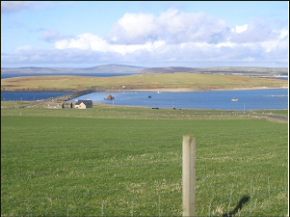
Katherine Selby is a Senior Lecturer in Quaternary Science and Physical Geography at the University of York, serving as Director of the School of Natural Sciences. Her academic journey includes roles as Deputy Head of the Department of Environment and Geography (2015–2018) and Deputy Director of the School of Natural Sciences (2018–2020). She holds a PhD from Coventry University (focused on Late Quaternary sea-level changes) and a BSc from Manchester University. Her research centers on three core areas: reconstructing past sea-level changes, investigating coastal environmental dynamics and their cultural impacts, and using pollen and diatom analyses for palaeoenvironmental reconstructions. Notable projects include studying the Churchill Barriers' environmental effects in Orkney, East African mangrove dynamics linked to sea-level changes, and North American saltmarsh accretion rates. She also explores diatomite deposition and dating potential, collaborating with Dr. Kirsty Penkman. Her work spans grants totaling over £100,000, including projects on Scottish coastal interactions, Yorkshire pollen prediction, and diatomite studies. She supervises PhD students Paramita Punwong and Michelle Robinson, focusing on East African mangroves and the Churchill Barriers. Teaching responsibilities include Physical Geography and Environmental Science modules at both undergraduate and postgraduate levels. Her publications address climate change impacts, storm effects, and interdisciplinary approaches to coastal systems. Professional roles include Editorial Board membership for Scientific Reports and leadership in the Quaternary Research Association.
Shin-Chan Han is a Professor at the School of Engineering, University of Newcastle, Australia. He specializes in space geodesy, geophysics, and planetary sciences. His research focuses on analyzing satellite geodetic measurements and modeling geophysical processes related to mass distribution in Earth and terrestrial planets. He has contributed to missions like GRACE, GRAIL, and Mars Reconnaissance Orbiter. Education: B.S. and M.S. from Seoul National University (South Korea), Ph.D. in Geodetic Science from Ohio State University (USA). Career highlights include postdoctoral work at Ohio State University and NASA Goddard Space Flight Center. His research has led to advancements in gravity field analysis, ocean tides, and earthquake-induced mass changes. Awards: NASA Early Career Fellow, Geodesy Section Award (AGU), Robert H. Goddard Honor Award, William T. Pecora Award, and South Korean government recognition. He has supervised numerous students and postdocs, many now in academic and research roles globally. Scientific contributions include pioneering GRACE data processing techniques, analyzing lunar and Martian gravity fields via GRAIL, and developing methods to track climate changes via satellite gravity. Collaborations span geodesy, hydrology, and planetary science. He currently edits the Journal of Geophysical Research - Solid Earth.
Nathan Senner is an Assistant Professor in the Department of Environmental Conservation at the University of Massachusetts Amherst. His research focuses on the ecology and evolution of avian migration, particularly in shorebirds, with an emphasis on understanding how environmental changes influence migratory behavior, habitat use, and conservation strategies. His work integrates field studies, tracking technologies, and ecological modeling to address global challenges in biodiversity conservation. Research interests include migratory connectivity, climate change impacts, phenological shifts in migration, and the ecological drivers of habitat suitability for shorebirds. He leads projects exploring the effects of sea-level rise on endangered species, the role of stopover sites in migration, and the behavioral flexibility of birds in response to environmental pressures. Recent studies highlight his contributions to understanding migration strategies, the application of isotopic and tracking data for conservation, and the importance of citizen science in monitoring bird populations. His work spans diverse ecosystems from Arctic breeding grounds to South American wetlands, emphasizing cross-continental collaboration in ecological research.
Dr Jim Leary is a Senior Lecturer in Field Archaeology at the University of York's Department of Archaeology. He holds a BA in Archaeology from Cardiff University (1998) and a part-time PhD from the University of Manchester (2013), focusing on sea-level rise in the Mesolithic. His career includes roles at English Heritage, the McDonald Institute (Cambridge), and the University of Reading's Archaeology Field School. Key research areas include later prehistoric landscapes, monumentality, and mobility studies, with notable projects like the Silbury Hill excavations (2007-2008) and the Leverhulme-funded Round Mounds project (2015-2017). Leary's work emphasizes interdisciplinary approaches to mobility, blending archaeological data with concepts from geography and anthropology. He has directed excavations in the Vale of Pewsey, uncovering Neolithic monuments like Marden Henge and a rare timber hall at Cat's Brain. His publications include The Remembered Land (2015) and Footmarks: A Journey into Our Restless Past (2023). He has received recognition as a BBC/AHRC New Generation Thinker (2015) and was nominated for Current Archaeology’s Archaeologist of the Year (2018). Leary supervises PhD students on topics ranging from Neolithic heritage management to mobility studies. He has secured major grants, including AHRC funding for 'Neolithic Pilgrimage?' (2018) and a Leverhulme grant examining prehistoric mottes. Active in academic leadership, he served on councils for the Theoretical Archaeology Group (2015-2018) and the Prehistoric Society (2012-2015). His media engagements include BBC documentaries, radio appearances, and public lectures.
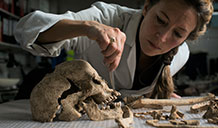
Dr. Paola Ponce is a Lecturer in Osteoarchaeology at the University of York’s Department of Archaeology, affiliated with the PalaeoHub. She holds a BSc from Universidad Nacional de La Plata (2002), an MSc from Bradford University (2004), and a PhD from Durham University (2010), where she was supported by a Durham Doctoral Fellowship Award. Previously, she worked at Archaeology South-East (UCL) from 2012–2017, analyzing human and cremated remains from Neolithic to post-medieval periods. Her research focuses on health and disease in past populations, including British, European, and South American groups. Key interests include paleopathology (e.g., Paget’s disease, smallpox identification), funerary archaeology, and the history of medicine. She has investigated topics such as cranial trepanations in Anglo-Saxon England, mercury content in syphilis cases, and isolated Saxon burials. Dr. Ponce teaches modules like Practical Skills: Human and Animal Bones and contributes to courses on archaeological sciences and skeletal evidence for health. She supervises undergraduate, masters, and PhD students, including Aster Wood’s ongoing thesis on post-Roman health transitions. Her grants include awards from the Society of Antiquaries (2023), Society for Post-Medieval Archaeology (2017), and the Prehistoric Society (2016). Public engagement includes talks at museums (e.g., The Novium Museum) and collaborations on exhibits, such as the Brighton Museum’s Archaeology Gallery. Media coverage includes articles on the reburial of Quaker remains and analysis of Selsey archaeological sites.
Ed Garrett is an Assistant Professor (Lecturer) in Physical Geography within the Department of Environment and Geography at the University of York. He joined the department in 2019 after holding research and teaching positions at the Geological Survey of Belgium and Durham University, where he also completed his PhD. Garrett leads the Creating a Climate Resilient World research group and currently serves as Principal Investigator for two active research projects: Partnership on sea-level change along Brazilian shores (SLABS) funded by NERC (2023-2025) and Connecting Blue Carbon Research (2023). Garrett's research program focuses on the globally significant and often interlinked hazards of subduction zone earthquakes, tsunamis, and sea-level rise. He utilizes sedimentary and geomorphic records to reconstruct the timing, rates, and magnitudes of these processes over annual to multi-millennial timescales. His methodological approach draws on diverse techniques including field-based surveying, sedimentology, microfossil analysis, geochronology and geophysical modeling. A significant new strand of his research examines carbon storage in intertidal environments, particularly saltmarsh blue carbon ecosystems and their relationship with sea-level rise. Analysis of Garrett's recent publication record (2021-2025) reveals three major research trajectories: (1) paleoseismic and paleotsunami studies focusing on megathrust earthquakes in Chile, New Zealand, and Japan; (2) relative sea-level reconstruction using microfossil and geochemical proxies across multiple global regions including the UK, Ireland, Australia, and the USA; and (3) blue carbon research examining organic carbon accumulation in saltmarshes and the implications for climate change mitigation. His work demonstrates strong international collaboration, with field sites spanning six continents and partnerships with researchers from over 20 countries. Garrett has secured significant research funding through the Natural Environment Research Council (NERC), including as Principal Investigator for the Partnership on sea-level change along Brazilian shores project (2023-2025) and the Connecting Blue Carbon Research project (2023). His research group includes multiple postdoctoral researchers and has produced over 40 peer-reviewed publications, two book chapters, and one edited book since 2013. Garrett leads the Creating a Climate Resilient World research group at York, which focuses on understanding past environmental changes to inform future climate resilience strategies. The group maintains active field programs in Chile, New Zealand, the UK, and Brazil, with particular expertise in coastal sedimentology, microfossil analysis, and blue carbon assessment. The group collaborates extensively with international partners including the Geological Survey of Belgium, Durham University, and research institutions in Chile, Japan, and Australia.
Dr. David Burdick is a Research Associate Professor of Coastal Ecology and Restoration in the Department of Natural Resources at the University of New Hampshire. He serves as Interim Director of the Jackson Estuarine Laboratory and has taught wetlands courses for over 20 years. His 35-year career focuses on coastal ecosystems, human impact assessment, and habitat restoration, particularly in salt marshes and eelgrass beds. He received the Susan Snow-Cotter Visionary Award in 2012 for his contributions to marine environmental stewardship. Education: Ph.D., Marine Sciences, Louisiana State University B.S., Chemistry, Hobart and William Smith College Research Interests: Coastal Processes Ecology Environmental Restoration/Remediation Estuarine Sciences His work emphasizes tidal restoration, salt marsh resilience to sea-level rise, and blue carbon dynamics. He has authored/co-authored over 100 publications and co-edited books on tidal marsh restoration. Recent Projects: Coastal resilience initiatives in Portsmouth, NH; shoreline rehabilitation in NH and Maine; and eelgrass restoration modeling. His outreach includes 'Dock Design with the Environment in Mind' and habitat restoration atlases for New Hampshire. Grants and Funding: Over 118 grants since 1992, including projects funded by NOAA, US Fish & Wildlife Service, and the National Fish and Wildlife Foundation. Key areas include living shorelines, salt marsh elevation dynamics, and sedimentation studies. Labs/Teams: Director of Jackson Estuarine Laboratory, collaborator in the Piscataqua Region Estuaries Partnership, and advisor on restoration projects across New England.
Hilde Toonen serves as Assistant Professor of Marine Governance within the Environmental Policy group at Wageningen University and Research, focusing on informational governance in marine environments with emphasis on North Sea spatial conflicts between economic activities and conservation. She coordinates the Aquaculture Governance project in collaboration with Monterey Bay Aquarium's Seafood Watch and contributes to EU-funded initiatives including PERMAGOV (Improving Marine Governance Performance), PERICLES, and PADDLE. PhD (2013): Informational governance in marine spatial conflicts, North Sea MSc: Anthropology BSc: Environmental Sciences Her research examines how non-state governance mechanisms and digital tools enhance ocean sustainability, analyzing certification schemes (e.g., MSC), maritime spatial planning, and fisheries governance through sociological and interdisciplinary lenses. Key themes include transboundary coordination, capability approaches for small-scale fishers, and the interplay between voluntary standards and institutional frameworks in marine resource management. Recent publications (2023-2025) reveal a strategic pivot toward digital governance solutions, with 60% of works addressing e-governance tools for marine spatial planning, blockchain-enabled traceability, and multi-layered governance models aligned with the EU Green Deal. Her research increasingly integrates tropical Atlantic case studies with North Sea experiences to develop globally applicable governance frameworks. Dr. Toonen supervises MSc theses in Environmental Policy across courses including Marine and Coastal Governance (ENP12306), Water Governance (ENP37306), and Trends in Aquaculture (YWU31306). Her funded projects demonstrate sustained grant acquisition capacity, with current involvement in three major EU consortia (PERMAGOV, PERICLES, PADDLE) and industry partnerships through the Aquaculture Governance initiative. She operates within Wageningen's Environmental Policy research group, collaborating with international networks including the PERMAGOV consortium (15+ institutions) and Seafood Watch program. Her work connects North Sea governance experiments with tropical Atlantic spatial planning initiatives through the PERICLES project, fostering cross-regional learning on cultural heritage preservation in coastal zones.
Ehsan Forootan is a Professor of Geodesy and Earth Observation at Aalborg University, Denmark. He holds a PhD in Geodesy from the University of Bonn and has held academic positions at Cardiff University, University of Hohenheim, and Robert Bosch GmbH. His research focuses on applying satellite geodetic techniques (GNSS, satellite gravity, altimetry) to monitor Earth System processes, including mass redistribution, hydrological cycles, and climate change impacts. He leads projects on flood awareness systems, digital twin Earth hydrology, and data assimilation frameworks. Forootan serves as vice-chair of the IAG's Sub-Commission 4.3 (Atmosphere Remote Sensing) and editor for Remote Sensing journals. Education: B.Sc. Civil-Surveying Engineering (Khaje Nasir Technical University, 2006), M.Sc. Geodesy-Hydrography (University of Tehran, 2008), PhD in Geodesy (University of Bonn, 2014). Postdoctoral fellowships include Curtin University and German Aerospace Center (DLR). Research interests include geodetic data assimilation, satellite remote sensing applications, and Bayesian methods for hydrological modeling. His work addresses UN SDGs related to climate action, water sustainability, and environmental monitoring. Key contributions include frameworks for GRACE/GRACE-FO data integration into hydrological models and thermospheric neutral density forecasting. Awards: ABC/J Young Academic Award (2015). Active in research networks (ESA, NASA) and editorial roles (Geodinamica Acta, Nature Geoscience). Projects include Space-based Flood Awareness System for Africa (SFAS) and Digital Twin Earth Hydrology initiatives.
Emanuele Bevacqua is a climate researcher at the University of Reading, specializing in compound weather extremes, coastal flooding, and climate change impacts. His work bridges climatology, hydrology, and environmental science to analyze synergistic hazards. Key Research Areas: Extreme event attribution, compound flooding mechanisms, precipitation-storm surge interactions, and climate modeling uncertainties. Recent Trends: Focus on anthropogenic influences in extreme weather, wintertime precipitation patterns, and non-robust climate projections across multi-model datasets.
Dr. Jacqueline Rosette is a Senior Lecturer in the Department of Geography at Swansea University, part of the Faculty of Science and Engineering. Her research focuses on remote sensing applications, particularly LiDAR technology for forestry and environmental monitoring. She has collaborated with institutions globally on projects involving biomass estimation, vegetation height analysis, and satellite data interpretation. Dr. Rosette teaches modules such as GEC140 Project and Field Methods and GEGM03 Drone Accreditation and Remote Sensing , emphasizing practical skills in geospatial data collection and analysis. Her research interests span lidar-based biomass assessment, forest parameter retrieval, and environmental remote sensing. She has supervised PhD students investigating topics like drone-based environmental monitoring, oak decline detection, and sea-level change impacts. Dr. Rosette's work has been published in journals like Global Change Biology , Remote Sensing of Environment , and Nature , showcasing her contributions to understanding forest dynamics and climate change impacts. Dr. Rosette is actively involved in academic supervision, co-supervising research on pathogen infection detection via hyperspectral reflectance and desertification in Iraq through geomatic approaches. Her teaching integrates fieldwork, data analysis techniques, and ethical considerations in geographical research. She also contributes to initiatives like the NASA Carbon Monitoring System and has developed curricula for drone remote sensing certifications aligned with Civil Aviation Authority standards.
Minghua Zhang is a Distinguished Professor at the School of Marine and Atmospheric Sciences (SoMAS) at Stony Brook University. His research focuses on climate modeling, atmospheric dynamics, and global climate change, with particular emphasis on improving parameterization techniques in general circulation models and studying climate feedback mechanisms. Education: Ph.D. in Atmospheric Physics from the Institute of Atmospheric Physics, Academia Sinica (1987). Research Interests: Zhang’s work centers on numerical modeling of climate systems, including the development and analysis of parameterization schemes for clouds, radiation, convection, and boundary layer physics. He has contributed to understanding atmospheric wave dynamics, their influence on weather and climate variability, and the impacts of climate change on precipitation patterns and extreme events. His involvement in field experiments enhances model validation through observational data integration. Publications and Contributions: Over 150 peer-reviewed articles since 2000, focusing on topics like climate model biases, ocean-atmosphere interactions, and climate change projections. Notable work includes improving orographic drag parameterization and analyzing tropical climate phenomena such as the Double Intertropical Convergence Zone (ITCZ). Grants and Collaborations: Active in international initiatives like CMIP6 and FAFMIP, contributing to Earth System Model (ESM) development and validation. Collaborates with institutions globally to address climate modeling challenges. Labs and Teams: Leads research teams at SoMAS and collaborates with the Chinese Academy of Sciences (CAS) on Earth system modeling projects, such as CAS-ESM2.0.