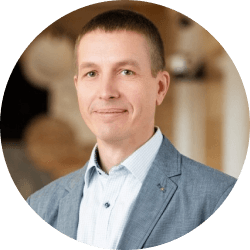
Steven Eppinger is a Professor of Management Science and Innovation at the MIT Sloan School of Management, holding the General Motors Leaders for Global Operations Chair. He focuses on interdisciplinary education and research in product design, systems engineering, and agile methodologies. His work bridges engineering and management, emphasizing complex project management and innovation processes. Educated at MIT (SB, SM, ScD in Mechanical Engineering), he has led major programs like SDM, IDM, LGO, and LFM. He co-authored Product Design and Development (7th/8th editions) and pioneered the Design Structure Matrix (DSM) methods. His research applies agile practices beyond software to hardware and systems engineering. He has received numerous awards, including the PICMET Medal of Excellence and POMS Distinguished Fellow. His executive courses cover systematic innovation and managing technical projects using DSM and agile frameworks. He co-directed the Center for Innovation in Product Development and served as Deputy Dean of MIT Sloan.
Patrick Noack is a Professor at HSWT, leading the Competence Centre for Digital Agribusiness (KoDA) and serving as Programme Director for Agricultural Engineering and Green Digital Engineering. His research focuses on IoT applications in agriculture, precision farming, and sensor systems. He has pioneered projects like DenimeF (foreign body detection in forage harvesters) and AutoDGB (automated field trial analysis). Key areas include GPS-guided machinery, soil sensors, and UAV-based monitoring. He chairs digitalization committees and collaborates with organizations like ASABE and VDI Round Table GIS. His work emphasizes interdisciplinary education, integrating horticulture and bioinformatics through agile methods. Research interests span environmental technology, geospatial data analysis, and sustainable resource management. Recent publications address spectral imaging for crop yield prediction and non-lethal insect monitoring systems. He advises students like Jan Oehlschläger and leads grants totaling millions in precision agriculture innovation.
Prof. Dr.-Ing. André Nitze is a faculty member at the Brandenburg University of Technology in the Department of Economics . His research focuses on Internet of Things (IoT) , Digital Business Models , Software Architectures , Cloud Computing , Mobile Computing , and Predictive Analytics . He leads research projects on municipal LoRaWAN infrastructure, rural on-demand transport systems, and user-centered digitalization for sustainable development. Area of Expertise: IoT Applications, Software Engineering, Digital Transformation Current Research: Sustainable Municipal LoRaWAN, Rural Mobility Solutions Projects: risKI - KatKomm (2024-2026): Protocol development for disaster communication InNoWest (2023-2027): Subproject leader for digital sustainability OSLO (2023): Rural on-demand transport software architecture Awards: Best Paper Award at ICDS 2024 for work on LoRaWAN infrastructure Education & Supervision: M.Sc. and B.Sc. in Business Informatics Supervised over 15 theses including topics on GIS analysis, sensor networks, and AI applications
Assoc. Prof. Dr. Saulius Šimkonis serves as an Associate Professor at the ISM Executive School (ISM University of Management and Economics) and currently holds the position of Project Portfolio Manager at Swedbank. With over 20 years of experience, he specializes in Project, Program, and Portfolio Management (PPM), risk management, and lessons learned processes. He holds certifications such as IPMA-A, PMP, and PRINCE2, and is an IPMA Assessor in Lithuania. His academic roles include leading the Project Management Program at ISM Executive School and teaching at Vilnius University Business School. Education: Graduated from ISM University of Management and Economics and earned a PhD from Vilnius University with a dissertation on 'Factors influencing lessons learned processes in innovative projects'. Research focuses on governance of interorganizational project networks, balanced leadership transitions, and ESG implementation frameworks. Recent work explores multi-level governance models, collaboration in distributed teams, and horizontal leadership dynamics. Teaching areas include PPM, risk management, and lessons learned methodologies. He contributes to professional bodies like the Project Management Institute and Lithuanian Project Management Association.
Erin Friess is Professor and Director of Graduate Studies in Technical Communication at University of North Texas. Education includes Ph.D. in Rhetoric and M.A. in Professional Writing from Carnegie Mellon University, and B.A. from Trinity University. Research examines agile project management (particularly Scrum) implementation in technical communication, usability/user experience methodologies, and disciplinary patterns in technical communication scholarship. Developed influential frameworks for persona applications in design processes. Award-winning publications analyze content trends in technical communication literature, persona utilization in heuristic evaluation, and decision-making patterns in design workflows. Recent work explores Scrum methodologies in educational contexts. Teaches advanced courses in usability testing, document design, and project management. Recognized with field's top research awards from IEEE, ACM, and STC.
Derek J. Sinnott is a Researcher at the RIKON Sustainable Architecture & Built Environment Research Centre, focusing on sustainable construction, digitalization, and circular economy principles. His work develops frameworks for material passports and lean-agile construction methodologies. Research addresses: Dynamic material tracking systems Integration of Scrum and Lean Construction principles Takt planning optimization Regulatory compliance in construction Recent publications establish conceptual frameworks for sustainable material management and analyze Last Planner® System implementations in residential projects.
Casper Lassenius serves as an Associate Professor in the Department of Computer Science at Aalto University, Finland, where he is affiliated with the Software and Service Engineering (SSE) research group. His academic role focuses on advancing empirical methodologies within software engineering through rigorous research and industry collaboration. Professor Lassenius's research centers on Empirical Software Engineering, with specialized expertise in Agile and Lean software development methodologies. His work critically examines large-scale agile transformations, global software engineering challenges, and the delicate balance between organizational control and team autonomy. He investigates practical implementations of scaling frameworks like SAFe across diverse sectors including finance and public administration, addressing real-world adoption barriers and optimization strategies. Analysis of his 2020-2024 publications reveals dominant research trajectories in agile scaling frameworks, backsourcing of IT services, and organizational dynamics in large-scale development. His empirical studies consistently employ systematic literature reviews and case-based approaches to identify challenges like delay archetypes and autonomy-control tensions, providing actionable insights for enterprise agile adoption. Lassenius is an active contributor to the Software and Service Engineering (SSE) research group, which drives innovation in software processes, service design, and empirical validation of development practices. This collaborative environment enables his research to bridge theoretical rigor with industry applicability, particularly in complex organizational contexts.
Nanda Surendra is an Associate Professor in the Department of Management Information Systems and Supply Chain at West Virginia University. He specializes in agile systems development, information systems design, and qualitative research methodologies. Ph.D., University of Cincinnati (1998) MBA, Madras University (1989) BEngg, Annamalai University (1987) His research explores the intersection of agile methodologies, privacy frameworks, and ethnographic approaches to systems development. He has pioneered techniques for integrating reflective practice into information systems and applying sports analytics concepts to educational reform. The 15 most recent publications span agile development in hyper-agile environments, privacy paradigms in IT, ethnographic requirements analysis, and curriculum design innovations. Key trends include crisis adaptation, collaborative software development, and ethical considerations in disaster recovery planning. Dr. Surendra's work bridges theoretical rigor with practical implementation, focusing on systems that balance automation with human intuition while maintaining technical relevance through case study validation.
Professor Viktoria Stray is a leading figure in agile software development at the University of Oslo 's Department of Informatics and serves as a senior researcher at SINTEF Digital . With over 15 years at UiO and 8 years at SINTEF, she combines academic rigor with industry expertise in large-scale agile transformations. Her work bridges empirical software engineering, generative AI integration, and coordination mechanisms in distributed teams. PhD in Informatics (2014), MSc in Computer Engineering (2007) Executive Guest Editor for Information and Software Technology special issue on Generative AI Her research focuses on: Generative AI in developer workflows Large-Scale Agile coordination Autonomous Teams dynamics Human Factors in software testing Digital Transformation in public sector Recent publications analyze trends in agile coaching, hybrid team communication, and empirical studies on coordination mechanisms. She supervises numerous PhD and master's students while teaching large cohorts in courses like IN2000 (680+ students). As Deputy Head of Department and leader of the Gemini Center for Software Engineering, she shapes both institutional and industry-wide practices.
Dr. Bartosz Marcinkowski serves as Professor and Head of the Department of Business Informatics at the University of Gdańsk's Faculty of Management, concurrently holding the positions of Deputy Dean for Research and Head of the Doctoral School. His academic leadership spans departmental administration, faculty research strategy, and doctoral program oversight within Poland's prominent management education institution. Marcinkowski's research centers on the intersection of information systems and practical business applications, with dominant focus areas including agile software development methodologies, digital transformation frameworks, and facility management technology adoption. His work consistently addresses contemporary challenges such as post-pandemic recovery in IT projects, generative AI integration, and sustainable business practices through empirical industry-academia collaborations. Recent publications demonstrate particular expertise in scaling agile frameworks for distributed teams and implementing blockchain solutions in enterprise environments. Analysis of his 2022-2025 publications reveals a strategic research trajectory emphasizing practical solutions for complex business-technology challenges. His work shows increasing integration of sustainability considerations across domains, from facility management to corporate governance, while maintaining strong methodological focus on agile approaches and systems integration. The recurring industry-academia collaboration theme highlights his commitment to bridging theoretical research with real-world business applications.
Rafael Capilla is a Professor of Software Engineering at Rey Juan Carlos University of Madrid and an Adjunct Professor at LUT School of Engineering Sciences. His research focuses on software architecture, architectural knowledge, software product line engineering, dynamic variability, technical debt, software sustainability, and Industry 4.0 architectures. He has conducted international collaborations across Europe, Latin America, and Asia, with over 80% of his collaborators from foreign institutions. Research Interests : Software Architecture, Technical Debt, Dynamic Variability, Software Sustainability, Industry 4.0 Quality Evaluation Recent Publications highlight trends in sustainable software practices, Industry 4.0 systems, and AI-assisted architectural decision-making. His work explores intersections between technical debt identification, serverless computing economics, and runtime variability models.
Prof. Dr. Sabine Pfeiffer holds the Chair of Sociology (Technology – Work – Society) at the Nuremberg Campus of Technology, part of Friedrich-Alexander University Erlangen-Nuremberg. She is an active researcher and thought leader in the sociology of work, with particular expertise in digital transformation, Industry 4.0, and labor capacity. Her work bridges academic research and practical applications in industry, with significant collaborations including the Volkswagen study and advisory roles with government bodies. Professor Pfeiffer's research interests focus on how digitalization transforms work structures and qualifications across various sectors including mechanical engineering, office work, and critical infrastructure. She has developed the Labouring Capacity Index (AV-Index) as a tool to measure living labor capacity and experience as resources for Industry 4.0 transition. Her work examines the intersection of technology, work organization, and social inequality, with particular attention to how workers navigate digital transformation in different occupational contexts. Her recent publications reveal consistent research trends examining the dual transformation of digitalization and sustainability, with particular focus on Volkswagen as a case study. The work explores transformation experience, resources, and readiness across multiple dimensions. She also investigates how AI is perceived and integrated in workplaces, the evolution of office work in digital environments, and the measurement of work through wearables and digital assistance systems. Best Paper Award for keynote speech on 'Work 4.0' at VET Conference in Rostock (2017) Nominated for 'Influencer of the Year 2013' by the Strategy Circle for Mechanical and Plant Engineering Professor Pfeiffer serves on the Council of the World of Work appointed by the Federal Ministry of Labour and Social Affairs, and recently joined the board of directors at bidt (Bavarian Institute of Technology Assessment). She previously served on the Research Advisory Board of the Industry 4.0 Platform and advisory boards at CIDAS. Her research is frequently funded through collaborations with institutions including BIBB (Federal Institute for Vocational Training), WZB Berlin Social Science Center, and industry partners like VDMA. Her work is conducted through the Labouratory research group at the Nuremberg Campus of Technology, which focuses on empirical studies of work in the digital age. The team employs mixed methods approaches including representative surveys, qualitative case studies, and workplace observations to understand the changing nature of work. Recent projects include the diGAP project on good agile project work and studies on digital transformation in mechanical engineering and office work sectors.
Tomas Gustavsson is an Assistant Professor of Information Systems and Project Management Research at Karlstad University. His work focuses on Agile methodologies, large-scale software development coordination, and technical debt management. He completed his PhD in 2020 with a thesis on scaling Agile practices in organizational contexts. Research Interests: Agile Software Development Process Debt and Non-Technical Debt Team Coordination Mechanisms Large-Scale Agile Transformations Secure Software Development Organizational Impact of Agile Practices His recent work emphasizes measuring process debt impacts on developer satisfaction and exploring interdependencies between technical/social debts. Over 60 publications span empirical studies, literature reviews, and framework evaluations. Key contributions include measurement instruments for process debt and analysis of pandemic-era software development adaptations. Professional Contributions: Authored/edited 12 textbooks on Agile methodologies Core contributor to SAFe implementation studies Active in both academic and practitioner communities
Klaas-Jan Stol is a Senior Lecturer at the School of Computer Science and Information Technology, University College Cork. His research focuses on software development methods, open source practices, and improving research methodologies in software engineering. He leads projects funded by Science Foundation Ireland (SFI) and industry, with grants totaling over €1.5 million. Notable roles include SFI Principal Investigator on open source and agile projects. Education: PhD (Computer Science, University of Limerick), MSc (University of Groningen), B.ICT (Hanzehogeschool Groningen). Former Research Fellow at Lero - Irish Software Research Centre. Research interests span open source adoption, inner source frameworks, crowdsourcing, and theory development. Key publications include Adopting InnerSource: Principles and Case Studies (2018) and Scaling a Software Business (2017). Awards include the Lero Director’s Research Excellence Award (2019). Grant leadership includes SODAW (€464k), HUSRAI (€353k), and Security-Centered Developers (€91k). Guides PhD/postdoc researchers in areas like secure coding and open source ecosystems. Editorial roles: Empirical Software Engineering, Journal of Systems and Software. Labs/Teams: Active in Lero as a Funded Investigator, contributing to industry-academia collaborations.
Prof. D.M. van Solingen serves as a Professor in the Software Engineering department within the Electrical Engineering, Mathematics and Computer Science school at Delft University of Technology. His academic career spans over two decades with continuous research output through 2024, demonstrating active engagement in both theoretical and practical aspects of software development. His research interests focus on Agile methodologies , global software development , and value-driven project management . Key areas include empirical studies on offshoring economics, Scrum framework optimization, stakeholder value quantification, and organizational transformation during Agile adoption. His work bridges academic rigor with industry applicability, particularly in measuring the true costs of distributed development and identifying critical turnover impacts in global teams. Analysis of his recent publications (2016-2024) reveals a strong trend toward practical Agile implementation and value measurement . Over 60% of his work addresses real-world challenges in scaling Scrum, optimizing offshoring strategies, and quantifying business value. His research increasingly incorporates empirical data from industry collaborations, with significant focus on the human factors affecting software project outcomes. EASE 2016 Best Paper Award for research on stakeholder satisfaction and project impact Prof. van Solingen's advisory work includes doctoral supervision and industry collaborations focused on software process improvement. His research has attracted significant industry interest, evidenced by 118 Mendeley readers for his 2013 media coverage on hyperproductive Scrum teams and consistent Scopus citations across his publications. His work demonstrates sustained engagement with both academic and practitioner communities through books, conference workshops, and empirical studies.