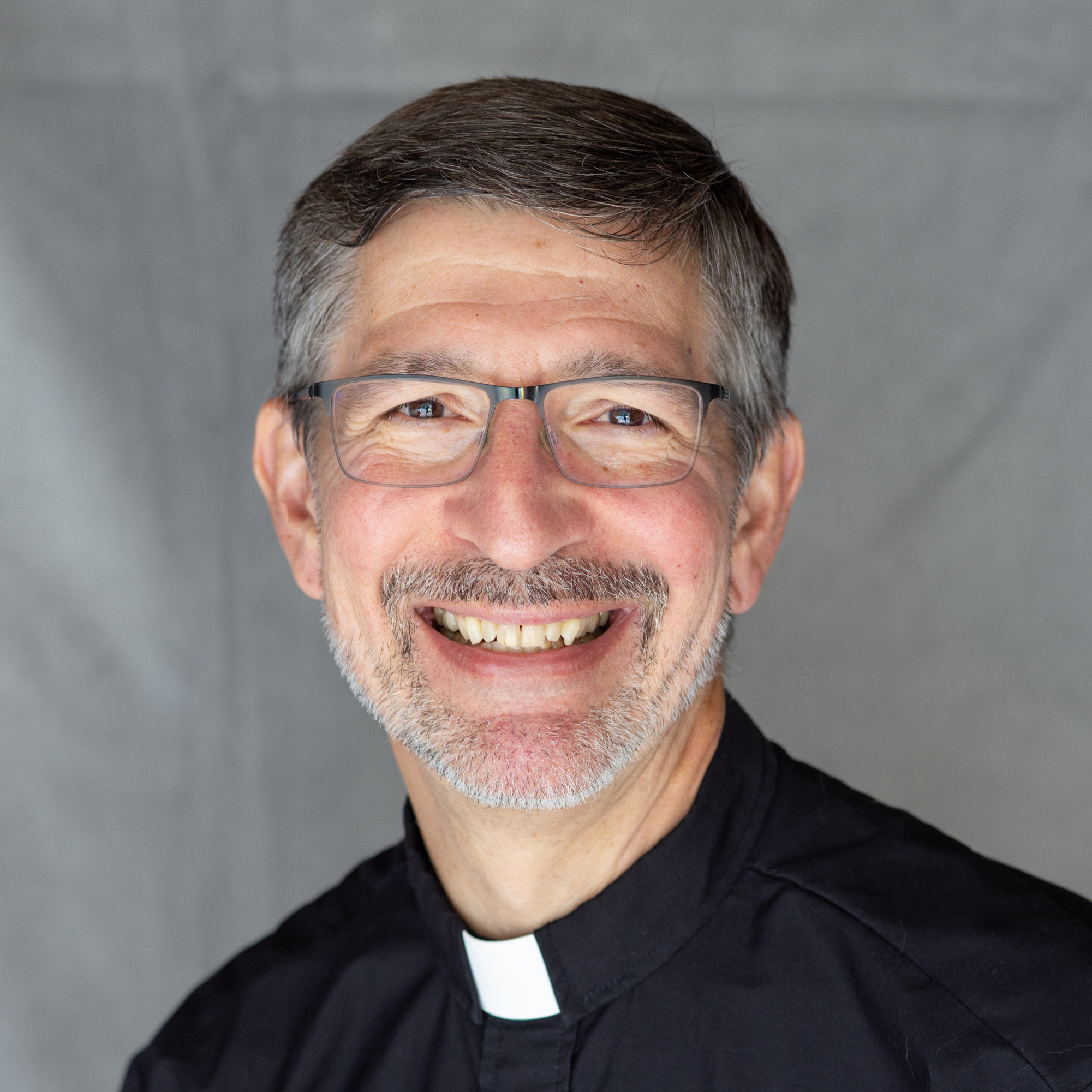
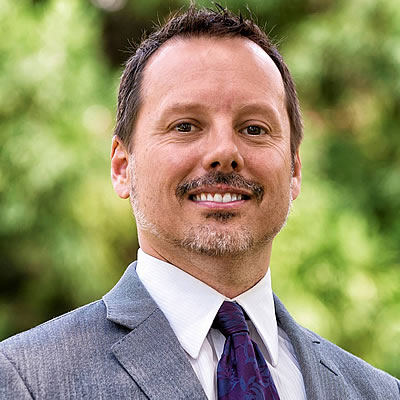
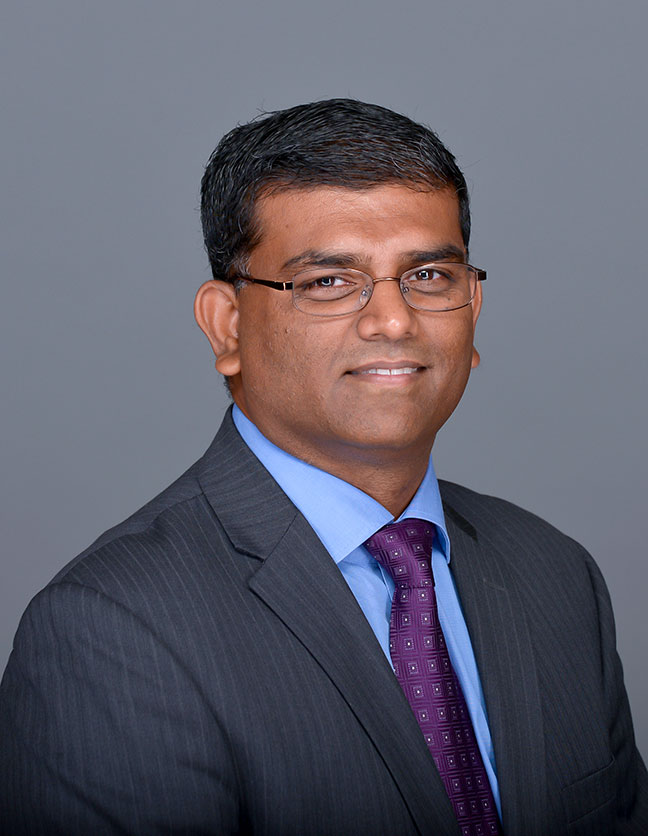
Charles Schulz is a Professor of Theology at the University of Chicago's College of Theology, Arts & Humanities, with prior tenure at Concordia University (2001–2024) and pastoral experience at St. Thomas Lutheran Church (2005–2014). His academic journey includes degrees from Concordia University, Concordia Seminary, Washington University, and the University of Virginia. His research focuses on Patristic Exegesis, Reformation Theology, and early Christian biblical interpretation. Key publications include his 2020 PhD dissertation on Patristic citations of Psalm 82:6 and translations of Martin Luther's sermons (2017–2018). His work bridges ancient and Reformation-era theological methods, emphasizing pastoral motives in exegesis. Recent presentations address topics like Patristic interpretations of Scripture and the impact of medical science on faith. He has received prestigious awards including the E. J. Otto Award (1998) and the University of Virginia Presidential Scholarship. His teaching excellence was recognized at Concordia University in 2022–2023. Schulz actively engages in theological commissions and academic symposia, contributing to both scholarly and pastoral discourse.
Dr Melanie Brunner is a Lecturer in Medieval Studies at the University of Leeds, affiliated with the School of History and the Institute for Medieval Studies. She holds a PhD in Medieval Studies from the University of Leeds and an MA in History and English from Universität Augsburg. Her research focuses on late medieval ecclesiastical history, papal administration, and the history of mendicant orders, particularly the Franciscans. She has contributed to major projects like the International Medieval Bibliography and led research networks such as the DFG-Netzwerk Imitation and Stilus Curiae. Her work explores political culture of the Avignon papacy, canon law dynamics, and religious reform movements. Education: PhD (Medieval Studies, University of Leeds), MA (History and English, Universität Augsburg). Professional affiliations include the Ecclesiastical History Society and Mediävistenverband. She supervises doctoral students in areas like Franciscan history, papal politics, and medieval book culture. Current projects include editorial direction of the International Medieval Bibliography and leadership of the MA Medieval Studies program. Research Interests: Late medieval papal governance, mendicant orders' institutional development, theological debates on poverty, and decision-making mechanisms in the Avignon Curia. She examines how theology, law, and political strategy intersected in medieval church administration. Advising & Grants: Supervises 4 current PhD students and has completed 6 theses. Involvement with EU-funded COST Action IS1301 and White Rose Collaboration Fund projects. Collaborates internationally with institutions like the Sächsische Akademie der Wissenschaften and Universität Zürich. Labs/Teams: Core member of research groups including Galleries, Libraries, Archives, and Museums (GLAM) and Politics, Diplomacy, and International History at Leeds. Active in interdisciplinary medieval studies networks.
Angelika Malinar, Professor of Indology at the University of Zurich and member of its Gender Studies Department, specializes in Hinduism, Indian philosophy, and Sanskrit literature. Her work spans historical and modern contexts, with a focus on epic texts and Indo-European exchanges. She co-edits the Brill's Encyclopedia of Hinduism and contributes to the University Research Priority Program "Asia and Europe." PhD and habilitation from University of Tübingen Researcher at Tübingen, Berlin, and London Her research integrates Sanskrit epics, philosophical traditions, and modern Hindu identity. Recent publications analyze Mahābhārata theology, ritual practices, and cross-cultural interpretations. She explores how texts like the Bhagavadgītā and Nārāyaṇīya bridge ritualism, aesthetics, and individual authority. Key article trends examine cosmological monotheism , epic decision-making , and colonial reinterpretations . Her editorial roles include interdisciplinary volumes on time, purity, and Indo-European cultural dialogues. As a Senior Lecturer at SOAS and Professor in Zurich, she has led projects on monastic institutions, rasas, and canonical formation. Her work contextualizes Indian philosophy within global frameworks, notably nineteenth-century German Indology.
Lucia Dolce serves as the Numata Professor of Japanese Buddhism within the Department of Religions and Philosophies at SOAS University of London, part of the School of History, Religions and Philosophies. Her academic base is room 342 in the Russell Square: College Buildings campus. Her educational background includes: Laurea MA (University of Venice) PhD (Leiden University) Professor Dolce's research centers on two interconnected projects: first, the discourse on the body in medieval Japanese Buddhist rituals and its connections to continental Tantric practices, emphasizing ritual fluidity and performative theory applications; second, contemporary Buddhism-Shinto syncretism with focus on revival of premodern practices in Kyoto shrines. She also examines Tokyo's urban pilgrimage routes like the Seven Gods of Fortune, analyzing institutional negotiations and religious marketing dynamics. Her journal articles (1992-2023) consistently explore ritual knowledge transfer in Japanese Buddhism, with recent works on scriptural repurposing and tantric exegesis highlighting material culture and practice-centered approaches. Earlier publications establish foundational studies on Nichiren Buddhism's esoteric dimensions, astrological cults, and celestial body worship, revealing enduring thematic threads across three decades of scholarship. Scientific awards: No awards listed in provided text Advising and grants: She currently supervises four PhD candidates: Rachel Williams (Japanese Secularity), Haruka Saito (Repentance Rituals), Sooyeun Yang (Korean Astrological Buddhism), and Yeonju Lee (Korean Nationalism). Previous supervisees include twelve PhD graduates such as Emanuela Sala (2022, Sannō Shintō), Ronit Wang (2022, Thai Hell Parks), and multiple 2011 completions. Dolce led the Newton Fellowship-associated project 'The Lucky Gods of Tokyo' (2014-2016), investigating spatial politics in Buddhist-Shinto pilgrimage networks.
Ximian Xu (preferred name: Simeon) is a Senior Research Associate in the Faculty of Divinity at the University of Cambridge , with a PhD in Systematic Theology from the University of Edinburgh (2020). His research bridges theology with technology, focusing on artificial intelligence (AI) ethics, Dutch Neo-Calvinism, Karl Barth, and contextual theology in mainland China. Xu’s work explores the intersection of AI and Christian ethics, the role of Reformed theology in contemporary Chinese Christianity, and the ontological implications of technology on human sustainability. Research Interests Theology and Technology (AI, Surveillance) Dutch Neo-Calvinism (Herman Bavinck) Karl Barth Contextual Theology (Reformed in China) Grants and Organisational Roles He received the CAHSS KE Grant for the workshop "Artificial Intelligence and the Christian Churches" and the Alan Turing Institute Postdoctoral Enrichment Award for research on AI in pastoral care. Xu co-founded the Studies in Dutch Neo-Calvinism Series (Chinese) and is a co-editor for its publications. Publications and Awards His recent works include studies on AI’s moral agency, technomoral futures, and Reformed theological frameworks. Xu’s book The Digitalised Image of God: Artificial Intelligence, Liturgy, and Ethics (2024) addresses AI’s theological challenges. He has contributed to journals like Perspectives on Science and Christian Faith and Modern Theology .
Professor Jinhua Chen (PhD, McMaster University, 1997) is a leading scholar in East Asian Buddhism at the University of British Columbia’s Department of Asian Studies, Faculty of Arts. Holding a Canada Research Chair (2001-2011) and inducted into the Royal Society of Canada (2020), his work spans trans-regional Buddhist narratives, monastic institutions, relic veneration, and technological innovations in medieval Asian religions. Key Affiliations: UBC Buddhist Forum (Director), Peter Wall Institute for Advanced Studies (Resident Scholar), and editorial roles in Brill Book Series on East Asian Religions and Studies in Chinese Religions . Research Themes: Combines textual analysis with interdisciplinary methods to explore Buddhist sacred sites, doctrinal transmissions, and church-state dynamics. His projects include From the Ground Up (SSHRC Partnership Grant 2016-2023), examining East Asian religions through multi-media sources, and studies on ruixiang (propitious signs) in medieval Chinese prognostication. Scientific Awards: Royal Society of Canada Fellow, Canada Research Chair, SSHRC Insight Grants, Humboldt Research Fellowship, and Max Planck Institute funding. Publications: Over 30 book chapters and journal articles (2000-2016), including monographs on Fazang, Shingon-Tendai conflicts, and Buddhist sacred geography. Teaching: Courses on Chinese thought, Chan/Zen Buddhism, and Buddhist text interpretation, emphasizing methodological rigor and cross-cultural analysis. Projects: Directed international collaborations on Buddhist manuscripts, palace chapels, and relic cultures, with grants totaling over $4 million CAD.
Joanna Grela is a Professor at the Department of Comparative Civilization Studies within the Faculty of Philosophy at Jagiellonian University (UJ) in Kraków, Poland. She holds habilitation in cultural studies (2016, SWPS University, Warsaw), a doctorate in religious studies (2004, Jagiellonian University), and is a certified Tibetologist (2000, INALCO, Paris). Her academic credentials also include an MA in philosophy (1996, Jagiellonian University) and postgraduate studies in gender (2009, Jagiellonian University). Her educational background includes: 2004: PhD in Humanities in religious studies, Jagiellonian University 2000: Diplôme Unilingue de Langue et Civilization Orientales de Tibétain, Institut National des Langues et Civilizations Orientales (INALCO), Paris 1996: Master of Philosophy, Jagiellonian University 2009: Postgraduate studies in gender, Jagiellonian University Professor Grela's research focuses on Tibetan, Himalayan, and Mongolian cultures, with particular emphasis on pre-Buddhist cults and their contemporary representations in popular culture, societal transformations, Tibetan ethnic and cultural identity, cultural stereotypes, and the comparative anthropology of Buddhism. Her work bridges religious studies, cultural anthropology, and Tibetan studies, examining both historical traditions and their modern adaptations. She has made significant contributions to understanding how traditional Buddhist practices interact with contemporary social contexts, digital technologies, and global cultural flows. Her scholarly output reveals consistent engagement with Tibetan religious culture, Buddhist textual traditions, and the adaptation of Buddhist practices in modern contexts. She has extensively explored the relationship between pre-Buddhist traditions and contemporary religious practices, the role of deities in Tibetan Buddhism, and the transformation of Buddhist thought in different cultural settings including Thailand and Poland. Her more recent work addresses how Buddhism is adapting to digital environments and contemporary social challenges. Her notable achievements include: 2017: Pro Arte Docendi Award from the Rector of Jagiellonian University Multiple teaching awards (2011/12, 2012/13, 2014/15) Membership in the International Association of Buddhist Universities (IABU) Collaboration with the Centre d'Etudes Himalayennes CNRS Professor Grela has led significant research projects including 'The impact of secularization and schooling on socio-religious relations between ritual specialists and the lay community in the Rebkong region' (2018-2020) and 'The Common Buddhist Text Project' (2009-2016). Her work demonstrates a strong commitment to both scholarly research and teaching excellence, with numerous publications spanning academic journals, edited volumes, and encyclopedia entries. She maintains active international collaboration and has presented her research at conferences across Europe and Asia.
Enrique Sanz Giménez-Rico, SJ is a Professor at the Faculty of Theology of Comillas Pontifical University , where he has taught for over two decades. His academic journey includes a Licentiate in Trilingual Biblical Philology (Pontifical University of Salamanca, 1990) Licentiate in Sacred Scripture (Pontifical Biblical Institute, 1997) Doctorate in Theology (Comillas Pontifical University, 2000) . Specializing in Old Testament theology and spirituality , his research focuses on the Theology of the Pentateuch , Theology of the Psalter , and Greek Philology . His recent publications explore themes like prophetic literature , divine mercy , and biblical foundations for environmental ethics , reflecting a synthesis of Hebrew Bible studies and contemporary theological challenges . Scientific contributions include Sexenio Campo 11 accreditation in Philosophy, Philology, and Linguistics (2011-2018) ACAP certification as Professor Doctor of Private University (2007) . Professional roles encompass Rector of Comillas Pontifical University (2021-2024) Dean of Theology and Canon Law Faculties (2015-2021) Director of the Department of Sacred Scripture and Church History (2011-2015) .
David Germano is Professor of Tibetan and Buddhist Studies at the University of Virginia's College of Arts & Sciences, Department of Religious Studies. He also holds a Clinical Professor appointment in Nursing and serves as Director of multiple centers including the Tibet Center, the Contemplative Sciences Center, and SHANTI (Social Sciences, Humanities, and Arts Network of Technological Initiatives). Since 2000, he has directed the Tibetan and Himalayan Library, establishing himself as a leading figure in Tibetan studies and digital humanities. Germano earned his B.A. from Notre Dame University in 1984 and completed his Ph.D. at the University of Wisconsin in 1992. His academic career at UVA progressed from Assistant Professor (1992-1998), to Associate Professor (1998-2011), and finally to Professor (2011-present). His research focuses on the Nyingma and Bön lineages of Tibetan Buddhism, particularly tantric traditions and Buddhist philosophy from the eighth to fifteenth centuries. He also studies Tibetan history and literature, contemporary Tibet (especially regarding religion, education, and technology), and digital humanities. Germano is particularly interested in engaged scholarship that inserts higher education into a socially transformative role across various sectors. Germano's publications reveal a consistent focus on Tibetan Buddhist traditions, with particular emphasis on Dzogchen (Great Perfection) teachings, visionary movements, and the intersection of traditional practices with contemporary contexts. His work spans religious studies, anthropology, digital humanities, and Tibetan cultural studies, demonstrating interdisciplinary approaches to understanding Tibetan Buddhism and its modern manifestations. As a leader in digital humanities, Germano has pioneered numerous initiatives including the Tibetan and Himalayan Digital Library, the Tibetan Unicode Project, the Tibetan Literary Encyclopedia, and the Tibetan Language Learning Resources initiative. He has also co-directed the UVa-Machik Geotourism Initiative and the Tibetan and Himalayan Historical GIS project, demonstrating his commitment to innovative approaches for preserving and disseminating Tibetan knowledge.
David Aers is the James B. Duke Distinguished Professor of English at Duke University, with affiliations in the Department of English, Religious Studies, and Divinity School. He holds academic appointments since 1994, including directorship of the Medieval and Renaissance Studies Center since 2019. His expertise spans medieval and early modern literature, theology, and political culture, with a focus on Christian tradition and its intersections with ethics, gender, and community. Education: PhD from the University of York (1971) and BA from the University of Cambridge (1968). Research interests include late medieval English writing (e.g., Chaucer, Langland), theological doctrines like election and sin, and the evolution of Christian thought across the medieval/early modern divide. His recent works explore themes like enemy love in theology, gender identity, and the legacy of Constantinian Christianity. Recognition includes the Duke Distinguished Professorship. Teaching spans courses on Milton, medieval literature, and historical theology. He has served as editor for journals like Journal of Medieval and Early Modern Studies and contributed to academic service through editorial roles and professional committees. Labs/Teams: Leads the Medieval and Renaissance Studies Center, fostering interdisciplinary research in premodern cultures.
Jeffrey S. Lidke is a Professor of Religious Studies and Chair of the Department of Religion and Philosophy at Berry College. He holds a B.A. from the University of Colorado (1990), M.A. (1996), and Ph.D. (2000) in South Asia Religion and Philosophy from the University of California, Santa Barbara. A Fulbright Dissertation Fellow to Nepal (1996-97), his research focuses on Nepalese Tantra, South Asian religious traditions, and the intersection of contemplative practices with neuroscience. His major works include The Goddess Within and Beyond the Three Cities (2017) and Viśvarūpa Maṇḍir: A Study of Chaṅgu Nārāyaṇa (2017). Key research areas include Śākta Tantra's political theology, Abhinavagupta's monistic philosophy, and the neuroscientific implications of Tantric meditative practices. His work bridges textual analysis with ethnographic fieldwork in Nepal and India. Education: B.A., Religious Studies, University of Colorado (1990) M.A., South Asia Religion and Philosophy, University of California, Santa Barbara (1996) Ph.D., South Asia Religion and Philosophy, University of California, Santa Barbara (2000) Research Interests: Indian and Nepalese Tantra Kashmir Śaivism Cognitive Neuroscience of Contemplative Practices Embodied Mysticism in Art and Dance Maṇḍala Theory and Political Theology Key Contributions: Pioneered studies on the Sarvāmnāya Tantra system Explored neuroscientific applications of Tantric meditation Edited volumes on South Asian religious practices and ecology Awards: Fulbright Dissertation Fellowship (1996-97) Professional Activities: Co-editor of Southeast Review of Asian Studies Interviews on Tantric philosophy and Yoga-Neuroscience connections
Dr. Daniel Castelo is the William Kellon Quick Professor of Theology and Methodist Studies at Duke University's Divinity School, serving concurrently as Associate Dean for Academic Formation (2023–2024). He holds a Ph.D. from Duke University (2005), M.Div. from Church of God Theological Seminary, and undergraduate degrees from Washington University and Lee University. His work bridges Latinx theologies, Methodist traditions, and pneumatology, emphasizing experiential spirituality and doctrinal innovation. Research interests include the doctrine of God, theological interpretation of Scripture, and intersections between Pentecostalism and Latinx theological perspectives. He co-edits the Wesleyan and Methodist Explorations series and serves on the Methodist Review editorial board. Notable awards include the John Templeton Award for Theological Promise (2011). Teaching focuses on advanced theological topics, Latinx theology, and Wesleyan foundations through courses like 'Introduction to Latinx Theology' and 'Pentecostal Theology.' He mentors students in Hispanic Summer Program initiatives and has taught globally in Mexico, Honduras, and Brazil.
John Cavadini is a Professor of Theology at the University of Notre Dame and serves as the McGrath-Cavadini Director of the McGrath Institute for Church Life . His work focuses on patristic theology , particularly the writings of St. Augustine and Origen, and he engages deeply with early Christian exegesis and medieval theological traditions. Education B.A., Wesleyan University M.A., Marquette University M.A., Yale University M.Phil., Yale University Ph.D., Yale University Cavadini’s research spans Patristic Theology , Patristic Exegesis , and Mariology , with a focus on Augustine’s City of God , early Christian biblical interpretation, and theological dialogue between Christianity and Judaism in antiquity. His recent graduate courses include studies on Augustine’s works, Origen, and Gregory the Great, while undergraduate offerings cover core Catholic theology, miracles, and topics like creation and resurrection. His selected publications reflect expertise in medieval theological texts, Augustine’s intellectual legacy, and early Christian hermeneutics. Cavadini also administers programs such as Echo , Vision , and the Notre Dame Center for Liturgy, bridging academic theology with ecclesial practice. Scientific Awards Honorary Doctorate in Humane Letters (2022) Monika K. Hellwig Award (2018) As director of the McGrath Institute for Church Life , he oversees initiatives connecting Notre Dame to the broader Church, including conferences like 'Saturdays with the Saints' and collaborations with the USCCB Committee on Doctrine and the International Theological Commission.
Joseph Pak is Professor of Biblical Studies at Taylor University in the Biblical Studies, Christian Ministries, Intercultural Studies & Philosophy Department . A New Testament scholar with a PhD from Dallas Theological Seminary, he invests his life in training the next generation of Christian leaders. Education PhD, New Testament Studies – Dallas Theological Seminary STM, New Testament Studies – Dallas Theological Seminary MDiv, School of Divinity – Liberty University BS, Electrical Engineering – Virginia Tech Research Interests Pak’s research centers on the New Testament , particularly the epistles of James and 2 Peter , exploring themes of self-deception in theology , wealth and poverty in early Christianity , Scriptural inspiration , and false believers . He also examines the intersection of contemporary philosophical discussions with biblical hermeneutics and theological ethics. Publications & Translations He has authored the monograph False Believers in the New Testament and the volume What the Bible Says about the Dangers of Self-Deception: An Exegetical Approach . Additionally, Pak translated six influential Christian works from English into Korean, including Daniel Fuller’s The Unity of the Bible and Everett Ferguson’s The Background of Early Christianity , thereby bridging Korean and Western evangelical scholarship. Professional Service & Outreach Regular presenter at the Evangelical Theological Society national conferences Contributed 10 New Testament introductions to The Abide Bible (Thomas Nelson, 2020) Has taught courses at Southern Baptist Theological Seminary , Liberty University , Midwestern Baptist Theological Seminary , and Taylor University Joseph Pak’s overarching passion is to know, love, and serve Jesus while equipping students to lead with biblical integrity.
Rakesh Peter-Dass serves as Associate Professor of Religion at Hope College, where he has been teaching since 2016. His academic journey spans multiple prestigious institutions including Harvard University, Yale University, and the University of Oxford, where he earned advanced degrees in theology, divinity, and business administration. His research focuses on the complex intersections of religion with business, language, law, and politics, particularly in the South Asian context. Dr. Peter-Dass examines how religious identities are shaped through linguistic choices, legal frameworks, and socio-political dynamics, with special attention to Hindu-Christian relations and religious rights. His work bridges theological scholarship with practical applications in interfaith dialogue and religious freedom advocacy. His publications reveal a consistent focus on South Asian religious contexts, particularly examining Hindi Christian literature, Hindu nationalism, and comparative theological approaches between Hindu and Christian traditions. The research demonstrates interdisciplinary connections between religious studies, political science, linguistics, and legal studies, with significant contributions to understanding religious rights in both Indian and American Supreme Court contexts. Among his notable honors are the Saïd Foundation Scholarship from Oxford University, multiple Harvard University fellowships, and the Selva J. Raj Endowed International Dissertation Research Fellowship from the American Academy of Religion. His teaching excellence has been recognized through Harvard University's Certificate of Distinction in Teaching. Dr. Peter-Dass has served in significant professional capacities including as Co-Chair of the Theology and Religious Reflection Unit at the American Academy of Religion (2018-2023) and on the Editorial Board of the Hindi Theological Literature Committee in India (2011-2015). His extensive consulting work with international development agencies, intergovernmental organizations, and religious bodies demonstrates his commitment to applying academic research to real-world religious and social challenges.