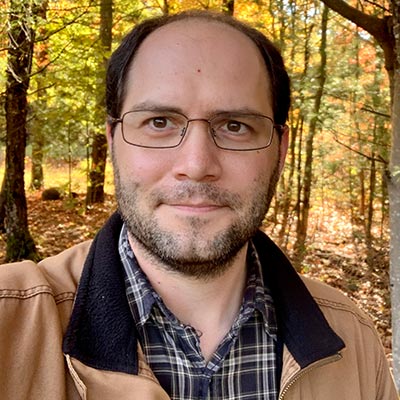
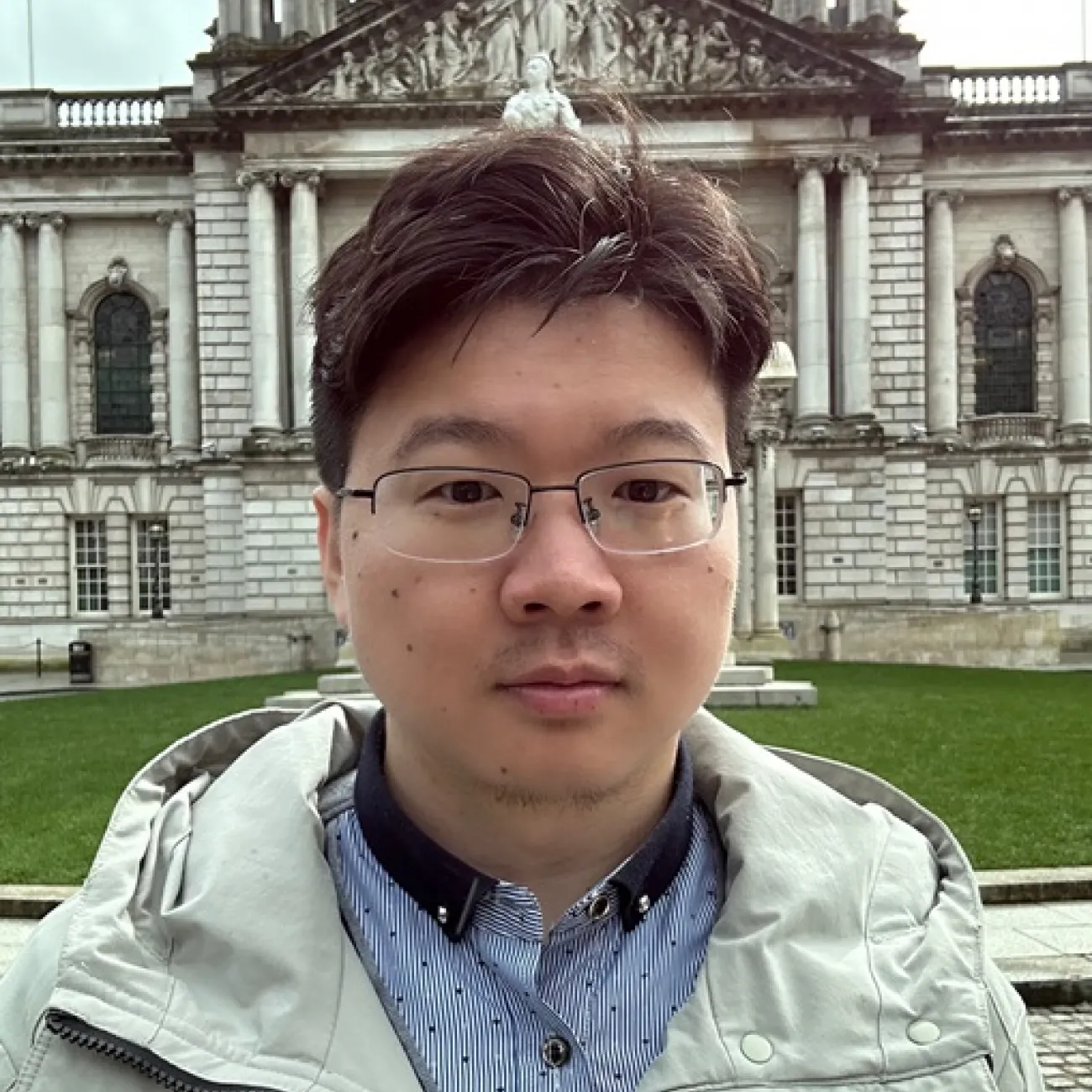
Karl Werder is an Associate Professor in the Section of Digital Business Innovation at the IT University of Copenhagen. His research focuses on resolving inherent trade-offs in digital innovation, emphasizing tensions between qualities like complexity/agency in AI and their impact on trustworthiness. He collaborates internationally, including visiting roles at Laval University (CA) and Georgia State University (US). Associate Editor: Communications of the Association for Information Systems, Business & Information Systems Engineering Journal Editorial Review Board: Decision Sciences Journal His work appears in leading journals across information systems (Journal of Management Information Systems), software engineering (IEEE Transactions on Software Engineering), and management (California Management Review). Recent research spans responsible AI, design methods, and emotional dynamics in technology adoption. Notable awards include the 2025 Honourable Mention Award. Media engagements include IEEE Spectrum and BLOG@CACM, addressing generative AI consistency and licensing errors in public AI datasets.
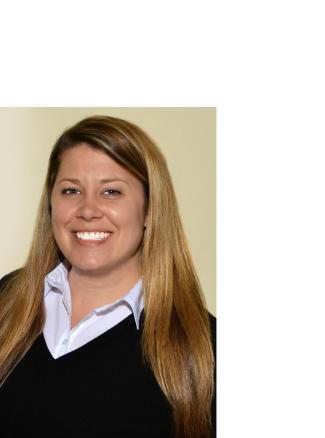
Harpreet Kaur Bassi serves as an Honorary Associate Professor at Norwich Medical School, University of East Anglia, and Senior Teaching Pharmacist at Norfolk and Norwich University Hospital. She holds a 0.6 whole-time equivalent academic appointment while maintaining clinical responsibilities, specializing in medical education and neurology/MFE wards. As Prescribing Theme Lead for the MBBS program, she integrates pharmacology and prescribing education across the curriculum to prepare students for the Prescribing Skills Assessment (PSA). Her academic qualifications include a Master in Pharmacy (MPharm) from Aston University (2004), Post Graduate Clinical Diploma from Keele University (2007), Non-Medical Prescribing certification (2011), and a Post Graduate Certificate in Higher Education Practice from UEA (2014). Professional certifications encompass Registered Pharmacist (GPhC, 2005), Independent Prescribing Pharmacist (2011), and Fellowship of the Higher Education Academy (FHEA, 2015). Bassi's research centers on medication safety through inter-professional education and technology-enhanced learning, with particular focus on gamification in medical training. She pioneered the 'MathaMedic' drug calculations app for medical students (2015) and co-founded the 'Foundation Academic Training Programme Innovation Group' to integrate technology-based learning (SCRIPT Project). Her secondary research strand explores yoga and mindfulness for healthcare professional resilience, evidenced by her role as a Kundalini Yoga instructor and representative for the All-Party Parliamentary Group on Indian Traditional Sciences. Analysis of her 15 most recent publications (2013-2016) reveals consistent emphasis on educational interventions to reduce prescribing errors among medical students and junior doctors. Her work frequently involves pharmacist-physician-nurse collaboration, with recurring themes of insulin administration accuracy, anticoagulation safety, and e-learning module development for site-specific prescribing (eye, skin, ear). Fellow of the Higher Education Academy (FHEA, 2015) Thrombus Innovation Award (3rd place, 2011) for VTE safety initiatives at Queen Elizabeth Hospital Birmingham As a Student Selected Study Tutor and Personal Advisor for MBBS students, Bassi mentors medical trainees in clinical pharmacology while leading curriculum development for prescribing education. Her inter-professional initiatives include co-developing joint medical-pharmacy OSCEs and the SCRIPT Project for computerized prescribing revalidation. She serves as Prescribing Skills Assessment Lead for NANIME, supporting Foundation Year doctors and non-UK medical graduates. Bassi co-founded the Foundation Academic Training Programme Innovation Group and directs the SCRIPT Project for prescribing safety. She actively participates in the Technology Enhanced Learning specialist group (ASME) and represents yoga in healthcare through the UK Yoga Research Group and All-Party Parliamentary Group on Indian Traditional Sciences.
Britta Gemmeke is a Research Assistant in Romance Studies/Applied Linguistics at the University of Siegen since 2020, with a research focus on phonological phenomena in French as a second language (L2). She is affiliated with the Chair of Prof. Dr. Britta Thörle and previously worked at the Chair of Prof. Dr. Guido Mensching at Georg-August-University Göttingen. Her academic expertise spans Constraint-based phonological analysis (Optimality Theory) French liaison and enchaînement in L2 acquisition Digital lexicography Old Occitan in Hebrew script Research highlights include: Development of annotated speech corpora for teaching French phonology Analysis of cross-sectional L2 acquisition data Investigation of syllable-related pronunciation errors in German learners of French She has presented at international conferences including New Sounds (Toronto), GALA (Lisbon), and STaPS, with recent work on gradient symbolic representations in L2 liaison acquisition. Her educational background includes a Master's in TransRomania Studies (Göttingen) and a Bachelor's in French/History (Göttingen).
Åse Gornitzka is a Professor at the University of Oslo, with significant contributions to public policy, EU governance, and organizational theory. She served as Pro-Rector from 2021–2025, focusing on institutional leadership and policy implementation. Her academic work spans comparative higher education systems, knowledge policy, and European administrative practices. Key Research Areas: Public administration, EU governance, organizational change, knowledge policy, Nordic higher education models Notable Work: Analysis of Plan S implementation, EU expert group dynamics, and soft governance mechanisms in education policy Awards: No explicit awards mentioned.
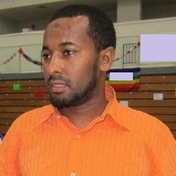
Seid Muhie Yimam is a postdoctoral researcher and Technical Lead at the University of Hamburg's Department of Informatics under the Faculty of Mathematics, Informatics and Natural Sciences. He has been a Research Associate at the Language Technology (LT) lab since 2012, contributing to NLP tools like Par4Sem, WebAnno, and Network of the Day. He also assists in teaching and student supervision. Ph.D. in Natural Language Processing, University of Hamburg (2019) M.Sc. in Human Language Technology and Interfaces, University of Trento (2011) B.Sc. and M.Sc. in Computer Science, Addis Ababa University (2004, 2009) His research focuses on NLP technologies for social applications and low-resource languages, particularly Ethiopian languages like Amharic. He explores hate speech detection, sentiment analysis, machine translation, and semantic writing aids. The 15 most recent publications highlight his work across NLP domains: low-resource language processing, hate speech detection, sentiment analysis, and multilingual tools. Subfields include biomedical annotation, cultural emotion analysis, and interactive annotation frameworks. Seid has developed critical NLP tools such as GermaNER (German NER) and WebAnno (annotation platform). He has supervised master projects and practical NLP classes at the University of Hamburg.
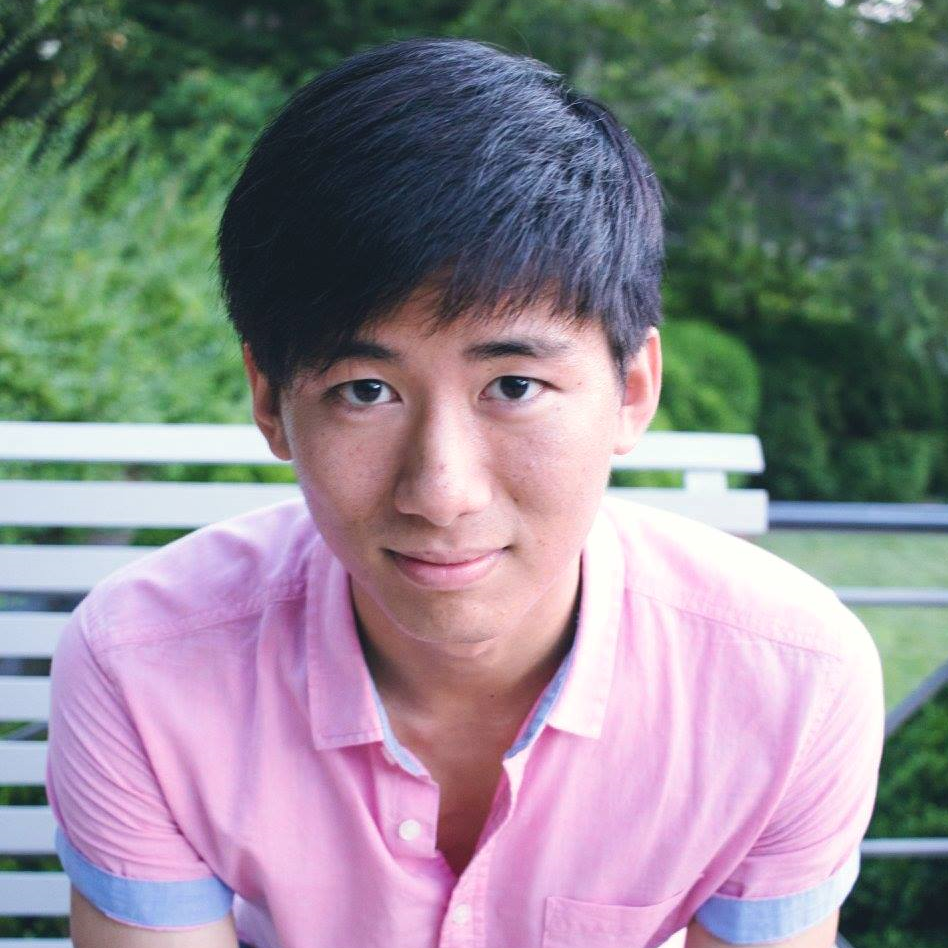
Dr. Kevin J Liang is a Research Scientist at Meta Platforms, Inc. , specializing in Deep Learning , Computer Vision , and 3D Reconstruction . He earned his PhD in Electrical & Computer Engineering from Duke University in 2020, with a dissertation on Deep Automatic Threat Recognition for Airport X-Ray Baggage Screening . His research focuses include: 3D Computer Vision (ICON, Fast3R) Few-Shot Learning (Sylph, HyperMix) Federated Learning (WAFFLe) Object Detection (EgoTracks, Self-Supervised Methods) Recent publications demonstrate his leadership in Egocentric Vision (Ego-Exo4D) and Transformer Applications (GliTr). He has received numerous awards including the E Bayard Halsted Fellowship (2017) and Summa cum laude (2015), and serves on program committees for major conferences like NeurIPS and CVPR . As an educator, he developed and taught tutorials for Duke University's Machine Learning School and Coursera courses, covering TensorFlow, PyTorch, and foundational ML concepts for over 600 students.
Dr. Matteo Pangallo is an Associate Professor of English at Virginia Commonwealth University's College of Humanities and Sciences. A former Junior Fellow in the Society of Fellows at Harvard University, he specializes in Shakespeare studies, early modern drama, theater history, and the history of the book. His research examines the complex connections between plays and their historical contexts, with particular focus on performance practices, authorship, textual transmission, and audience reception. Dr. Pangallo's work often explores "the edges of theatrical and literary history" and how these peripheral areas transform our understanding of central narratives. His influential 2017 monograph Playwriting Playgoers in Shakespeare's Theater examines how working- and middle-class amateur dramatists translated their love of the stage into their own scripts, providing insight into how Shakespeare's audience experienced and understood theatrical performances. Dr. Pangallo's research program includes an anticipated trilogy examining early modern theatrical culture, with Strange Company: Foreign Performers in Medieval and Early Modern England currently in progress and Theatrical Failure in Early Modern England planned. He is also co-editor of Teaching the History of the Book and Shakespeare's Audiences , and serves as founder and editor of the Database of English Manuscript Drama (DEManD), a comprehensive resource for early modern play manuscripts. His scholarly contributions have been recognized with a "Best Essay in Theatre History" prize from Early Theatre , the 2011 Open Paper Competition prize from the Shakespeare Association of America, and a 2022 VCU College of Humanities and Sciences Seed Grant. Dr. Pangallo has also received research support from the Bibliographical Society of the United Kingdom, The Malone Society, and the Shakespeare Association of America. Beyond his academic work, Dr. Pangallo is an active theatrical director and dramaturge who has worked with multiple theater companies, and he maintains interests in book collecting, gardening, and local government service.
Professor Bruce Lincoln is a distinguished academic affiliated with the University of Chicago , specializing in the study of ancient religions, particularly focusing on Pre-Islamic Iranian Religions , Zoroastrianism , and Comparative Religious History . His career spans decades of critical analysis and scholarship in myth, ritual, and the intersection of religion with culture and politics. Lincoln’s research explores Indo-European cosmogony , Achaemenid imperial ideology , Zoroastrian demonology , and ritual practices across ancient societies. His work often engages with critical theory and historiographical debates , emphasizing interdisciplinary approaches. A recurring theme in Lincoln’s recent publications involves the role of the Magi in ancient Persian religion, myth-genre analysis , and political theology . His articles highlight connections between ritual , power structures , and apocalyptic discourses in both historical and contemporary contexts. Lincoln has delivered influential talks on topics such as Pre-Islamic Iranian Religions and the Magi , which were archived in audio format for the Persian Circle at the University of Chicago. His contributions to religious studies and comparative history remain foundational.
Jana Grusková is an Associate Professor of Classical Philology at the Department of Classical and Semitic Philology , Faculty of Arts, Comenius University . Her research focuses on the textual tradition of ancient Greek authors , particularly Demosthenes and Dexippus, and the study of Greek palimpsests using advanced imaging techniques like X-ray fluorescence. Key projects : Wiener Griechischen Palimpsesten (2012–2015), Scythica Vindobonensia (2015–2020), Fast Scanning X-ray Fluorescence Mapping of Palimpsests (2017–2019, 2024), Vienna Herodian Palimpsest (2019–2024), and Vienna Basilica Palimpsests (2024–2027). Research interests span Greek Philology , manuscript studies , and the reception of Greek literature in Slovakia . Her work bridges classical textual analysis with digital methods for recovering hidden texts. 2023 Award : Grand Commander of the Order of the Phoenix (Hellenic Republic) for promoting Greek language and culture. Teaching includes courses on Greek language, syntax, and historiography. She contributes to editorial work for Graecolatina et Orientalia and has reviewed major philological publications.
Tim Schreiter is a doctoral researcher at the Chair of Perception for Intelligent Systems within the Munich Institute of Robotics and Machine Intelligence at Technical University of Munich , joining in 2024. His work focuses on bridging human behavior with robotic systems through advanced sensor networks and machine learning. Education M.Sc. in Automation Engineering, TU Chemnitz (2021) Prior doctoral studies at AASS, Örebro University, Sweden Research Themes explore human-robot interaction , motion prediction , and intent communication . Recent publications highlight applications of large language models , ultra-wideband localization , and multimodal interfaces in industrial robotics and shared environments.
Haodong Wang is an Associate Professor in the Department of Electrical Engineering and Computer Science at Cleveland State University, where he maintains his office in FH 219. He previously served as an Assistant Professor in the Department of Math and Computer Science at Virginia State University before joining Cleveland State. Wang received his educational foundation through a Bachelor of Engineering in Electronic Engineering from Tsinghua University in Beijing, China, followed by a Master of Science in Electrical Engineering from Penn State University, culminating in a Ph.D. in Computer Science from the College of William and Mary in August 2009. His research primarily focuses on wireless and mobile computing security, with particular expertise in cryptographic implementations for resource-constrained sensor networks. Wang's WM-ECC project represents one of the most efficient publicly available ECC implementations for wireless sensor motes, adopted by numerous institutions including USC, UCLA, and Siemens Research Corporation. His work bridges theoretical security concepts with practical implementations for pervasive computing environments. Analysis of his 15 most recent publications reveals a progression from foundational wireless sensor network security work toward broader applications in cloud computing, virtualization, and web security, while maintaining his core expertise in wireless communications. His research consistently demonstrates a practical engineering approach to solving real-world security and performance challenges. Wang has served on technical program committees for major conferences including GLOBECOM 2014 and ICCCN 2014, reflecting his standing in the networking research community. He teaches a comprehensive range of courses at Cleveland State University from foundational programming and data structures to advanced topics in information security, blockchain, and artificial intelligence, demonstrating both breadth and depth in computer science education.
Dr. Ana-Maria Gînsac serves as Scientific Researcher II at the Department of Socio-Human Sciences within the Institute for Interdisciplinary Research and concurrently as Associate Lecturer at the Faculty of Letters (Classical Philology) at Alexandru Ioan Cuza University of Iași. Her scholarly profile integrates historical linguistics, philology, and cultural heritage conservation with emphasis on premodern Romanian textual traditions. Her core research investigates the evolution of the Romanian language during the 16th-17th centuries, specializing in early Bible translations from Greek/Latin/Slavonic sources ( Monumenta linguae Dacoromanorum. Biblia 1688 ) and the adaptation of foreign onomastics in premodern texts (1780-1830). Expertise spans Romanian-Cyrillic paleography, historical lexicography, and digital corpus development for cultural heritage preservation. Current projects analyze psalters, lexicons, and administrative documents through philological and computational lenses. Recent publications demonstrate methodological rigor in examining lexical relics, calque translations, and toponym adaptation across European biblical traditions. Her work reveals systematic patterns in vernacular translation choices (e.g., Psalm 67:26 variants) and grammaticalization clusters in medieval documents, establishing Romania's role in pan-European linguistic transmission networks. Digital humanities approaches feature prominently in corpus alignment and manuscript analysis.
Maren Scull serves as Associate Teaching Professor and Undergraduate Advisor in the Sociology Department within the College of Liberal Arts and Sciences at the University of Colorado Denver. Her academic profile reflects specialization in qualitative approaches to understanding deviant identities and gender performance. Her educational background includes: Ph.D. from Indiana University Bloomington M.A. from Indiana University Bloomington B.A. from University of Denver Dr. Scull's research centers on the intersection of deviance, gender, and sexuality, with particular focus on how individuals navigate stigmatized identities. Her work examines the self-conceptual impacts of engaging in sexual deviance and sex work, analyzing both male exotic dancers and participants in sugar relationships. Through field work and in-depth interviews, she investigates how deviant roles shape identity formation and social interaction while challenging or reinforcing traditional gender norms. Her publication trajectory reveals consistent focus on gender performance in economically-mediated relationships, evolving from studies of male strippers to comprehensive analysis of sugar relationship dynamics. This research program demonstrates methodological coherence through qualitative exploration of how individuals negotiate social stigma while constructing meaningful relationship frameworks that challenge conventional economic and emotional boundaries in intimate partnerships. As Undergraduate Advisor, Dr. Scull guides sociology students through academic planning while teaching core curriculum including Introduction to Sociology, Social Psychology, Sociology of Human Sexuality, and Qualitative Methods courses. Her teaching directly informs and is informed by her research on deviant identities and gender performance.
Dr. Kai Wen is a Postdoctoral Research Fellow in Offshore Geotechnics at the University of Southampton's Department of Civil, Maritime, and Environmental Engineering. Appointed in 2023, he leads the ROBOCONE project funded by EPSRC-SFI and contributes to the Royal Academy of Engineering's Centre of Excellence for Intelligent & Resilient Ocean Engineering (IROE). BSc (2016) - Tianjin University MPhi (2019) - Zhejiang University PhD (2023) - Imperial College London Specializing in offshore foundation optimization, Dr. Wen focuses on seabed-structure interaction, computational geomechanics (FEM/PFEM), and performance-based design of foundations in challenging geomaterials like dense sands and chalk. His work combines finite element modeling, machine learning, and Python scripting for high-cycle loading analysis. Recent article trends show expertise in: 1) Computational modeling of offshore foundations in chalk and sand 2) Robotic site investigation tools 3) Lateral/torsional loading mechanics 4) Load transfer models for offshore piles 5) Wind turbine anchoring systems 6) Time-dependent soil capacity analysis. Marie Skłodowska-Curie Postdoctoral Fellowship (2024) EPSRC Supergen ORE Hub Early Career Researcher Fund Active in technical committees (ISSMGE TC102, TC209) and journal peer-review (Géotechnique, Ocean Engineering, etc.), Dr. Wen collaborates with Professors Dave White and Susan Gourvenec on advancing offshore geotechnical methodologies.
Doan Cam Thi is a Lecturer at the National Institute of Oriental Languages and Civilizations (Inalco) in Paris, specializing in Vietnamese and Southeast Asian literature with a focus on autobiography, gender, war narratives, and modernism. She has directed the "Contemporary Vietnamese Literature" collection at Riveneuve Editions and served on Inalco's Scientific Council and Doctoral School No. 265. Her work bridges academia with public intellectualism through translations, editorial boards, and international conferences. Key Roles : Director of "Contemporary Vietnamese Literature" collection; Co-head of "Gender in Asia" team at IFRAE; Co-director of M1 seminar on South/Southeast Asian literature Research : Vietnamese literature (19th-21st centuries), self-writing, war and literature, women's writing, binary gender construction Her scientific awards include the Golden Word for Translation 2005 (Unesco – AIF). Notably, she translated seminal works like Thuận's Chinatown and Dương Hương's The Pier of Husbandless Women into French, while rendering Duras' The Sorrow into Vietnamese. She has presented at global events, including the Asian Literature Festival in South Korea and the University of Montreal, addressing themes of exile, language, and cultural memory.