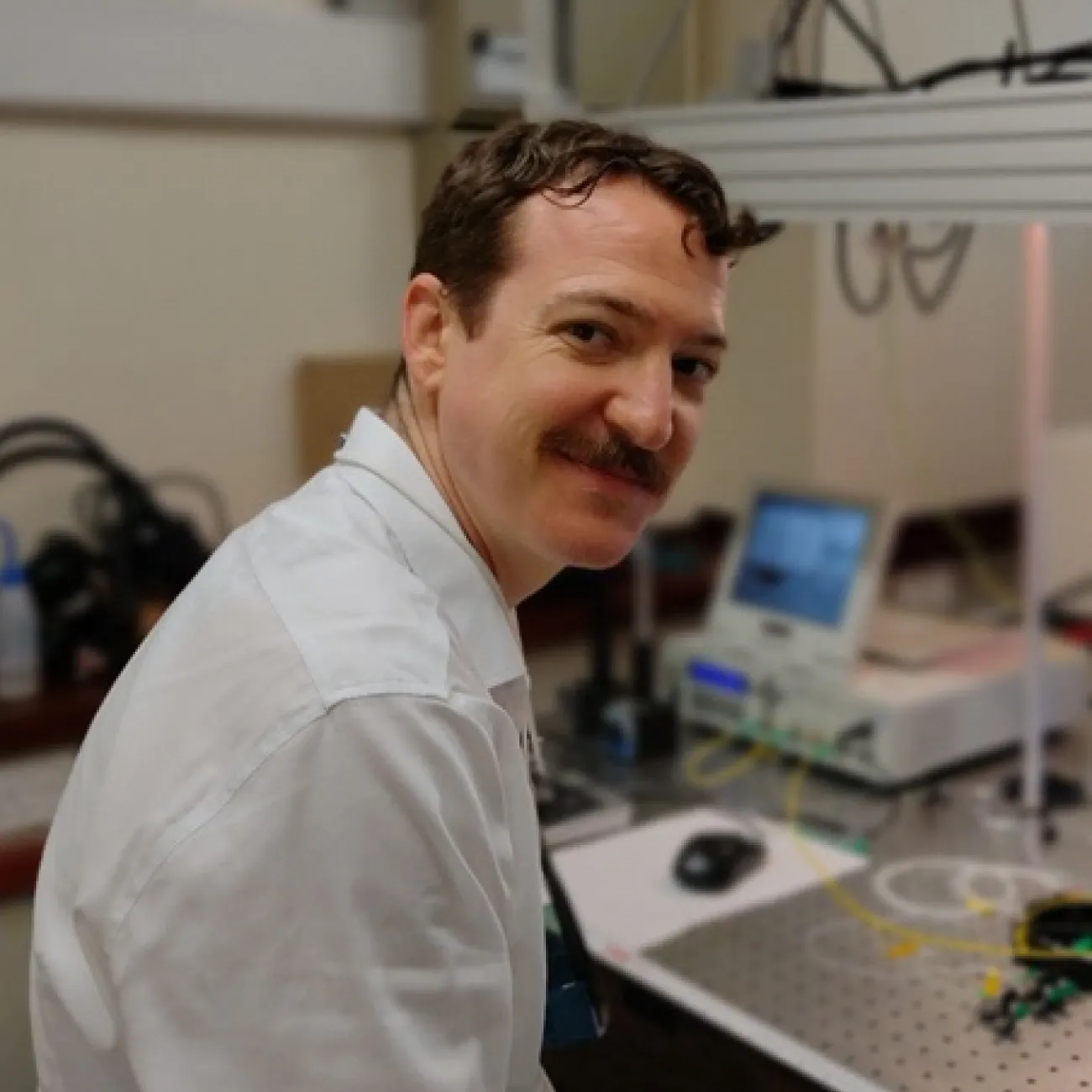
Wenguang Chen is a researcher affiliated with Tsinghua University and Pengcheng Laboratory , specializing in computer science and high-performance computing . His work bridges theoretical advancements with practical applications in domain-specific languages , parallel programming , and machine learning . Research Interests include: Development of modular DSLs for numerical methods (e.g., Mat2Stencil) Performance optimization in distributed and parallel systems Compiler frameworks for privacy-preserving AI (e.g., FHE-based neural network inference) Graph algorithms scaling to trillion-edge datasets Applications of Rust in memory-safe pointer analysis Recent Publications span 2014–2025, focusing on: Parallelization strategies for supercomputing Compiler automation tools Extreme-scale data processing Performance variance diagnosis in production environments
Renata Borovica-Gajic is an Associate Professor in Data Analytics and an ARC DECRA Fellow at the School of Computing and Information Systems (CIS), University of Melbourne. She also serves as Associate Dean (Diversity and Inclusion) for the Faculty of Engineering and IT, demonstrating leadership in both research and academic community development. Her research lies at the intersection of database systems, machine learning, and artificial intelligence, with a vision of creating adaptive, self-driving database engines that optimize query execution in real-time. Her work spans learned indexes, query optimization, data quality, and data-driven traffic optimization, aiming to reduce costs and improve performance in data analytics. The recent publications reflect a strong trend toward integrating machine learning into core database operations—particularly through learned indexes, bandit-based tuning, and reinforcement learning for traffic systems. These works emphasize automation, provable guarantees, and real-time adaptation, showcasing a cohesive research agenda focused on intelligent, self-optimizing data systems. Her scientific excellence is recognized by numerous awards, including: L'Oréal-UNESCO for Women in Science Fellowship (2023) Victorian Young Tall Poppy (2024) Test of Time Award at SIGMOD 2022 Multiple Research and Teaching Excellence Awards from the University of Melbourne Google Research Inclusion Award (2021) She actively mentors PhD students and leads significant research projects funded by the Australian Research Council, Google, and Telstra. Her service includes roles as Associate Editor for SIGMOD Record, conference organization (e.g., aiDM, ADC, VLDB), and leadership in diversity and inclusion initiatives. She has also contributed to influential publications such as a chapter in the 7th edition of Database System Concepts . Her research lab focuses on AI-powered databases, traffic optimization via reinforcement learning, and self-healing data systems, positioning her at the forefront of next-generation data management.
Yoram Alhassid is the Frederick Phineas Rose Professor of Physics in the Department of Physics at Yale University, where he leads a research group focused on theoretical nuclear and many-body physics. His work bridges nuclear physics, mesoscopic systems, and ultracold atomic gases, using advanced computational methods such as quantum Monte Carlo and the configuration-interaction shell model. His research interests include the nuclear many-body problem, femtoscience and nanoscience (nuclei, quantum dots, nanoparticles), and cold atomic Fermi gases. He has developed and applied the shell model Monte Carlo (SMMC) method to study statistical and collective properties of nuclei, such as level densities, deformation, and pairing correlations. He has extended these methods to study cold Fermi gases, particularly in the unitary regime, where he has investigated pseudogap phenomena, heat capacity, and pairing gaps. The recent publications highlight a strong focus on nuclear level densities, γ-ray strength functions, deformation effects, and quantum Monte Carlo methodologies. There is a clear trend toward microscopic, ab initio calculations of nuclear and many-body properties, with increasing attention to odd-mass and deformed nuclei, as well as the interplay between pairing and collective phenomena. Scientific Awards: Frederick Phineas Rose Professor of Physics Alhassid advises students and postdoctoral researchers, as evidenced by numerous co-authored publications. His group has developed advanced computational tools and codes (e.g., HF-SHELL) for finite-temperature mean-field and shell model calculations. The research is supported by high-performance computing and has implications for nuclear astrophysics, radioactive beam facilities, and quantum simulation with cold atoms. His lab focuses on theoretical and computational modeling of finite-size quantum many-body systems, with close collaborations across nuclear theory, condensed matter, and atomic physics. The group emphasizes method development, benchmarking against mean-field theories, and extracting model-independent signatures of physical phenomena such as deformation and pairing.
Mauro Bonfanti is a Fixed-term Assistant Professor at the Department of Mechanical and Aerospace Engineering (DIMEAS) at Politecnico di Torino, Italy. His academic work focuses on wave energy conversion systems, mechatronics, and applied mechanics within the field of industrial and information engineering. Dr. Bonfanti's primary research interests include wave energy conversion systems, system identification, optimal control, mechatronics, and renewable energy systems. His work centers on developing advanced control strategies for wave energy converters, with particular emphasis on improving energy extraction efficiency through innovative mechanical designs and control algorithms. He has made significant contributions to the understanding of wave-structure interactions, hydrodynamic modeling of floating bodies, and optimization of wave energy converter systems under various sea conditions. His research bridges theoretical modeling with practical implementation, often involving high-fidelity numerical simulations validated through experimental testing. His publication record demonstrates a strong focus on advancing wave energy conversion technology, with particular emphasis on control systems, hydrodynamic modeling, and optimization techniques. The research shows progression from fundamental modeling approaches to increasingly sophisticated control strategies and system integration. Recent work has expanded to include hybrid renewable energy systems that combine wave and wind energy technologies. Dr. Bonfanti serves as a Scientific Responsible for several research projects including OCEANGLIDE, AQUALEV, and WISE, which focus on innovative wave energy conversion technologies. He holds multiple patents related to wave energy conversion systems, including the WISE (Water-air Injectable Swath Elevator) and AQUALEV magnetic support systems. He actively supervises PhD students including Alessandro Brusasco, Matteo Mastorakis, Francesco Balestrieri, and Domenico Edoardo Sfasciamuro, guiding research in sustainable materials, mechanical engineering, and wave energy conversion systems. His teaching responsibilities include courses on System Identification and Optimal Control of Wave Energy Conversion Systems, as well as Mechatronics across multiple academic years. Dr. Bonfanti is a member of the Mechatronics and Servosystems research group at DIMEAS, where he collaborates on projects related to marine renewable energy systems and advanced control technologies.
Thomas C. Rich serves as Professor of Pharmacology and Director of the Bioimaging Core Facility at the University of South Alabama's Frederick P. Whiddon College of Medicine, where he leads innovative research in cellular signaling dynamics and advanced imaging technologies. His educational background includes: Baccalaureate with Honors in Engineering from Georgia Institute of Technology Masters in Aerospace Engineering from Georgia Institute of Technology Ph.D. in Biomedical Engineering from Vanderbilt University Dr. Rich's research focuses on cellular signaling specificity , particularly cAMP pathways and phosphodiesterase regulation . His laboratory pioneered single-cell cAMP sensors and excitation-scanning hyperspectral imaging (HSI) techniques enabling 100-fold signal-to-noise improvements over traditional FRET. Key contributions include mapping cAMP gradients in pulmonary endothelial cells and airway smooth muscle, revealing previously undetectable signaling microdomains through collaborations with Dr. Silas Leavesley and Dr. Michael Francis. Analysis of his 14 publications (2015-2024) shows consistent innovation in quantitative imaging and signal transduction , with increasing emphasis on multi-parametric measurement (cAMP, Ca2+, NO, cGMP) and real-time dynamic tracking . His work spans fundamental enzymology to clinical applications, particularly in respiratory physiology and endoscopic technology development. No scientific awards were mentioned in the provided documentation. While specific advisees and grant details are not documented, Dr. Rich's research program demonstrates extensive collaboration through co-authorship patterns and facility leadership. His Bioimaging Core Facility serves as a hub for interdisciplinary projects requiring advanced fluorescence measurement capabilities. Dr. Rich leads the Bioimaging Core Facility in a collaborative research ecosystem centered around hyperspectral imaging development. His team works closely with Dr. Leavesley on optical system engineering and Dr. Francis on dynamic region-of-interest algorithms, creating an integrated approach to overcome limitations in cellular signal measurement within the 'turbulent maelstrom of the cellular environment'.
Dr. Sandra Diaz Pier is a Scientific Lead at the Jülich Supercomputing Centre (JSC) within the Jülich Research Centre , Germany. Specializing in computational neuroscience , high performance computing (HPC) , and machine learning , she bridges neuroscience and advanced computational methods through her research. Education: B.Sc. in Electronic Systems Engineering, Mexico M.Sc. in Computer Science (focus: machine learning, quantum computing), Mexico Second M.Sc. in Electrical Engineering, Ontario, Canada Ph.D. in Computer Science, Germany (2021) Her research focuses on modeling and simulating brain dynamics and plasticity at multiple scales, leveraging HPC to accelerate large-scale neural network simulations. She actively contributes to EU projects like the Human Brain Project (HBP) , Virtual Brain Cloud , and EBRAINS 2.0 , emphasizing infrastructure development and educational training. Her work includes open-source tools such as the NEST simulator , The Virtual Brain , and L2L , enabling efficient parameter exploration and multiscale co-simulation frameworks. The 15 most recent publications highlight her interdisciplinary approach, spanning topics from quantum computing in biomolecular simulations to neural plasticity algorithms and cloud-based brain modeling . These articles reflect her expertise in integrating machine learning , multi-scale simulation , and HPC infrastructure for neuroscience challenges, including seizure propagation, Parkinson’s disease progression, and swarm intelligence in spiking networks. She leads technical coordination in projects like EBRAINS and serves as a task leader in the HBP infrastructure work package , while also organizing workshops and hackathons for open-source tools. Her role involves supporting domain scientists through methodological research and workflow optimization for brain simulations.
Dr. Gergely Kocsis serves as an Associate Professor at the University of Debrecen's Faculty of Informatics, Department of Informatics Systems and Networks. His office is located in the Faculty of Informatics building at 4028 Debrecen, Kassai út 26, ground floor, IF13 (Lecturers' room), with contact email kocsis.gergely@inf.unideb.hu and central telephone +36 52 512 900 75013. Dr. Kocsis's research program focuses on: Information spreading phenomena Agent-based and individual-based simulations Cellular automata applications Network structure and dynamics His scholarly output reveals a sophisticated research trajectory evolving from foundational work on cellular automata modeling of social dynamics (2007-2014) to contemporary investigations of transportation networks, VANETs, and AI applications. The 2023-2025 publications demonstrate particular expertise in network extraction methodologies, containerized computing environments, and the application of generative AI to productivity challenges. His work consistently applies computational modeling approaches to understand complex spreading phenomena across diverse network structures. Dr. Kocsis maintains comprehensive scientific profiles across major academic platforms including Google Scholar, ResearchGate, ORCID, Scopus, and Web of Science, demonstrating active participation in the international research community. His departmental colleagues work in complementary areas such as complex networks, embedded systems, and neural networks, suggesting rich collaborative opportunities within the Faculty of Informatics.
Sarah Neuwirth is a tenured Professor for Computer Science at Johannes Gutenberg University Mainz (JGU) and a Visiting Researcher at the Jülich Supercomputing Centre. She manages JGU's High Performance Computing (HPC) division, coordinates regional/national HPC activities, and represents JGU in NHR, Gauss-Allianz, and HPC committees. Education : PhD (Dr. rer. nat.) in Computer Science (2018), Heidelberg University Diplom in Computer Science (2012), University of Mannheim Bachelor of Science in Computer Science (2010), University of Mannheim Research Interests : Parallel File and Storage Systems Modular Supercomputing (resource disaggregation/virtualization) Performance Engineering High Performance Computing Networking Reproducible Benchmarking Parallel I/O Publications Trends : Her work focuses on HPC performance modeling, parallel I/O optimization, modular supercomputing, network characterization, and reproducible benchmarks. Key themes include resource disaggregation, automated workflows, and data-intensive distributed applications. Scientific Awards : 2023 PRACE Ada Lovelace Award for HPC ZONTA Science Award 2019 Grants & Leadership : She leads the High Performance Computing division at JGU, participated in European DEEP projects, and serves on SC conference committees.
Richard S. Lewis serves as Professor of Neuroscience and Psychological Science at Pomona College, where he has maintained an active research program since 1985. Currently on leave for Fall 2025, he directs a laboratory specializing in cultural neuroscience using electrophysiology and functional near-infrared spectroscopy (fNIRS). His work examines how cultural frameworks shape neural processing of social and physical environments, with particular focus on self-construal differences between East Asian and European American populations. His educational foundation includes a Ph.D. from Michigan State University, Master of Arts from California State University, Los Angeles, and Bachelor of Science from University of California, Los Angeles. This training underpins his interdisciplinary approach bridging psychology, neuroscience, and cultural studies. Dr. Lewis's research program centers on three interconnected domains: (1) cultural modulation of neural responses to social stimuli using N400 and P3 event-related potentials; (2) acute/chronic stress effects on frontal EEG asymmetry and cognitive performance; and (3) neurocognitive sequelae of mild traumatic brain injury. His laboratory actively investigates how cultural background influences neural processing of contextual incongruities and emotional cues, revealing fundamental mechanisms of sociocultural cognition. His publication trajectory since 2006 demonstrates consistent advancement in cultural neuroscience methodology, increasingly incorporating ecological validity through naturalistic paradigms. The work shows progressive refinement from basic ERP studies of cultural priming to complex investigations of stress-cognition interactions in real-world academic settings, with recent emphasis on developing virtual reality methodologies for social neuroscience. Scientific recognition includes: Wig Distinguished Professorship Award for Excellence in Teaching (Pomona College, 1988 & 2011) National Institute of Mental Health Postdoctoral Fellowship (1984-1986) Research funding reflects his program's significance through: National Science Foundation Grant: "Stress, Stages of Memory, and Event-Related Potentials" (2002-2006) National Science Foundation MRI Grant: "Establishment of High-Density ERP Laboratory" (2001-2004) National Institutes of Health Grant: "Neurobehavioral Sequelae of Mild Pediatric TBI" (1989-1991) He actively mentors undergraduate researchers in his Pomona College laboratory, with students contributing to publications across cultural neuroscience and stress physiology domains. His laboratory maintains specialized facilities including high-density EEG systems and fNIRS equipment, recently enhanced through NSF instrumentation grants. Current work pioneers virtual reality integration to create ecologically valid social scenarios while preserving experimental control, aiming to uncover deeper sociocultural neural mechanisms through innovative methodology.
Professor Richard Morgan is an academic at the University of Queensland's School of Mechanical and Mining Engineering, where he served as Director of the Centre for Hypersonics from 1997 to 2021. His research specializes in hypervelocity aerothermodynamics, scramjet propulsion, and advanced hypersonic testing facilities. He lectures in mechanical and aerospace engineering and maintains an extensive international research program. His research focuses on: Development of hypervelocity impulsive facilities (including the 'X' series expansion tubes) Hypersonic aero-thermo-dynamics and radiation physics Scramjet propulsion systems for high-speed flight Planetary entry phenomena including ablation and radiation coupling Superorbital ground testing methodologies Analysis of recent publications reveals a dominant focus on experimental hypersonics, particularly in expansion tube facility development, radiation measurement techniques, planetary entry simulations, and aerodynamic heating. His work consistently addresses challenges in recreating extreme flight conditions for spacecraft and missile technologies. Awards and honors include: NASA Ames Honour Award (2010) for contributions to Hayabusa asteroid sample return mission observations UQ Excellence in Research Higher Degree Supervision Award (2012) He leads significant research collaborations with DSTG, NASA, ESA, Oxford University, and Ecole Centrale Paris, supported by continuous ARC funding since 1990 including current Discovery grants. His laboratory develops cutting-edge facilities like the X3 expansion tube and T6 Stalker Tunnel for hypersonic testing.
Professor Vincent Wheatley is a Professor at the School of Mechanical and Mining Engineering, University of Queensland , and Co-Director of the Centre for Hypersonics . His research focuses on supersonic plasma flows , hypersonics , and computational fluid dynamics , with applications in inertial confinement fusion and scramjet engines for space propulsion. Education: PhD in Aeronautics (2005), California Institute of Technology MEngSc (Mechanical), University of Queensland BE (Mechanical and Space), University of Queensland His recent work (2025–2021) explores scramjet combustion dynamics (e.g., hydrogen/ethylene fuel injection), plasma instabilities in multi-fluid models, and hypersonic noise and shock wave interactions . These studies employ direct numerical simulation (DNS) , large eddy simulation (LES) , and reacting flow modeling . Scientific Awards: Australia's Research Field Leader in Aerospace and Aviation Engineering (2018) 2017 Australian Award for University Teaching – Award for Teaching Excellence Professor Wheatley supervises projects on plasma fuel engines and hypersonic propulsion , supported by grants from the Australian Research Council (ARC) and Commonwealth Defence Science and Technology Group . His team collaborates on multi-fluid plasma simulation and scramjet optimization .
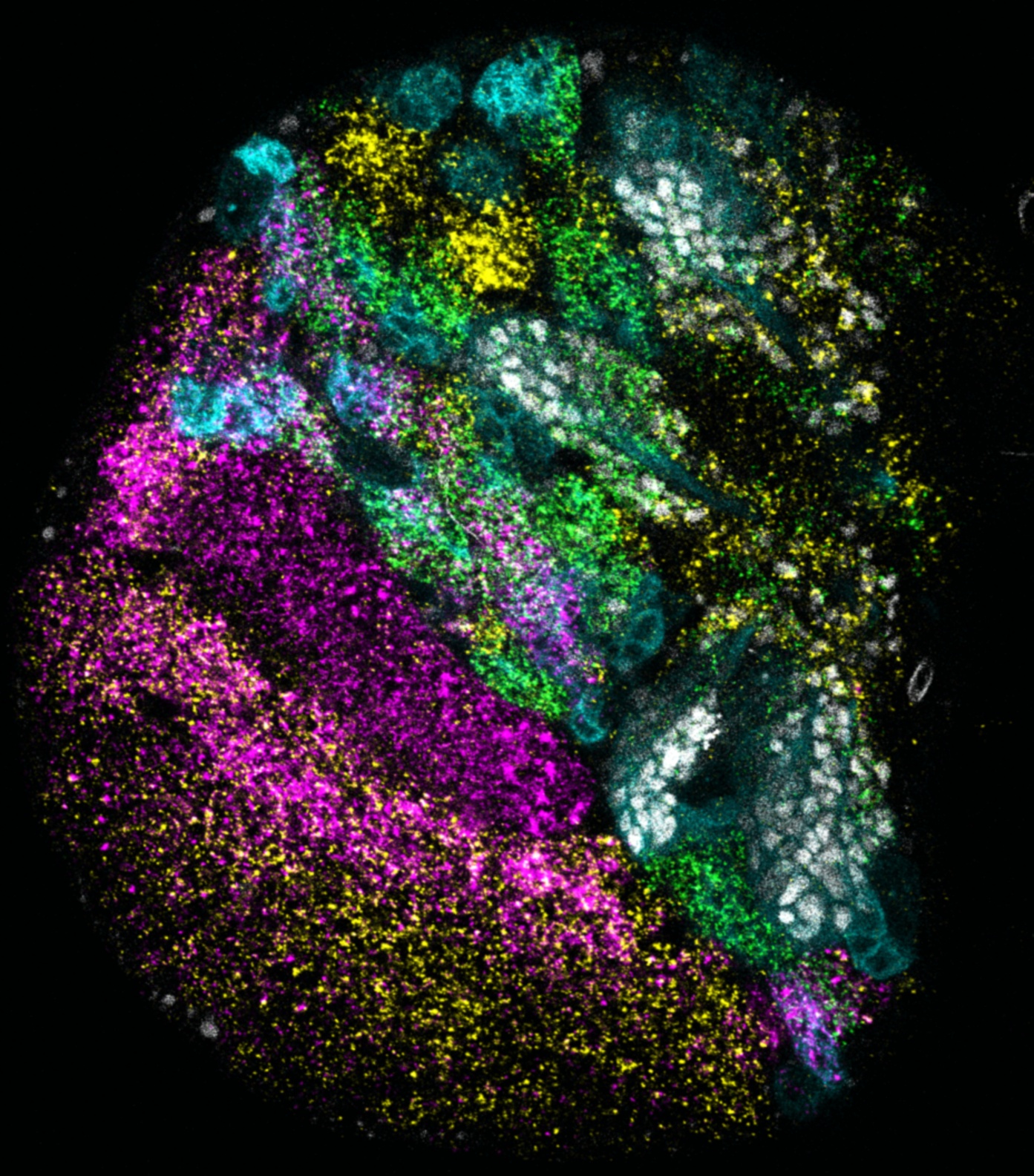
Dawen Cai, Ph.D., is an Associate Professor at the University of Michigan Medical School in the Department of Cell and Developmental Biology , with a secondary affiliation in the Biophysics Department under the College of Literature, Science, and the Arts (LS&A). He is also affiliated with the Neuroscience Graduate Program at the Medical School. His research focuses on integrating computational and experimental approaches to study neuronal subtype determination using scRNA-seq and in situ analysis. His research explores the intersection of RNA biology, neuroscience, and bioinformatics. He develops tools for multispectral imaging and lineage tracing to decode neural development and connectivity in Drosophila and mammalian models. His work combines single-cell transcriptomics with advanced microscopy to identify marker genes and model neuronal architecture. The articles reflect a strong interdisciplinary focus on neuroscience and biomedical imaging. Recent publications highlight innovations in 3D imaging technologies, image compression algorithms, and machine learning applications for medical image segmentation. These works emphasize scalable solutions for high-resolution data analysis, advancing tools for neurophysiology, and leveraging RNA sequencing to map neural development. No scientific awards were explicitly mentioned in the text. Dawen Cai actively recruits PhD students and postdoctoral fellows for the Cai Lab, prioritizing candidates with wet-lab skills, bioinformatics expertise, and experience in quantitative image processing. His lab emphasizes training in interdisciplinary research, paper/grant writing, and critical thinking.
Florin Rusu is a Professor and Chair of the Department of Computer Science and Engineering at the University of California Merced, School of Engineering. He joined UC Merced in 2010 and has served in multiple administrative positions including as chair of the School of Engineering's Executive Committee and currently as chair of the Department of Computer Science and Engineering. His educational background includes a B.Eng. degree from the Technical University of Cluj-Napoca, Faculty of Automation and Computer Science (2004), and M.Sc. and Ph.D. degrees from the University of Florida in Computer Science (2008 and 2009). Rusu's research focuses on database systems and large-scale data management, with particular emphasis on designing infrastructure for Big Data analytics. His specific research areas include query processing and optimization, approximate and randomized algorithms, scalable machine learning, multi-dimensional array data management, and in-situ data processing. His work bridges theoretical aspects with practical system design issues. His research has been funded by multiple prestigious organizations including the US Department of Energy (DOE), National Science Foundation (NSF), California Department of Education, Hellman Foundation, LogicBlox, and TigerGraph. His recent publications show a continued focus on database query optimization, particularly around cardinality estimation, sketch-based methods, and innovative approaches to query plan generation. His work spans both theoretical contributions and practical implementations, with several projects transitioning into real-world database systems. Scientific Awards: DOE Early Career Award (2014) Hellman Faculty Fellowship (2013) Rusu has advised numerous graduate students through their Ph.D. and Master's programs, with many going on to successful careers at major tech companies (Google, Meta, TigerGraph) and academic positions. His research group has secured substantial funding from NSF (COMPASS project 2020-2025), DOE Early Career Award (2014-2021), TigerGraph, California Department of Education, and Hellman Foundation. His research group maintains active projects in Database Query Optimization, Scalable Gradient Descent Optimization, Array Databases, In-Situ Data Processing, GLADE, Online Aggregation, and Sketches, demonstrating a comprehensive research program spanning multiple aspects of database systems and large-scale data management.
Austin Taranta serves as a Professor at the University of Southampton's Optoelectronics Research Centre (ORC), where he leads research and enterprise initiatives within the Hollow Core Fibres Group. Since joining the ORC in 2016, he has driven advancements in hollow core fibre technology for defence and space applications, authored over 50 peer-reviewed publications, secured significant research funding, and manages key industrial partnerships including a Microsoft research contract. His work bridges fundamental fibre physics with practical sensor development. His academic background includes a BSc in Chemical Engineering from the Massachusetts Institute of Technology (2006) and a PhD in Optoelectronics from the University of Southampton (2024). Prior to academia, he gained industry experience as Senior Optical Engineer at Honeywell Aerospace's Strategic Sensors Group developing fibre-optic gyroscopes. Taranta's research focuses on exploiting the unique properties of hollow core fibres for next-generation sensing systems. Key areas include: Hollow core antiresonant fibre guidance physics Gas pressure and temperature dynamics in hollow fibres Polarization behavior in nodeless antiresonant structures Novel sensor architectures for defence applications Bend-insensitive fibre designs for telecom integration Non-destructive characterization methodologies Analysis of his 2023-2024 publications reveals concentrated efforts on solving manufacturing challenges, environmental stability issues, and sensor integration barriers in hollow core fibre technology. His work demonstrates strong industry alignment through Microsoft collaborations and defence-focused applications, particularly in distributed sensing systems and next-generation gyroscopes. No specific scientific awards or medals are listed in the provided text, though his profile notes responsibility for multiple research awards and patent holdings including optical time domain reflectometry innovations. Taranta actively supervises PhD candidates Amalie Gjelsvik and Chiang Ping Saw (part-time), while managing industrial research contracts and academic partnerships. His funding portfolio includes strategic defence projects through Honeywell Aerospace and Microsoft collaborations, supporting the Hollow Core Fibres Group's translational research pipeline. He leads the Hollow Core Fibres Group within the ORC, focusing on commercializing hollow core antiresonant fibre technology through the Hollow Core Fibres Group. Current work targets polarization control, environmental resilience, and sensor integration with industry partners to develop deployable systems for aerospace and defence sectors.
Nikos Giatrakos is an Assistant Professor at the School of Electronic & Computer Engineering, Technical University of Crete, and a core member of the Software Technology and Network Applications Lab (SoftNet) . His work bridges Big Data systems, IoT, and advanced analytics, with a focus on real-time processing and scalable architectures. Previously, he served as a postdoctoral researcher at the same laboratory. Education PhD in Computer Science, University of Piraeus (2012) Postgraduate Diploma in Information Systems, Athens University of Economics and Business (2008) BSc in Computer Science, University of Piraeus (2006) Research Focus : Nikos specializes in software architectures for Big Data streaming, including Distributed Big Data Processing , Federated Machine Learning , Cloud-to-Edge Data Management , and Approximate Query Processing . His work has also advanced Complex Event Processing and Outlier Detection in decentralized environments. Scientific Contributions : His research has led to the DAG* workflow optimizer for IoT, the SuBiTO framework for real-time neural learning, and the INFORE approach for cross-platform analytics. He received the Best System Demonstration Award at ACM CIKM 2020 for INforE. Academic Leadership : Nikos teaches Object-Oriented Programming, Data Science, and Distributed Systems. He has supervised numerous European and national grants as Principal Investigator and served on program committees for top-tier conferences like SIGMOD, VLDB, and DEBS.