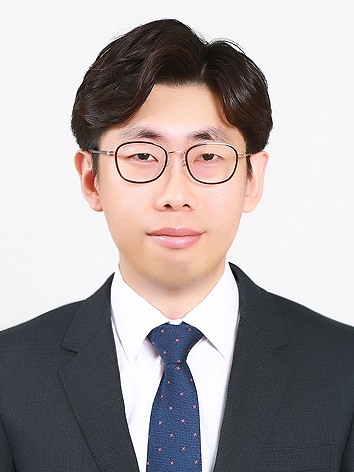
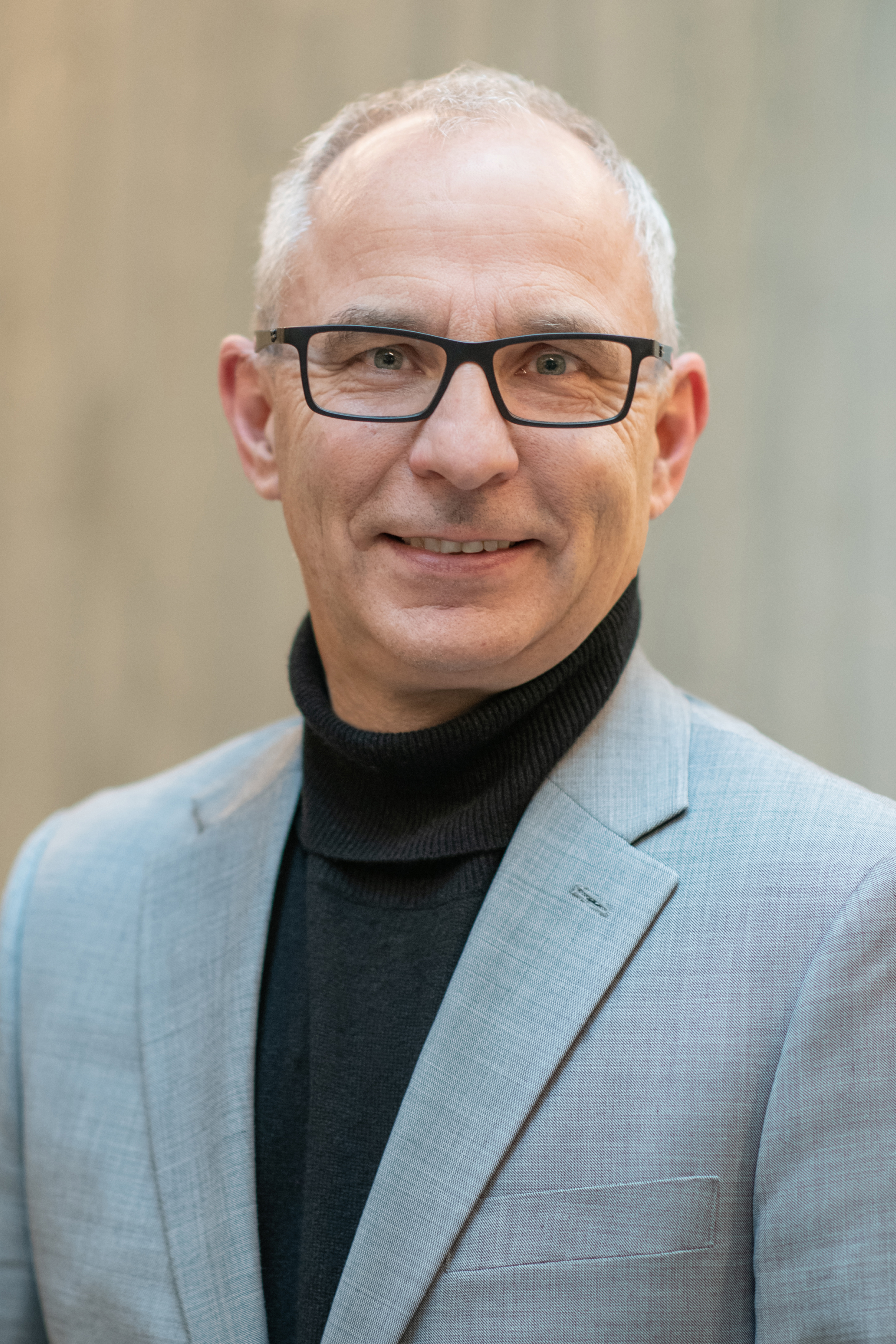
Inho Hong is an Assistant Professor at the Graduate School of Data Science, Chonnam National University (Gwangju, Korea), leading the Computational Social Science and Complex Systems Lab (CSL). His research explores socio-spatial systems through data science and complex systems methods, focusing on urban dynamics, human mobility, and AI's societal impact. Education: Ph.D. in Physics (2019), Pohang University of Science and Technology (POSTECH) M.S. in Physics (2012), POSTECH B.S. in Physics (2010), POSTECH Research Interests: Urban Data Science : Analyzing urban scaling laws and innovation pathways Human Mobility : Modeling intra-city movement patterns Social Impact of AI : Ethical and societal challenges Natural Language Processing : Text embedding for policy analysis Complex Systems : Network approaches to protests and epidemics Recent Work Trends: Over 2020–2022, his articles centered on pandemic control, protest networks, and urban green spaces' psychological impact. Recent 2023–2025 work extends to vocational education analysis and mobility laws within cities. His methods combine network science with large-scale data analytics. Awards: Young Statistical Physicist Award (Korean Physical Society, 2021) Best Paper Award (Korea Computer Congress 2021) Global Ph.D. Fellowship (NRF, 2014–2017) Grants & Labs: Current lab focuses on socio-spatial systems. Past roles include Associate Research Scientist at Max Planck Institute for Human Development (2020–2023) and Postdoctoral Fellowships at POSTECH and APCTP.
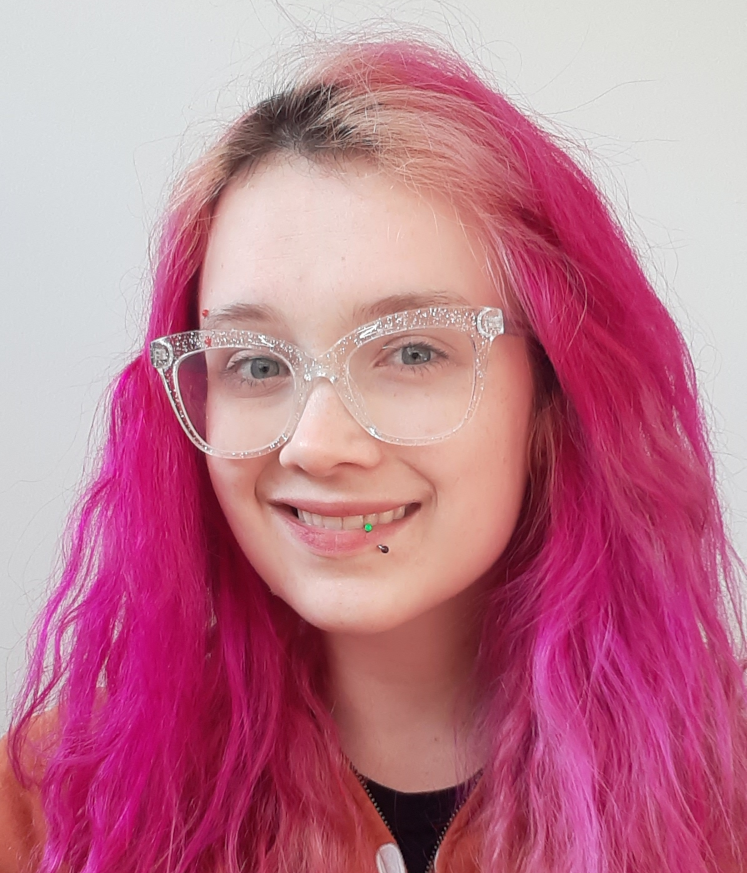
Maggie Miller is a mathematician specializing in low-dimensional topology, currently serving as an NSF Postdoctoral Fellow at the Massachusetts Institute of Technology. She previously held a position at the University of Texas, Austin, and earned her Ph.D. in 2020 from Princeton University under the supervision of David Gabai. Education: Ph.D. in Mathematics (Princeton University, 2020) Her research focuses on 3- and 4-manifolds, leveraging algebraic, combinatorial, geometric, and topological techniques to solve long-standing problems. Key contributions include developing a theory of singular fibrations in 4-manifolds and resolving a 35-year-old problem by Casson and Gordon related to fibered ribbon knots. She actively collaborates on diverse topics such as topological versus smooth isotopy, taut foliations, concordance, trisections, and knot Floer homology. Maggie's work intersects multiple subfields within topology, including Knot Theory , Manifold Theory , and Differential Topology , with a strong emphasis on geometric structures and their applications. While her recent publications aren't listed here, her research trends center on topological invariants and their implications in mathematical physics. Scientific Awards: Clay Research Fellow
Prof. Dr. Johanna Heitzer is a University Professor for Mathematics Education at RWTH Aachen University since 2011. She leads the Teaching and Research Area of Mathematics Education within the university's mathematics department. Her office is located in Room 352 of the Kreuzherrenstraße 2 building in Aachen. She serves as co-editor of the journal 'mathematik lehren,' co-author of the 'Mathematics - New Ways' textbook series, and holds numerous committee positions including membership in the Faculty Advisory Board and Structural Commission of the Center Council. 1989: High school diploma 1989-1994: Mathematics and Physics Teacher Training at RWTH Aachen 1994-1996: Traineeship at Aachen Teacher Training College 1997: Research assistant at University of Münster 1998-2007: Mathematics and Physics teacher at Korschenbroich Gymnasium 2007-2010: Scientific assistant and doctorate at RWTH Aachen 2011-present: University Professor at RWTH Aachen Professor Heitzer's research focuses on the training and further education of mathematics teachers, development of contemporary teaching materials, applied and interdisciplinary mathematics, and the transition from school to university. Her work emphasizes concept formation, linguistic communication in mathematics, and the historical development of mathematical ideas as teaching resources. She investigates mathematics-specific learning and cognitive processes through multiple research projects including the Aachen school-university project iMPACt. Her recent scholarly output demonstrates a strong trend toward integrating digital technologies in mathematics education, particularly 3D printing and e-learning tools. She has increasingly focused on the social relevance of mathematics, exploring concepts of fairness, sustainability, and citizen empowerment through mathematical modeling. Her work bridges theoretical mathematics education with practical classroom applications, maintaining a strong connection to both historical perspectives and contemporary educational challenges. Special prize from Sparkasse Bad Hersfeld-Rotenburg for best mathematics Abitur (1989) Borchers Plaque for doctoral examinations passed with distinction (2011) DMV honor as Mathemaker of the Month (2013) Brigitte Gilles Prize 2013 for the MINT-L4 Center Professor Heitzer has supervised numerous doctoral students, serving as primary or secondary advisor for at least nine PhD dissertations between 2016-2021. Her research projects include the School-University Project MathePlus Aachen (iMPACt), e-Learning 'Mathematics for Civil Engineers,' and the development of mathematics items for StudiChecks NRW. She has secured funding through the Quality Initiative for Teacher Education (both phases) and participates in the ComeIn project focused on digitalization in teacher training. Her grants consistently emphasize practical applications of mathematics education research with direct impact on classroom practice. As a founding member of the MINT-L4@RWTH center and initiator of the working group Mathematical Education for Sustainable Development, Professor Heitzer has established significant collaborative structures. She participates in the Subject Didactics Forum at the Teacher Training Center of RWTH Aachen and has served in leadership roles including Chair of the Center Council (2014-2016) and Board member of the Teacher Training Center (2014-2017). Her work connects with national and international networks through her membership in the Society for Mathematics Education (GDM), the German Association for Mathematics and Science Education (MNU), and the German Mathematical Society (DMV).
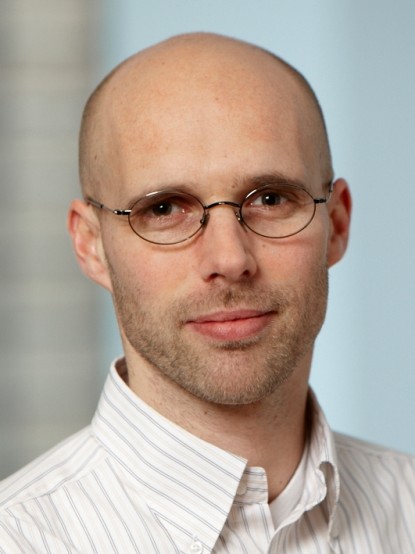
Prof. Heinz Koeppl is a Professor in the Department of Electrical Engineering and Information Technology at TU Darmstadt. His research focuses on self-organizing systems, systems biology, and control theory, with applications in synthetic biology, robotics, and stochastic processes. He explores interdisciplinary topics such as genetic circuit design, UAV swarm dynamics, and machine learning-driven modeling of biochemical systems. Key research areas include the development of deep learning frameworks for kinetic modeling, Bayesian optimization for riboswitch design, and mean field control theory for sparse networks. His work bridges theoretical foundations with practical engineering solutions, addressing challenges in molecular communication, gene regulation, and robotic swarm coordination. Publications from 2023–2025 highlight advancements in bio-inspired algorithms, swarm intelligence, and computational biology. Notable contributions include studies on RNA-based circuits, active matter dynamics, and optimization strategies for large-scale systems. His research emphasizes interdisciplinary collaboration, leveraging tools from electrical engineering, mathematics, and life sciences. No scientific awards are explicitly listed in the provided text. Advising and grants details are not available. Prof. Koeppl’s lab focuses on integrating systems biology approaches with engineering principles to solve complex problems in healthcare, environmental sustainability, and technological innovation.
Prof. Dr. Frank T. Piller is a University Professor and Co-Leader of the Institute for Technology and Innovation Management (TIM) at RWTH Aachen University, where he also serves as Academic Director of the Executive MBA program at RWTH Business School. He leads a research team of approximately 30 doctoral students, 5 postdocs, and over 20 student researchers within the TIME Research Area of the School of Business and Economics. His educational background includes a doctoral degree in Operations Management from the University of Würzburg (1999) and a Habilitation degree from TUM Business School (2004) on "Innovation and Value Co-Creation." Prior to joining RWTH Aachen in 2007, he was a Research Fellow at MIT Sloan School of Management and faculty at TUM Business School. Prof. Piller is recognized as one of the world's leading experts in customer-centered value creation, specializing in mass customization, personalization, and customer co-creation. His current research focuses on how established companies can transform in response to disruptive business model innovations, with particular emphasis on digital transformation (Industry 4.0), AI-augmented innovation, and sustainable business models. He is particularly known for his work on innovation ecosystems, platform-based business models, and stakeholder-oriented technology development. His recent publications demonstrate a clear trajectory toward integrating artificial intelligence with traditional innovation management frameworks, exploring how AI transforms manufacturing systems, innovation processes, and business models. His work increasingly addresses the challenges of digital transformation in established industries while maintaining focus on customer co-creation and mass customization principles. His scientific achievements have been recognized with numerous awards: Co-Creation Award of the PDMA Nomination for "Innovating Innovation" Prize by Harvard Business Review and McKinsey "Lecturer of the Year" by Executive MBA students at TU Munich RWTH Aachen Rector's Prize for Excellent Teaching (since 2010) Grant for innovative "Flipping the Classroom" teaching concept ERC Synergy Grant for SAFER Grid project (2025-2031) Prof. Piller maintains an extensive research network spanning academia and industry. He collaborates with numerous corporations including 3M, Adidas, BASF, EON, J&J, P&G, Siemens, and Vodafone, as well as many technology startups across Europe and North America. As a co-founder, supervisory board member, and investor in innovative startups, he actively transfers research into practice. His research has received significant funding, most notably the prestigious ERC Synergy Grant for the SAFER Grid project. He leads the Technology and Innovation Management Group (TIM) within the TIME Research Area at RWTH Aachen, which comprises over 100 senior and junior researchers working at the intersection of innovation, technology management, marketing, and entrepreneurship. The institute is a leading European research institution for strategic, behavioral, and computer-supported technology and innovation management.
Dr. Alexander Paulus serves as a Researcher at the Chair of High-Frequency Engineering within the Department of Electrical Engineering at the Technical University of Munich (TUM), School of Computation, Information and Technology. Working under Prof. Dr.-Ing. Thomas Eibert, he contributes to advanced electromagnetic research and measurement systems development at TUM's Arcisstr. 21 campus in Munich. Research Expertise His core specialization lies in near-field antenna measurement and transformation techniques, with significant contributions to phase retrieval algorithms, inverse source methods, and UAV-based electromagnetic field measurements. He addresses critical challenges including probe correction with unknown antennas, sparse sampling for directive antennas, and electromagnetic modeling of environmental effects like rain attenuation. His work bridges theoretical electromagnetics with practical antenna characterization solutions. Publication Trends From 2014-2025, Paulus has published 25+ papers focusing on near-field to far-field transformations, particularly in phaseless and multi-probe scenarios. Recent work (2023-2025) demonstrates innovation in spectral filtering, sparse reconstruction, and UAV-based systems for defect localization and wet antenna modeling. His research increasingly integrates computational techniques to solve complex inverse problems in antenna measurements. Scientific Recognition No formal awards documented in available information Academic Contributions Student Mentoring: No advisees listed in provided materials Research Funding: Grant details not specified in source text Research Environment Paulus operates within TUM's Chair of High-Frequency Engineering facilities, which include advanced near-field measurement ranges, UAV-based electromagnetic characterization systems, and laboratories for metamaterials research and electromagnetic compatibility testing. His work supports applications in 5G/6G communications, aviation navigation systems, and precision antenna diagnostics.
Christian Wald is a Post-doctoral researcher at Technical University Berlin working under Professor Gabriele Steidl, focusing on generative modeling, flow matching, and stochastic processes in machine learning. His research bridges theoretical probability with practical medical imaging applications, particularly in MRI reconstruction and analysis. He completed his PhD at Humboldt University of Berlin in 2017 with a thesis on p-adic quantum groups. His academic journey transitioned from pure mathematics to interdisciplinary machine learning research, reflecting his versatile expertise. Wald's primary research explores generative models through the lens of optimal transport and flow matching, with significant contributions to Wasserstein geometry and conditional distance metrics. His work frequently integrates stochastic processes to enhance medical image reconstruction, demonstrating strong cross-disciplinary impact in both theoretical machine learning and clinical applications. Recent publications highlight innovations in sliced MMD flows, Bayesian OT methods, and uncertainty-aware medical image analysis. Analysis of his 15 most recent publications (2019-2025) reveals a consistent trajectory toward unifying geometric probability with deep learning. Key themes include flow-based generative modeling for medical time-series data, optimal transport applications in image reconstruction, and novel kernel methods for distribution matching. His work spans both foundational theory (e.g., Fisher-Rao curves) and high-impact medical applications (e.g., coronary calcium scoring). No specific scientific awards are documented in the provided text, though his publications appear in prestigious venues including ICLR, IEEE TMI, and Physics in Medicine & Biology. Wald maintains extensive collaborations with the medical imaging group at Technical University Berlin, particularly with Andreas Kofler and Gabriele Steidl. His co-authored works demonstrate consistent contributions to MRI reconstruction pipelines and segmentation frameworks, though no formal advising roles or grant leadership are indicated. Current projects focus on uncertainty quantification in active learning for medical image segmentation. He operates within Gabriele Steidl's research group at Technical University Berlin, which specializes in mathematical imaging and machine learning. The team combines expertise in optimization, probability theory, and deep learning to solve medical imaging challenges, with Wald contributing core algorithmic innovations in generative modeling and stochastic reconstruction.
Prof. Karsten Urban is a Full Professor of Numerical Mathematics at the University of Ulm, leading the Institute for Numerical Mathematics. He holds roles such as Dean of Studies in Computational Science and Engineering (CSE) and Deputy Spokesman for the Research Association for Scientific Computing in Baden-Württemberg. He is an active member of prestigious societies including the Deutsche Mathematikervereinigung (DMV) and SIAM. His academic journey includes a PhD from RWTH Aachen (1995), Habilitation (2001), and a full professorship at Ulm since 2005. Research focuses on numerical methods for PDEs, reduced basis techniques, multiscale simulations in fluid mechanics, biomechanics, quantum sciences, and financial mathematics. He has pioneered wavelet-based methods and collaborated with industries on ship propulsion and energy trading models. His work integrates mathematical rigor with real-world applications, emphasizing model reduction and computational efficiency. Editorial Roles: Managing Editor of Advances in Computational Mathematics , Editor of SN Partial Differential Equations and Applications . Awards: Teaching award of Baden-Württemberg (2005), Science-Economy Cooperation Awards (2004, 2008). Administrative Roles: Member of the University Council and ASIIN expert committee. Supervises doctoral students in numerical analysis, quantum simulations, and biomechanics. Active in interdisciplinary projects, including quantum systems (IQST) and fracture healing modeling in collaboration with biomechanics experts. His contributions bridge academia and industry, driving innovation in computational methods.
Rainald Loehner is a Distinguished Professor of Fluid Dynamics at George Mason University's Center for Computational Fluid Dynamics. Since 2003, he has led the Center for Computational Fluid Dynamics at George Mason University. He is currently a Hans Fischer Senior Fellow at the Technical University of Munich's Institute for Advanced Study (TUM-IAS) for 2023, hosted by Professors Kai-Uwe Bletzinger and Roland Wüchner in the 'Adjoint-Based System Identification of Large-Scale Structures' Focus Group. Loehner received his Diplom Ingenieur (Maschinenbau) degree from the Technical University of Braunschweig, and his PhD and a DSc in civil engineering from the University College of Swansea, Wales. After teaching at Swansea for a year, he worked at the Naval Research Laboratory in Washington, DC, followed by a research professorship at George Washington University. He joined George Mason University as an associate professor and was promoted to full professor in 1995 and distinguished professor in 2004. With over 35 years of experience, Professor Loehner's research spans the complete pipeline of numerical solvers and simulation tools. His expertise includes pre-processing, grid generation, numerical methods, field solvers, parallel computing, adaptive mesh refinement, fluid-structure interaction, shape optimization, system identification, and computational crowd dynamics. His current work focuses on developing advanced field solvers for compressible and incompressible flows, acoustics, electromagnetic wave propagation, heat and mass transfer, structural mechanics, and fluid-structure interaction. Key application areas include blast mitigation, ship hydrodynamics, blood flow, contaminant transport, and pedestrian safety. Loehner's recent research output (2020-2024) shows a strong trend toward digital twin technology and adjoint-based methods for structural analysis and optimization. His publications focus on high-fidelity digital twins for detecting structural weaknesses, risk assessment in engineering systems, and optimization of sensor placement. His work bridges computational mechanics with machine learning approaches, particularly in system identification and inverse problems, demonstrating how computational methods can solve complex real-world engineering challenges. 2020: Ranked #15119 in the Stanford List of Most Influential Scientists of the World; #8 in Aerospace and Aeronautics 2010: Distinguished International Career Award, Argentine Association of Computational Mechanics 2008: Fellow, International Association for Computational Mechanics 2006: Associate Fellow, AIAA 2005: Honorary Professor, University of Wales Swansea 2005: Advisory Professor, Shanghai Jiao Tong University 2004: Distinguished Professor of Fluid Dynamics, George Mason University 1999: Computational Mechanics Achievements Award, Japan Society of Mechanical Engineering 1993: Doctor of Science in Civil Engineering, University College of Swansea 1979-1983: Studienstiftung des Deutschen Volkes (Top 1% of German Students) Professor Loehner has mentored numerous students through his work at George Mason University and has supervised research in computational fluid dynamics, structural mechanics, and related fields. His research has been supported by various grants from government agencies and industry partners, enabling the development of advanced simulation tools applied in aerodynamics, hydrodynamics, shock-structure interaction, and medical applications. His codes and methods have been widely adopted in industry and academia for applications ranging from aircraft and ship design to medical simulations and urban pathogen transmission modeling. Loehner leads the Center for Computational Fluid Dynamics at George Mason University, which focuses on developing cutting-edge computational methods for fluid dynamics and related multiphysics problems. The center works on strategic application areas including blast mitigation, ship hydrodynamics, blood flow simulation, and pedestrian movement modeling. As a TUM-IAS Fellow, he collaborates with the Chair of Computational Modeling and Simulation at TUM on adjoint-based system identification of large-scale structures, bringing together expertise in computational mechanics and digital twin technology to address complex engineering challenges.
Andreas Holzinger is a Professor at Graz University of Technology, with additional affiliations at Medical University Graz and University of Natural Resources and Life Sciences Vienna in Austria. He is recognized as an IFIP Fellow (2021) for his significant contributions to information processing and computer science. His work spans multiple institutions across Europe, with notable collaborations extending to the University of Alberta in Canada. Professor Holzinger's research focuses on Human-Centered AI, Explainable AI (XAI), and their practical applications across diverse domains. His work bridges theoretical AI advancements with real-world implementations in healthcare, forestry, and human-robot interaction. He has pioneered approaches in counterfactual explanations, graph neural networks, and human-in-the-loop systems that emphasize transparency and trustworthiness in AI decision-making processes. His recent publications demonstrate a strong trend toward integrating large language models with traditional AI systems while maintaining explainability. Holzinger's work consistently emphasizes the human element in AI systems, ensuring that technological advancements serve human needs rather than obscuring decision processes. His research in medical AI, smart forestry, and agricultural applications shows a commitment to solving practical problems with human-centered technological solutions. Scientific Awards: IFIP Fellow (2021) Professor Holzinger has been instrumental in establishing design guidelines for explainable AI systems, particularly through his work on post-hoc versus ante-hoc explanations. His research on Kandinsky Patterns has provided valuable experimental frameworks for pattern analysis and machine intelligence. He has secured significant research funding for projects bridging AI with practical applications in healthcare and environmental monitoring. His leadership extends to the organization of major conferences and workshops, including the CD-MAKE conference series, where he has fostered interdisciplinary collaboration between AI researchers and domain experts. His work on the CLARUS platform demonstrates practical implementations of interactive explainable AI for medical applications.
Ruben Martins is an Assistant Professor at Carnegie Mellon University's School of Computer Science and serves as the program director of the Master of Science in Computer Science (MSCS) . His research focuses on the intersection of constraint programming, program synthesis, analysis, and verification, with recent work aiming to make formal methods tools more accessible through automated reasoning. Ruben earned his Ph.D. with honors from the Technical University of Lisbon, Portugal (2013) , followed by postdoctoral research at the University of Oxford (2014-2015) and UT Austin (2015-2017) . Research Interests : Ruben's work bridges constraint programming and program synthesis , with applications in software verification , optimization , and automated reasoning . He has developed award-winning tools like Open-WBO , a modular MaxSAT solver that has won gold medals in international competitions. His publications span top-tier venues such as POPL , PLDI , FSE , SAT , and CP , often addressing real-world challenges from program analysis to network security. Scientific Awards include: Distinguished Paper Award at PLDI 2018 Distinguished Paper Award at FSE 2021 Distinguished Paper Award at SAT 2022 Gold medals for Open-WBO in MaxSAT competitions Teaching & Advising : Ruben mentors Ph.D., Master’s, and undergraduate students in research projects related to program synthesis, formal methods, and constraint solving. He teaches courses such as Bug Catching: Automated Program Verification and Advanced Topics in Logic: Automated Reasoning and Satisfiability , emphasizing hands-on experience with tools like Why3. His advising spans topics from AI-driven program repair to network protocol verification , fostering collaboration across disciplines.
Dr. Bahador Bahrami serves as an ERC Group Leader and junior faculty member at the Graduate School of Systemic Neurosciences (GSN), affiliated with the Chair of General and Experimental Psychology within the Faculty of Psychology and Educational Sciences at Ludwig Maximilian University of Munich. Previously associated with the Munich Center for Neurosciences (MCN), his current research integrates psychological, neurobiological, and computational approaches to investigate human interactive behavior. His primary research interests center on the cognitive and neurobiological mechanisms of social decision-making, with emphasis on collective intelligence, confidence calibration, influence dynamics, and consensus formation. Utilizing behavioral experiments, fMRI neuroimaging, and psychopharmacology, his work examines how humans share information and negotiate during joint decisions, particularly investigating biases like equality distortion and vulnerability to disinformation in group contexts. The lab actively explores neural substrates of social influence and human-AI collaborative decision-making. Analysis of his 2015-2021 publications reveals a consistent trajectory examining social influence mechanisms across behavioral, neural, and computational domains. Key themes include the neural basis of strategic advice-giving, cultural universality of decision biases, exploitation vulnerabilities in human-AI systems, and disinformation's impact on social influence competition. His work demonstrates interdisciplinary integration of psychology, neuroscience, and game theory to model collective cognition. Scientific recognition includes: ERC Group Leader award supporting his independent research program Dr. Bahrami supervises graduate researchers including Jamal Esmaily, with his ERC-funded laboratory enabling comprehensive investigation of interactive decision-making. His research program combines theoretical modeling with multimodal empirical approaches, securing significant European funding for exploring the biological foundations of social cognition. Current projects examine neural correlates of influence reciprocity and algorithmic exploitation in human-machine teams. He leads an active research group at LMU Munich investigating crowd cognition dynamics, with laboratory facilities supporting behavioral testing, fMRI studies, and computational modeling of social interactions. The team maintains international collaborations across neuroscience and decision science domains, focusing on translating fundamental research into understanding real-world collective behavior in digital and social environments.
Prof. Dr. Heiner Rindermann is a Professor of Educational and Developmental Psychology at Chemnitz University of Technology (TUC). Affiliated with TUC's Institute of Psychology under the Behavioural and Social Sciences school, his work bridges educational practices and cognitive development. Academic Timeline: 1988-1993 Heidelberg RA, 1994-1999 LMU Munich RA, 1999-2007 Otto-von-Guericke-University Magdeburg RA, 2001 University of Graz visiting professor, 2003-2004 University of Kassel interim, 2004-2006 Saarland University interim, 2006-2007 Paderborn University interim, 2008-2010 University of Graz Professor, 2010-present TUC Professor. Educational Background: 1972-1985 Baden-Württemberg schools, 1986-1995 University of Heidelberg (PhD 1995), 2005 Landau habilitation. Research Interests focus on cognitive competence development , cross-cultural comparisons , intelligence-societal development links , kindergarten quality assessments , and international comparative studies . His work examines psychometric vs. Piagetian frameworks, emotional competence, and educational program evaluation. Academic Contributions include the William-Stern-Preis (2007) , APS Fellowship (2010) , and Mexican National Award of Giftedness (2016) . He serves on editorial boards for journals like Zeitschrift für Pädagogische Psychologie and Intelligence , and reviews for over 40 journals and institutions. Projects include BMBF-funded SoKonBe (external educational consultation using socio-cognitive conflicts) and international collaborations like the Study of Latin American Intelligence with Earl Hunt and Jelte Wicherts. His publications span books including Cognitive Capitalism (Cambridge University Press, 2018) and chapters in encyclopedias.
Markus Lange-Hegermann serves as Professor of Mathematics and Data Science at Ostwestfalen-Lippe University of Applied Sciences (TH OWL) since 2018 and holds a board position at the Institute for Industrial Information Technology (inIT). His career bridges academic research and industrial applications, with expertise in translating machine learning theory into practical engineering solutions for automation and manufacturing sectors. His educational foundation includes a Diplom (Master equivalent) in Computer Mathematics from RWTH Aachen University (2004-2008) followed by a Dr. rer. nat. (PhD equivalent) in algorithmic differential algebra (2008-2014). Prior to academia, he gained industry experience at FEV GmbH as an R&D engineer (2014-2017) and P3 automotive GmbH as a Data Science Consultant (2017-2018). Lange-Hegermann's research centers on probabilistic machine learning with distinctive emphasis on physics-informed approaches. He develops Gaussian process methodologies that incorporate differential equations to model time dependencies, uncertainties, and physical constraints in industrial systems. His work enables robust data-based modeling and optimization for cyber-physical systems, with applications spanning predictive maintenance, process control, and quality assurance in manufacturing. Analysis of his 15 most recent publications (2024-2025) reveals consistent innovation in physics-integrated machine learning, particularly using Gaussian processes to solve partial differential equations and optimal control problems. The research demonstrates strong industrial applicability across domains including medical imaging, material science, automotive engineering, and brewing processes, with recurring themes of anomaly detection in time-series data and uncertainty-aware decision making. His scientific contributions have earned significant recognition: Forschungspreis TH OWL (2024) Top reviewer award at NeurIPS (2023) Outstanding reviewer award at NeurIPS (2021) Best poster award at Bosch AI CON (2019) Borchers Plakette for outstanding dissertation (2014) Springorum Denkmünze for outstanding diploma (2009) As chairman of the Data Science study program and vice chairman of undergraduate examination boards, Lange-Hegermann actively shapes academic curricula while supervising graduate theses. His governance roles include serving on professorship search committees at multiple institutions and contributing to examination regulations. He maintains active research funding through collaborations with industrial partners and reviews proposals for initiatives like It's OWL and 3IA Côte d’Azur. Lange-Hegermann leads the Mathematics and Data Sciences research group within inIT, fostering collaboration between theoretical machine learning and industrial automation. He co-founded AICOmmunityOWL and the Informatics Europe working group on Data Analysis and Reporting, while organizing machine learning reading groups and data science hackathons to bridge academic research with industrial problem-solving.
Prof. Dr. Andrea Walter is a Professor of Political Science and Sociology at the Hochschule der Polizei und Verwaltung Nordrhein-Westfalen (HSPV NRW), based at the Dortmund campus. She is affiliated with the Department of General Administration / Pension Insurance and specializes in Social Sciences, particularly civil society, local governance, and civic engagement. University: Hochschule der Polizei und Verwaltung Nordrhein-Westfalen School: Faculty of Public Administration Department: Department of General Administration / Pension Insurance Academic Rank: Professor Email: andrea.walter@hspv.nrw.de Location: Hiltropwall 4-12, 44137 Dortmund, Room A.1.14 She earned her PhD in Political Science from the University of Münster in 2014 with scholarships from the Friedrich-Ebert-Stiftung and FAZIT-Stiftung. Prior to her professorship, she worked as a project manager at Bertelsmann Stiftung and as a research associate at WWU Münster, contributing to third-party funded projects. She has held visiting researcher positions at WU Wien, Stockholm School of Economics, and Georgetown University. Her research centers on civil society, local democracy, civic engagement, volunteerism, gender in nonprofit organizations, and social innovation. She investigates how civil society actors interact with public administration, the governance of local services, and the sustainability of volunteer-based institutions. Her work emphasizes participatory governance, informal decision-making, and gender equity in nonprofit leadership. Her recent publications span topics such as volunteer firefighters, civic engagement during the pandemic, local integration, and the value of civil society. These works reflect a strong focus on empirical social research applied to public administration and policy, often in collaboration with practitioners and policymakers. Her research combines qualitative and policy analysis methods, contributing to both academic discourse and practical governance improvements. Scientific awards and recognitions include the Carl Goerdeler Prize for her municipal science dissertation (2016). She has also been actively involved in academic and public service, including: Co-Editor of Voluntaris - Zeitschrift für Freiwilligendienste und zivilgesellschaftliches Engagement (since 2023) Member of the Research Commission at HSPV NRW (since 2019) Deputy Program Director of the Master of Public Management (MPM) at HSPV NRW (2020–2024) Reviewer for BMBF, BMEL, Stiftung Mercator, and journals such as Voluntas and Bristol University Press She supervises research projects and advises on policy, including serving on the advisory board of the Kompetenzzentrum Bürgerbeteiligung, the jury for Friedrich Ebert Stiftung, and the Forum Zivilgesellschaftsdaten. She is also active in networks such as DVPW, ISTR, and the BBE Berlin working group on civil society research. Prof. Walter leads the BMBF-funded project SROI – Stärkung des Ehrenamts für die Sicherung lokaler Daseinsvorsorge (2021–2024) in collaboration with Kreis Lippe and WWU Münster. She has coordinated and contributed to numerous EU and national research projects on civil society, social innovation, and public administration. Her work bridges academic research and practical policy application, fostering collaboration between municipalities, citizens, and civil society organizations.