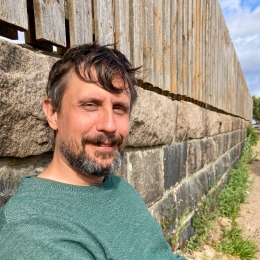
Christian Stranne is an Associate Professor at Stockholm University's Department of Geological Sciences, specializing in Marine geophysical mapping and modeling. He leads research projects investigating climate change impacts on methane dynamics and Arctic glacial systems. Research Focus Climate warming-induced methane release from marine sediments Arctic ice-ocean-atmosphere interactions Acoustic mapping of oceanographic features Submarine groundwater discharge mechanisms Glacial sedimentation and retreat dynamics Scientific Contributions His work integrates field observations with numerical modeling, particularly through: Development of geomechanically-coupled hydrate dissociation models Pioneering acoustic techniques for mixed layer depth mapping Quantifying glacial erosion rates in Greenland fjords Awards & Grants Swedish Research Council Postdoctoral Fellowship (2015) Swedish Research Council Grant for methane release study (2018) Swedish Research Council Grant for sediment-ocean-atmosphere methane study (2022) Field Experience Christian has extensive polar expedition experience: 6 major icebreaker expeditions to Antarctica and Arctic Ocean Research cruises in Sweden, Finland, Brazil, and Chile Expertise in CTD/LADCP operations and mooring deployments
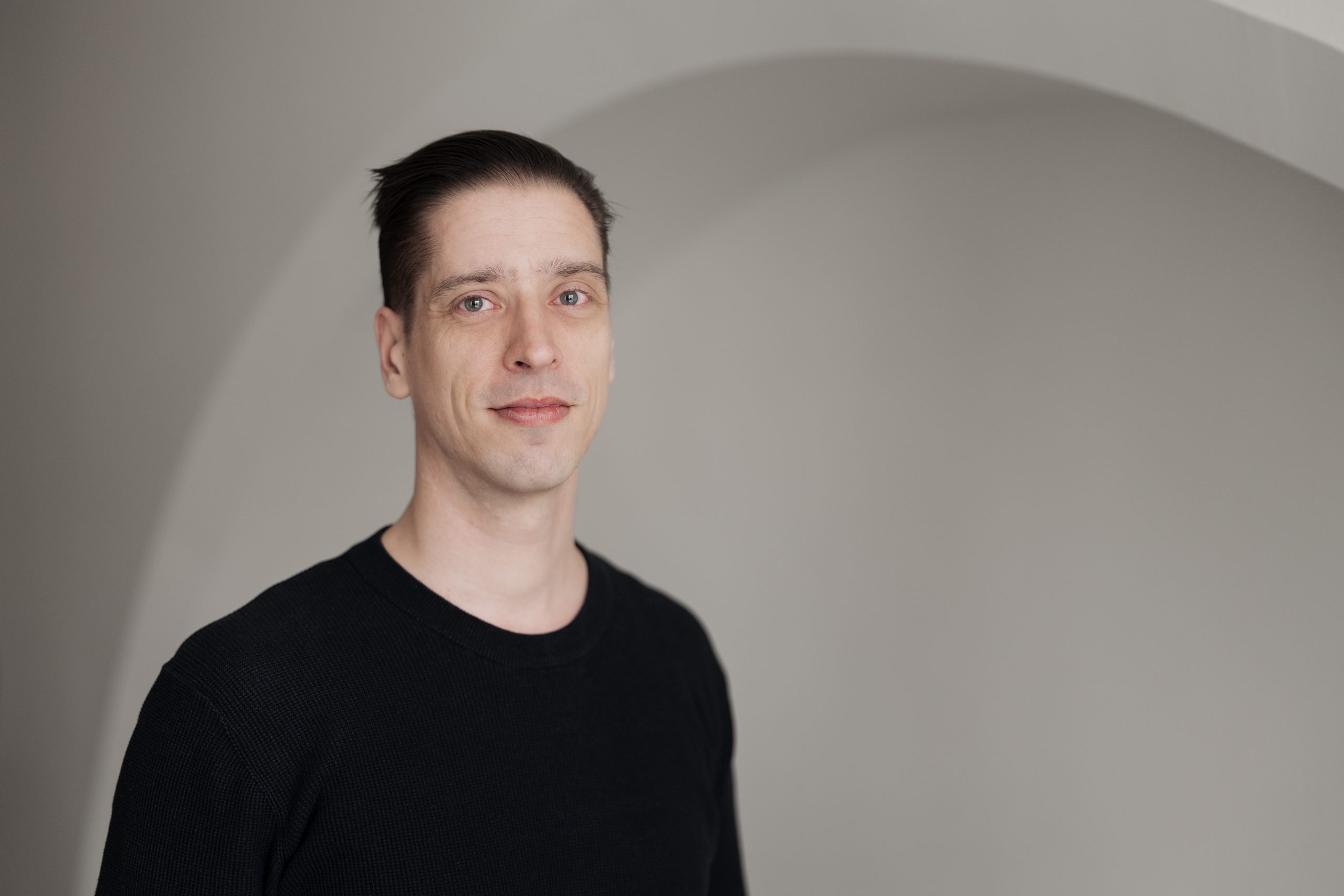
Dr. Steven Wepster is an Assistant Professor in the Department of Fundamental Mathematics at Utrecht University's Faculty of Science. His work is centered in the Mathematical Institute, where he contributes to both teaching and research in the history of mathematics. Wepster is actively involved in teaching courses including History of Mathematics, Mathematical Techniques 1, and Mathematical Techniques 2. Wepster's research focuses on the history of mathematics, particularly 18th century mathematical astronomy, lunar distance methods, and the works of historical figures like Tobias Mayer and Ludolph van Ceulen. His work bridges mathematical theory with historical context, examining how mathematical concepts evolved and were applied in navigation and astronomy. He has made significant contributions to understanding circle quadratures, celestial navigation techniques, and the development of mathematical tables. His scholarly activities reveal a strong pattern of engagement with the history of mathematical astronomy and navigation. Wepster has presented numerous invited talks on topics ranging from lunar distance methods to historical mathematical education. His editorial work for journals like 'Nieuw archief voor wiskunde' demonstrates his commitment to advancing historical mathematical scholarship. Among his notable activities are presentations on Tobias Mayer's lunar tables, circle quadratures of Kashani and Van Ceulen, and transits of Venus. Wepster has also been actively involved in connecting pre-university and university mathematics education, serving on the National working group GMFW. Editor for 'Nieuw archief voor wiskunde. Serie 4' (2011-2013) Editor for 'Zebra series' (2012) Member of Epsilon Publishing (2011-2013) Member of National working group GMFW (2011-2013) Wepster maintains an active role in both academic and public dissemination of mathematical history, presenting at museums like Museum Boerhaave and participating in national mathematics events. His work demonstrates a commitment to making historical mathematical concepts accessible to both academic and general audiences.
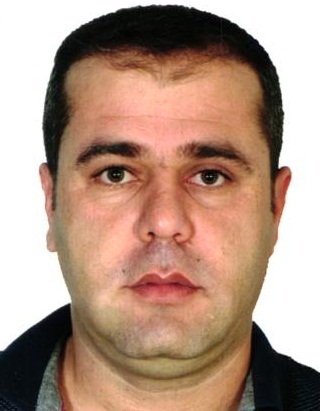
Dr. Thomas Bergmann serves as a scientific collaborator at the Institute of Psychology, Humboldt University of Berlin, while maintaining clinical roles at the Evangelical Hospital Queen Elisabeth Herzberge and a teaching position at the University of the Arts, Berlin. He is concurrently pursuing doctoral studies at the Free University of Berlin's Department of Psychology. Academic Background: 1st State Examination in School Music and Jazz Studies (1988), University of Music and Performing Arts, Hamburg Diploma in Music Therapy (1999), University of the Arts, Berlin Ongoing Doctorate in Psychology (since 2011), Free University of Berlin Research Focus: Bergmann specializes in developing innovative diagnostic and therapeutic approaches for adults with autism spectrum disorders (ASD) and co-occurring intellectual disabilities (ID). His work pioneers music-based assessment tools like MUSAD to address diagnostic gaps in low-verbal populations, emphasizing non-verbal communication analysis and socio-emotional development evaluation. He investigates severe behavioral disorders through interdisciplinary lenses, integrating clinical observation with therapeutic intervention design. Publication Trends: His 13 most recent publications (2010-2014) reveal a concentrated focus on adapting autism diagnostics for intellectually disabled adults. Key contributions include the Diagnostic Observation Sheet (DiBAS) and revisions to behavioral assessment instruments, demonstrating consistent innovation in methodology. His work bridges music therapy with clinical diagnostics, particularly through musical interaction analysis for non-verbal populations, while critically evaluating alternative interventions like animal-assisted techniques. Research Leadership: Bergmann directs two major funded projects: MUSAD (supported by Stiftung Irene) for music-based autism diagnostics in low-verbal adults, and AutKom for developing a 20-session group therapy program targeting social skills and stress regulation in ASD with mild ID. These initiatives emphasize practical clinical translation through caregiver involvement and multimodal assessment. Research Environment: Affiliated with the Dziobek Lab (dziobek-lab.org), Bergmann operates within a specialized research ecosystem focused on neurodevelopmental disorders. His work integrates clinical practice at Queen Elisabeth Herzberge with academic research, creating a continuous feedback loop between diagnostic innovation and therapeutic application for underserved adult populations.
Prof.dr.ir. C. Poelma is a Professor in the Department of Process and Energy at Delft University of Technology (TU Delft). His research focuses on experimental fluid dynamics, multiphase flows, and measurement engineering. Research Areas: Cavity Engineering, Turbulent Flow, Reynolds Number Analysis, Air Lubrication, Velocity Field Measurement, and Wave Propagation. Projects: Led the Flows Unveiled project on multimodal measurement in opaque two-phase flows (2017-2022). Scientific Contributions: His work includes pioneering studies on ventilated cavities, bubbly shock waves, and particle-laden flows using X-ray and LED-based PIV techniques. He has received an ERC Advanced Grant for his research. Key Publications: 125+ research outputs, including articles in Journal of Fluid Mechanics , Ocean Engineering , and International Journal of Multiphase Flow . Datasets: Generated critical datasets for void fraction analysis, nozzle flow, and biomedical velociometry. Supervised Students: Mentored 9 PhD candidates and collaborated with researchers across fluid mechanics and biomedical engineering.
Leonardo Ricci is an Associate Professor at the Department of Physics, University of Trento , with a 28-year teaching career spanning 56 courses (31 in English) and extensive roles in the Interdepartmental Center for Mind/Brain Sciences - CIMEC (30% affiliation). His research bridges nonlinear dynamics , information theory , and neuroscience , focusing on chaos detection in time series and entropy analysis. Academic Career : From 1994 post-doc at Max-Planck-Institut to 2022 promotion to Associate Professor Teaching : Courses in Experimental Physics, Advanced Electronics, and Statistical Methods across Physics and Computer Science programs Ricci leads the NSE Lab (Nonlinear Systems and Electronics) , developing hardware/software systems for experimental research. His 2022 Entropy cover story on permutation entropy highlights his impact in information theory. Scientific Contributions : 20 patents (visibility measurement devices), collaborations with international researchers on complex systems Editorial Roles : Associate Editor for Chaos, Solitons & Fractals and Frontiers in Network Physiology
Florian Rabitz is a Professor in the Department of International Relations at Vilnius University's Institute of International Relations and Political Science (VU TSPMI). His work focuses on global environmental politics , international institutions , and the governance implications of new and emerging technologies in sustainability contexts. He holds a PhD in Political Science from the Free University of Brussels. Education : PhD in Political Science (Free University of Brussels) Rabitz's research explores the intersection of technology and global governance, particularly in areas like space resource utilization , gene drive organisms , and solar radiation management . His recent publications analyze the formation of international regimes for space resources and the equity challenges of asteroid mining. He contributes to global policy discussions through his role as a Senior Research Fellow at the Earth System Governance Project and as a member of the Ad Hoc Technical Expert Group on Synthetic Biology under the Convention on Biological Diversity. His methodological approaches include social network analysis and topic modeling to map complex governance systems. Key Affiliations : Earth System Governance Project Convention on Biological Diversity (Expert Group) Rabitz has presented his research at major international conferences, including the European Consortium for Political Research General Conference and the Toronto Conference on Earth System Governance.
Tran B. Nguyen is an Associate Professor of Environmental Chemistry in the Department of Environmental Toxicology at the University of California, Davis, where he has served since 2016 (promoted from Assistant Professor in 2023). His research addresses critical atmospheric chemistry challenges including oxidation mechanisms in aerosols/clouds and indoor environments, with direct implications for air pollution, climate interactions, and inhalation toxicology. Dr. Nguyen's educational background includes: Ph.D. in Chemistry, University of California, Irvine (2012) B.S. in Chemistry, University of Southern California (2007) His postdoctoral work was conducted at Caltech under Professors Paul Wennberg and John Seinfeld. His interdisciplinary research program combines advanced mass spectrometry, synthetic organic chemistry, and computational modeling to investigate atmospheric photochemistry, organic aerosol aging, and toxicant formation in electronic cigarettes. His group operates a 10 cubic meter photochemical chamber with temperature-controlled instrumentation for aerosol studies, alongside bench-top reaction systems. Major scientific recognition includes: Whitby Award from American Association for Aerosol Research (2022) NSF CAREER Award (2021) Sheldon K. Friedlander Award from American Association for Aerosol Research (2015) Dr. Nguyen directs ICARUS, an NSF-supported national database for chamber research data, and mentors graduate students while teaching ETX 102A (Environmental Fates of Toxicants) and ETX 111 (Introduction to Mass Spectrometry). His laboratory facilities span Meyer Hall rooms 4113 (office), 4423 (Wet Chemistry Lab), and 4427 (Chamber Lab).
Dr. Miriam Matamales is a UNSW Scientia Fellow (Level C) in the School of Psychology at the University of New South Wales. She leads the Neuromodulatory Systems and Behaviour group within the Decision Neuroscience Laboratory, focusing on understanding how neuromodulatory systems support plasticity in subcortical brain networks for generating and modifying voluntary behaviors. Education: Ph.D. Neuroscience, Pierre and Marie Curie University, Paris, France (2009) Master in Biomedical Research, Pompeu Fabra University, Barcelona, Spain (2007) Bachelor of Human Biology, Pompeu Fabra University, Barcelona, Spain (2006) Dr. Matamales' research combines innovative high-throughput fluorescence microscopy and computational image analysis to understand how the functional architecture of the striatum encodes goal-directed learning and how its dysfunction impairs normal behavior. Her work primarily focuses on neuromodulatory systems (dopamine, acetylcholine, neuropeptides) supporting plasticity in subcortical brain networks, particularly the striatum and basal ganglia pathways. She uses mice as experimental models with approaches including instrumental conditioning, AAV-based circuit- and cell-specific tracing and manipulation in behaving animals, in vivo photometry and computational analysis of behavioral and neuronal data. Analysis of Dr. Matamales' recent publications shows a strong focus on striatal function, goal-directed learning mechanisms, and age-related changes in neural circuits. Her work spans from molecular neuroscience examining DARPP-32 signaling to systems-level investigations of basal ganglia circuits and their role in behavior. Scientific Awards: UNSW Dean of Science Early Career Excellence Award (2020) UNSW's Vice-Chancellor's Childcare Support Fund for Women Researchers (2019) Paxinos-Watson Award from the Australasian Neuroscience Society (2017) Dr. Matamales has successfully secured multiple competitive grants including NHMRC Ideas Grants as both Lead CI and CIB, an ARC Discovery Project as Lead Investigator, and a Tourette Association of America Young Investigator Award as sole CI. She currently supervises PhD student Jonathon Jacobs on research related to the molecular footprint of instrumental learning in the striatum. In addition to her research, she teaches in the UNSW NEUR2201 Neuroscience Fundamentals course and serves as invited faculty at the Australasian Course in Advanced Neuroscience. Her laboratory, the Neuromodulatory Systems and Behaviour group (www.neuromodulab.org), investigates how learning is encoded in brain circuits and how new behaviors imprint in neuronal circuits during generation, maturation, and adaptation to environmental rule changes.
Professor Thomas Huber is a distinguished academic at the Australian National University's Research School of Chemistry, where he was appointed Professor in 2013 after serving as an ARC Future Fellow (2010-2014). His career spans appointments at ETH-Zurich, ANU Supercomputer Facility, University of Queensland (Mathematics and Molecular Bioscience departments), and the Research School of Chemistry. Education: Diploma of Chemistry, Technical University Munich PhD, ETH-Zurich Huber's research focuses on structural bioinformatics and computational structural biology , developing innovative tools to determine 3D structures of biological macromolecules using sparse experimental data. His work targets understanding molecular interactions fundamental to life processes and pharmaceutical intervention. Key research areas include NMR spectroscopy, protein structure determination, genetically encoded non-canonical amino acids, and paramagnetic probes for distance measurements. Analysis of his recent publications (2022-2025) reveals dominant trends in protein engineering through genetic code expansion, fluorogenic labeling techniques, and advanced NMR methodologies for probing protein dynamics and ligand binding. His work bridges computational modeling with experimental structural biology, emphasizing cost-efficient solutions for macromolecular structure determination. Scientific Awards: ARC Future Fellow (2010-2014) Huber actively supervises research students and leads multiple collaborative projects including "Protein Structure and Dynamics by Electron/Nuclear Paramagnetic Resonance" and "Non-Canonical Amino Acids for Protein Analysis." His research is supported by significant grants from the Australian Research Council, focusing on protein characterization, drug discovery platforms, and advanced spectroscopy instrumentation. He leads the Huber Group within the Research School of Chemistry, collaborating extensively with researchers like Gottfried Otting and Christian Nitsche on protein analysis and therapeutic development.
Dr. Bayram Bozkurt currently serves as an Assistant Professor at the Department of Educational Sciences, Faculty of Education at University of Gaziantep. His academic journey includes a PhD in Educational Administration (2016-2018), an MA in Educational Sciences (2012-2014), and a BA in Science Education (2003-2007) from Çukurova University. His research focuses on educational leadership, social justice in education, teacher motivation, and organizational behavior in schools. He has supervised 8 theses and published 9 book chapters, with recent work exploring topics like Social justice in migrant education Instructional supervision practices Communication competencies of administrators Multi-dimensional value perceptions Scientific contributions include 33 peer-reviewed articles and 26 conference papers, with 15 most recent articles spanning 2023-2025. His work has been recognized with two Public Success Certificates (2020, 2021). Professional experience includes 12 years in the Turkish Ministry of National Education (2008-2020) as a science teacher and vice principal, alongside TÜBİTAK project instructor roles.
Dejan Markovic is a Professor of Electrical and Computer Engineering at the University of California, Los Angeles (UCLA), holding the Mukund Padmanabhan Term Chair in Electrical Engineering and serving as Area Director for Circuits and Embedded Systems. His research spans implantable neuromodulation systems, domain-specific compute architectures, and energy-efficient design methodologies for biomedical and embedded applications. Dr. Markovic earned his PhD (2006) and MS (2000) from UC Berkeley and BS (1998) from the University of Belgrade, Serbia. His research focuses on ultra-low-power integrated circuits for neural interfaces, including artifact-free stimulation/sensing platforms and neural recording front-ends, alongside domain-specific architectures for sparse linear algebra in IoT and mobile computing. Recent work demonstrates strong trends in medical neuromodulation and energy-efficient VLSI for biomedical signal processing and wireless communications. His scientific contributions have been recognized with prestigious awards including IEEE Fellow (2021), ISSCC Lewis Award (2014), ISSCC Jack Raper Award (2010), and NSF CAREER Award (2009). Additional honors include UC Berkeley's David J. Sakrison Memorial Prize (2007) and multiple best paper awards. Dr. Markovic co-founded semiconductor IP startup Flex Logix Technologies (2014) and leads the DMGroup research lab at UCLA. He teaches core courses including ECE 115C (Digital Integrated Circuits), ECE M216A (VLSI Design), and BME M260 (Neuroengineering), mentoring students in cutting-edge VLSI design for medical and communication applications. The DMGroup lab specializes in developing implantable neuromodulation systems, domain-specific compute engines, and novel design methodologies, with recent projects featured in UCLA's coverage of brain-computer interface technology and Anari AI's $2M funding for personalized AI hardware.
Professor Alan Penn is a leading academic at University College London's The Bartlett School of Architecture , where he holds the title of Professor in Architectural and Urban Computing. He previously served as Dean of the Bartlett Faculty of the Built Environment from 2009 to 2019 and has been instrumental in establishing Space Syntax Ltd , a UCL knowledge transfer spin-out company. His affiliations include membership in the Space Syntax Laboratory, board membership of UCL Consultants Ltd, and trustee status at Shakespeare North Trust. Education: BSc (1978), Dip Arch (1980), MSc (1983) - all from University College London Alan Penn’s research investigates how spatial design influences social and economic behaviors through innovative space syntax methodologies . Key areas include: Agent-based simulations of human behavior Spatio-temporal representations of built environments Urban spatial network analysis Urban sustainability across multiple dimensions Cognitive markers in architectural design Historical urban growth modeling His recent publications demonstrate a strong focus on computational urbanism, evolutionary city patterns, and behavioral architecture. Research trends show interdisciplinary approaches combining architectural theory with: Machine learning applications Network science analysis Behavioral psychology insights Historical GIS techniques Complex systems modeling Public health considerations Scientific recognition includes: HEFCE Business Fellowship (2001-2005) KTP SE Region Award (2010) Multiple UCL Enterprise awards ‘Spirit of Enterprise’ Award (2008) As Principal Investigator he leads the £5m EPSRC-funded Urban Dynamics Lab , demonstrating sustained research excellence. His work extends to public engagement through: Shakespeare North Trust educational theatre development Media appearances (New Scientist, Slashdot) Public policy contributions
Bharat Ratra is a Professor at the Department of Physics , Kansas State University , focusing on Cosmology and Astroparticle Physics . He develops theoretical models of the universe's large-scale structure and tests them using observational data, particularly from cosmic microwave background radiation (CMBR) anisotropy, dark energy dynamics, and large-scale matter distribution . His work frequently involves collaborations with the Kansas State University High Energy Physics Group , University of Kansas Cosmology Group , and use of computational resources at the Kansas State University Center for Scientific Supercomputing . Ratra's research has been supported by the National Science Foundation , and he has made significant contributions to understanding the time-variable cosmological constant , inflationary models , and dark energy through over 50 publications. His 15 most recent selected publications focus on constraining cosmological parameters using supernova data, CMBR anisotropy experiments (COBE, MAX, ARGO, White Dish), and large-scale structure observations, with a particular emphasis on Hubble constant determination, spatial curvature analysis, and dark energy dynamics . Among his research advisees is Silviu Podariu , and he has collaborated with postdoctoral associates such as Dr. Pia Mukherjee , Dr. Tarun Souradeep , and Dr. Graca Rocha (now at University of Oxford). Ratra's work bridges theoretical cosmology with observational data to refine our understanding of the universe's geometry and evolution.
Alec H. Follmer is an Assistant Professor at the University of California, Davis, appointed in 2024. His research focuses on metalloenzymology, combining structural biology, spectroscopy, biophysics, and chemical biology to study non-equilibrium dynamics in metal-containing enzymes. He leads the Follmer Lab, which develops innovative approaches for high-resolution characterization of catalytic intermediates to pioneer selective catalysis and structure-based drug discovery. His educational background includes: Ph.D. from the University of California Irvine (2014-2019) B.Sc. from the University of the Pacific (2011-2014) Dr. Follmer's research spans bioinorganic chemistry and enzyme catalysis, investigating how protein motions couple with metallocofactor electronic structures to drive enzymatic mechanisms. His lab employs XFEL crystallography, advanced spectroscopies, and biophysical methods to capture transient catalytic states, with implications for sustainable chemistry and pharmacological applications. His recent publications (2018-2024) reveal consistent focus on cytochrome P450 systems, metallocofactor dynamics, and catalytic mechanisms. Key trends include substrate binding effects, redox partner interactions, and conformational changes during catalysis, utilizing X-ray scattering, crystallography, and electron spin resonance to probe enzyme dynamics at atomic resolution. His scientific honors include: Visiting Physicist at Stanford / SLAC National Accelerator Laboratory (2025) Appointed to LCLS User Executive Committee, SLAC (2024) National Science Foundation 2026 Idea Machine Finalist – Top 33 (2020) DOE Basic Energy Sciences Early Career Network Representative (2020–2021) No information on students or research grants is provided in the source text. The Follmer Lab operates at the Chemistry building (3110 Chemistry) at UC Davis, working at the interface of bioinorganic chemistry, (bio)photocatalysis, and pharmacology to develop strategies for medical and sustainable chemistry advancements.
Vasileios P. Kemerlis is an Associate Professor of Computer Science at Brown University, where he conducts research in systems and software security. He serves as the director of the Secure Systems Lab (SSL) and is a recipient of the prestigious NSF CAREER Award. His work focuses on practical security solutions for real-world systems. Dr. Kemerlis specializes in software, hardware, and systems security with particular emphasis on OS kernel protection, software hardening, fuzz testing, and information flow tracking. His research bridges theoretical security concepts with practical implementations that can be deployed in commodity systems. His work often leverages hardware features to build more robust security mechanisms while maintaining system performance. His recent publications demonstrate a consistent focus on memory safety, control flow integrity, and practical security mechanisms that can be deployed in real-world systems. His work spans multiple security domains including kernel security, network security, and application security, with a strong emphasis on developing solutions that balance security guarantees with practical performance considerations. Scientific Awards: NSF CAREER Award Dr. Kemerlis teaches advanced security courses at Brown University including CSCI 1650: Software Security and Exploitation (offered Fall 2016-2024) and CSCI 2951U: Topics in Software Security (offered Spring 2016-2018, 2020, 2021, 2024). As director of the Secure Systems Lab, he leads research efforts that have resulted in numerous publications at top security venues including IEEE Symposium on Security and Privacy, ACM CCS, and USENIX Security. The Secure Systems Lab under his direction focuses on developing practical security solutions that can be deployed in real-world systems, with recent work exploring hardware-assisted security mechanisms, binary hardening techniques, and novel approaches to memory safety.