Professor Alsayed Algergawy is the substitute for the Chair of Data and Knowledge Engineering at the University of Passau since April 2023. His work bridges semantic web technologies and machine learning to enable heterogeneous data integration across domains. Current focus areas: schema/ontology alignment, entity resolution, knowledge graph construction Active in DFG Collaborative Research Center AquaDiva (data lifecycle management) Domain applications: biodiversity, agriculture, energy His team develops hybrid strategies combining rule-based systems with ML techniques to extract value from both structured and unstructured data sources.
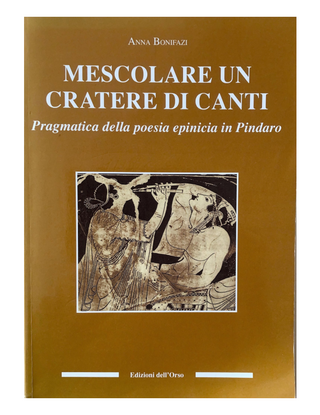
Prof. Anna Bonifazi holds a Professorship in Discourse Studies at the Department of Linguistics, University of Cologne. Her research spans Discourse Analysis, Pragmatics, Cognitive Linguistics, and Multimodal Communication with a focus on Ancient Greek Linguistics and Oral Epic traditions. She investigates phenomena like anaphoric cohesion in long texts, multimodal storytelling in film and oral traditions, and ancient Greek particles' discursive functions. Her work explores how multimodal elements (e.g., visual, musical, gestural) interact in communication, particularly analyzing films (e.g., mystery genres), ancient texts (e.g., Homeric epics), and South Slavic oral narratives. She examines cross-modal iconicity, viewpoint blending, and the cognitive underpinnings of discourse structures. Recent publications address topics like anaphoric strategies in crime stories and syntactic patterns in ancient Greek conversational frameworks. Prof. Bonifazi's research often bridges classical philology and modern cognitive theories, emphasizing embodied cognition and the interplay between language and other semiotic systems. She collaborates internationally on projects involving gesture analysis in storytelling and ancient papyrological studies. Her interdisciplinary work integrates linguistics with musicology, film studies, and cognitive science. Administratively, she oversees the Discourse Studies research group at Cologne and mentors assistants like Dr. Sandra Debreslioska and Madeleine Frings. Her lab focuses on multimodal discourse analysis using experimental and corpus-based methods.
Max Planck Institute of Colloids and InterfacesGermany
Craig Knoblock serves as Keston Executive Director of the Information Sciences Institute (ISI) at the University of Southern California (USC), Vice Dean of the USC Viterbi School of Engineering, and Research Professor of Computer Science and Spatial Sciences. He also directs the Data Science Program and the Center on Knowledge Graphs at USC. His educational background includes a Ph.D. and M.S. in Computer Science from Carnegie Mellon University (1991, 1988) and a B.S. with honors in Computer Science from Syracuse University (1984). Knoblock's research focuses on data semantics , specializing in source modeling, schema and ontology alignment, entity and record linkage, data cleaning, Web data extraction, and knowledge graph construction. His work bridges computer science, geospatial analysis, and artificial intelligence to solve complex data integration challenges. Recent projects emphasize historical map digitization, geospatial knowledge graphs, and smart city applications. His 300+ publications demonstrate consistent contributions to knowledge graphs and geospatial data integration, with a growing emphasis on historical map analysis and urban applications. The research trajectory shows increasing interdisciplinary collaboration across computer vision, geoinformatics, and domain-specific applications. IEEE Fellow (2020) ACM Fellow (2017) AAAI Fellow (2004) Robert S. Engelmore Memorial Lecture Award (2014) Donald E. Walker Distinguished Service Award (IJCAI, 2018) Use-Inspired Research Award (USC Viterbi, 2018) As Executive Director of ISI, Knoblock oversees one of USC's premier research centers with significant federal funding. His leadership extends to directing the Center on Knowledge Graphs and the Data Science Program. While specific grant details aren't provided, his extensive publication record and leadership roles indicate substantial research funding across data integration, knowledge representation, and geospatial applications. His work bridges theoretical computer science with practical applications in historical preservation, urban planning, and resource management through collaborative projects with government agencies and industry partners. Knoblock leads the Center on Knowledge Graphs at USC, focusing on developing techniques for building and utilizing knowledge graphs across diverse domains. His team combines expertise in artificial intelligence, geospatial analysis, and data integration to tackle challenges in historical map digitization, urban applications, and resource discovery. The research group maintains strong connections with both academic and government partners through the Information Sciences Institute's extensive network.
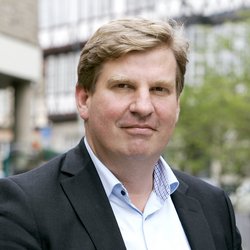
Felix Naumann is a Professor at the Hasso Plattner Institute in Potsdam, Germany, specializing in data management and database systems. His research focuses on data quality, data profiling, entity resolution, functional dependencies, and database optimization. He has authored over 300 publications in top-tier conferences and journals, including VLDB, SIGMOD, and ICDE. His work bridges theoretical foundations with practical systems, such as TASHEEH for data cleaning and PRISMA for privacy-preserving schema matching. He serves as an editor for the ACM Journal of Data and Information Quality and has led initiatives on hybrid conference formats and inclusive computing. Key contributions include: Data Quality: Pioneered studies on data quality's impact on machine learning and developed tools like AutoTSAD for anomaly detection. Data Dependency Discovery: Advanced functional and inclusion dependency mining algorithms, including Hitting Set Enumeration methods. Schema Matching & Integration: Created systems like BrewER and Frost for entity resolution and schema alignment. Educational Impact: Led massive open courses in data engineering with over 10,000 participants. His work emphasizes practical applications in cultural heritage data (ReCLAIM), Wikipedia table analysis, and cross-platform data systems (RHEEMix). He collaborates extensively with industry and academia, addressing challenges in dynamic datasets and data governance.
German National Library of Science and TechnologyGermany
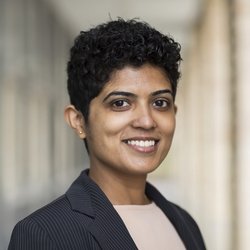
Jennifer D'Souza is a Research Fellow in the Open Research Knowledge Graph (ORKG) project at the Data Science and Digital Libraries research group within the Technische Informationsbibliothek (TIB) . Her current work focuses on natural language machine learning, including knowledge graph construction, ontology alignment, and AI-assisted scientific discovery. Prior to TIB, she held postdoctoral positions at the University of California, Davis (focusing on software engineering and NLP applications) and completed her PhD at the University of Texas at Dallas, specializing in relation mining. She has also contributed to industrial software solutions in concept generation. Education : PhD in Computer Science, University of Texas at Dallas Postdoctoral Researcher, University of California, Davis Research Interests : Information Extraction and Question Answering Scientometrics and Knowledge Organization Natural Language Processing (NLP) for Ontology Learning Large Language Models (LLMs) in Scientific Workflows Awards & Grants : Not explicitly listed, but her contributions to projects like ORKG and participation in hackathons highlight collaborative achievements in AI-driven research. Labs/Teams : Active member of the Data Science and Digital Libraries group at TIB, contributing to projects such as ORKG and the Large Language Models for Ontology Learning Challenge .
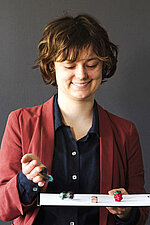
Tamara Friedenberger serves as a Research Fellow at the Institute for Human-Computer-Media within the Faculty of Human Sciences at Julius-Maximilians-University Würzburg. She is an active member of the Psychological Ergonomics research team led by Prof. Dr. Jörn Hurtienne, contributing to cutting-edge research at the intersection of human-computer interaction, data visualization, and social dynamics. Her educational background includes a Master of Science in Human-Computer Interaction and a Bachelor of Science in Psychology, both completed at Julius-Maximilians-University Würzburg. This interdisciplinary foundation supports her research in creating meaningful technological experiences that align with human cognitive and social processes. Friedenberger's research interests focus on data physicalization and visualization , examining how physical representations of data affect social interactions in informal learning environments. Her work in feminist HCI challenges traditional design paradigms by incorporating diverse perspectives and embodied experiences. She also specializes in research methods and statistics, bringing rigorous analytical approaches to qualitative human-centered computing research. Her recent publications (2023-2025) reveal a consistent focus on the social dimensions of interactive technologies, with particular emphasis on multispecies interaction, data representation ethics, and the material aspects of user experiences. Friedenberger frequently collaborates with colleagues across the Psychological Ergonomics team, contributing to interdisciplinary projects that bridge psychological theory with practical design applications. As part of the active research staff at the Institute for Human-Computer-Media, Friedenberger contributes to the department's mission of advancing human-centered technology design through empirical research and innovative design explorations. Her work demonstrates the institute's commitment to addressing complex human-technology interaction challenges through both theoretical and practical approaches.
Zaiwen Feng is a researcher actively contributing to data governance, semantic modeling, and causal inference. His work focuses on knowledge graphs, graph-based methods, and service-oriented architectures through collaborations with institutions like the University of Queensland and universities in China. Research Focus : Graph Differential Dependencies, Entity Resolution, Causal Effect Estimation, and Ontology Alignment Methodologies : Machine Learning, Variational Autoencoders, Prompt Engineering, and Semantic Retrieval Application Areas : Biomedical Data, Property Graph Recommendation, and Process Model Repositories Key trends in his publications include automated semantic modeling , neural approaches for entity resolution , and causal inference with graph structures . He frequently collaborates with researchers like Keqing He, Wolfgang Mayer, and Selasi Kwashie across conferences such as HPCC, BIBM, and WISE.
Eric Leclercq is a researcher at the University of Burgundy, affiliated with the LE2I Lab in Dijon, France. His work spans database systems, social network analysis, and biomedical data integration. He has contributed extensively to polystore systems, tensor decompositions, and category theory applications in data modeling. Fields of Interest : Database Systems, Data Mining, Social Network Analysis, Big Data Analytics, Semantic Web Leclercq's recent research focuses on formal frameworks for data lakes using category theory, multi-level tensor decomposition for social network stratification, and schema migration in multi-model systems. He has published in venues like CAiSE, IDEAS, and RCIS. His collaborations include Annabelle Gillet, Marinette Savonnet, and Nadine Cullot. Notable works include Lambda+ architecture for data processing, polarization analysis in social networks, and tools for tweet collection and biomedical data integration.
Dr. C. Maria Keet is a Professor in the Department of Computer Science at the University of Cape Town, South Africa. With a PhD from the Free University of Bozen-Bolzano (2008), she has established herself as a leading researcher in ontology engineering and multilingual natural language processing, particularly for African languages. Her research interests span Ontology Engineering , Knowledge Representation , Natural Language Processing for African languages (especially isiZulu), Conceptual Data Modeling , and Temporal Data Modeling . She has developed significant frameworks for ontology modularization, competency questions, and multilingual knowledge representation. Her work bridges theoretical computer science with practical applications for linguistic diversity in Africa, addressing the critical need for technology that serves low-resourced languages. Her recent publications (2023-2025) reveal a strong focus on advancing ontology engineering methodologies, improving multilingual language processing capabilities, and developing tools for temporal data modeling. She has pioneered approaches for representing African languages in computational systems, with particular attention to noun classification, verb conjugation, and part-whole relations in Bantu languages. Dr. Keet has made substantial contributions to educational resources in her field, including her 2023 book The What and How of Modelling Information and Knowledge - From Mind Maps to Ontologies , which serves as a comprehensive guide to knowledge representation techniques. She actively supervises graduate students and has developed in-house tools specifically for ontology engineering education, demonstrating her commitment to advancing both research and teaching in her field.
Jacqueline Matthäi serves as a Scientific Associate and Research Assistant at the Chair of Empirical Educational Research within the Faculty of Human Sciences at Otto-Friedrich University Bamberg, working under Prof. Dr. Cordula Artelt since May 2007. Her academic role focuses on empirical investigations of reading comprehension processes and teacher assessment methodologies in educational contexts. Education: Master's degree in Educational Science with minors in French and African Studies (University of Leipzig, 2000-2005) General higher education entrance qualification (Gymnasium Humboldt-Schule Leipzig, 1999) Matthäi's research centers on the intersection of teacher knowledge, text comprehension demands, and assessment accuracy in reading literacy. Her work examines how educators identify text difficulty features, evaluate student comprehension, and implement strategic reading interventions—particularly in elementary and lower secondary settings. She investigates the relationship between teachers' knowledge bases and judgment accuracy, developing specialized instruments to measure pedagogical expertise in reading comprehension domains. Her scholarship bridges theoretical educational psychology with practical classroom assessment applications. Analysis of her 2008-2015 publications reveals consistent specialization in reading assessment instrumentation and teacher cognition. The research trajectory shows progressive refinement of measurement tools for teacher knowledge about text features, with increasing focus on specificity in assessment practices across school levels. Collaborative work with Artelt dominates her output, indicating sustained research partnership within Bamberg's empirical education framework. Methodologically, her studies combine experimental comprehension tasks with teacher judgment analysis to identify accuracy determinants in literacy assessment. Advising and Grants: No formal student supervision or grant funding details are documented in available materials. Laboratory Affiliations: Her work appears connected to Bamberg's UFF (probably "University Research Focus") and PsyCoach initiatives mentioned in departmental materials, though specific lab leadership isn't indicated.
Anton Dignös is an Associate Professor at the Free University of Bozen-Bolzano, Italy. His research focuses on temporal databases, time series analysis, and database system optimization. He has co-authored numerous papers in top venues such as VLDB, ICDE, and ACM Computing Surveys, with a strong emphasis on query processing, indexing techniques, and benchmarking tools for database systems. Notable contributions include the SEER toolkit for time series benchmarking and foundational work on temporal anomaly detection in healthcare systems. His work spans theoretical advancements in join algorithms and practical applications in manufacturing and monitoring systems. He has collaborated extensively with researchers like Johann Gamper and Michael H. Böhlen, contributing to projects like TSM-Bench and the development of efficient interval join methods optimized for modern hardware.
Beuth University of Applied Sciences BerlinGermany
Parminder Bhatia is a prominent research scientist at Amazon with over 49 publications and 1,400+ citations spanning natural language processing, vision-language models, and medical AI. As a key contributor to Amazon's AI research initiatives, Bhatia has developed influential frameworks including A³Tune for medical vision-language alignment, SIMA for visual-language modality improvement, and ReCode for evaluating code generation robustness. Their work bridges theoretical advances with practical applications across healthcare, software engineering, and multimodal systems. Bhatia's research primarily focuses on enhancing large language models through innovative alignment techniques, efficient fine-tuning strategies, and robustness evaluation frameworks. Key contributions include solving attention distribution challenges in medical VLMs, improving cross-file context understanding for code completion, and developing self-improvement mechanisms for visual-language alignment without external dependencies. Their work demonstrates consistent innovation in addressing fundamental limitations of current AI systems while maintaining practical applicability across diverse domains. Analysis of Bhatia's 15 most recent publications reveals a strong emphasis on medical AI applications (40%), code generation/analysis (30%), and foundational LLM improvements (30%). The research shows an evolving trajectory from basic NLP tasks toward complex multimodal integration, with increasing focus on practical constraints like computational efficiency, robustness to perturbations, and adaptation to specialized domains. Notably, over 60% of recent work involves medical applications, establishing Bhatia as a leader in healthcare AI.
Dietmar Seipel is a Professor at the University of Würzburg, affiliated with the Department of Computer Science within the Faculty of Mathematics and Computer Science. He has held this position since November 1995, establishing a distinguished academic career spanning over 25 years with significant contributions to logic-based computer science. Professor Seipel's research focuses on Logic Programming and Deductive Databases, with substantial expertise in Knowledge Engineering and Artificial Intelligence. His scholarly work bridges theoretical foundations with practical applications, particularly in rule-based systems, knowledge representation, and declarative programming paradigms. He has consistently advanced the field through both theoretical developments and practical implementations, creating tools that enable more effective knowledge management and reasoning systems. His publication trajectory demonstrates a clear evolution from foundational work in disjunctive logic programming to contemporary applications in knowledge representation and semantic technologies. Recent research shows continued innovation in integrating logic programming with modern programming languages and systems, including Python and JavaScript implementations. His work spans theoretical contributions to practical tool development, with applications across diverse domains including space systems, medical informatics, and business process management. Professor Seipel has made extensive contributions to the academic literature, with publications appearing consistently from the 1980s through to the present. His work has influenced both theoretical developments in logic programming and practical applications in knowledge-based systems. He has been actively involved in academic community building through conference organization, particularly for events related to declarative programming and knowledge management.
German National Library of Science and TechnologyGermany
Prof. Sören Auer is the Director of the German National Library of Science and Technology (TIB) and Professor of Data Science and Digital Libraries at Leibniz Universität Hannover's Faculty of Electrical Engineering and Computer Science . With academic positions at Dresden, Yekaterinburg, Leipzig, Pennsylvania, Bonn, and Fraunhofer Society, his career focuses on semantic technologies , knowledge engineering , and Artificial Intelligence Research Data Management Open Science Knowledge Graphs . He leads the Open Research Knowledge Graph (ORKG) initiative and co-founded DBpedia and eccenca.com . His research spans data science , AI-driven knowledge representation , and digital library systems . He has supervised numerous PhD theses and final-year theses while offering courses on Knowledge Engineering Semantic Web Technologies Data Integration Scientific Data Management . The technical focus includes semantic data interlinking , neuro-symbolic AI , and contextual metadata frameworks . As a recipient of prestigious awards including ERC Consolidator Grant SWSA Ten-Year Award ESWC 7-Year Best Paper Award OpenCourseware Innovation Award , Prof. Auer has led major projects like BigDataEurope and contributes to standards in W3C , NFDI , and EOSC . His recent publications demonstrate advancements in ontology alignment , LLM-driven schema discovery , and hybrid AI systems for scholarly knowledge organization.
Dominique Ritze is a Research Fellow at the Data and Web Science Group of the University of Mannheim. Her research focuses on ontology alignment, semantic web technologies, linked open data integration, and knowledge organization systems. She collaborates with Prof. Dr. Christian Bizer and Prof. Dr. Kai Eckert on projects like InFoLiS II, aiming to advance data integration and semantic web applications. Education: MSc Computer Science (Diplom-Informatikerin) Research Interests: Dominique’s work bridges theoretical and applied aspects of semantic web technologies. Key areas include ontology evaluation frameworks, cross-domain data integration, and the development of tools for provenance tracking and data reuse. She has contributed to methodologies for aligning knowledge organization systems (KOS) and enhancing discovery systems with linked data. Publications Trends: Her articles from 2010-2015 emphasize ontology alignment (e.g., OAEI evaluations), semantic web applications, and data integration techniques. Notable contributions include the ICE-Map visualization for KOS evaluation and the Mannheim Search Join Engine for cross-website table integration. Awards: No scientific awards explicitly listed in the provided texts. Projects & Teams: Active in the Data and Web Science Group, leading projects on web table matching and semantic data integration. Collaborates with global research networks through initiatives like the Ontology Alignment Evaluation Initiative.