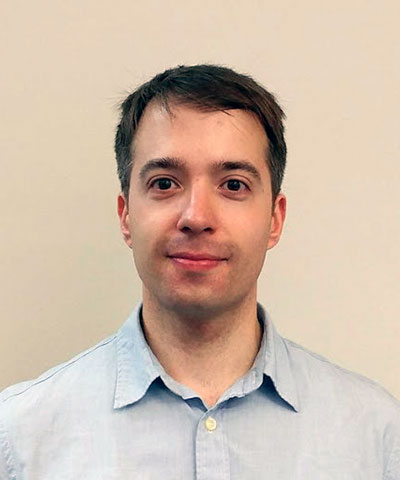
Benjamin Garner serves as Associate Professor of Marketing in the College of Business at the University of Central Arkansas (UCA), maintaining an active research program from his office in COB 312I. His contact information includes email bgarner3@uca.edu and phone (501) 450-5329, reflecting ongoing institutional affiliation. Dr. Garner's research centers on consumer behavior in experiential marketing contexts with three primary thrusts: Social media engagement dynamics in wine tourism and farmers' markets Authenticity construction through scarcity and sustainability messaging Innovative business education pedagogy including flipped classroom methodologies Analysis of his 2021-2025 publications reveals consistent methodological emphasis on ethnographic observation and text-mining of user-generated content across platforms like Facebook, Instagram, and Twitter. His work uniquely bridges agricultural marketing contexts with digital communication strategies, particularly examining how language structures influence consumer perceptions of authenticity. No scientific awards or student advising information appears in available records. Similarly, grant funding details and laboratory affiliations remain undocumented in the provided materials, though his publication output indicates sustained research activity across multiple scholarly domains.
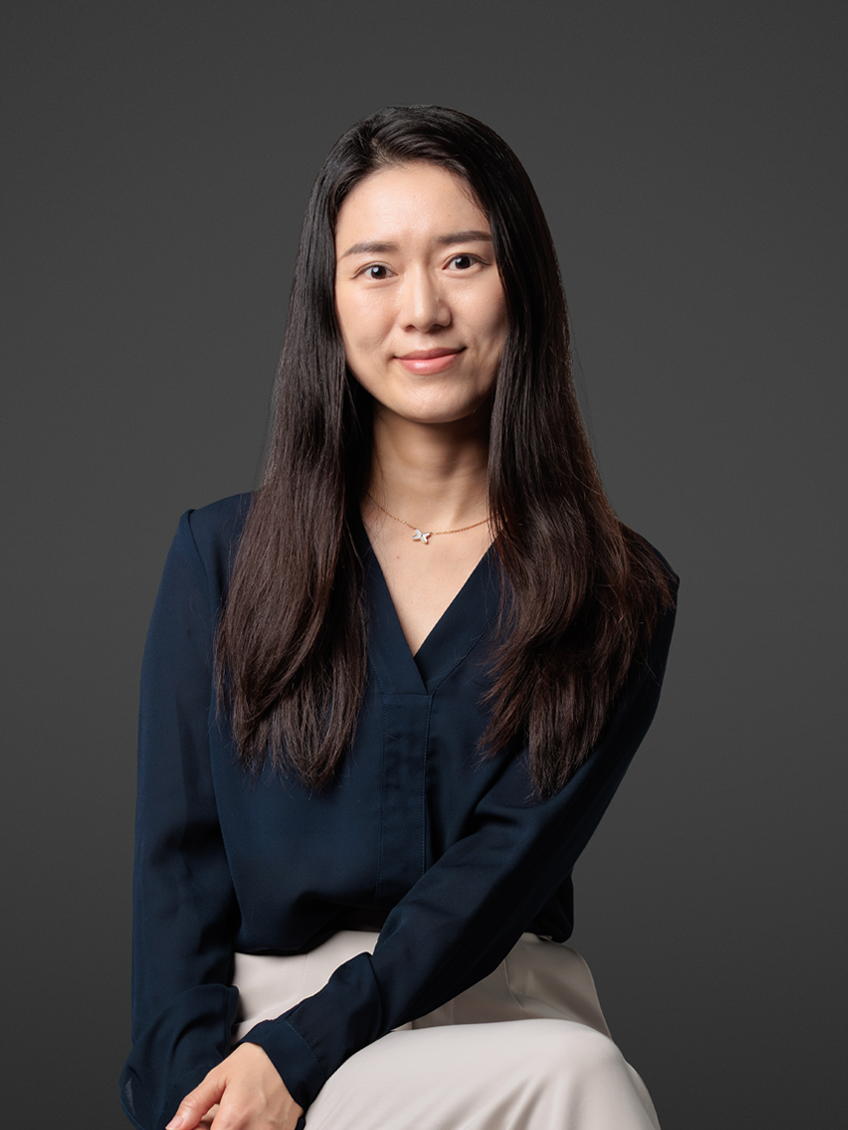
Dr. Wenjing Jia is an Associate Professor at the University of Technology Sydney (UTS), affiliated with the School of Electrical and Data Engineering within the Faculty of Engineering and IT. She holds a PhD in Computing Sciences (UTS, 2007), Master's in Communications and Information Systems (Fuzhou University, 2002), and a Bachelor's in Communications Engineering (Jilin University, 1999). Her research focuses on image analysis, computer vision, and AI applications in healthcare, transport, and defense. Key areas include text detection in challenging environments, medical image super-resolution, and crowd surveillance systems. She leads projects with industry partnerships, securing over $900K in funding. Dr. Jia is also a recognized educator with 12+ years of teaching experience, specializing in internetworking subjects. She organizes international conferences (e.g., ICDAR2019, TrustCom-2017) and serves as a Cisco Certified Instructor Trainer. Awards include the Science and Technology Award and a finalist spot in the Cisco Women in IT Academia Award. Education: PhD in Computing Sciences, UTS (2007) MSc in Communications and Information Systems, Fuzhou University (2002) BEng in Communications Engineering, Jilin University (1999) Research Highlights: Developed algorithms for low-light text detection and medical image enhancement Advanced crowd counting and violence detection in surveillance systems Contributions to OCT image super-resolution and LiDAR point cloud analysis Teaching & Leadership: Lead CI of Teaching & Learning grants Legal Main Contact for UTS Cisco Networking Academy Deputy Head - Teaching and Learning (secondee) Awards: Excellent Thesis Award, Science and Technology Award (2019), and recognition in Women in IT Academia. Her work bridges academia and industry, with over 130 publications and active roles in conference organization and technology transfer.
Dr. Hamidreza Mohades Kasaei is an Associate Professor in the Department of Artificial Intelligence at the University of Groningen, Netherlands. He holds positions in both the Faculty of Science and Engineering and the Faculty of Medical Sciences/UMCG, focusing on Robotics and image-guided minimally-invasive surgery. His work bridges theoretical advances in machine learning with practical robotic applications. Dr. Kasaei's research focuses on developing algorithms for adaptive perception systems through interactive environment exploration and open-ended learning. His specific interests include 3D object perception, grasp affordance detection, object manipulation, and active perception. He has evaluated his research on various robotic platforms including PR2, UR5e, Kinova, Franka robotic arms, and humanoid robots. His work enables robots to learn from past experiences and intelligently interact with non-expert human users using data-efficient techniques. Analysis of his recent publications reveals strong trends toward increasingly sophisticated manipulation capabilities, particularly in dual-arm coordination and handling dense clutter. There's a clear progression toward integrating language models with robotic control systems, as seen in works like 'Lifelong Robot Library Learning' and 'Towards Open-World Grasping with Large Vision-Language Models.' His research consistently addresses real-world challenges in agricultural robotics, assistive technologies, and service robotics applications. Gratama Science Award (2022) Google Research Scholar Award in Machine Learning (2023) Outstanding Associate Editor for IEEE Robotics and Automation Letters (2023) Dr. Kasaei has successfully supervised multiple PhD students including Zhenxing Zhang (thesis on 'Generative Adversarial Networks for Diverse and Explainable Text-to-Image Generation') and Hamed Ayoobi (thesis on 'Explain What You See: Argumentation-Based Learning and Robotic Vision'). His research is supported by significant grants including the Google Research Scholar Award for 'Continual Robot Learning in Human-centered Environments' and various conference organization roles including workshops at RSS 2023 and NeurIPS 2022. He leads the Lifelong Interactive Robot Learning Lab (IRL-Lab), which focuses on six key research directions: Perception and Perceptual Learning, Object Grasping and Manipulation, Lifelong Interactive Robot Learning, Dual-Arm Manipulation, Dynamic Robot Motion Planning, and Exploiting Multimodality. The lab develops cutting-edge approaches for robots to learn in open-ended fashion through interaction with non-expert human users, with applications in assistive robotics for people with disabilities.
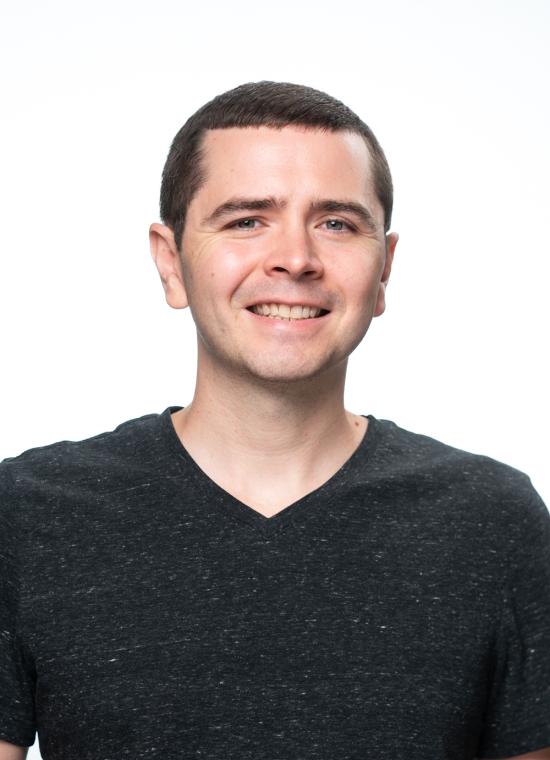
Cantay Caliskan is an Associate Professor at the Goergen Institute for Data Science, University of Rochester. He teaches Data Mining, Statistical Machine Learning, and the Data Science Capstone courses in the undergraduate and graduate data science curriculum. Bachelor of Arts, Brandeis University Master of Arts, Koç University PhD in Political Science, Computer Science, and Statistics, Boston University (2018) His research focuses on computational social science, computer vision, and generative AI, with applications in deep learning, network analysis, and AI ethics in social contexts. His recent publications span interdisciplinary topics including: Geo-cultural bias in AI-generated urban models (SimCityNet) Comparative religious text analysis using LLMs (HalalLLM vs. KosherLLM) Political polarization metrics through social media interactions Article trends highlight AI's role in addressing social science challenges, from electoral geography to disaster response optimization. His work integrates natural language processing, dynamic network modeling, and cross-cultural analysis. He contributes to advancing accessible AI systems (ACROSS) and understanding misinformation dynamics. No scientific awards listed in available data.
Affiliations and Roles Professor Wang holds dual appointments as Professor of Physics and Mechanical and Aerospace Engineering at Cornell University. She is affiliated with the Sibley School of Mechanical and Aerospace Engineering and the College of Arts and Sciences. Education B.S. in Physics, Fudan University, Shanghai, China (1989) Ph.D. in Physics, University of Chicago (1996) NSF-NATO Postdoctoral Fellow, Theoretical Physics, Oxford University (1997) Visiting Member, Courant Institute of Mathematical Sciences, NYU (1997-1999) Research Her research focuses on the physics of living organisms, particularly insect flight dynamics , biophysics , and computational modeling . Key projects include: Dragonfly righting reflex mechanisms Neuro-mechanical control in fruit flies Unsteady aerodynamics and fluid-structure interactions Awards and Honors Simons Fellowship in Theoretical Physics (2020) Radcliffe Fellowship (2007) Cornell Provost's Award for Distinguished Scholarship (2005) David and Lucile Packard Fellowship (2002) Labs and Collaborations Her work integrates experimental and computational approaches, often conducted in collaboration with institutions like the Janelia Research Campus (HHMI) and the Joint Texas Experimental Tokamak (J-TEXT).
Dr. Zhao Na is a tenure-track Assistant Professor at the Singapore University of Technology and Design (SUTD), affiliated with the Institute of Sustainable Technology and Design (ISTD). She holds a Ph.D. in Computer Science from the National University of Singapore (NUS), where her thesis on 3D point cloud semantics earned the IMDA Excellence Prize. Her research bridges computer vision and machine learning, focusing on scene understanding, data-efficient learning, and domain generalization. Education: Ph.D. in Computer Science (NUS, 2021); Prior roles include Research Fellow at NUS. Research interests emphasize 3D scene analysis, object detection, semantic segmentation, and robust learning under noisy or limited data. Her work addresses challenges in multi-modal learning, continual learning, and open-world scenarios. Recent projects include geometry-semantics synergy in neural fields and cross-modal augmentation for visual grounding. Publications span top-tier venues like CVPR, ECCV, and ICCV, with a focus on 3D vision and AI. Key contributions include the PCTeacher framework for semi-supervised segmentation and Static-Dynamic Co-Teaching for incremental learning. Scientific Awards: IMDA Excellence Prize (2021). Active grants include a DSO Research Grant (2023–2026) and A*STAR MTC Grant (2023–2026). She leads the SUTD-ZJU Thematic Grant on 3D scene understanding (2022–2024). Laboratory/Team: Research group at ISTD/SUTD focuses on advancing AI-driven 3D perception and scene understanding systems.
Jean-Christophe Burie is a Professor at the University of La Rochelle, serving as Vice-President for Digital Campus and Information Systems, Deputy Director of the L3i Laboratory (Informatics, Imaging, and Interaction), and Director of the joint research laboratory SAIL (Sequential Art Image Laboratory). His interdisciplinary work bridges computer science and humanities. His research focuses on image processing, pattern recognition, and artificial intelligence , with applications in historical manuscripts, comics indexing, and digital security. Key projects include enhancing palm-leaf manuscript analysis (AMADI/STIC ASIE), developing e-BDthèque for comics content extraction, and identity verification systems (MOBIDEM/IDECYS). He collaborates internationally with institutions like Leiden University and Vietnam's ICT Lab on medical imaging and cultural heritage preservation. He advises doctoral students in areas spanning ancient text analysis, document security, and manga character recognition. His recent publications demonstrate a strong emphasis on deep learning adaptations for document analysis, biometric security, and cross-modal recognition systems.
Kobus Barnard is a Professor in the Department of Computer Science at the University of Arizona, with his office located in GS 708. His research bridges computer vision, machine learning, and interdisciplinary scientific applications across diverse domains. Education: Ph.D. from Simon Fraser University (1999) His research interests focus on extracting meaningful insights from complex data through computer vision and probabilistic modeling. Key areas include machine learning for environmental monitoring (flood detection, plant disease analysis), social dynamics (interpersonal coordination, emotional coregulation), astronomy (transient classification), and multimodal learning (visual-linguistic integration). His work consistently applies deep learning to real-world problems requiring high-resolution data interpretation. Analysis of his 2022-2025 publications reveals three dominant trends: (1) Environmental applications using satellite imagery for flood mapping and agricultural monitoring, (2) Cognitive modeling of human teams and emotional dynamics through probabilistic frameworks, and (3) Astronomical data analysis leveraging host galaxy properties for transient classification. These threads demonstrate his commitment to solving practical scientific challenges through computational innovation. While scientific awards aren't documented in available sources, his leadership in projects like FloodPlanet and ToMCAT indicates significant contributions to data infrastructure. His advising and grant activities remain unreported in the source material, though his extensive interdisciplinary collaborations suggest substantial mentorship impact. Barnard's work operates at the intersection of multiple scientific communities, evidenced by applications spanning neuroscience, agriculture, astronomy, and social science. His current focus on high-resolution data fusion and multimodal modeling positions him at the forefront of real-world AI deployment.
Syrielle Montariol is a Researcher and Course Lecturer at the École Polytechnique Fédérale de Lausanne (EPFL), affiliated with the Natural Language Processing Lab (NLP) under the School of Computer and Communication Sciences (IC). She holds a postdoctoral position and teaches courses related to computational linguistics and AI applications. Her research focuses on advancing NLP, medical language models, multimodal learning, and AI ethics. She works in the INR 240 office and maintains collaborations across EPFL's academic divisions. Research Interests: Her work spans interpretability of AI systems, cross-modal reasoning, medical domain adaptation, sustainability text analysis, and the societal impact of AI. Recent projects include developing explainable models (e.g., global mixture-of-experts frameworks) and benchmarking tools like Vinabench for visual narratives. Publications: Her recent work addresses critical challenges in AI, including vulnerability of higher education to LLMs, medical language model adaptation (Meditron), and robust geo-localization systems. Key themes include ethical AI, multimodal learning, and domain-specific NLP applications. Labs & Teams: She contributes to the NLP lab's initiatives on visual-language models and collaborates with interdisciplinary teams on projects like PAN-RSVQA for remote sensing and PICLe for low-resource NER systems.
Mark Plumbley is a Professor of Signal Processing at the Centre for Vision, Speech and Signal Processing (CVSSP) within the School of Computer Science and Electronic Engineering at the University of Surrey. He holds an EPSRC Fellowship in 'AI for Sound' and has led major research initiatives, including the DCASE challenges. His work focuses on AI-driven analysis of acoustic scenes and events, with contributions to machine learning, audio source separation, and sparse representations. Previously, he was Director of the Centre for Digital Music at Queen Mary University of London and Head of the School of Computer Science at Surrey. Education: PhD in Neural Networks (1991). Academic roles include Professorships at King’s College London (1991–2002) and Queen Mary University of London (2002–2014). Research spans audio event detection, sound scene classification, and generative AI for audio synthesis. He leads projects like the EPSRC-funded 'Making Sense of Sounds' and 'Musical Audio Repurposing using Source Separation', and co-edited the Springer book on Computational Analysis of Sound Scenes and Events. Research Interests: AI for Sound: Machine learning applied to real-world audio analysis. Acoustic Scene and Event Recognition: Developing models for sound classification and localization. Generative Audio Models: Text-to-audio systems and diffusion models for sound synthesis. Healthcare Applications: Audio-based diagnostics and bioacoustic signal processing. Grants and Awards: EPSRC Fellowships, EU-funded networks (SpaRTaN, MacSeNet), and Fellowships from IET and IEEE. Notable awards include the IEEE Young Author Best Paper Award (co-authored with students) and leadership in the DCASE community. Labs and Collaborations: CVSSP at Surrey, collaborations with BBC R&D, and interdisciplinary projects on urban soundscapes and noise pollution (UK Acoustics Network Plus).
Anthony Clark is an Assistant Professor of Computer Science at Pomona College, where he has been teaching since 2020. Previously, he served as an Assistant Professor at Missouri State University from 2016 to 2020. He directs the ARCS (Autonomous Robotics and Complex Systems) Lab, which focuses on improving the robustness and adaptability of autonomous robots, particularly small-scale systems that can navigate unpredictable terrain and adapt to potential damage. Clark earned his Ph.D. in Computer Science from Michigan State University in 2016, where he worked under Dr. Philip K. McKinley, and his B.S. in Computer Engineering from Kansas State University, graduating magna cum laude. His research centers on making autonomous robots more robust and adaptive through optimization algorithms and multimodal systems. He specializes in evolutionary robotics, computer vision, neural networks, and simulation methods for developing control systems that leverage multiple locomotion mechanisms. His recent work demonstrates strong trends across several domains: developing hybrid locomotion systems (wheel/leg transformations), applying deep learning to terrain classification and pathfinding, using simulation environments for training, and exploring pretraining techniques for evolutionary robotics. His research shows a consistent focus on bridging simulation and real-world applications while addressing challenges in robot adaptability and robustness. Faculty Excellence in Teaching, Missouri State University (2018) Best Paper Award, Workshop on Evolutionary and Reinforcement Learning (2013) Best Paper Award, ALIFE Conference, Behavior and Intelligence Track (2012) Outstanding Reviewer, Elsevier (2018) Master Advisor Certification, Missouri State University (2017) Clark has advised numerous undergraduate and graduate students through the ARCS Lab, with current research involving projects like the Adabot (a robot with multiple locomotion mechanisms) and thermal semantic segmentation for aerial field robots. His teaching portfolio includes courses on data structures, algorithms, neural networks, computer systems, and mobile robotics. He has also served as a Visiting Associate at Caltech's ARC Lab from 2023-2024, working with Dr. Soon-Jo Chung. The ARCS Lab develops simulation environments, optimizes control systems, and fabricates physical robots. Current projects include the Adabot with its geared coaxial shaft mechanism for hybrid locomotion, thermal semantic segmentation using satellite data, and creating dynamic simulation environments with Unreal Engine 5. The lab emphasizes practical applications of theoretical research while training students in both hardware and software aspects of robotics.
Dr. Mine Dogan serves as Assistant Professor of Environmental Geophysics in the Department of Geological and Environmental Sciences at Western Michigan University, with her office located in 1121 Rood Hall (Kalamazoo, MI). She holds a Ph.D. from Michigan State University (2013) and previously held research positions at Clemson University's Department of Environmental Engineering and Earth Sciences. Education: Ph.D., Michigan State University, 2013 Her research integrates geophysics, hydrology, and environmental engineering to investigate subsurface processes using advanced methodologies including drone-based electromagnetic surveys, time-lapse monitoring, and 4D X-ray computed tomography. Key focus areas include tree root hydrology, contaminant transport in groundwater, permafrost characterization, and macropore flow dynamics in heterogeneous soils. Analysis of her recent publications (2018-2024) reveals strong emphasis on unmanned aerial systems for geophysical data acquisition, visualization of fluid transport mechanisms in porous media, and forensic/environmental applications of electromagnetic methods. Recurring themes include the role of biological structures in hydrological processes and innovative approaches to subsurface imaging. Scientific Awards: No awards documented in source material While her advising activities and grant funding remain unspecified in available information, her publication record demonstrates active collaboration across geophysics, hydrology, and environmental engineering disciplines. Laboratory facilities and research team structures are not detailed in the provided texts.
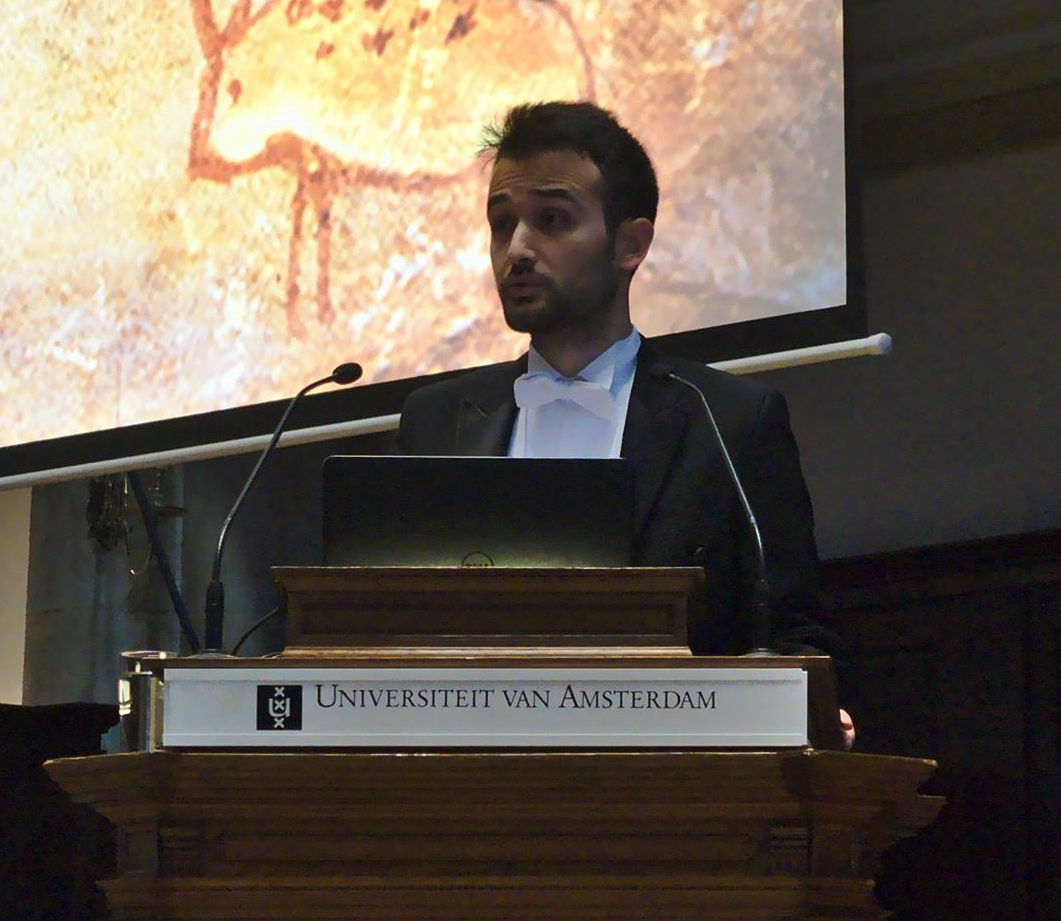
Sezer Karaoglu is a Lecturer and part-time postdoctoral researcher at the Computer Vision Group, Informatics Institute, University of Amsterdam. He is also the CTO and Co-Founder of 3DUniversum, a technology spin-off of the University of Amsterdam that provides state-of-the-art 2D/3D computer vision solutions. Additionally, he has co-founded other startups including Scanm and 3DHealthScan. Dr. Karaoglu received his PhD from the Computer Vision Group, Informatics Institute, University of Amsterdam, with research funded by the COMMIT project. His educational background includes a double master's degree: an optics, image and vision master's degree from University Jean Monnet in France and a media technology master's degree from Gjovik University College in Norway. He completed his undergraduate studies with honors at Istanbul Technical University in Telecommunication Engineering. His research focuses on Artificial Intelligence and 3D Computer Vision, with specific interests in SLAM, re-localization, 3D reconstruction, 3D object detection and segmentation, synthetic media, generative AI, deep fake creation and detection, and VR/AR technologies. His work has significant applications in healthcare, particularly in using deepfake technology for therapy for victims of sexual violence-related PTSD and moral injury, as documented in a Frontiers in Psychiatry article. Analyzing his recent publications reveals a strong trend toward neural scene reconstruction, intrinsic image decomposition, and the application of diffusion models to computer vision problems. His research increasingly integrates 3D scene understanding with language models, as evidenced by his work on language-to-3D scene generation. The applications span from healthcare (deeptherapy.ai) to media authenticity (deepfake detection) and industrial applications. ICT.OPEN Poster Award (3rd Position), Oct'13 Pascal VOC'12 Classification challenge, 2nd Position, Sep'12 Pascal VOC'12 Detection challenge, 3rd Position, Sep'12 Best project award at Nokia and CIMET project competition Outstanding reviewer at CVPR'21 PROVADA Future Startup Battle winner Best Dutch AI startup by Valuer Dr. Karaoglu has supervised numerous PhD, Master's, and Bachelor's students, demonstrating his commitment to academic mentorship. His research has attracted significant media attention, with features on Dutch national TV programs including NPO, VPRO, RTL, and international outlets like BBC News. He has received research funding through the COMMIT project during his PhD studies and has successfully translated his research into commercial applications through his startups. His work on deepfake technology has been applied in innovative therapeutic contexts through DeepTherapy.ai, showing the real-world impact of his research. Dr. Karaoglu leads research efforts at the Computer Vision Group Amsterdam and through his company 3DUniversum, which has developed applications like weScan, DeepTherapy, and FairFake.ai. His team collaborates with various institutions including the Netherlands Film Academy for grief therapy applications using deepfake technology. The DeepTherapy project represents a particularly impactful application of his work, using deepfake technology to help victims of sexual violence confront perpetrators in therapeutic settings.
Dr Lounis Chermak is a Lecturer in Computer Vision and Autonomous Systems at the Centre for Electronic Warfare, Information and Cyber, part of Cranfield Defence and Security at Cranfield University, UK. He leads the Joint Autonomy Lab and is actively involved in research and education in autonomous systems with applications in defence and space. Research Interests: His work focuses on situational awareness in autonomous platforms, with core expertise in computer vision, sensor fusion, artificial intelligence, robotics, and navigation. He investigates perception, decision-making, and mobility across aerial, ground, maritime, and space systems, developing robust solutions for challenging environments including low visibility and extreme illumination. The recent publications reflect a strong trend in autonomous navigation, particularly for space and defence applications, using advanced computer vision techniques such as thermal stereo odometry, HDR imaging, stixel-based scene understanding, and lightweight 3D descriptors. Research also extends to cybersecurity of autonomous systems, including impersonation attack detection and optical countermeasures. Scientific Awards: No scientific awards mentioned in the provided text. Advising and Grants: Dr Chermak leads research activities supported by postdoctoral researchers, PhD, and MSc students. His work is funded and applied in collaboration with major clients including aerospace organizations (ESA, UK Space Agency, Thales Alenia Space), defence agencies (MoD, DSTL, BAE Systems, MBDA), and technology companies (Samsung, Astroscale). He supervises research students in robotics and autonomous systems across civilian and defence domains. Labs and Teams: He leads the Joint Autonomy Laboratory, a 200 m² indoor facility equipped with drone netting, motion capture systems, virtual reality test benches, UAV and ground robot fleets, electric vehicles, and multiple sensors for vision, ranging, and motion. This lab supports both educational and cutting-edge research in autonomous systems.
Silvia Cascianelli is an AI and Computer Vision Researcher at the University of Modena and Reggio Emilia (UNIMORE). She actively contributes to the computer vision and document analysis communities through research, conference organization, and academic mentorship. She serves as Area Chair for major computer vision conferences including CVPR2025, BMVC2025, and ECCV2024, demonstrating her standing in the field. Her research focuses on several key areas within computer vision and document analysis: Image Generation : Developing efficient and lightweight methods for image generation with desired characteristics, particularly using diffusion models Handwriting Imitation : Creating algorithms for generating images of text with specific content and handwriting styles, along with evaluation methods Document Understanding : Extracting information from 2D and 3D document images, ranging from modern documents to historical artifacts like carbonized Roman papyri Dr. Cascianelli's work shows a clear progression toward more sophisticated generative models and evaluation frameworks, with recent publications focusing on diffusion models for handwritten text generation, efficient token reduction for multimodal tasks, and innovative approaches to historical document analysis. Her research bridges theoretical advancements with practical applications across diverse document types. Her scientific contributions have been recognized through invitations to serve as Area Chair for top-tier computer vision conferences (CVPR, ECCV, BMVC) and opportunities to organize specialized workshops including VisionDocs at ICCV, AI4DH at ECCV, and ADAPDA at ICDAR. Area Chair at CVPR2025 Area Chair at BMVC2025 Area Chair at ECCV2024 Organizer of VisionDocs Workshop at ICCV2025 Organizer of AI for Digital Humanities Workshop at ECCV2024 Organizer of ADAPDA Workshop at ICDAR2024 Dr. Cascianelli actively mentors the next generation of researchers: Vittorio Pippi - PhD Student at UniMoRe (National PhD program in AI) Fabio Quattrini - PhD Student at UniMoRe (ICT program) Carmine Zaccagnino - Research Intern at UniMoRe (formerly MSc student) Kostantina Nikolaidou - PhD Student at Luleå University of Technology Pau Torras Coloma - PhD Student at Computer Vision Center, Universitat Autònoma de Barcelona Bram Vanherle - CV Engineer at Colruyt Group Smart Innovation (formerly PhD student) She is actively involved in several research initiatives including the AI Governance Lab where she serves as a lecturer, and collaborates with institutions worldwide. Her current projects focus on advancing diffusion models for image generation, improving handwritten text recognition systems, and developing novel methods for document understanding across historical and contemporary contexts.