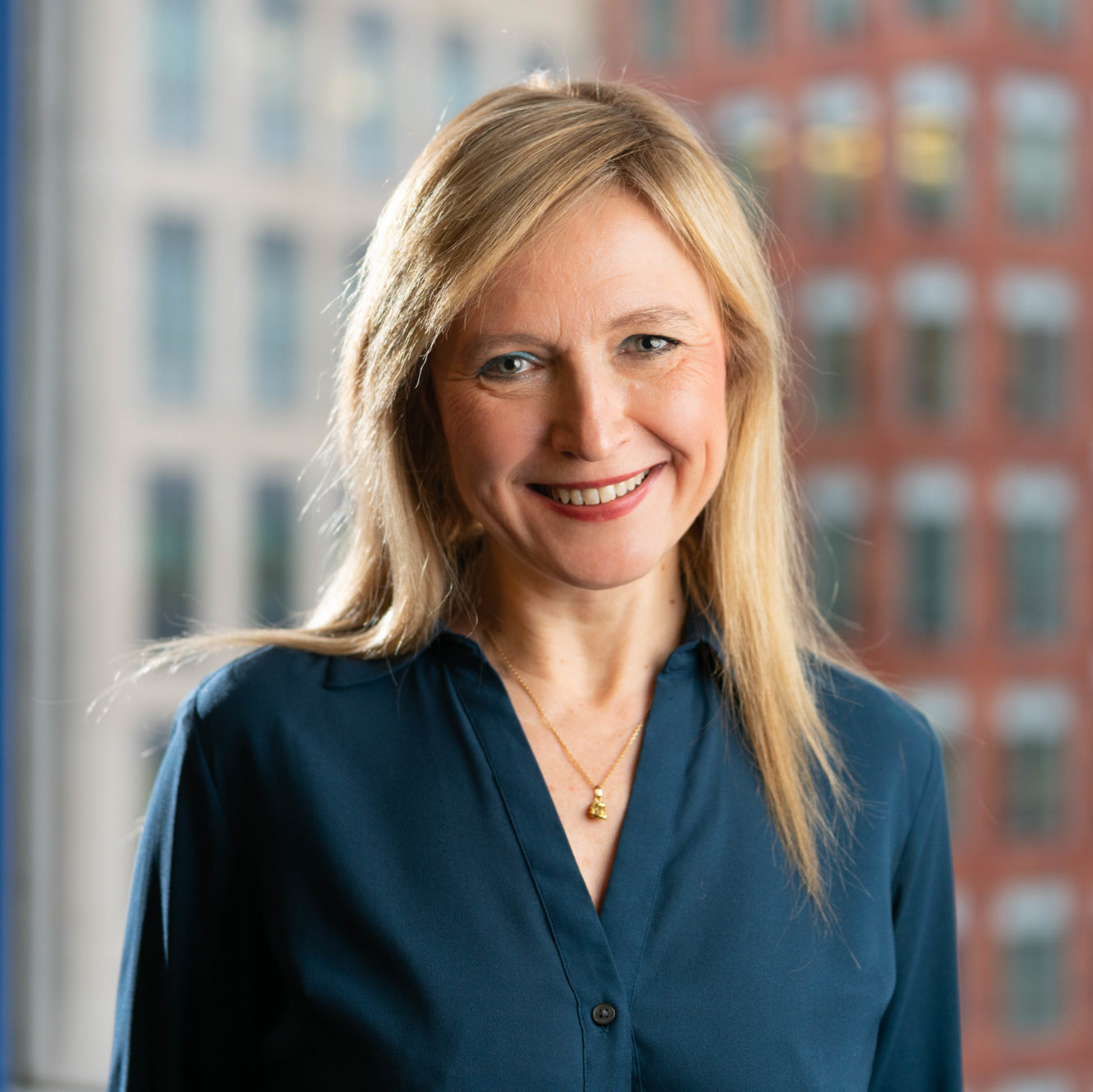
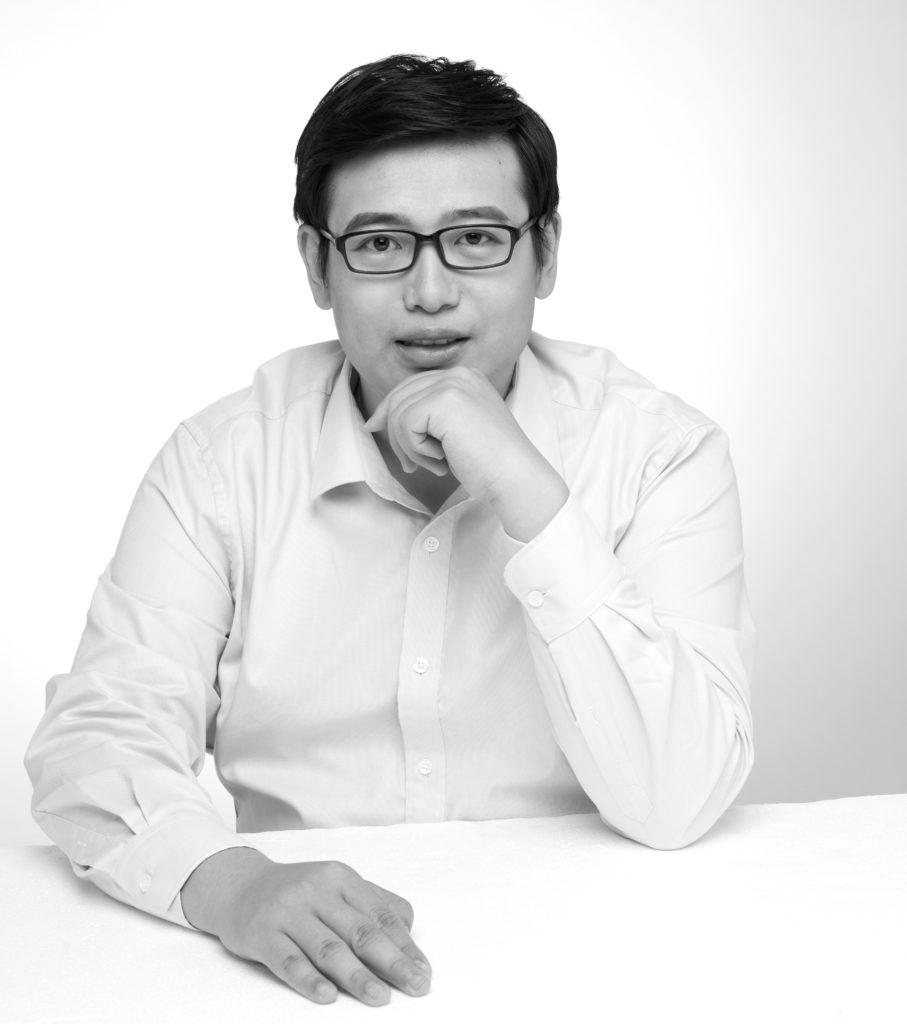
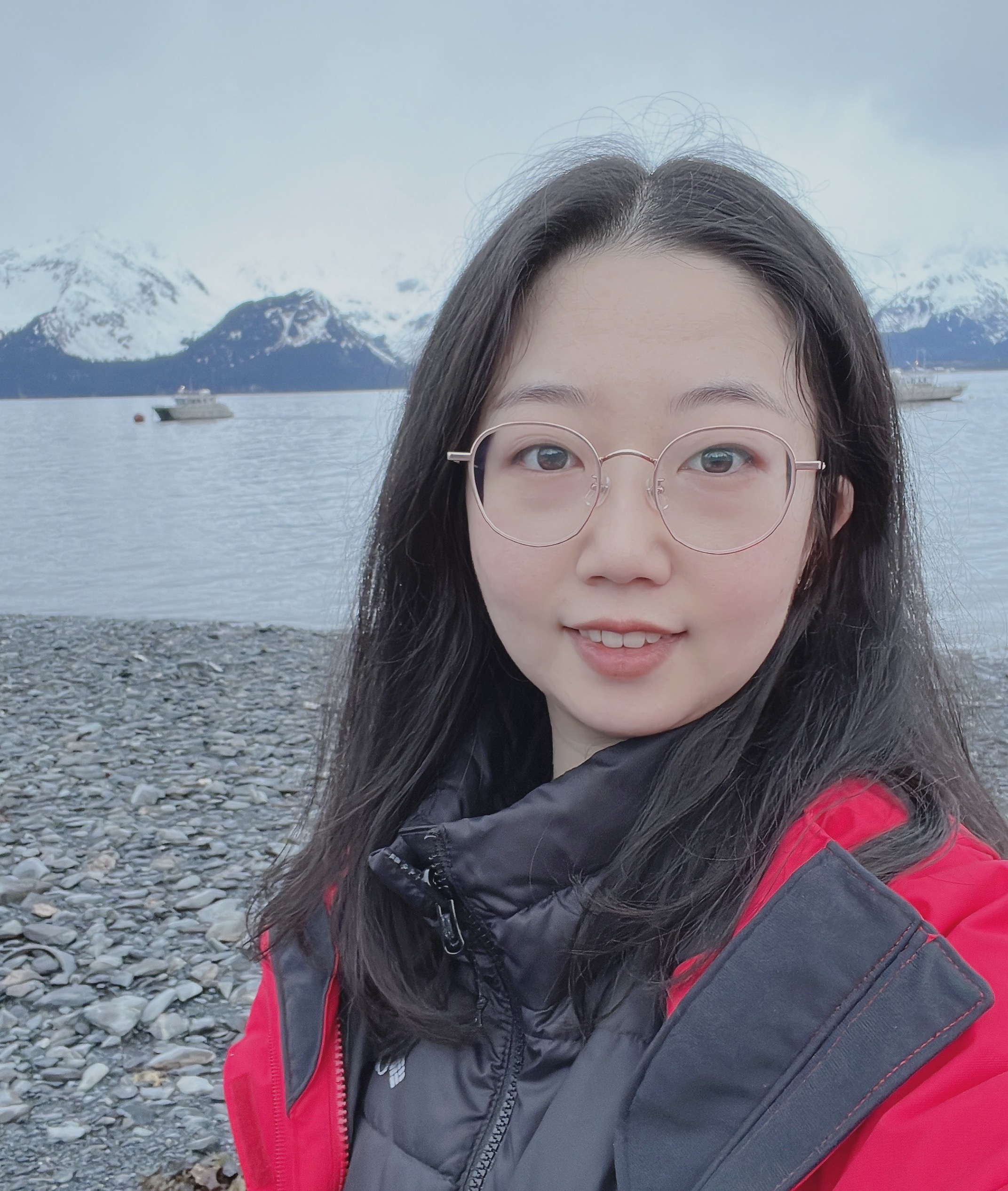
Adam Misik is a researcher at the Chair of Media Technology (Prof. Steinbach) within the College of Engineering at the Technical University of Munich. He earned a B.Sc. in 2019 and M.Sc. in 2022 in Electrical Engineering and Information Technology, with study visits at EPFL and Télécom ParisTech. Since June 2022, he has been an external PhD student at Siemens AG. His research focuses on multimodal sensor data analysis using computer vision and deep learning techniques, particularly for 3D reconstruction and localization problems. His work intersects with fields like haptic communication , indoor mapping , and human activity understanding . Key publication trends include point cloud registration , hyperbolic learning , and equivariant neural networks . Recent works address surface material classification (2025), CAD model retrieval (2025), and SLAM systems (2024). Education: B.Sc. (2019), M.Sc. (2022) in Electrical Engineering and Information Technology, TU Munich Current Role: External PhD student at Siemens AG since 2022 Research Affiliation: Chair of Media Technology at TU Munich, part of the Munich Institute of Robotics and Machine Intelligence (MIRMI)
Aude Oliva serves as MIT director of the MIT-IBM Watson AI Lab and director of strategic industry engagement at the MIT Schwarzman College of Computing. As a Senior Research Scientist at MIT CSAIL, she leads the Computational Perception and Cognition group, driving interdisciplinary research at the intersection of human intelligence and artificial systems. Her roles position her at the forefront of translating academic AI research into real-world applications through major industry partnerships. Dr. Oliva earned her MS and PhD in cognitive science from Institut National Polytechnique de Grenoble, France, establishing her foundation in human perception and computational modeling. Her research integrates computer vision, deep learning, and cognitive neuroscience to understand visual information processing in both biological and artificial systems. She develops computational models that mimic human visual recognition while creating AI systems capable of compositional reasoning and efficient video understanding. Current work emphasizes neuroscience-inspired architectures, resource-efficient deep learning, and multimodal representation learning, with applications spanning healthcare, robotics, and human-computer interaction. Her cross-disciplinary approach uniquely bridges theoretical neuroscience with practical AI development. Analysis of recent publications reveals a clear trajectory toward tighter integration of neuroscience and AI, particularly through brain imaging datasets like BOLD Moments. Her group consistently advances efficient deep learning techniques (Trans-LoRA, VA-RED²) while exploring fundamental questions in visual cognition through projects like the Algonauts Challenge. The work demonstrates increasing industry relevance with strong representation in NeurIPS and Nature Communications. Her major recognitions include: NSF Career Award in computational neuroscience Guggenheim fellowship in computer science Vannevar Bush Faculty Fellowship in cognitive neuroscience As director of the $240M MIT-IBM Watson AI Lab, Dr. Oliva oversees substantial research funding while advising graduate students through MIT's EECS department. Her lab benefits from unique industry-academic synergy, with students gaining access to IBM resources and real-world deployment challenges. The collaborative environment fosters innovation in efficient AI systems with tangible societal impact. The Computational Perception and Cognition group operates as a dynamic hub where computer scientists, neuroscientists, and cognitive scientists collaborate on fundamental questions of intelligence. Current projects focus on making AI systems more human-like in visual reasoning while ensuring computational efficiency for real-world deployment, leveraging the unique resources of the MIT-IBM partnership.
Chuang Gan is a distinguished researcher holding dual positions as a Principal Research Staff Member at the MIT-IBM Watson AI Lab and an Assistant Professor at the University of Massachusetts Amherst. His work bridges academic research and industrial applications in artificial intelligence, with particular focus on advancing the frontiers of computer vision and multimodal learning systems. Dr. Gan's research interests span multiple interconnected domains within artificial intelligence. He specializes in video understanding, with deep expertise in representation learning, neural-symbolic visual reasoning, audio-visual scene analysis, and embodied intelligence. His work frequently integrates graph deep learning techniques with neuro-symbolic approaches to create more interpretable and robust AI systems. The recurring themes across his research portfolio include developing models that can understand physical dynamics from visual inputs, creating systems capable of embodied reasoning, and building bridges between symbolic and neural approaches to artificial intelligence. His publications reveal a strong trend toward increasingly sophisticated multimodal systems that integrate visual, auditory, and linguistic information. Over time, his work has evolved from basic video understanding tasks to complex embodied reasoning systems capable of physical simulation, 3D scene understanding, and multi-agent collaboration. A notable pattern is the progression from analyzing static scenes to understanding dynamic physical interactions and embodied agent behaviors in increasingly complex environments. Microsoft Fellowship Baidu Fellowship Dr. Gan's research has received significant recognition from major technology companies through prestigious fellowships and has been widely covered by leading media outlets including CNN, BBC, The New York Times, WIRED, Forbes, and MIT Tech Review. His work at the MIT-IBM Watson AI Lab provides him with access to substantial resources for cutting-edge AI research, while his academic position enables him to train the next generation of AI researchers. His collaborations with prominent researchers like Antonio Torralba demonstrate his integration within the top echelons of the computer vision and AI research community. At the MIT-IBM Watson AI Lab, Dr. Gan leads research initiatives focused on advancing video understanding and embodied intelligence. His work contributes to the lab's mission of developing AI systems that can perceive, reason about, and interact with the physical world in more human-like ways. His research group likely focuses on developing novel architectures for multimodal learning, creating benchmarks for physical reasoning, and building systems that can transfer knowledge between simulation and real-world environments.
Bo Wu is a Researcher at the MIT-IBM Watson AI Lab in Cambridge, MA, where he conducts pioneering research in deep learning, computer vision, natural language processing, and multimodal learning. Previously, he served as a postdoctoral research scientist at Columbia University after completing his Ph.D. at the Chinese Academy of Sciences (CAS) in Beijing, with additional research experience at Microsoft Research Asia (MSRA) and Academia Sinica. His academic foundation includes: Ph.D. in Computer Science, Chinese Academy of Sciences (CAS) Research internships at Microsoft Research Asia and Academia Sinica Wu's research focuses on advancing situated reasoning in real-world contexts, integrating neuro-symbolic approaches with deep learning for enhanced interpretability. His work spans video question answering, temporal forecasting, and multimodal understanding, with applications in social media prediction, enterprise AI, and personalized dialogue systems. He emphasizes bridging symbolic reasoning with neural networks to develop robust systems capable of handling open-world knowledge and dynamic environments. Analysis of his recent publications reveals three dominant trends: the creation of novel benchmarks for situated video reasoning (STAR, SOK-Bench), development of efficient multimodal architectures for enterprise applications (Granite Vision), and personalization techniques for language models. His research consistently merges computer vision with linguistic understanding while addressing practical constraints like real-time processing and model compression, demonstrating strong industry-academia translation. His scientific excellence is evidenced by prestigious recognitions including: IBM Master Inventor Award (2023) IBM Research Level-A Accomplishment Award (2021) ACL Best Demo Paper Award (2020) ICIP Prediction Challenge Champion (2020) Alibaba Global Vision AI Challenge Top 3 (2018) NIST TAC SM-KBP Top 1 (2019) Wu actively mentors emerging talent, currently recruiting students for vision-language projects. He provides significant academic service as Area Chair for ACM Multimedia, Senior Program Committee Member for AAAI and IJCAI, and organizer of the SMP Challenge at ACM Multimedia since 2017. His leadership extends to CVPR workshops on Multimodal Foundations Models (MMFM) and Multimodal Video Content Understanding (MVCS), while serving on program committees for NeurIPS, CVPR, ACL, and other top-tier conferences. As a core member of the MIT-IBM Watson AI Lab, Wu operates within a unique industry-academia ecosystem that fosters rapid translation of fundamental research into practical applications. His collaborative work with Chuang Gan and other researchers leverages IBM's computational resources and MIT's academic rigor, positioning him at the forefront of enterprise AI innovation where theoretical advances directly address real-world business challenges.
Yuqi Song is an Assistant Professor in the Department of Computer Science at the University of Southern Maine (USM), where she joined in August 2023 after completing her Ph.D. at the University of South Carolina. Her interdisciplinary research bridges machine learning with materials science, tourism, and recommender systems. Her educational background includes: Ph.D. in Computer Science, University of South Carolina (2023), supervised by Dr. Jianjun Hu M.S. and B.S. in Computer Science, Chongqing University, supervised by Dr. Ming Gao Dr. Song's research focuses on applying state-of-the-art deep learning techniques—including generative adversarial networks, graph neural networks, and transformer models—to solve real-world problems. She develops AI-driven solutions for materials discovery (predicting crystal structures and properties) and tourism applications (employee turnover prediction systems). Her work uniquely combines computational methods with domain-specific challenges, emphasizing practical implementation through user-friendly tools like her materials informatics web platform MaterialsAtlas.org. Analysis of her recent publications (2023-2025) reveals three dominant research thrusts: (1) materials informatics using transformer-based generative models for crystal structure prediction, (2) robust recommender systems security against data hybrid attacks, and (3) computer vision innovations in depth estimation and medical image analysis. Her work consistently leverages attention mechanisms and cross-disciplinary data integration. Dr. Song actively mentors graduate students, currently advising Reihaneh Maarefdoust (Complex Learning and Machine Learning) and Zahra JahediBashiz (NLP, Generative AI). She teaches core courses including Software Engineering (COS 430) and Artificial Intelligence (COS 470), emphasizing practical programming skills. Her lab seeks motivated students for projects in materials discovery and tourism analytics. She leads a research group focused on interdisciplinary AI applications, collaborating with materials scientists and hospitality industry partners to develop deployable solutions. Current initiatives include deep learning models for predicting piezoelectric properties and generative design of 2D materials, alongside tools for tourism workforce analytics.
Bin Ran serves as the Vilas Distinguished Achievement Professor and Director of the Intelligent Transportation Systems (ITS) Program within the Civil & Environmental Engineering Department at the University of Wisconsin-Madison. A globally recognized expert in Connected Autonomous Mobility (CAM), he has authored over 850 scientific articles and secured more than 200 patents across multiple jurisdictions, significantly advancing transportation engineering through innovations in vehicle-highway automation and intelligent infrastructure systems. His educational foundation includes a PhD from the University of Illinois at Chicago (1993), an MS from the University of Tokyo (1989), and a BS from Tsinghua University (1986). These qualifications underpin his leadership in transportation research and education. Ran's research program centers on Connected Autonomous Mobility (CAM), Collaborative Automated Driving Systems (CADS), and Connected and Automated Vehicle & Highway (CAVH) technologies. His work integrates dynamic transportation network modeling, smart city applications, big data analytics, and Drive GPT-enhanced traffic simulation to develop proactive safety systems and resilient infrastructure solutions. Current projects emphasize cloud-based architectures, digital twins, and cooperative vehicle control frameworks. Analysis of his 2024-2025 publications reveals dominant trends in cloud-to-vehicle control systems, risk-quantified adaptive cruise control, and federated digital twin frameworks for connected corridors. Research spans cybersecurity for connected vehicles, energy-efficient platooning, and urban traffic flow optimization—addressing both technological innovation and sustainability challenges in transportation networks. Professor Ran has received prestigious accolades including the ITE's Wilbur S. Smith Distinguished Transportation Educator Award (2018) and the Vilas Distinguished Achievement Professorship (2016). His complete award portfolio features: 2025 TRB Committee on Vehicle-Highway Automation Best Paper Award 2024 Top 0.05% Lifetime Global Highly Ranked Scholar in Transport 2020 ASCE Journal Best Paper Award 2010 Chinese National Distinguished Expert Lifetime Honor 1994 Charley Wootan Award for best transportation PhD dissertation He actively mentors graduate researchers through thesis supervision (CIV ENGR 890/990 courses) and leads major initiatives including the Transportation Research Board's Task Force on vehicle-highway automation architecture and the World Transport Convention's Faculty Committee. His grant portfolio supports international collaborations through the International Road Federation's 180-country network. As ITS Program Director, Ran oversees a research ecosystem integrating connected vehicle corridors, roadside edge computing, and V2X-enabled infrastructure. His team develops physical-virtual integration frameworks like the Digital Twin for Connected Vehicle Corridors, focusing on real-world deployment of cooperative automated driving systems across diverse environmental conditions.
Tuğrul TAŞCI serves as an Assistant Professor in the Department of Information Systems Engineering at Sakarya University's Faculty of Computer and Information Sciences, where he has maintained continuous academic service since 2001. His career progression includes Research Assistant positions across multiple university units before advancing to his current faculty role in 2016. His academic credentials include: Doctorate in Computer and Information Engineering (2014) from Sakarya University Institute of Science, thesis: Real-Time Motion Tracking with Particle Filtering Based on Data Fusing Master's degree in Computer and Information Engineering (2004) with thesis: Design of an Integrated Web-Based Distance Education System Bachelor's degree in Computer Engineering (2001) with thesis: Course Scheduling with Genetic Algorithms Dr. TAŞCI's research centers on Artificial Intelligence applications, particularly Natural Language Processing for Arabic text and Computer Vision . His work integrates particle filtering , data fusion , and optimization algorithms (e.g., Artificial Bee Colony, Firefly) to solve problems in text summarization, motion tracking, and image processing. Recent publications demonstrate expansion into deep learning for industrial defect detection and time series analysis. Analysis of his 2019-2024 publications reveals three dominant research trajectories: (1) Arabic NLP with focus on extractive summarization using PageRank and word embeddings, (2) Computer vision systems for motion tracking and text detection leveraging particle filters and curvature features, and (3) Hybrid optimization techniques applied to diverse domains from emergency management to customer churn prediction. Current academic advising activities and research grant details are not publicly documented in available sources. Similarly, no institutional laboratories or research teams are explicitly associated with his profile in the provided materials.
E. Eisemann is a Professor at the Computer Graphics and Visualisation department within the Faculty of Electrical Engineering, Mathematics and Computer Science at Delft University of Technology (TU Delft). Their research focuses on computer graphics, virtual reality, and 3D modeling, with recent publications addressing ray-box intersections, neural scene representations, and interactive modeling systems. Current research trends include Advancements in real-time rendering algorithms Applications of neural networks for 3D scene reconstruction Innovative approaches to human-computer interaction in VR environments Optimization techniques for large-scale environment rendering Research output spans 164 publications, with recent work appearing in venues like Computer Graphics Forum and ACM SIGGRAPH conferences. Supervised work includes 18 formal advisees.
Dr. Zhi Huang serves as an Instructor and incoming Assistant Professor in the Department of Pathology and Laboratory Medicine, with a secondary appointment in the Informatics Division of the Department of Biostatistics, Epidemiology, and Informatics. His academic work bridges biomedical research with artificial intelligence to advance healthcare solutions. His research expertise spans critical areas in medical AI: Biomedical AI : Developing AI models for clinical decision support Human-AI Collaboration : Designing intuitive interfaces for clinician-AI teamwork Medical Image Platforms : Creating scalable infrastructure for medical imaging analysis Digital Pathology : Implementing AI-driven tissue analysis systems Precision Medicine : Tailoring treatments using genomic and clinical data integration Analysis of his publication record reveals a strong interdisciplinary trajectory connecting computer vision, multi-agent systems, and clinical applications. His work demonstrates consistent innovation in translating autonomous systems research—particularly in scene graph generation, motion planning, and visual question answering—into medical contexts including digital pathology platforms and precision diagnostics. Recent contributions emphasize open-source frameworks for accessible medical AI development.
Pascual Campoy Cervera is a Full Professor at the Universidad Politécnica de Madrid (UPM) and holds visiting professor positions at Delft University of Technology, Tongji University, and Queensland University of Technology. His work focuses on Control Systems , Machine Learning , and Computer Vision for Unmanned Aerial Vehicles (UAVs) . As Principal Investigator of the Computer Vision and Aerial Robotics group at UPM's Center for Automation and Robotics (CAR), he has led over 40 R&D projects with European, national, and industrial funding. Current affiliations: UPM, TU Delft, CAR-UPM Research themes: UAV autonomy, swarm robotics, embedded vision systems His research integrates cutting-edge technologies in image processing, control theory, and artificial intelligence to enhance UAV capabilities in unstructured environments. Recent projects include: Autonomous firefighting systems High-speed drone racing frameworks Swarm-based solar farm inspection Thrust vectoring for heavy UAVs Notable scientific awards include multiple international prizes at UAV competitions (IMAV12–17). His team has developed the Aerostack and Aerostack2 frameworks for aerial robotics, which address execution control, mission planning, and sensor fusion challenges.
Prof. Dr. Alexander Ecker is Professor of Data Science at the Institute of Computer Science, University of Göttingen, and concurrently holds the prestigious Max Planck Fellow position at the Max Planck Institute for Dynamics and Self-Organization. Since 2020 he also serves on the Executive Board of the Campus Institute Data Science in Göttingen. He leads the Neural Data Science research group, comprising 14 PhD students and 2 postdoctoral researchers, focusing on the interface of machine learning and computational neuroscience. His educational background includes a Dr. rer. nat. in Neuroscience (2014) from the Graduate School of Neural and Behavioral Sciences/IMPRS, University of Tübingen, followed by post-doctoral and group-leader positions at the University of Tübingen and the Max Planck Institute for Biological Cybernetics. Research Interests Machine Learning & Deep Learning: developing novel algorithms for representation learning and generative modeling. Computational Neuroscience: large-scale data-driven modeling of visual cortical circuits. Visual Perception: bridging biological vision and computer vision via biologically inspired architectures. His work has produced a steady stream of influential publications (2019-2025) in leading journals such as Nature Communications , Nature , Nature Methods , PLOS Computational Biology , ICLR , NeurIPS , and CVPR . The publications trend toward integrating high-resolution neural recordings with state-of-the-art machine-learning models to uncover principles of sensory processing, neuron-type classification, and behavior. Scientific Awards & Honors Max Planck Fellow, Max Planck Institute for Dynamics and Self-Organization (ongoing) Executive Board Member, Campus Institute Data Science, Göttingen (since 2020) Teaching, Advising & Grants Regularly teaches advanced courses: “Deep Learning for Image Synthesis”, “Current Topics in Deep Learning”, and “Graph Machine Learning”. Supervises 14 current PhD students and 2 postdocs within the Neural Data Science Group. Offers numerous Bachelor’s and Master’s thesis projects, with topics ranging from neuronal morphology clustering to primate vocalization analysis. Leads or co-leads large collaborative consortia with labs in Göttingen, Tübingen, Baylor College of Medicine, and other institutions across the US and Germany. Labs & Teams The Neural Data Science Group operates at the Institute of Computer Science, University of Göttingen, and is tightly integrated with the Max Planck Institute for Dynamics and Self-Organization. The group maintains active collaborations with over a dozen partner laboratories, including groups led by Fabian Sinz, Andreas Tolias, Thomas Euler, Tim Gollisch, and Viola Priesemann, fostering an interdisciplinary environment that spans computer science, physics, biology, and psychology.
Huijuan Xu is an Assistant Professor in the Department of Computer Science and Engineering. Her research spans artificial intelligence, computer vision, and knowledge representation, with a focus on temporal modeling, semantic reasoning, and multimodal learning. She has contributed to advancements in virtual reality streaming, knowledge graph completion, and weakly-supervised video analysis. Research output: 32 publications (2015-2025), including 15 peer-reviewed articles and conference contributions Core research areas: Representation Learning (100% match), Knowledge Graph (100% match), Temporal Action Detection (86% match), and Motion Feature Learning (73% match) Her recent work explores: 2025 : Bandwidth-optimized VR streaming for edge devices 2024 : Neural concept reasoning for image retrieval and avatar generation from sparse data 2023 : Zero-shot scene graph generation and bias mitigation in visual QA
Giorgos Stamou is a Professor at the School of Electrical and Computer Engineering, National Technical University of Athens (NTUA), and a Visiting Professor at the MIT Sloan School of Management and MIT Open Learning. He directs the Artificial Intelligence and Machine Learning Systems Laboratory (AILS Lab) and has been a senior researcher at the Institute of Communications and Computer Systems (2000-2008) and an academic visitor at Oxford University (2011-2012). His research spans Deep Learning , Explainable AI , and Knowledge Representation , with a focus on Large Language Models and Multimodal Learning . He has coordinated over 60 funded projects and published 150+ papers. Recent work highlights trends in LLM Evaluation , Gender Bias Mitigation , and Multimodal Music Analysis , reflecting his interdisciplinary approach to AI challenges. Stamou has served on steering committees for W3C working groups (Rule Interchange Format, Web Ontology Language) and contributed to cultural heritage metadata enrichment through the CrowdHeritage projects. He founded NTUA's MSc program in Data Science and Machine Learning (2018-2022) and has organized conference tracks on riddle-solving frameworks and hallucination detection.
Tarik Kelestemur is a roboticist specializing in autonomous systems, with affiliations including Boston Dynamics AI Institute and Northeastern University. His work bridges robotics, artificial intelligence, and computer engineering, focusing on tactile manipulation, 3D semantic understanding, and policy learning frameworks. His research interests include: Robotics Artificial Intelligence Machine Learning Computer Engineering Autonomous Systems Human-Robot Interaction Recent publications highlight advancements in diffusion policies, vision foundation models, and 3D relational object graphs. Tarik received an Outstanding Paper Award Finalist at CoRL 2024 and contributes to open-source robotics projects like point_cloud_proc and icub_arm_imitator .
Prof. Dr. Didier Stricker is a leading academic in computer science, serving as Scientific Director at the German Research Center for Artificial Intelligence (DFKI) and Professor at the University of Kaiserslautern-Landau (RPTU). His career spans over two decades, including leadership roles at Fraunhofer IGD and founding the Augmented Vision research unit at DFKI/RPTU, which now includes ~30 researchers. Education: Electrical Engineering (Technical University of Grenoble, Karlsruhe) PhD: Computer Vision-based Calibration and Tracking Methods for Augmented Reality (2002, TU Darmstadt) His research focuses on virtual and augmented reality , computer vision , human-computer interaction , and on-body sensor networks . He leads major EU/national projects like LUMINOUS (Language-Augmented XR) and SHARESPACE (Ethical Hybrid Shared Spaces), with industrial partnerships including Sony, Google, and John Deere. Recent publications emphasize 3D reconstruction , neural network optimization , and XR systems . Key trends include event camera processing , scene flow estimation , and multimodal AI for industrial applications . He holds patents in AR tracking and has received the 2006 Innovation Prize from the German Society of Computer Science. Scientific Awards : Innovation Prize (2006) Best Paper/Demonstration Awards at ISMAR, EUSIPCO, CVPR, and ICRA As a reviewer for journals and conferences in VR/AR and computer vision, he contributes to shaping research standards. His lab ( AG Augmented Vision ) combines academic and industrial collaborations to advance cognitive interfaces and extended reality systems.