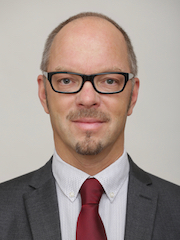
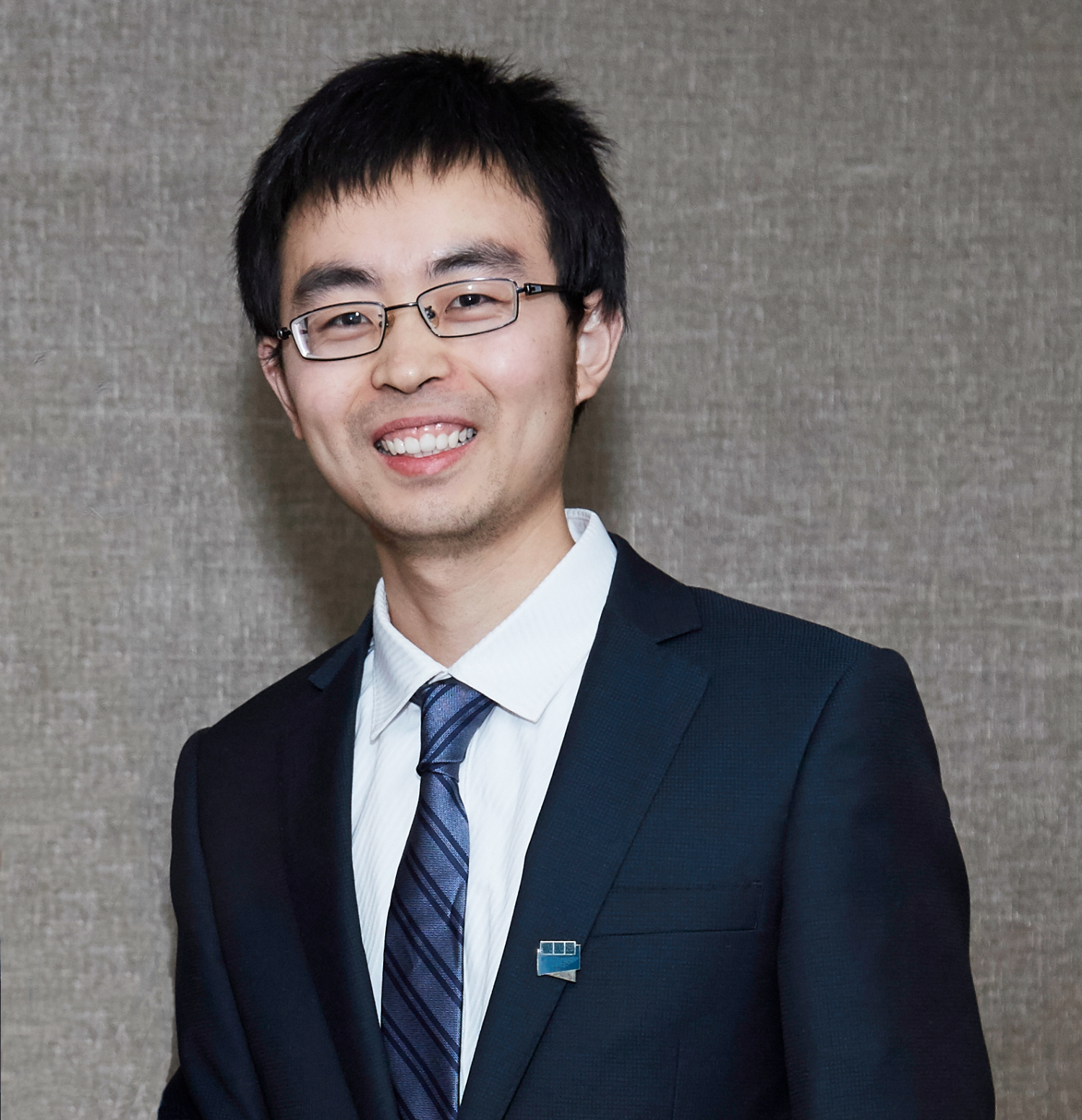
Zhi-Xun Shen is the Paul Pigott Professor in Physical Sciences at Stanford University, holding dual appointments in the Physics and Applied Physics Departments. He is a senior fellow at the Precourt Institute for Energy and serves on advisory boards for the Knight-Hennessy Scholars and Stanford Science Fellows programs. His research focuses on condensed matter and materials physics, particularly the electronic structures of superconductors, topological insulators, and novel materials. Dr. Shen pioneered advanced spectroscopic techniques, including photon-based imaging and scattering methods, and has authored over 600 publications with significant citation impact. His honors include the Kamerlingh Onnes Prize (2000), E.O. Lawrence Award (2010), and Oliver E. Buckley Prize (2011). He co-founded PrimeNano Inc., commercializing technologies from his lab, such as microwave impedance microscopy. His work bridges fundamental physics with energy-related applications, emphasizing the interplay between electronic structure and material properties. Dr. Shen’s research group explores cutting-edge topics like topological surface states, electron-phonon interactions, and superconductivity mechanisms. His inventions, such as non-resonance microwave imaging, have found applications in materials characterization. He remains active in advancing instrumentation and fostering interdisciplinary collaborations through his academic and industry roles.
Roman Schnabel is a Professor of Experimental Physics at the University of Hamburg , affiliated with the Institute for Laser Physics under the Faculty of Mathematics, Informatics and Natural Sciences. He leads cutting-edge research in quantum optics, gravitational wave detection, and quantum technologies. Education : PhD in Physics (1999, Leibniz Universität Hannover); Physics degree (1988–1994, Leibniz Universität Hannover) Awards : QCMC 2018 Award, Gruber Cosmology Prize 2016 (LIGO team), Special Breakthrough Prize in Fundamental Physics 2016 (LIGO team), Joseph F. Keithley Award 2012 His recent work explores high-frequency gravitational wave observatories , entanglement generation , and quantum-enhanced sensing . He holds patents for gas sensors and optical surface imaging technologies. Schnabel co-founded the start-up Noisy Labs in 2023 and served as Director of Outreach & Transfer for the Cluster of Excellence 'Quantum Universe' (2019–2022).
Jun Liu is an Assistant Professor in the Department of Mechanical and Aerospace Engineering at the School of Engineering and Applied Sciences, University at Buffalo. His research focuses on advanced energy materials, nano/micro-mechanics, and self-powered systems, with applications in triboelectric energy harvesting and scanning probe microscopy. Education: PhD, Materials Engineering, University of Alberta (2018) MS, Materials Science, Shanghai University (2015) BE, Materials Science and Engineering, Nanchang University (2012) Research Interests: Development of tribovoltaic and triboelectric systems for self-powered electronics Mechanical energy harvesting via dynamic heterojunctions and Schottky contacts 3D-printed hydrogel structures for energy absorption and flexible electronics Nanoscale characterization using atomic force microscopy Design of nanocomposite sensors and catalytic materials Publication Trends: His work emphasizes triboelectricity, nanoscale energy conversion, and sustainable materials. Recent articles explore bionic tactile sensing, tunable hydrogels, and quantum dynamics in sliding interfaces. Awards: SONY Faculty Innovation Award (2021) Nature Springer MINE Young Scientist Award (2020) International Contest of Applications in Nano/Micro Technology Prize (2013) Laboratory: Advanced Energy Materials and Nanomechanics Lab at University at Buffalo.
Angela Kou is an Assistant Professor in the Department of Physics at the University of Illinois at Urbana-Champaign, specializing in the intersection of quantum information science and condensed matter physics. Her laboratory develops novel superconducting circuit elements and qubits, while also utilizing superconducting circuits to investigate topological materials with potential applications in quantum computing. She actively seeks postdoctoral researchers and graduate students to explore superconducting qubit engineering and quantum material sensing. Her research integrates quantum information , topological materials , and superconducting circuit design . Recent publications demonstrate expertise in fluxonium qubit control , quantum dot Josephson junctions , and parafermion zero modes in exotic heterostructures. She contributes to advancing cryogen-free dilution refrigerator technology for scanning probe microscopy applications. Current research trends focus on quantum coherence optimization , phase-slip qubit operation , and vibration mitigation in cryogenic systems. Her work receives support from the Air Force Office of Scientific Research, Army Research Office, IBM-Illinois Discovery Accelerator Institute, and the National Science Foundation. Collaborations span multiple institutions, with key partnerships at Stanford University and SLAC National Accelerator Laboratory. Her technical contributions include microwave impedance microscopy , scanning single-electron transistor measurements , and vibration analysis for quantum device stability.
Dr. Longji Cui is an Assistant Professor in the Thermo Fluid Sciences, Materials, and Micro/Nanoscale disciplines at the University of Colorado Boulder, affiliated with the Department of Mechanical Engineering within the College of Engineering and Applied Science. His laboratory focuses on high-precision instrumentation and computational techniques to explore energy transport, conversion, and dissipation at extreme scales, including scanning thermal microscopy, picowatt-resolution sensors, and nanophotonics. Lab Location: ECME 1B66F / ECME 108 Office Location: ECME 267B Research Interests: Dr. Cui's work spans thermal energy sciences, ultrahigh-resolution sensing, scanning probe microscopy, nano-optics, and quantum engineering. His interdisciplinary projects address critical challenges in sustainable energy systems, next-generation microelectronics, and advanced sensor technologies for high-performance applications. Notable contributions include innovations in thermophotovoltaic systems, molecular-scale thermal transport, and plasmonic light emission mechanisms. Recent publications emphasize near-field thermal radiation, quantized thermal transport in single-atom junctions, and enhanced energy conversion through nanoscale engineering. These studies bridge fundamental physics with practical applications in renewable energy and nanotechnology. Awards: 2025 CEAS Innovation & Entrepreneurship Fellow 2024 ASME Rising Star Award 2023 NSF CAREER Award 2023 CU Boulder Lab Venture Challenge Award His research group collaborates across disciplines to advance instrumentation for atomic-scale thermal measurements and develop novel materials for energy applications. Ongoing efforts include optimizing thermophotovoltaic devices and exploring hot-carrier dynamics in plasmonic systems.
Georg Fantner is an Associate Professor at the Swiss Federal Institute of Technology Lausanne (EPFL) with dual appointments in the School of Engineering (STI) within the Institute of Bioengineering and the School of Life Sciences (SV) for teaching. He directs the Laboratory for Bio- and Nano-Instrumentation (LBNI) and holds leadership roles including President of the Open Science Strategic Committee and the Association des Professeurs de l'EPFL. Research Focus: Bioinstrumentation, Nanotechnology, Scanning Probe Microscopy, and Metrology Teaching: Structural Mechanics for Life Sciences, Metrology, and Metrology Practicals His research pioneers advanced instrumentation for nanoscale characterization, emphasizing data-driven approaches to enhance microscopy techniques. Recent work integrates deep learning with scanning probe microscopy for real-time biological imaging and develops novel MEMS devices for fluid-compatible nanoscale manipulation. Key innovations include hermetically sealed sample chambers for pathogen studies and deterministic nanotopography engineering. Professor Fantner actively mentors 7 current PhD students and has supervised 14 graduates. His laboratory fosters interdisciplinary collaboration across engineering, physics, and life sciences to advance nanoscale measurement technologies and instrumentation development.
John Heron is an Associate Professor in the Department of Materials Science and Engineering at the University of Michigan. His research focuses on epitaxial growth of complex oxide thin films and heterostructures to engineer new electronic phenomena for next-generation devices. B.S. in Physics, University of California, Santa Barbara (2007) M.S. in Materials Science and Engineering, University of California, Berkeley (2011) Ph.D. in Materials Science and Engineering, University of California, Berkeley (2013) His work explores ferroic materials like (anti)ferromagnets and (anti)ferroelectrics, utilizing techniques such as X-ray diffraction, scanning probe microscopy, and magnetotransport measurements. The Ferroelectronics Lab (http://ferroelectronicslab.com) employs in-situ transfer systems for high-quality oxide and metal growth. Recent publications emphasize magnetoelectric switching, entropy-stabilized oxides, and spintronic devices. Current teaching includes MSE500 Materials Physics and Chemistry. No explicit scientific awards or students are listed in the provided texts.
Friedrich Prinz is the Leonardo Professor in the School of Engineering at Stanford University, holding dual professorships in Mechanical Engineering and Materials Science and Engineering. He is also a Senior Fellow at the Precourt Institute for Energy and an affiliate of the Stanford Woods Institute for the Environment. Additionally, he directs the Nanoscale Prototyping Laboratory and co-directs the NPL-Affiliate Program. He earned a PhD in Physics from the University of Vienna (1975) and joined Stanford in 1994 after faculty roles at Carnegie Mellon University. His research focuses on nanoscale energy conversion and storage, employing advanced fabrication techniques like atomic layer deposition (ALD) to develop prototype fuel cells and capacitors. His lab investigates material structures using scanning tunneling microscopy, impedance spectroscopy, and atomic-scale modeling. Prinz has authored over 360 publications and advised numerous students. Notable awards include AAAS Fellowship (2007) and the AM Strickland Prize (2005). His work bridges solid-state physics, materials engineering, and renewable energy technologies. He teaches courses in manufacturing processes, quantum field theory applications, and advanced material science. Current roles include supervising doctoral and postdoctoral researchers in energy-related nanotechnologies.
Yu Xia is a Post Doc at the Department of Chemistry, Stockholm University, Sweden. He is affiliated with the Tom Willhammar Research Group, focusing on advanced electron microscopy and diffraction techniques for structural characterization of materials. PhD (2019–2023) from a joint program between the University of Birmingham (UK) and the Southern University of Science and Technology (China). Research emphasizes fabrication of metallic nanoparticles with non-equilibrium structures and shapes using gas-phase condensation and thermal shock methods. Specializes in scanning transmission electron microscopy (STEM), in-situ heating experiments, and electron energy loss spectroscopy (EELS) for nanoparticle analysis. Current work prioritizes 4DSTEM imaging for electron beam-sensitive materials and Python-based post-processing of electron microscopy datasets. Yu Xia's research spans Materials Science , Nanotechnology , and Electrocatalysis , with applications in photocatalytic hydrogen evolution , graphene composites , and advanced electron microscopy techniques . His work often integrates computational image processing with structural characterization to optimize material properties. Publications highlight innovations in heterostructure engineering , metallic alloy catalysts , and electron beam-sensitive material imaging . No scientific awards are explicitly mentioned in the provided text. Yu Xia's technical expertise includes Python scripting for image analysis, in-situ electron microscopy , and multifunctional graphene-based materials .
Marc De Graef is the John and Claire Bertucci Distinguished Professor of Materials Science and Engineering at Carnegie Mellon University (CMU). He leads the J. Earle and Mary Roberts Materials Characterization Laboratory and is affiliated with the Materials Science and Engineering Department within the College of Engineering. De Graef holds dual roles as a faculty director and researcher, specializing in advanced materials characterization techniques, particularly electron microscopy and microstructural analysis. Education: Ph.D. in Physics, Catholic University of Leuven (1989) M.S. and B.S. in Physics, University of Antwerp (1983) Research Interests: De Graef's work focuses on 3D microstructure analysis, materials informatics, magnetic materials, and advanced characterization methods like Lorentz microscopy. His research emphasizes quantitative electron microscopy techniques, including electron backscatter diffraction (EBSD), and their application to study complex materials systems. He has pioneered software tools for materials characterization, such as orientation mapping algorithms and dictionary-based indexing methods. Key Achievements: Recipient of the 2025 Microscopy Society of America Distinguished Scientist Award Author/co-author of over 350 publications and two textbooks: Introduction to Conventional Transmission Electron Microscopy and Structure of Materials Principal investigator on grants including a $7.5M Air Force-funded Center of Excellence in data-driven materials research Lab & Collaborations: Directs the Materials Characterization Facility at CMU, advancing capabilities in X-ray and electron microscopy. His team collaborates on projects involving additive manufacturing, magnetic domain analysis, and topological magnetic structures. Recent work includes studies on skyrmions in thin films and phase stability in novel alloys.
Nabil Bassim is an Associate Professor in the Department of Materials Science and Engineering at McMaster University and serves as Scientific Director of the Canadian Centre for Electron Microscopy (CCEM). His research focuses on advanced electron microscopy techniques, ion microscopy, nanofabrication, and beam-sample interactions, applied to nanomaterials, 2D materials, and structural materials like concrete and alloys. He holds a B.S. in Mechanical Engineering from the University of South Florida, and M.Sc. and Ph.D. degrees from the University of Florida. Research interests include: Development of novel electron/ion microscopy techniques Nanomaterial synthesis and characterization Beam-induced damage and doping mechanisms Structural materials analysis Machine learning optimization for microscale processes Recent publications demonstrate strong focus on semiconductor characterization, nanomaterials synthesis, and advanced microscopy techniques. Article trends highlight innovative approaches to nanoscale analysis, materials for energy applications, and correlative microscopy methods. As Faculty Lead for McMaster Engineering's Aerospace and Defense Initiative, Dr. Bassim coordinates interdisciplinary research. He co-founded the FIB-SEM User Meeting and teaches graduate courses in electron/ion microscopy characterization techniques.
Tomasz Majka serves as a Lecturer at the Department of Polymer Chemistry and Technology within the Faculty of Chemical Engineering and Technology at Tadeusz Kościuszko Cracow University of Technology. His academic career spans over a decade with continuous research and teaching activities focused on polymer engineering and materials science. His educational background includes a Licentiate in Applied Chemistry (2008) and Pedagogical Preparation (2008) from State Higher Vocational School in Tarnów, followed by MSc in Plastics Technology (2010) and Dr. Eng. in Technical Sciences (2015) from Tadeusz Kościuszko Cracow University of Technology. Majka's research primarily centers on polymer processing technologies , with special emphasis on thermal analysis and flammability of polymer materials , nanocomposite development , and terminal ballistics . His work bridges fundamental polymer science with practical industrial applications, particularly in developing sustainable flame retardant systems using biobased materials like lignosulfonamides. Recent publications reveal a strong focus on circular economy approaches through polymer recycling and biodegradable material development. His scientific contributions demonstrate consistent output in high-impact journals, with a notable shift toward sustainable polymer solutions since 2020, particularly in biodegradable composites and recycling technologies. The 15 most recent publications show expertise spanning flame retardancy mechanisms, nanocomposite engineering, and sustainable polymer processing. III place at International Session of WIiTCh Krakow University of Technology Science Clubs (2010) Award in 'Sustainable Development - Scientific Debut 2010' competition (2010) Award in 'Poster about famous scientist - Norio Taniguchi' competition (2011) II Prize in B-Innovative 'Be Entrepreneurial' business plan competition (2013) Majka actively supervises the Ballistic and Flammability Research Section within WIiTCH PK Chemistry Research Club and maintains strong industry connections through numerous industrial research projects. His professional engagements include international research stays at University of Bolton (UK) and Academy of Sciences of the Czech Republic, focusing on fire testing and polymer materials innovation. He serves as a scientific advisor for several industrial projects related to polymer processing and material safety. His laboratory work spans multiple specialized facilities including thermal analysis equipment, scanning electron microscopy, and polymer processing machinery. Current research directions include developing halogen-free flame retardants from lignin derivatives, optimizing biodegradable polymer composites, and advancing recycling technologies for post-consumer plastics.
Paul M Thibado is a Professor in the Department of Physics within the College of Arts & Sciences at the University of Arkansas. With over 100 refereed publications and 51 patents worldwide, his work focuses on cutting-edge research in graphene physics and energy harvesting technology. He has secured over $12 million in external research funding from sources including NSF, DoD, and the Walton Foundation, with current support from the WoodNext Foundation. Education: Ph.D. in Physics, 1994, University of Pennsylvania, Philadelphia, PA B.S. in Physics, 1990, San Diego State University, San Diego, CA B.S. in Mathematics, 1990, San Diego State University, San Diego, CA Professor Thibado's primary research focuses on the physical properties of novel two-dimensional systems, particularly pristine freestanding graphene and chemically-functionalized graphene. His work investigates electronic, mechanical, electromechanical, spin-dependent tunneling, and transport properties. A significant portion of his recent research centers on developing multimodal energy harvesting technology using graphene, with power sources including kinetic, solar, thermal, ambient radiation, acoustic, and nonlinear thermal energy. His groundbreaking discovery that thermal fluctuations in graphene can be harnessed to generate usable electrical power represents a paradigm shift in nanoscale energy generation. Analysis of his recent publications (2023-2025) reveals a clear progression from fundamental studies of graphene properties to the development of functional energy harvesting devices. Key research themes include spectrum analysis of thermally driven curvature inversion in graphene ripples, transient thermal energy harvesting at single temperatures using nonlinearity, and creating arrays of graphene solar cells on silicon wafers. His work demonstrates how Brownian motion in two-dimensional materials can be converted into electrical energy through innovative device architectures. Scientific Awards: Senior Member of the National Academy of Inventors NSF CAREER Awardee ONR award recipient NSF MRSEC funding NSF FRG funding NSF MRI funding NSF REU funding NSF-EM funding NRC Post-doctoral Fellow, Naval Research Laboratory (1994-96) Master Researcher Award, Fulbright College (2014) Professor Thibado has successfully mentored numerous students and postdocs, including Dr. Vince LaBella who was elected APS Fellow for clicker development work. His research has been supported by over $12 million in external funding from diverse sources. His laboratory combines advanced scanning tunneling microscopy techniques with electrical measurements to study and harness the unique properties of two-dimensional materials. Future work appears directed toward scaling up graphene energy harvesting technology for practical applications and commercialization, with several patents recently granted for energy harvesting devices and sensors.
Elisa Riedo is a tenured Professor of Chemical and Biomolecular Engineering at New York University (NYU) Tandon School of Engineering, with joint appointments as Professor of Physics in NYU’s College of Arts and Science and as affiliated Professor of Mechanical Engineering at Tandon. She serves as Director of Faculty Development at NYU Tandon and has held prior tenured positions at Georgia Tech (2003–2015) and CUNY ASRC (2015–2018). Her academic career spans over two decades, with a Ph.D. in Physics from the University of Milano (2000) and postdoctoral work at EPFL. Her research focuses on nanotechnology , graphene and 2D materials , and thermal scanning probe lithography (tSPL) , with applications in biomedical diagnostics quantum electronics electromagnetic interference shielding mechanical reinforcement of materials She pioneered tSPL for sustainable nanofabrication and discovered diamene—a single-layer diamond structure from graphene under pressure. Her recent work involves transparent infrared electrodes using silver nanowires (2025) and self-organized graphene stacking domains for quantum technologies (2024). She has secured major grants from National Science Foundation , Department of Defense , and Army Research Office . Scientific honors include: 2023 NYU Tandon Excellence in Research Award 2013 American Physical Society Fellow 2005 CREA Innovation Award Membership in the Academy of Europe (2023) She contributes to editorial boards for journals like 2D Materials and Applications and advises companies such as Mirimus Inc. and SwissLitho AG .
Christopher Re is a Professor in the Department of Computer Science at Stanford University, affiliated with the Stanford AI Lab, Machine Learning Group, and Center for Research on Foundation Models. His research focuses on the intersection of machine learning, database systems, and scientific computing, with applications in humanitarian efforts, scientific discovery (e.g., extrasolar neutrinos, DNA foundation model Evo), and industry partnerships with companies like Apple and Google. He has been recognized with prestigious awards, including the MacArthur Foundation Fellowship and multiple test-of-time awards. His work emphasizes advancing thermal materials, phase-change memory, and ultrafast electron microscopy technologies. Re's research contributions span database theory, systems, and machine learning, with best papers at PODS 2012, SIGMOD 2014, and ICML 2016. His lab’s innovations have been incorporated into products globally, and he actively invests in technology startups. Key projects include developing thermal interface materials for 3D integrated circuits and exploring energy-efficient neuro-inspired memory systems. His awards reflect sustained excellence: NeurIPS 2020 and PODS 2022 test-of-time awards, along with recent accolades for student-led initiatives at MIDL 2022 and ICLR22. Re’s interdisciplinary approach bridges academia and industry, driving both scientific and humanitarian impact.