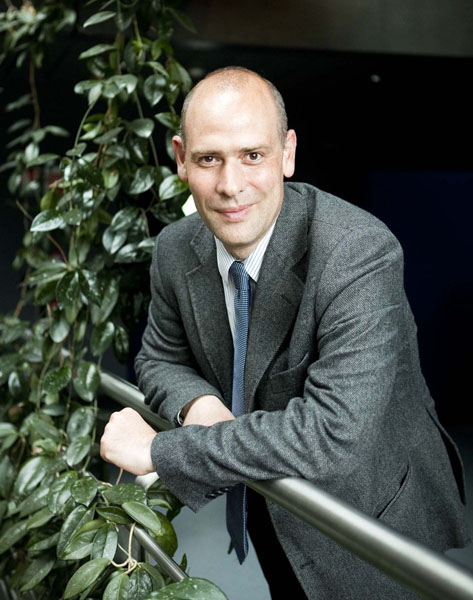
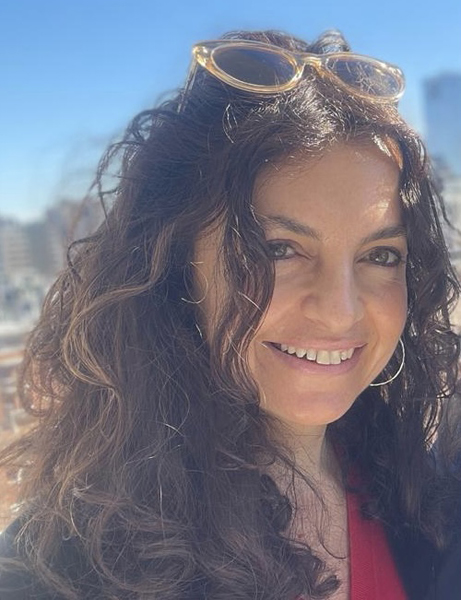
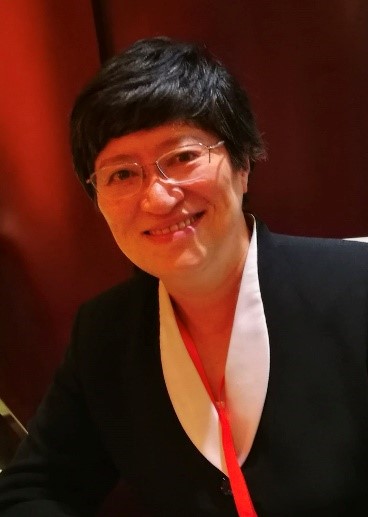
Paolo Samorì is a full-time Professor at the Université de Strasbourg , where he serves as Director of the Nanochemistry Laboratory and Emeritus Director of the Institut de Science et d'Ingénierie Supramoléculaires (ISIS) . He is affiliated with multiple prestigious academies, including the German National Academy of Science and Engineering (ACATECH) , Royal Society of Chemistry (FRSC) , and European Academy of Sciences (EURASC) . Education: Laurea (MSc) in Industrial Chemistry (University of Bologna, 1995), PhD in Chemistry (Humboldt University Berlin, 2000, summa cum laude). His research focuses on Nanochemistry , 2D materials , and supramolecular systems at interfaces , with applications in organic electronics , optoelectronics , and sensing . He pioneered methods for scanning probe microscopies and photoresponsive nanodevices , including graphene-based systems and diarylethene molecular switches. His scientific awards include the ERC Advanced Grant (2019) , Blaise Pascal Medal (2018) , and Catalán-Sabatier Prize (2017) , among 20+ honors. He has trained over 130 students and researchers , including 34 professors now active globally.
Cesare Franchini is a full Professor at the University of Vienna's Faculty of Physics, leading the Computational Materials Physics research group. His work focuses on theoretical understanding and computational modeling of quantum materials using first principles methods, particularly VASP. He maintains an active research program with numerous postdocs, PhD students, and collaborations across multiple institutions including the University of Bologna. Professor Franchini's research centers on quantum materials with many interacting degrees of freedom (lattice, spin, and electron orbital) that enable novel electronic and magnetic phases. His specific interests include metal-insulator transitions, polaron physics (electron-phonon interactions), non-collinear spin orderings, topological Dirac/Weyl phases, multiferroism, and superconductivity. He has increasingly incorporated machine learning data-driven tools and diagrammatic Monte Carlo techniques into his computational approaches. Analysis of his recent publications (2024-2025) reveals a strong focus on polaron physics across multiple material systems, with significant work on hematite, titanium dioxide, and quantum paraelectrics like KTaO3. His research increasingly integrates machine learning with traditional first-principles methods, particularly for studying hydrogen diffusion, surface science phenomena, and electronic structure calculations. There's also substantial work on single-atom catalysis and the application of advanced computational techniques to understand fundamental charge transport mechanisms in energy materials. Professor Franchini actively supervises numerous PhD students and postdocs, including Andrea Angeletti, Viktor Birschitzky, Lorenzo Celiberti, and several others working on diverse aspects of computational materials physics. He leads or participates in major research projects including TACO (Taming Complexity in Materials Modeling), DCAFM (Doctoral College Advanced Functional Materials), and the recently launched Spin-orbit entangled anharmonic polarons project. His group maintains strong collaborations with experimentalists at Charles University, Technical University of Vienna, and other international institutions.
François Peeters is a Full Professor of Physics at the University of Antwerp, Belgium, holding the position since 2000 (with Dutch title 'gewoon hoogleraar' since 2003). He previously served as Research Director (FWO-VI) at the University of Antwerp (1996-1999), Research Leader (NFWO) (1992-1996), and Senior Research Assistant (NFWO) (1988-1992), establishing a distinguished academic career spanning over three decades. His educational background includes a Ph.D. in Physics from the University of Antwerp (1982), followed by a Habilitation (Hoger aggregaat) from the same institution (1987), and a postdoctoral fellowship at Bell Laboratories in Murray Hill, New Jersey (1982-1983). His academic journey also featured research periods at prestigious institutions including the High Magnetic Field Laboratory in Grenoble, University of California Berkeley, Oxford University, and several Brazilian and Australian universities. Peeters' research focuses on theoretical condensed matter physics , specializing in the electronic, optical, and magnetic properties of nanostructured systems. His work encompasses semiconductors , superconductors , graphene , and hybrid quantum systems , with particular emphasis on strong correlations in both classical (colloids, dusty plasma) and quantum (quantum dots) environments. His theoretical frameworks bridge fundamental quantum mechanics with practical nanotechnology applications, driving innovations in spintronics and quantum device design. Analysis of his publication record reveals a clear evolution from foundational work on polaron physics and quantum Hall systems in the 1980s-1990s toward contemporary research on graphene, topological materials, and programmable quantum nanodevices. His most cited works demonstrate consistent leadership in mesoscopic physics, with recent publications showing increased focus on spin-dependent transport phenomena and two-dimensional material systems. His scientific recognition includes: Fellowship in the American Physical Society (2005) APS Outstanding Referee award (2008) Doctor Honoris Causa from University of Szeged, Hungary (2009) Peeters has supervised 26 completed PhD theses and currently leads the Condensed Matter Theory research group comprising 3 ZAP researchers, 16 PhD students, and 8 postdocs. His grant portfolio includes coordination of an EU Marie Curie Training site on 'Electrons on helium', participation in multiple EU projects, COST actions, and ESF networks, demonstrating sustained success in securing competitive international funding. The Condensed Matter Theory group maintains extensive international collaborations, evidenced by Peeters' research visits to over 10 institutions worldwide and regular hosting of 3-4 international visitors at postdoc or professorial levels. The group's output of over 770 refereed publications with 12,000+ citations reflects its position at the forefront of theoretical condensed matter physics research.
Elisa Riedo is a tenured Professor of Chemical and Biomolecular Engineering at New York University (NYU) Tandon School of Engineering, with joint appointments as Professor of Physics in NYU’s College of Arts and Science and as affiliated Professor of Mechanical Engineering at Tandon. She serves as Director of Faculty Development at NYU Tandon and has held prior tenured positions at Georgia Tech (2003–2015) and CUNY ASRC (2015–2018). Her academic career spans over two decades, with a Ph.D. in Physics from the University of Milano (2000) and postdoctoral work at EPFL. Her research focuses on nanotechnology , graphene and 2D materials , and thermal scanning probe lithography (tSPL) , with applications in biomedical diagnostics quantum electronics electromagnetic interference shielding mechanical reinforcement of materials She pioneered tSPL for sustainable nanofabrication and discovered diamene—a single-layer diamond structure from graphene under pressure. Her recent work involves transparent infrared electrodes using silver nanowires (2025) and self-organized graphene stacking domains for quantum technologies (2024). She has secured major grants from National Science Foundation , Department of Defense , and Army Research Office . Scientific honors include: 2023 NYU Tandon Excellence in Research Award 2013 American Physical Society Fellow 2005 CREA Innovation Award Membership in the Academy of Europe (2023) She contributes to editorial boards for journals like 2D Materials and Applications and advises companies such as Mirimus Inc. and SwissLitho AG .
Prof. Chunli Bai is a distinguished academic leader serving as President of the Chinese Academy of Sciences (CAS) since 2011 and President of TWAS (The World Academy of Sciences) since 2013. He previously led the University of Chinese Academy of Sciences (UCAS) from 2001-2014 and directed the National Center for Nanoscience and Technology (2003-2008). His research focuses on nanotechnology, molecular self-assembly, scanning probe microscopy, and catalyst characterization. Education highlights include a Research Associate position at the California Institute of Technology (1985-1987) and Visiting Professorships at Tohoku University (1991-1992). He has held progressively senior administrative roles within CAS since 1996, culminating in his current presidencies. Research interests emphasize nanomaterials synthesis, STM-driven structural analysis, and molecular-level surface interactions. His work bridges fundamental nanoscience with applied technologies, particularly in catalytic systems and nanodevice development. Prof. Bai has received over 15 major international honors including membership in 8 national academies, 6 honorary doctorates, and prestigious medals from UNESCO and the National Academy of Sciences (USA). He authored/co-authored influential books on nanotechnology and pioneered China's nanoscience advancement through visionary leadership. His extensive network includes global collaborations through TWAS and CAS, driving scientific capacity development in developing countries. Leadership in major institutions has positioned him as a pivotal figure in both Chinese and global scientific communities.
Professor Lifeng Chi is Chair Professor at the Institute of Functional Nano & Soft Materials (FUNSOM) at Soochow University, China, and Adjunct Professor at Westfälische Wilhelms-Universität Münster, Germany. She holds a PhD in Physics (1989) from Max Planck Institute for Biophysical Chemistry, Germany, with prior degrees in Physics (1982) and Physical Chemistry (1985) from Jilin University, China. Current Position: Chair Professor at FUNSOM, Soochow University Previous Positions: Professor (2004-2012) and Group Leader (1993-2000) at University of Münster; Postdoctoral work at BASF (1991-1993) and Johannes Gutenberg-University Mainz (1990-1991) Research Focus: Supramolecular chemistry on surfaces, including: On-surface reactions (C-H bond activation, C-C coupling of alkanes) Surface-modulated synthesis of asymmetric molecules and polymers Chemical bond imaging Molecular self-assembly and interfacial molecular patterning/engineering Her work bridges chemistry, physics, and materials science , with applications in functional nanomaterials and molecular engineering. Awards & Recognition: IUPAC Distinguished Women in Chemistry/Chemical Engineering (2017) ACS Nano Lectureship (2016) Lisa Meitner Scholarship (1997) Leadership & Service: Serves on editorial boards of 8 international journals, including associate editor roles. Leads 19 international/national projects, notably as co-speaker for the first German-Chinese SFB project. Publication Impact: Over 397 papers (Nature, Science, Angewandte Chemie, etc.), 12,700+ WoS citations (H=60), 13,700+ Google Scholar citations (H=62). Delivered 120+ invited talks globally.
Xinliang Feng is a W3 Chair Professor at Dresden University of Technology, where he heads the Chair of Molecular Functional Materials. He also holds an Adjunct Chair Professorship at Shanghai Jiao Tong University, China. Previously, he served as a Distinguished Group Leader at the Max Planck Institute for Polymer Research in Mainz, Germany (2012-2014), and as a Group Leader at the same institute (2007-2012). His educational background includes a Bachelor's degree in Analytic Chemistry (2001), a Master's degree in Organic Chemistry (2004), and a PhD from the Max Planck Institute for Polymer Research (2008). Feng's research focuses on the frontier areas of nanomaterials science, particularly on 2D nanomaterials and low-dimensional nanostructures for energy applications. His work spans from fundamental organic synthesis to applied energy technologies. Key research areas include: Bottom-up synthesis of carbon nanostructures and graphene nanoribbons 2D polymers and supramolecular polymers with tailored properties Mesoporous covalent-bonding organic frameworks for energy storage Organic synthetic methodology in aromatic coupling reactions 2D carbon-rich conjugated polymers for electronic and optoelectronic applications His extensive publication record includes over 436 journal papers with significant impact, featuring publications in top-tier journals including Nature (3 papers), Science (1 paper), Nature Materials (2 papers), and numerous papers in Advanced Materials, Angewandte Chemie, and Journal of the American Chemical Society. His work has garnered over 34,797 citations in Web of Science (H-index ≥88) and over 44,959 citations in Google Scholar (H-index ≥101). Feng has received numerous prestigious awards recognizing his contributions to materials science and chemistry: Member of the German National Academy of Sciences (Leopoldina, 2024) Member of the Academia Europaea (2019) Fellow of the European Academy of Sciences (2019) EU-40 Materials Prize (2018) ERC Consolidator Grant Award (2018) Multiple years as a Highly Cited Researcher (2014-2018) ERC Starting Grant Award (2012) IUPAC Prize for Young Chemists (2009) He serves on the international/editorial advisory boards of 12 international journals and has organized or co-organized 30 symposia, workshops, and conferences. As the Head of the ESF Young Research Group "Graphene Center Dresden" and Working Package Leader for the EU GRAPHENE FLAGSHIP project, he plays a significant role in European materials research initiatives.
Chi Lifeng is a Chair Professor at the Institute of Functional Nano & Soft Materials (FUNSOM), Soochow University, China, and an Adjunct Professor at the Physics Institute of Westfälische Wilhelms-Universität Münster (since 2014). She holds a PhD from the Max Planck Institute for Biophysical Chemistry (1989) and completed her Habilitation at the University of Münster (2000). Her research focuses on supramolecular chemistry on surfaces, including on-surface reactions (e.g., C-H bond activation), molecular self-assembly, and interfacial molecular engineering. She has authored over 400 papers with >13,700 citations (H-index 62) and received prestigious awards like the IUPAC Distinguished Women in Chemistry Award (2017) and ACS Nano Lectureship Award (2016). Education: BSc Physics (1982), MSc Physical Chemistry (1985) – Jilin University, China. Leadership: Dean of Science at Soochow University (2012–present). Editorial Roles: Associate editor of 2 Chinese journals and member of 8 international journal boards. Her work emphasizes surface-modulated synthesis of asymmetric molecules, functional polymers, and applications in sensors and nanostructures. She coordinates 19 international projects, including the first German-Chinese SFB collaborative project as co-speaker.
Sergei Kalinin is the Weston Fulton Professor at the Department of Materials Science and Engineering, University of Tennessee, Knoxville, and holds a Corporate Fellow position at Oak Ridge National Laboratory (ORNL). His academic affiliations include adjunct professorships at Sung Kyun Kwan University (South Korea) and Penn State University. He earned his M.S. summa cum laude from Moscow State University (1998) and Ph.D. from the University of Pennsylvania (2002), both in Materials Science. Kalinin's research focuses on transformative applications of machine learning and AI in materials science, particularly in: Atom-by-atom fabrication using electron beams Big data analytics in scanning probe/transmission electron microscopy Nanoscale electromechanical phenomena in functional oxides Development of novel microscopy techniques and autonomous experimentation frameworks His recent publications (2024-2025) demonstrate strong emphasis on AI-driven microscopy, autonomous labs, and computational materials design. Over 85% of his last 15 articles involve machine learning applications in experimental physics, with emerging focus on human-AI collaboration and real-time instrumentation control. Major scientific honors include: Blavatnik National Award (2018) Feynman Prize in Nanotechnology (2022) Presidential Early Career Award (2009) 4 R&D100 Awards (2008-2023) Fellowships in APS, MRS, IEEE, AVS He directs the ORNL Institute for Functional Imaging of Materials and leads research on autonomous experimentation systems integrating high-performance computing with microscopy platforms.
Federico Rosei is Professor and Director of the Centre for Energy, Materials and Telecommunications (Centre EMT) at Institut National de la Recherche Scientifique (INRS) in Varennes, Canada. He holds the UNESCO Chair in Materials and Technologies for Energy Conversion, Saving and Storage and has been a Canada Research Chair (senior) since 2016. Previously, he served as Director of Centre EMT from 2011 to 2019 and held junior and senior Canada Research Chairs since 2003. His educational background includes a Laurea degree (1996) and PhD (2001) from University of Rome I, followed by postdoctoral work as a Marie Curie Fellow at the University of Aarhus, Denmark (2000-2002). He also held visiting positions including Gledden Fellow and Professor at Large at the University of Western Australia (2008-2012). Professor Rosei's research spans multiple cutting-edge areas in materials science and nanotechnology, with particular focus on quantum phenomena at the nanoscale. His work bridges fundamental surface science with practical applications in renewable energy technologies. He has made significant contributions to understanding and developing multiferroic materials, quantum dots for energy applications, and novel nanofabrication techniques. His research integrates experimental surface science with theoretical modeling to create advanced materials for optoelectronic and photonic devices. Analysis of his recent publications reveals a strong emphasis on energy conversion technologies, particularly solar energy applications. His work consistently bridges fundamental nanoscale phenomena with practical device applications, showing evolution from basic surface science toward increasingly complex functional materials systems. The publications demonstrate expertise across multiple disciplines including materials chemistry, condensed matter physics, and electrical engineering, with a growing emphasis on sustainable energy solutions in recent years. Fellow of the Royal Society of Canada Fellow of the European Academy of Science Fellow of the American Physical Society Fellow of the Optical Society of America NSERC EWR Steacie Memorial Fellowship Rutherford Memorial Medal, Royal Society of Canada Friedrich Wilhelm Bessel Award from Alexander von Humboldt Foundation Khwarizmi International Award from Government of Iran Outstanding Engineer Award from IEEE Canada Professor Rosei has supervised numerous graduate students and postdoctoral fellows, though specific names aren't listed in the provided text. His research has been supported by significant grants including multiple Canada Research Chairs (junior and senior), the UNESCO Chair, and various international collaborations. He has co-organized 96 symposia/workshops/conferences across 21 countries, demonstrating extensive international engagement. His editorial roles include Associate Editor of Journal of Materials Chemistry C and advisory board membership for six international journals. As Director of the Centre for Energy, Materials and Telecommunications at INRS, Professor Rosei leads a multidisciplinary research team focused on developing next-generation materials for energy applications. His laboratory combines advanced characterization techniques with nanofabrication capabilities to investigate quantum phenomena in novel materials systems. The research environment fosters collaboration between chemists, physicists, and engineers working on cutting-edge problems in sustainable energy technologies.
Christian Teichert is an Associate Professor in Materials Physics and Deputy Head of the Chair of Physics at the University of Leoben's Institute of Physics. He leads the Scanning Probe Microscopy (SPMG) group, focusing on nanoscale surface characterization through atomic force microscopy and related techniques. His educational background includes: PhD in Physics (1992) from Martin-Luther-Universität Halle-Wittenberg Habilitation in Material Physics (2001) at Montanuniversität Leoben Diploma in Physics (1985) from Martin-Luther-Universität Halle-Wittenberg Teichert's research centers on self-organization of inorganic/organic semiconductor nanostructures during heteroepitaxy and ion bombardment, molecular growth processes in organic semiconductor thin films, and nanomechanical characterization of materials from cellulose fibers to piezoelectrics. His group employs conductive AFM and Kelvin probe force microscopy to investigate electrical properties at nanometer scales, with current projects examining polar organic molecules on 2D substrates like graphene. Key recognition includes the 2002 Gaede Prize from the German Vacuum Society. He served as President of the Austrian Physical Society (2023-2024) and held leadership roles in IUVSTA's Nanometer Structure Division (2010-2019). Teichert supervises graduate students including Philipp Münzer (Master's thesis on perovskite relaxors) and collaborates on FWF-funded projects. His SPMG laboratory partners with institutions including Materials Center Leoben GmbH, Czech Academy of Sciences, and Sheffield Hallam University for advanced nanomaterials research.
Xinliang Feng holds the W3 Chair Professor position at Technische Universität Dresden, Germany, leading the Chair of Molecular Functional Materials. He previously served as a Distinguished Group Leader at the Max Planck Institute for Polymer Research and held adjunct professorships at Shanghai Jiao Tong University. His research focuses on 2D nanomaterials, energy storage systems, and organic synthesis methodologies. Education: B.Sc. in Analytic Chemistry (2001), M.Sc. in Organic Chemistry (2004), Ph.D. from Max Planck Institute for Polymer Research (2008). He has authored over 436 journal papers, including in Nature , Science , and Advanced Materials , with >34,797 citations (Web of Science). ERC Consolidator Grant (2018) EU-40 Materials Prize (2018) Member, German National Academy of Sciences (2024) Advisory roles include leading the EU GRAPHENE FLAGSHIP's Functional Foams & Coatings Working Package and the ESF Graphene Center Dresden. He serves on 12 editorial boards and has delivered 170 invited conference talks.
Univ.Prof. Dr. José Luis Toca-Herrera is a distinguished Professor of Biophysics at the University of Natural Resources and Life Sciences Vienna (BOKU), where he serves as Head of the Institute of Biophysics within the Department of Natural Sciences and Sustainable Resources. With a career spanning over two decades in biophysics and nanotechnology, he has established himself as an international leader in the application of atomic force microscopy to biological systems. His research bridges physics, chemistry, and biology to investigate the mechanical properties of biological materials at micro- and nanoscales. Prof. Toca-Herrera's research focuses on colloidal and molecular interactions, mechanical properties of biological materials, cell-substrate and cell-cell interactions, and self-assembly interfacial phenomena. His work applies mathematical and physical models to life sciences, social sciences, and education. He specializes in spectroscopy, surface analytical techniques, soft matter physics, and scanning probe microscopy. His laboratory investigates how physical forces influence cellular behavior, particularly in cancer research, where mechanical properties serve as biomarkers for disease progression. His publication record demonstrates a consistent trajectory of high-impact research in biophysics, with recent work spanning cancer cell mechanics, protein-lipid interactions, environmental applications of nanotechnology, and interdisciplinary studies bridging physics with social sciences. His team regularly publishes in top journals across physics, biophysics, and materials science, with multiple cover features recognizing the significance of their work. Scientific Recognition: Multiple cover features in prestigious journals including Small, Microscopy Research and Technique, Biotechnology Journal, and Toxins Visiting professorships at AGH University of Science and Technology in Krakow, Poland Best poster awards at European Colloid and Interface Society conferences Major research grants including Marie Curie, Ramón y Cajal, and Wellcome Trust funding Prof. Toca-Herrera leads several major research projects including the Human ECM-based platform for anti-cancer drug testing (CARES), Hierarchical polymer niches for enhanced cell attachment, and Adaptations for fog and dew harvesting in cactus spines. His international collaborations span Europe, Asia, and the Americas, with presentations delivered in over 15 countries. His laboratory combines atomic force microscopy with other biophysical techniques to create a comprehensive understanding of biomaterials at multiple scales. His research group operates within BOKU's advanced facilities for biophysics and nanotechnology, contributing significantly to the university's research profile in sustainable resource management and life sciences. The team's work has important implications for cancer diagnostics, drug delivery systems, and environmental applications of nanotechnology.
Oskar Armbruster is a researcher at the Institute of Synthetic Bioarchitectures , within the Department of Biotechnology and Food Sciences at the University of Natural Resources and Life Sciences, Vienna (BOKU) . He is actively engaged in interdisciplinary research bridging biophysics, materials science, and synthetic biology. His research focuses on biomolecular condensates , phase-separated extracellular systems , and advanced imaging techniques such as scanning probe microscopy. His recent work explores the physical properties and cellular interactions of synthetic condensates, as well as ultrafast electrochemical phenomena in plasmonic materials. The analysis of his recent publications reveals a strong trend in nanoscale biophysical engineering and dynamic material behavior in biological contexts , with applications in synthetic biology and vaccine development. His involvement in the S-layer-based vaccine project underscores translational potential. Dr. Armbruster has contributed to high-impact journals such as Chemical Engineering Journal and Cell Reports Physical Science , demonstrating active scholarly output. He has collaborated with researchers like Eva-Kathrin Ehmoser and Alireza Mashaghi. He participated in the research project S-layer-based vaccine development against COVID-19 (and other virus families) , funded by third-country companies, from September 2020 to June 2022. There is no public information about student supervision or major grants led by him. He is associated with the research infrastructure at BOKU, particularly in the domain of synthetic bioarchitectures and advanced microscopy. His work is part of BOKU's broader initiatives in bioresources and sustainable technologies.
Claudia Gusenbauer (Dipl.-Ing.Dr.) is a Senior Scientist and University Assistant at the Institut für Holztechnologie und Nachwachsende Rohstoffe of the University of Natural Resources and Life Sciences (BOKU), Vienna. Her research focuses on biobased material design , particularly through nanostructural analysis of wood components using atomic force microscopy (AFM) and chemical force microscopy . She has held research positions at the University of Cambridge (2022) and Lehigh University (2019). Research Highlights: Biobased wood coatings using cellulose nanocrystals High-resolution nanoscale characterization of wood surfaces Surface chemistry of lignocellulosic materials Applications of AFM in renewable resource analysis Scientific Recognition: Danubius Young Scientist Award (2021) Knowledge creates the future Prize (2021) BOKU Best Talent Award (2018) Academic Contributions: She has published extensively on wood nanotechnology, presented at international conferences (e.g., EPNOE, ISWFPC), and supervised master's theses on topics like reaction wood characterization and chemical force titration methods.