Professor Diomidis Spinellis is a renowned academic in Software Technology at Athens University of Economics and Business (AUEB). He specializes in software engineering practices, code quality, AI ethics, and system architecture. His work bridges theoretical advancements with practical applications in industry, emphasizing reproducibility and empirical methods. Recipient of the IEEE Computer Society's prestigious 'Distinguished Contributor Recognition,' Spinellis is the sole Greek scientist to achieve this honor. His research spans software evolution, security, and open-source ecosystems, with a focus on methodologies like refactoring, static analysis, and debugging strategies. Key research interests include AI-generated content detection, modular data analytics, and incident management systems. His studies often leverage large-scale datasets (e.g., Unix evolution, Linux supercomputing analysis) to uncover patterns in software behavior and development practices. Publications frequently address emerging technologies' societal impacts, such as energy-efficient computing and ethical AI deployment. He advocates for reproducible research through tools like the Alexandria3k framework and contributes to open-source initiatives.
Dr Alexis Kirke is a Senior Research Fellow in Computer Music at the School of Art, Design and Architecture (Faculty of Arts, Humanities and Business) at the University of Plymouth. As a composer-in-residence, he specializes in interdisciplinary research at the intersection of music, computing, and healthcare. His work includes developing adaptive music systems like RadioMe for dementia care, applying quantum computing to music composition, and exploring affective computing through brain-computer interfaces. Teaching roles include associate lecturer positions in modules such as Collaborative Practice (BA Sound and Music Production), Psychology (BA Music), and MRes Computer Music. He has supervised five PhD students as a second supervisor and served as an internal PhD examiner. His research focuses on algorithmic composition, music technology for healthcare, quantum computing applications in music, and multi-agent systems inspired by natural phenomena like humpback whale song evolution. Recent projects include the Plymouth Marine Institute collaboration and the Cloud Chamber performance involving real-time interaction with subatomic particles. Key contributions include innovative systems like RadioMe, which combines adaptive radio with reminder systems for dementia patients, and Q-Muse, a quantum computer music system. His work bridges computational creativity with human-centric applications, emphasizing ethical and accessible technology. Grants & Awards: No specific awards listed, but active in collaborative research projects Lab/Teams: Plymouth Marine Institute, Cloud Chamber Project
Kazem Cheshmi is an Assistant Professor in the Department of Electrical and Computer Engineering at McMaster University. His research focuses on compiler optimization techniques for accelerating scientific computing and machine learning applications on parallel architectures. He leads the SwiftWare Lab and teaches courses such as High-Performance Programming (COMPENG 4SP4/ECE 6SP4) and Special Topics in Computation (ECE 718). Education: B.Eng. (Ferdowsi University of Mashhad), M.A.Sc. (University of Tehran), Ph.D. (University of Toronto). He has held research positions at Microsoft Research, Adobe Research, Concordia University, and Rutgers University. Research Interests: High-performance computing, compiler design, sparse matrix computations, and their applications in machine learning and scientific computing. His work emphasizes optimizing sparse codes for parallel architectures and developing efficient QP solvers like NASOQ. Key Contributions: Developed Sympiler (a domain-specific compiler for sparse matrix codes) and NASOQ (a scalable QP solver). His awards include the ACM-IEEE CS George Michael Memorial HPC Fellowship (2020) and recognition for contributions to compiler-driven sparse computation optimization. Teaching and Service: Organizes SONAD’25, serves on program committees for PPoPP, Supercomputing, and IPDPS. Supervises students in compiler design, parallel programming, and high-performance computing. Labs/Teams: Leads the SwiftWare Lab focusing on compiler optimization and high-performance systems. Collaborates on open-source projects like Sympiler and NASOQ.
Satwik Patnaik is an Assistant Professor in the Department of Electrical and Computer Engineering at the University of Delaware. His research focuses on strengthening hardware security through CAD tools, leveraging machine learning, and exploring emerging technologies. He holds a Ph.D. in Electrical Engineering from New York University (2020) and was a postdoctoral researcher at Texas A&M University (2020–2021). Education: Ph.D., Electrical Engineering, Tandon School of Engineering, New York University (2020) Postdoctoral Research, Texas A&M University (2020–2021) Research Interests: VLSI design, hardware security (e.g., logic locking, side-channel attacks), computer-aided design (CAD), and applications of machine learning in securing global semiconductor supply chains. His work emphasizes 3D integration, emerging devices (e.g., ferroelectric tunnel junctions), and reinforcement learning for adversarial testing. Key Contributions: Developed tools like SecureX, VIGILANT, and Titan. Published over 48 peer-reviewed articles in top venues (e.g., ICCAD, IEEE Transactions). Co-organized global competitions like HeLLO-CTF 2021 and AI vs. Humans 2022. Served as security track chair for ACM CADAthlon (2022) and technical program committee member for ICCAD, ASP-DAC, etc. Awards: ACM/SIGDA Bronze Medal (2018) Best Paper Award at ARC 2017 Third Place at ARC 2021 Expertise: Integrates hardware design, security, and AI to address vulnerabilities in semiconductor supply chains. Active in standardizing secure CAD flows and educating the next generation of hardware security researchers.
Anantha P. Chandrakasan is MIT's Provost and Vannevar Bush Professor of Electrical Engineering and Computer Science. He leads strategic initiatives such as the MIT Climate and Sustainability Consortium, MIT AI Hardware Program, and MIT-IBM Watson AI Lab. As Chief Innovation and Strategy Officer, he oversees MIT HEALS, MGAIC, and MITHIC. Previously, he served as MIT School of Engineering Dean (2011-2025) and director of MIT Microsystems Technology Laboratories (2006-2011). He earned all degrees (B.S., M.S., Ph.D.) in EECS from UC Berkeley (1989-1994). His research focuses on energy-efficient circuits, low-power wireless sensors, and emerging technologies. Key projects include implantable medical devices, secure AI hardware, and THz communication systems. He pioneered the Schwarzman College of Computing, reshaping MIT’s academic structure. Recipient of the 2022 IEEE Mildred Dresselhaus Medal, he holds leadership roles in multiple MIT-industry partnerships. Notable collaborations include Ericsson (5G networks), Takeda (healthcare), and Accenture (industry-technology convergence). His academic advising includes fostering interdisciplinary programs like the MIT Quest for Intelligence and postdoctoral fellowships. He champions diversity through initiatives like the Faculty Gender Equity Committee and Daniel J. Riccio Graduate Engineering Leadership Program. Labs/Teams: Leads MIT's Office of Innovation & Strategy, oversees Microsystems Technology Laboratories, and co-chairs the MIT-GE Vernova Energy & Climate Alliance. Key hardware projects include conformable ultrasound patches and battery-free IoT devices.
Simon Lacoste-Julien is an Associate Professor at Université de Montréal, affiliated with the Department of Computer Science and Operations Research (DIRO). He also serves as the Associate Scientific Director of Mila – Quebec Institute of Artificial Intelligence and holds the position of Vice President Lab Director at Samsung SAIT AI Lab Montreal (SAIL). His research focuses on machine learning, optimization, and their applications in areas like deep learning, generative models, causality, and computer vision. Lacoste-Julien has held academic positions at INRIA in Paris and has a PhD from UC Berkeley, with postdoctoral work at the University of Cambridge. He teaches advanced graduate courses on probabilistic graphical models and structured prediction. His work includes contributions to optimization algorithms (e.g., Frank-Wolfe methods), causal discovery, and generative models. Lacoste-Julien has supervised numerous students and postdocs, and his awards include being a CIFAR Fellow and Canada CIFAR AI Chair. His research spans theoretical foundations and practical applications, with a strong emphasis on scalable and efficient machine learning techniques.
Nuno Manuel Branco Souto is an Associate Professor (with Habilitation) at the Department of Information Science and Technology, School of Technologies and Architecture, ISCTE - University Institute of Lisbon. He also holds leadership roles as Deputy Director of both the School of Technologies and Architecture and the Institute of Telecommunications - IUL, where he is an Integrated Researcher in the Radio Systems Group. Aggregation in Information Sciences and Technologies, ISCTE-University Institute of Lisbon, 2021 PhD in Electrical and Computer Engineering, Higher Technical Institute - UTL, 2006 Bachelor's degree in Aerospace Engineering, Higher Technical Institute - UTL, 2000 His research focuses on signal processing for communications , MIMO systems , channel estimation , reconfigurable intelligent surfaces (RIS) , and optimization in wireless communications . He explores advanced techniques in hybrid precoding , index modulation , and energy-efficient 5G/6G network design , contributing significantly to next-generation wireless technologies. His recent publications (2020–2024) reveal a strong trend toward reconfigurable intelligent surfaces (RIS) , millimeter-wave and THz communications , molecular communication with deep learning , and anti-UAV systems using SDR-based jamming and spoofing . These works appear in high-impact journals such as IEEE Transactions, Sensors, and Applied Sciences, reflecting his leadership in cutting-edge wireless communication research. Dr. Souto has no scientific awards explicitly listed in the provided text. He has been actively involved in teaching, research supervision, and academic leadership. His collaborations span multiple institutions and include prominent researchers such as Pavia, Velez, Correia, Sebastião, and Dinis. He contributes to both theoretical advancements and practical implementations in wireless systems, including software-defined radio (SDR) applications for UAV security and scalable video broadcasting in cellular networks. Dr. Souto is affiliated with the Radio Systems Group at the Institute of Telecommunications - IUL, where his team conducts research on next-generation wireless networks, signal processing algorithms, and communication system optimization.
Audrey Repetti is an Associate Professor in the Department of Actuarial Mathematics and Statistics within the School of Mathematical and Computer Sciences at Heriot-Watt University in Edinburgh, UK. She also holds a dual affiliation with the Institute of Sensors, Signals, and Systems in the School of Engineering and Physical Sciences, and is part of the Maxwell Institute for Mathematical Sciences - Edinburgh. Her research spans mathematical imaging, optimization, and computational methods with applications across astronomy, medical imaging, and optical engineering. Dr. Repetti's research focuses on developing advanced mathematical frameworks for solving imaging inverse problems. Her work centers on optimization algorithms, Bayesian uncertainty quantification, and the integration of machine learning with traditional mathematical approaches. She has made significant contributions to radio interferometric imaging, computational optical imaging with photonic lanterns, and uncertainty quantification in medical imaging. Her research bridges theoretical mathematics with practical applications in astronomy, healthcare, and engineering. Analysis of her recent publications reveals a clear trajectory toward integrating traditional mathematical imaging approaches with modern machine learning techniques. Her work increasingly focuses on 'hybrid' methodologies that combine data-driven models with optimization frameworks. Key themes include plug-and-play algorithms, uncertainty quantification in imaging, and the development of efficient computational methods for high-dimensional inverse problems. Her research demonstrates strong interdisciplinary connections between mathematics, signal processing, astronomy, and medical imaging. Dr. Repetti is actively involved in academic service, including co-organizing the 2026 ICMS Workshop on Imaging inverse problems and generating models. She has received research funding supporting her work in computational imaging and inverse problems, though specific grant details aren't listed in the provided materials. Her teaching portfolio includes advanced courses in scalable inference, deep learning, and statistics for sciences. She leads several research projects with associated software toolboxes including BUQO (Bayesian Uncertainty Quantification by Optimization), SARA-COIL (Compressive optical imaging with a photonic lantern), and CALIM (Self direction-dependent effect calibration and imaging in radio-interferometry). These projects demonstrate her commitment to developing practical computational tools that advance both theoretical understanding and real-world applications in imaging science.
Tao Lin is a Tenure-Track Assistant Professor and Principal Investigator of LINs Lab at Westlake University, School of Engineering. He leads cutting-edge research in deep learning optimization, generalization, and robustness, particularly in distributed and federated settings. Prior to this, he was a Ph.D. student at École Polytechnique Fédérale de Lausanne (EPFL), Switzerland, under the supervision of Prof. Martin Jaggi and Prof. Babak Falsafi. Doctor of Science, School of Computer and Communication Sciences, EPFL, Switzerland (2017–2022) Master of Science, School of Computer and Communication Sciences, EPFL, Switzerland (2014–2017) Bachelor of Engineering (with honors), College of Electrical Engineering, Zhejiang University, China (2010–2014) His research focuses on the intersection of optimization and generalization in deep learning, leveraging theoretical and empirical insights into loss landscapes and training dynamics to design efficient and robust learning and inference methods. This includes work on decentralized and federated learning under noisy, heterogeneous, and hardware-constrained environments. His work spans algorithmic innovation, theoretical analysis, and practical system integration. The recent publications from his lab demonstrate a strong trend in advancing federated learning, efficient inference for large language models, multimodal foundation models in pathology, and robust training under distribution shifts. Key themes include communication efficiency, model personalization, gradient tracking, and hardware-aware learning. His group has published at top venues including NeurIPS, ICML, ICLR, CVPR, and ECCV, with several papers receiving oral or spotlight presentations. ECCV Best Paper Candidate, 2024 Top 2% Scientists Worldwide 2024 (Stanford University) Doctoral Program Thesis Distinction Award, EPFL, 2022 Outstanding Performance Bonus, EPFL, 2021–2022 Top Reviewer: NeurIPS, ICML, AISTATS He advises multiple Ph.D. and master’s students, including Yongxin Guo, Futing Wang, Peng Sun, and Yuxuan Sun, whose work has been accepted at premier conferences. He has secured competitive grants as PI and participant, including the National Natural Science Foundation of China for Excellent Young Scientists Fund (Overseas) and the Science and Technology Innovation 2030 – Major Project. He also contributes to the community through service as an area chair (NeurIPS, ICML), reviewer for top journals and conferences, and organizer of workshops and academic events. His open-source contributions, such as Post-local SGD, have been integrated into PyTorch. Tao Lin teaches graduate courses such as Research Methodology of Computer Science and Technology and Deep Learning at Westlake University. He is actively involved in academic governance, serving on committees for student seminars, academic exchange, doctoral studies, and teaching leadership. The LINs Lab runs a regular research seminar on Deep Learning and Optimization, fostering a collaborative and dynamic research environment.
Vincent Sitzmann is an Assistant Professor at the Massachusetts Institute of Technology (MIT) in the Department of Electrical Engineering and Computer Science (EECS), where he leads the Scene Representation Group at MIT's Computer Science and Artificial Intelligence Laboratory (CSAIL). His research focuses on building machines that learn to understand and interact with the world autonomously through 'world models' - mental simulators that enable agents to predict environmental outcomes and the consequences of their actions. His educational background includes a PhD from Stanford University under Gordon Wetzstein and a Bachelor's degree from the Technical University of Munich. Sitzmann's research spans computer vision, graphics, and robotics, with pioneering contributions to neural scene representations. He introduced Scene Representation Networks (SRNs) that enable continuous 3D-structure-aware scene modeling from 2D images. His work on implicit neural representations with periodic activation functions has become foundational to the field. Recent research focuses on scaling 3D reconstruction techniques, improving generative models for visual content, and developing methods for robot control through neural Jacobian fields. His approach emphasizes both theoretical rigor and practical applications across multiple domains. His publication record shows a clear progression toward more sophisticated diffusion models applied to video generation, robotics, and 3D reconstruction. The 2025 Nature paper on robot control via Jacobian fields demonstrates his expanding influence beyond traditional computer vision into robotics. His work consistently bridges theoretical advances with practical implementations, as evidenced by the CVPR 2023 Best Paper Runner-Up for pixelSplat, which offers scalable solutions for 3D reconstruction. His notable scientific achievements include: CVPR Best Paper Runner-Up (2023) for 'pixelSplat' Multiple papers with 'Spotlight' or 'Oral' presentations at NeurIPS and CVPR 2023 Amazon Research Award for '2D and 3D Animation via Image-Conditional Generative Flow Models' NeurIPS Outstanding New Directions Honorable Mention (2019) As leader of the Scene Representation Group, Sitzmann mentors researchers working at the intersection of computer vision, graphics, and AI. The group has secured funding from prestigious sources including Amazon Research Awards. Their work has practical applications in virtual reality, robotics, and content creation industries. Sitzmann teaches advanced courses at MIT, including 'Advances in Computer Vision' (6.8300). The Scene Representation Group focuses on developing novel methods for 3D scene understanding and manipulation. Current projects include research on neural radiance fields, diffusion models for 3D content creation, and methods for autonomous scene understanding. The group maintains active collaborations with industry partners and academic institutions to advance visual computing research.
Paul Beale is a Professor in the Department of Physics at the University of Colorado Boulder, where he has been a faculty member since 1984 and currently serves as Chair of the Department. He holds a Ph.D. in Physics from Cornell University (1982) and a B.S. from the University of North Carolina at Chapel Hill (1977). His academic career has been centered at CU Boulder, where he advanced from Assistant to Associate and then to full Professor. Ph.D., Physics, Cornell University, 1982 B.S., Physics, University of North Carolina at Chapel Hill, 1977 Paul Beale's research is in theoretical condensed matter physics, with a focus on statistical mechanics and thermodynamics. His work spans a broad range of topics including phase transitions, critical phenomena, ferroelectrics, hysteresis, grain boundary kinetics, and Monte Carlo methods. He has made significant contributions to the exact calculation of energy distributions in the two-dimensional Ising model and developed a novel class of scalable parallel pseudorandom number generators based on Pohlig-Hellman exponentiation ciphers. His research integrates analytical theory, computational modeling, and applications in materials science and complex systems. His recent publications reflect a strong trend in computational and theoretical physics, particularly in developing robust algorithms for simulation and advancing fundamental understanding of phase behavior in soft and condensed matter systems. His work on pseudorandom number generation has implications for high-performance computing and statistical sampling. He has also contributed to physics education research, focusing on curriculum transformation and quantum mechanics instruction. Notable scientific contributions include: Co-author of the textbook Statistical Mechanics (with R.K. Pathria), a standard graduate-level reference. Development of exact methods for the 2D Ising model partition function. Innovation in scalable pseudorandom number generation for parallel computing. Paul Beale has advised numerous students and collaborated widely, though specific advisees are not listed. He has held significant administrative roles, including Director of the Honors Program and Associate Dean for Natural Sciences. He maintains active research through publications, code development, and academic leadership, with no indication of retirement. He is associated with the following labs and research groups: Condensed Matter Laboratory (former Director, 1999–2001) Statistical Physics and Computational Modeling Group (implied through research topics and code repositories)
Patty Stabile is an Associate Professor in the Department of Electrical Engineering at Eindhoven University of Technology (TU/e), specializing in Indium Phosphide (InP) photonic integrated circuits for next-generation optical networks and computing systems. She is affiliated with the Electro-Optical Communication group and EAISI High Tech Systems. MSc in Electrical Engineering (2004) from Politecnico di Bari PhD in Nanoscience (2008) from National Nanotechnology Laboratory, Lecce Her research focuses on integrating electronics and photonics for ultra-high-speed data routing, leveraging optical parallelism inspired by brain architecture. She also explores low-cost passive coupling concepts and novel materials like 2D materials to enhance photonic platforms. Key contributions include pioneering work on InP-based switch matrices and high-speed transceiver modules, with publications in Microsystems & Nanoengineering , IEEE Photonics Technology Letters , and Journal of Optical Communications and Networking . She received the Early Career Women in Photonics – Special Recognition in 2016. Active in academic communities, Patty serves on the IEEE Photonics Benelux Chapter board, is a member of the TU/e Young Academy of Engineering, and contributes to educational programs in automotive dynamics and brain-inspired optical computation.
Christopher Hojny is an Assistant Professor at the Department of Mathematics and Computer Science at Eindhoven University of Technology , specializing in combinatorial optimization. He contributes to the EAISI Foundational group and co-develops the academic solver SCIP . His research focuses on symmetry handling in mixed-integer programming , theoretical properties of integer programs, and algorithm development for combinatorial optimization. Recent work explores applications in graph neural network verification , clustering problems, and network coding through mixed-integer programming frameworks. Key publication trends show expertise in Symmetry detection and mitigation techniques Relaxation complexity theory Applications to machine learning robustness Decision diagram-based scheduling Scientific contributions include Proof systems for symmetry certification Topological bounds tightening in GNNs Stable set problem symmetry handling SCIP solver extensions He supervises PhD students Cédric Roy (NWO project on Local Symmetries) and Sten Wessel (co-supervised with Frits Spieksma), while Jasper van Doornmalen (2019-2023) investigated symmetry propagation algorithms.
Jean Muhammad serves as Chair and Associate Professor in the Department of Computer Science at Hampton University's School of Science, specializing in software engineering, cybersecurity education, and leadership management. Her academic journey spans Florida State University (Ph.D., 2005), Illinois Institute of Technology (M.S., 1991), and Chicago State University (B.S., 1984), complemented by industry roles at AT&T Bell Labs and Nokia. Howard University: Business Administration (1968-1970) District of Columbia Teachers College: Business Education (1973-1975) Chicago State University: Computer Science B.S. (1984) Illinois Institute of Technology: Computer Science M.S. (1991) Florida State University: Computer Science M.S. (1999) Florida State University: Computer Science Ph.D. (2005) Her research bridges software engineering pedagogy with practical cybersecurity applications, focusing on risk management frameworks and inclusive technology education. Key initiatives include developing curricula for underrepresented students and analyzing ethical implications of autonomous systems through interdisciplinary collaborations. Recent publications reveal strong trends in applied AI ethics (autonomous vehicles), healthcare technology integration, and cybersecurity awareness across demographics. Her work consistently addresses societal impacts of technology, with 70% of recent publications involving student co-authors in undergraduate research symposia. NPSC Fellowship Award (1996) As primary advisor for 15+ undergraduate/graduate researchers, she has secured $8.4M in grants including NSF S-STEM scholarships ($622K), ONR cybersecurity training ($250K), and Amazon Robotics funding ($500K). Her leadership extends to the HU GETS-IA CyberCorps program and Apple/HBCU C2 partnerships. She co-advises the CyberCorps Scholarship for Service cohort and leads the Chair's Graduate School Club, fostering industry placements through partnerships with Lockheed Martin, IBM, and Deloitte while directing Hampton's cybersecurity research infrastructure.
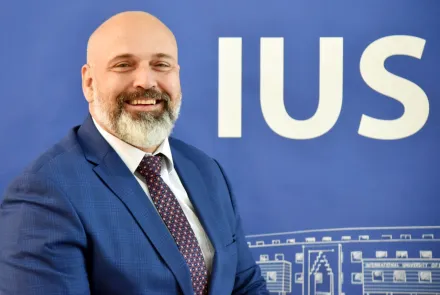
Dr. Senad Bušatlić serves as a Full Professor of Management, Organization, and Strategy at the International University of Sarajevo (IUS), where he holds key administrative roles including Head of the Department of Economics and Management, Coordinator of the Leadership and Entrepreneurship Center, and active IUS Senate member. His extensive leadership extends to former positions as Vice Rector, Vice Dean, and Acting Dean, significantly shaping university strategy and policy implementation since 2010. His research spans Management, Strategy, Leadership, and Innovation with regional focus on Bosnia and Herzegovina. Core interests include organizational performance, tourism innovation, quality assurance, and human resource management, addressing practical business challenges in post-conflict economies and multinational contexts. His work bridges theoretical frameworks with real-world applications in public and private sectors. Recent publications reveal evolving research trajectories toward technology integration (IoT, blockchain in smart cities), value-based leadership models, and cross-cultural management studies. His 50+ scientific papers demonstrate consistent focus on leadership dynamics, employee engagement, and strategic management applications across hospitality, banking, and healthcare sectors in the Balkans. Dr. Bušatlić has mentored 30 graduate students while leading four major multi-stakeholder research projects involving hundreds of participants. His industry background includes executive roles at Coca-Cola, Procter & Gamble, and Henkel, providing practical insights that inform his academic work and grant-funded initiatives on organizational development. Through the Leadership and Entrepreneurship Center, he cultivates academic-industry partnerships that drive leadership development programs, entrepreneurial training, and innovation ecosystems connecting IUS students with regional business communities.