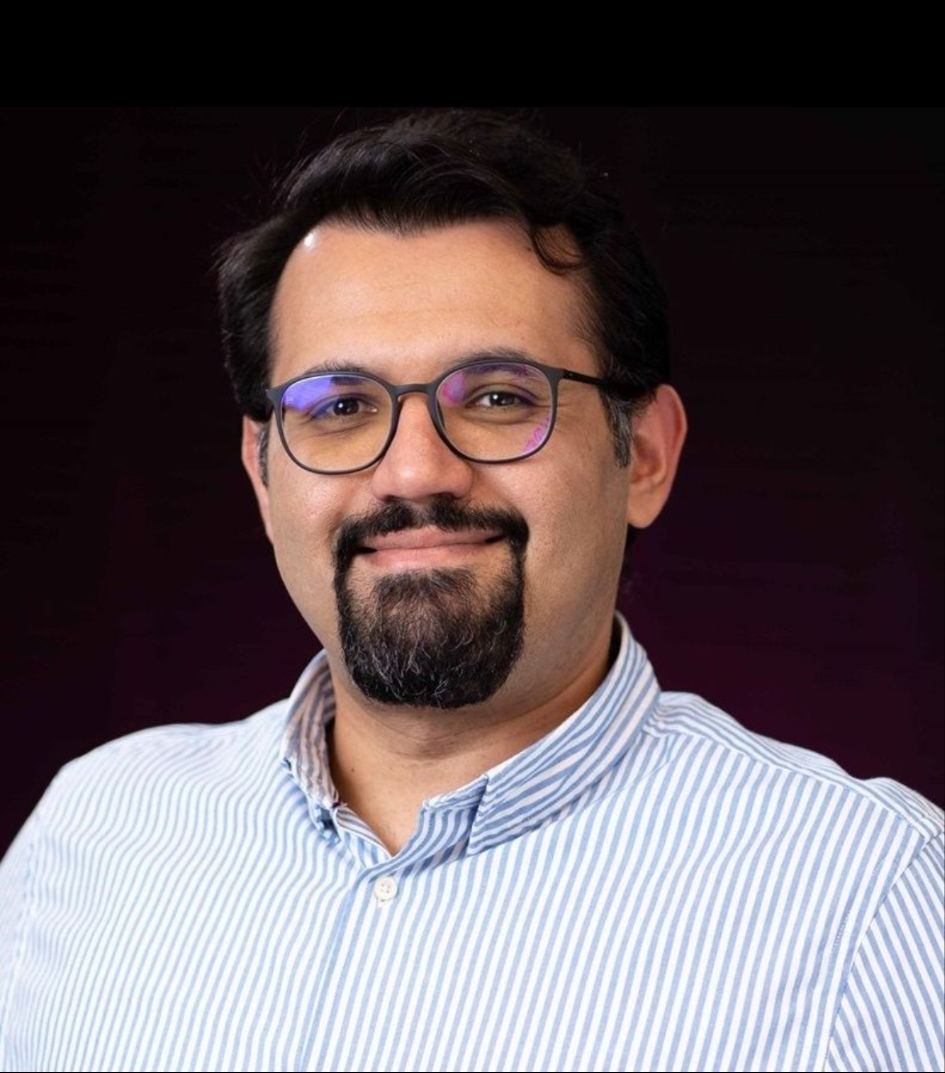
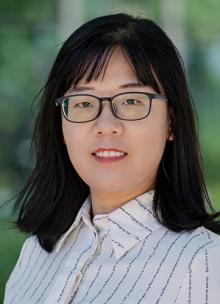
Dr. Chang Xu is an Associate Professor in Machine Learning and Computer Vision at the University of Sydney's School of Computer Science. He holds a Bachelor of Engineering from Tianjin University and a PhD from Peking University. His research focuses on machine learning, data mining, and their applications in AI and computer vision, including multi-view learning, visual search, and face recognition. He is an ARC Future Fellow and a member of the Sydney Southeast Asia Centre and The Net Zero Institute. Education: B.E. in Engineering (Tianjin University), Ph.D. in Computer Science (Peking University). His research interests emphasize handling heterogeneous data, exploring data variety, and developing algorithms for robust AI systems. His work includes adversarial robustness, neural architecture search, and efficient deep learning models. Research trends in his articles include adversarial robustness in neural architectures, efficient vision transformers, multimodal 3D style transfer, and underwater image restoration. Key contributions span image restoration, video super-resolution, and lightweight network design. He has advised multiple PhD and master's students on topics like diffusion models, radar image synthesis, and graph similarity. Awards: ARC Future Fellow. Collaborations focus on cross-domain data integration and AI applications. His labs and teams explore generative models, robust learning, and scalable robotics policies. Recent work includes diffusion models for action segmentation and robust vision-language systems.
Professor Scott Sisson is Director of the UNSW Data Science Hub (uDASH) and Professor of Statistics and Data Science at the University of New South Wales, School of Mathematics and Statistics. His research focuses on computational statistics, particularly solving 'intractable' statistical problems through Bayesian methods, big data techniques, simulation algorithms, and extreme value theory with environmental applications. Education includes a PhD in Statistics from Bristol University (2002), MSc in Environmental Statistics from Lancaster University (1997), and BSc in Mathematics and Statistics from Lancaster University (1996). Research interests span: Bayesian statistics and uncertainty quantification Big data analytics and scalable algorithms Machine learning integration with statistical methods Extreme value modeling for climate/environment Computational techniques for intractable problems Recent publications (2022-2025) demonstrate strong emphasis on Bayesian computation, spatiotemporal modeling, and interdisciplinary applications in materials science, oncology, quantum computing, transportation policy, and ecology. Methodological innovations include likelihood-free inference, modular Bayesian analyses, and symbolic data modeling. Awards and honors: 2020 Service Award (Statistical Society of Australia) 2017 ARC Future Fellowship 2015 G. N. Alexander Medal (Engineers Australia) 2011 Moran Medal (Australian Academy of Science) 2010 J.G. Russell Award (Australian Academy of Science) 2010 Queen Elizabeth II Research Fellowship As Director of uDASH, he leads data science initiatives across UNSW. He maintains sustained ARC funding and supervises students in computational statistics, Bayesian methods, extreme value theory, and machine learning. Professional service includes editorial roles for Statistics and Computing and past presidency of Statistical Society of Australia.
Dr. Ehsan Abbasnejad is an Associate Professor at Monash University's Department of Data Science and Artificial Intelligence, and holds adjunct positions at the Australian Institute for Machine Learning (AIML, University of Adelaide) and the Centre for Augmented Reasoning (CAR). He specializes in foundational AI, focusing on vision-language tasks, adversarial machine learning, and reinforcement learning. His work bridges theory with real-world applications in agriculture, energy, healthcare, and sports. Education: PhD in Computer Science from Australian National University (ANU). Research Interests: Machine Learning Theory and Adversarial Defenses Neural Network Robustness and Generalization Multimodal Learning (Vision-Language) Continual and Transfer Learning Applications in Energy, Healthcare, and Robotics Awards: Finalist for Australian AI Academic/Researcher of the Year (2024) Multidisciplinary competition wins (e.g., OzMineral Explorer Challenge) Advising & Grants: Australian Research Council (ARC) Discovery Project on Reinforcement Learning CSIRO's Next Generation Graduate Fund Accepting PhD students in foundational AI and applications Labs & Teams: Director of Foundational Machine Learning & Reasoning at Monash, leading global teams in AI competitions and industry collaborations (Microsoft Research, NEC Labs America).
Professor Jun Zhang is a leading academic in cybersecurity at Swinburne University, Australia, where he directs the Cybersecurity Lab. He has been honored as Australia's top cybersecurity researcher and instrumental in establishing Swinburne as a globally recognized cybersecurity research institution. His work includes high-impact papers and multi-million-dollar R&D projects, culminating in awards like the 2021 'Top Cybersecurity Research Institution' accolade. As course director of the Bachelor of Cyber Security, he pioneered an industry-driven teaching model with Deloitte and CSIRO, significantly boosting course enrollment. His collaborations extend to Adobe's Curriculum Innovation Program and the Australian P-TECH initiative, promoting STEM education and cybersecurity awareness. He supervises doctoral candidates and leads grants focused on AI-driven cybersecurity, smart home security, and blockchain-based edge computing. His research spans vulnerability detection, GAN forensics, IoT security, and privacy preservation in OSNs. Research interests include cybersecurity fundamentals, data science applications, and distributed systems. Notable achievements include the PTFix framework for Java vulnerabilities, the IoTFuzz smart home testing system, and CTI mining methodologies. Awards reflect his mid-career research excellence and industry partnerships. His grants with CSIRO and defense organizations emphasize real-world impact, addressing challenges from malware detection to adversarial machine learning. The Cybersecurity Lab and collaborative projects like Artchain demonstrate his commitment to bridging academia and industry. Professional activities include supervising over 20 HDR students and securing grants totaling millions. His work on blockchain-based edge storage (CSEdge) and SDCCP congestion control highlights innovation in networking. Future directions include advancing AI for design collaboration with CSIRO and enhancing privacy in smart energy technologies. His contributions span technical, educational, and community outreach domains, positioning him as a pivotal figure in cybersecurity's evolution.
Dr. Kanchana Thilakarathna is a Senior Lecturer in Distributed Computing at the University of Sydney's School of Computer Science, and a member of the Centre for Distributed and High Performance Computing. They hold a PhD from the University of New South Wales (UNSW) and a B.Sc. Eng (Hons) from the University of Moratuwa, Sri Lanka. Prior to academia, they worked as a Research Scientist at CSIRO/Data61 and had industry experience as a Mobile Radio Network Engineer. Research Interests : Dr. Thilakarathna focuses on cybersecurity, privacy in mobile and IoT systems, mixed reality privacy, and distributed computing platforms. Their work emphasizes user-centric solutions like the Yalut social media app, which enables decentralized data sharing. Key themes include privacy-preserving techniques, edge computing, and secure federated learning frameworks. Recent Work : Recent articles (2023–2025) explore machine unlearning for large language models, federated learning security, and IoT network slicing using P4 programmability. Their work on synthetic video traffic generation (VideoTrain++) and drone detection (DronePrint) demonstrates cross-disciplinary innovation. Awards : Malcolm Chaikin Prize (2015), Meta Research Awards (2020/2022), and Heidelberg Laureate Fellowship (2019). Grants : ARC Research Hub for Future Digital Manufacturing (2024), NSW Defence Innovation Network Projects (2024/2021), and Facebook Research Awards (2022/2020). Students : Advising 4 current PhD students on topics like wireless trust establishment and machine unlearning. Labs/Teams : Part of the Centre for Distributed and High Performance Computing and Sydney Nano Institute.
Dr. Alireza Nili is a Senior Lecturer in Service Science at QUT's School of Information Systems within the Faculty of Science. His expertise spans digitization of customer-centric services, AI/chatbots, IoT/IIoT, and sustainable technologies. He holds a PhD from Victoria University of Wellington and has coordinated large-scale courses like IT Systems Design (IFB103), achieving top teaching scores. Nili's research focuses on service ecosystems, trust in digital services, and public/retail sector innovations. He has secured over $1.4M in industry grants for projects involving Cisco, Amazon, and Services Australia. His awards include the 2023 Educator of the Year and multiple top conference paper recognitions. Nili supervises PhD students at Level 3 mentoring status and contributes to major conferences as track chair/associate editor. Research highlights include frameworks for chatbot governance, IOT in agriculture, and AI ethics. His work appears in IEEE Software , Communications of the ACM , and MIT Sloan Management Review . Current projects address consumer trust in AI technologies and spatial data systems. Nili's interdisciplinary approach combines design science with empirical methodologies to bridge theory and practice in digital service innovation.
Dr. Chenming Zhang is an Advanced Queensland Industry Research Fellow at the School of Civil Engineering, The University of Queensland. His research focuses on hydrological processes in coastal and terrestrial groundwater systems, with particular emphasis on evaporation-driven mass and heat transport in soils and tailings, and hydrogeochemical dynamics in aquifers and mine waste systems. Specializes in IoT-based environmental monitoring Develops numerical models for coastal aquifer dynamics Conducts field and laboratory experiments on tailings behavior Research interests span coastal hydrology, groundwater modeling, mine waste management, and environmental monitoring. He works on contamination transport, aquifer protection, and climate impacts on water systems. Recent publications analyze: Iron curtain formation in subterranean estuaries Sea water intrusion mechanisms Salinity dynamics in tidal wetlands Smart sewer monitoring systems Scientific awards include the prestigious Advanced Queensland Industry Research Fellowship. He supervises multiple PhD projects on mine waste hydrology and coastal aquifer management, with notable collaboration on: Evolution Mining's gold tailings projects ARC Discovery Projects on coastal processes Grange Resources' PAF cell instrumentation His work combines field measurements, laboratory testing, and computational modeling to address critical environmental challenges in mining and coastal zones.
Xuan Liang is a Lecturer in Statistics at the Research School of Finance, Actuarial Studies and Statistics (RSFAS), Australian National University. With a PhD from Peking University and postdoctoral experience at Monash University, his research focuses on spatial statistics, nonparametric modeling, and environmental data analysis. Education: PhD in Statistics (Peking University, 2017), BSc in Statistics (Zhejiang University, 2012) His work addresses methodological challenges in spatial panel data analysis, network modeling, and air pollution quantification. He has developed novel techniques for meteorological confounder adjustment in air quality assessments and contributed to distributed data analysis methods. Recent research trends include: Advancing quasi-score matching for spatial econometric models Improving subbagging algorithms for big data Creating robust distributed data aggregation frameworks Refining spatial autoregressive panel data methodologies Scientific contributions include: ANU Vice-Chancellor’s Citation for Outstanding Contribution to Student Learning (Early Career), 2022 CBE Teaching Commendation for Outstanding Teaching, 2020 Co-development of the ggmatplot R package for matrix visualization Co-inventor of Chinese patent 201811183512.0 for air quality assessment He teaches advanced courses in time series analysis, regression modeling, and mathematical statistics at ANU, while maintaining active research collaborations in econometrics and environmental statistics.
Alana Clifton-Cunningham is a dedicated educator and researcher in fashion and textile design at the University of New South Wales, Faculty of Arts, Design & Architecture. With over two decades of experience in higher education, she has established herself as a leader in sustainable and innovative design education. Her work bridges traditional craftsmanship with cutting-edge technologies, creating experiential learning environments that prepare students for contemporary design practice while addressing global sustainability challenges. Educational Background: 2021 | UNSW - Learn to Lead: Progress Needs Resilient Leaders 2019 | UTS - Graduate Certificate in Higher Education Transdisciplinary Learning 2008 | UNSW (COFA) - Master of Design (Hons) Research 2002 | UTS - Graduate Certificate in Higher Education Teaching and Learning 2001 | TAFE - Diploma of Marketing Management 1993 | UTS - Bachelor of Design (Hons) (Fashion and Textile Design) Clifton-Cunningham's research focuses on sustainable fashion practices, with particular emphasis on circular economy principles in textile production and garment design. Her work explores scalable models for textile remanufacturing, clothing waste reduction, and sustainable workwear systems. She is deeply engaged in addressing clothing sizing issues and standards in Australia, advocating for more inclusive approaches to fit and body diversity. Her commitment to equity, diversity, and inclusion underpins all aspects of her leadership and teaching, making her a strong advocate for responsible design futures that prioritize both environmental sustainability and social justice. Her publication record demonstrates a consistent focus on the intersection of design education, cultural exchange, and sustainable practices. Notable works include her 2022 book chapter on cross-cultural textile workshops in India, her 2018 analysis of undergarment technology evolution, and her contributions to exhibitions like 'Out of Hand' at the Powerhouse Museum. These works collectively highlight her emphasis on hands-on, experiential learning that connects students with real-world sustainability challenges and cultural contexts. Research Grants: 2024 | Redesigning Clothing Waste Using a Circular Design Framework - LP230200929 $220,473K 2024 | Department of Community and Justice - $17,900 2024 | Education Focussed Community of Practice (PVCESE) - $2,500 2023 | Department of Community and Justice - $15,900 2023 | Education Focussed Community of Practice (PVCESE) - $6,995 2017 | AbbVie Pharmaceutical Pty Ltd, HS Support Garments: Chief Investigator - $35,000 Clifton-Cunningham actively supervises research in fashion and textile design, with a focus on sustainable practices and innovative design processes. Her extensive industry network, including partnerships with major fashion labels, brings real-world insight into the classroom. She has led international global studios, including immersive programs in India where students collaborate with artisans. Her current ARC Linkage project 'Redesigning Clothing Waste Using a Circular Design Framework' represents a significant contribution to sustainable fashion research. Her creative practice is reflected in numerous exhibitions, including the Seoul International Fashion Art Biennale (2016, 2018), Wangaratta Contemporary Textile Awards, and the Powerhouse Museum's 'Out of Hand' exhibition. These artistic endeavors complement her academic work, demonstrating the practical application of her research interests in sustainable and innovative textile design.
Professor George Siemens is a leading academic in the field of learning analytics and AI-driven education, serving as Professor and Director of the Centre for Change and Complexity in Learning at UniSA Education Futures, University of South Australia. His work focuses on advancing educational practices through data analytics, artificial intelligence, and understanding online learning dynamics. His research spans MOOCs, social and emotional learning analytics, and the ethical integration of AI in education. Notable contributions include the development of frameworks like the MOOC Replication Framework (MORF) and the DAIR infrastructure for educational AI research. Key publications include studies on student agency in AI environments, practicum effectiveness in teacher education, and synthetic data fairness in learning analytics. He collaborates internationally, with affiliations previously including the University of Texas Arlington. As a Research Degree Supervisor, he guides students in transformative educational technology research. His work emphasizes actionable intelligence for educators and scalable solutions for lifelong learning in the digital age.
Dr. Liyi Zhou is a Lecturer in the School of Computer Science at the University of Sydney, specializing in systems security, blockchain, and AI. His research focuses on developing automated and adaptive security tools using machine learning and reinforcement learning. He co-founded D23E.ch, a platform addressing blockchain security and privacy challenges. Research interests include AI-driven vulnerability detection, large security models, real-time intrusion prevention, advanced program analysis (fuzzing/symbolic execution), and privacy-preserving systems. He actively recruits PhD students for projects advancing AI in cybersecurity. Notable achievements include pioneering 'sandwich attacks' discovery in DeFi protocols, contributing to Ethereum Foundation grants, and receiving bug bounties from Flashbots and Ethereum Foundation for vulnerability disclosures. His work has been published in venues like IEEE S&P, USENIX Security, and SIGMETRICS. Teaching includes the course INFO2222. He seeks collaborations and funding to bridge academic research with real-world industry problems, emphasizing practical impact.
Dr. Teresa Wang is a Senior Lecturer in Data Science at Monash University's Faculty of Information Technology, specializing in entity/user modeling, relational/structural machine learning, and graph/network analysis. She holds a Ph.D. from the University of Queensland and degrees from Nanjing University. Currently, she directs the Master of Data Science Program and teaches courses like FIT5201 Machine Learning. Her research focuses on social, e-commerce, and health data modeling, with notable projects including the Knowledge Enriched Approach for Effective Personalization (2025–2027) and collaborations on AI in Mental Health and Site Safety. Dr. Wang has co-authored over 59 publications, emphasizing areas like ontology matching and multimodal data analysis. She actively supervises PhD students and contributes to initiatives like the CSIRO Next Generation Graduates Program for clean energy and sustainability. Education: Ph.D. in Computer Science (2017), University of Queensland Master of Computer Science (2013), Nanjing University Bachelor of Software Engineering (2010), Nanjing University Research Interests: Entity modeling, spatio-temporal data analysis, graph mining, recommender systems, and health/medical records mining. She explores applications in social media, e-commerce, and healthcare sectors. Projects: "Knowledge Enriched Approach for Effective Personalization" (2025–2027) "AI for Clean Energy and Sustainability" (2023–2027) "CSIRO Next Generation Graduates Program: AI in Mental Health" (2023–2027) "Large-scale multimodal knowledge management" (2022–2025) Grants & Collaborations: Engaged with CSIRO, Crank Group, and Pola Practice Pty Ltd. Her work aligns with UN SDGs in education and sustainable energy systems. Labs/Teams: Part of the Monash Energy Institute and Monash Data Futures Institute, contributing to interdisciplinary AI and energy research.
Associate Professor Mahsa Baktashmotlagh is an ARC Future Fellow at the School of Electrical Engineering and Computer Science, University of Queensland. Her research focuses on machine learning techniques applied to visual data analysis, biomedical data (e.g., antibacterial activity prediction), and cybersecurity. She holds a PhD from the University of Queensland (2014) and has contributed to over 50 peer-reviewed publications. Her research interests include domain adaptation, deep learning, and robust generalization across domains. Notable contributions include the development of DI-NIDS (a domain-invariant network intrusion detection system) and advancements in open-set domain adaptation. Her work bridges theoretical machine learning with practical applications in healthcare and computer vision. Education: PhD in Machine Learning, The University of Queensland (2014) Awards: ARC Future Fellowship (202X) Research Themes: Domain Adaptation, Cybersecurity, Biomedical AI Her recent work explores challenges in cross-domain generalization, adversarial machine learning, and scalable 3D object detection. She is actively involved in supervising graduate students and collaborates on interdisciplinary projects involving robotics and medical imaging.
Kwan-Wu Chin is a Professor in the School of Electrical, Computer and Telecommunications Engineering at the University of Wollongong, where he also serves as Head of Postgraduate Studies (HPS) and co-directs the Wireless Technologies Lab (WTL). His research focuses on resource allocation problems in Internet of Things (IoT) systems, maritime networks, edge computing platforms, and integrated sensing-communication systems. Chin leads an active research group currently supervising five PhD students working on UAV networks, edge computing, maritime systems, and metaverse resource allocation. He has graduated over 20 PhD students who now hold positions in academia and industry. Chin serves as editor for Elsevier Computer Communications and IEEE Internet of Things Journal. His work develops optimization techniques using graph theory, stochastic processes, and machine learning for next-generation wireless systems.
Professor David Taubman is a distinguished academic serving as Professor and Deputy Head of School (Research) at the School of Electrical Engineering and Telecommunications (EE&T) at the University of New South Wales (UNSW) in Sydney, Australia. He is also co-director of Kakadu Software Pty. Ltd. and its affiliates Kakadu R&D and Kakadu GPU. With a career spanning over three decades, Professor Taubman has made significant contributions to the field of image and video compression, most notably as the author of the EBCOT coding algorithm adopted in the JPEG2000 international standard. Professor Taubman earned his B.Sc. in Mathematics and Computer Science (1986) and B.E. (Medal) in Electrical Engineering (1988) from the University of Sydney, followed by an M.Sc. (1992) and Ph.D. (1994) in Electrical Engineering from the University of California at Berkeley. His professional journey includes engineering work at the Electricity Commission of N.S.W. (1988-1990), research positions at Hewlett-Packard Laboratories in Palo Alto (1994-1998), and an academic career at UNSW where he progressed from Senior Lecturer (1998-2003) to Associate Professor (2004-2009) and finally to Professor (2009-present). He has held various leadership roles including Head of the EE&T Telecommunications Research Group (2003-2014), Head of the EE&T Signal Processing Research Group (2014-present), Director of Research for the School of EE&T (2011-2016), and Deputy Head of School (Research) since 2017. Professor Taubman's research interests center on image and video compression, with particular expertise in JPEG2000 standards and implementations. His work spans signal processing, wavelet transforms, scalable video coding, motion modeling, and multimedia systems. He has pioneered numerous compression algorithms and frameworks, including the EBCOT coding algorithm that became central to the JPEG2000 standard. His recent research focuses on efficient motion modeling with cuboidal partitioning, learned lifting-based transform structures, and high-throughput implementations of JPEG2000 for video applications. His work bridges theoretical foundations with practical implementations, as evidenced by the commercially successful Kakadu Software tools that have garnered around 500 commercial licensees. Analysis of Professor Taubman's recent publications reveals a consistent focus on advancing compression technologies with particular emphasis on scalability, efficiency, and adaptability. His work spans traditional image compression (JPEG2000 extensions), video coding (cuboid-based partitioning for UHD/360-degree video), and emerging applications (nanopore sequencing data compression). A notable trend is the integration of machine learning techniques with traditional compression frameworks, as seen in his work on learned lifting-based transform structures. His research maintains strong connections to real-world applications across diverse domains including medical imaging, astronomical data processing, and genomic sequencing. IEEE Fellow Engineers Australia Fellow (by invitation) Professor Taubman has served as Associate Editor for the IEEE Transactions on Image Processing for two four-year appointments (2003-2005 and 2010-2013). He has been actively involved in numerous research grants focused on image and video compression technologies, particularly those related to the JPEG2000 standard and its extensions. His work has received significant industry support, reflected in his consultancy with various U.S., Japanese, and Australian corporations. He has also contributed to international standards development as a member of Standards Australia Technical Committee MS-065 (mirroring ISO TC42 on Digital Photography) and as a constitutional member of Standards Australia Technical Committee IT-029 (Coded Representation of Picture, Audio and Multimedia/Hypermedia Information). Professor Taubman co-directs Kakadu Software Pty. Ltd. and its research affiliates Kakadu R&D and Kakadu GPU, which have developed the commercially successful Kakadu Software tools for JPEG2000. His research group at UNSW focuses on advanced image and video compression techniques, with particular expertise in wavelet-based methods, scalable coding, and motion modeling. The group maintains strong industry connections and has contributed significantly to the development and standardization of image compression technologies worldwide.