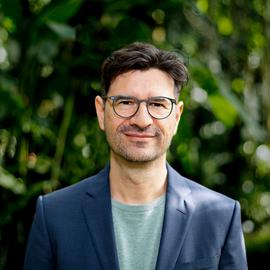
Dr. Conny Kühne serves as a Researcher at the Karlsruhe Institute of Technology (KIT), actively contributing to the Chair of Prof. K. Böhm within the Information Management Systems research group (IPD Böhm). Her role encompasses both teaching and research responsibilities, positioning her as a core member of the academic team focused on advancing data organization methodologies. Her scholarly work centers on Information Management Systems , with specialized expertise in Database Systems and Data Engineering . These research domains drive innovation in scalable data infrastructure and efficient information processing frameworks, addressing critical challenges in modern computational environments. The IPD Böhm team operates from KIT's campus at Am Fasanengarten 5, 76131 Karlsruhe, Germany, under the leadership of Prof. K. Böhm. Dr. Kühne's collaborative efforts within this unit support KIT's reputation for excellence in computer science research and engineering education, particularly in program structures and data management systems.
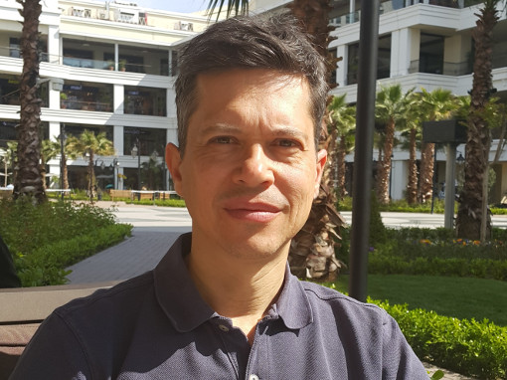
Dr. Dikran Meliksetian serves as Adjunct Faculty in the Computer Engineering and Computer Science Department at the University of New Haven's Tagliatela College of Engineering. An accomplished Senior IT Professional with extensive US and international experience, he leverages industry expertise from his tenure as an IBM Senior Technical Staff Member to enrich academic instruction. His educational foundation includes a Ph.D. in Computer Engineering from Syracuse University. Dr. Meliksetian's research spans critical domains including software engineering, cloud computing, machine learning, and artificial intelligence, with significant contributions to geospatial processing, enterprise IT services, grid computing, and quantum technology. His work bridges theoretical frameworks with practical industry applications, particularly in developing scalable architectures and service delivery models. Current involvement in initiatives like the QuantumUp! Challenge demonstrates his commitment to emerging technologies. His publication history reveals an evolution from foundational grid computing research (2004-2006) toward contemporary work in geospatial processing and cloud service transformation (2016-2019), reflecting industry shifts toward distributed systems and AI-driven solutions. Notable recognitions include: IBM Master Inventor status Senior Membership in the ACM Life Membership in IEEE and IEEE Computer Society Portfolio of over 50 patents While specific student names aren't documented, Dr. Meliksetian actively mentors through projects like the QuantumUp! Challenge where students develop quantum technology skills. His extensive patent portfolio and industry-academia transition exemplify significant research impact beyond traditional grant funding structures. As part of the Computer Engineering and Computer Science Department, he contributes to the academic ecosystem by integrating real-world IBM experience with theoretical instruction, particularly in emerging fields like quantum computing where student teams compete in national challenges.
Hakan GÜLDAL is an Assistant Professor at the Faculty of Education, Trakya University, with a research focus on educational technology and data mining applications in education. He holds degrees in Computer Engineering (BSc, MSc, PhD) and teaches courses in Database Management Systems and Programming Languages . BSc, MSc, PhD in Computer Engineering from Trakya University Assistant Professor since 2018 Specializes in machine learning for educational analytics His research explores technology acceptance models, cloud-based learning systems, and classification algorithms applied to educational datasets. Recent work examines chatbots as educational tools and predictive modeling of student performance. Publications span 2010-2024, with a focus on Cloud computing in education Machine learning for student assessment Learning management system analysis He contributes to international conferences and journals in educational technology. Teaching includes foundational courses in database systems and programming languages, reflecting his technical background.
Michael D. Bond is a Professor in the Department of Computer Science and Engineering at Ohio State University, where he leads the Programming Languages and Software Systems (PLaSS) Research Group. His work focuses on designing program analyses and software and hardware systems that enhance computing reliability, scalability, and security. As an active member of the programming languages and systems research community, he serves in leadership roles including General Chair for PLDI 2027 and ISMM 2024. Professor Bond's research interests span programming languages, systems, and security with a particular focus on information flow control, concurrency, memory management, and Rust programming language systems. His group has made significant contributions to data race detection, predictive analysis, information flow control in Rust, and memory-disaggregated systems. Recent work includes Carapace (static-dynamic information flow control in Rust), Cocoon (static information flow control in Rust), and IsoPredict (predictive analysis for weakly isolated data applications). His research group has secured substantial funding, including multiple NSF grants such as SaTC-2348754 (2024-2027) on information flow control in Rust, CyberCorps-2336531 (2024-2029), and CSR-2106117 (2021-2025). Professor Bond has advised numerous PhD and MS students, many of whom have gone on to prestigious positions at Google, Amazon, Huawei, and academic institutions. Scientific Awards: Outstanding Teaching Award, Department of Computer Science and Engineering, Ohio State University (2018) Lumley Research Award, College of Engineering, Ohio State University (2016) OOPSLA 2015 Distinguished Paper and Artifact Awards NSF CAREER Award ACM SIGPLAN Outstanding Doctoral Dissertation Award Professor Bond actively contributes to the research community through service as program committee member for top conferences including PLDI, ASPLOS, and OOPSLA. He is currently the General Chair for PLDI 2027 and served as General Chair for ISMM 2024. His group's open-source implementations accompany many publications, demonstrating commitment to reproducibility and practical impact.
Dr. Ritu Shandilya is an Associate Professor of Computer and Data Science at Mount Mercy University since 2023. She holds a PhD from Iowa State University and has academic credentials from Shobhit University, U.P Technical University, and Kurukshetra University. Her research focuses on machine learning, recommender systems, and their applications in healthcare and legal domains, alongside expertise in big data, search engines, and data mining. Education: PhD, Iowa State University Master of Technology, Shobhit University Master in Computer Application, U.P Technical University Bachelors in Science, Kurukshetra University Her work includes eFeed-Hungers (sustainable feeding systems), MATURE (recommender systems), and eLegPredict (legal judgment prediction). She has collaborated with institutions in India and the U.S., served on editorial boards, and received a Teaching Excellence Award. Dr. Shandilya co-founded eFeed-Hungers.com and continues technical advisory work at eLegalls, LLC. Scientific Awards: Teaching Excellence Award, Iowa State University
Dixin Tang is an Assistant Professor at the University of Texas at Austin Department of Computer Science. He previously served as a postdoc scholar at UC Berkeley under Prof. Aditya Parameswaran and earned his Ph.D. from the University of Chicago CS department under Prof. Aaron Elmore. Current research focuses on vector databases, large-scale unstructured data analysis, and data systems leveraging CXL memory technology. Key contributions include systems like Tigon (distributed CXL pod databases) and Pasha (scalable CXL pod architecture). His work emphasizes user-centered data systems, with projects like FormS (spreadsheet-to-SQL translation), Smash (string distance metrics), and Lux (visualization recommendations) demonstrating cross-decade innovation. Recent publications (2025) highlight trends in: CXL memory-optimized data architectures Homomorphism-based query frameworks Scalable unstructured data processing Scientific recognition includes: VLDB 2023 Best of Special Issue ICDE 2021 Short Paper Award Teaching roles include: CS 395T: Database Systems and LLMs (Fall 2025) CS 347: Data Management (Fall 2024) CS 395T: Advanced Query Optimizations (Spring 2024) Affiliated with the UT Data Systems research group, collaborating with Profs. Witchel and Chidambaram on CXL memory projects.
Miguel D. Mahecha is a Full Professor for Earth System Data Science at Leipzig University and a research group leader at the Max Planck Institute for Biogeochemistry. He is affiliated with the German Centre for Integrative Biodiversity Research (iDiv) Halle-Jena-Leipzig and the Center for Scalable Data Analytics and Artificial Intelligence. As co-spokesperson for the National Research Data Infrastructure for Earth System Sciences (NFDI4Earth), he focuses on integrating empirical Earth observations with theoretical frameworks to address climate-ecosystem-human interactions. PhD in Environmental Sciences (2009), ETH Zurich Diploma in Geoecology (2006), Bayreuth University His research centers on climate extremes and ecosystem responses , Earth system data cubes , and human-environment feedbacks . He develops advanced data science methodologies, including nonlinear dimensionality reduction (Isomap) and causal inference, to analyze high-dimensional Earth observations. His work bridges macroecological gradients , vegetation-climate feedbacks , and data interoperability challenges in Earth sciences. Recent publications highlight applications of machine learning (e.g., DeepExtremeCubes , Explainable Earth Surface Forecasting ) and remote sensing (e.g., SpectralIndices.Jl , On-Demand Data Cubes ). His group pioneered the Earth System Data Cube concept to unify spatiotemporal data analysis. Collaborative efforts span ecological monitoring networks and planetary boundary interactions . Current projects emphasize global vegetation dynamics , compound climate-ecosystem events , and improving data availability through open-access databases (e.g., Ddeadtrees.Earth , Dheed ). He advocates for nonlinear methods in ecological pattern analysis and causal Earth system modeling , particularly in tropical montane forests and post-conflict ecological transitions.
Luís Eduardo Teixeira Rodrigues is a Professor Catedrático at the Department of Computer Engineering , Instituto Superior Técnico (IST) , Universidade de Lisboa . He is also affiliated with INESC-ID's Distributed, Parallel and Secure Systems Group . With a career spanning over three decades, he has pioneered research in distributed systems, fault tolerance, edge computing, and microservices consistency. PhD from IST (1996) "Agregação" in Informatics (2003) Co-founder of LASIGE's Navigators group His research focuses on transactional causal consistency , Byzantine fault tolerance , and edge computing systems . He leads the GLOG project for distributed shared logs and the DACOMICO project for microservices consistency. His work bridges theoretical distributed algorithms with practical systems engineering. Recent publications emphasize geo-replicated transactional systems , proof-of-storage mechanisms , and automated microservices decomposition . Notable collaborations include projects with institutions in Italy, Japan, and Luxembourg. Scientific contributions include: Prémio Prof. Luís Vidigal (awarded to student Mário Rui Vazão) Co-author of foundational books on Reliable Distributed Programming and Distributed Systems for System Architects Mentorship highlights: Supervised over 40 PhD and MSc students in distributed systems, including: Diogo Barrinha - Unobservable Covert Streaming Xavier Vilaça - N-Party BAR Transfer João Queirós - Transactional Causal Consistency Current projects include the GLOG distributed shared log system and DACOMICO for microservices consistency. Active in international collaborations with institutions in the USA, Switzerland, and Brazil.
Wenting Zheng is an Assistant Professor in the Computer Science Department at Carnegie Mellon University (CMU), with a courtesy appointment in the Electrical and Computer Engineering Department. She co-founded Opaque Systems and serves as a core faculty member at CyLab Security and Privacy Institute. Ph.D. in Electrical Engineering and Computer Science (EECS) from UC Berkeley M.Eng. and Bachelor’s degrees from MIT under Barbara Liskov Her research focuses on system security and applied cryptography , particularly systems enabling “sharing without showing.” Key areas include secure cloud computation, collaborative privacy-preserving analytics, and practical cryptographic frameworks for machine learning. Recent work emphasizes encrypted AI (e.g., Cinnamon), secure multi-party computation (e.g., Silph), and private information retrieval (e.g., PIANO). Notable scientific honors include the Berkeley Fellowship (2014-2016) , IBM Research Fellowship (2017-2018) , and the USENIX Security 2021 Distinguished Paper Award . She has advised numerous Ph.D. and Master’s students, including collaborators at CMU and UC Berkeley. Teaching: Distributed Systems, Secure Computer Systems, Cryptosystems: Theory and Practice Research grants from NSF, AWS, Cisco, Google, Samsung, and CMU CyLab Co-founder of DARE, a diversity-focused research mentorship program
Dr. János Pánovics serves as a Lecturer at the Department of Information Technology, Faculty of Informatics, University of Debrecen. His academic work centers on computer science education and research in programming methodologies, artificial intelligence, and database systems. He actively contributes to the university's educational infrastructure through development of evaluation tools and curriculum design. Research interests span Assembly programming, Functional and multiparadigm programming, Artificial intelligence, and Database security. His innovative work focuses on automatic evaluation systems for programming tasks, particularly the ProgCont platform which utilizes test case annotations to enhance feedback for novice programmers. In AI research, he explores cooperative game theory in incomplete information environments and implements search algorithms using functional programming approaches. Analysis of his 15 most recent publications (2016-2022) reveals three dominant research thrusts: programming education tools (60% of output), artificial intelligence methodologies (27%), and cloud/database technologies (13%). The ProgCont system forms the core of his educational research, with multiple publications addressing error detection, differential education, and gamification techniques. His AI contributions include novel state space representations and game-theoretic approaches, while his technical work extends to Azure cloud applications and database security evaluation. Scientific Awards: No awards or fellowships are documented in available sources. Advising and Grants: Student advising activities and research grant information are not specified in current documentation. Labs and Teams: No laboratory affiliations or research team memberships are indicated in the provided materials.
Ladjel Bellatreche is a Full Professor at the National Engineering School for Mechanics and Aerotechnics (ISAE-ENSMA) in Poitiers, France, where he has been a faculty member since September 2010. He leads the Data and Model Engineering Team of the Laboratory of Computer Science and Automatic Control for Systems (LIAS). Prior to his current position, he spent eight years as Assistant and then Associate Professor at Poitiers University. His academic journey includes visiting positions at Université du Québec en Outaouais (Canada), Purdue University (USA), and Hong Kong University of Science and Technology (China). Professor Bellatreche's research interests span multiple domains in data management and engineering, with a focus on Semantic Data Integration, Ontology-based Database Design, Life Cycle of Extremely Large Database Design, Big Data & Cloud Computing, Green Computing, and Database Deployment. His work bridges theoretical foundations with practical applications in data-intensive systems. His publications reflect a strong trend toward addressing challenges in big data analytics, semantic data integration, and energy-efficient database systems. The research demonstrates a progression from traditional data warehousing techniques to more advanced approaches incorporating semantic web technologies, linked open data, and green computing principles. His work increasingly focuses on scalability, efficiency, and the integration of diverse data sources. Professor Bellatreche has received recognition through his service as an Editorial Board Member for the International Journal of Reasoning-based Intelligent Systems and as subject area editor of the Scalable Computing Journal. He has also served as a reviewer for prestigious journals including IEEE TKDE and Distributed and Parallel Database Journal. His leadership extends to organizing major international conferences such as DAWAK, DOLAP, MEDI, and WISE. With over forty program committee memberships, he plays a significant role in shaping research directions in data management. Additionally, he actively promotes research in Africa and Asia through student supervision and conference organization.
Juan Antonio Fernández del Pozo is an Associate Professor of Statistics and Operations Research at the School of Computer Science, Technical University of Madrid (UPM), and a member of the Computational Intelligence Group. With over 60 publications and participation in more than 30 national and international research projects, he is a leading researcher in decision analysis and intelligent systems. His educational background includes: Doctorate in Computer Science from the School of Computer Science, UPM (Thesis: "Listas KBM2L para la síntesis de conocimiento en sistemas de ayuda a la decisión") His research focuses on probabilistic graphical models (Bayesian networks/influence diagrams) for decision support, evolutionary algorithm optimization, and machine learning for data streams with concept drift. Key application domains span Social Network Analysis, Air Traffic Management, structural health monitoring, Industry 4.0, and social service quality modeling in collaboration with Spanish Foundations. His work emphasizes knowledge acquisition in large decision tables, explanation synthesis, and sensitivity analysis. Publication trends reveal two phases: foundational work (2000-2013) on Bayesian networks and medical decision systems (e.g., neonatal jaundice modeling), and recent applied research (2016-2018) addressing environmental restoration, transportation scheduling, and social innovation networks. Scientific awards: No scientific awards were mentioned in the provided text. Advising and grants: Supervised 12+ Master's Degree projects Supervised 50+ final degree projects Participated in 30+ research projects Served on 18+ doctoral thesis evaluation panels Labs and teams: Active member of the Computational Intelligence Group at UPM
Professor Tolga Ayav is affiliated with the Department of Computer Engineering at Izmir Institute of Technology , where he has served as faculty since 2006. He received his BSc in Electrical and Electronics Engineering (1995) from Dokuz Eylül University, MSc in Computer Engineering (1999) from Izmir Institute of Technology, and PhD in Computer Engineering (2004) from Ege University. He was a researcher at INRIA Rhone-Alpes in 2005. Education BSc: Electrical and Electronics Engineering, Dokuz Eylül University (1995) MSc: Computer Engineering, Izmir Institute of Technology (1999) PhD: Computer Engineering, Ege University (2004) Research Interests include formal methods for software testing, hardware component and on-chip system tests, real-time and fault-tolerant embedded systems, blockchain applications, and machine learning. His work focuses on: Formal verification techniques Real-time system optimization Hardware-software co-design Blockchain-based security solutions Mathematical modeling in testing Recent Publications span topics like: Deep learning for livestock monitoring Blockchain in IoT security Fourier expansion in fault analysis Optimized data replication strategies Finite state machine testing Scientific Awards include: Best Paper Award at IEEE CBDCom 2016 for cloud data replication research Teaching includes courses such as: CENG 312: Computer Networks CENG 523: Advanced Topics in Real-Time Systems CENG 215: Circuits and Electronics Projects he has led include: TÜBİTAK TEYDEB: Spectrally Efficient Small Cell Base Station Design BAP: Dedicated Server for Physical Network Applications Lab Leadership : He leads the DCS Research Group at Izmir Institute of Technology, focusing on distributed computing and real-time systems.
Georgi Stojanov is an Associate Professor at The American University of Paris since Fall 2005, previously serving as associate professor at the Faculty of Electrical Engineering, Sts Cyril and Methodius University in Skopje (2001-2005). He co-founded the Cognitive Robotics Group (2000) and the Institute for Interactivist Studies, actively organizing the bi-annual Interactivist Summer Institute (ISI). His academic credentials include: PhD in Computer Science and Artificial Intelligence (1997), University SS Cyril and Methodius, Skopje MSc in Computer Science (1992), Thesis: 'Recognition and Modeling of Evoked Brain Potentials', University SS Cyril and Methodius, Skopje BS in Electrical Engineering (1988), Faculty of Electrical Engineering, University 'Sts. Cyril and Methodius', Skopje (Computer Science major) Stojanov's research spans Artificial Intelligence with emphases on Cognitive Robotics , Developmental Robotics , and Computational Creativity . His work investigates interactivist theory, metaphor/analogy mechanisms in AI, and embodied cognition frameworks. Key contributions include modeling attention architectures, curiosity-driven robotic systems, and Piagetian-inspired developmental models, consistently bridging cognitive science with practical robotics applications. His focus on perceptual similarity in creative processes represents a significant thread in recent publications. Publication trends (2005-2013) reveal a progression from foundational interactivism theory (2006) toward computational creativity (2010-2013), with sustained exploration of embodied learning through inductive logic programming. His work demonstrates strong interdisciplinary connections between machine learning, cognitive development, and human-computer interaction. He maintains active leadership through program committee roles for AI/robotics conferences and has delivered invited lectures at institutions including Université Montpellier 3, Université Paris-8, and the New Bulgarian University. His 2013 AAAI symposium on Creativity and Cognitive Development highlights ongoing scholarly engagement. Stojanov's collaborative network includes the Cognitive Robotics Group (Skopje), Institute for Interactivist Studies, and international partners at University of Trieste, Université de Versailles-Saint-Quentin-en-Yvelines, and UC San Diego, reflecting his commitment to cross-institutional cognitive systems research.
Ahmad Ghazawneh is a Senior Lecturer at the School of Information Technology , Halmstad University. His research explores the intersection of digital innovation platforms, blockchain technology, and fintech, emphasizing transformative impacts on financial systems and digital economies. Email: ahmad.ghazawneh@hh.se Research Focus: Dr. Ghazawneh investigates blockchain-based financial ecosystems, knowledge graph integration in healthcare, and platform dynamics across multiple domains including mobility systems and social media affordances. Scientific Trends: Recent publications demonstrate expertise in federated health data systems, token-based blockchain ecosystems, conversational AI for healthcare, and sustainable mobility platforms. His work bridges theoretical platform economics with practical implementations.