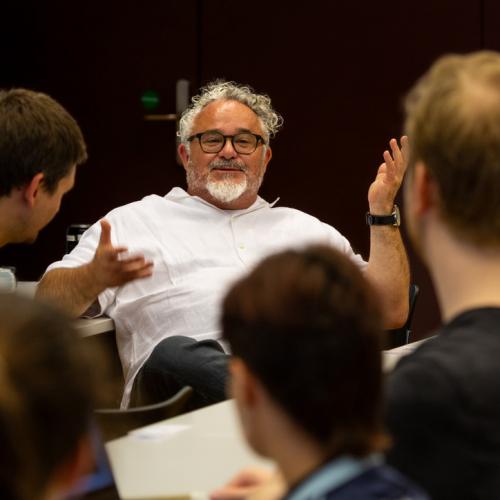
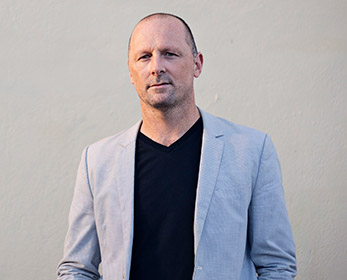
Kristin McGee is a Senior Lecturer in Jazz and Contemporary Music at the Australian National University (ANU) School of Music, with prior roles at the University of Groningen. Her research bridges jazz/popular music, gender studies, audiovisual media, and ecocritical performance. Education: PhD in Ethnomusicology (University of Chicago, 2003), MM in Saxophone Performance (Northwestern University). Her work explores jazz's intersection with film, television, and social movements, alongside feminist and intersectional approaches to jazz leadership. She has published on themes like Some Liked It Hot , which examines jazz women in media, and Remixing European Jazz Culture (2020). Recent research includes ecocritical soundscapes and collective improvisation for climate awareness. She co-edited a special issue on Beyoncé and served on boards like IASPM Benelux and KVNM. Scientific Awards: TLA Richard Wall Memorial Award (nominated) American Musicological Society's Lewis Lockwood Award (nominated)
Mara Gibson is an Associate Professor of Composition at Louisiana State University (LSU) School of Music, where she serves as area coordinator with tenure. Originally from Charlottesville, VA, Dr. Gibson completed her Ph.D. at SUNY Buffalo after graduating from Bennington College. She has also studied at London College of Music, L'École des Beaux-Arts in Fontainebleau, France, and the International Music Institute at Darmstadt, Germany. Dr. Gibson's creative work spans contemporary composition with emphasis on cross-disciplinary collaborations. Her music has been described as "shocking, gripping and thought-provoking... conjuring a flurry of emotions" (PARMA Recordings). She is a regular collaborator with choreographers, visual artists, writers, and filmmakers, with notable projects including the ArtSounds initiative which ran for 11 years at UMKC. Her recent compositions demonstrate consistent innovation in technique and interdisciplinary approaches. Works like Escher Keys (2021), a bassoon concerto inspired by M.C. Escher, and Galetea's Dream (2021/23), a staged song cycle, showcase her ability to merge visual art concepts with musical expression. Her compositions often draw inspiration from poetry, visual arts, and natural phenomena, resulting in works that are both technically sophisticated and emotionally resonant. Dr. Gibson has received numerous prestigious awards including: LSU Provost Fund for Innovation in Research ($7,500 for "The Devil's Dream" opera, 2024) GRAMMY nomination eligibility for "Unseen World" album (2024) ATLAS grant through Louisiana Board of Regents ($32,000 for bassoon concerto project, 2021) MacDowell Colony Fellowship (2016) Virginia Center for the Arts residency (2015) Yale University Distinguished Music Educator Award (2015) As an educator, Dr. Gibson has significantly expanded the composition program at LSU, more than doubling its size since her arrival. She founded the Constantinides New Music Ensemble, which debuted at Carnegie Hall in April 2022. Previously, at UMKC Conservatory of Music and Dance, she coordinated undergraduate composition and tripled enrollment in the program. She is currently working on her first opera, "The Devil's Dream," based on Lee Smith's novel and inspired by the country music powerhouse Carter family.
Marc Benamou is a Professor of Music and Director of the Javanese gamelan ensemble at Earlham College, located in Richmond, Indiana. He holds a Ph.D. from the University of Michigan, alongside degrees from Oberlin College and Université de Paris X. His research focuses on ethnomusicology, with primary specialization in Javanese gamelan music and Peruvian saxophone orchestras. He has conducted fieldwork in Indonesia, Peru, and France, and his work explores aesthetics, musical meaning, and cross-cultural comparisons. Recent projects include a National Endowment for the Humanities-funded initiative to transcribe and analyze Javanese gamelan lyrics from cassette recordings. Benamou’s teaching emphasizes global musical traditions beyond the Western canon, including courses on African, Japanese, and South American musics. He speaks French, Indonesian, and Spanish fluently, and has presented his research internationally in countries like Argentina, Italy, and Israel. His interdisciplinary interests span music and food, gender studies in music, and the intersection of musicology and linguistics. He has collaborated with institutions such as the Institut Seni Indonesia in Surakarta and participated in faculty research initiatives in Japan and the U.S. Benamou’s career combines academic rigor with artistic practice, having performed as a singer of Javanese music and a classical trumpet player. His dedication to Earlham’s liberal arts mission is evident in his emphasis on student-centered learning and fostering cross-cultural connections among students. He has mentored students like Yasmine Lee and Tinisha Newland in research on African-American classical musicians, blending scholarly inquiry with community engagement.
Christine Jensen is an Associate Professor of Jazz Studies & Contemporary Media and Director of the Eastman Jazz Orchestra at the University of Rochester’s Eastman School of Music. A renowned composer, arranger, and soprano saxophonist, she leads her own jazz orchestra and has received international acclaim. Her work includes Juno Award-winning albums Habitat (2014) and Treelines (2011), along with multiple commissions and conducting residencies across North America and Europe. Affiliations: Director, Canadian National Jazz Orchestra; former Artistic Director, Orchestre National Jazz de Montreal Collaborations: Performances with Jeremy Pelt, Phil Dwyer, Ben Monder, and others Her research and teaching focus on jazz composition, orchestration, and ensemble performance. Jensen’s awards include SOCAN’s Hagood Hardy Jazz Composer Award (twice) and recognition in Downbeat magazine’s Critics’ Poll. Grants & Commissions: Extensive international commissions and residencies at institutions like Frost School of Music and University of Michigan Education: Mentors include Kenny Werner, Jim McNeely, and John Hollenbeck
Kent Engelhardt is a Professor at the Dana School of Music & University Theatre at Youngstown State University (YSU). He has maintained a dual career as both an academic scholar and professional performer, with faculty appointments at YSU since 1994, Lakeland Community College (1991-2011), and the Youngstown State University Summer Jazz Camp (1997-1999). As a Conn-Selmer Artist and active musician, he bridges scholarly research with practical musical application through performance. Dr. Engelhardt's educational background includes: PhD in Ethnomusicology/Jazz from the University of Pittsburgh (2001) MA in Ethnomusicology/Jazz from the University of Pittsburgh (1999) BM in Performance/Clarinet from Youngstown State University (1993) MM in Performance/Jazz from Youngstown State University (1986) His research focuses on Kansas City Jazz, Charlie Parker, and Tadd Dameron , with particular emphasis on jazz composition, arranging, and historical performance practices. Dr. Engelhardt has created 47 critical editions and arrangements of Dameron's music, representing one of the most comprehensive scholarly efforts on this important jazz composer. His work combines meticulous historical research with practical musical application, often resulting in performances that bring historical works to contemporary audiences. His teaching interests span Jazz Studies: Improvisation, Composition/Arranging, Ethnomusicology, and instruction on multiple instruments including saxophone, flute, clarinet, and piano. Dr. Engelhardt's scholarly output demonstrates a consistent focus on preserving and reinterpreting jazz history, particularly the works of Tadd Dameron. His research spans from historical analysis of Count Basie's arrangements to contemporary reinterpretations of Dameron's music for modern big bands. The January 2023 release of "Central Avenue Swing & Our Delight" represents the culmination of years of research into Dameron's work, featuring 22 new editions and arrangements that have received significant critical acclaim. His scholarly contributions have been recognized through multiple university research appointments: YSU Research Professorship 2011-2012: "The 'Head' Arrangements of the Count Basie Orchestra 1937-1939" YSU Research Professorship 2012-2013: "Musical Contextualization of Charlie Parker's Solos with The Jay McShann Orchestra" CCAC re-assigned time 2013-2014: "The Music of Tadd Dameron for Harlan Leonard and his Rockets" YSU Research Professorship 2016-2017: "Tadd Dameron: The Magic Touch" for Dameron's centennial His recording "Central Avenue Swing & Our Delight" (2023) received significant recognition, being named among the "Top 25 Jazz Recordings of 2023" by Scott Yanow and appearing in the "Top 10 Critics Poll in Cadence Magazine," with additional reviews from major jazz publications including Jazz Wax, LA Jazz Scene, and All About Jazz. As an educator and performer, Dr. Engelhardt has mentored countless students through his teaching positions and ensemble leadership. His Madd For Tadd ensemble serves as both a creative outlet and educational platform, having performed at numerous festivals including the TRI-C Jazz Fest, Kaleidoscope Festival, and Lakeland Jazz Festival. Dr. Engelhardt's research has been consistently supported by university grants, enabling him to preserve and reinterpret important jazz repertoire for contemporary audiences. Dr. Engelhardt leads the Madd For Tadd ensemble, which focuses on performing and recording Tadd Dameron's music in new arrangements for big band. The ensemble has performed at major jazz festivals and venues including the TRI-C Jazz Fest, Cleveland's Bop Stop, and BLU-Jazz. Recently, he has expanded the reach of his work by performing Dameron's music with the Orlando Jazz Orchestra and at the University of South Florida, demonstrating the national recognition of his scholarly and artistic contributions to jazz studies.
Rodney Chism is an Assistant Professor of Music and Director of Bands at Kentucky State University, where he oversees the Mighty Marching Thorobreds. As an educator, composer, saxophonist, and clinician, he has spent over two decades shaping instrumental music programs and fostering leadership within Historically Black Colleges and Universities (HBCUs). B.S. in Music Education from the University of Arkansas at Pine Bluff M.M.E. from Jackson State University D.M.E. from Liberty University Advanced studies at Tennessee State University, University of Memphis, Union University, and American Conservatory of Music Dr. Chism’s research focuses on music education, HBCU band culture, and leadership dynamics in academic music programs. His scholarly works examine the intersection of institutional identity, alumni engagement, and organizational challenges in HBCU band programs. His publications highlight trends in HBCU music education, emphasizing cultural preservation and the societal impact of band programs. As a composer and arranger, he has written over 150 works across multiple genres, including the award-winning jazz composition The Plaza (2025). Kappa Kappa Psi National Intercollegiate Jazz Composition Award (2025) for The Plaza Rodney Chism founded the Big Band Memphis Professional Stage Band and actively tours as a performer, arranger, and clinician. He has performed with renowned artists like Al Jarreau, Arturo Sandoval, and Bobby Rush, blending academic rigor with professional artistry.
Matthew Styles is a Senior Lecturer in Saxophone Studies at the Western Australian Academy of Performing Arts (WAAPA), Edith Cowan University. He serves as Coordinator of Honours (Music) and is a postgraduate supervisor with extensive experience in musician injury research through collaboration with sports science specialists. As a faculty member, he teaches research preparation courses, creative projects, and woodwind workshops across undergraduate and postgraduate levels. Matthew holds a Doctor of Musical Arts from the University of Western Australia (2008), a Bachelor of Music with Second Class Honours from the same institution, and two Certificate IV qualifications in Training and Assessment (2013 and 2023). His academic journey includes studies at the Royal College of Music, London, and mentorship under renowned saxophonists including Bob Berg, Martin Robertson, Dr. Kyle Horch, Dr. Otis Murphy, and Dr. Eugene Rousseau. His research interests center on cross-genre pedagogy and performance, specifically bridging classical and jazz traditions for classical musicians, and developing injury mitigation strategies for saxophonists through multi-disciplinary approaches with sports science. With over 30 years of professional experience as a saxophonist across jazz, classical, funk, and avant-garde genres, Styles brings practical insight to his academic work. His research outputs demonstrate consistent productivity with publications spanning from 2009 to 2025, showing particular focus on saxophone health, performance techniques, and cross-genre exploration. The publications reveal a trajectory from performance-focused outputs toward increasingly research-intensive work examining health, pedagogy, and interdisciplinary approaches. 2004 Churchill Fellowship HenriSelmerParis Artist D'Addario Artist JLV Sound Ambassador Dr. Styles actively supervises doctoral and master's students, currently serving as Principal Supervisor for three PhD candidates and Associate Supervisor for one PhD candidate. His completed supervision portfolio includes four PhD students as Principal Supervisor and five as Associate Supervisor across diverse musical topics. He has secured research funding including an ECU Early Career Researcher Grant ($23,560) for his project 'Saxology: recasting third stream music for the saxophone' (2014-2015). As director of 'The Phone Co.', he leads performance initiatives that integrate his research interests with practical application. His professional activities extend to membership in the Australian Society for Performing Arts Healthcare (since 2012), Performing Arts Medical Association (since 2015), and Western Australian Music (since 2022), where he serves as a conference reviewer, demonstrating his commitment to advancing knowledge in performing arts healthcare and music education.
Aris Argiris is a Professor at the University of the Arts in Berlin, Faculty of Performing Arts, where he has been teaching since 2016. Born in Athens, he is a distinguished baritone opera singer with an international career spanning major opera houses across Europe, North America, and Asia. His educational background includes studies in marketing and languages, saxophone and music theory, as well as singing with Kostas Paskalis, Frangiscos Voutsinos, and Despoina Kalafati in Athens. In 1999, he received the Maria Callas scholarship and continued his vocal studies in the master class of Prof. Daphne Evangelatos at the University of Music and Theater in Munich. As a performer, Argiris has appeared at prestigious venues including the Royal Opera House Covent Garden, Arena di Verona, Semperoper Dresden, and Theatre de la Monnaie. His repertoire spans dramatic Italian and German works including roles such as Wotan in Wagner's Ring cycle, Scarpia in Tosca, Rigoletto, Amonasro in Aida, and Escamillo in Carmen (which he performed in the first 3D opera film). His notable awards include: Maria Callas scholarship in Athens (1999) International Singing Competition of the Chamber Opera Schloss Rheinsberg winner (2002) Best Young Artist of Greece by the Greek Association of Music and Theatre Critics (2007) Professor Argiris maintains an active performance schedule alongside his teaching responsibilities, with engagements planned through 2026 at major opera houses including Staatstheater Darmstadt, Landestheater Linz, and Tiroler Landestheater Innsbruck. He has worked with renowned conductors such as Zubin Mehta, Christian Thielemann, and Kurt Masur and continues to be a significant figure in both the performance and educational aspects of opera.
John Supko is an Associate Professor of Music and Theater Studies at Duke University's Trinity College of Arts & Sciences. He also serves as Core Faculty in Innovation & Entrepreneurship and previously held roles like Interim Director of the PhD Program in Computational Media, Arts & Culture. Educated at Indiana University (B.Mus., 2002), Princeton University (M.F.A., 2005; Ph.D., 2009), he specializes in generative music that blends human creativity with algorithmic processes. His research explores intersections of chance, traditional notation, and real-time score generation. Notable projects include s_traits (a generative environment based on Bill Seaman’s text) and USINE (a 24-hour work combining ensemble and algorithmic electronics). His work has been hailed as 'spellbindingly beautiful' and 'hypnotic' for its fusion of sound, text, and technology. Recent artistic works include Time Becomes Again (2024) and Crossed Shadows (2024), emphasizing algorithmic innovation. Awards include the Hunt Family Publication Award (2013) and the Leo Kaplan Award (2008). Teaching spans composition, generative media, and arts entrepreneurship, reflecting his commitment to interdisciplinary creativity. Supko’s collaborations extend to computational media and experimental performance, with works exhibited globally. His lab focuses on using technology to disrupt conventional musical frameworks, advocating for 'exuberant rule-breaking' in artistic exploration.
Jonas Braasch is a Professor at Rensselaer Polytechnic Institute's School of Architecture and Associate Director for Research at the Experimental Media and Performing Arts Center (EMPAC). He teaches in the Graduate Program in Architectural Acoustics and leads research on collaborative virtual reality, binaural hearing, auditory modeling, and sensory substitution devices. His work has been funded by NSF, NSERC, and European agencies, and he holds dual PhDs in Electrical Engineering/Information Science and Musicology. His research integrates acoustic virtual reality systems, immersive museum soundscapes, telematic music, and assistive instrument design. Recent publications focus on networked immersive environments, spatial audio techniques, museum acoustics classification, and innovations in wind instrument design for accessibility. Publications emphasize the application of deep learning to acoustic prediction and multisensory integration.
Alistair Dobson is a Lecturer in Contemporary Music and Coordinator of Jazz and Popular Music programs at the University of Tasmania’s School of Creative Arts and Media, within the College of Arts, Law and Education. He holds a MMus (2001) and BMus (1999) from the University of Tasmania, studying under Brian Brown (Australian Jazz Hall of Fame) and Elliot Dalgliesh. His academic roles include coordinating music degrees, designing curricula, and teaching saxophone, improvisation, and ensemble studies. Education: MMus (UTAS, 2001), BMus (UTAS, 1999) Administrative Roles: Undergraduate course coordinator, curriculum architect Teaching: Contemporary Saxophone, Big Band, Jazz Theory, and Ensemble Skills Research focuses on improvisation’s role in developing individual musical identity and connecting global practices to local (Tasmanian) contexts. His creative work explores composition, performance, and reimagining existing works to reflect place. Performance highlights include collaborations with international artists (Petra Haden, Brian Jackson) and Australian jazz legends (Allan Browne, Nick Haywood), plus groups like Kelly Ottaway’s Modern Operative and his own quartet. He performs in jazz festivals, broadcasts, and interdisciplinary projects merging music with science (e.g., Antarctic seal research concerts). Community engagement includes International Jazz Day performances, Tasmanian festivals, and educational outreach. An APRA/AMCOS member, his work balances academic rigor with vibrant creative practice.
Ignacy Wiśniewski is a Doctor of Fine Arts, jazz pianist, composer, and Assistant Professor at the Academy of Music in Gdańsk (Faculty IV - Choral Conducting, Church Music, Artistic Education, Rhythmics and Jazz). He specializes in vocal collaboration as arranger, coach, and songwriter, creating over a dozen musicals performed in major Polish theaters. Academy of Music in Gdańsk (Graduate and Faculty Member) Hochschule fur Musik, Theater und Medien Hannover Academie Musicale de Villecroze His research interests include improvisation as human-machine distinction , cross-genre musical collaboration , and theatrical jazz integration . His 2021 DUOS project explored algorithm-resistant composition through saxophone, double bass, and drum collaborations. Scientific Awards: Honorary Badge of Merit for Polish Culture (2022) Special Award of Pomeranian Voivodeship Marshal (2024) Young Poland Scholarship (2018) Wiśniewski leads the Ignacy Wiśniewski Trio (Jazz Shirim debut 2016) and co-founded the Almost Jazz Group quartet (2012-2017). He has collaborated with directors like Agata Duda-Gracz and received funding through the Minister of Culture's Culture on the Web program.
Charles Pillow is an Assistant Professor of Jazz Saxophone at the Eastman School of Music, University of Rochester. He specializes in contemporary jazz performance, woodwind doubling, and saxophone pedagogy. Pillow has released seven recordings including acclaimed works like Electric Miles (2018) and Triocity (2017). His performances span collaborations with major artists such as Brad Mehldau, John Scofield, and Maria Schneider. His research focuses on expanding saxophone techniques across genres, with publications including The Art of Doubling: A Saxophonist's Guide to Flute, Clarinet and Oboe and Jazz Etudes on Great American Standards for Flute and Clarinet . Pillow's work bridges classical and contemporary jazz traditions, emphasizing interdisciplinary artistry through projects like Van Gogh Letters , which interprets visual art through music. His recordings demonstrate expertise in Miles Davis tributes, ensemble leadership, and avant-garde improvisation. Pillow maintains active teaching roles with masterclasses internationally while continuing performance engagements across jazz and pop genres.
Dr. Wolfgang Lamprecht is a University Professor for Arts Management and Deputy Head of Institute at the University of Vienna, holding a dual role as external Head of Corporate Communication at Bank Austria Kunstforum Wien since 2000. His academic career includes a doctorate in journalism/communication studies and a master’s in jazz studies, alongside saxophone training at renowned institutions like the Vienna Academy of Music. **Education**: Doctorate: University of Vienna (communication studies/theater/musicology) Master’s: University of Vienna (Jazzkritik in Österreich) Saxophone studies: Bruckner Conservatory Linz, Vienna Academy of Music **Research Focus**: Lamprecht bridges economics, media, and culture, specializing in corporate cultural responsibility (CCRes), trust communication, and cultural financial management. Key themes include CSR in Austrian banks, historical jazz research, and cultural policy globalization. **Professional Roles**: Board member: Music in Progress Society (2015–2023), Austrian Jazz Prize Academy (since 2024) Advisor: UniCredit Bank Austria, Austrian Music Theater Prize, Vienna Music Society Founder: IGFM Institute for Global and Future Markets (since 2021) **Grants & Labs**: His work extends to institutional advising (e.g., JazzFest Wien) and interdisciplinary projects like the OSCE E-mindful Consortium (2022–2023). He also chairs the Bank Austria Salon cultural platform at Vienna’s Old City Hall.
Jamie Oehlers is an Associate Professor at the Western Australian Academy of Performing Arts (WAAPA), part of Edith Cowan University, where he has served as Coordinator of Jazz Studies since 2008. He maintains an active dual career as both an educator and internationally recognized jazz artist, performing at major venues across New York, London, Paris, Berlin, and throughout Asia. His educational background includes: Doctor of Philosophy, Edith Cowan University (2019) Associate Diploma of Performing Arts (Jazz & Contemporary Music), Edith Cowan University (1994) Oehlers' research centers on jazz improvisation and practice-led research methodologies, particularly his chromatic-intervallic approach to improvisation developed through reflexive practice. His scholarly work explores tension variation, non-conventional harmonic structures, and cross-cultural musical dialogues, consistently bridging theoretical concepts with practical application in performance contexts. His publications demonstrate a progression from technical explorations of melodic construction to broader cultural analyses of the Australian jazz scene. His notable achievements include: Winner of the 2003 World Saxophone Competition in Switzerland Four-time Australian Jazz Bell Award winner ABC Limelight Award for Best Jazz CD Release ARIA Awards finalist for Best Jazz Album Oehlers has supervised multiple research students, serving as Principal Supervisor for a Master of Arts thesis on 'Developing a Framework for Music Ekphrasis in Jazz Composition' and as Associate Supervisor for several other projects including a PhD on 'Enhancing improvisational and compositional practice with the electric wind instrument.' His supervision work demonstrates his commitment to developing both the technical and conceptual aspects of jazz performance and composition.