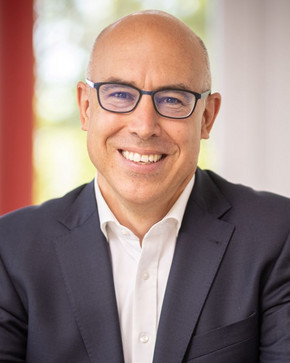
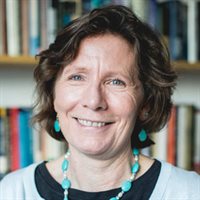
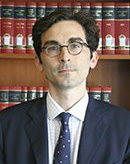
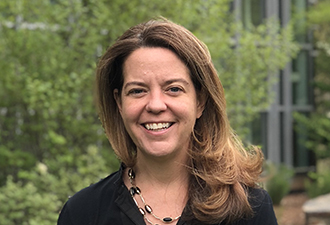
Gabriel Felbermayr is a Professor of Economics at Vienna University of Economics and Business (WU) and Director of the Austrian Institute of Economic Research (WIFO) since 2021. He holds a PhD in Economics and has held academic positions at the University of Munich (ifo Center for International Economics), Kiel University (Chair in Economics), and the University of Tübingen. University Professor: WU Vienna (2021–) Director: WIFO Vienna (2021–) President: Kiel Institute (2019–2021) Research Interests include international trade theory, labor markets in open economies, European integration, migration economics, and climate-trade intersections. His work combines theoretical models with empirical policy analysis, focusing on globalization challenges, supply chain disruptions, and economic sanctions. Current Projects Trump 2.0 Transatlantic Tariff Scenarios Scientific Awards include recognition for his research contributions, though specific award names are not detailed in the text. He has led major projects for institutions like the Austrian Economic Chamber and the Foundation for Family Businesses. Education includes studies at the University of Linz and University of Florence (PhD). His publications span journals like Journal of International Economics , Review of World Economics , and World Development .
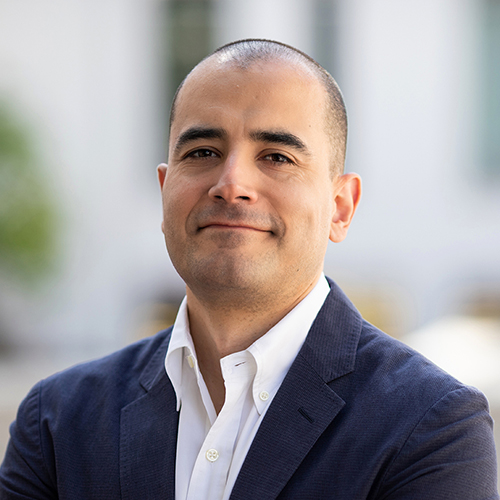
Miguel R. Rueda is an Associate Professor in the Department of Political Science at Emory University, specializing in electoral manipulation, civil conflict, money in politics, and political methodology. He holds a PhD from the University of Rochester (2014), an M.Sc. in Economics, and a B.Sc. in Economics and Mathematics from La Universidad de los Andes. Before Emory, he was a visiting scholar at Princeton University's Center for the Study of Democratic Politics (2013–2014). In Fall 2024, he will serve as a Visiting Associate Professor at Vanderbilt University. His research has been published in top journals like the American Political Science Review , American Journal of Political Science , and Journal of Conflict Resolution . Key themes include electoral fraud mechanisms, civil war dynamics, and the intersection of political methodology with empirical policy analysis. Rueda's work spans theoretical models of strategic behavior (e.g., foreign aid allocation, partisan poll-watching) and applied analyses of electoral systems, conflict outcomes, and governance challenges. His methodological contributions address econometric issues like post-instrument bias and omitted variable effects. Contact: miguel.rueda@emory.edu , 315 Tarbutton Hall, Emory University, Atlanta, GA 30322.
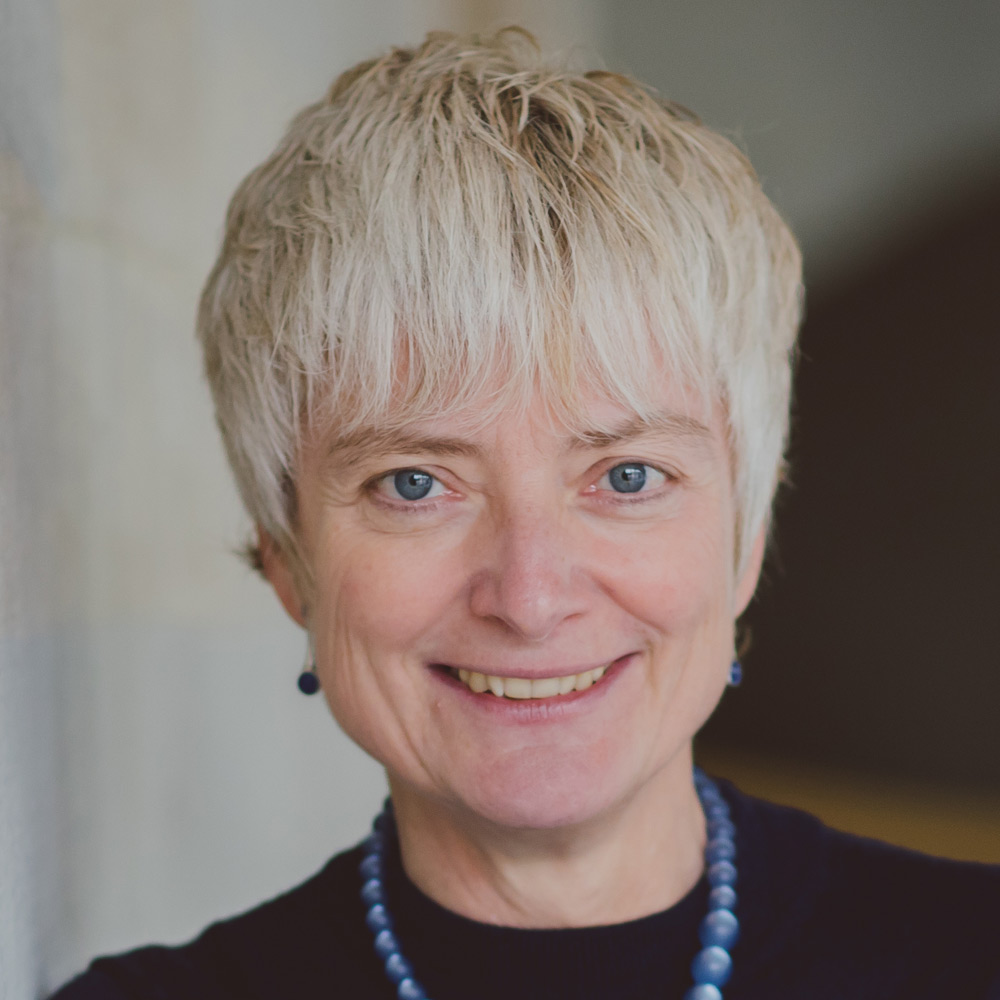
Sabine Michalowski is a Professor at the University of Essex's Essex Law School, specializing in transitional justice, corporate complicity, and medical law. She co-directs the Essex Transitional Justice Network (ETJN) and chairs its research area on the economic dimensions of transitional justice. She is also a member of the Human Rights Centre. Her work focuses on holding economic actors accountable in Colombia's peace process, collaborating with Dejusticia and providing legal briefs to Colombian judicial bodies. She is involved in projects such as the Wellcome Trust-funded Mental Health and Justice initiative and AHRC-funded research on the Mental Capacity Act's compliance with the UNCRPD. Education: PhD from the University of Sheffield Diploma in Comparative Law from University of Paris II Law degree from Hamburg Qualified as a lawyer in Berlin Research Interests: Transitional justice mechanisms, corporate liability in conflict zones, end-of-life decision-making, and mental capacity law. She explores human rights implications of assisted dying and legal frameworks for capacity assessment in healthcare settings. Awards & Funding: Involved in grants including the Wellcome Trust and AHRC projects. Her work includes policy roundtables with the Ministry of Justice and public conferences on legal and ethical issues. Advising & Labs: Supervises PhD students in transitional justice, corporate complicity, and medical law. Collaborates with the Essex Autonomy Project and ETJN, focusing on interdisciplinary research and policy impact.
Abraham L. Newman is a Professor at the Edmund A. Walsh School of Foreign Service and the Government Department at Georgetown University, where he also serves as Director of the BMW Center for German and European Studies. His work bridges political science, international relations, and global regulatory studies, with a focus on the intersection of economic interdependence and political power. PhD in Political Science – University of California, Berkeley MA in Political Science – University of California, Berkeley MA in International Relations – Stanford University BA in International Relations – Stanford University His research centers on globalization, data privacy, financial regulation, and weaponized interdependence . He investigates how transnational networks, particularly in finance and digital infrastructure, are leveraged for geopolitical advantage. His work emphasizes the evolving role of private actors, regulatory institutions, and technological change in shaping international order. Analysis of his recent publications reveals a strong focus on economic statecraft, digital sovereignty, AI governance, and transatlantic regulatory dynamics . Themes such as financial sanctions, data privacy enforcement, and the weaponization of global networks recur across his scholarship, reflecting a cohesive research agenda on power in an interconnected world. While no specific scientific awards are listed in the provided text, his publications in top journals like Science , Nature , International Organization , and World Politics indicate significant scholarly recognition. He has advised or collaborated on major research projects related to transnational regulation, GDPR implementation, and global financial governance . Although no specific grants are listed, his leadership of the BMW Center suggests involvement in externally funded research initiatives. He has also edited or contributed to collaborative academic volumes across institutions such as Princeton and Rice Universities. His leadership of the BMW Center for German and European Studies places him at the center of a research team focused on transatlantic relations, EU policy, and comparative political economy. This center likely supports a network of scholars, students, and visiting researchers engaged in European and global governance studies.
Jean Galbraith is a Professor at the University of Pennsylvania Carey Law School . Her scholarship focuses on the intersection of international law , foreign relations law , constitutional law , and human rights . Key areas include treaty design, separation of powers, administrative law, and domestic implementation of international obligations.
Alessandro Rigolon is an Associate Professor and MCMP Program Coordinator in the Department of City and Metropolitan Planning at the University of Utah, where he has been on the faculty since 2019. A dual-PhD scholar (Design & Planning, University of Colorado Denver; Architecture, University of Bologna), he is internationally recognized for research on environmental justice, green-space equity, and the public-health consequences of urban greening. Education: Ph.D. in Design and Planning, University of Colorado Denver (2015) Ph.D. in Architecture, University of Bologna, Italy (2012) B.Arch. & M.Arch. in Architecture and Urban Design, University of Bologna, Italy (2007) Research Interests: Rigolon’s work sits at the intersection of environmental justice, urban planning, and public health. He investigates four interconnected themes: (1) policy drivers of inequity in green-space provision; (2) the mechanisms and resistance to green gentrification; (3) green infrastructure’s role in equitable climate adaptation; and (4) health impacts of urban nature on marginalized communities. His studies span multiple scales—from census microdata in Miami-Dade County to machine-learning analyses across 263 Chinese cities—deploying mixed-methods, spatial analytics, and community-engaged research. Publications & Impact: Across 89 peer-reviewed outputs, recent work (2024-2025) reveals complex pathways by which gentrification both precedes and follows greening, quantifies disparities in park access among racial/ethnic groups, and evaluates policies aimed at achieving green-space equity. Collectively, these studies highlight the need for fine-scale spatial data, intersectional analyses, and robust procedural justice when designing equitable greening interventions. Scientific Awards & Recognition: Stanford/Elsevier Top 2 % Scientist (2024) Clarivate Highly Cited Researcher (2024) APA-Utah High Achievement Award (2022) Urban Studies Editor’s Featured Articles (2021) University of Utah Celebrate U Researcher Honoree (2020) Arnold O. Beckman Award (2019) Grants & Advising: Rigolon currently leads or co-leads six funded projects totaling over one million dollars from the Center for Equitable Transit-Oriented Communities, Center for Climate Smart Transportation, Prevention Institute, and University of Illinois. These grants support interdisciplinary teams examining transit-oriented green gentrification, climate adaptation for active transportation, and equitable park policy implementation. Graduate students and post-docs are active collaborators on all projects. Teaching & Community Engagement: He teaches graduate courses including Design Ecologies , Plan Making , Professional Project Studio , and Research Design . Through studio courses, students partner with local governments (South Salt Lake City, Liberty Wells Community Council) to produce actionable plans advancing environmental justice.
Masaru Kohno is a Professor at the Faculty of Political Science and Economics at Waseda University, with a career spanning over two decades. His research focuses on Japanese politics , electoral studies , and international relations , often employing experimental methods and cross-national comparisons. He has held visiting and research positions at institutions like Stanford University, University of British Columbia, and Sophia University. Education : Ph.D. in Political Science (Stanford University), MA in International Relations (Yale University), LL.B. (Sophia University) His recent work includes experimental analyses of foreign aid preferences, hate speech regulation, and electoral strategies. He has received grants from the Japan Society for the Promotion of Science and contributed to debates on democratic accountability, policy networks, and post-COVID governance. Kohno has presented at leading conferences such as the American Political Science Association and International Political Science Association, often collaborating with scholars like Matthew S. Winters and Gabriella R. Montinola. Key Research Areas : Electoral systems and strategic voting Public opinion on foreign policy Political economy of institutions Democratic accountability mechanisms
Timo Koivurova is a Research Professor at the Arctic Centre, University of Lapland. He holds visiting and adjunct professor roles at Kobe University (Japan), Riga Graduate School of Law, University of Eastern Finland, and University of Turku. His research focuses on Arctic law, international environmental law, and geopolitical dynamics in the Arctic region. He has authored over 465 publications and led 43 research projects, including major initiatives like the ICEBERG project on Arctic Ocean governance and the Co-CREATE project on solar radiation management. Key research interests include legal frameworks for indigenous peoples, climate change regulations, Arctic geopolitics, and China’s Arctic engagement. He has received awards such as the 2015 Honorable Mention for environmental policy analysis and the 2008 Nordenskiöld Stipend for Arctic legal research. Over 100 media contributions discussing Arctic policy and geopolitics. Active in 552 professional activities, including editorial roles and conference presentations. Principal Investigator for EU-funded projects like Arctic PASSION and MARCS. His work bridges legal scholarship with policy practice, addressing contemporary challenges like Arctic Council functionality post-2022 Ukraine invasion and sustainable development goals in the region.
Associate Professor Anton Didenko is a leading academic at UNSW Sydney's School of Private & Commercial Law, specializing in FinTech regulation, banking law, and central bank digital currencies (CBDC). He holds law degrees from Russia and the UK, including an MJur and DPhil from the University of Oxford. His research focuses on CBDC design, regulatory sandboxes, open banking frameworks, and cybersecurity in finance. University Affiliation: UNSW Sydney Key Academic Roles: Author of Banking Law in Australia (11th ed, 2024) and lead author of Customer Data Sharing Frameworks (2024) Global Engagement: Adviser to G20, Asian Development Bank, and UN agencies Research Interests: - CBDC policy and design implications - Regulatory frameworks for FinTech innovation - Cybersecurity in financial systems - Transnational commercial law and secured transactions - Open data and customer consent mechanisms Recent Articles: Focus on CBDC adoption in Pacific economies, weaponization of digital currencies in geopolitical conflicts, and comparative analysis of blockchain liabilities. His work bridges legal, technological, and policy dimensions of financial innovation. Awards : Australian Academic of the Year in Digital Finance (2023) Advising & Grants: - No listed advisees - Collaborations include Asian Development Bank-funded Pacific CBDC studies - Co-authored policy reports for UN Capital Development Fund and CPA Australia Labs/Teams: - Editor-in-Chief of the Cape Town Convention Journal - Co-leader of UNSW's FinTech regulation research initiatives
Mariya Grinberg is an Associate Professor of Political Science at the Massachusetts Institute of Technology (MIT), where she is also a core faculty member in the Security Studies Program. She joined MIT as an Assistant Professor in 2021 and was promoted to Associate Professor in 2025. Her academic journey includes postdoctoral fellowships at Stanford University's Center for International Security and Cooperation (2019-2020) and Dartmouth College's Dickey Center for International Understanding (2020-2021). Dr. Grinberg earned her PhD in Political Science from the University of Chicago in 2019, with a dissertation titled "Planning for the Short Haul: Explaining Wartime Trade between Enemies." Her educational background also includes an MA from the University of Chicago's Committee on International Relations and dual undergraduate degrees (BA in International Relations and BS in Business Administration) from the University of Southern California, all earned with honors. Her research focuses on how time and uncertainty shape strategic decisions of states, examining economic statecraft, military planning, and questions of state sovereignty. Dr. Grinberg's groundbreaking work challenges conventional wisdom about the relationship between economic interdependence and conflict, demonstrating that states frequently engage in trade with their enemies even during wartime. Her research spans international security, political economy of security, wartime trade, order formation, sovereignty, and state decline. Dr. Grinberg's scholarly contributions reveal important patterns in international behavior, particularly the "denial-escalation dilemma" in economic statecraft and the inherent trade-offs in strategies for managing state decline. Her work shows that economic ties between states may be insufficient to prevent war, as states balance competing imperatives of preventing enemies from gaining military advantage while maintaining economic security. Committed to Caring Honoree, MIT Office of Graduate Education, 2024 Nuclear Security Research Grant, Stanton Foundation, 2025-26 Junior Faculty Research Grant, Smith Richardson Foundation, 2025-26 Hans J. Morgenthau Fellowship, Notre Dame International Security Center, 2020-21 As an advisor, Dr. Grinberg is renowned for her commitment to students' intellectual growth, providing both incisive criticism and staunch advocacy. She maintains one of the largest advising loads in the department while delivering prompt, discerning feedback. Students describe her as someone who can be "both your most incisive critic and staunchest advocate." She teaches courses including "How to Theory," "Introduction to International Relations," and "Political Economy of International Security." Dr. Grinberg is actively engaged in professional communities, regularly presenting her research at major conferences including the International Studies Association (ISA) and the American Political Science Association (APSA). Her work has particular relevance to contemporary security challenges including the Russia-Ukraine conflict, where she has provided expert analysis on the limitations of economic sanctions.
Karen E. Smith is Professor of International Relations at the London School of Economics and Political Science (LSE), specializing in EU foreign policy, genocide prevention, and UN multilateralism. She currently leads the Women in Diplomacy project at LSE IDEAS and served as Head of the IR Department (2019-2022). Recent research examines feminist foreign policy analysis, emotional dimensions of EU decision-making, and group politics in UN diplomacy. Her award-winning book Group Politics in UN Multilateralism (2020) won the ACUNS best book prize. She has supervised 21 PhD students to completion, with alumni in academia, international organizations, and government. Current teaching includes the graduate course 'The EU in the World'. Education: PhD (LSE), MA (Johns Hopkins SAIS). Key Awards: ACUNS Book Award (2020), Anna Lindh Award (2007), Royal Society of Arts Fellowship (2016) Grants: EU-funded network on EU-UN relations (2016-2019)
Professor Karen E. Smith is a leading scholar in European Union foreign policy studies at the London School of Economics and Political Science (LSE). She serves as a Professor in the Department of International Relations and directs the European Foreign Policy Unit. Her research focuses on EU foreign policy formulation, ethical foreign policy goals (human rights advocacy), genocide policy-making, and EU-UN relations. Notable contributions include work on feminist foreign policy frameworks, emotions in EU diplomacy, and mass atrocity prevention. She has held leadership roles including Head of the International Relations Department (2019–2022). Awards include the 2020 ACUNS Award for best UN-related book and Royal Society of Arts Fellowship (2016). Education: PhD in International Relations (LSE, 1996), MA from Johns Hopkins SAIS (1998), BA from Wellesley College (1987). Academic leadership includes co-editing the Palgrave Macmillan Global Foreign Policy Studies series and directing the LSE IDEAS Women in Diplomacy project. Recent projects analyze gender representation in diplomacy and EU responses to humanitarian crises. Teaching includes courses on EU global engagement and supervision of doctoral students in EU foreign policy areas. Key publications address EU-UN coalition politics, feminist policy impacts, and genocide designation strategies. Grants include EU-funded research networks on EU-UN relations (2012–2019) and contributions to the UN Prevention of Mass Atrocities Task Force (2012–2013). Her work bridges theoretical insights with policy-relevant analysis for global governance challenges.
Anatole Boute is Professor at The Chinese University of Hong Kong's Faculty of Law, specializing in energy, environmental, and investment law with focus on sustainable energy transitions in emerging economies and Belt and Road contexts. His academic credentials include: PhD in Law (2011, University of Groningen) Advanced Master (LLM) in Energy and Environmental Law (2005, University of Leuven) Law degree (2004, University of Leuven) Political Sciences degree (2003, University of Leuven) Professor Boute's research examines legal frameworks for renewable energy adoption, emissions trading systems, and investment protection in energy transitions. His work analyzes geopolitical dimensions of energy security, regulatory stability challenges, and adaptation of international law to regional contexts—particularly Central Asia and China—through interdisciplinary lenses combining law, economics, and political science. His publication trends reveal concentrated expertise in China's emissions trading mechanisms, Belt and Road energy investments, and regulatory stability for renewable projects. Recent work critically examines carbon pricing integration in electricity markets, geopolitical tensions in EU-Russia energy relations, and legal innovations for climate adaptation in resource-constrained regions. His scientific recognition includes: Willoughby Prize (2009) for Journal of Energy & Natural Resources Law publications Outstanding Fellow of the Faculty of Law at CUHK As founder and coordinator of CUHK's LLM program in Energy and Environmental Law, Professor Boute mentors graduate students while leading major research initiatives. He secured General Research Fund grants for projects on China's emissions trading (2016) and Eurasian energy market shaping (2018), and co-organized the 2017 conference on Belt and Road energy investments. His advisory work spans the World Bank's Russia Renewable Energy Program (2011-2016), International Energy Agency, and United Nations Conference on Trade and Development. Professor Boute directs research on energy transitions through collaborations with international organizations and government bodies, focusing on practical implementation of legal frameworks for decarbonization in Asian and Eurasian contexts.
Prof. Dr. Martin Böse is a full Professor at the University of Bonn, holding the Chair of Criminal Law and Criminal Procedure Law as well as International and European Criminal Law. He is affiliated with the Faculty of Law and Political Science and serves at the Institute of Criminal Law. His contact email is sekretariat.boese@jura.uni-bonn.de. His primary research focuses on European and transnational criminal law , with expertise spanning: EU judicial cooperation mechanisms (mutual recognition, European Arrest Warrant) Human rights in criminal proceedings Corporate criminal liability and economic sanctions Cross-border evidence transfer and mutual legal assistance Jurisdictional conflicts in international law Analysis of his 15 most recent publications (2022-2024) reveals dominant themes: Evolution of ne bis in idem principles in transnational contexts EU institutional reforms (European Public Prosecutor, evidence directives) Digital-era challenges (cybercrime, electronic payments fraud) Fundamental rights tensions in mutual recognition instruments German criminal law doctrine in European harmonization contexts He leads the Working Group on European Criminal Law and has supervised doctoral and habilitation candidates. While no specific awards are mentioned, his editorial roles include the journals ZIS and ZJS (2013-2021). Third-party funded projects focus on improving judicial cooperation frameworks within the EU.
Rachel Brewster is the Jeffrey and Bettysue Hughes Distinguished Professor of Law at Duke Law School, specializing in international economic law, dispute settlement, and anti-corruption frameworks. She co-directs Duke's Center for International and Comparative Law and co-chairs the JD-LLM in International and Comparative Law Program. Her prior roles include Harvard Law School assistant professor, legal counsel at the U.S. Trade Representative, and affiliations at the University of Chicago, University of Hamburg, and University of St. Gallen. Education: BA and JD from the University of Virginia PhD in Political Science from the University of North Carolina - Chapel Hill Brewster’s research spans WTO law, the Foreign Corrupt Practices Act, ESG accountability, and international relations theory. She explores institutional design in trade and anti-corruption regimes, reputational dynamics in state compliance, and regulatory synergies between legal domains. Recent publications analyze corruption arbitration, transnational asset recovery, and ESG frameworks. Her work highlights the interplay between formal legal remedies and reputational incentives, as well as institutional reforms for global governance. Scientific Awards: John Patrick Hagan Award for Excellence in Undergraduate Teaching Brewster’s career bridges academia and policy, with contributions to the WTO’s Appellate Body debates, U.S. trade strategy, and multilateral coalition-building. She teaches courses in International Trade Law, Foreign Anti-Bribery Law, and Corporate-International Law intersections.