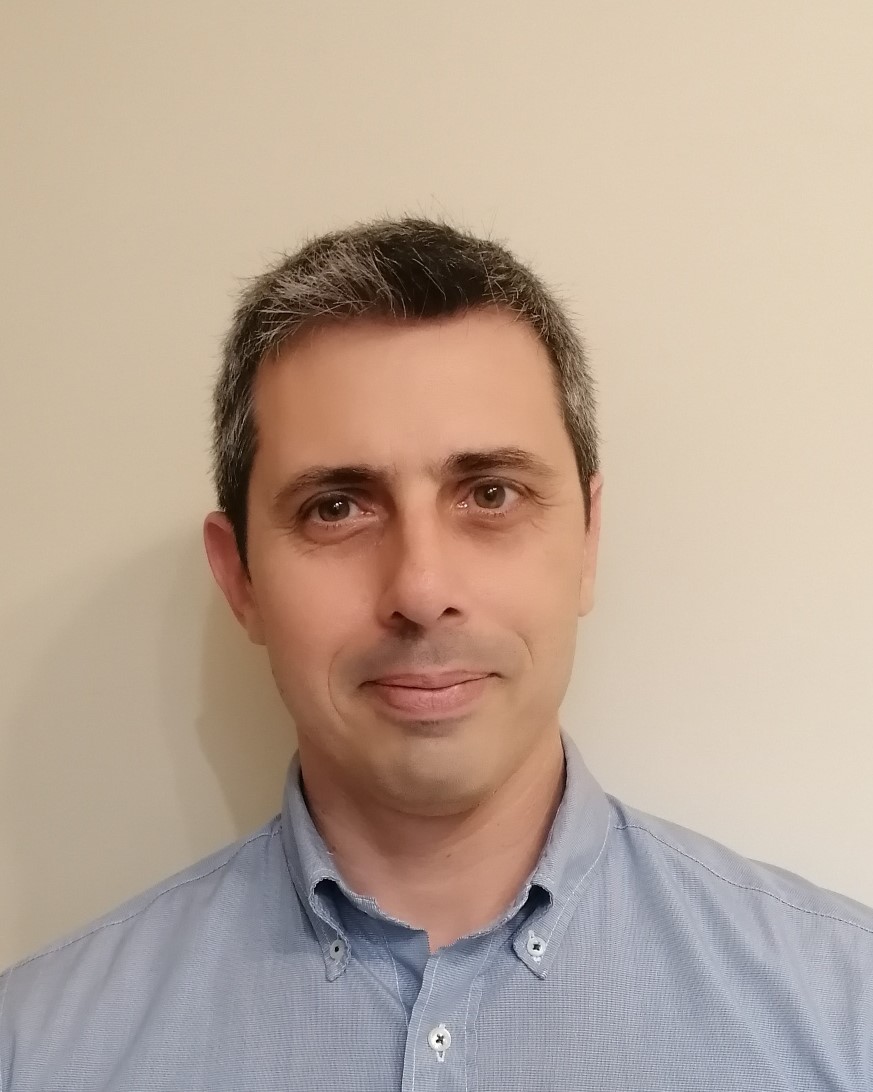
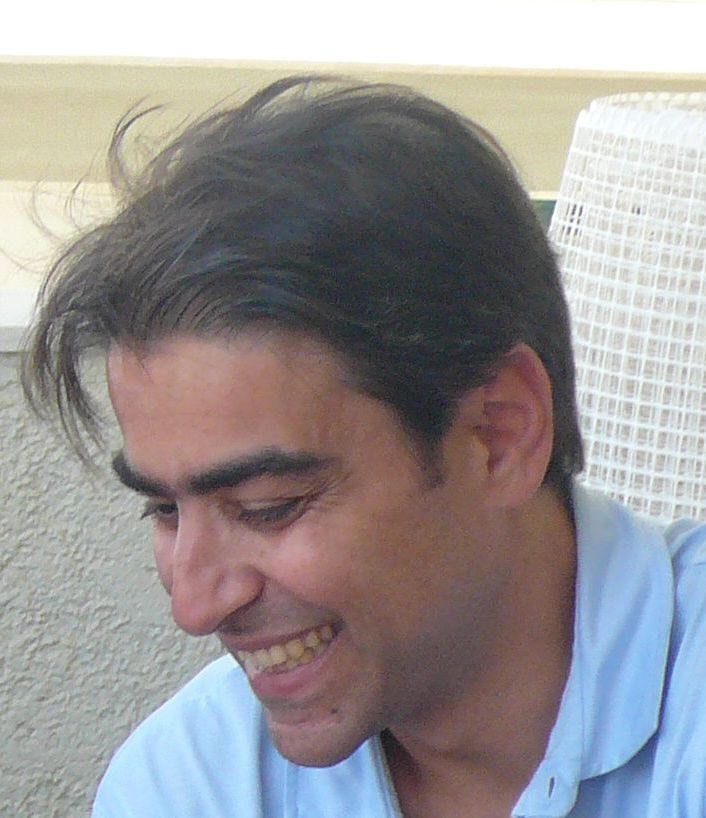
Ioannis Panageas is an Assistant Professor in Computer Science at UC Irvine's Donald Bren School, directing the GOALLab. His research develops theory for learning in multi-agent systems, game dynamics, and optimization. Funded by NSF and NRF, he focuses on last-iterate convergence guarantees in games, efficient equilibrium computation, and multi-agent reinforcement learning. Recent Work: Provides first exponential lower bounds for fictitious play in potential games (NeurIPS 2023), efficient Nash equilibrium computation methods (ICLR 2023), and semi-bandit learning dynamics with no-regret guarantees (ICML 2023). Teaching: Offers courses in Algorithmic Game Theory and Optimization for Machine Learning. Currently advising 3 PhD students and 2 MS students.
Professor Foto N. Afrati is a Distinguished Faculty Member at the National Technical University of Athens, specifically within the School of Electrical and Computing Engineering and the Division of Communication, Electronic and Information Engineering. She has held this position since 1993, following previous academic ranks at the same university as Associate Professor (1989-1993), Assistant Professor (1985-1989), Lecturer (1982-1985), and Research Fellow (1980-1982). She completed her PhD in Electrical Engineering at Imperial College of the University of London in March 1980, with a dissertation focused on Error Correcting Codes by Algorithms. Her academic journey also included a Diploma from Imperial College (March 1980) and an earlier Diploma in Electrical and Mechanical Engineering from the National Technical University of Athens (June 1976). Professor Afrati's research interests span several critical areas in computer science: Parallel and distributed computation Processing of very large data (including MapReduce) Data and web mining Database Systems Information integration Query optimization Computation and complexity of algorithms Approximation algorithms Her most recent publications demonstrate expertise in MapReduce environments, query optimization with views, and data exchange frameworks. These works are published in prestigious venues like EDBT, VLDB, PODS, and ICDT, with specific focus areas including adaptive sampling techniques, data source integrity, and algorithm complexity in database environments. Professor Afrati has received significant recognition in her field, including Fellow of the Association for Computing Machinery (ACM) Best Paper Award at the International Conference on Database Theory (ICDT) 2009 She has advised numerous PhD students throughout her career, including Theodoros Mitakos, Ezz Hattab, Nikos Kiourtis, and Angelos Vasilakopoulos. Her current PhD students include Victor Kyritsis and Nikos Stassinopoulos. Professor Afrati maintains strong professional networks through her various visiting positions at institutions such as Google, Stanford University, IBM Research Center, University of Helsinki, University of Paris, DIMACS, and others. She has served as associate editor and reviewer for major academic journals and conferences including IEEE TKDE, ACM Transactions of Database Systems (TODS), Journal of ACM (JACM), and Theoretical Computer Science (TCS). Her extensive work in research projects spans both national and international initiatives, with funding from sources including the European Union's Thalis project, ESPRIT working groups, HCM networks, and Greek General Secretariat of Research and Technology grants.
Evangelos Ioannidis is an Associate Professor at the Department of Statistics, School of Informatics and Statistics, Athens University of Economics and Business. Born in 1962, he holds a Mathematics PhD from the University of Heidelberg (1993) and has served in his current department since 1999, progressing from Lecturer (1999) to Assistant Professor (2007) and Associate Professor (2023). His expertise spans spectral analysis of time series , cointegration methods , and bootstrap applications in economic data analysis, with additional focus on Official Statistics and sampling techniques . University of Heidelberg: MMath (1987), PhD (1993) Researcher, University of Heidelberg (1987-1991) Visiting Researcher, University of Orsay, Paris Sud (1992-1993) OECD, Paris (1994-1998) National Institute of Labour (1999) His scientific contributions focus on time series econometrics, VAR model spectra, and R&D expenditure analysis. Recent work includes non-parametric spectral estimation and risk-based sampling methodology. He has collaborated with Eurostat on statistical projects (2012-2014). Current affiliations include the Athens University of Economics and Business , where he teaches and conducts research on economic time series analysis and statistical methods.
Periklis Andritsos is an Associate Professor at the University of West Attica's Department of Informatics and Computer Engineering. Previously, he served as an Assistant Professor at the University of Toronto's Faculty of Information (iSchool). He holds a PhD in Computer Science from the University of Toronto (2004), with postdoctoral research under Professors Renée J. Miller and Kenneth C. Sevcik. His research focuses on data clustering, process mining, customer journey analytics, and database design. He co-founded Thoora Inc. (winner of TechCrunch 50 2009) and Odaia.ai, applying his work to real-world applications in banking and urban transport systems. Education: PhD in Computer Science, University of Toronto (2004); MEng from National Technical University of Athens (Diploma in Electrical & Computer Engineering). Awards: Multiple Best Paper Awards (ICPM 2021, ADBIS 2019), TechCrunch 50 Award, and recognition in industry collaborations with institutions like the National Bank of Denmark and Lausanne Municipality. Research Interests: Process mining for customer journey mapping, categorical data clustering (notably the LIMBO algorithm), and applications in sales process optimization, data warehousing, and entity lifecycle management. Service: Program committee roles at EDBT, SIGMOD, KDD, and other conferences; editorial contributions to journals and special issues. His work on LIMBO remains a benchmark in categorical clustering, while recent efforts in process mining have pioneered customer journey analytics. He actively engages with industry, notably through Odaia.ai's application of his research in customer journey mapping tools.
John Paparrizos is an Assistant Professor of Computer Science and Engineering at The Ohio State University's College of Engineering, where he directs The DATUM Lab (Data Analytics, Understanding, Mining, and Management Lab). He maintains an adjunct affiliation with the School of Informatics at Aristotle University of Thessaloniki. His research spans databases, data science, machine learning, and artificial intelligence , with focus areas including: Time-series analysis (clustering, anomaly detection) Scalable data mining for structured/unstructured data Adaptive algorithms for resource-constrained environments Foundational technologies for data-intensive applications His work addresses real-world challenges across relational, time-series, multimedia, text, graph, web, and IoT data domains. Notable recognition includes: 2025 ACM SIGMOD Test-of-Time Award for k-Shape time-series clustering 2023 IEEE TCDE Rising Star Award ACM SIGMOD Research Highlight Award NetApp Faculty Award His research has been featured in New York Times (front page), Washington Post , Forbes , and adopted by Fortune 500 companies (Exelon, Nokia) and the European Space Agency. He actively serves on program committees for premier conferences including ACM SIGMOD, VLDB, IEEE ICDE, ACM SIGKDD, and NeurIPS. His open-source tools have exceeded 100,000 downloads and are integrated into academic curricula at Brown, Columbia, Purdue, and University of Chicago.
Michael Carbin is an Associate Professor at MIT in the Department of Electrical Engineering and Computer Science (EECS), where he leads the Programming Systems Group at the Computer Science and Artificial Intelligence Laboratory (CSAIL). His research centers on developing programming systems that handle uncertainty through probabilistic programming, quantum computing, and neural networks. Carbin's work spans programming languages, systems, and machine learning, with themes including uncertainty management, efficiency optimization, and formal verification. His publications demonstrate a strong focus on probabilistic inference methods, neural network optimization, and quantum programming frameworks. Awards and Honors: Sloan Research Fellowship (2020) Multiple Best Paper Awards (OOPSLA 2013, 2014; ICLR 2019) NSF CAREER Award (2018) Google Faculty Research Award (2018) As the head of the Programming Systems Group, he advises 10+ graduate students and postdocs, focusing on cutting-edge systems research. He has secured grants including Facebook Research Awards and NSF funding.
Minos Garofalakis is a Professor of Computer Science at the School of Electrical and Computer Engineering (ECE) of the Technical University of Crete (TUC), where he directs the Software Technology and Network Applications Laboratory (SoftNet). He is also the Director of the Information Management Systems Institute (IMSI) at the Athena Research and Innovation Centre in Athens. Previously, he held roles at Yahoo! Research, Intel Research Berkeley, and Bell Laboratories, and was an Adjunct Associate Professor at UC Berkeley. Education: He earned a BSc in Computer Engineering from the University of Patras (1992), followed by MSc (1994) and PhD (1998) in Computer Science from the University of Wisconsin-Madison. Research Interests: His work focuses on Big Data analytics , including database systems, data streams, approximate query processing, probabilistic databases, and secure/private data analytics. Key areas include distributed stream processing, data synopses, and machine learning applications. He has authored over 150 papers and holds 29 patents, with an h-index of 63 and 13,500+ citations. Recent Work Trends: His recent articles emphasize scalable stream analytics (e.g., OmniSketch), privacy-preserving techniques, and distributed event processing. He explores challenges in handling high-velocity data streams, uncertainty in databases, and real-world applications like healthcare analytics. Scientific Awards: ACM Fellow (2018), IEEE Fellow (2017), TUC Excellence Award (2015), and multiple patents from Bell Labs/Yahoo/AT&T. Advising & Grants: He led EU projects such as FERARI, LEADS, and The Human Brain Project. His lab, SoftNet, develops tools for extreme-scale analytics and declarative networking. Current work includes interactive cross-platform analytics (Infore) and AI-driven medical data systems. Labs/Teams: Director of SoftNet Lab and IMSI. Collaborates with industry partners on distributed systems and privacy-preserving technologies.
Professor Eleni Kokkinou holds a position at the Hellenic Mediterranean University (HMU) as a Professor of Environmental Geology and Geotechnology, with an affiliation to the Institute of Computer Science at FORTH. She earned her Geology degree from Aristotle University of Thessaloniki, followed by a postgraduate diploma and PhD in Applied Geophysics from the Technical University of Crete. Her research focuses on environmental geology, geotechnical studies, geodata modeling, and coastal vulnerability. She has pioneered work in remote sensing for agricultural management, oil spill modeling in the Eastern Mediterranean, and precision agriculture using UAV technology. She has supervised over 73 diploma dissertations, 5 ongoing theses, and examined multiple international M.Sc. theses in Egypt and Cyprus. Teaching includes courses on GIS, geotectonics, and geoscience software at HMU and TEI Crete. She actively contributes to committees like the Research Management Board of HMU and is a licensed UAV pilot with expertise in geophysical prospection. Her work integrates geomatics, environmental monitoring, and civil protection strategies for coastal and marine systems. Key collaborations include Cairo University and the Technical University of Crete. She has developed decision-support systems for irrigation optimization and participated in major projects like the Nereids oil spill risk assessment initiative.
Antzoulakos Dimitrios is an Associate Professor in the Department of Statistics and Actuarial Science at the University of Piraeus. His academic career spans over two decades, with progressive appointments from Lecturer (1998-2000) to Assistant Professor (2000-2006) and finally Associate Professor (since 2006). He has held significant administrative roles including Chairman of the Department (2013-2015) and Director of the Postgraduate Program 'Applied Statistics' (2013-2017). Dr. Antzoulakos earned his Degree (1986) and PhD (1990) from the Department of Mathematics at the University of Patras. His teaching portfolio includes undergraduate courses such as Probabilities I & II and Actuarial Life Event Models II, as well as postgraduate courses in Data Analysis, Survival Analysis, and Statistical Quality Control. His research focuses on Applied Probability with particular emphasis on success flow theory, k-order distributions, component reliability, control charts, composite distributions in risk theory, and Fibonacci applications. His work bridges theoretical probability with practical applications in quality control and actuarial science. His publications from 2001-2016 demonstrate a clear trajectory from theoretical probability distributions toward practical applications in quality control and reliability engineering, appearing in top journals including Journal of Applied Probability and Journal of Quality Technology. Dr. Antzoulakos serves as a reviewer for numerous prestigious journals including Journal of Applied Probability, Journal of Statistical Planning and Inference, and The Fibonacci Quarterly, demonstrating his standing in the academic community. He has authored textbooks on probability exercises and developed extensive university notes for courses in life insurance, survival analysis, and quality control, contributing significantly to educational resources in his field.
Charalampos (Haris) Psillakis is an Assistant Professor at the Division of Signals, Control, and Robotics within the School of Electrical and Computer Engineering at the National Technical University of Athens (NTUA). He holds a Ph.D. and Diploma in Electrical & Computer Engineering from the University of Patras. Previously, he served as an Adjunct Lecturer at multiple institutions and worked at Hellenic Electricity Distribution Network Operator (HEDNO) S.A. His research focuses on adaptive control, nonlinear control, robotics, multi-agent systems, power systems, and distributed control. Education: Ph.D., Electrical & Computer Engineering, University of Patras, 2006 Diploma in Electrical Engineering, University of Patras, 2000 Research Interests: Adaptive Control Nonlinear Control Intelligent Control Robotics and Automation Power Systems Control Multi-Agent Systems Stochastic Systems Uncalibrated Visual Servoing Publications: His work emphasizes distributed control algorithms for multi-agent systems, nonlinear control methodologies, and applications in robotics and power systems. Recent trends include consensus protocols under communication delays, adaptive neural network control, and robustness in dynamic network topologies. Teaching: He teaches courses on automatic control, nonlinear control systems, and advanced control methods at both undergraduate and graduate levels. Labs/Teams: His research is associated with the Signals, Control, and Robotics division at NTUA, focusing on robotics, power systems, and distributed control systems.
George Nenes is a Professor and Head of the Department of Mechanical Engineering at the University of Western Macedonia (Greece), affiliated with the Polytechnic School. He also serves as a research associate at Aristotle University of Thessaloniki's Mechanical Engineering Department. His academic journey includes a PhD in Statistical Quality Control (2006), MSc in Management of Production Systems (2002), and a Mechanical Engineering Diploma (2000), all from Aristotle University. He has held visiting roles at institutions like the University of Thessaly and Democritus University of Thrace, and taught in international programs like Middlesex University's external programme. Research focuses on Statistical Quality Control and Supply Chain Management, with expertise in adaptive control charts, economic-statistical design methodologies, and inventory optimization. His work spans journals such as European Journal of Operational Research and IIE Transactions. He leads the MORSE Lab (Quantitative Methods of Operations Research and Statistics in Engineering) and teaches courses including Operations Research I/II, Inventory Management, and Simulation. Publications emphasize optimization of quality control systems, remanufacturing lot sizing, and finite-horizon process monitoring. His research integrates Bayesian methods, stochastic modeling, and cost-benefit analysis to address challenges in manufacturing and supply chain systems.
Dimitris Fouskakis is a Professor at the Department of Mathematics within the School of Applied Mathematical and Physical Sciences at the National Technical University of Athens (NTUA), where he also serves as the Director of the Statistics Lab. His research primarily focuses on Bayesian statistics, objective Bayesian methodology, and stochastic optimization. He has developed novel approaches for prior specification, variable selection, and model comparison in statistical modeling. Professor Fouskakis maintains active research interests in: Objective Bayesian methods and prior construction Bayesian variable selection and model averaging Stochastic optimization techniques High-dimensional data analysis Applications in educational statistics and public health His recent publications demonstrate a consistent focus on Bayesian methodology development, particularly in the areas of shrinkage priors, power-expected-posterior methods, and model comparison techniques. The research spans both theoretical developments and practical applications across multiple domains including education, public health, and computational statistics. Professor Fouskakis directs the Statistics Lab at NTUA, which serves as a hub for statistical research and collaboration. While specific grant and student advising information isn't provided in available texts, his leadership role indicates active engagement in research supervision and academic mentorship.
Bagkavos Dimitrios is an Associate Professor in the Department of Mathematics at the School of Science, University of Ioannina. His research focuses on Mathematical Statistics, Survival Analysis, and Probability Theory Applications, with expertise in nonparametric estimation, statistical inference, and kernel methods. He holds a B.Sc. in Mathematics from the University of Ioannina and an M.Sc. in Mathematics (Statistics) from the University of Birmingham, UK. His work emphasizes hypothesis testing, computational statistics, and applications of martingales and Edgeworth expansions. He has developed R packages such as NPHazardRate and asymmetry.measures , and his research has been published in top journals like Journal of Multivariate Analysis and Computational Statistics and Data Analysis . He actively contributes to the academic community by refereeing for journals including Test , Journal of Statistical Planning and Inference , and Communications in Statistics .
Angelos Alexopoulos is an Assistant Professor at the Department of Economics , Athens University of Economics and Business . He has held Research Associate positions at the University of Cambridge, University College London, and University of Exeter in the UK. PhD: Athens University of Economics and Business Research Focus: Computational Statistics, Econometrics, Bayesian Analysis, Network Modelling Publications span Bayesian inference, epidemic forecasting, machine learning for fraud detection, and econometric methodology. Key journals include Journal of the Royal Statistical Society , Journal of Computational and Graphical Statistics , and Statistics and Computing . 2024: Gaussian invariance in MCMC 2024: Epidemic nowcasting models 2023: VAT fraud detection with ML Awards include certifications in Deep Learning (Coursera), Blockchain (edX), and Object-Oriented R Programming (DataCamp).
Dr. Ioulia Papageorgiou is an Associate Professor in the Department of Statistics at the Athens University of Economics and Business (AUEB), School of Information Sciences and Technology. She holds a B.Sc. in Mathematics (2.1) and a Ph.D. in Statistics, both from the University of Ioannina. Her career spans since 2001, with prior roles as a Post-Doctoral Research Fellow at AUEB and Nottingham Trent University, and Lecturer at AUEB (2002-2007). Education B.Sc. in Mathematics (2.1), University of Ioannina Ph.D. in Statistics, University of Ioannina Employment History Associate Professor, AUEB Department of Statistics (2007-present) Lecturer, AUEB Department of Statistics (2002-2007) Post-Doctoral Research Fellow, AUEB (2001-2002) Post-Doctoral Research Fellow, Nottingham Trent University (1998-2001) Her research focuses on Sampling Theory, Model-Based Clustering, Mixture Models, and their Applications to Archaeometry. She has developed statistical methodologies for ceramic artifact provenance studies, explored hierarchical cluster analysis for overpainted artwork identification, and addressed optimal sampling designs for autocorrelated populations. Her work bridges statistical innovation with archaeological and medical applications. Analysis of her recent publications reveals a strong emphasis on statistical modeling in archaeology (e.g., ceramic provenance via p-XRF), computational methods for multivariate data, and pharmacoeconomic assessments for chronic diseases. Keywords across her work include Archaeometry, Cluster Analysis, Multivariate Modeling, and Survey Sampling.