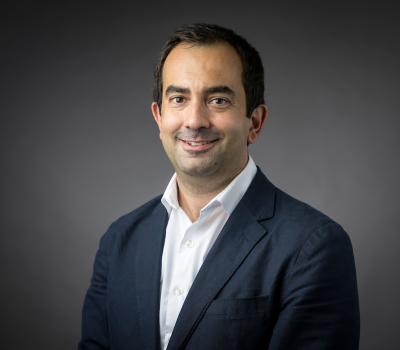
Dr. Adam Wood is an Assistant Professor of Engineering at Saint Vincent College since 2020. He holds a Ph.D. in Mechanical Engineering from Carnegie Mellon University, an M.S. from the University of Illinois at Urbana-Champaign, and a B.S. from the University of Pittsburgh. His research focuses on sustainable water purification, microfabrication, and plant biology, particularly exploring biomimetic solutions for desalination using plant-derived materials and food waste. He actively engages students in research projects and career development. Dr. Wood’s work emphasizes environmental sustainability through innovative materials science, including carbon electrodes from bread and mangrove roots. His publications span desalination technologies, microfluidic cell studies, and soft robotics. He teaches courses such as Statics, Materials Engineering, and Design with Modern Materials. While no awards are explicitly noted, his research contributions highlight interdisciplinary approaches to global challenges like water scarcity and renewable materials. His advising and grants section remains underdeveloped in available texts, but his labs focus on biomimetic engineering and sustainable systems. Collaborations include studies on tumor cell behavior in soft matrices and chemotactic cell responses in microfluidics.
Mark Jensen is a Professor of Chemistry and holds the Jerry and Tina Grandey University Chair in Nuclear Science and Engineering at Colorado School of Mines. He is affiliated with the Nuclear Science and Engineering Program and Center. He earned his BS from Bethel College (St. Paul), PhD in Inorganic and Nuclear Chemistry from Florida State University, and completed postdoctoral research at Argonne National Laboratory. His research focuses on nuclear fuel cycle chemistry, including chemical separations of actinides and lanthanides, environmental chemistry of transuranium elements, and solvent extraction processes. He has contributed extensively to understanding mechanisms of selectivity in chemical separations and the biochemistry of radioactive elements. Recent work highlights include studies on cerium redox behavior in tri-n-butyl phosphate, uranium dendrites in molten salt systems, and ionic liquid applications for actinide separation. His publications also address workforce dynamics in radiation-related professions and the structural characterization of uranium compounds. Jensen’s contributions span experimental and computational approaches, with notable work on ALSEP and PUREX processes, molecular dynamics simulations of extractants, and neptunium purification for space applications. No specific scientific awards or grants are listed in the provided information.
Walter G.J. van der Meer is a full Professor at the Department of Water Management, Faculty of Civil Engineering and Geosciences, Delft University of Technology. He is a leading researcher in membrane technologies, water treatment, and sustainable water systems, with over 100 research outputs and an h-index of 36. His work focuses on reverse osmosis, filtration, PFAS removal, and micropollutant management in potable and wastewater systems. His research interests lie at the intersection of environmental and chemical engineering, particularly in advancing membrane-based separation processes. Key areas include reverse osmosis modeling, adsorption mechanisms, brine management, and the removal of emerging contaminants such as perfluoroalkyl substances (PFAS). His work integrates experimental studies with theoretical modeling to improve efficiency and sustainability in water treatment. Recent publications (2020–2025) reveal a strong trend toward sustainable water solutions, with emphasis on PFAS remediation, bio-based adsorbents, energy-efficient desalination, and wastewater reuse. His research combines material science, process engineering, and environmental chemistry, contributing to both fundamental understanding and practical applications in water infrastructure. Walter van der Meer has secured significant research impact through extensive collaboration, particularly within the Dutch 4TU federation. He has co-supervised at least 10 student projects and contributes to open science through public data repositories. His work is frequently published in high-impact journals such as Desalination , Water Research , and ACS ES&T Water .
Prof. Dr. Vinzenz Brendler serves as Head of the Department of Thermodynamics of Actinides at the Helmholtz-Zentrum Dresden-Rossendorf (HZDR) Institute of Resource Ecology. He also holds an Honorary Professor position in Radiochemistry at the University of Applied Science Dresden (HTW) since 2008. His career at HZDR has spanned over three decades, progressing from Junior Scientist (1993-2000) to his current leadership role, with previous positions including Head of Department Surface Processes (2013-2021) and Acting Director of the Institute of Resource Ecology (2012-2013). Dr. Brendler received his Ph.D. in natural sciences from TU Bergakademie Freiberg in 1993 with distinction ("Magna cum laude") and completed his Diploma in Chemical Engineering there in 1989 with "Excellence" honors. His doctoral work focused on water activities in ternary salt systems, while his diploma research examined reaction models for activity data in lithium-zinc chloride systems. His research focuses primarily on the thermodynamics of radionuclides in aqueous solutions and at mineral-water interfaces, with direct applications to nuclear waste repositories. He possesses extensive expertise in experimental capabilities using modern analytical spectroscopic methods, including laser-induced fluorescence and X-ray absorption techniques. His work encompasses geochemical modeling, radionuclide migration studies, sorption processes, risk assessment methodologies, and database development for environmental modeling. Analysis of his recent publications reveals a consistent focus on actinide and f-element chemistry, particularly uranium, europium, and technetium systems. His research employs sophisticated combinations of experimental methods including spectroscopy, batch experiments, and computational modeling to understand complex geochemical processes relevant to nuclear waste disposal. Key themes include surface complexation modeling, redox processes, mineral-water interactions, and thermodynamic characterization under repository-relevant conditions. Agricola medal of the TU Bergakademie Freiberg for outstanding diploma work As an Honorary Professor at HTW Dresden, Dr. Brendler contributes to radiochemistry education while maintaining an active research program. His extensive publication record (over 100 papers) demonstrates significant contributions to the field of nuclear waste management. He serves on multiple advisory boards including the Technical Direction Team of the NEA Sorption Project and the Governing Board of EU framework projects. His research is supported by numerous national and international funding programs including EU R&D framework programs and German federal initiatives. Dr. Brendler leads research within the Thermodynamics of Actinides department at HZDR, collaborating with various research teams across multiple facilities including the Rossendorf Beamline at ESRF. His work integrates experimental, theoretical, and modeling approaches to address complex challenges in nuclear waste disposal safety assessment.
Patrik Yrjas is a Senior Researcher at the Faculty of Science and Engineering , Åbo Akademi University , affiliated with the Laboratory of Molecular Science and Engineering Technologies for a Sustainable Future . His work focuses on high-temperature corrosion, biomass combustion, and ash behavior in thermal systems. Research Interests: High-Temperature Corrosion Biomass and Waste Combustion Fluidized Bed Technology Ash Melting and Agglomeration Chemical Looping Combustion Key Article Trends: His recent publications (2024–2023) address pyrolysis of biomass, cold-end corrosion from ammonium chloride, and molten phase effects in superheater corrosion. Earlier works (2022–2015) explore ash melting, coating durability, and alkali chloride impacts using thermal analysis and microscopy. Projects: 2021–2023: Investigated chemical looping combustion and boiler corrosion. 2023: Analyzed fluidized bed agglomeration. Contact: Email: patrik.yrjas@abo.fi Phone: +358-469219021
Dr. Gayathri Danasamy Naidu serves as Associate Professor and Deputy Head of School (Research) in the School of Civil and Environmental Engineering at University of Technology Sydney. With expertise spanning chemical process engineering and environmental systems, she leads research initiatives focused on sustainable water treatment and resource recovery technologies. Her academic journey includes bachelor's and master's degrees from University of Malaya Kuala Lumpur and Imperial College London, followed by a PhD in Environmental Engineering from UTS. Dr. Naidu's research concentrates on the three Rs of water systems - remediation, reuse and recovery - with particular emphasis on extracting critical minerals like lithium, rubidium, and rare earth elements from seawater and wastewater streams. Her work integrates nanomaterial synthesis, membrane technology development, and solar-powered treatment processes to create sustainable solutions for the global water industry. She has pioneered approaches using capacitive deionization, membrane distillation, and metal-organic frameworks for selective mineral recovery. Analysis of her recent publications reveals a strong focus on membrane-based separation technologies for critical mineral extraction, particularly lithium and rare earth elements from complex brine sources. Her research demonstrates consistent innovation in electrode design, membrane modification, and process optimization to enhance selectivity and efficiency. The work spans fundamental materials development to practical implementation in real-world water sources including seawater, desalination brine, and acid mine drainage. International Johnson and Johnson WiSTEM Fellowship ARC DECRA Fellowship UTS Chancellor's Research Fellowship Women in Stem for 2021 Dr. Naidu has secured over two million dollars in external research funding over the past three years, supporting her work on critical minerals and renewable energy applications. She actively supervises PhD and MSc students while mentoring early career researchers including Chancellor's Postdocs. Her research team has achieved significant milestones including patent filings (IP Australia, patent no. 2024903308) and industry translation with NEOM Energy and Water Co. She serves on the editorial boards of Desalination Journal and Chemical Engineering Journal, and previously held leadership roles on the Membrane Society of Australasia board (2021-2023).
Kemal Celik is an Assistant Professor of Civil Engineering at New York University Abu Dhabi (NYUAD) and holds a Global Network Assistant Professor appointment at New York University Tandon School of Engineering. He directs the AMBER Lab , focusing on sustainable construction materials and building energy efficiency. PhD in Civil and Environmental Engineering from University of California, Berkeley (2015) MS and BS in Civil Engineering from Istanbul University His research spans multi-scale material characterization, 3D printing of cementitious composites, carbonation processes for CO2 sequestration, and hybrid simulation methods for daylighting optimization. Current trends include lunar regolith simulants for space construction and low-carbon cement technologies. Scientific Awards: Outstanding Graduate Student Instructor Award, UC Berkeley (2013-14) Outstanding Paper Award, SCMT3 Conference, Kyoto (2013) UC Berkeley Conference Grant Ministry of National Education of Turkey Scholarship TUBITAK Fellowship
Anna Lähde is a Professor in Aerosol Technology at the Department of Environmental and Biological Sciences, University of Eastern Finland. She leads the Sustainable Materials Group at the Fine Particle and Aerosol Technology Laboratory . Her work focuses on the synthesis and characterization of sustainable nano- and microparticles for clean energy and environmental applications. Academy of Finland Research Fellow (2017-2022) Specializes in graphene, carbon nanostructures, and metal oxides via aerosol processes Key methods: induction annealing, chemical vapor synthesis, spray pyrolysis Her research spans Li-ion battery materials , water treatment nanocomposites , and toxicological analysis of airborne particles . She has published extensively on carbon-based anode materials , photocatalytic systems , and environmental applications of aerosol technology . Recent work includes CO2 adsorption catalysts and biomass-derived graphene . She has received recognition through the Academy of Finland Fellowship and contributes to circular economy projects like EKOAKKU.
Dr. Ngoc N. Nguyen is a Senior Lecturer and ARC DECRA Fellow at the School of Chemical Engineering, The University of Queensland (UQ), Australia. He earned his PhD in Chemical Engineering at UQ in 2018 after receiving an Australia Award Scholarship. His postdoctoral work included an Alexander von Humboldt Fellowship (2019-2021) at the Max Planck Institute for Polymer Research and visiting scholar roles at Pacific Northwest National Laboratory (USA) and Hanoi University of Science and Technology (Vietnam). Research Interests: Dr. Nguyen specializes in surface and interfacial science, with applications in minerals processing, energy and resources engineering, and environmental sustainability. His work addresses challenges in the low-carbon economy through Gas hydrate-based energy storage (e.g., hydrogen, methane) Eco-efficient mineral extraction and separation CO 2 capture and mine waste recycling Publication Trends: His recent articles focus on ion-specific effects in flotation, colloidal interactions, gas hydrate kinetics, and sustainable mineral processing. Key methodologies include sum frequency generation spectroscopy , colloidal probe AFM , and X-ray tomography . Scientific Awards: ARC DECRA Fellowship (2024) Alexander von Humboldt Fellowship (2019) Supervision & Grants: As an associate investigator in the ARC Centre of Excellence for Eco-enabling Beneficiation of Minerals, he mentors PhD candidates on topics like flotation froth dynamics and X-ray CT applications in mineral processing. His research has secured significant ARC and industry funding.
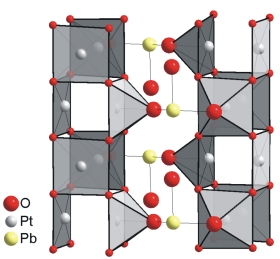
Catherine Renard is a Lecturer (Maître de Conférences) at the National School of Chemistry of Lille, part of the Solid State Catalysis and Chemistry Unit (UCCS), UMR CNRS 8181. She works within the Solid State Chemistry Department, specifically in the Chemistry, Materials and Processes for Sustainable Nuclear Power (CIMEND) research group. Her office is located in Building C7, Room 226 at the Scientific City campus in Villeneuve d'Ascq, France, where she conducts research on innovative materials for nuclear applications. Dr. Renard's research focuses on two primary areas: innovative oxides and derived phases with ab initio calculations, and uranium oxide structural architectures. She investigates novel strontium-lead-platinum oxides with unique structures and conducts density functional theory (DFT) calculations on cobalt-barium oxide systems. Her uranium research examines how uranyl ions coordinate with oxygen atoms to form complex polyhedral structures that combine with vanadates, molybdates, and tungstates to create diverse architectural frameworks, including three-dimensional structures with tunnel formations crucial for nuclear applications. Analysis of her 17 publications since 2007 reveals a consistent trajectory in crystallography of nuclear materials, particularly uranyl compounds. Her work demonstrates expertise in molten salt synthesis techniques, structural characterization of complex oxides, and materials development for nuclear waste management. The publications span prestigious journals including Journal of Nuclear Materials, Journal of Solid State Chemistry, and Acta Crystallographica, showing methodological diversity from experimental synthesis to computational analysis. Dr. Renard has secured significant research funding including ANR 2008: COMP-ACT ("New actinide compounds: from precursors to model materials") and GDR PARIS 2008 ("Synthesis of actinide oxides in molten chloride. Structural studies and reaction mechanisms"). She maintains an active collaboration with CEA Marcoule's Pyrochemical Processes Laboratory, connecting her academic research with national nuclear research initiatives. With teaching responsibilities since 2006 at the National School of Chemistry of Lille, Dr. Renard leads mineral chemistry practicals and projects for engineering students. Previously (1999-2006), she taught crystallography, group theory, and solid analysis at the University of the Littoral Opal Coast. Her educational contributions complement her research in developing the next generation of materials scientists for nuclear applications. Her laboratory work centers on synthesizing and characterizing innovative materials for sustainable nuclear power, with particular attention to structural frameworks in uranyl compounds that could revolutionize nuclear waste management strategies through engineered tunnel structures in three-dimensional architectures.
Dr. Ali Altaee is an Associate Professor in the School of Civil and Environmental Engineering at the University of Technology Sydney (UTS), affiliated with the Centre for Green Technology (CGT) and the Centre for Technology in Water and Wastewater (CTWW). His research focuses on renewable energy, water engineering, soil remediation, and sustainable development, with expertise in membrane technologies and alternative water sources. Education: BSc Civil Engineering (UTS), MSc Environmental Science Engineering (University of New South Wales), PhD in Environmental Engineering (Brighton University, UK). Research Interests : Sustainable development, water quality, environmental impact assessment, membrane technology, desalination, hydrogel applications, and CO2 capture. Recent projects include developing eco-friendly nanomaterials for wastewater treatment and modeling CO2 capture using machine learning. Grants & Collaborations : Lead on grants like Qatar National Research Fund projects on salinity gradient energy and seawater pretreatment. Collaborates with industry partners such as Photon Energy Engineering Australia and Xinhua Pharmaceutical Company. Awards : Queen’s Anniversary Award (2011) for pioneering osmotic energy pilot plant development at Surrey University. Member of professional societies including Society of Chemical Industry (SCI), Sigma Xi, and American Chemical Society. Labs & Teams : Part of UTS’s CTWW and CGT, advancing technologies in water-energy-food nexus solutions and innovative membrane systems.
Konstantinos Goulas is an Assistant Professor in the Department of Chemical, Biological, and Environmental Engineering at Oregon State University's College of Engineering. His research focuses on catalytic materials, particularly investigating structure-reactivity relationships through operando spectroscopy and kinetic analysis to develop sustainable catalysts for applications like biofuel production, plastic upcycling, and automotive emissions control. He leads the Goulas Research Lab, which collaborates on projects such as PVC-to-wax conversion and low-temperature CO oxidation. His research groups include Materials and Catalysis, Computation and Simulation, and Water and Environment. Notable advisees include Dr. Scott Svadlenak (startup Renewcat, Inc.), Dr. Tanmayi Bathena (PNNL), and Dr. Stephen Kristy (Idaho National Lab). His work has been featured in Nature Catalysis and media outlets like KATU News. He also engages in outreach, leading sessions at the Migrant Engineering Summer Camp. Key projects include PVC upcycling via hydrodechlorination, bismuth molybdate catalysts for propylene oxidation, and PdCu alloy catalysts for CO oxidation. His lab emphasizes interdisciplinary approaches to sustainability challenges, with funding from agencies like VentureWell and the Vinyl Institute.
Symone Alexander serves as an Assistant Professor in the Department of Chemical Engineering within Auburn University's College of Engineering. Her research bridges biomimetic design and sustainable materials engineering, focusing on translating natural systems into solutions for environmental and biomedical challenges. With expertise in soft materials mechanics and biopolymer systems, she leads interdisciplinary projects addressing waste valorization and toxin remediation. Her educational foundation includes: Ph.D. in Macromolecular Science and Engineering from Case Western Reserve University B.S. in Chemical Engineering from Howard University Dr. Alexander's research centers on bio-inspired materials with four core platforms: Extraction and Utilization of Biopolymers from Mixed Food Waste, Dynamic Compatibilizers for Mixed Waste Plastics, Structural Uniformity of Cellulose Gels and Microgels, and Bioinspired Responsive Systems. She investigates how nature achieves engineering feats through efficient resource utilization, particularly studying spider web mechanics for ultrafast motion applications and dietary fiber assemblies for metabolic toxin removal. Her work emphasizes sustainable processing of agricultural and food waste into functional materials. Analysis of her publication record (2017-2025) reveals consistent innovation in cellulose-based materials, with increasing focus on medical applications like chronic kidney disease treatment. Her research trajectory shows a strategic integration of biomechanics, materials science, and environmental engineering, characterized by biomimetic approaches to solve complex problems in waste recovery and biomedical device development. Her scientific recognition includes: Research Support Program grant from Auburn University Dr. Alexander secures substantial research funding including an NSF grant for slingshot spider biomechanics and participation in a $4 million NSF-EPSCoR grant for sustainable plastic development. She actively mentors undergraduate researchers through the Research Experience for Undergraduates program, guiding students in professional skill development from elevator pitches to scientific presentations. Her #ARTist lab members like Matt and Luke May present at national conferences and secure industry internships. The Alexander Research Team (Bio-inspired Materials Advancing Science and Society) operates through four interconnected research platforms that convert waste streams into functional materials while studying natural systems for engineering inspiration. Current initiatives include extracting cellulose nanofibers from pecan shells as synthetic fiber alternatives and developing dietary fiber-inspired hydrogels for uremic toxin removal.
Professor Janos Urai is a renowned academic at RWTH Aachen University, specializing in structural geology and salt tectonics. He leads the Lehr- und Forschungsgebiet Geologie - Endogene Dynamik department, focusing on deformation mechanisms in evaporites, microstructural analysis, and the application of geological structures to energy and resource exploration. His research integrates field observations, laboratory experiments, and numerical modeling to understand salt diapir dynamics, fault mechanics, and rheological behavior of geological materials. Key areas of expertise include salt tectonics in Romania's Transylvanian Basin, microstructural analysis of glacier salt, and the influence of evaporite deformation on regional tectonics. He has contributed to understanding the geomechanics of salt caverns for radioactive waste storage and energy projects, while also exploring carbonation processes in peridotites and fracture network evolution in carbonate reservoirs. Professor Urai's work bridges fundamental geological research with applied challenges in mining, energy transition, and geohazard mitigation. His interdisciplinary approach combines structural geology, petrophysics, and geochemistry, with a strong emphasis on fieldwork in salt mines and ophiolite complexes such as the Samail Ophiolite in Oman.
Brajendra Mishra is the Kenneth G. Merriam Professor of Mechanical & Materials Engineering at Worcester Polytechnic Institute (WPI) and Director of the Metal Processing Institute (MPI). He also leads the NSF-funded Industry/University Collaborative Research Center on Resource Recovery & Recycling. Previously, he held roles at the Colorado School of Mines and Tata Steel, and served as President of TMS and AIME. His expertise spans corrosion, materials processing, and sustainable resource management. Education: Bachelor of Technology in Metallurgical Engineering, Indian Institute of Technology, Kharagpur (1981) M.S. in Materials Science, University of Minnesota (1983) Ph.D. in Materials Science, University of Minnesota (1986) Research Interests: Mishra focuses on corrosion-resistant materials, advanced manufacturing processes, and recycling technologies. His work emphasizes environmental sustainability, particularly in critical materials recovery and industrial waste valorization. He advocates for student engagement in cutting-edge research to bridge academia and industry needs. Awards & Recognition: ASM International Fellow (2001) TMS Fellow (2016) 2010 Minerals, Metals & Materials Society Distinguished Service Award 2008 Indian Institute of Metals Honorary Membership Grants & Leadership: Directs NSF-funded research centers and collaborates with industries to advance sustainable materials processing. His work includes optimizing mobile manufacturing labs for military applications and analyzing road salt impacts on automotive materials. Labs & Teams: Leads the MPI at WPI, fostering interdisciplinary research in metallurgy, corrosion science, and resource recovery. Engages students in projects addressing global challenges like material scarcity and recycling inefficiencies.