Casey M. Owens is the Novus International Professor of Poultry Science at the Center of Excellence for Poultry Science , University of Arkansas. She joined the faculty in 2000 and was promoted to Associate Professor with Tenure in 2006. Owens also holds an Adjunct Associate Professor appointment in the Department of Food Science. Education: Ph.D., Food Science and Technology, Texas A&M University, 1999 M.S., Food Science and Technology, Texas A&M University, 1996 B.S., Poultry Science, Texas A&M University, 1994 Her research focuses on preslaughter environmental conditions and processing techniques affecting poultry muscle metabolism and meat quality . Key areas include pale, soft exudative (PSE) meat , woody breast myopathy , and postmortem electrical stimulation . She has developed the Meullenet-Owens Razor Shear (MORS) method for meat tenderness evaluation. Recent publications highlight her work on instrumental texture analysis, myopathy mitigation , and nutritional interventions for improving meat quality. Owens teaches POSC 4314 Egg & Meat Technology and POSC 5413/4413 Value Added Muscle Foods , emphasizing muscle ultrastructure , protein functionality , and processed meat development .
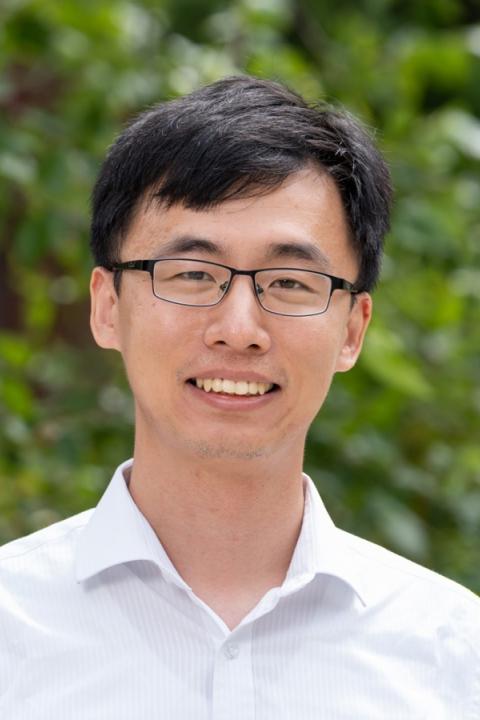
Dongpeng Xu is an Associate Professor in the Department of Computer Science at the University of New Hampshire. His research focuses on cybersecurity, software security, and program analysis, with particular emphasis on binary code analysis, malware detection, and obfuscation techniques. He holds a Ph.D. in Information Sciences and Technology from Pennsylvania State University, an M.Eng. in Software Engineering from the University of Science and Technology, and a B.E. in Fashion Design and Engineering from Jilin University. Research Interests: Cybersecurity and software security Malware analysis and detection Program obfuscation and deobfuscation Formal methods in program analysis Approximate computing security Binary code simplification His publications highlight advancements in malware lineage inference, SMT solver optimization for obfuscated expressions, and hardware-software co-design for secure systems. Notable contributions include VAHunt for detecting repackaged Android malware and VMHunt for verifying obfuscated binary code. He has also explored security threats in approximate computing and developed tools like GraphMR for mathematical reasoning in cybersecurity contexts. Teaching includes courses such as CS 527 (Fundamentals of Cybersecurity) and multiple iterations of CS 727/827 (Software Security). His research has been supported by grants like the SaTC: CORE grant for deobfuscation techniques. Xu’s work bridges theoretical foundations with practical applications, addressing challenges in both software protection and malicious code analysis.
Chris Dakin is an Associate Professor in the Department of Kinesiology and Health Science at Utah State University. His research focuses on understanding how sensory information from the vestibular system contributes to movement control and perception, with a particular emphasis on postural stability, locomotion, and fall prevention. He holds a BHK in Human Kinetics and a PhD in Neuromechanics from the University of British Columbia. His postdoctoral work at Baylor College of Medicine and University College London explored visual and vestibular perception in human spatial orientation. Dr. Dakin's research interests include: Vestibular contributions to balance and gait Sensory integration in motor control Environmental factors influencing fall risk Neurological disorders affecting movement perception His recent publications emphasize real-world applications of biomechanical research, including stairway design modifications to reduce fall hazards, and the role of visual contrast in environmental safety. Teaching responsibilities include Biomechanics courses at both undergraduate and graduate levels. Dr. Dakin has mentored six graduate students in kinesiology programs since 2017. His work bridges neuroscience and applied biomechanics, with a focus on translating laboratory findings into practical solutions for improving mobility safety.
David R. Gang is a Professor in the Institute of Biological Chemistry at Washington State University (WSU), where he also serves as Director of WSU's Center for Cannabis Policy, Research and Outreach (CCPRO) and Director of the Tissue Imaging and Proteomics Laboratory (TIMPL). He previously served as Assistant Director of the CAHNRS Office of Research in the College of Agricultural, Human and Natural Resource Sciences. Dr. Gang has been affiliated with WSU since 2009, following his faculty position at the University of Arizona's Department of Plant Sciences and BIO5 Institute. Dr. Gang's primary research interests focus on plant specialized metabolism, with particular emphasis on medicinal plants, aromatic plants, and hemp/cannabis research. His laboratory employs a multidisciplinary approach combining chemistry, biochemistry, molecular biology, and omics technologies to elucidate biosynthetic pathways of specialized metabolites. His work spans seven major research areas: 1) medicinal compound production in plants, 2) metabolic regulation in plants, 3) invasive plant species biology, 4) plant disease control (particularly citrus greening), 5) drug target identification from natural sources, 6) ancient residue analysis in archeometry, and 7) hemp for economic development. His research often involves field collection of biological samples from diverse global locations including Hawaii, Puerto Rico, Mexico, Korea, and Thailand. Dr. Gang's recent publications demonstrate strong trends in cannabis/hemp research, ancient biomolecular analysis, plant-pathogen interactions, and specialized metabolite biosynthesis. His work increasingly focuses on the intersection of traditional plant knowledge with modern analytical techniques, particularly in the context of human health applications and agricultural sustainability. The research shows growing emphasis on translational applications of basic plant biochemistry findings to address contemporary challenges in agriculture, medicine, and environmental science. Benson Presidential Scholarship at BYU Loyal H. Davis Graduate Student Fellowship at WSU Sokol Post-Doctoral Fellowship in the Sciences from the Rackham Graduate School, UM Arthur Neish Young Investigator Award, PSNA Young Investigator Award in Plant Genome Research from the United States National Science Foundation President of the Phytochemical Society of North America Executive Board Member of the Groupe Polyphenols Dr. Gang has supervised 18 post-doctoral researchers, a dozen graduate students, and over two dozen undergraduate students in his laboratory. His research is supported by diverse funding sources including USDA NIFA SAS Grants for hemp research in the western US and tribal lands, a DOE RACIPAC project on biochar formulations in hemp-based crop rotation systems, and Washington State Department of Ecology funding for pesticide uptake studies in cannabis plants. His laboratory collaborates extensively with partners at Oregon State University, UC Davis, University of Nevada, Reno, and tribal communities. Dr. Gang leads the Laboratory for Cellular Metabolism and Engineering (LCME), which houses the Tissue Imaging and Proteomics Laboratory (TIMPL). His research group includes postdoctoral researchers, PhD students, and undergraduate interns working across multiple projects. The lab maintains specialized facilities for metabolomics, proteomics, and mass spectrometry imaging, supporting research on plant specialized metabolism, rhizome biology, and cannabis science. Current major initiatives include the Center for Cannabis Policy, Research and Outreach and the DOE-funded RACIPAC project investigating biochar applications in agricultural systems.
Dr. Eric Greska is an Associate Professor in the Department of Kinesiology & Applied Physiology at the University of Delaware’s College of Health Sciences. His research focuses on reducing lower-extremity injuries and improving physical performance through interventions, particularly in athletic populations and post-surgical rehabilitation. He uses technology to assess outcomes like range-of-motion and quality of life in patients recovering from surgery. Education: Ph.D. in Human Movement Science, Old Dominion University (2012) M.S. in Exercise Science, University of West Florida (2008) B.S. in Physical Education, University of West Florida (2006) Research Interests: Combining biomechanical analysis with clinical applications, Dr. Greska explores injury prevention strategies, neuromuscular training effects, and the biomechanics of athletic movements. His work emphasizes translating findings into practical interventions for athletes and aging populations. Publications Trends: His recent articles focus on jump mechanics, ACL injury prevention, and gait modification in post-surgical patients. He has investigated optimal training protocols for athletes and seniors, emphasizing kinetic analysis and functional outcomes. Teaching & Service: Teaches courses in anatomy, physiology, and kinesiology fundamentals. Engaged in community outreach and interdisciplinary initiatives through the College of Health Sciences.
Holly Caroline Felix is a Professor in the Department of Health Policy & Management at the University of Arkansas for Medical Sciences College of Public Health. Her research focuses on health disparities, particularly among Marshallese populations, with expertise in diabetes management, obesity research, and nursing home care quality. Dr. Felix's research interests span health policy, diabetes management, obesity research, health disparities (particularly among Marshallese populations), nursing home care, community health, and telehealth implementation. Her work often examines the intersection of food insecurity and chronic disease management, with a strong emphasis on culturally appropriate interventions for underserved populations. She employs community-based participatory research approaches to develop and evaluate interventions that address health disparities in vulnerable communities. Her recent publications demonstrate a clear focus on diabetes management in Marshallese populations, obesity in nursing home settings, and the impact of healthcare policy changes on vulnerable populations. The research shows consistent attention to health disparities, with particular emphasis on Pacific Islander communities and rural populations in Arkansas. Her work often incorporates interdisciplinary approaches, combining health services research, epidemiology, and community engagement methods. Dr. Felix has received significant funding as Principal Investigator on multiple NIH grants, including R01DK128145 for evaluating diabetes self-management education in the Republic of the Marshall Islands and R01NR019487 for home food delivery interventions for diabetes management in rural clinics. Her collaborative research approach is evident in numerous co-investigator roles on projects addressing health disparities, Medicaid policy changes, and community health initiatives. As a mentor, Dr. Felix has guided numerous students and early-career researchers, particularly in community-based participatory research methods. Her work with the Marshallese community in Arkansas has led to the development of culturally tailored diabetes prevention and management programs, demonstrating her commitment to addressing health disparities through sustainable, community-driven solutions.
Adel Bibi is a Senior Researcher and Junior Research Fellow at the University of Oxford's Department of Engineering Science. His research focuses on fundamental problems in computer vision, machine learning, and optimization. Recent work addresses critical challenges in AI safety including adversarial robustness, model interpretability, and machine unlearning. His publications focus on developing certifiable methods for uncertainty calibration, mitigating risks in large language models, and creating intrinsically interpretable architectures. Dr. Bibi has been recognized with multiple outstanding reviewer awards at top computer vision and machine learning conferences. He received the Best Paper Award at the Optimization and Big Data conference and serves as Area Chair for AAAI. His research contributes to building more reliable and transparent AI systems.
Jason Martin is an Associate Professor and Docent of Quality Technology and Management at Linköping University's Department of Management and Engineering (IEI) within the Faculty of Science and Engineering. He holds a PhD in Industrial Engineering and Management and an MA in Applied Ethics, with expertise in organizational development, sustainable quality management, and digital transformation. His research focuses on leadership, learning processes, and competencies in medium-to-large organizations across public and private sectors. Dr. Martin’s educational background includes an MSc in HRM/HRD and academic qualifications as a Docent (Reader). He teaches courses in quality management, pedagogy, and research methodology at both BSc and MSc levels. He also supervises doctoral students and leads projects such as the HELIX Competence Centre initiative. His work bridges theory and practice, addressing challenges like crisis preparedness in municipalities and healthcare system digitization. Key research areas include organizational learning, policy-practice gaps, and sustainable operations. He has been recognized with the 2022 Emerald Literati Awards for his impactful research. His interdisciplinary approach integrates ethics, systems thinking, and behavioral science to enhance organizational resilience and employee capabilities. Affiliations: Division of Logistics and Quality Management (LOGQ), HELIX Competence Centre, Board of Studies for Chemistry, Biology and Technology (KB). Leadership Roles: Course director, examiner, and coordinator for research initiatives. Professional Experience: Former CEO of a construction materials subsidiary, consultant in organizational development, and reserve officer in the Swedish Armed Forces.
Edward Spang is an Associate Professor in Food Science and Technology at the University of California, Davis, affiliated with the Robert Mondavi Institute - Sensory Bio Food Science. His research focuses on optimizing water, energy, and food systems, emphasizing high-resolution monitoring and policy impacts. He holds a Ph.D. and M.A.L.D. from Tufts University's Fletcher School, and a B.A. from Dartmouth College. Dr. Spang's work explores the food-water-energy nexus, including food loss drivers, policy effectiveness, and innovative technologies like desiccant drying systems. He has published extensively on topics ranging from cultured meat sustainability to emergency food system resilience during crises like the pandemic. Research Interests: Integrated resource systems, food waste reduction, energy-efficient agricultural processing, and climate adaptation strategies Key Publications: Over 50 peer-reviewed articles since 2014, with recent focus on cellular agriculture economics and policy analysis Recipient of multiple advising awards (2018–2020), Dr. Spang is a leader in academic mentorship while advancing interdisciplinary sustainability research. His work bridges engineering, policy, and environmental science to address global resource challenges.
Winta Mehtsun is an Assistant Professor in Residence in the Department of Surgery at the University of California San Diego (UCSD) School of Medicine. Their research focuses on healthcare disparities, surgical oncology, gastrointestinal cancers, and public health outcomes. They have authored/co-authored over 50 peer-reviewed publications, with recent work addressing racial disparities in cancer care, adoption of minimally invasive surgical techniques, and circular economy approaches in healthcare. Key research themes include: Health equity in surgical outcomes Disparities in cancer treatment adherence Minimally invasive surgery for gastrointestinal malignancies Global surgical capacity assessment Selected publications highlight: Analysis of gastrectomy outcomes in gastric adenocarcinoma Racial disparities in colorectal cancer care Impact of robotic surgery adoption Climate-conscious surgical practices Collaborations include work with Transatlantic Australasian Retroperitoneal Sarcoma Working Group and international district hospital studies in Ghana. Their work has been cited over 2,000 times and featured in policy discussions regarding healthcare equity.
Sonja Monica Berlijn is a Professor of sustainable integrated energy systems at KTH Royal Institute of Technology. Her work focuses on the energy transition towards sustainable systems, emphasizing electrification, digitalization, and grid modernization. She examines practical challenges in maintaining energy security, including infrastructure upgrades, renewable integration, and cybersecurity risks in smart grids. Collaborations with industry and public actors drive her research on improving insulation systems, voltage management, and environmental resilience in power transmission networks. Her research interests encompass power systems engineering, renewable energy integration, cybersecurity in energy infrastructure, and the digitalization of control systems. She investigates solutions for grid reliability, such as advanced monitoring of overhead lines using image analysis and surveillance systems. Her work also addresses environmental factors like ice/snow impacts on insulators and volcanic ash effects, ensuring robustness against natural hazards. Berlijn’s contributions include pioneering methods for voltage uprating of transmission lines (e.g., upgrading 300 kV to 420 kV) and developing testing protocols for high-voltage equipment compliance with IEC standards. Her publications span over two decades, highlighting expertise in insulation coordination, partial discharge measurements, and system safety under extreme conditions. Despite no explicit awards listed, her extensive industry collaboration underscores her applied research impact. Her advising and grants focus on advancing technical solutions for energy systems through interdisciplinary approaches. She engages in lab-based studies of material performance and field applications of smart grid technologies, aiming to bridge theoretical and practical challenges in sustainable energy systems.
Carl Westin is an Assistant Professor at Linköping University's Department of Science and Technology (ITN), within the Media and Information Technology (MIT) division. He holds a PhD in Human Factors from Delft University of Technology (2017), an MSc in Applied Ergonomics from the University of Nottingham (2012), and a Commercial Pilot diploma from Lund University (2006). His research focuses on enhancing human-automation collaboration in safety-critical environments like aviation, maritime transport, and air traffic control. Key themes include automation transparency, personalized decision support, and the application of eye-tracking and visual analytics to improve system design and user understanding. Westin's work emphasizes designing automation that aligns with human cognitive strategies (e.g., 'strategic conformance') to foster trust and efficiency. He leads projects such as the EU-funded 'Explain Yourself' initiative, which explores automation transparency for end-users. His research bridges academia and industry, addressing challenges in air traffic management, maritime piloting, and unmanned aerial systems. Collaborations include partnerships with organizations like the Swedish Transport Agency and the European Union Aviation Safety Agency (EASA). Education: PhD in Human Factors, Delft University of Technology (2017) MSc in Applied Ergonomics, University of Nottingham (2012) Air Traffic Pilot Diploma, Lund University (2006) Key Projects: Explain Yourself: Designing Automation Transparency for End Users (EU Horizon 2020) RESKILL: Interactive Visualization for Self-Explanatory Automation DiTA Digital Tower Assistant for Remote Air Traffic Control Labs/Teams: Member of the Media and Information Technology (MIT) research group, focusing on visual analytics and human-automation systems. His publications span journals like Cognition, Technology & Work and conferences like IEEE Visualization, with a focus on empirical studies of human-automation interaction in safety-critical domains. Recent work explores AI transparency, visual analytics for decision support, and guidelines for ethical AI in air traffic management.
Dr. Wesley Roozing is an Assistant Professor at the Robotics and Mechatronics (RaM) group and Robotics Centre of the University of Twente, Netherlands. He holds a PhD from the Italian Institute of Technology (2018) and was a visiting student at the Australian Centre for Field Robotics. His research focuses on compliant actuation, mechatronic co-design, energy-efficient systems, bio-inspired mechanisms, and control methodologies. He actively contributes to the robotics community through roles such as chair of the euRobotics Mechatronics Topic Group, associate editor for IROS and BioRob, and organizer of ICRA events. His work emphasizes high-performance robotics for applications like jumping, grasping, and athletic feats, with publications in top journals and conferences like IJRR, T-MECH, and ICRA. Education: PhD in Robotics, Italian Institute of Technology (2018) Visiting Student, Australian Centre for Field Robotics Research interests include advanced actuation systems, motor-gearing integration, and safety-critical control strategies. He leads national/international projects and teaches courses on energy-based modeling. His research bridges electric motor innovations with mechanical design to achieve dynamic robot capabilities. Notable awards include an honorable mention for the RA-L Best Paper Award (2021). His work contributes to UN Sustainable Development Goals related to Industry, Innovation, and Infrastructure (Goal 9) through advancements in energy-efficient robotics. Advising and Grants: Coordinates research projects, advises on robotics program development, and serves on examination boards. His grants fund collaborative efforts in mechatronics and robotics education. Labs/Teams: Part of the Robotics and Mechatronics group at University of Twente, contributing to the Robotics Centre’s interdisciplinary initiatives.
Song Cher Pin is a Senior Lecturer in the Department of Chemical Engineering at Monash University Malaysia, with a Ph.D. in Chemical Engineering from the same institution. His research focuses on developing sustainable and green processes for chemicals production, particularly in enzymatic biodiesel synthesis, lipid engineering, and biorefinery technologies. He has secured multiple research grants and published extensively in peer-reviewed journals. Education: Ph.D. in Chemical Engineering (Monash University Malaysia) Affiliations: Malaysia School of Engineering, Monash University Malaysia Research interests include enzymatic catalysis, process intensification (ultrasound/CO₂), and valorization of agricultural by-products. Key projects include the THOR Technology platform for microalgae biorefining and MLCT synthesis from rice bran oil. He collaborates widely on lipid engineering and sustainable fuel production. Notable recent work involves CO₂-derived ionic liquids for biodiesel production, stabilization of lipase enzymes under harsh conditions, and optimization of enzymatic hydrolysis processes. His contributions align with UN SDGs 7 (Affordable Energy), 9 (Industry Innovation), and 12 (Responsible Consumption). Active Projects (2024-2026): Feasibility Study on MLCT Synthesis Microalgae Biorefinery Valorization THOR Technology Platform Development Labs/Teams: Leads the Enzymatic Process Engineering Lab within Chemical Engineering Discipline, focusing on industrial biotechnology applications.
Prof. Klaus-Martin Schulte is the Professor & Chair of Transdisciplinary Health Research at the Australian National University (ANU) and holds an Honorary Reader position at King's College London. His clinical roles include Consultant Endocrine and General Surgeon at King’s College Hospital (part-time since 2014) and Lead Clinician in Endocrine Surgery. He has extensive experience in surgical oncology, endocrine disorders, and translational research. Education: MD from University of Duisburg-Essen (1990) Postgraduate training at Harvard Medical School, Baylor College of Medicine, and University of Paris PhD in molecular endocrinology (1990) FRACS (Fellow of the Royal Australasian College of Surgeons) and FRCS (Fellow of the Royal College of Surgeons of England) Research Interests: Focus on Indigenous Pharmacogenomics , Space Medicine , and Cancer Biology . His work includes developing surgical oncology protocols for endocrine cancers (e.g., parathyroid carcinoma, pheochromocytoma) and investigating space-related health challenges like microgravity effects on cardiovascular systems. Key Projects: iLAuNCH: Wearable health solutions for space medicine Pharmacogenomics pipeline for Indigenous health equity Software-defined radio for satellite communications Awards: von Langenbeck Award for surgical innovation (2002) Oberdisse Award for thyroid research (1998) Multiple Clinical Excellence Awards (2004–present) Grants & Funding: Principal investigator in 4 DFG-funded projects and multiple NHMRC-like grants. Current leadership roles in ANU’s Transdisciplinary Health Research division. Future Work: Expanding space medicine collaborations and advancing precision medicine for endocrine tumors.