معرفی
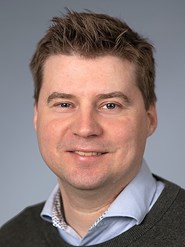
Carl Westin is an Assistant Professor at Linköping University's Department of Science and Technology (ITN), within the Media and Information Technology (MIT) division. He holds a PhD in Human Factors from Delft University of Technology (2017), an MSc in Applied Ergonomics from the University of Nottingham (2012), and a Commercial Pilot diploma from Lund University (2006). His research focuses on enhancing human-automation collaboration in safety-critical environments like aviation, maritime transport, and air traffic control. Key themes include automation transparency, personalized decision support, and the application of eye-tracking and visual analytics to improve system design and user understanding.
Westin's work emphasizes designing automation that aligns with human cognitive strategies (e.g., 'strategic conformance') to foster trust and efficiency. He leads projects such as the EU-funded 'Explain Yourself' initiative, which explores automation transparency for end-users. His research bridges academia and industry, addressing challenges in air traffic management, maritime piloting, and unmanned aerial systems. Collaborations include partnerships with organizations like the Swedish Transport Agency and the European Union Aviation Safety Agency (EASA).
- Education:
- PhD in Human Factors, Delft University of Technology (2017)
- MSc in Applied Ergonomics, University of Nottingham (2012)
- Air Traffic Pilot Diploma, Lund University (2006)
- Key Projects:
- Explain Yourself: Designing Automation Transparency for End Users (EU Horizon 2020)
- RESKILL: Interactive Visualization for Self-Explanatory Automation
- DiTA Digital Tower Assistant for Remote Air Traffic Control
- Labs/Teams: Member of the Media and Information Technology (MIT) research group, focusing on visual analytics and human-automation systems.
His publications span journals like Cognition, Technology & Work and conferences like IEEE Visualization, with a focus on empirical studies of human-automation interaction in safety-critical domains. Recent work explores AI transparency, visual analytics for decision support, and guidelines for ethical AI in air traffic management.