Thomas Grote is a Research Fellow at the University of Tübingen's Ethics and Philosophy Lab within the Cluster of Excellence 'Machine Learning: New Perspectives for Science'. His research focuses on philosophical and ethical dimensions of artificial intelligence, particularly interpretability, fairness, and reliability in medical and social contexts. He co-supervises the Carl-Zeiss-Stiftung-funded project 'Certification and Foundations of Safe Machine Learning Systems in Healthcare' and co-organizes the 'Philosophy of Science Meets Machine Learning' conference series. Research Focus Grote's interdisciplinary work bridges philosophy of science and applied AI ethics. Key areas include: Methodological foundations of AI ethics and epistemology Clinical reliability and safety of ML systems Fairness metrics in sociotechnical healthcare systems Interpretability requirements for medical AI Computational psychiatry and evolving mental health frameworks His recent publications demonstrate strong emphasis on healthcare applications, with critical analyses of reliability in foundation models, ethical paradigms for LLMs, and rethinking evaluation methodologies at the epistemology-ethics interface.
Edwin Olson is an Associate Professor of Computer Science and Engineering at the University of Michigan, where he directs the APRIL Robotics Lab. He also serves as CEO of May Mobility Inc., a company focused on developing driverless shuttles. His research spans autonomy, perception, robotics, and learning, with notable contributions to technologies like AprilTags and the LCM middleware. Olson has led groundbreaking projects, including the 2010 MAGIC competition-winning robot team and the DARPA Urban Challenge. He has been recognized with awards such as Popular Science's 'Brilliant Ten' (2012), the DARPA Young Faculty Award (2013), and the College of Engineering Education Excellence Award (2015). His work emphasizes real-world applications of autonomous systems, including risk assessment, multi-policy decision making, and sensor fusion. Recent articles focus on autonomous agent behavior prediction, remote assistance systems, and infrastructure calibration. Olson's academic contributions are complemented by industry roles, including his tenure at Toyota Research Institute as Co-Director for Autonomous Driving Development. Education: PhD in Computer Science from MIT (2008) Key Projects: MAGIC 2010, DARPA Urban Challenge, Toyota Research Institute Labs: APRIL Robotics Lab Awards: DARPA Young Faculty Award, Brilliant Ten, Education Excellence Award
Somil Bansal is an Assistant Professor in the Department of Aeronautics and Astronautics at Stanford University, part of the School of Engineering. Previously, he served as an Assistant Professor in the Electrical and Computer Engineering (ECE) department at the University of Southern California. He holds a B.Tech. from IIT Kanpur, an MS, and a Ph.D. from UC Berkeley’s EECS department. Research Focus: Development of mathematical tools and algorithms for safety-critical autonomous systems, emphasizing learning-enabled systems’ safety. Key Collaborations: Waymo, Skydio, Google, Boeing, NASA AMES/JPL. Awards: NSF CAREER Award, Eli Jury Award, RSS Pioneer Award, and Outstanding Graduate Instructor Award. His research integrates control theory and machine learning to ensure safety in autonomous systems, focusing on safe learning frameworks, anomaly detection, and real-time safety guarantees. He leads the Safe and Intelligent Autonomy (SIA) Lab, which explores applications in robotics, autonomous driving, and aerospace systems. Teaching: Courses include Introduction to Control Design Techniques and Principles of Safety-Critical Autonomy. He advises doctoral students and supervises research projects in his lab.
Nikolai Matni is an Assistant Professor in the Department of Electrical and Systems Engineering at the University of Pennsylvania. He holds a secondary appointment in the Department of Computer and Information Science and is a member of the Applied Mathematics and Computational Sciences (AMCS) graduate group. His research focuses on integrating learning, optimization, and control for safety-critical and data-driven cyber-physical systems, with applications in robotics, autonomy, and distributed control. Secondary Appointment: Computer and Information Science (University of Pennsylvania) Labs/Centers: GRASP Lab, PRECISE Center His research bridges machine learning, robust control, and autonomous systems, particularly in developing guaranteed-safe strategies for cyber-physical systems. He emphasizes the importance of reliability and robustness in learning-based control for applications like self-driving vehicles and agile robots, where failures could be catastrophic. Recent publications highlight advancements in vision-based robotic control, neural ODEs for motion planning, adversarial exploration strategies, and stability-constrained learning. These works span conferences such as ICRA, CoRL, WACV, IROS, and L4DC, with a focus on safety-critical applications. Notable scientific awards include the NSF CAREER Award, George S Axelby Award (for his work on System Level Synthesis), AFOSR YIP award, and Google Research Scholar Award. He was also elevated to IEEE Senior Member. Matni advises Ph.D. students in Computer and Information Science (CIS), Electrical and Systems Engineering (ESE), and Applied Mathematics and Computational Sciences (AMCS). His teaching includes courses like ESE 2030 (Linear Algebra with Engineering/AI applications) and others focused on control theory and robotics.
Yang Kaidi is an Assistant Professor in the Department of Civil and Environmental Engineering at the National University of Singapore (NUS), affiliated with the Institute of Operations Research and Analytics (IORA) within NUS’s Smart Nation Research Cluster. Their research focuses on intelligent transportation systems, traffic control, shared mobility, and machine learning applications in mobility. Key interests include connected and automated vehicles, privacy-preserving data sharing, and reinforcement learning for traffic optimization. Research highlights include developing parameter privacy-preserving strategies for mixed-autonomy platoons, enhancing safety in autonomous driving via transformer-based trajectory prediction, and optimizing traffic signal timing using connected vehicle data. Their work bridges theoretical control systems with practical urban mobility challenges, addressing issues like ridesourcing-public transit integration, modular transit service operations, and weaving section management in mixed traffic environments. Recent publications emphasize real-time control frameworks, cooperative safety mechanisms, and data-driven solutions for urban and highway systems. Yang’s interdisciplinary approach integrates robotics, optimization, and cybersecurity to advance smart transportation infrastructure. Their contributions are particularly notable in privacy-preserving techniques for traffic state estimation and federated learning applications. While no specific awards or grants are listed, their research aligns with Singapore’s Smart Nation initiatives through IORA’s strategic focus areas. Yang’s work has implications for future traffic management systems, autonomous vehicle coordination, and sustainable urban mobility solutions.
Anqi Liu is an Assistant Professor in the Department of Computer Science at the Whiting School of Engineering, Johns Hopkins University. She maintains significant affiliations with the Johns Hopkins Mathematical Institute for Data Science (MINDS) and the Johns Hopkins Institute for Assured Autonomy (IAA), while also collaborating extensively with the Center for Language and Speech Processing (CLSP) and the Laboratory for Computational Sensing and Robotics (LCSR). Her research focuses on developing principled machine learning algorithms for building reliable, trustworthy, and human-compatible AI systems in real-world applications. Key research areas include: Distributionally robust learning under covariate shift Uncertainty quantification for AI safety and fairness Safe exploration in control systems Fair machine learning under distribution shift Active learning under label shift Dr. Liu's work addresses critical challenges in high-stakes AI applications where reliability, safety, and societal impact are paramount. Her methods ensure AI systems remain robust to changing data environments, provide accurate uncertainty estimates, and incorporate human preferences in interactions. Analysis of her recent publications reveals a strong trajectory in trustworthy AI research with significant contributions to distribution shift handling, uncertainty quantification techniques, and safe decision-making frameworks. Her work bridges theoretical foundations with practical applications across healthcare, robotics, and social media analysis. Amazon Research Award Dr. Liu actively mentors eight PhD students and teaches specialized courses on Machine Learning for Trustworthy AI and standard Machine Learning at Johns Hopkins University, preparing the next generation of researchers to address critical challenges in AI safety and reliability.
Alex John London is the K&L Gates Professor of Ethics and Computational Technologies at Carnegie Mellon University, where he also serves as co-lead of the K&L Gates Initiative in Ethics and Computational Technologies, Director of the Center for Ethics and Policy, and Chief Ethicist at the Block Center for Technology and Society. His work spans multiple institutions, including affiliations with the Center for Bioethics and Health Law at the University of Pittsburgh. Dr. London earned his Ph.D. in Philosophy from the University of Virginia, followed by a post-doctoral fellowship at the University of Minnesota's Center for Bioethics. He joined Carnegie Mellon University in 2000 and has established himself as a leading scholar in ethics at the intersection of technology, medicine, and policy. His academic journey includes being a Visiting Scholar at Harvard University's Program in Ethics and Health. Professor London's research spans ethical and policy issues surrounding novel technologies in medicine, biotechnology and artificial intelligence, methodological issues in theoretical and practical ethics, and cross-national issues of justice and fairness. His work in AI ethics critically examines structural obstacles to safe and effective technologies, challenges conventional notions of algorithmic bias, and questions requirements for explainability in medical contexts. His foundational work on clinical equipoise and the 'integrative approach' to risk assessment has shaped research ethics guidelines globally. He has made significant contributions to international research ethics, particularly regarding justice, responsiveness to host community health needs, and post-trial access. Professor London's scholarly output demonstrates a trajectory toward addressing the ethical challenges of emerging technologies, with increasing focus on justice-led approaches to AI innovation, accountability frameworks, and the sociotechnical dimensions of healthcare AI systems. His work increasingly addresses how AI can be designed to respect human dignity while navigating complex ethical terrain in healthcare settings. New Directions Fellowship from the Andrew W. Mellon Foundation (2005, 2010) Hastings Center Fellow (2011) Elliott Dunlap Smith Award for Distinguished Teaching (2016) Distinguished Service Award from the American Society of Bioethics and Humanities (2017) As an educator, Professor London teaches courses on ethical theory, bioethics, ethics and AI, and research ethics. His influential textbook 'Ethical Issues in Modern Medicine' (8th edition) is one of the most widely used resources in medical ethics education. His book 'For the Common Good: Philosophical Foundations of Research Ethics' (2022) provides a comprehensive framework for understanding research ethics as serving the common good. Professor London has advised numerous students and mentored early-career researchers in bioethics and technology ethics. His policy work extends to multiple national and international organizations including the World Health Organization Expert Group on Ethics and Governance of AI, the National Academy of Medicine Action Collaborative, and the U.S. National Science Advisory Board for Biosecurity. Professor London leads several significant research initiatives, including serving as co-leader of the ethics core for the NSF AI Institute for Collaborative Assistance and Responsive Interaction for Networked Groups (AI-CARING). His Center for Ethics and Policy at CMU serves as a hub for interdisciplinary research addressing pressing ethical challenges in technology and healthcare. He is actively involved in shaping policy through his membership on the steering committee of the AAAI/ACM Conference on Artificial Intelligence, Ethics and Society (AIES) and his co-chair role in the U.S. National Academies planning committee on computational modeling of biological agents.
Associate Professor Tim Moore serves as Deputy Director at the Australian Catholic University's Institute of Child Protection Studies, where he leads child-inclusive and child-informed research initiatives. With over two decades of experience, he is internationally recognized for his work in child protection, youth justice, residential care, and child sexual abuse prevention. His research directly informs policy and practice, having advised major inquiries including the national Royal Commission into Institutional Responses to Child Sexual Abuse. Moore's research interests span child protection systems, therapeutic residential care, youth justice, homelessness, young carers, and children's rights advocacy. His work emphasizes children's participation in research on sensitive topics and developing child-safe organizations. He has shaped numerous local, national, and international initiatives aimed at improving children's lives through evidence-based approaches that center children's voices and experiences. His publication record demonstrates consistent focus on child safety in institutions, residential care quality, and children's participation in decision-making. Recent work examines therapeutic residential care models, children's conceptualizations of safety, and the implementation of the United Nations Convention on the Rights of the Child in Australia. His research increasingly addresses intersectional issues including disability, domestic violence, and youth engagement in abuse prevention. Moore has provided expert advice to multiple government inquiries and commissions, translating research into practical frameworks for organizations working with children. His work with the Royal Commission into Institutional Responses to Child Sexual Abuse significantly influenced national approaches to child safety in institutions. As Deputy Director of the Institute of Child Protection Studies, Moore leads initiatives that bridge research, policy, and practice in child protection. His team develops resources and training for organizations on child-safe practices, with particular emphasis on understanding children's perspectives and experiences within institutional settings.
Michael Rauhut is a Professor at the University of Agder where he leads the PhD specialization in popular music performance and represents subject teachers within scientific disciplines at the Department of Rhythmic Music . His academic work focuses on popular music studies and musicology, with supervisory responsibilities for master's and doctoral candidates. Rauhut's research explores the intersection of music, politics, and society, with particular emphasis on: Popular music history in socialist contexts (especially the GDR) Cultural transfer during the Cold War Blues, rock, and jazz as forms of cultural expression Youth cultures and music under authoritarian systems Church-state dynamics in musical expression His work demonstrates how music functioned as both state propaganda and vehicle for dissent. Analysis of Rauhut's publications reveals consistent focus on: Cultural mechanisms in socialist states (75% of recent works) Transnational music exchanges across the Iron Curtain Archival methodologies for reconstructing musical histories Identity formation through popular music State censorship and artistic resistance strategies His documentary filmography expands these themes into visual media. As PhD supervisor, Rauhut guides research in popular music performance and musicology. His extensive conference participation includes keynote addresses in Germany, USA, Georgia, and Ukraine, covering topics from blues reception to music's role in political revolutions.
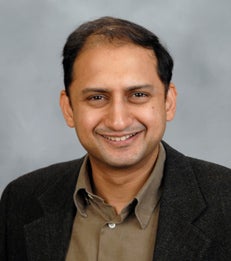
Viral V. Acharya is the C.V. Starr Professor of Economics in the Department of Finance at New York University Stern School of Business. He is a Research Associate at the National Bureau of Economic Research (NBER), a Research Affiliate at the Center for Economic Policy Research (CEPR), and a Research Associate at the European Corporate Governance Institute (ECGI). He previously served as Deputy Governor of the Reserve Bank of India (2017–2019), with responsibilities in monetary policy, financial markets, and financial stability. He is currently Director of Doctoral Education at NYU Stern (2025–), Advisor to the NYU Stern Henry Kaufman Initiative on Financial History (2023–2026), and a Scientific Advisor to the Sveriges Riksbank (2024–). He is also a member of the Climate-related Financial Risk Advisory Committee (CFRAC) of the Financial Stability Oversight Council (2023–2026), the Bellagio Group, and the Financial Advisory Roundtable of the Federal Reserve Bank of New York. Education: B.Tech. in Computer Science and Engineering, Indian Institute of Technology, Mumbai (1995) Ph.D. in Finance, New York University Stern School of Business (2001) His research focuses on systemic risk, financial regulation, sovereign and financial linkages, credit and liquidity risk, and the macroeconomic implications of financial frictions. He has also recently explored risks related to pandemics and climate change. His recent publications examine commercial real estate exposure in banks, spillover risks from non-banks, U.S. Treasury market dynamics, and industrial policy in India. The body of work consistently emphasizes financial stability, regulatory design, and the interaction between public policy and financial markets. Scientific Awards: Alexandre Lamfalussy Senior Research Fellowship, Bank for International Settlements (2017) Inaugural Banque de France – Toulouse School of Economics Junior Prize (2011) Senior Houblon-Norman Research Fellowship, Bank of England (2008) Clarivate Analytics Highly Cited Researcher (2020–2022) Acharya has held numerous editorial and leadership roles, including Editor of the Journal of Law, Finance and Accounting (2014–2016, 2020–), member of the Editorial Committee of the Annual Review of Financial Economics (2022–), Board Member of the American Finance Association (2024–), and Director of the Western Finance Association (2012–2015). He has served as an Academic Advisor to multiple Federal Reserve Banks and international institutions including the IMF, World Bank, and BIS. He advises on financial policy globally and is a frequent commentator in major media outlets. He is not known to advise specific students, but his leadership in doctoral education at NYU Stern underscores his role in mentoring the next generation of finance scholars. He is affiliated with research centers and policy initiatives focused on financial history, climate risk, and financial stability.
Joanna N. Erdman is an Assistant Professor and MacBain Chair in Health Law and Policy at Dalhousie University's Schulich School of Law. Her work focuses on reproductive rights, health equity, and human rights within legal frameworks. She has extensively researched abortion law, global health policies, and gender equality in healthcare access. Erdman's scholarship addresses intersections between law, public health, and human rights, particularly in contexts like abortion accessibility, HPV vaccine equity, and prenatal care ethics. Her research interests emphasize harm reduction strategies, evidence-based lawmaking, and transnational legal perspectives. Erdman has contributed to influential discussions on constitutionalizing abortion rights in Canada, WHO guidelines on safe abortion practices, and the implementation of CEDAW in healthcare systems. Her work often critiques legal barriers to healthcare access and advocates for policy reforms grounded in human rights principles. Erdman has collaborated with leading scholars like Rebecca J. Cook and Bernard Dickens on publications analyzing abortion law and medical ethics. Her articles frequently appear in interdisciplinary journals such as the International Journal of Gynecology and Obstetrics and Emory Law Journal . While no formal grants or awards are cited here, her extensive citation count (over 5,000 downloads on SSRN) underscores her impact in health law research. Erdman’s recent work includes updating global abortion policy analyses and exploring gender equality in health systems through CEDAW frameworks. She maintains an active research agenda on transnational healthcare law and its implications for marginalized communities.
Professor Lyudmila Mihaylova is a distinguished academic at the University of Sheffield's School of Electrical and Electronic Engineering, where she holds the position of Professor of Signal Processing and Control. She has established herself as a leading researcher in the fields of signal processing, Bayesian methods, and autonomous systems, with significant contributions to particle filtering techniques for intelligent transportation systems. Her work bridges theoretical developments with practical applications across multiple domains including transportation, healthcare, and industrial automation. Prof. Mihaylova's research interests center on nonlinear filtering, sequential Monte Carlo methods, statistical signal processing, and sensor data fusion. Her work spans both theoretical advancements and practical implementations, with particular focus on high-dimensional problems including vehicular traffic flow estimation, image processing, and localization in sensor networks. She has extensive experience with various image modalities such as optical, thermal, LIDAR, SAR, and hyperspectral imaging. Her group actively develops novel methods for autonomous intelligent systems focusing on sensing, tracking, decision making, and machine learning applications. Analysis of Prof. Mihaylova's recent publications reveals a strong trend toward uncertainty quantification in machine learning models, particularly for safety-critical applications. Her work increasingly integrates traditional signal processing techniques with modern deep learning approaches, with applications spanning sewer inspection robotics, medical diagnostics (particularly sleep apnea detection), UAV swarm tracking, industrial manufacturing, and autonomous vehicle systems. A significant portion of her recent research focuses on developing robust methods that can handle incomplete or outlier-corrupted data while providing reliable uncertainty estimates. Among her notable professional achievements: President of the International Society of Information Fusion (ISIF) Senior member of the IEEE Signal Processing Society Associate Editor for IEEE Transactions on Aerospace and Electronic Systems Associate Editor for Elsevier Signal Processing Journal Prof. Mihaylova has successfully mentored numerous PhD students and postdoctoral researchers, many of whom have gone on to prominent academic and industry positions. Her research has been supported by major funding bodies including EPSRC, EU, MOD/DSTL, and industry partners, with recent projects including 'Protecting Environments with UAV Swarms' (InnovateUK, 2022-2024), 'ShiRAS: Towards Safe and Reliable Autonomy in Sensor Driven Systems' (NSF-EPSRC, 2019-2023), and 'Confident safety integration for Cobots' (Lloyd's Register Foundation, 2019-2020). Her research group follows a collaborative approach with the philosophy 'We share knowledge, we grow.' Prof. Mihaylova maintains active research collaborations with institutions worldwide and has held previous academic positions at Lancaster University (2006-2013) and University of Bristol (2004-2006), along with research visiting positions at the University of Ghent, Katholic University of Leuven, and the Bulgarian Academy of Sciences.
Mehmet Soyer , Assistant Professor at Utah State University’s College of Arts & Sciences , specializes in the School of Social Sciences . His work bridges environmental sociology , social inequality , and pedagogical innovation . Research Focus : Socio-environmental conflicts, hydraulic fracturing impacts, autoethnography, and community-engaged learning. Teaching Philosophy : Advocates for experiential learning, digital tools, and brave spaces in classrooms. Publication Trends : Recent work highlights climate activism, inclusive education, and interdisciplinary approaches to sustainability. Earlier research explores Kurdish identity, sociological theory, and health dynamics.
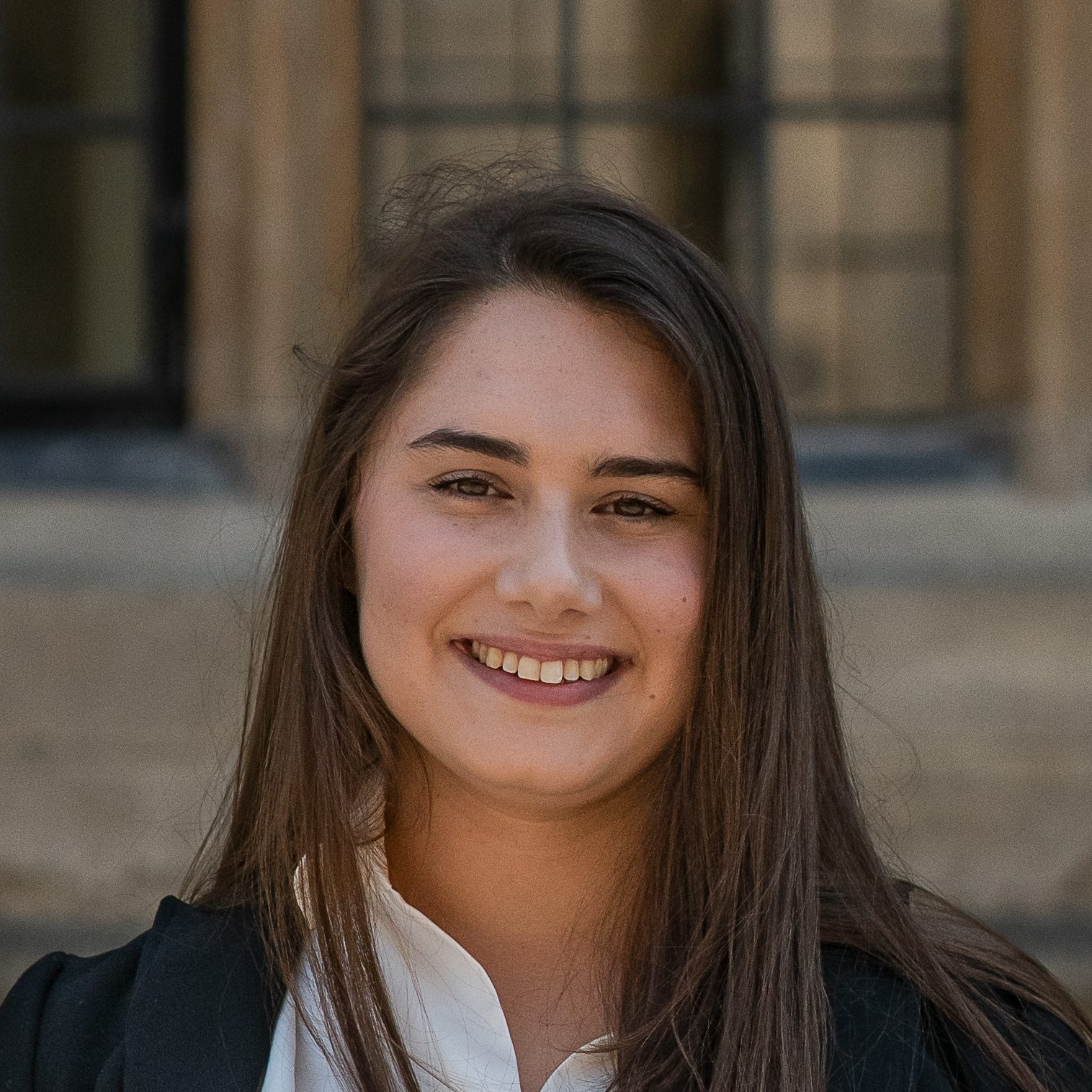
Anna Gautier is an Assistant Professor in the Department of Computer Science at Chalmers University of Technology, affiliated with the Division of Data Science and AI. Previously, she was a Digital Futures Postdoctoral Fellow at KTH Royal Institute of Technology (2023–2025), focusing on mechanism design for multi-robot systems. Her research emphasizes planning under uncertainty, multi-agent systems, and human-robot interaction. She holds a PhD from the University of Oxford (2023), an MSc from the London School of Economics, and dual undergraduate degrees from Washington University in St. Louis. Education Background: PhD in Computer Science, University of Oxford (2023) MSc in Applied Mathematics, London School of Economics BA in Mathematics and BS in Computer Science, Washington University in St. Louis Research Interests: Dr. Gautier explores planning algorithms for multi-agent systems, particularly in uncertain environments. She designs mechanisms to coordinate robots and humans, leveraging game theory and formal methods. Her work addresses challenges like resource allocation, risk-aware decision-making, and trust in autonomous systems. Recent projects include contingency planning for autonomous vehicles and auction-based resource distribution. Professional Activities: She co-chairs the ECAI 2025 Demonstration Track and teaches the course Safe Robot Planning and Control at KTH. Her projects include collaborations with WASP-Nest (PerCorSo) and TECoSA on trustworthy autonomy. She actively publishes in top venues like AAMAS and AAAI. Labs and Teams: Affiliated with Chalmers' Data Science and AI division, she leads research in multi-agent systems and human-AI collaboration.
Jeeseop Kim is an Assistant Professor in the Department of Aerospace and Mechanical Engineering at The University of Texas at El Paso (UTEP), College of Engineering, specializing in robotics, autonomy, and control theory. His research focuses on safety-critical planning and control, with emphasis on bipedal/quadrupedal locomotion, hybrid dynamical system control, and whole-body planning and control. Education: B.S. in Mechanical and Aerospace Engineering, Seoul National University (2014) M.S. in Intelligence and Information (Robotics), Seoul National University (2017) Ph.D. in Mechanical Engineering, Virginia Tech (2022) Postdoctoral Scholar, Mechanical and Civil Engineering, Caltech (2022–2025) His research spans safety-critical control systems for legged robots, including obstacle-aware nonlinear model predictive control (MPC), control barrier functions, and distributed coordination algorithms. Recent work explores adaptive delay estimation, tactile sensing for robotic grasping, and hardware-software co-design for humanoid robots. Key article trends highlight advancements in autonomous inspection robotics, hybrid control architectures, and real-time planning for quadrupedal systems. His work integrates control theory with practical applications in industrial and healthcare domains. Awards: ASME DSCD Rudolf Kalman Best Paper Award (2022) IEEE ICRA Outstanding Paper Award (2023) Jeeseop teaches MECH 4332: Mechanical Computational Applications in Vision and Robotics (Fall 2025). He actively recruits Ph.D. students for Spring/Fall 2026 and seeks motivated undergraduates/MS students with skills in robotics kinematics, programming (C/C++, Python, MATLAB), and CAD design. The AIGIS Lab welcomes applicants with interests in robotics, controls, and autonomous systems.