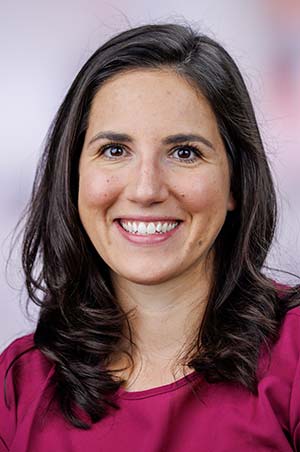
Allison Meisner, PhD, is an Assistant Professor in the Cancer Prevention Program within the Public Health Sciences Division at Fred Hutchinson Cancer Research Center (Fred Hutch). She also holds affiliate roles as an Investigator in the Clinical Research Division at Fred Hutch and Affiliate Faculty in the Department of Global Health at the University of Washington. Her primary academic affiliation is with Fred Hutch’s Biostatistics department. Dr. Meisner’s education includes a PhD in Biostatistics from the University of Washington (2017), an MA in Biostatistics from Boston University (2011), and a BS in Biomedical Engineering from the University of Connecticut (2008). She completed a postdoctoral fellowship in Biostatistics at Johns Hopkins University (2020). Her research focuses on developing novel methods for risk prediction using polygenic risk scores and biomarker combinations. Key interests include causal inference, SMART designs (Sequential Multiple Assignment Randomized Trials), and treatment selection strategies. She has contributed to HIV prevention trials through the HIV Prevention Trials Network (HPTN) and conducted implementation studies in sub-Saharan Africa. Her work also extends to diagnostic trials for COVID-19 and tuberculosis. Current studies under her direction include evaluating stepped PrEP adherence support for young South African women using SMART designs, integrating HIV prevention services into family planning clinics in Kenya, and assessing pharmacy-delivered PrEP services in Kenya. She is a member of the Translational Data Science Integrated Research Center (TDS IRC) at Fred Hutch.
Dr. Maureen A. Walton is a Professor and the Toby Brzoznowski Research Professor in Behavioral Health Technology Innovations in the Department of Psychiatry at the University of Michigan Medical School. She serves as the Associate Chair for Research and Research Faculty Development, Senior Associate Director of the Injury Prevention Center (IPC), Associate Director for Child Research at the Addiction Center, Co-Director of the Research & Scholarship Core at the Institute for Firearm Injury Prevention, and MI-ACRE Strategic Advisor. She also directs the NIAAA T-32 Program. Dr. Walton received her B.S. from Wayne State University, M.P.H. in Health Promotion from San Diego State University, and Ph.D. in community psychology from Michigan State University. She completed post-doctoral training at the University of Michigan. Dr. Walton's research focuses on innovative interventions to prevent and treat substance use, violence, and injury, with expertise in harnessing technology (web, text messaging, social media, telehealth, and smartphone apps) for assessment and intervention delivery. Her work spans multiple domains including: Developing evidence-based single-session behavioral interventions to reduce risky substance use in medical settings Testing remotely delivered interventions to prevent opioid misuse among young people Examining social media delivered interventions for substance use reduction Creating technology-facilitated interventions for violence prevention Implementing mobile health approaches for assessment and intervention delivery Dr. Walton's recent publications demonstrate a strong focus on technology-based interventions for substance use and violence prevention, particularly among adolescents and young adults. Her work increasingly incorporates telehealth, mobile applications, and digital platforms to deliver interventions in emergency department settings. She has developed evidence-based single-session interventions like SafERteens to reduce youth violence and alcohol misuse, and is expanding this work to optimize telehealth interventions using Sequential Multiple Assignment Randomized Trial (SMART) designs. Dr. Walton has received several notable honors including: The inaugural Toby Brzoznowski Research Professor in Behavioral Health Technology Innovations (2024) MICHR Education and Training Outstanding Mentorship Award (2022) NIAAA T-32 Program Director appointment Dr. Walton is deeply committed to mentoring the next generation of researchers, serving as a faculty mentor for the Addiction Center's NIAAA-funded T-32 post-doctoral fellowship. Her research is supported by major funding from the National Institute on Alcohol Abuse and Alcoholism (NIAAA), the National Institute on Drug Abuse (NIDA), and the Centers for Disease Control and Prevention (CDC). With over 200 peer-reviewed publications, she collaborates extensively with multi-disciplinary teams across the University of Michigan and beyond. Dr. Walton leads and collaborates with several research teams including the Injury Prevention Center, U-M Addiction Center, and the Institute for Firearm Injury Prevention. She is also involved with MI-ACRE (Michigan Institute for Addiction Research and Clinical Excellence) and the Community Firearm Violence Prevention Network funded by NIH. Her work often involves developing and testing technology-based interventions in real-world clinical settings, particularly emergency departments.
Min Qian is an Associate Professor of Biostatistics at Columbia University Mailman School of Public Health, specializing in data analytic methods for health decision-making. She is affiliated with the Foundations of Data Science, Health Analytics, and Education centers. Current role: Associate Professor of Biostatistics Institution: Columbia University Mailman School of Public Health Email: mq2158@cumc.columbia.edu Research Focus Dr. Qian develops advanced statistical and machine learning techniques for: Reinforcement learning in sequential decision-making Statistical inference for non-regular parameters Sequential Multiple-Assignment Randomized Trials (SMART) Mobile health applications Her work addresses health outcomes in cardiovascular disease, cognitive impairment, and psychiatric conditions, leveraging longitudinal and microbiome data. Publication Trends Her recent articles emphasize: Survival analysis for cancer outcomes Microbiome-based prediction models Cognitive intervention trials for aging populations Machine learning in cardiovascular risk stratification Statistical methods for individualized treatment regimes Affiliations Foundations of Data Science Health Analytics Education Center
Kevin G. Lynch is an Associate Professor of Biostatistics in Psychiatry at the Perelman School of Medicine, University of Pennsylvania, with dual appointments at the Hospital of the University of Pennsylvania and the Children's Hospital of Philadelphia. His career bridges advanced statistical methodology with clinical applications in psychiatry and addiction medicine. Dr. Lynch's academic foundation includes: B.Sc. in Mathematics from University College, Galway, Ireland (1988) M.Sc. in Mathematics and Statistics from University College, Galway, Ireland (1989) M.A. in Statistics from Yale University (1990) Ph.D. in Statistics from Yale University (1997) His research specializes in developing and applying sophisticated statistical methods to psychiatric and addiction research. Dr. Lynch has made significant contributions to clinical trial methodology, particularly in handling partial compliance in sequential treatment protocols, marginal structural modeling for longitudinal data, and Bayesian approaches for optimizing dynamic treatment regimes. His work spans depression treatment, substance use disorders, neurostimulation therapies, and neuroimaging data analysis, demonstrating how advanced statistics can enhance psychiatric research and improve clinical outcomes. Analysis of Dr. Lynch's publication history reveals a sustained focus on methodological innovation applied to pressing clinical problems. His recent work combines cutting-edge neuroimaging techniques with sophisticated statistical modeling to understand brain mechanisms underlying psychiatric conditions and treatment response. The interdisciplinary nature of his collaborations reflects his position at the intersection of biostatistics, neuroscience, and clinical psychiatry. As a biostatistics faculty member in a clinical department, Dr. Lynch serves as a crucial methodological resource for numerous research projects, providing expertise in study design, data analysis, and interpretation of complex clinical data across the Department of Psychiatry.
Dr. Stephanie Shire is an Associate Professor in Special Education at the University of Oregon's College of Education, specializing in early intervention for children with autism and neurodevelopmental disorders. Her work emphasizes community partnerships and evidence-based practices through hybrid implementation science and randomized clinical trials. She holds a PhD in Human Development and Psychology from UCLA (2013), an M.Ed (2010) and B.A. in Psychology (2008) from the University of Alberta. Her research focuses on optimizing caregiver-mediated interventions like JASPER, exploring their real-world effectiveness and scalability. Key areas include telehealth adaptations, pandemic impacts on early intervention, and peer engagement strategies for minimally verbal autistic children. Dr. Shire collaborates with educators, therapists, and families to bridge research and practice, particularly in low-resource settings. Publications highlight innovations in intervention delivery models, including videoconferencing coaching and SMART designs for social skills interventions. She advocates for sustained community implementation of evidence-based practices, with recent work addressing post-pandemic service recovery and global caregiver training programs. Dr. Shire is actively mentoring graduate students and seeks new doctoral advisees for 2024-25.
Marvin E. Belzer, MD serves as a Clinical Professor of Pediatrics and Medicine (Part-Time) at the University of Southern California, with primary clinical affiliation at Children's Hospital Los Angeles (CHLA). His expertise centers on adolescent medicine, specializing in HIV/AIDS, sexuality, and chronic fatigue syndrome within vulnerable youth populations. Dr. Belzer's research demonstrates profound focus on adolescent HIV care and medication adherence , pioneering mobile health interventions using text messaging and cell phone support systems for youth with HIV and chronic conditions. His work extensively addresses sexual health disparities among transgender and gender-expansive youth, including PrEP initiation and HIV prevention strategies, while also investigating HPV vaccination outcomes and contraception adherence in HIV-positive adolescents. Critical contributions include development of stepped-care approaches for sexual risk reduction and analysis of anal dysplasia prevalence in young men with HIV. Analysis of his 2023-2025 publications reveals dominant trends in technology-driven adherence solutions and health equity interventions for marginalized youth. Key methodological approaches include sequential multiple assignment randomized trials (SMART), mixed-methods cohort studies, and usability testing of mobile apps tailored for transgender youth. His research consistently employs innovative frameworks like the supportive accountability model to address structural barriers in adolescent healthcare delivery. Dr. Belzer leads significant initiatives including the Healthy Young Men's Cohort study examining health disparities among Black and Latino young men who have sex with men. His grant-funded work spans NIH-sponsored clinical trials evaluating digital adherence tools and nationwide protocols for HIV care continuum optimization, with particular emphasis on recruitment strategies for hard-to-reach adolescent populations.
Alla Sikorskii is a Professor in the Department of Psychiatry at Michigan State University. Her research focuses on patient-reported outcomes, symptom management, and intervention design for individuals with cancer and chronic conditions, with a particular emphasis on caregiver dyad dynamics and adaptive clinical trial methodologies. She earned an M.S. in Mathematics from Kiev University and a Ph.D. in Statistics at MSU. Her work spans methodological innovations in sequential multiple assignment randomized trials (SMART) to improve supportive care for cancer survivors and their caregivers. Key research areas include symptom measurement, interdependent psychological distress, and optimizing healthcare utilization through evidence-based interventions. She has led studies on HIV-exposed children's neurodevelopment, caregiver burden mitigation, and the obesity paradox in colorectal cancer. Recent projects include a longitudinal study of fatty acid impacts on executive function in HIV-affected Ugandan youth and a cluster-randomized trial evaluating visual navigation aids in long-term care settings. Her work frequently integrates statistical rigor with interdisciplinary collaboration, addressing global health disparities through community-engaged approaches. Notable contributions include advancing adaptive intervention frameworks and demonstrating how symptom management reduces unscheduled healthcare visits. Current efforts focus on sustaining scalable interventions and evaluating the efficacy of complementary therapies such as reflexology and compassion training in oncology care. Dr. Sikorskii collaborates across disciplines to translate statistical methodologies into actionable clinical practices, with a focus on sustainable health equity solutions.
Bethany Forseth, Ph.D., is an Assistant Professor in the Department of Physical Therapy, Rehabilitation Sciences and Athletic Training at the University of Kansas Medical Center. Her research focuses on pediatric obesity treatment in rural settings, emphasizing family-based behavioral interventions, neighborhood environmental influences, and telemedicine adaptation. She is a KL2 Scholar through the Frontiers Clinical & Translational Science Institute, which supports her work in optimizing treatment protocols via adaptive trial designs. Her research also explores the intersection of yoga, physical activity, and health outcomes, while addressing challenges like the impact of the COVID-19 pandemic on rural families. Scientific Awards: NIH KL2 Program Support NIH T32 Award Forseth advocates for institutional support and interdisciplinary collaboration to advance NIH R01 grant applications and improve health trajectories for vulnerable youth populations.
Eric Laber serves as James B. Duke Distinguished Professor of Statistical Science at Duke University, with cross-appointments as Professor of Biostatistics & Bioinformatics in the School of Medicine and Research Professor of Global Health. He co-directs the Duke Computing Initiative and maintains active roles in the Department of Statistical Science. His educational background includes: Ph.D. in Statistics, University of Michigan, Ann Arbor (2011) M.A. in Statistics, University of Michigan, Ann Arbor (2007) Laber's research pioneers statistical reinforcement learning for dynamic decision-making in complex health environments. He specializes in developing methodologies for Sequential Multiple Assignment Randomized Trials (SMARTs) to optimize personalized treatment sequences in precision medicine. His work bridges machine learning with clinical applications, focusing on cancer therapeutics, mental health interventions, and resource-constrained global health settings. Recent innovations address network interference in policy learning and risk-sensitive optimization for digital health platforms. Analysis of his 15 most recent publications reveals strong trends in adaptive clinical trial design, with increasing emphasis on mHealth applications (40% of recent work), PTSD management in cancer survivors (25%), and network-based reinforcement learning (20%). Key methodological threads include Thompson sampling variants (33%), functional data analysis for truncated outcomes (15%), and causal inference under interference (25%). His scientific recognition includes: James B. Duke Distinguished Professorship (premier faculty honor at Duke) Laber secures substantial grant funding for high-impact health research, currently leading 10 active projects totaling over $15M. Major awards include NIH/NCI funding for next-generation SMARTs in cancer therapeutics (2023-2028), NSF support for risk-sensitive statistical learning (2024-2027), and multiple NIH trials for digital mental health interventions. His collaborative approach spans oncology, psychiatry, and global health teams, with special focus on vulnerable populations including cancer survivors and adolescents. As Co-Director of the Duke Computing Initiative, he leads interdisciplinary teams developing scalable computational frameworks for precision medicine. Current efforts integrate reinforcement learning with electronic health records systems to create real-time clinical decision support tools, particularly for resource-limited settings in infectious disease management and chronic pain treatment.
Shawna Smith, PhD is an Associate Professor in the Department of Health Management and Policy at the University of Michigan School of Public Health. Her interdisciplinary work bridges implementation science, health services research, and sociology, focusing on optimizing evidence-based healthcare practices and expanding access through innovative delivery models. Current faculty member (not retired or former staff) Secondary appointment in the Department of Psychiatry, University of Michigan Medical School Affiliate of the Quantitative Methods Program and the D3 Lab (Survey Research Center, Institute for Social Research) Member of the leadership team for MPrOVE (Michigan Program on Value Enhancement) Education: PhD in Sociology, Indiana University (2014) MPhil in Sociology, Oxford University (2004) as a Fulbright Scholar BA in Sociology, Political Science, and Communication Studies, University of Kansas (2002) Research Interests include: Designing adaptive healthcare interventions using SMART trials and factorial designs Improving implementation fidelity for school-based CBT delivery Reducing cardiovascular disease disparities in serious mental illness populations Developing mobile health tools like the Life Goals app for bipolar self-management Scientific Awards : Fulbright Scholar Grants include funding from NIH, AHRQ, Michigan Department of Health and Human Services, and the Institute for Educational Studies. Recent Publications focus on implementation methodology, school mental health, digital therapeutics, and equitable care delivery for chronic conditions. Her work emphasizes scalable solutions through clustered SMART trials, EHR integration, and stakeholder-informed adaptations.