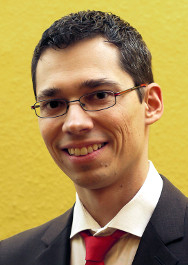
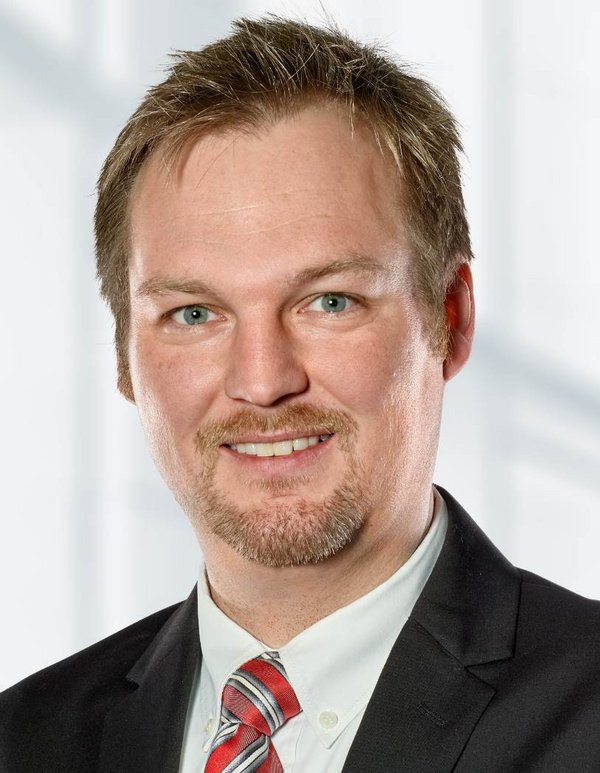
Prof. Daniel Göhring is a professor in the Department of Computer Science at the Free University of Berlin, leading the Autonomous Cars Lab and part of the Dahlem Center for Machine Learning and Robotics. His research emphasizes robotic perception, object tracking, and real-time planning under computational constraints, with a focus on autonomous vehicles and cooperative systems. Education: Bachelor's/Master's in Robotics (exact program unspecified) PhD in Computer Science at Humboldt University Berlin Postdoctoral Research at International Computer Science Institute (ICSI), Berkeley, CA Research Interests: Daniel's work integrates machine learning and sensor technologies like LiDAR and cameras to address challenges in autonomous driving. Key areas include SLAM algorithms, trajectory prediction, cooperative perception, and real-time systems. He explores how limited sensor data and computational resources can be optimized for dynamic traffic environments. Grants and Projects: Leader of the Autonomous Cars Lab Involved in EU-funded projects such as H2020 HIVEOPOLIS and KIS-M (AI-based mobility systems) Past projects include CRTX (recycling optimization), Open.Make (open hardware), RoboFish (biological swarm analysis), and SAFARI Awards: Best Poster Award at IAAS Workshop 2024 Best Paper Award at ICAIR-CACRE 2019 Teaching: He has taught courses such as Image Processing, Robotics, and Advanced Robotics. Recent semesters include modules on self-supervised learning, autonomous vehicle research, and continuous learning software projects. Labs and Teams: Daniel heads the Autonomous Cars Lab and collaborates with the BioRobotics Lab, focusing on interdisciplinary projects like 'Robots Communicating with Fish' and 'Open Hardware for FAIR Robotics.'
Dr. Jan Barowski is a Senior Academic Councillor (Senior Lecturer) at the Department of High Frequency Systems within the Faculty of Electrical Engineering and Information Technology at Ruhr University Bochum. His research focuses on millimeterwave radar systems, THz sensing, and advanced material characterization techniques. He leads a team developing innovative solutions in high-frequency systems, including FMCW radar imaging, antenna design, and biosensor applications. Barowski's work integrates interdisciplinary approaches combining radar technology, signal processing, and electromagnetic engineering. Recent projects include fluidic THz time delay systems, ultrawideband robotic antenna measurements, and dielectric waveguide-based biosensors. His team collaborates extensively on industrial applications like non-destructive material testing and 3D imaging. He is actively involved in academic committees and has authored/co-authored numerous articles in top journals/conferences like IEEE Transactions on Microwave Theory and Techniques, European Microwave Conferences, and International Radar Symposia. His research emphasizes practical applications in fields such as biomedical sensing, industrial monitoring, and telecommunications.
Prof. Dr.-Ing. Gerd-Jürgen Giefing serves as Professor of Information and Communication Technology at Georg Agricola University of Applied Sciences since 2003, concurrently leading the Electrical and Information Engineering Master's Program, Digital Signal Processing Laboratory, and serving as Deputy Head of the Software Engineering Laboratory. His academic foundation includes: Electrical engineering studies with data processing focus at University of Karlsruhe and Technical University of Munich (1983-1988) Doctorate in neuroinformatics and technical vision from Ruhr University Bochum (1988-1993) Research spans cognitive robotics with emphasis on behavior-oriented scene analysis and distributed communication frameworks, augmented reality systems, and traffic telematics applications including driver face recognition. His foundational work in biologically inspired computer vision established video-based facial capture systems using multiprocessor architectures, later evolving into cognitive robotics frameworks. Current investigations focus on brain-computer interfaces and nomadic point cloud calibration for mobile robotics. Publication trends reveal a progression from neurobiological vision models (1990s) to cognitive robotics infrastructure (2010s), consistently addressing real-world applications in automation and human-machine interaction through IEEE conference proceedings. Key recognitions: Innovation Award '94 from Bochum Technology Transfer Association European Information Technology Award 1996 from European Council for Applied Sciences and Engineering As IEEE Systems Man and Cybernetics Society member, he maintains active research leadership without documented grant specifics. His laboratory direction fosters applied research in signal processing and software engineering for cognitive systems development.
apl. Prof. Dr.-Ing. Claus Brenner is an Adjunct Professor at the Institute of Cartography and Geoinformatics within the Faculty of Civil Engineering and Geodetic Science at Leibniz University Hannover. His research focuses on LiDAR mapping, point cloud processing, and robust estimation, with applications in autonomous systems, urban mapping, and disaster risk assessment. He leads the Graduiertenkolleg 2159 research group on integrity and collaboration in dynamic sensor networks. Key research areas include 3D reconstruction, SLAM (Simultaneous Localization and Mapping), semantic segmentation of mobile mapping data, and cooperative perception systems. His work integrates advanced machine learning techniques with geospatial data analysis, addressing challenges in sensor fusion, uncertainty modeling, and real-time localization. Recent publications span topics like voxel-based point cloud localization for smart spaces, flood risk mapping using LiDAR, and adversarial shape completion. Brenner has contributed to benchmark datasets such as LuCoop and LUMPI, advancing research in cooperative perception and urban navigation. His methods emphasize robustness and scalability, often leveraging generative models and statistical frameworks for urban environment analysis. Notable projects include the development of high-definition mapping using LiDAR, trajectory-based road network reconstruction, and semantic annotation from user trajectories. His work bridges theoretical advancements in computer vision with practical applications in autonomous systems and smart infrastructure.
Norbert Haala is an Adjunct Professor and Deputy Director at the University of Stuttgart's Department of Photogrammetric Computer Vision. He leads the Research Group in Photogrammetric Computer Vision and is involved in ISPRS Working Group II/2 (Point Cloud Generation) and EuroSDR Commission 2 (Modelling and Processing). His work focuses on 3D data collection, SLAM algorithms, LiDAR integration, and UAV-based geospatial technologies. Research interests include image-based data collection, photogrammetric computer vision, and semantic segmentation of 3D point clouds. He has contributed to benchmarks like Hessigheim 3D and TIME, and developed tools like SURE for dense image matching. Teaching includes courses on digital image processing, terrain modeling, and computer vision. His publications emphasize real-time mapping, hybrid georeferencing, and neural surface reconstruction from airborne imagery. Projects involve UAV monitoring, indoor SLAM for robotics, and multi-modal data fusion for urban modeling. He collaborates on EuroSDR initiatives and publishes regularly in remote sensing and robotics domains.
Dr.-Ing. Sven Lange is a post-doctoral researcher at Technische Universität Chemnitz (TU Chemnitz), affiliated with the Chair of Automation Technology and the Chair of Neurorobotics. His work spans research, education, and project management in robotics. Research interests include: Factor-graph optimization for SLAM and sensor fusion Nonlinear least squares methods in robotics Robust navigation for autonomous systems GNSS signal processing in urban environments Educational robot design for undergraduate courses Integration of multi-modal error models in state estimation Key publication trends focus on factor graphs, outlier mitigation, and sensor fusion techniques for UAVs, GNSS, and indoor navigation. His work emphasizes parameter-free algorithms and open-source implementations. Projects include DLR SpaceBot Cup robotics, smartLoc GNSS navigation, and TUC-Bot educational platforms. He has contributed to sensor fusion frameworks for Ceres and GTSAM solvers.
Peer Neubert is a Professor at the University of Koblenz , appointed in October 2022, and previously a senior researcher (Dr.-Ing.) in the Automation Technology group at TU Chemnitz . His work lies at the intersection of autonomous robotics , computer vision , and machine learning , with particular expertise in place recognition in changing environments and hyperdimensional computing . His research spans: Vector Symbolic Architectures and hyperdimensional representations for robotics, Visual place recognition robust to seasonal and illumination changes, Neurologically inspired navigation models (e.g., grid-cell representations), Deep learned and hand-crafted image descriptors for mobile robot localization, Efficient graph optimization and SLAM techniques. Since 2010 he has published extensively in RSS , ICRA , CVPR , IEEE RA-L , and other premier venues, with a clear trend toward unsupervised, memory-efficient, and biologically inspired solutions. In 2022 he was nominated for the Heinz Maier-Leibnitz Prize by the Deutsche Forschungsgemeinschaft. No advisees or direct contact details are provided in the source material.
Dr. Xi Wang is a postdoctoral researcher at the Technical University of Munich (TUM) within the Computer Vision Group (Informatics 9) under Prof. Daniel Cremers, and a researcher at the Computer Vision and Geometry Lab at ETH Zurich led by Prof. Marc Pollefeys. He collaborates with Prof. Luc Van Gool at INSAIT and has affiliations with MIT and Adobe Research. His research spans computer vision, computer graphics, vision science, and vision-language multimodal learning , focusing on modeling human common sense, intent-driven behavior, and egocentric scene understanding. Research Highlights: Developed multimodal world models (GEM) for fine-grained ego-motion and object dynamics Created vision-language interior design systems (I-Design) and driver trajectory prediction models Advanced 3D human-object interaction reconstruction (ROMEO) and eye-tracking-based action anticipation Explored Gaussian splatting for dynamic scene understanding (EgoGaussian) Scientific Recognition: Recipient of the ECCV 2024 Workshop Best Paper Award for ROMEO $1.6 million grant from BMBF for establishing his independent TUM research group Accepted papers at top venues: CVPR, ECCV, ICLR, ETRA, ISMAR
Dr. Christian Kurtz is a Postdoctoral Researcher and research project coordinator at the IT Management and Consulting working group within the Department of Informatics, Faculty of Mathematics, Informatics and Natural Sciences at the University of Hamburg. He has held this position since 2022, following his role as a Research Associate at the same institution from 2017-2022. His academic career is complemented by industry experience as an IT Consultant at NTT DATA Deutschland GmbH. Dr. Kurtz's educational background includes: M.A. in Management & Controlling / Information Systems from Leuphana University of Lüneburg (2013-2016) B.Sc. in Business Administration and Economics from Paderborn University (2010-2013) His research is grounded in Information Systems (IS), with a focus on societal values and regulations in the design and governance of socio-technical ecosystems. He examines how regulations—such as the GDPR and the AI Act—and their underlying protective aims (e.g., privacy, transparency) can be operationalized within platform, service, and data ecosystems. This includes translating abstract legal norms into IS design—and, in turn, using insights from IS research to inform policy and regulatory development. To support this bidirectional relationship of IS and normative frameworks, he investigates how interdisciplinary collaboration—particularly between IS, law, and ethics—can be enabled, with a key focus on the use of boundary objects, such as architectural models, that help bridge disciplinary perspectives and support shared understanding. Dr. Kurtz's recent publications demonstrate a strong focus on regulatory compliance in digital ecosystems, particularly examining how information systems can be designed to meet legal requirements while maintaining functionality. His work spans multiple domains including platform accountability, GDPR implementation challenges, and the development of interdisciplinary methods for ecosystem architecture that inform regulatory reasoning. There's a clear trend toward increasingly sophisticated approaches to bridging the gap between technical systems design and legal/ethical requirements. Dr. Kurtz has received numerous academic and professional awards: Best Paper award at HICSS 54 (2021) Hamburg Teaching Prize for outstanding and innovative teaching (2021) Best Paper Nomination at HICSS 52 (2019) 3rd prize in Digital Science Slam on Computational Propaganda (2021) Class of the Year award at Leuphana University of Lüneburg (2016) Entrepreneurship Award at Leuphana University of Lüneburg (2015) Lower Saxony scholarship for talented students (2014) Innovation Award at NTT DATA Open Innovation Challenge (2017) Idea Competition Prize from Chamber of Skilled Crafts (2014) Finalist in Lüneburg Business Awards (2014) As a dedicated mentor, Dr. Kurtz has supervised numerous Master's and Bachelor's theses focusing on cutting-edge topics in AI, data privacy, and digital transformation. His academic service includes representation roles in the Ethics Commission and examination boards. He has been actively involved in multiple research projects including "Informing Regulatory Reasoning on Algorithmic Systems in Societal Communication with STEAM" (2022-2025), "DL2030 - Digitale Dienstleistungen als Erfolgsfaktor für die Wertschöpfung der Zukunft" (2019-2023), and "Developing the socio-technical architecture method to inform policy choices in the shaping of COVID-19 digital infrastructure" (2021-2022). Dr. Kurtz is actively engaged in the academic community through various leadership roles including Track Chair for ECIS 2026, Minitrack Chair for HICSS 58 and 59, and Associate Editor for multiple conference tracks. He serves as a reviewer for prestigious journals including Business Research, Communications of the Association for Information Systems, and Journal of Information Technology.
Professor Andreas Geiger leads the Autonomous Vision Group (AVG) at the University of Tübingen , heading the Department of Computer Science and serving as core faculty at the Tübingen AI Center . He is Principal Investigator in the ML in Science cluster of excellence and CRC Robust Vision , while coordinating the ELLIS PhD program . Develops machine learning models for computer vision, NLP, and robotics Focus on 2D/3D representations, geometry/material reconstruction, and robust AI Applications in autonomous vehicles, VR/AR, and document analysis His research has produced hundreds of publications with significant impact, including multiple best paper awards at top venues. The Scholar Inbox platform he co-created revolutionizes academic paper discovery, winning business model awards at Tübingen AI Center spinoff events. Key research areas include: Neural rendering and 3D scene understanding Self-driving perception and planning systems Simulation frameworks for autonomous validation Efficient reinforcement learning architectures Recent awards include: CVPR 2024 Best Paper Sage 10-Year Impact Award 2024 IEEE PAMI Young Researcher Award 2018 Active in CyberValley and ELLIS Institute Tübingen , he maintains strong industry collaborations through initiatives like the ML ⇌ Science Colaboratory . His group's work appears in journals like TPAMI and conferences including SIGGRAPH 2025.
Hongbo Liu is a researcher at Indiana University - Purdue University Indianapolis , Department of Computer Information and Graphics. With a focus on Artificial Intelligence, Machine Learning, and Network Analysis , Liu has contributed extensively to computational intelligence through 118+ publications since 2004. Multi-disciplinary research spanning Graph Theory, Swarm Intelligence, and Deep Learning Recent work includes Robust Gated Models for Temporal Networks and Self-Adaptive Neuroevolution Systems (2024-2025) Key research themes include: Dynamic network analysis and link prediction Crowd behavior modeling and trajectory forecasting Swarm-based optimization for complex systems Fuzzy logic and granular computing applications Neural network architectures for image and text processing Liu's publications demonstrate strong collaborations with researchers like Ajith Abraham, Yu Yang, and Bo Zhang across 15+ academic journals and conferences . The work spans from theoretical graph algorithms (2015-2017) to applied systems in autonomous robotics and blockchain (2024).
Daniel Büscher is a post-doctoral researcher at the Robot Learning Lab of the University of Freiburg. His work focuses on autonomous robot navigation , deep learning , and probabilistic state estimation . He has contributed to robotics research through projects involving mobile manipulation and audio-visual navigation . Research Interests : Autonomous navigation, deep learning, computer vision, probabilistic estimation Teaching : Lecturer and tutor for Introduction to Mobile Robotics and Robot Mapping (2017–2023) Publication Trends : Recent work emphasizes robot design optimization , language-grounded scene graphs , and uncertainty-aware perception . His research connects reinforcement learning with mobile manipulation and cross-domain navigation challenges.
Prof. Dr.-Ing. Stefan Brüggenwirth serves as a Professor at Ruhr University Bochum within the Faculty of Electrical Engineering and Information Technology, specifically leading the Cognitive Sensors department. His institutional address is Cognitive Sensors, Postbox ID 37, Universitätstraße 150, D-44801 Bochum, with departmental contact via sekretariat@est.rub.de. He maintains an active research profile with continuous publications in IEEE journals and major radar conferences, demonstrating his leadership in integrating artificial intelligence with radar technology. Brüggenwirth's research centers on cognitive radar systems, where he pioneers the application of machine learning techniques to enhance radar capabilities. His work spans neural network architectures for SAR target recognition, reinforcement learning for radar resource management, and explainable AI methods for radar applications. He investigates both theoretical foundations and practical implementations, with research addressing military applications, autonomous vehicle navigation, and aerospace systems. His department connects with related research areas including plasma technology and microwave systems within the faculty's ecosystem. Analysis of his publication trends reveals a distinct progression from early cognitive systems for UAVs (2010-2013) to increasingly sophisticated AI-radar integration (2015-present). Recent work emphasizes explainable AI techniques (grad-CAM, LIME, SHAP), neural network robustness, and quality of service frameworks for radar resource management. His 2024 publications demonstrate cutting-edge applications of YOLO and complex-valued networks for target recognition and signal denoising. Brüggenwirth has contributed to significant collaborative projects including SPERI (super-resolution and target identification), PolRad (polarimetric radar technology for European defense), and KI-ROJAL. His special issue contributions in IEEE Aerospace and Electronic Systems Magazine (2020) highlight his role as a thought leader in cognitive radar. While specific grant details aren't provided, his extensive project involvement suggests successful funding acquisition across defense, aerospace, and autonomous systems domains. The Cognitive Sensors department at Ruhr University Bochum serves as his primary research base, with his work intersecting with related groups in Learning Technical Systems, Medical Engineering, and Photonics & Terahertz Technology. His research has practical applications in defense systems, autonomous driving (RADAR SLAM), and aerospace, particularly in hypersonic plasma signature measurement. He maintains connections with international researchers including S. Z. Gurbuz and M. Rangaswamy for collaborative book chapters.
Prof. Dr. Sabine Timpf, Chair of Geoinformatics at the University of Augsburg 's Faculty of Applied Computer Science , leads pioneering research at the intersection of spatial cognition , urban navigation systems , and agent-based modeling . Her work transforms how we understand wayfinding processes , landmark-based route planning , and urban space appropriation through computational approaches. Dr. techn. from TU Vienna (1998), Dipl.-Ing. from University of Hannover (1993), M.Sc. from University of Maine (1992) Research spans spatiotemporal data mining , cognitive GIS , and smart city applications . Key contributions include: Pioneering landmark salience metrics for navigation systems Developing affordance-based urban accessibility models Integrating LLMs with GIScience for intelligent urban systems Mapping olfactory and acoustic wayfinding cues in urban environments Agent-based simulations of public park usage and climate change impacts on allergenic plants Her recent publications analyze: 2025: Foundational work on olfactory navigation and LLM-GIS integration 2023-2024: Landmark modeling, sound mapping, and microplastic soil analysis 2021-2022: Pedestrian simulation frameworks and climate change pollen studies Teaching focuses on GIScience , 3D modeling , and spatial data analysis . She supervises research teams exploring urban green space ontologies , route probability models , and multi-agent transport simulations .
Prof. Wolfram Burgard is a Professor for Robotics and Artificial Intelligence and Founding Chair of the Engineering Department at the University of Technology Nuremberg. Previously, he was a professor of computer science at the University of Freiburg (1999–2021), where he established the renowned Autonomous Intelligent Systems research lab. His research focuses on probabilistic techniques for robot navigation, state estimation, and control, with notable contributions to SLAM, path-planning, and mobile robot applications such as museum tour-guides (Rhino/Minerva) and autonomous vehicles. His research interests span artificial intelligence, mobile robotics, and autonomous systems. Key projects include deploying interactive museum robots, developing autonomous parking systems (2008), and the pedestrian-like Obelix robot (2012). He has authored over 350 papers, co-authored seminal books like Probabilistic Robotics , and holds the prestigious Gottfried Wilhelm Leibniz Prize (2009) and ERC Advanced Grant (2010). He is an ECCAI and AAAI Fellow, and member of the German Academy of Sciences Leopoldina and Heidelberg Academy of Sciences. Prof. Burgard coordinated the BrainLinks-BrainTools Cluster of Excellence (2012–2019), funded by the German Research Foundation. His work emphasizes real-world applications, including industrial plant supervision and autonomous driving systems. His Erdős number is ≤4, and his publications are indexed on Google Scholar.