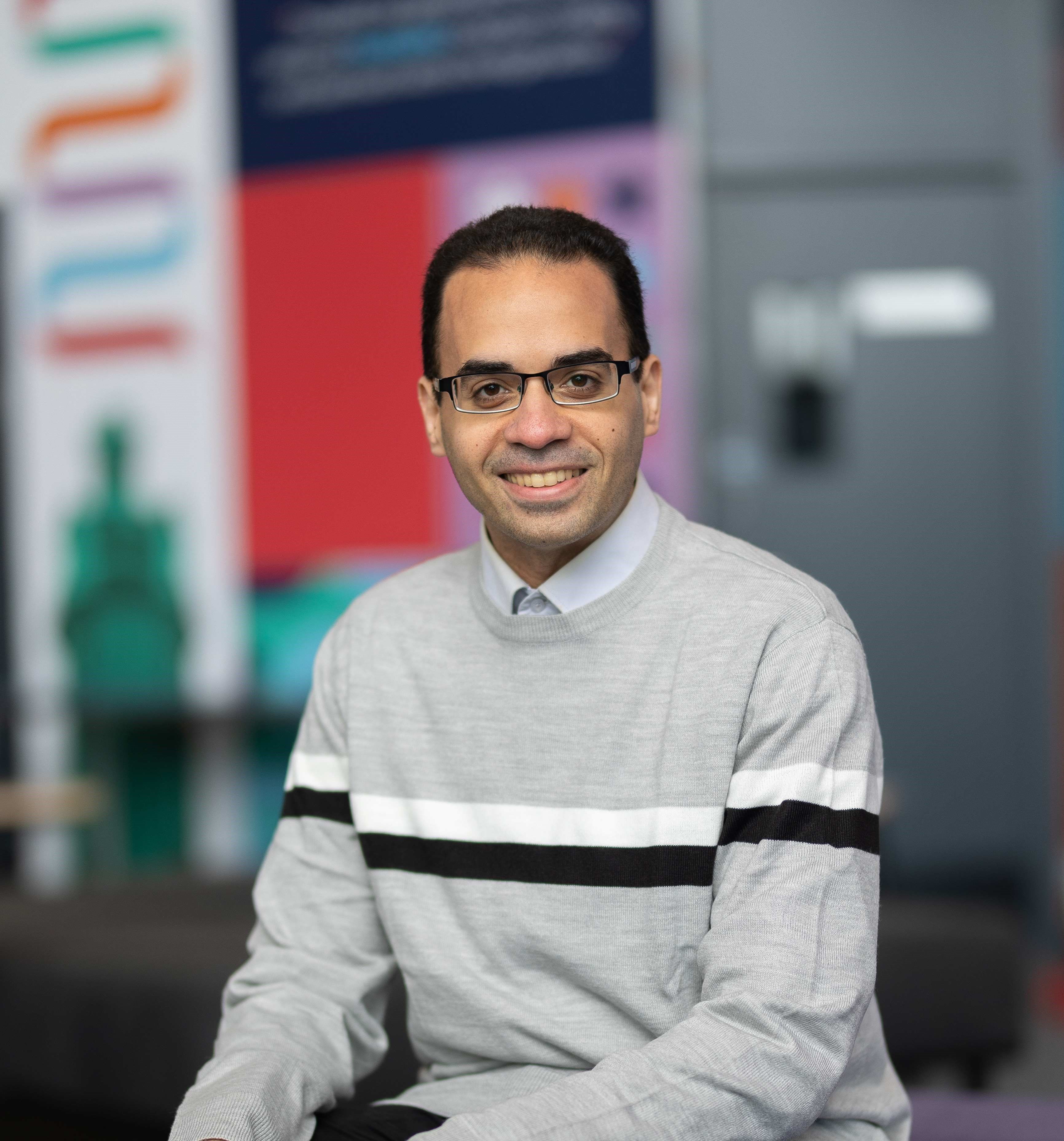
Dr. Babis Loukas is an Assistant Professor at the Department of Electrical and Computer Engineering of the Democritus University of Thrace (DUTH), affiliated with the Mechatronics and Automation Laboratory of E-M Systems . His academic journey includes a Diploma (2013) and PhD (2018) from DUTH, focusing on robotics and position sensing technologies. Education Electrical and Computer Engineering, Democritus University of Thrace (Diploma, 2013) Production Engineering and Management, Democritus University of Thrace (PhD, 2018) Dr. Loukas' research lies at the intersection of robotics , mechatronics , and artificial intelligence , with a focus on: Intelligent Mechatronic Systems Automation and Decision-Making Autonomous Navigation Location Detection and Mapping His work emphasizes deep learning in robotics, including SLAM (Simultaneous Localization and Mapping) , loop closure detection , and AI-driven industrial automation . He has contributed to robotics research for terrestrial and extra-terrestrial exploration, as well as cultural heritage digitization . Dr. Loukas teaches undergraduate courses on: Technical Drawing Energy Systems Automation Electromechanical Transport Systems Engineering Standardization Occupational Safety Management
Marcello Chiaberge is an Associate Professor at the Department of Electronics and Telecommunications (DET) of the Polytechnic University of Turin. He serves as Coordinator of the Interdepartmental Center for Service Robotics (PIC4SeR) and oversees quality management for the Master's Degree in Mechatronic Engineering. With over 110 publications and 9 international patents, his work bridges academic research and industrial applications in robotics and electronics. Research Interests span a wide array of fields including Autonomous vehicles Drones Embedded systems Precision agriculture Search and rescue robotics Simultaneous localization and mapping (SLAM) Smart cities infrastructure His projects often integrate machine learning with hardware acceleration, focusing on real-time solutions for robotics applications. Recent Publications highlight his contributions to: Deep reinforcement learning for robot navigation Hybrid MPPT algorithms for solar energy optimization UAV-based remote sensing in agriculture Transformer architectures for action recognition Hardware-accelerated computer vision systems Research Leadership is evident in his coordination of PIC4SeR and principal investigator roles in projects like: HERITALISE (2025-2028) - Cultural heritage digitization EMPATHY (2024-2026) - Empathetic mobility platforms NG-UWB (2019-2023) - Next-generation localization systems MArcEL (2019-2022) - Electric agricultural machinery His teaching includes courses on electronic fundamentals and mechatronic systems, all delivered in English at the Master's level. He has served as doctoral consortium member since 2002 and currently supervises multiple PhD candidates in electronics and mechatronics fields.
Dr. Thomas Walther is a postdoctoral researcher at the Institute of Neuroinformatics (INI), Faculty of Computer Science, Ruhr University Bochum. His work centers on computational neuroscience with a focus on modeling cognitive processes in mammals, particularly spatial navigation, learning, and memory extinction through computational approaches. His educational background includes: Diploma in Electrical Engineering and Information Technology from the University of Dortmund, with thesis research on medical image interpretation, tumor tracking, and robot-assisted radiotherapy Ph.D. in Electrical Engineering and Information Technology from Ruhr University Bochum, dissertation on autonomous visual model learning based on Organic Computing principles Dr. Walther's research spans computational neuroscience, virtual reality systems, robotics, computer vision, computational auditory scene analysis, and Organic Computing. He investigates hippocampal circuit mechanisms underlying spatial cognition and memory processes, employing deep reinforcement learning and computational modeling to bridge neural mechanisms with behavioral outcomes. His work integrates biological plausibility with artificial intelligence techniques to unravel complex cognitive functions. His publication record shows consistent focus on applying reinforcement learning to neuroscience questions, particularly spatial navigation and extinction learning phenomena, while maintaining strong contributions to computer vision (human body modeling) and robotics (RatSLAM optimization). This interdisciplinary trajectory demonstrates evolving integration between machine learning methodologies and neurobiological inquiry. Scientific awards: None mentioned in available information. Dr. Walther has supervised multiple Master's theses including research on deep reinforcement learning algorithms across environments, virtual reality applications, context representation in learning systems, and transfer of learned associations. His advising emphasizes computational approaches to cognitive questions within the INI's collaborative framework. As a core member of the Computational Neuroscience group at INI, he contributes to the institute's mission of understanding natural cognitive systems through experimental psychology, neurophysiology, and AI to develop novel solutions for artificial cognitive systems within interdisciplinary collaborations.
Joerg Roewekaemper is a researcher in the Autonomous Intelligent Systems group at Albert-Ludwigs-Universität Freiburg's Faculty of Engineering. His work focuses on robotics, localization, and sensor calibration. Education: Dipl.-Ing. (FH) in Mechatronics Engineering (Bochum University of Applied Sciences, 2009), Master o.Sc. in Systems and Control (Coventry University, 2009) Research interests include path planning for mobile manipulators, localization of mobile robots, and sensor calibration. His publications cover topics like multiple-body registration, RRT planning in high-dimensional spaces, and scan matching techniques for SLAM. Recent work analyzes trends in improving robot localization accuracy through probabilistic methods and sensor fusion, particularly for autonomous navigation systems operating in dynamic environments. Teaching: Teaching Assistant for "Einführung in die Informatik" (Introduction to Computer Science) at University of Freiburg (WS2011/12, SS2012, WS2012/13)
Dr. Ashwin Ashok is an Assistant Professor in the Department of Computer Science at Georgia State University, directing the Mobile Cyber Physical Systems Lab. He holds a Ph.D. from Rutgers University and a postdoctoral background at Carnegie Mellon University with expertise in vehicular networks, visible light communication, and mobile systems. His research focuses on cyber-physical systems, IoT, and wearable technologies, with contributions to computer vision, underwater communication, and environmental sensing. Education: B.Tech., National Institute of Technology-Warangal (2006) M.S., Texas A&M University (2008) Ph.D., Rutgers University (2014) His research interests span visible light communication, vehicular networks, and sensor systems, with a focus on real-world applications like autonomous systems and environmental monitoring. Recent work includes advancements in non-line-of-sight optical communication and digital rehabilitation systems. Publications reflect a strong emphasis on interdisciplinary innovation, combining communication systems with environmental and healthcare applications. Awards include the Best Teaching Assistant and Research Excellence Awards from Rutgers. Key Grants: CAREER: Towards Practical Mobile Visible Light Communication (2022) He leads initiatives like the OpenRadon Lab for soil radon modeling and collaborates on projects such as the Cosmic Climate Cuboid Nanosatellite for space radiation studies.
Pengcheng Shi serves as the Associate Dean for Research and Scholarship and PhD Program Director at the Golisano College of Computing and Information Sciences at Rochester Institute of Technology (RIT). He holds a prominent position within the Department of Computing and Information Sciences, where he oversees research initiatives and doctoral programs while maintaining an active research profile across multiple disciplines. Dr. Shi completed his educational journey with a BS from Shanghai Jiao Tong University (China), followed by MS, M.Phil., and Ph.D. degrees from Yale University. His academic foundation spans both Chinese and American institutions, providing him with a diverse educational background that informs his interdisciplinary research approach. Dr. Shi's research spans an impressive breadth of computational disciplines, with particular focus on artificial intelligence applications in biomedical contexts. His work integrates bioinformatics, data science, and health informatics to develop computational approaches for medical imaging analysis, cardiac electrophysiology modeling, and diagnostic reasoning processes. Recent publications reveal an expanding research portfolio that now includes significant contributions to battery technology, materials science, and advanced 3D computer vision techniques for robotics and autonomous systems. His research demonstrates a unique ability to bridge theoretical computer science with practical applications in healthcare and energy storage. Dr. Shi's scholarly output shows a clear evolution from biomedical imaging and computational physiology toward broader applications in materials science and autonomous systems. While his early work focused primarily on cardiac modeling, medical image analysis, and diagnostic reasoning processes, his recent publications indicate a strategic expansion into energy storage technologies, particularly battery chemistry and interfacial engineering, alongside continued work in 3D computer vision and point cloud processing for robotics applications. As Associate Dean for Research and Scholarship, Dr. Shi plays a critical leadership role in shaping the research direction of the college while actively mentoring doctoral students through his PhD program director responsibilities. His teaching portfolio includes advanced courses such as CISC-810 Research Foundations, CISC-890 Dissertation and Research, and CISC-896 Colloquium in Computing and Information Sciences, indicating his commitment to developing the next generation of computing researchers. Dr. Shi's laboratory work appears to focus on computational biomedical imaging, with recent expansions into battery technology research and 3D vision systems. His interdisciplinary approach connects computer science with biomedical engineering, materials science, and robotics, creating a research environment that bridges traditionally separate domains. This cross-pollination of ideas across disciplines has positioned his work at the intersection of multiple rapidly advancing technological fields.
Luciano Spinello is a Research Fellow affiliated with the University of Freiburg's Department of Computer Science, working within the AIS Lab led by Prof. W. Burgard. Previously, he held roles at Amazon Research (Seattle), ETH Zurich (PhD under Prof. Roland Siegwart), and EPFL Lausanne as a research assistant. His research focuses on the intersection of computer vision and robotics, specializing in robot perception, SLAM, and autonomous systems. He has contributed to projects involving RGB-D data processing, terrain classification, and socially-aware navigation algorithms. Education: PhD in Computer Science from ETH Zurich (2009), Electrical Engineering degree from Rome, Italy. Academic activities include organizing workshops (RSS 2014, IROS 2012), serving on program committees for robotics conferences, and editorial roles (IROS associate editor). His work emphasizes multimodal sensing, object detection in 3D environments, and robust localization across dynamic conditions. Key technical contributions include methods for RGB-D fusion, adaptive domain adaptation, and large-scale place recognition. His research bridges theoretical advancements with practical applications in autonomous robotics, including navigation systems and human-robot interaction protocols.
Kailai Li is a tenure-track Assistant Professor at the University of Groningen's Bernoulli Institute, where he leads the Agile Sensing and Intelligence Group (ASIG). His research develops novel methods for robotic perception, including continuous-time state estimation, sensor fusion, and visual navigation. Recent publications focus on Gaussian process representations for motion estimation and multi-robot collaboration using vision-language models. Dr. Li's lab maintains open-source projects like LiLi-OM (LiDAR-inertial odometry) and SFUISE (UWB-inertial fusion). Collaborations include Linköping University and industry partners. Current projects investigate trustworthy perception for autonomous systems under uncertainty and efficient representations for high-dimensional state estimation.
Michael Furlong is an Adjunct Assistant Professor at the University of Waterloo. His research bridges neuroscience and computer science, focusing on neuromorphic computing , vector symbolic architectures , and autonomous robotic systems . He has contributed to frameworks like Neurobench for evaluating neuromorphic algorithms and developed models for cognitive processes such as visual attention and action specification. Email: michael.furlong@uwaterloo.ca Research Interests : His work explores biologically plausible computation , spiking neural networks , and Bayesian optimization . Publications highlight autonomous exploration , terrain classification , and information-gathering strategies for planetary missions. Collaborative projects emphasize fair benchmarking and robust adaptive recovery in robotic systems. Recent Trends : Recent articles focus on hyperdimensional computing , probabilistic neuromorphic programming , and multi-modal active perception . These studies integrate category theory , dynamic modeling , and semantic processing to advance neuromorphic hardware and cognitive architectures. Key Collaborations : Participated in planetary exploration initiatives, including lunar rover simulation and icy moon landing site selection , combining Wald's sequential probability ratio test for fault tolerance and neural predictive control for robotic chassis reconfiguration.
Boying Li is a Research Fellow in the Department of Data Science & AI at Monash University. Their research focuses on advancing computer vision, robotics, and remote sensing technologies. Key contributions include developing SLAM algorithms using semantic planar text features, self-supervised depth estimation systems, and SAR datasets for ship interpretation. Research interests span neuro-symbolic AI frameworks, autonomous navigation, and sensor data fusion. Their work contributes to the UN Sustainable Development Goals through applications in maritime surveillance and autonomous systems. Collaborations involve structural regularities in indoor environments and satellite imagery analysis. Notable outputs include the OpenSARShip dataset (2017–2018) and recent advancements in Hier-SLAM++ (2025). Awards and grants are not explicitly listed in available texts. No lab affiliations or future works are detailed.
Professor Dayou Li is a Professor of Robotics and Director of the Institute for Research in Applicable Computing (IRAC) at the University of Bedfordshire. He holds a BEng and MSc from Northern Jiaotong University (China) and a PhD from Cardiff University. His research focuses on robotic systems, AI, and nanotechnology, with expertise in multiagent systems, fuzzy logic, neural networks, and automatic control. He has led EU-funded projects under FP7/H2020 and collaborates internationally with institutions in Australia, Canada, China, Europe, Japan, and South Korea. Professor Li's teaching expertise includes Robotics, Artificial Intelligence, Software Engineering, and Programming. His research interests span e-Learning, machine learning, and robotics applications in healthcare and smart environments. He coordinates PhD and part-time student supervision, fostering interdisciplinary innovation through projects like the 5G-ERA platform for connected robotics and laser interference nanomanufacturing techniques for advanced materials. His work integrates robotics with emerging technologies such as swarm intelligence, SLAM algorithms for weak-environment navigation, and oxy-fuel combustion optimization for sustainable energy systems. He actively contributes to advancing robotic applications in smart cities, healthcare assistive devices, and nanoscale manufacturing processes.
Professor Ravi Vaidyanathan holds a Chair in Biomechatronics at Imperial College London, leading the Imperial College Biomechatronics Laboratory. His research focuses on smart systems integration, including wearable sensors, robotics, and health technologies. He is affiliated with multiple centers such as the Artificial Intelligence Network, Care Research and Technology Centre, and the UK Dementia Research Institute. His work bridges engineering and healthcare, with applications in neurorehabilitation, fetal monitoring, and assistive robotics. Dr. Vaidyanathan has secured funding for over 20 research programs globally and has authored over 200 publications. Notable achievements include 6 patents and innovations recognized by awards from IEEE, SAGE Journals, and industry leaders like Google and Sony. Education: No explicit details provided, though his academic role implies advanced degrees in mechanical engineering. Research interests span mechatronic design, sensor fusion, and human-robot interaction. His lab has spun off 4 companies commercializing neurorobotic solutions. Recent work includes AI-driven dementia care tools and fetal movement monitoring systems. Key Awards: Best Paper Awards from IEEE, AIAA, RSJ, and SAGE Journals UK NHS and IET Innovation Awards 2021 Google & Sony Awards for Dementia Research Advising and grants: Over 20 funded projects; formed 4 companies (3 commercial products). Lab collaborations include the Robotics Forum and Robotic Additive Manufacturing Lab. Labs/Teams: Biomechatronics Lab (website: biomechatronicslab.co.uk ), with multidisciplinary teams in robotics, AI, and biomedical engineering.
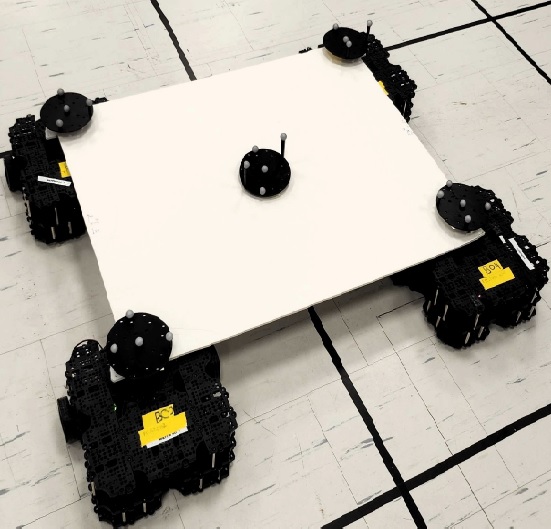
Sajad Saeedi Gharahbolagh is an Assistant Professor in the Department of Mechanical, Industrial, and Mechatronics Engineering at Toronto Metropolitan University and an Honorary Research Fellow at Imperial College London's Department of Computing. His research spans robotics, SLAM, focal-plane sensor-processor arrays (FPSP), and deep learning for autonomous systems. Education : PhD in Electrical and Computer Engineering (2014) from the University of New Brunswick. Prior Roles : Dyson Research Fellow (2018-2019) at Imperial College London; Postdoctoral Fellow at University of New Brunswick (2014); R&D Engineer at 2G Robotics (2015). His research focuses on Simultaneous Localization and Mapping (SLAM) for single/multi-robot systems Focal-plane Sensor-Processor Arrays (FPSP) for high-speed, low-power vision processing Autonomous aerial/underwater robotics Deep learning integration with traditional robotics algorithms Control systems for heterogeneous robotic platforms His work addresses challenges in computational efficiency, robustness in GPS-denied environments, and real-time multi-sensor data fusion. Recent publications highlight advancements in Distributed NeRF for collaborative mapping MR.CAP multi-robot control/planning BIT-VIO visual-inertial odometry WiFi-based geometric mapping FPSP-optimized CNNs PathBench benchmarking framework Scientific Awards : Dyson Research Fellowship (2018-2019) Best Robotics Paper (CRV 2021) Best Student Presentation (IROS 2023) Research Team : PhD Students: Christopher Kolios, Navid Zarrabi, Messiah Esfahani, Ishaan Mehta, Mahboubeh Asadi, Jack Saunders MASc Students: Georgia Jovanovic, Hussein Ali Jaafar, Austin Vuong, Roni Sherman, Matthew Lisondra, Glenn Shimoda, Ali Babaei, Robel Efrem, Messiah Ataey, Christopher Kolios, Nikolas Kourtzanidis Laboratory Facilities : Robotics and Computer Vision Lab (RCVL) with Vicon motion capture system 14 TurtleBot 3 platforms (Waffle Pi/Burger variants) Germicidal UVC-equipped G-Robots Jetbots with onboard GPU processing OpenMANIPULATOR robotic arms
Hazem Eissa is a Lecturer and Researcher in Robotics at the University of Sunderland, affiliated with the School of Computing, Engineering and Digital Technologies. He holds an MSc in Electrical and Electronics Engineering (2016) and a PhD in Distributed Systems for Robotic Swarms (2022), both from the University of Greenwich. His expertise spans robotics, embedded systems, and swarm intelligence. Teaching Modules: Engineering Mathematics, IoT and Robotics, Telecommunications, Advanced Programming Research Focus: Robotic swarm formations, SLAM, swarm optimization, and navigation algorithms Collaborations: Member of IEEE; peer reviewer for IEEE Sensors and IEEE Access Professional Experience: Higher education roles in Egypt, Germany, and the UK His research emphasizes applying robotic swarm formations to mapping and localization challenges. Key themes include multi-agent systems, particle swarm optimization, and biologically-inspired behaviors. He also works on IoT integration and embedded systems applications in biomedical engineering.
Luis Puig is an academic researcher specializing in computer vision and robotics, focusing on omnidirectional imaging systems, 3D reconstruction, and sensor calibration. His work bridges theoretical advancements with practical applications in navigation assistance for visually impaired individuals, intelligent tutoring systems, and multi-camera system integration. Key contributions include: Pioneering research in omnidirectional vision systems, including calibration techniques and feature extraction. Development of algorithms for 3D tracking, deformable surface modeling, and RGB-D sensor fusion. Advances in visual SLAM (Simultaneous Localization and Mapping) and stereo visual odometry. His interdisciplinary approach also extends to educational technology, designing adaptive learning systems for mathematical problem-solving. Over 23 publications in top venues like IEEE Trans. PAMI, CVIU, and ICRA reflect his expertise in both technical and applied domains.