Caleb Stanford is an Assistant Professor at the University of California, Davis, specializing in Programming Languages , Formal Methods , and Systems . He actively contributes to research in Rust security, stream processing, and graph algorithms. Key projects: GID (Guided Incremental Digraphs) for dead state detection, Regex SMT Benchmarks , and Cargo-Scan for Rust crate auditing Conference roles: Committee Member for OOPSLA Review Committee (2025), PLDI Review Committee (2024), POPL Artifact Evaluation Co-Chair (2024) Research focuses on improving software correctness through differential testing , incremental algorithms , and formal verification in systems like Apache Flink and Rust ecosystems.
James R. Cordy is a Professor in the School of Computing at Queen's University, Faculty of Engineering and Applied Science, Kingston, Canada. He is a leading researcher in software engineering, with a focus on source code analysis, software clone detection, model-driven engineering, and program transformation. He has been actively publishing since 1977, with a sustained record of contributions in top-tier venues such as ICSE, MoDELS, and WCRE. His research interests include software clone detection, model transformation, Simulink models, source transformation, software maintenance, and grammatical inference. He has developed and contributed to influential tools such as TXL and NiCad, and his work often involves empirical studies and tool evaluation in real-world software systems. The most recent articles highlight trends in model transformation, clone detection, verification of state machines, and migration of legacy systems. His work increasingly integrates formal methods and empirical validation, particularly in automotive and safety-critical domains. He has also explored applications in healthcare software, such as artificial pancreas systems. Most Influential Paper Award, SCAM 2001 (awarded in 2019) He has advised numerous students, including Manar H. Alalfi, Matthew Stephan, and Chanchal K. Roy, who have co-authored multiple publications with him. His research is often collaborative, involving teams from Queen's University and other institutions. He has also contributed to workshops and special issues, demonstrating leadership in the software engineering community.
Bryan Parno is a Professor at Carnegie Mellon University, holding the Kavčić-Moura Chair in Electrical and Computer Engineering and Computer Science. His work bridges theoretical and practical aspects of secure systems verification, focusing on formal methods to ensure rigorous security guarantees. Research Areas: Secure systems, formal verification, cryptography, concurrency, distributed systems Key Contributions: Development of Verus, Leaf, IronFleet, and FastVer2 for verified secure systems Awards: Jay Lepreau Best Paper (OSDI 2025), IEEE Cybersecurity Award for Practice (2024), Distinguished Artifact Award (SOSP 2024) His recent publications demonstrate a focus on scalable formal verification across diverse domains, including Rust programming, WebAssembly sandboxing, and cryptographic protocols. Tools like Verus and OwlC enable provably correct implementations with performance optimizations. Scientific recognition includes: ACM Doctoral Dissertation Award (2011) IEEE Golden Core Recognition (2023) Forbes 30-Under-30 (2011) Sloan Research Fellowship (2018) Multiple best paper awards at USENIX Security, CAV, and IEEE S&P Parno advises PhD students in secure systems and contributes to critical infrastructure projects like Project Everest. His lab develops open-source tools for verified cryptography and systems programming.
Sam Lindley is a Reader (equivalent to Associate Professor) in Programming Language Design and Implementation at the Laboratory for Foundations of Computer Science within the School of Informatics at the University of Edinburgh. He maintains an active research profile in programming language theory and implementation, with a particular focus on effect handlers and type systems. His research interests span multiple dimensions of programming language design, with significant contributions in effect handlers, type systems (particularly modal and linear types), WebAssembly integration, and session types. Lindley's work bridges theoretical foundations with practical implementations, as evidenced by his publications on effect handlers for C and WebAssembly standardization. His research consistently explores how advanced type systems can enable safer and more efficient programming paradigms. The trends in his recent publications (2023-2025) demonstrate a deepening focus on modal effect systems, with increasing connections to memory management (particularly through Rust-inspired approaches), formal language specification, and practical applications in WebAssembly. His work shows a clear progression from theoretical foundations of effect handlers toward concrete implementations and standardization efforts. UKRI Future Leaders Fellowship in Effect Handler Oriented Programming Lindley has been actively involved in the programming language community through service on numerous program committees, including serving as Program Chair for ICFP 2023 and as an Area Chair for PLDI 2025. His mentoring activities include participation in the Programming Languages Mentoring Workshop (PLMW) where he has presented on research, graduate school, and community building. His grant activity is highlighted by the prestigious UKRI Future Leaders Fellowship, which supports his work on effect handler oriented programming. As a member of the Laboratory for Foundations of Computer Science at the University of Edinburgh, Lindley contributes to one of the world's leading research groups in theoretical computer science and programming languages. His work often involves collaboration with researchers across institutions, particularly evident in his WebAssembly-related publications which include multiple international collaborators.
Jonathan Protzenko is a Principal Researcher at Microsoft Azure Research , focusing on advancing the theory and practice of software verification through formal methods and type systems. His work bridges critical security gaps in modern programming languages, with verified code integrated into major software like BoringSSL, Linux kernel, Python, and Firefox. PhD in Computer Science from INRIA Paris (2014) Formerly at Microsoft Research (9 years) and INRIA's Gallium team (2010–2014) His research spans verified cryptography (EverCrypt, HACL*), Rust verification (Aeneas, Eurydice), and computational law (Catala). Recent projects include: Rust verification (2022–present): Aeneas and Eurydice toolchains for bidirectional Rust-C compilation Verified protocol stacks (2019–present): Noise*, MLS*, and Signal* implementations Formal computational law (2020–2022): Catala for formalizing legal texts Open-source impact (2009–present): Maintaining Thunderbird add-ons His 15 most recent publications (2025–2021) highlight trends in Rust verification , secure messaging protocols , and formal methods for legal frameworks . Scientific accolades include the Internet Defense Prize and SIGPLAN Research Highlight . Notable advisees include Théophile Wallez and Denis Merigoux , who won the Gilles Kahn PhD Award . His work involves collaborations with startups like Cryspen and formal verification toolchains like KreMLin .
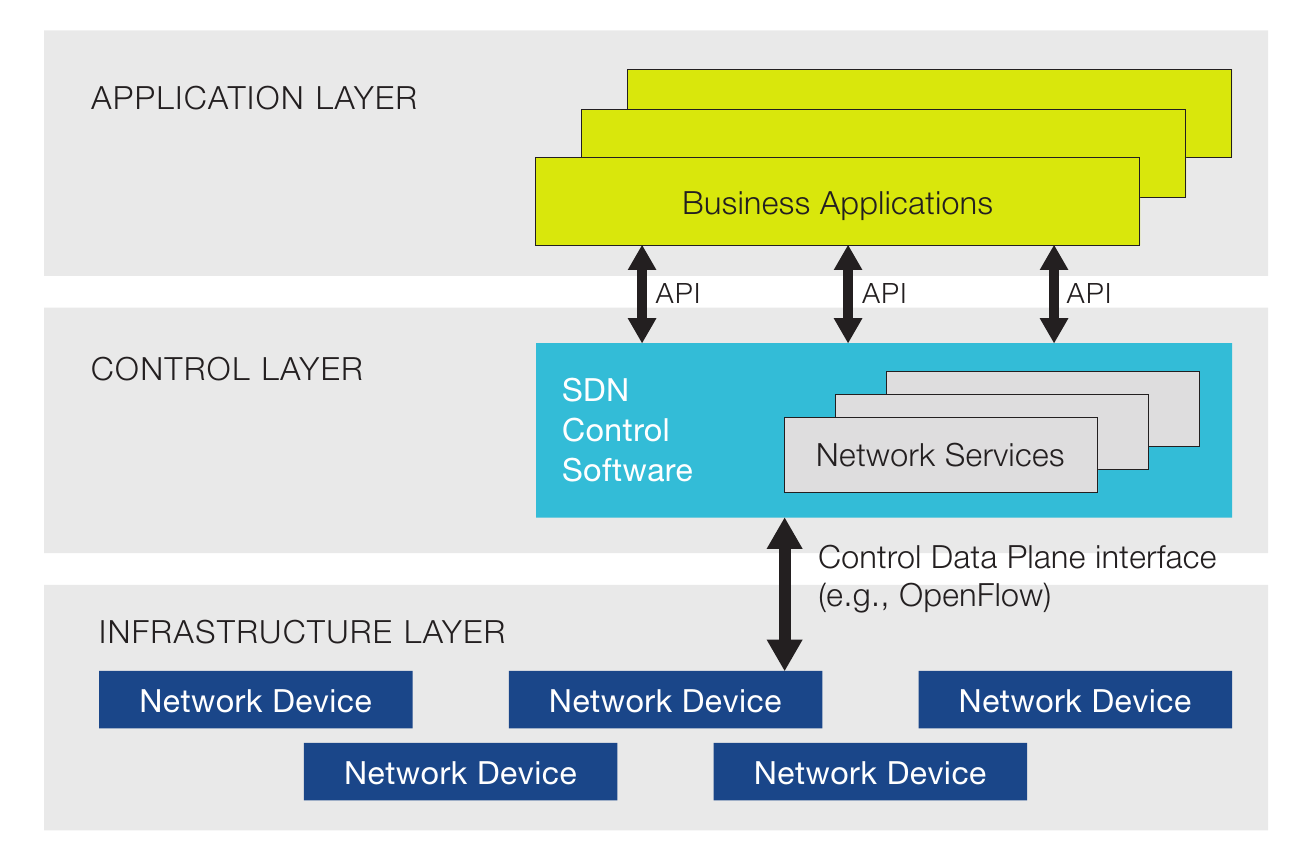
Fabian Ihle is a Researcher & PhD Student at the Chair of Communication Networks , Department of Computer Science , University of Tübingen . He works on Software-Defined Networking (SDN) , P4 Programming Language , and MPLS Network Actions , focusing on Time-Sensitive Networking and Network Resilience . His research includes data plane programming , network protocol development , and high-speed switching using hardware like Intel Tofino. He has contributed to IETF Internet Drafts and presented at workshops including ReNeSys 2025 and IETF MPLS WG meetings. Academic Background : B.Sc. and M.Sc. in Computer Science from University of Tübingen (2021-2023) His publications address MPLS extensions , BIER-TE , and P4-based tools for traffic generation and runtime control. He actively participates in KuVS workshops and serves as a reviewer for journals like IEEE Transactions on Cognitive Communications .
Sukyoung Ryu is a Professor in the Department of Computer Science at KAIST's College of Computing, South Korea. Her research centers on programming languages and program analysis, with significant contributions to WebAssembly, JavaScript semantics, and language specification. She leads the Programming Languages Research Group (PLRG) at KAIST. Her research spans multiple critical areas including executable specification engineering, static analysis techniques, and language interoperability. Recent work focuses on WebAssembly conformance testing, C-to-Rust translation, and bridging real-world implementations with formal semantics. Her group develops practical tools like SpecTec for mechanized language specifications and JISET for JavaScript semantics extraction. Analysis of her 15 most recent publications reveals strong trends in executable specifications (7 papers), WebAssembly tooling (5 papers), and language translation (4 papers). Key methodological approaches include record-replay debugging, filtered-simulation for binary lifting, and algebraic data type transformations for memory safety. Ryu actively contributes to the programming languages community through leadership roles including Steering Committee Chair for APLAS, Program Co-Chair for SPLASH/OOPSLA, and committee positions at POPL, PLDI, and ICFP. She frequently organizes workshops on real-world language specification (RPLS) and presents keynotes on programming language research for social good. Her mentoring activities include co-chairing New Faculty Symposia and participating in RTFM panels on faculty mentoring. She advises students through KAIST's programs and supervises research in the PLRG lab, which focuses on building practical language tools with formal foundations. Current projects emphasize WebAssembly standardization, secure language interoperability, and specification-based testing frameworks.
Alastair Reid is a researcher at Intel (2021–present) focusing on formal instruction set architecture (ISA) specifications and model checking processor pipelines. His career spans roles at Google Research (2019–2021) developing Rust verification tools, Arm Ltd (2004–2019) working on formal ISA specifications and vectorizing compilers, University of Utah (1998–2004) on component-based operating systems, Yale University (1994–1998) contributing to Haskell functional reactive programming, and University of Glasgow (1988–1994) in formal specification and verification. Ph.D. in Defining interfaces between hardware and software: Quality and performance , Glasgow University M.Sc. in A precise semantics for Ultraloose Specifications , Glasgow University B.Sc., University of Strathclyde His research interests include formal verification, security analysis, functional programming languages (particularly Haskell and Rust), and computer architecture. He has contributed to the development of machine-readable ISA specifications for ARM, RISC-V, and Intel architectures, and worked on symbolic execution tools like KLEE for Rust verification. Key publications include work on RISC-V specification improvements (2024), formal methods for persistent programming (2023), PLARCH workshop contributions on ISA specification (2023), and foundational papers on ARM processor verification with ISA-Formal (2016). His technical blog posts cover topics in symbolic execution, SMT solvers, and practical verification challenges. Contributions to conferences include committee roles in PLDI (2024), PriSC (2024), and workshop organization in formal methods and programming language design.
Adrian Sampson is an Associate Professor in the Department of Computer Science at Cornell University, where he is part of the Computer Systems Laboratory and the programming languages group. He joined Cornell in 2016 as an Assistant Professor and was promoted to Associate Professor in 2022. Prior to Cornell, he was a Visiting Researcher at Microsoft Research (2015-2016). He received his Ph.D. from the University of Washington in 2015 under advisors Luis Ceze and Dan Grossman, with a dissertation on Hardware and Software for Approximate Computing. His research focuses on breaking down abstraction barriers and rethinking the hardware-software interface. He is particularly known for his work on approximate computing, which explores how computers can be more efficient by allowing them to make controlled mistakes. He leads the Capra research group at Cornell, which investigates programming languages and computer architecture. Sampson's recent publications demonstrate a strong focus on hardware acceleration, FPGA programming, compiler design, and programming language theory. His work often bridges the gap between high-level programming abstractions and low-level hardware implementation, with particular attention to predictability, verification, and energy efficiency. He has made significant contributions to geometry types for graphics programming, timeline types for modular hardware design, and virtual machines for FPGA programming. Among his notable recognitions are the IEEE TCCA Young Computer Architect Award (2021), NSF CAREER award (2019), and multiple Distinguished Artifact Awards at major conferences. He has advised numerous Ph.D. students who have gone on to positions at institutions like Wellesley College, Northwestern University, and Amazon. Sampson is actively involved in academic service, serving on program committees for major conferences including PLDI, ASPLOS, and ISCA. He has also held leadership roles such as ACM SIGARCH Board of Directors (2023-2025) and SIGPLAN Information Director. His teaching at Cornell includes courses on computer systems, programming languages, and advanced compilers.
Massimo Violante is a Tenured Associate Professor at the Department of Control and Computer Engineering (DAUIN) , Politecnico di Torino. He serves as Deputy Director of the Polytechnic School and holds leadership roles in multiple research centers including the Interdepartmental Center PEIC (Power Electronics Innovation Center) and the Spin-Off/Start-Up Evaluation Commission . With expertise in embedded systems , functional safety , and sleep analysis , he bridges automotive engineering with biomedical applications through his research. Scientific Branch: IINF-05/A - Information Processing Systems ERC Sectors: PE7_11 (Components/Applications), PE6_1 (Computer Architecture), PE6_3 (Software Engineering) SDG Alignment: Goal 3 (Health) and Goal 9 (Innovation) His research focuses on fault tolerance , driver safety aid systems , and functional safety standards like ISO26262. He leads groundbreaking work in real-time sleep prediction and automotive electronics reliability , including patented solutions for drowsiness detection and safety-critical systems . Recent projects span from GreenChips-EDU (education ecosystem for sustainable microelectronics) to HiEFFICIENT (wide band gap power electronics for electric vehicles). Violante has supervised numerous PhD students including Sara Groppo (health monitoring for newborns), Michele Guagnano (sleep monitoring), and Pietro D'Agostino (Industrial IoT solutions). He has received prestigious recognition including the IEEE Best Paper Award (2005) and leadership roles as Program Chair for major symposiums like the IEEE European Test Symposium . His teaching portfolio includes foundational courses in Model-based Software Design , Operating Systems for Embedded Systems , and Technologies for Autonomous Vehicles . Major Projects: EU-funded: Cynergy4MIE (2024-2027), ShapeFuture (2024-2027), A-IQ Ready at EDGE (2023-2025) Nationally/Regionally funded: EMC2 (2014-2017), MIE (2014-2017), FELIX (2007-2010) Commercial contracts: Automotive Academy (2019-2020), Vodafone IoT Academy courses (2019-2021), Smartwatch-based drowsiness detection systems As a prolific inventor, he holds multiple international patents in driver state monitoring , microsleep prediction , and emergency intervention analysis . His work demonstrates a unique convergence of automotive engineering , biomedical applications , and high-reliability computing .
Luis Gerhorst is a Researcher at the Department of Computer Science 4 (Distributed Systems and Operating Systems) at Friedrich-Alexander-Universität Erlangen-Nürnberg. He focuses on systems software, embedded systems, energy-efficient computing, and security mitigations against transient execution attacks like Spectre. His work spans kernel-level optimizations, carbon-aware cloud systems, and embedded system resilience. Education: Completed Bachelor's and Master's theses in system software at FAU, focusing on system-call aggregation and Linux kernel interrupt handling. Research Interests: His primary areas include operating systems, distributed systems, and energy-aware resource management. Notable contributions include the AnyCall system-call aggregation framework and VeriFence , a Spectre defense mechanism for BPF programs. He also explores carbon footprint modeling in cloud environments through projects like carbond . Publications: Recent work addresses energy-efficient embedded systems (vNV-Heap), power-failure resilient network stacks (PfIP), and reverse-engineering Wi-Fi drivers for energy analysis. His research often bridges hardware-software co-design and environmental sustainability. Grants/Advising: Supervised over 10+ theses on topics like carbon-aware timers, BPF sandboxing, and Rust-based alternatives to BPF. Active in open-source projects like Linux kernel contributions and GitHub repositories for systems research. Labs/Teams: Member of Lehrstuhl für Informatik 4, collaborating on projects related to system software and embedded systems resilience. Maintains active GitLab/ GitHub repositories for research tools and prototypes.
Adrian Sampson is an Associate Professor in the Department of Computer Science at Cornell University, where he is part of the Computer Systems Laboratory and the Programming Languages Group. He leads the Capra research group, focusing on programming languages, computer architecture, and hardware-software co-design. Previously, he was an Assistant Professor at Cornell (2016–2022) and a researcher at Microsoft and Google. Education: Ph.D. in Computer Science and Engineering from the University of Washington (2015), advised by Luis Ceze and Dan Grossman. Dissertation: Hardware and Software for Approximate Computing . B.S. in Computer Science from Harvey Mudd College (2009). Research interests include approximate computing, compiler optimization, hardware accelerators, and formal methods in systems programming. His work on Geometry Types and Reticle has advanced abstractions for graphics programming and FPGA design. Sampson is known for contributions to compiler infrastructure for accelerators, such as the Timeline Types framework for predictable hardware design. Awards include the Cornell Bowers CIS Research Excellence Award (2024), IEEE TCCA Young Computer Architect Award (2021), NSF CAREER Award (2019), and the Google Ph.D. Fellowship in Computer Architecture (2013–2015). He has advised over 30 graduate and undergraduate students, contributing to projects like compiler-driven accelerator simulation and vectorization techniques. Teaching includes courses on compilers, programming languages, and computer architecture at Cornell. He has served on program committees for major conferences (ASPLOS, PLDI, ISCA) and chairs roles in ISCA and ASPLOS. Sampson’s research is supported by grants from NSF, Google, and industry partnerships.
Daniel Gritzner is a researcher at the Institute for Information Processing (Leibniz Universität Hannover) , specializing in computer vision, remote sensing, and scenario-based software engineering. His work bridges academic research with real-world applications in renewable energy, geospatial analysis, and automated code generation. Studied Computer Science (B.Sc. 2010, Diploma 2014) at the University of Mannheim Focus areas: Deep Learning, Semantic Segmentation, Remote Sensing, Formal Specifications His research integrates computer vision with remote sensing , applying techniques like transfer learning and domain adaptation to aerial/satellite imagery. Key projects include SegForestNet for segmentation and WindGISKI for wind turbine site selection. Recent publications highlight advancements in semantic segmentation, hyperspectral band optimization, and scenario-based controller synthesis. Collaborative work with Jörn Ostermann and others demonstrates interdisciplinary approaches across IEEE, Springer, and arXiv platforms. Technical contributions include the open-source SegForestNet framework, implementing binary space partitioning trees for geospatial analysis. This toolchain combines Python/Rust with PyTorch, emphasizing reproducibility and practical deployment in industrial/energy domains.
Ran Wei is a researcher at the University of Science and Technology of China, Department of Chemistry, with extensive contributions across interdisciplinary domains. His work bridges Computer Science , Biomedical Imaging , and Transportation Systems , focusing on active inference models, digital twins, and multimodal learning. Academic Affiliation : University of Science and Technology of China, Department of Chemistry Research Themes : Ran Wei's research explores active inference for adaptive systems, multimodal fusion in computer vision, and domain-specific knowledge graphs for engineering applications. He also investigates federated learning on heterogeneous networks and automated safety analysis for cyber-physical systems. Recent Article Trends : His publications from 2025–2021 span AI-driven engineering (e.g., construction project management), biomedical imaging (lesion detection, radiomics), and transportation systems (driver behavior modeling). Methodologically, he integrates transformers , Bayesian inference , and active learning frameworks. Scientific Collaborations : Ran Wei collaborates with experts in autonomous vehicles (Alfredo García, Anthony D. McDonald), biomedical engineering (Qiaolin Ye, Yifan Cai), and safety-critical systems (Tim Kelly, Simon Foster).
Trevor Walker is an Assistant Professor in the Department of Forestry and Environmental Resources at North Carolina State University's College of Natural Resources. His research focuses on forest genetics, tree breeding, and biotechnology applications for improving commercial forestry outcomes. Research Interests: Utilizing hyperspectral imaging and machine learning for high-throughput phenotyping of disease resistance in loblolly pine Investigating genetic parameters for growth, wood quality, and climate resilience in Pinus taeda populations Developing cost-effective genotyping methods for pedigree quality control in tree breeding programs Optimizing silvicultural practices through comparative analysis of planting stock and thinning regimes Publications Trends: Dr. Walker's recent work emphasizes advanced phenotyping techniques, genetic gain estimation, and adaptive forestry. His research spans from foundational genetic studies to applied technologies for disease resistance and wood quality optimization. Grant Support: Currently leads the Loblolly Pine Biomass Genetics/Cropping Study (2019-2024), funded by the North Carolina Department of Agriculture & Consumer Services with $127,993. This project evaluates genetic families and thinning regimes to maximize biomass and sawtimber returns. Laboratory Focus: Works with large-scale progeny test trials and clonal populations to advance genomic selection methods. His group explores innovative applications of imaging technology and statistical modeling in forest genetics.