معرفی
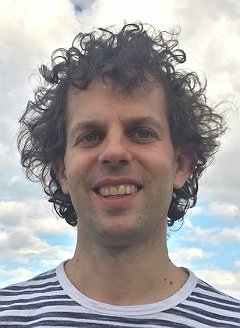
Sam Lindley is a Reader (equivalent to Associate Professor) in Programming Language Design and Implementation at the Laboratory for Foundations of Computer Science within the School of Informatics at the University of Edinburgh. He maintains an active research profile in programming language theory and implementation, with a particular focus on effect handlers and type systems.
His research interests span multiple dimensions of programming language design, with significant contributions in effect handlers, type systems (particularly modal and linear types), WebAssembly integration, and session types. Lindley's work bridges theoretical foundations with practical implementations, as evidenced by his publications on effect handlers for C and WebAssembly standardization. His research consistently explores how advanced type systems can enable safer and more efficient programming paradigms.
The trends in his recent publications (2023-2025) demonstrate a deepening focus on modal effect systems, with increasing connections to memory management (particularly through Rust-inspired approaches), formal language specification, and practical applications in WebAssembly. His work shows a clear progression from theoretical foundations of effect handlers toward concrete implementations and standardization efforts.
- UKRI Future Leaders Fellowship in Effect Handler Oriented Programming
Lindley has been actively involved in the programming language community through service on numerous program committees, including serving as Program Chair for ICFP 2023 and as an Area Chair for PLDI 2025. His mentoring activities include participation in the Programming Languages Mentoring Workshop (PLMW) where he has presented on research, graduate school, and community building. His grant activity is highlighted by the prestigious UKRI Future Leaders Fellowship, which supports his work on effect handler oriented programming.
As a member of the Laboratory for Foundations of Computer Science at the University of Edinburgh, Lindley contributes to one of the world's leading research groups in theoretical computer science and programming languages. His work often involves collaboration with researchers across institutions, particularly evident in his WebAssembly-related publications which include multiple international collaborators.